
REVIEW · SAKE & BAR HOPPING TOURS
Private Sake Tasting in Central Kyoto with Sake Sommelier
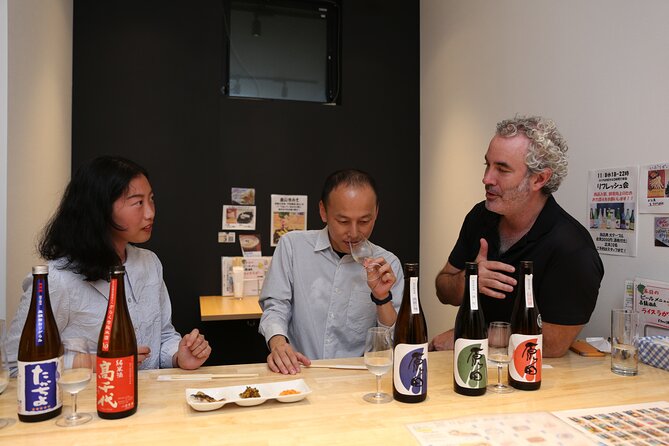
The best part of this Kyoto experience is its personal scale. Kenji, a certified international sake sommelier, leads only your group of up to four people through several hand-selected sakes, with plenty of room for questions and adjustments to your tastes. I like the brewery insight he brings from years working in Hyogo, and I like that the tasting takes place at a real standing sake bar rather than a classroom. The main drawback is simple: there are no seats, and the two-hour tasting is not suitable for anyone under Japan’s legal drinking age of 20.
In This Review
- Key points to know
- Why this two-hour Kyoto tasting is more than a drink stop
- Meeting Kenji near Kyoto-Kawaramachi
- Inside the standing sake bar
- How the sake tasting unfolds
- Learning to order and taste with confidence
- What the brewery background adds
- The value of a private group of up to four
- Snacks, timing, and the pace of the evening
- Who should book this Kyoto sake experience
- Is the $85.66 price fair?
- Should you book it?
- FAQ
- Where does the sake tasting begin?
- Where does the activity end?
- How long does the experience last?
- How many people can join the private tasting?
- Who leads the sake tasting?
- What will I taste?
- Is this experience suitable for beginners?
- Can people under 20 participate?
- Can I cancel for a refund?
Key points to know
- Private for one to four people: You do not share the session with a large tour group.
- Kenji leads the tasting: He is a certified international sake sommelier with past brewery experience in Hyogo.
- Sake from across Japan: The selection is designed to show different styles, not just one local bottle.
- A standing-bar setting: This is a casual, distinctly Japanese venue, but you will be on your feet.
- Useful for beginners: Kenji explains brewing, ingredients, types, ordering, and tasting in plain terms.
- About $85.66 per person: The price makes the most sense if you value expert guidance and a private format.
Why this two-hour Kyoto tasting is more than a drink stop
Sake can look simple on a menu, especially if you only know the broad categories of hot or cold, dry or sweet. The point of this experience is to give you a working understanding of nihonshu, the Japanese rice beverage most people mean when they say sake.
You are not simply handed a glass and left to guess what you are tasting. Kenji explains how sake is brewed, what ingredients matter, and how different varieties develop their character. He also covers practical points that help once you leave the tour, including how to order and how to taste with more confidence.
I see real value in that approach. A tasting flight can be fun, but the lesson gives the flight a purpose. You begin to notice why two sakes made from similar basic ingredients can taste very different. You also get a better chance of ordering something you actually like at a Kyoto restaurant later in your trip.
The experience lasts about two hours, which is enough time for a proper introduction without taking over your day. It fits nicely between sightseeing plans, though you should leave yourself time to arrive at the meeting point and get settled.
More Sake & Bar Hopping Tours in Kyoto
- Kyoto Night Foodie Tour in Gion (9+ dishes + 6 Sake tastings)
★ 5.0 · 1,762 reviews - 3-Hour Kyoto Insider Sake Brewery Tour with Tastings & Pairings
★ 5.0 · 917 reviews - Arashiyama Bamboo, Temple, Monkeys, or Secret Sake Brewery
★ 4.8 · 886 reviews
Meeting Kenji near Kyoto-Kawaramachi
The meeting point is outside the Sumitomo Mitsui Banking Corporation Kyoto Branch, at Kyoto Mitsui Building in Naginatabokochō, Shimogyo Ward, postal code 600-8008. The location is near public transportation, making it a practical starting point in central Kyoto.
Pay attention to the exact meeting details. Central Kyoto has many bank branches, large buildings, and busy streets, so confirming the location before you set out is wise. The activity both starts and ends at the meeting point.
Kenji is the key to the experience. He is a certified international sake sommelier and spent many years working at a sake brewery in Hyogo. That background matters because he can explain sake from the production side, not only from a restaurant or retail angle.
You can expect questions to be welcome. The private format means you are not waiting for a guide to finish a long speech before asking about the bottle in front of you. If one style catches your attention, you can ask why it tastes the way it does. If you are new to sake, you can ask the basic questions without feeling out of place.
Inside the standing sake bar
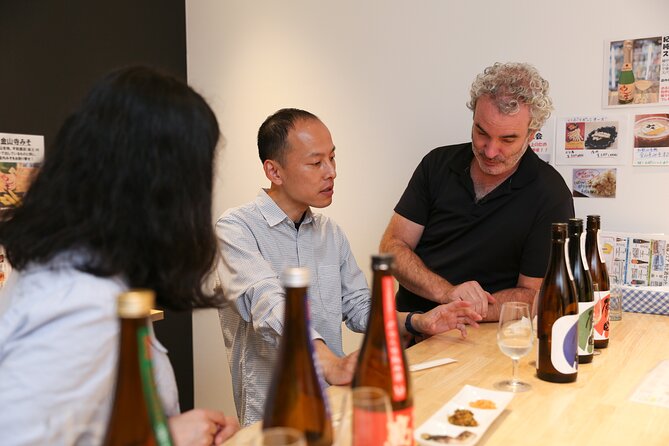
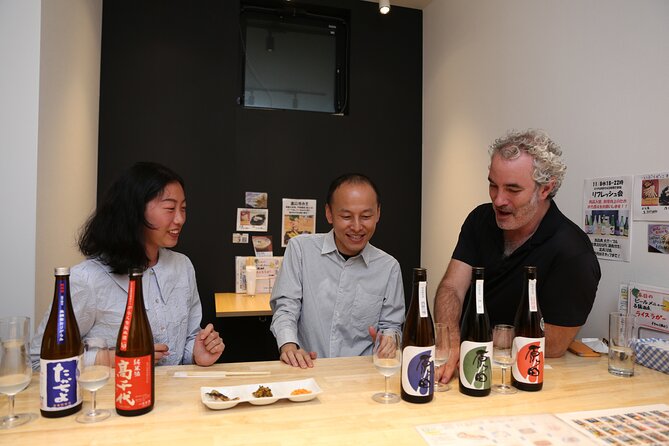
The tasting takes place at a cool standing bar in central Kyoto. This setting gives the activity a more local, informal feel than a seated formal tasting room. You sample sake while standing and enjoy traditional Japanese snacks alongside it.
That atmosphere will suit you if you like casual food-and-drink places and want an experience with a bit of everyday Kyoto character. It is also a good match for a short break from temples and museums. You get to focus on a part of Japanese culture that is often enjoyed in small bars, restaurants, and izakaya.
The no-seat arrangement is worth taking seriously. Two hours on your feet is manageable for many people, but it may not be comfortable if you have mobility concerns or simply prefer a seated tasting. The available information confirms that most people can participate, but it does not describe special seating or tailored accessibility arrangements.
The bar format can also make the tasting feel less formal. You are there to learn, but this is not a lecture with a test at the end. Snacks help keep the mood relaxed, and the small group keeps conversation moving.
How the sake tasting unfolds
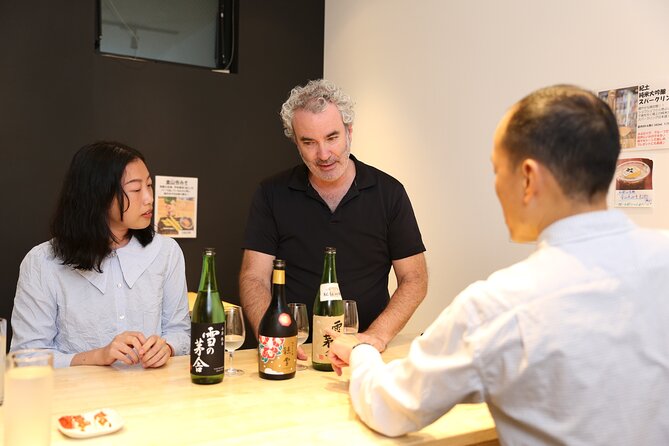
The session begins with an introduction to sake and its production. Kenji explains the brewing process, the materials used, and the main types you may encounter. This foundation helps you understand what is in your glass before you start comparing one pour with the next.
The basic ingredients and brewing decisions are not just technical details. They help explain the difference between styles. Kenji’s role is to connect those details to what you smell and taste, so the information stays useful rather than becoming a list of Japanese terms.
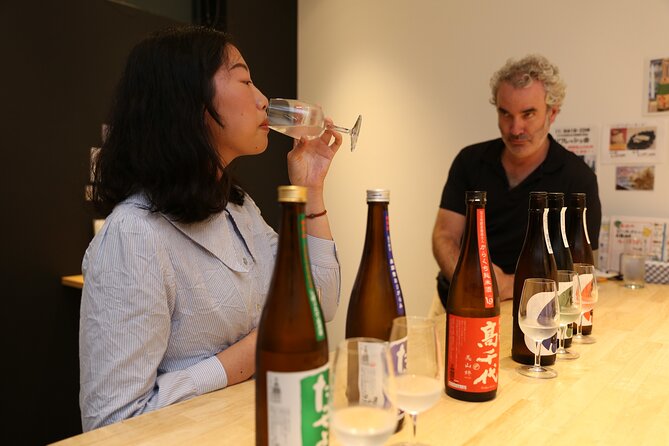
You then sample several hand-selected sakes from different parts of Japan. The exact number and selection can vary, but one tasting group reported trying eight sakes. That gives you a sense of the possible range, though you should not treat eight pours as a guaranteed itinerary.
The selection may include distinctive bottles that are mainly found in Japan, including unpasteurized examples according to one detailed account. Again, specific bottles are not promised, and the point is the range rather than a fixed menu. Kenji chooses the pours and can adjust the discussion to your experience level and preferences.
For first-time sake drinkers, this structure is especially useful. You can compare styles while the explanations are fresh. Instead of trying to remember a complicated lesson from earlier in the day, you immediately connect the brewing method and category to the flavor in front of you.
Same city, a completely different kind of day:
- PERFECT KYOTO 1-Day Bus Tour
★ 5.0 · 13,518 reviews - Kyoto: Fushimi Inari, Kinkakuji, Bamboo Grove 1 Day Bus Tour
★ 4.8 · 4,316 reviews - Kyoto: Tea Ceremony in a Traditional Tea House in Kiyomizu
★ 4.9 · 3,519 reviews - Kyoto Geisha Walking Tour: Gion District & Hidden Gems
★ 4.7 · 3,273 reviews
Learning to order and taste with confidence
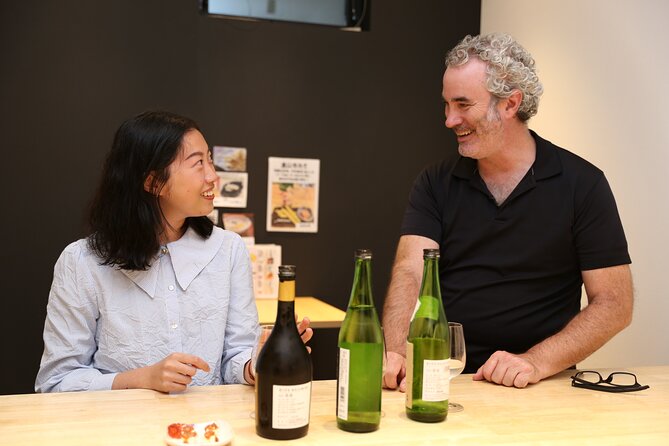
One of the most practical parts is learning how to order and enjoy sake in Japan. Menus can be confusing when you do not know the categories, serving choices, or words used to describe a bottle.
Kenji guides you through those basics. You learn how to approach a sake menu and how to describe what you prefer. That does not turn you into a sommelier in two hours, but it can make your next restaurant visit less of a gamble.
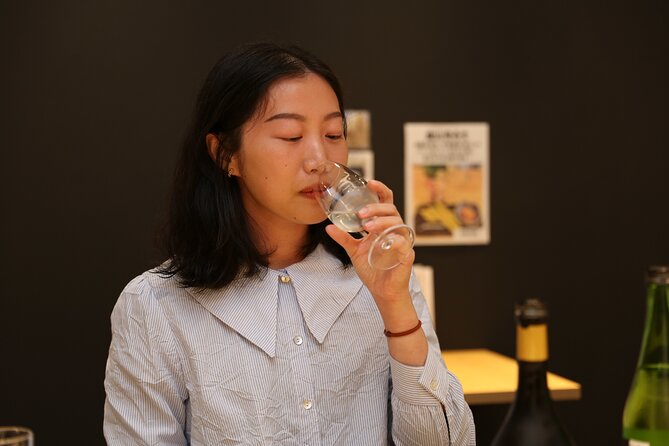
The tasting method is also explained as you go. You can expect guidance on how to taste the different sakes and how to compare them. This is useful even if you already drink sake, since the session covers more than a quick sip at a bar.
I would encourage you to tell Kenji what you already know at the beginning. The format works for beginners, and it can also work for people who have sampled sake before. One particularly strong account described Kenji adjusting the tasting to the group’s level and explaining each of eight sakes carefully.
That personal adjustment is one of the strongest reasons to choose a private session. In a large group, the guide has to follow a fixed pace. Here, your questions and preferences can shape the conversation.
What the brewery background adds
Hyogo is an important part of Kenji’s story because he spent years working at a sake brewery there. He can discuss production from direct professional experience, giving you a clearer sense of how sake moves from raw materials to the finished drink.
The experience is not advertised as a brewery visit, so you should not expect a tour of a production site or a walk through brewing rooms. Instead, the brewery connection strengthens the explanation at the bar.
That distinction is helpful when deciding what to book. If you want to see tanks, rice preparation, or a working brewery, this is not that kind of activity. If you want an informed introduction with tasting and practical advice in central Kyoto, the format makes good sense.
You also avoid spending extra time traveling to a distant brewery. The central location keeps the experience easy to fit into a sightseeing day, while the sake selection brings bottles from across Japan to you.
The value of a private group of up to four
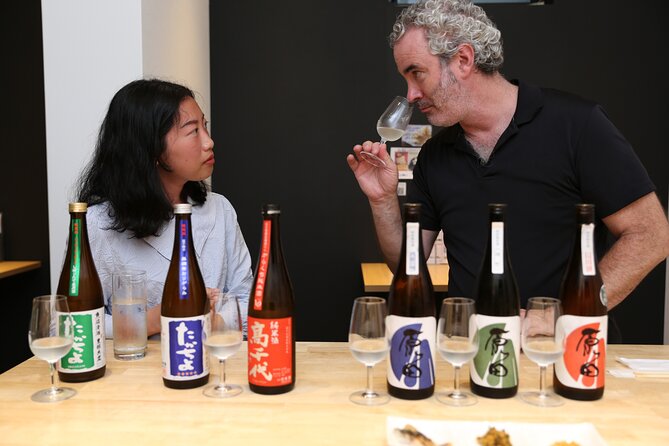
The private format is a major part of the price. At about $85.66 per person, this is not the cheapest way to drink sake in Kyoto. You are paying for a two-hour session, several selected pours, snacks, and one-on-one attention from a certified specialist.
For a group of two, three, or four, the cost may feel easier to justify because you share a private experience with people you already know. You can ask questions freely, set the pace, and discuss which sake you prefer without trying to hear over a larger group.
Solo visitors can also book, since the activity accepts groups of one to four. The price per person remains the same, but the private attention can be particularly useful if you are traveling alone and want a focused cultural activity rather than a crowded bar stop.
The value depends on your goal. If you only want a drink, you can spend less at a Kyoto bar. If you want to understand what you are drinking, taste several styles, and leave with practical knowledge for the rest of your trip, the fee is more reasonable.
The perfect group is small and curious. Couples, friends, and sake beginners should get the most from it. It is less suitable for anyone who wants a rowdy night out, a large social group, or a seated formal meal.
Snacks, timing, and the pace of the evening
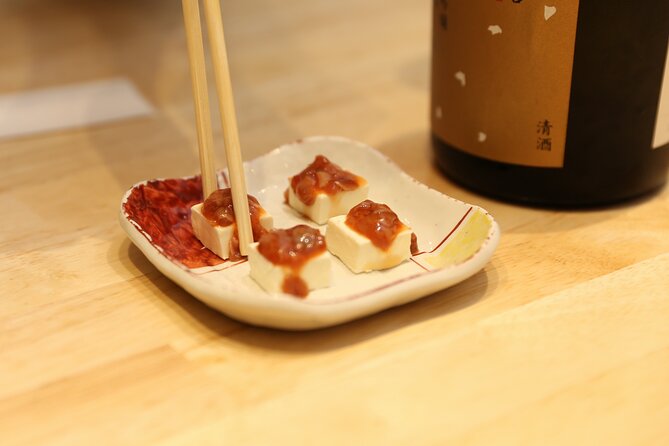
Traditional Japanese snacks are included during the tasting. They give you something to eat alongside the sake and help the session feel like a small food-and-drink outing rather than a series of isolated samples.
The information does not specify the snack menu, so do not book this expecting a full dinner or a guaranteed list of dishes. Plan another meal if you need one. Think of the food as a thoughtful accompaniment to the tasting.
Two hours is a comfortable length for the subject. A shorter session could feel rushed if you are learning the production process and tasting several varieties. A much longer session might become tiring, especially in a standing venue.
I would place this activity at a point in your Kyoto schedule when you can stay relaxed afterward. Sake is alcohol, and the experience is meant to be enjoyed at an unhurried pace. It is not a good match immediately before a demanding timed attraction or a long train connection.
Who should book this Kyoto sake experience
Book it if you want more than a standard bar order. Kenji covers the making of sake, its ingredients, its types, and the practical skills needed to order and taste it. That combination gives you both cultural context and useful dining advice.
It is a strong choice for first-time sake drinkers. You do not need prior knowledge, and the small group makes it easier to ask basic questions. It also suits someone who has already tried sake and wants to compare more refined or less familiar bottles from Japan.
The experience is also a good rainy-day or mid-itinerary option. It takes place indoors at a central bar and lasts about two hours. You can pair it with other Kyoto plans without committing an entire day.
Skip it if you cannot stand for two hours, do not drink alcohol, or want a brewery visit rather than a guided tasting. People under 20 cannot participate because Japan’s legal drinking age is 20.
Booking confirmation is provided at the time of booking, and the activity is available as a mobile ticket. Free cancellation is allowed up to 24 hours before the start time for a full refund. Changes or cancellations inside that window are not accepted, so keep the local start time in mind.
Is the $85.66 price fair?
I think the price is fair for the right person, but it is not a bargain tasting for someone focused only on quantity. The strongest value comes from the private group, Kenji’s professional background, and the way the tasting teaches you how to make sense of sake afterward.
You may taste around eight sakes, but the exact selection is not fixed. The bottles are hand-selected from across Japan, and the experience aims to show variety rather than simply provide the largest possible number of pours.
The cost also buys convenience. You do not need to research sake categories, choose a bar, guess at unfamiliar bottles, or translate a menu on your own. Kenji takes care of the selection and explains what makes each pour different.
For a couple or small group sharing an interest in Japanese food and drink, that is a useful spend. For someone who already knows sake well and wants rare bottles only, ask yourself if the introductory explanations will add enough value. The activity is built around learning, not just collecting expensive pours.
Should you book it?
I would book this private Kyoto sake tasting if you want a friendly, focused introduction to Japanese sake and appreciate having a real specialist guide the evening. Kenji’s brewery background, flexible teaching style, and private format make the experience more personal than a standard tasting flight.
The decision comes down to comfort and expectations. You need to be at least 20, comfortable standing in a bar for about two hours, and interested in sake beyond its alcohol content. If that sounds like you, the $85.66 fee buys a useful cultural experience and skills you can use at restaurants for the rest of your Japan trip.
FAQ
Where does the sake tasting begin?
It begins at the Sumitomo Mitsui Banking Corporation Kyoto Branch, inside Kyoto Mitsui Building, in Naginatabokochō, Shimogyo Ward, Kyoto, postal code 600-8008.
Where does the activity end?
The activity ends back at the meeting point.
How long does the experience last?
The tasting lasts approximately two hours.
How many people can join the private tasting?
The private activity is for one to four people, and only your group participates.
Who leads the sake tasting?
Kenji from Kyoto leads the experience. He is a certified international sake sommelier and spent many years working at a sake brewery in Hyogo.
What will I taste?
You will taste several hand-selected sakes from across Japan, along with traditional Japanese snacks. The exact sake selection is not specified.
Is this experience suitable for beginners?
Yes. The session explains sake production, ingredients, varieties, ordering, and tasting, making it suitable for first-time sake drinkers.
Can people under 20 participate?
No. The activity is not suitable for anyone under 20 because the legal drinking age in Japan is 20.
Can I cancel for a refund?
You can cancel at least 24 hours before the start time for a full refund. Cancellations or changes made less than 24 hours before the experience are not accepted.
More Food & Drink in Kyoto
- Kyoto Nishiki Market Food and Culture Walking Tour
★ 5.0 · 412 reviews - Kyoto: Gion Food Tour 13 Dishes at 4 Eateries
★ 5.0 · 408 reviews - 1.5-Hour Kyoto Insider Sake Experience with 7 Tastings & Pairings
★ 5.0 · 297 reviews - Kyoto: Insider Sake Experience with 7 Tastings and Snacks
★ 5.0 · 266 reviews
More Drinking Tours in Kyoto
- Kyoto: Izakaya Bars Guided Walking Tour
★ 4.9 · 815 reviews - Kyoto: Insider Sake Brewery Tour with Sake and Food Pairing
★ 5.0 · 704 reviews - Kyoto Sake Brewery & Tasting Walking Tour
★ 5.0 · 623 reviews - Kyoto Bar Hopping Night Tour
★ 5.0 · 613 reviews
Just added around Kyoto
- Private Guided Traditional Buddhist Cooking in Japan★ 5.0 · 16 reviews
- Kyoto: Gion Geisha District & Sake-in-Hand Walking Tour★ 5.0 · 37 reviews
- Your Private Vacation Photography Session In Kyoto★ 5.0 · 110 reviews
- Kyoto: Zen Meditation at a Private Temple with a Monk★ 5.0 · 25 reviews
- Traditional Japanese Washi Papermaking- Kyoto morning★ 5.0 · 77 reviews
- Kyoto Wagashi(Japanese sweets) Cooking Class near Fushimiinari★ 5.0 · 60 reviews
- Private Pewter Sake Cup Experience with a Kyoto Artisan★ 5.0 · 31 reviews
- Private Cooking Class Udon in Kyoto Japan★ 5.0 · 23 reviews
Sake & Bar Hopping Tours, compared.
Tokyo Bar Hopping Tour in Shinjuku (All-You-Can-Drink + Dinner)
Read our review →
Best of Shinjuku: Izakaya Food Tour (4 Stops, 14+ Tastings)
Read our review →
Kyoto Night Foodie Tour in Gion (9+ dishes + 6 Sake tastings)
Read our review →
Shibuya Meltdown Nightlife Tour: All-You-Can-Drink Bar Hopping
Read our review →
1-Day Snow Monkeys, Zenko-ji Temple & Sake in Nagano
Read our review →
Osaka Bar Hopping Night Walking Tour in Namba (3 bars, 6 tastes)
Read our review →
3-Hour Kyoto Insider Sake Brewery Tour with Tastings & Pairings
Read our review →
Browse the lists this tour appears in