
REVIEW · JAPANESE COOKING CLASSES
Osaka: Sushi Making in Spacious Studio (SAME-DAY OK!)
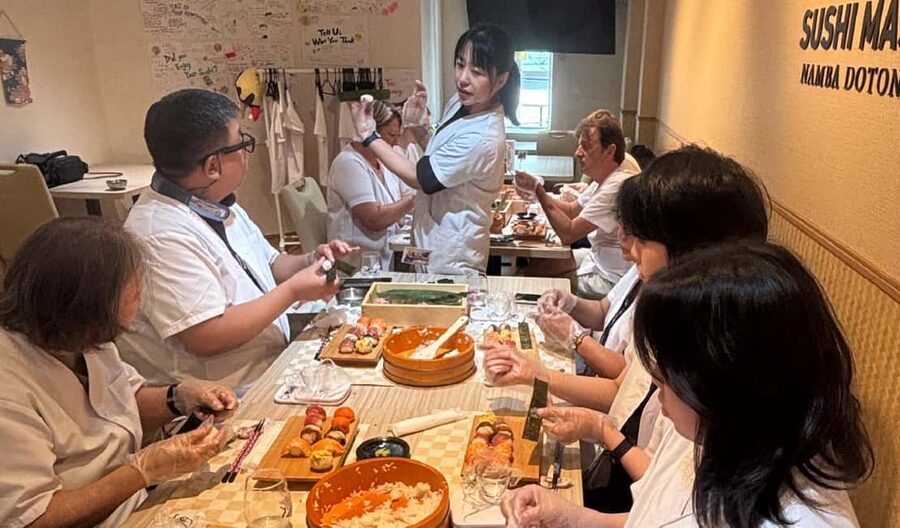
Making sushi in Osaka is a hands-on way to get past the restaurant counter and learn what goes into the food on your plate. In this 90-minute class near Namba, an English-speaking instructor guides you through rice preparation and sushi assembly, then you eat what you make.
I like the friendly, personal teaching and the fact that the class works for solo visitors, couples, and families. I also like the useful little finish: you receive a Sushi Master Certificate and a Japanese souvenir, not just a full stomach. The main consideration is that drinks cost extra, and vegetarians need to contact the studio ahead of time.
In This Review
- Key points to know before booking
- Why this Osaka sushi class works so well
- Finding Sushi Master Namba near the station
- The opening: food culture before the rice work
- Sushi rice is the real lesson
- Nigiri, gunkan, rolls, and temari sushi
- The meal you make, plus optional drinks
- The instructors make the difference
- Vegetarian and allergy planning
- The certificate and souvenir
- Is $25 a good value?
- Who should book this experience?
- Booking flexibility and timing
- Should you book Sushi Master Namba?
- FAQ
- Where is the sushi-making class located?
- How long does the activity last?
- How many pieces of sushi will I make?
- Is the class taught in English?
- Are vegetarian options available?
- Are drinks included?
Key points to know before booking
- Three minutes from Namba Station: The central location makes this an easy activity to fit between sightseeing, shopping, and dinner.
- Choose eight or ten pieces: The Standard course includes 8 pieces, while the Premium course includes 10.
- Learn several sushi basics: Expect guidance with sushi rice and preparations such as nigiri, gunkan, rolls, or temari sushi.
- English instruction is a real strength: Instructors including Naho, Aki, Seina, Tsuki, and Matsuri are praised for clear, kind teaching.
- Your food is the meal: Sushi ingredients and the sushi you make are included, while soft drinks and alcohol are available to buy.
- Vegetarian substitutions are possible: Send a direct message before arrival so fish toppings can be replaced with vegetables.
Why this Osaka sushi class works so well
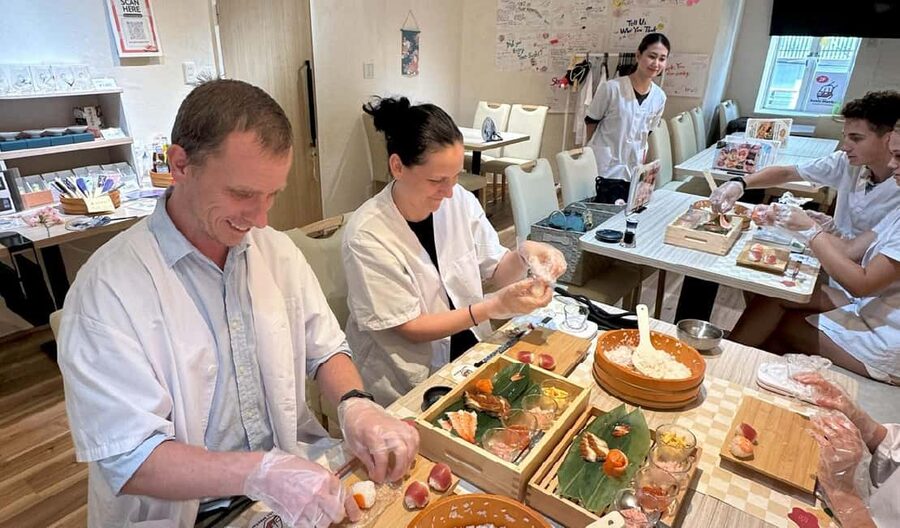
The best part of this experience is its simple promise: you learn a Japanese food skill, make something with your own hands, and eat it minutes later. That gives the class a satisfying rhythm. You are not sitting through a long cooking lecture, and you are not watching a chef do everything while you take pictures.
The studio is described as spacious and welcoming, which matters in a class involving rice, seaweed, fish, and careful hand movements. You have room to work without feeling squeezed around a tiny table. The setting is practical rather than formal, so you can focus on the food and ask questions.
The instructors teach in English and Japanese. Names that come up often in the class experience include Naho, Aki, Seina, Tsuki, and Matsuri. The teaching style is warm and patient. That is especially useful if you have never handled sushi rice before or are unsure how firmly to shape nigiri.
You also get a small introduction to Japanese food culture and sushi history. It is not a full culinary school course, but it gives meaning to the techniques you are practicing. You learn why the rice matters, how the pieces are assembled, and what makes sushi different from simply putting toppings on rice.
More Japanese Cooking Classes in Osaka
- Sushi Making Osaka Roll and Authentic Japanese Sushi Class
★ 5.0 · 1,220 reviews - Osaka Sushi Making Experience
★ 5.0 · 400 reviews - Osaka: Ramen and Gyoza Cooking Class in Dotonbori
★ 5.0 · 378 reviews
Finding Sushi Master Namba near the station
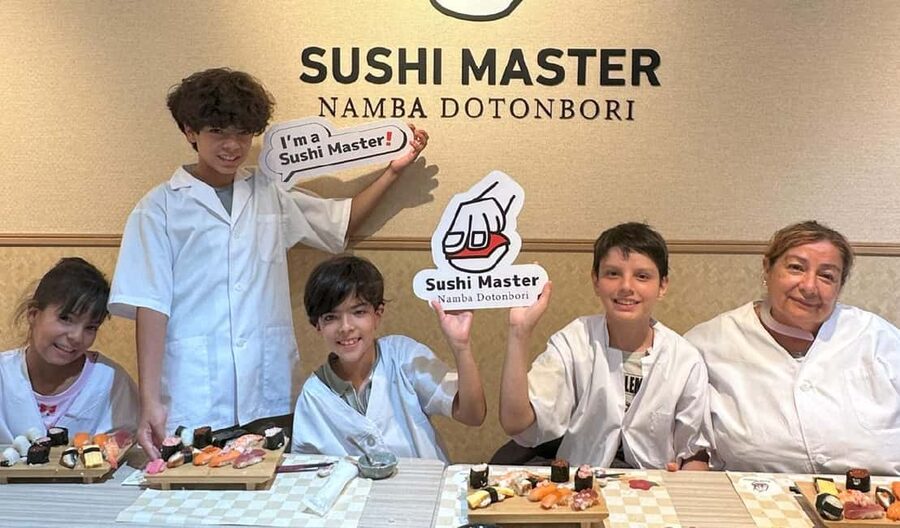
The meeting point is about three minutes from Namba Station, one of Osaka’s most useful bases. Search for Sushi Master Namba in Google Maps, but check the building carefully because the map pin may be slightly off.
The studio is on the second floor of a narrow orange-colored building. That description is more useful than relying only on the map, especially in a dense Osaka neighborhood where signs and entrances can be easy to miss. If you have trouble finding it, the provided phone number is 06-6484-8070.
There is no hotel pickup or drop-off. You make your own way to the studio, but the short walk from Namba keeps the logistics easy. I would allow a little extra time for finding the entrance, particularly if your class is scheduled during a busy part of your day.
Smoking is not allowed. Outside food and drinks are also not permitted, so plan to arrive without snacks or a takeaway beverage in hand.
The opening: food culture before the rice work
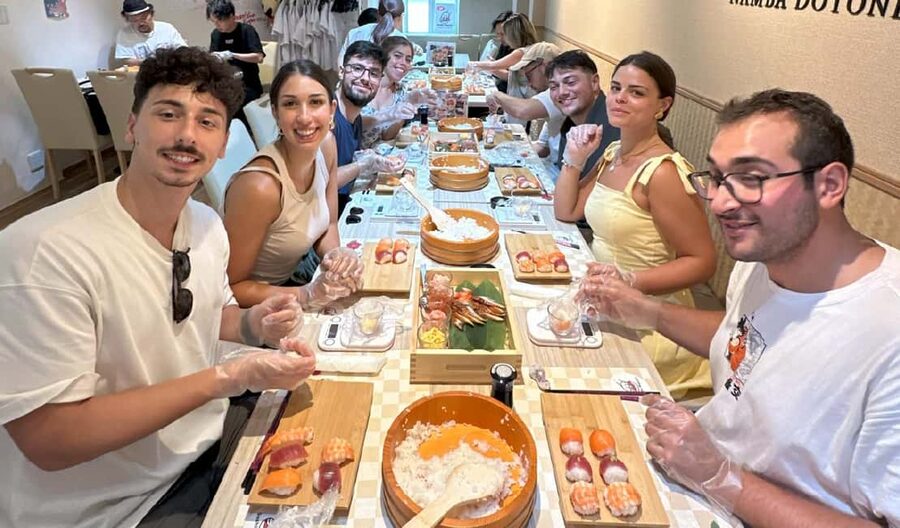
The session begins with a welcome and a short introduction to Japanese food culture in English. This opening helps set the scene before you start shaping anything. You get a little context about sushi and the ingredients, then move into the practical work.
Some sessions use an informative video at the start. This is helpful because you can see the basic process before trying it yourself. The format also gives the instructor a clear way to explain the steps to a mixed group, including people with no cooking experience.
Do not expect a long lecture. The appeal is that the introduction quickly leads into making food. If you are traveling with children or have a short attention span after a morning of sightseeing, that hands-on pace is a plus.
Sushi rice is the real lesson
Many first-time sushi makers focus on the fish. The class sensibly gives attention to the rice, because good sushi depends on rice that has the right texture and seasoning. You learn how to prepare or handle sushi rice and how to shape it for the pieces you will make.
Some detailed preparation is done before the class. The rice may already be cooked, and the fish, egg, and seaweed can be prepared in advance. That means your time is spent on the parts that are easiest and most useful for a beginner: cooling or handling the rice, forming portions, and putting the sushi together.
This is a practical compromise. If every ingredient were prepared from scratch during a 90-minute session, you would spend much of the class waiting. Here, the pre-preparation keeps the focus on sushi assembly and gives you enough time to make a proper meal.
You should still expect a learning curve. Sushi rice can be sticky, and shaping it neatly takes a little practice. That is where the instructor’s patient guidance helps. The class is designed for participation, not perfection, so a slightly uneven piece is part of the fun.
Same city, a completely different kind of day:
- Osaka Go Karting Tour with Funny Costume
★ 5.0 · 2,658 reviews - Osaka Castle: Museum and Tower Entry Ticket
★ 4.5 · 2,380 reviews - Osaka: Shinsekai Food Tour with 13-15 Dishes at 5 Eateries
★ 4.8 · 2,204 reviews - Osaka Food Tour: 13 Dishes at 5 Local Eateries
★ 5.0 · 2,149 reviews
Nigiri, gunkan, rolls, and temari sushi
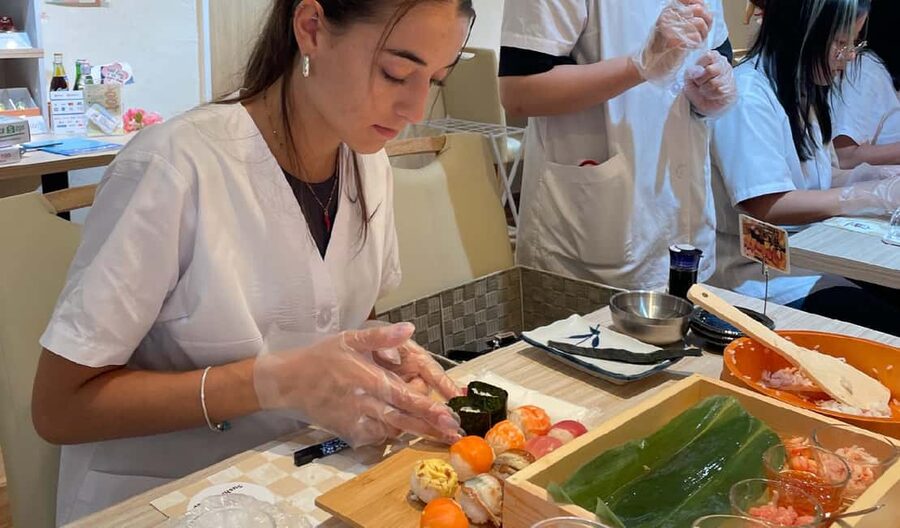
The exact selection can vary, but the basic course includes styles such as nigiri and gunkan. Nigiri is the familiar hand-shaped rice topped with an ingredient. Gunkan has a seaweed wrapper around the rice, creating a small space for toppings.
Some sessions also include rolls or temari sushi. Temari sushi is rounded and decorative, and it gives you a different way to think about shape and presentation. It can be especially enjoyable if you want a colorful piece that looks good in photographs before you eat it.
The Premium Sushi Making Course includes 10 pieces. The Standard course includes 8. Neither option is a tiny tasting portion. The food is intended to serve as your meal, and the amount is repeatedly described as generous enough to leave you satisfied.
The class does not turn you into a professional sushi chef in an hour and a half. It does give you a solid introduction to several basic forms and a better understanding of the handwork involved. You leave with skills you can try again at home, even if your first pieces are not restaurant-perfect.
The meal you make, plus optional drinks
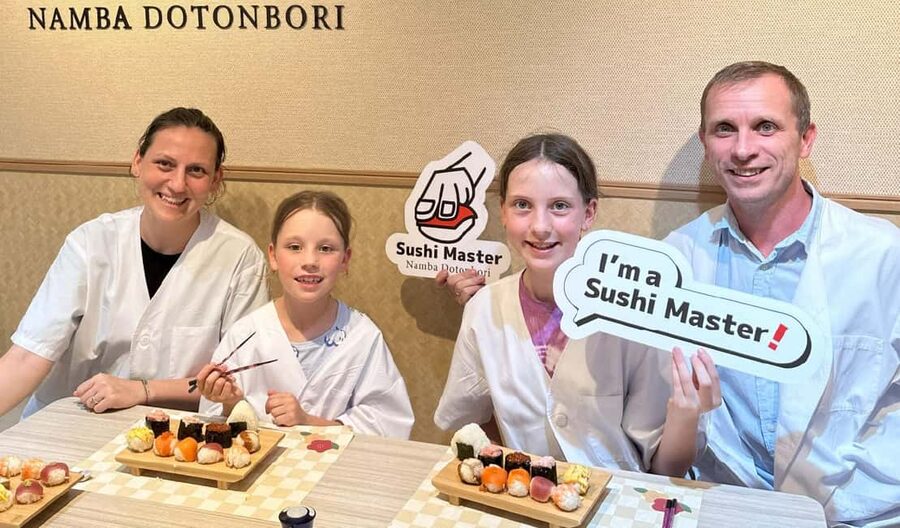
The most rewarding part comes when you sit down to eat your own sushi. The ingredients are included, and the sushi you prepare becomes your meal. There is no separate tasting menu to compare against your work, which keeps the experience direct and personal.
The food is often praised for its quality and flavor. That makes a difference at this price. You are not paying only for an activity and a novelty certificate. You are also receiving a sushi meal near one of Osaka’s main entertainment areas.
Drinks are not included, but you can order soft drinks and alcohol at the studio. Carefully selected sake may be available to enjoy with the sushi. If you want to keep the cost close to the advertised $25 per person, skip the extras. If you like trying sake with Japanese food, buying a drink can make the meal feel more complete.
I would not book this as a replacement for a serious sushi dinner at a respected Osaka restaurant. The point is different. Here, the value comes from combining food, instruction, and a cultural activity in one short session.
The instructors make the difference
The strongest part of the experience is the teaching. A sushi class can quickly become frustrating if instructions are rushed or unclear. Here, the instructors are described as friendly, patient, and easy to understand in English.
Naho is praised for taking time to explain each part of the process and for making questions welcome. Aki is noted for clear communication and a fun manner. Seina is described as patient, while Tsuki is praised for kindness and helpful guidance. Matsuri also teaches with Naho in some sessions.
Those details matter because the quality of a class depends on more than the ingredients. You want someone who notices when your rice is too loose, shows you how to place the topping, and keeps the tone relaxed when your first attempt looks a little lopsided.
The class also suits solo visitors. You do not need to arrive with a group to enjoy it, and the friendly atmosphere helps avoid that awkward feeling of being the only person who came alone. Families can join too, making this a good break from temples, shopping arcades, and long train rides.
Vegetarian and allergy planning
Vegetarian options are available, but you need to send a direct message in advance. The fish toppings can be replaced with vegetable-based ingredients for groups that include vegetarians.
That advance message is important. Do not assume you can simply announce a dietary need when you arrive. The studio needs time to arrange the substitutions, and the activity information specifically asks you to contact them.
You should also report allergies ahead of time. The class includes several ingredients, and advance notice gives the staff a chance to discuss what can be adjusted. The supplied information does not promise that every allergy can be accommodated, so ask before booking if your restrictions are serious.
Outside food and drinks are not allowed. That rule is straightforward, but it means you should handle dietary planning with the studio rather than bringing your own meal.
The certificate and souvenir
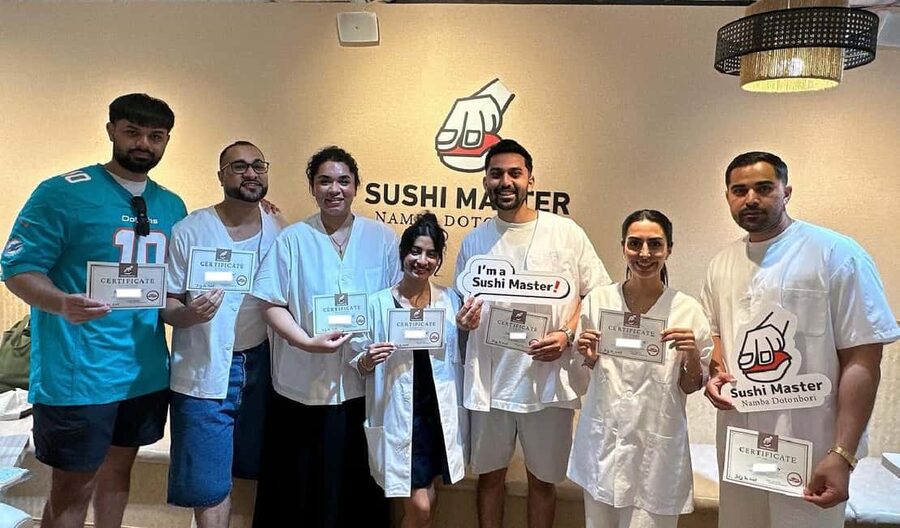
At the end, you receive a Sushi Master Certificate and a small Japanese souvenir. The certificate is playful rather than a professional qualification, but it is a nice reminder of what you did. For children, it adds a clear finish to the activity. For adults, it makes a fun travel keepsake.
The souvenir is small, but it helps the experience feel more personal. Many paid activities end when the food is gone. Here, you leave with something physical and a new skill that you can show friends or try again at home.
The instructors are also happy to take photos during the session, according to the experience details. That is useful if you want pictures of the process, not just the finished plate. Ask before handling food or during a natural pause so the class keeps moving.
Is $25 a good value?
At $25 per person, this is a strong value if you want more than a meal. The price includes sushi ingredients, 8 or 10 pieces of sushi, instruction, the certificate, and the souvenir. You are also paying for a convenient location and an English-language activity.
A comparable sushi meal might cost less or more depending on the restaurant, but it would not give you the same participation. A standard cooking class can cost considerably more, especially when it includes a full meal and a central location. This experience sits in a useful middle ground: affordable, short, and substantial enough to feel worthwhile.
The value is best for people who are curious about sushi but do not want to spend half a day in a kitchen. At 90 minutes, it fits neatly into an Osaka itinerary. You can schedule it before an evening around Dotonbori or after exploring Namba.
The price does not include drinks or transportation. Add those costs if you want sake, beer, or soft drinks. Still, the included meal means you can treat the class as lunch or an early dinner rather than an extra snack.
Who should book this experience?
I would recommend it to first-time sushi makers, food-focused visitors, families, couples, and solo visitors who want an activity with a clear result. It is also a good choice for anyone who wants an English-language introduction to Japanese food culture without committing to a long lesson.
Children can enjoy the shaping and decorating, though the supplied details do not give a specific minimum age. If you are booking for young children, confirm age requirements directly before paying.
This is less suitable if you want an advanced chef’s course, a raw-fish market tour, or a behind-the-scenes visit to a working sushi restaurant. It is a beginner-friendly class centered on making and eating basic sushi styles.
The class also makes sense on a rainy day. Most of the experience takes place indoors, and the short walk from Namba Station keeps you out of bad weather for long. Just remember that the studio is upstairs in a narrow orange building, so identifying the entrance is part of the small adventure.
Booking flexibility and timing
Same-day booking may be available, depending on the class schedule. You need to check the available starting times, since the session lasts 90 minutes and the activity does not list a single fixed departure time.
You can reserve now and pay later, which helps if your Osaka plans are still shifting. Free cancellation is available up to 24 hours in advance for a full refund. These terms are useful during a Japan trip, where weather, train changes, and crowded sightseeing days can alter your plans.
For the smoothest visit, book early if you need vegetarian substitutions or have allergies. Send those details directly to the provider rather than waiting until the class begins.
Should you book Sushi Master Namba?
Book it if you want an affordable, friendly, and genuinely hands-on Osaka activity. The strongest reasons are the clear English instruction, the central Namba location, the satisfying amount of food, and the chance to learn several sushi basics instead of merely watching a demonstration.
I would especially choose this class for a first visit to Osaka, a family afternoon, or a solo day when you want an easy way to meet people and do something different. The certificate and souvenir are pleasant extras, but the real payoff is understanding how much care goes into sushi rice and shaping.
Skip it if your main goal is a high-end sushi meal or advanced knife training. For everyone else, $25 buys a well-paced cultural activity, a proper meal, and a skill you can take home.
FAQ
Where is the sushi-making class located?
It is at Sushi Master Namba, about three minutes from Namba Station. The studio is on the second floor of a narrow orange-colored building. Search for Sushi Master Namba on Google Maps, but note that the map location may be slightly misaligned.
How long does the activity last?
The class lasts 90 minutes. Starting times vary, so check availability when booking.
How many pieces of sushi will I make?
The Standard Sushi Making Course includes 8 pieces. The Premium Sushi Making Course includes 10 pieces.
Is the class taught in English?
Yes. Instruction is available in English and Japanese, and the class is led by English-speaking instructors.
Are vegetarian options available?
Yes. Fish toppings can be replaced with vegetable-based ingredients, but you must send a direct message in advance if your group includes vegetarians.
Are drinks included?
No. Soft drinks and alcohol can be ordered during the class, but they cost extra. Outside food and drinks are not allowed.
Just added around Osaka
- (Ticket Included) Explore Osaka Castle & Museum of History★ 4.8 · 21 reviews
- Hidden Osaka – Yukaku Red Light Tour & Culinary Adventure★ 4.8 · 96 reviews
- Osaka: Walking Tour and Top Highlights★ 4.8 · 104 reviews
- Osaka: Private Ceramic Painting Workshop★ 5.0 · 13 reviews
- Eat Like a Local in Osaka – Private Custom Street Food Tour★ 4.3 · 33 reviews
- Pickleball in Osaka, Kobe & Kyoto with Locals!★ 4.7 · 80 reviews
- Osaka:SUMO BEATS SHOWCASE: Taiko Drum and Wagyu burger!★ 4.2 · 37 reviews
- Kimono photoshoot-Includes 100 photo data★ 5.0 · 21 reviews
Japanese Cooking Classes, compared.
Sushi Making Tokyo Roll and Authentic Japanese Sushi Class
Read our review →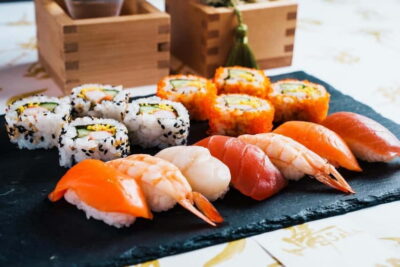
Roll and Authentic Sushi Making Class in Asakusa
Read our review →
Ramen Cooking Class at Ramen Factory in Kyoto
Read our review →
Sushi Making Class in a Happi Coat near a Famous Spot
Read our review →
Sushi Making Osaka Roll and Authentic Japanese Sushi Class
Read our review →
Tokyo Sushi Making Class in Tsukiji with Professional Chef
Read our review →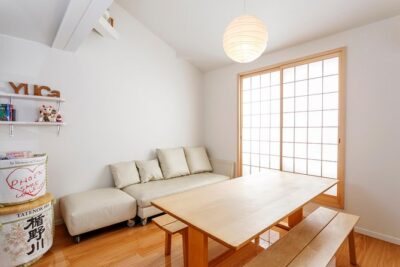
Ramen & Gyoza Cooking Class in Tokyo with Local Supermarket Visit
Read our review →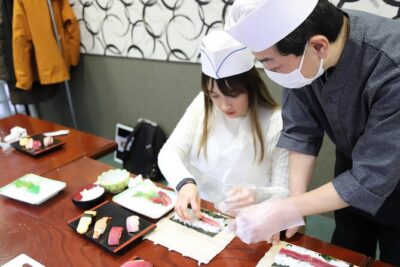
Tsukiji Fish Market Guided Tour and Sushi Making with Pro Chef
Read our review →Browse the lists this tour appears in