
REVIEW · FOOD MARKET TOURS
Osaka Dotonbori Daytime Food Tour
Osaka’s food scene can overwhelm you fast. This three-hour walk cuts through the noise of Dotonbori and Namba, combining four food stops with stories about local culture, shrines, markets, and the famous Glico running man. Guides such as Ron, Chiyoe, Kevin, and Miki have led guests through side streets and small eateries that are easy to miss on your own.
I like the efficient route and the personal feel of a group capped at 10 people. I also like that the tour includes a drink and traditional Japanese dessert, not just quick bites. The main drawback is the $209 price, which is high for three hours and four included food stops, so the value depends on how much you want guidance and orientation rather than simply a meal.
In This Review
- Key points at a glance
- Starting beneath the Glico running man
- Dotonbori beyond the neon
- Four food stops across Minami and Namba
- Hozenji Yokocho and a quiet Buddha
- Kuromon Market and Sennichimae
- Misono Building and the city’s back streets
- What the guides add to the walk
- Price, group size, and what you receive
- Dietary needs and physical demands
- Booking and cancellation details
- Who should book this Osaka food walk?
- Should you book the Dotonbori daytime food tour?
- FAQ
- Where does the Osaka Dotonbori daytime food tour begin?
- What time does the tour start?
- How long does the tour last?
- Where does the tour end?
- How many food stops are included?
- Is hotel pickup included?
- Are dietary restrictions supported?
- What is the maximum group size?
- Can I cancel for a full refund?
Key points at a glance
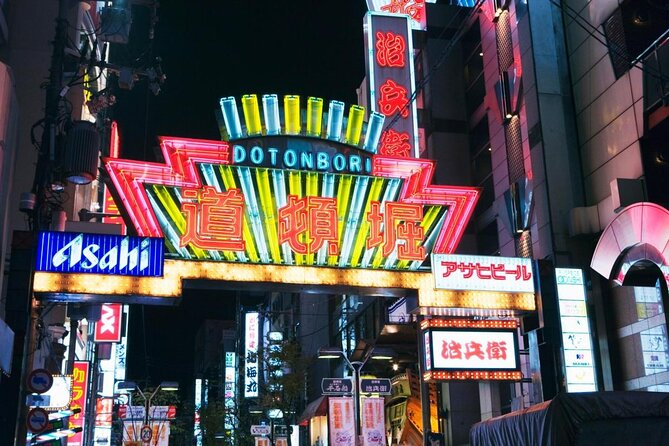
- The Glico sign starts the story: Learn why the famous running man is linked to Filipino sprinter Fortunato Catalon and the Glico company.
- Four food stops keep the pace moving: You sample local dishes, enjoy one drink, and finish with a traditional Japanese dessert.
- Dotonbori is more than neon signs: The route also reaches Hozenji Yokocho, Kuromon Market, Misono Building, and Sennichimae.
- Small groups make questions easy: A maximum of 10 people gives the guide room to adjust the conversation and explain unfamiliar foods.
- Takoyaki is a likely highlight: The food is described as a strong part of the experience, with especially good takoyaki mentioned by name.
- It is useful early in your stay: You leave with dining ideas and neighborhood bearings for the rest of your Osaka visit.
Starting beneath the Glico running man
Meet at 11 a.m. outside the Starbucks at Tsutaya Ebisubashi, at 1-chome-8-19 Dotonbori. This puts you right by the Glico sign, one of Osaka’s most recognizable photo spots and the natural place to begin a walk through Minami, the broad central district that includes Namba.
The opening explanation gives the sign more meaning than a quick photograph does. The Glico man is linked to Fortunato Catalon, a Filipino sprinter whose image inspired a nation and a company. That is a small but useful example of what this tour does well: it connects familiar sights to a piece of cultural background.
You get about five minutes at the sign, so this is not a long photo session. It is best to arrive ready to meet the guide, especially since Dotonbori is crowded and the group needs to move together. A mobile ticket is accepted, and confirmation arrives when you book.
More Food Market Tours in Osaka
- Osaka: Shinsekai Food Tour with 13-15 Dishes at 5 Eateries
★ 4.8 · 2,204 reviews - Osaka Food Tour: 13 Dishes at 5 Local Eateries
★ 5.0 · 2,149 reviews - Hungry Osaka Street Food Tour:15 Tastings & 3 Drinks with a Local
★ 5.0 · 1,727 reviews
Dotonbori beyond the neon
Dotonbori is famous for bright signs, loud storefronts, and food displays designed to pull you inside. The area is fun, but it can also send you toward restaurants with long queues and a heavily commercial feel. The tour’s purpose is to help you avoid spending valuable Osaka time guessing which door to enter.
You will walk through the main Dotonbori area for roughly 15 minutes before moving toward places selected for local food and a more personal experience. The guide can explain what you are seeing while you make your way through the crowds, which is useful if this is your first day in Osaka.
I especially like this part for first-time visitors. You get the famous Osaka scene and its photos, but you are not left with the impression that the whole neighborhood is only a row of giant restaurant signs. The tour aims to steer you away from the most obvious choices and toward smaller stops that you might not locate by yourself.
The tradeoff is that Dotonbori is busy by nature. Even a small group cannot make the streets quiet, and moving through the area requires some patience. You should expect a moderate amount of walking and the need to stay close to your guide.
Four food stops across Minami and Namba
The food portion lasts about three hours in total, with four stops spread through the route. The exact dishes can change with the season, restaurant schedules, public holidays, weather, and availability, so you should treat the menu as a sampling of local specialties rather than a fixed tasting list.
That flexibility is practical in Osaka, where small restaurants may have limited hours or change what they serve. If one stop is unavailable, a substitute may be used. This means the tour can continue without asking you to wait around or lose a large part of the afternoon.
The included package covers local dishes at four food stops, one drink, and a traditional Japanese dessert. Extra food and drinks are available at your own cost, but they are not part of the stated price. That matters because $209 per person is not a bargain food crawl. You are paying for the guide, the route, the cultural explanation, and the time saved finding suitable places.
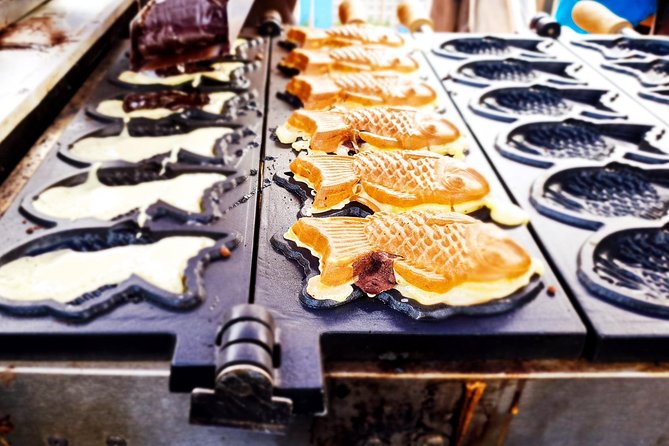
Takoyaki is one food to look forward to. Several experiences connected with this tour single it out as a favorite, including a particularly memorable version served during a walk with Chiyoe. The tour does not promise a specific takoyaki shop every time, so do not book solely on the assumption that one exact vendor is guaranteed.
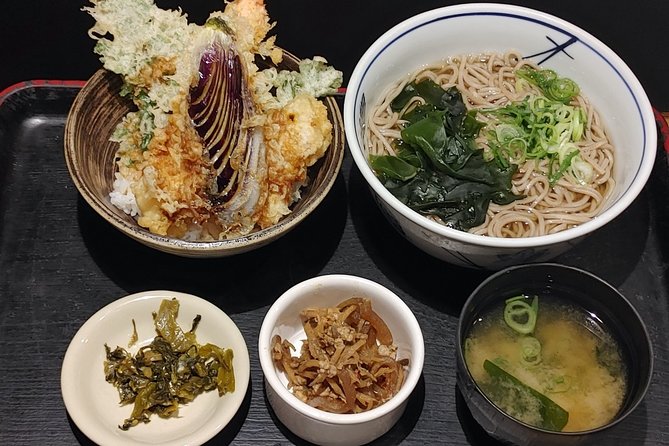
The food is served in the context of the neighborhood. You may stop at small market shops, local restaurants, or tucked-away izakaya-style places, depending on the day’s arrangements. The advantage is variety. You are not sitting in one restaurant for the entire afternoon, and you can ask questions as each dish arrives.
Hozenji Yokocho and a quiet Buddha
Hozenji Yokocho provides a change of pace from the broad, noisy streets of Dotonbori. Its narrow lanes and older character make it one of the more memorable walking sections on the route.
A special Buddha statue near Hozenji is part of the experience. One guide also included visits to shrines while explaining Japanese culture and history. The precise stop can vary, but the point is clear: this is not only a food tour with facts added as decoration. The walking route gives you a look at smaller religious and historic corners near the major entertainment district.
You should keep your expectations measured. The listed time at some stops is short, and the tour cannot provide a full historical visit to every place. Still, these pauses give the afternoon some texture and help explain why Namba is more than a shopping and dining zone.
Same city, a completely different kind of day:
- Osaka Go Karting Tour with Funny Costume
★ 5.0 · 2,658 reviews - Osaka Castle: Museum and Tower Entry Ticket
★ 4.5 · 2,380 reviews - Osaka: Tea Ceremony Experience
★ 4.9 · 1,426 reviews - Osaka Kickstart: Hotspots & Hidden Gems Tour
★ 5.0 · 1,306 reviews
Kuromon Market and Sennichimae
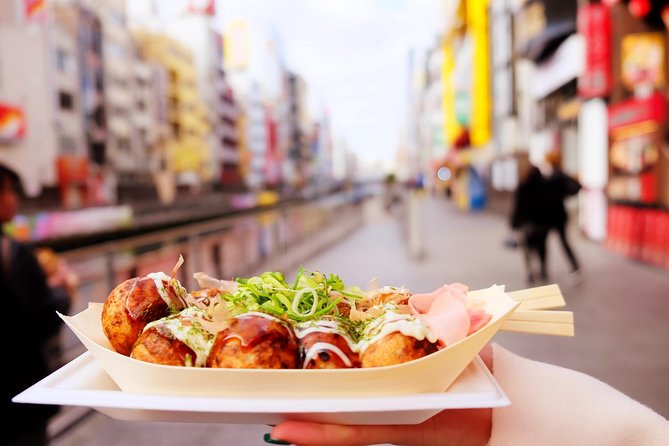
The route includes Kuromon Market, a useful place to see Osaka’s food culture in motion. Market stalls and small shops make this a natural setting for trying local items and watching how food is presented and sold.
The experience can feel more personal here because the guide helps you understand what you are looking at. You can ask about unfamiliar foods rather than choosing at random from a display. The market section also works well for anyone who wants ideas for independent eating later in the trip.
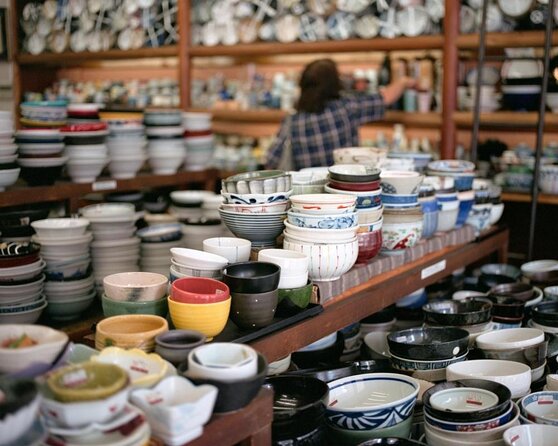
Sennichimae Doguyasuji Shotengai is another named stop. This shopping street is associated with kitchen and restaurant supplies, giving you a different side of Osaka’s food identity. It is a fitting addition to a food walk because it shifts your attention from eating to the tools and businesses behind the city’s dining culture.
The tour ends in the Sennichimae area, at 542-0074 in Chuo Ward. There is no hotel drop-off included, but the end point leaves you in a useful part of central Osaka for more food, shopping, or onward public transportation.
Misono Building and the city’s back streets
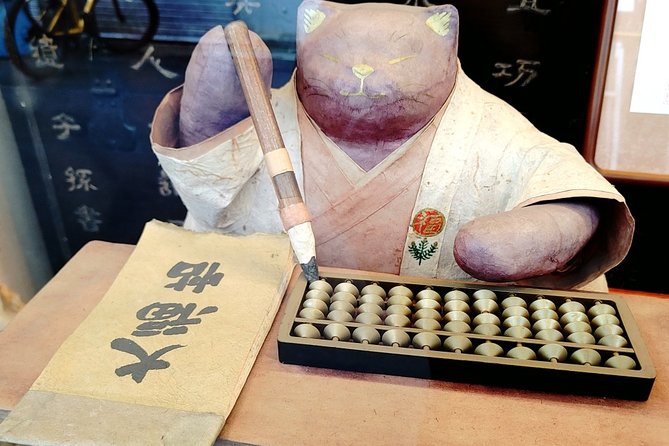
Misono Building is included among the route stops, along with the Dotonbori and Namba areas. The supplied details do not promise a particular activity or food item inside the building, so you should think of it as one of the places your guide may use to show you a less obvious side of Minami.
That is a recurring strength of the route. It does not stay only on the main strip. You move through narrow alleys, markets, restaurant areas, and recognizable landmarks, while the guide fills in the connections between food, entertainment, and local life.
The stories can be as memorable as the tastings. One guide explained the baseball custom involving fans throwing a KFC statue into the river, while other guides shared side stories about Japanese culture and local history. These details help you understand the humor and traditions that shape Osaka’s public life.
What the guides add to the walk
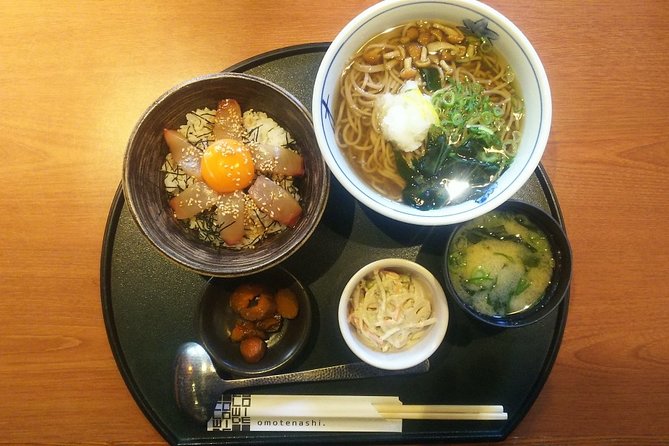
The guide is the key part of this experience. Names associated with past tours include Ron, Russ, Natsumi, Chiyoe, Miki or Micky, and Kevin. Your guide will depend on the date, but the descriptions point to a friendly, informal approach with plenty of room for questions.
Ron has been associated with taking groups to places that are not obvious to a first-time visitor. Russ combined ongoing cultural explanations with stops at market shops and small izakaya-style restaurants. Natsumi added side stories and shrine visits, and Chiyoe made the route personal with narrow lanes, a Buddha statue, takoyaki, and Japanese cakes.
Kevin’s tours are described as personal, especially with very small groups. That is worth noting because the maximum group size is 10, but the actual group can be smaller. If only a few people book, the tour may feel closer to a guided lunch with a local than a standard group excursion.
The guide can also give you more dining suggestions for the rest of your time in Osaka. I would save questions about neighborhoods, foods, and restaurants for the last part of the walk, when you have a better sense of what you enjoyed.
Price, group size, and what you receive
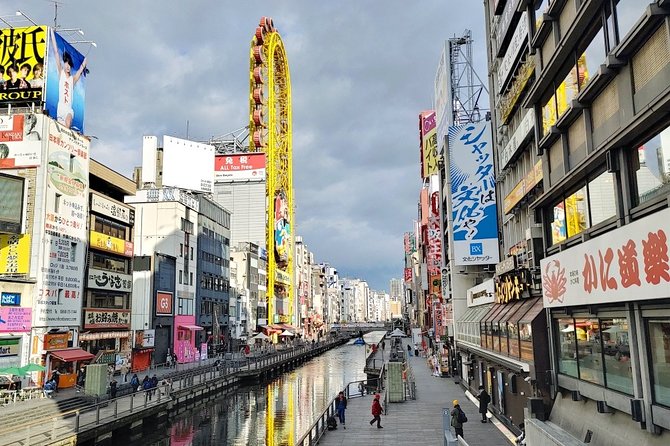
At $209 per person, this is a premium food tour. Four food stops, one drink, and dessert alone do not automatically justify that price, especially since transportation, extra drinks, extra food, hotel pickup, and gratuity are excluded.
The value comes from several things working together:
- You get a planned three-hour route through Dotonbori, Namba, Hozenji Yokocho, Kuromon Market, Misono Building, and Sennichimae.
- You avoid wasting time on restaurants with long lines or uncertain quality.
- You receive cultural context while walking, not just a list of dish names.
- You can ask for further dining advice before the tour ends.
- A group of no more than 10 people is easier to manage than a large bus-style outing.
For a solo visitor, a couple, or a small group that wants help getting oriented, those benefits may be worth the cost. For someone focused mainly on eating as cheaply as possible, the price will be harder to defend.
The tour accepts single participants and is family-friendly. Children must be accompanied by an adult, and a copy of passport information is required for children age 10 and above. The minimum drinking age is 21, though the food tour itself is not presented as a drinking event.
Dietary needs and physical demands
Vegetarian, vegan, pescetarian, shellfish-free, and pork-free options are supported. You should provide your requirements when booking and confirm them with the guide at the start, since food changes with availability and the precise stops may vary.
The tour requires a moderate level of physical fitness. You will walk through busy streets, markets, narrow lanes, and shopping arcades for about three hours, with time standing at food stops. Hotel pickup is not included, so you also need to reach the Dotonbori meeting point independently.
The 11 a.m. start is useful if you want the tour to serve as lunch. It also leaves the evening free for another meal or a return to one of the areas you discovered. Because the tour ends in Sennichimae, you can continue exploring without having to cross the city to get back to your hotel.
Booking and cancellation details
The tour is often booked well ahead, with an average booking point of 42 days before the date. Same-day booking is available, but advance planning is sensible if you need a particular date, dietary arrangement, or schedule.
Free cancellation is available when you cancel at least 24 hours before the local start time. Cancellations or changes inside that window are not accepted for a refund. The experience requires good weather and a minimum number of participants. If the operator cancels for either reason, you can choose another date or experience, or receive a full refund.
Who should book this Osaka food walk?
I would choose this tour for a first visit to Osaka, especially if you want a quick introduction before exploring alone. It suits people who enjoy trying unfamiliar foods but do not want to spend the first afternoon comparing menus, deciphering signs, or waiting in lines.
It is also a good fit for solo visitors and small groups. The limited group size leaves room for conversation, and the guides appear to make the experience personal when attendance is low. Families can join, provided children are accompanied and the passport requirement is handled for older children.
I would be more cautious if you are a very budget-minded eater, dislike walking, or want a fixed menu with guaranteed restaurants. The route and food can change, and the price is substantial for a three-hour outing.
Should you book the Dotonbori daytime food tour?
Book it if you want orientation, local stories, and a planned tasting route in one compact afternoon. The combination of Dotonbori photos, market streets, Hozenji Yokocho, four food stops, dessert, and practical restaurant advice gives you more than a simple snack crawl.
Skip it if your main goal is the lowest possible food cost or if you prefer to choose every restaurant yourself. For everyone else, the best reason to book is the time saved and the chance to see Dotonbori with context, not just neon and queues. Schedule it early in your Osaka stay so you can use the guide’s suggestions for the meals that follow.
FAQ
Where does the Osaka Dotonbori daytime food tour begin?
The tour begins at Starbucks Coffee at Tsutaya Ebisubashi, 1-chome-8-19 Dotonbori, Chuo Ward, Osaka, 542-0071, Japan.
What time does the tour start?
The scheduled start time is 11 a.m.
How long does the tour last?
The experience lasts approximately three hours.
Where does the tour end?
The tour ends in the Sennichimae area of Chuo Ward, Osaka, at postal code 542-0074.
How many food stops are included?
The tour includes local dishes at four food stops, along with one drink and a traditional Japanese dessert.
Is hotel pickup included?
No. Hotel pickup is not included, though it can be arranged for an additional charge.
Are dietary restrictions supported?
Vegetarian, vegan, pescetarian, shellfish-free, and pork-free options are supported. Food can change based on season and availability.
What is the maximum group size?
The tour has a maximum of 10 participants.
Can I cancel for a full refund?
Yes, if you cancel at least 24 hours before the experience start time. Cancellations and changes made less than 24 hours before the start are not accepted for a refund.
More Food in Osaka
- Osaka Local Foodie Walking Tour in Dotonbori and Shinsekai
★ 5.0 · 985 reviews - Osaka: Kuromon Market Food Walking Tour (6 stops, 6 tastes)
★ 4.6 · 272 reviews - Osaka After Dark: Small-Group Night Food Tour (Max 6)
★ 4.5 · 245 reviews - Eat, Drink & Cycle: Osaka Foodie Bike Tour
★ 5.0 · 224 reviews
More Food & Drink in Osaka
- Hungry Osaka Street Food Tour: 15 Dishes & 3 Drinks
★ 4.9 · 694 reviews - Kuromon Market Food Walking Tour in Osaka (6 stops, 6 tastes)
★ 5.0 · 550 reviews - Osaka: Guided Food Tour with 12 Dishes at 4 Local Eateries
★ 5.0 · 533 reviews - Absolute Osaka Food Tour
★ 5.0 · 309 reviews
Just added around Osaka
- Samurai dress-up and shows, plus Tea Ceremony & Calligraphy★ 5.0 · 27 reviews
- Kyoto & Nara Private customized tour with English speaking Guide★ 4.5 · 99 reviews
- Well-balanced BENTO (lunch box) Cooking Class★ 5.0 · 35 reviews
- Volleyball in Osaka & Kyoto with Locals!★ 5.0 · 21 reviews
- Urban Canvas: Osaka Street Art Bike Tour★ 5.0 · 47 reviews
- OSAKA:Feel the Power! Learn Taiko Drum from Professionals★ 5.0 · 28 reviews
- 1.5〜2 Hours Traditional Kintsugi Work Shop in Namba Osaka★ 5.0 · 75 reviews
- Umami Town Street Food Tour★ 5.0 · 120 reviews
Food Market Tours, compared.
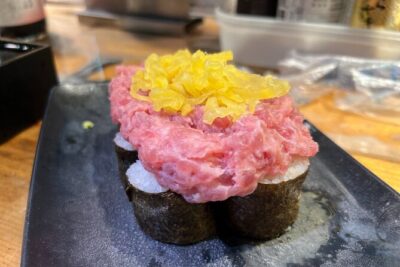
Shinjuku Food Tour (13 Dishes at 4 Local Eateries)
Read our review →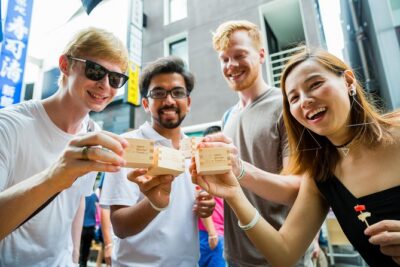
Tokyo Tsukiji Fish Market Food and Culture Walking Tour
Read our review →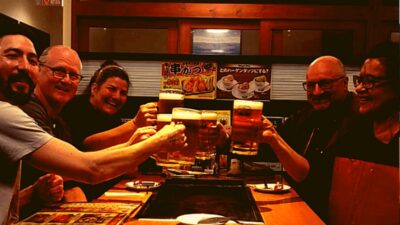
Shinsekai Food Tour with 13-15 Dishes at 5 Eateries
Read our review →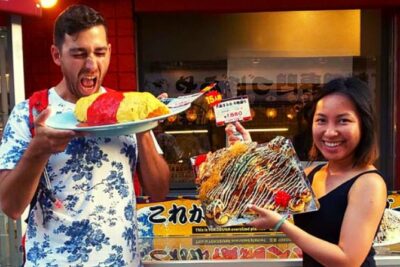
Osaka Food Tour: 13 Dishes at 5 Local Eateries
Read our review →
Shinjuku Food Tour (15 Dishes and 4 Eateries)
Read our review →
Best of Shinjuku: Izakaya Food Tour (4 Stops, 14+ Tastings)
Read our review →
Hungry Osaka Street Food Tour:15 Tastings & 3 Drinks with a Local
Read our review →
Browse the lists this tour appears in