
REVIEW · KIMONO & CULTURE EXPERIENCES
Ninja Experience in Osaka
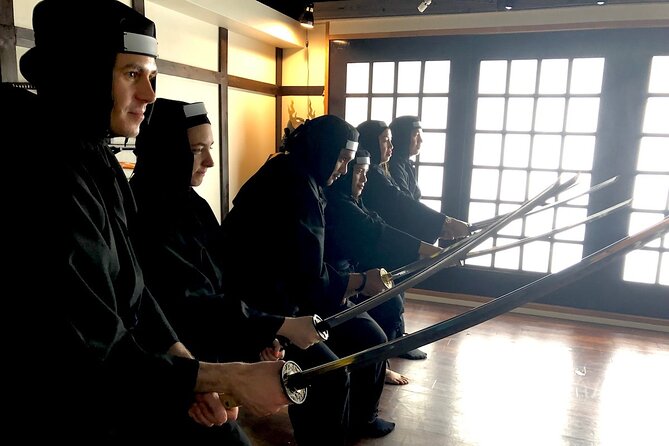
At Ninja-Do, you get a compact lesson in ninja movement, weapons, and pose-ready costume work. Sensei Tsujimura keeps the session lively, explains the role of ninjas as trained spies, and gives each person time to try the activities. The sword lesson and shuriken-star practice are the main draws.
I like the mix of hands-on training and photo time, since you are not simply watching a demonstration. I also like the small maximum group of eight, which can make it easier to receive personal instruction. The main consideration is the short format: one session was reported as closer to 45 minutes than the advertised hour, and the activity is more staged entertainment than serious martial-arts training.
In This Review
- Key points to know before you book
- What happens inside Ninja-Do
- Why the costume matters
- A short lesson with a clear limit
- The instructor and the teaching style
- Is $30.80 a fair price?
- How it fits into an Osaka day
- Who will enjoy Ninja-Do most?
- Practical details that affect your choice
- Final decision: book it for play, not mastery
- FAQ
- Where does the Ninja Experience in Osaka begin?
- Where does the activity end?
- How long does the experience last?
- What activities are included?
- Is a ninja costume included?
- Is the activity suitable for children?
- How many people can join the activity?
- Is the experience available in English?
- Can I cancel for a refund?
Key points to know before you book
- Sensei Tsujimura leads the session: Expect clear English instruction, a friendly manner, and individual attention during parts of the class.
- Costume rental is included: You can dress as a ninja for the lesson and the photo session.
- The program is hands-on: Practice ninja walking, sword handling, and shuriken-star throwing.
- The group is capped at eight: This is a better setup for questions and personal help than a large show.
- Photos are part of the fun: Bring a phone or camera, and if you travel alone, a tripod may be useful.
- The location fits an Osaka sightseeing day: Ninja-Do is near Shinsekai and Abeno Harukas, Japan’s tallest commercial building.
What happens inside Ninja-Do
The experience begins at 忍者堂 Ninja-DoJapan, in the Wakaba Building on the fourth floor at 1-chome 18 Taishi, Nishinari Ward. The meeting point is also where the activity ends, so you do not need to follow a guide through several Osaka neighborhoods.
The setting is built for a short, active class and photo session. You put on a ninja costume, learn a little about ninja life, and then work through a series of simple exercises. The emphasis is on trying the movements yourself, not sitting through a long lecture.
You start with basic ninja walking. This gives the session a playful foundation, but it also connects to the larger idea behind ninja training: control, quiet movement, and awareness. You should expect an introductory version rather than a demanding physical workout.
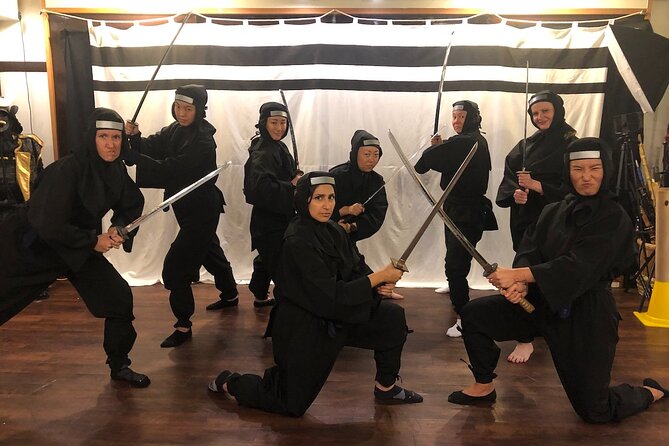
Next comes sword instruction. The lesson focuses on how to hold and use the sword in a controlled ninja style. This is one of the strongest parts of the experience because it gives you a clear skill to practice, rather than asking you only to pose with a prop.
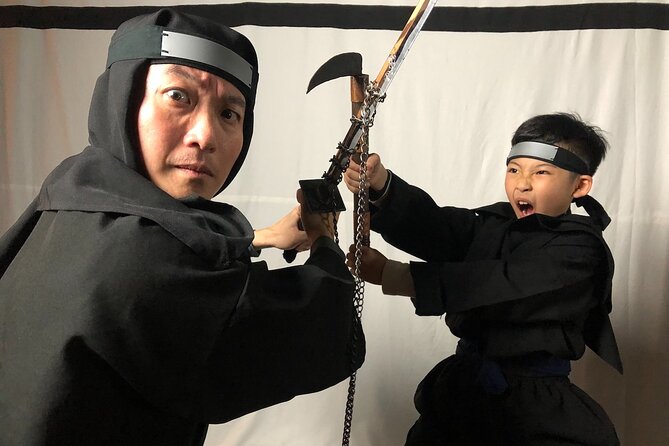
The program also includes shuriken-star practice. Handling the stars adds a weapon-based element without turning the session into a full martial-arts course. You will learn through demonstration and repetition, with the instructor helping participants individually when needed.
The exact balance between instruction, games, explanation, and photography can vary. Some sessions may feel like a brisk class, while others may give more room for pictures and playful practice. That flexibility is useful for families, but anyone expecting an intensive training program should set expectations lower.
More Kimono & Culture Experiences in Osaka
- Osaka: Sumo Show & Experience w/ Optional Kimono & Hot Pot
★ 4.5 · 609 reviews - Samurai Training Experience KENDO in Osaka
★ 5.0 · 515 reviews - OSAKA NIGHT FUSION Japanese Taiko Kabuki Samurai Dance Show
★ 4.8 · 155 reviews
Why the costume matters
The costume rental is included in the price, which makes the experience feel like more than a basic lesson. Once dressed, you have a clear visual role in the session, and the sword and shuriken activities make more sense as part of a themed program.
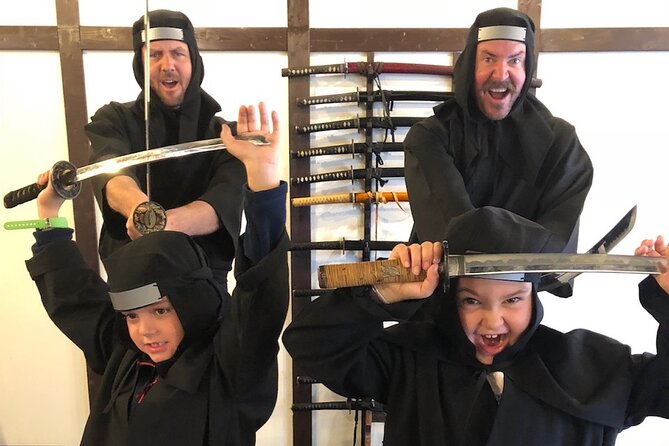
The costumes also add value for children and teenagers. A young child can take part in the physical activities, while a skeptical teenager may find the photo session more appealing than the history talk. The format gives different ages a reason to stay involved.
Photography is not an afterthought here. The instructor takes time for pictures and videos, and the set design and music help create a playful atmosphere. If you are visiting Osaka with family, this can give you a shared souvenir that feels more personal than a standard group photo.
Solo visitors can take part too. One participant used a tripod for photos and videos, so bringing one may help if you want full-body shots and have no companion available. The small group size also makes a solo booking less awkward than joining a large staged show.
A short lesson with a clear limit
The advertised duration is about one hour. That is enough time for a taste of several activities, but not enough for a detailed study of ninja history or advanced technique.
One important point is that the session may finish early. A report of roughly 45 minutes suggests you should not plan your day around a full hour of activity. This is not necessarily a problem if you want a light stop between sightseeing plans, but it matters if you are comparing the experience with longer cultural classes.
The short length is also part of its appeal. You can fit Ninja-Do into a half-day around Shinsekai, Abeno Harukas, or other Osaka plans without giving up most of your afternoon. Families with younger children may appreciate the limited commitment.
I would think of this as a themed introduction, not a course. You learn a few movements, handle a sword, try shuriken stars, hear a little about ninja work, and leave with photos. If you want a serious lesson in Japanese martial arts, this is not the right product.
The instructor and the teaching style
Sensei Tsujimura is central to the experience. He is described as funny, kind, and attentive, with English strong enough to explain the activities clearly. That matters because weapon handling and movement practice are much more enjoyable when instructions are easy to follow.
The teaching style appears personal rather than formal. The instructor gives individual attention during the exercises, helps people with the techniques, and leaves room for questions and pictures. That approach is particularly helpful when a family includes children of different ages and confidence levels.
The tone is friendly and theatrical. You may hear explanations about how ninjas trained their bodies and minds and how they worked as spies. This gives the games some historical context without pretending that a one-hour activity can recreate a traditional ninja school.
That balance is worth noting. The experience uses ninja history as a starting point, but the central goal is participation and entertainment. The class is safe and approachable, yet the sword and shuriken practice still give it more substance than a costume-only photo stop.
Same city, a completely different kind of day:
- Osaka Go Karting Tour with Funny Costume
★ 5.0 · 2,658 reviews - Osaka Castle: Museum and Tower Entry Ticket
★ 4.5 · 2,380 reviews - Osaka: Shinsekai Food Tour with 13-15 Dishes at 5 Eateries
★ 4.8 · 2,204 reviews - Osaka Food Tour: 13 Dishes at 5 Local Eateries
★ 5.0 · 2,149 reviews
Is $30.80 a fair price?
At $30.80 per person, the price is reasonable if you value the combination of costume rental, instruction, weapon practice, and photo time. You are paying for an organized activity with an English-speaking instructor, not simply for access to a costume.
The value is strongest for families. If several people take part, everyone gets the same shared activity, and the instructor’s personal attention helps keep the class moving. Children can enjoy the physical games, parents can join the photo session, and older children can take the sword work more seriously.
For a solo visitor, the value depends on your interest in themed experiences. You may get good personal attention and can set up a tripod, but the class is short. If you mainly want a few costume photos, the price may feel high compared with a simple photo opportunity. If you want to learn and play as well, it makes more sense.
The small group limit of eight helps support the price. You are less likely to be lost in a crowd, and the instructor can spend time with each person. Still, the experience is not a bargain for anyone seeking a long class. The 45-minute possibility makes the value more dependent on how much you enjoy the photo and performance side.
How it fits into an Osaka day
Ninja-Do is in Taishi, in Osaka’s Nishinari Ward, and is near public transportation. The activity begins and ends at the same address, so it is easy to pair with nearby sightseeing once you have located the building.
Shinsekai is one obvious companion stop. Its bright signs, food spots, and old-school entertainment atmosphere provide a natural follow-up to a ninja session. You can also plan time for Abeno Harukas, Japan’s tallest commercial building, which gives the day a very different contrast: costume play at ground level, then city views and modern shopping above.
Because the class is short, do not treat it as a full-day destination. It works best as one stop in a larger Osaka plan. Allow enough time to find the fourth-floor meeting point, but avoid booking it so tightly against another timed attraction that a slightly longer photo session creates stress.
The mobile ticket makes entry simple, and confirmation arrives when you book. The activity ends where it starts, which is useful if you have bags, children, or a fixed plan afterward.
Who will enjoy Ninja-Do most?
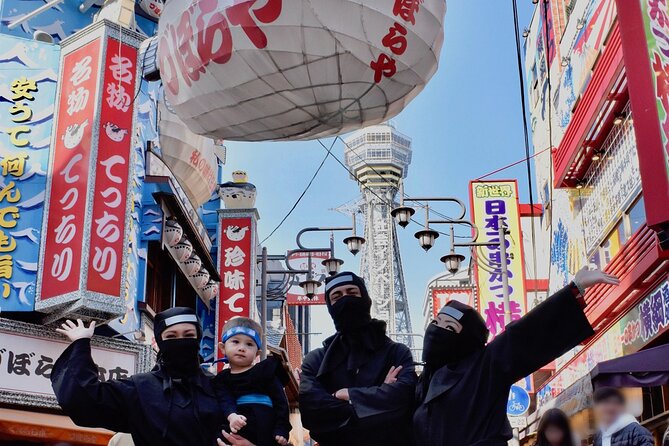
Families are the clearest match. Several children and adults can take part together, and the class does not require prior ninja or martial-arts experience. Younger children are specifically well suited to the friendly teaching style, while older children and teenagers can find a challenge in the sword practice and shuriken activity.
It also works for a first introduction to Japan. The class gives you a small amount of cultural context, a costume, a physical activity, and a lighthearted memory in one hour. It is not a substitute for a museum or historical site, but it can be a good way to begin a Japan trip with something active.
Solo visitors should not rule it out. The instructor can provide one-on-one time, and a tripod can help with self-portraits. You should simply be comfortable with a group activity built around play, performance, and photos.
This is less suitable if you want advanced training, a long historical lecture, or an entirely authentic reconstruction of ninja practice. The activity is staged. That is not a flaw if you understand the purpose, but it is important to know before booking.
Practical details that affect your choice
The maximum group size is eight people. That is small enough to support individual instruction and gives the class a more personal feel. The exact number in your session may be lower, but the available information does not promise a private class.
Most people can participate, and service animals are allowed. The activity is near public transportation, though the supplied details do not specify a station or give step-by-step directions. Confirmation is provided at booking, and the ticket is mobile.
Free cancellation is available if you cancel at least 24 hours before the local start time. If you cancel within 24 hours, you should expect no refund, and changes made inside that window are not accepted.
Wear something that allows comfortable movement under the costume. The program includes walking practice and weapon lessons, so you will get more from it if you can move easily. The supplied details do not state whether changing facilities or storage are available, so keep your belongings manageable.
Final decision: book it for play, not mastery
I would book Ninja-Do if you want a short, friendly Osaka activity with costumes, simple training, and plenty of photo opportunities. Families with children, first-time visitors to Japan, and solo guests who enjoy themed experiences are likely to get the most from it.
The strongest reasons to go are Sensei Tsujimura’s personal teaching style, the sword and shuriken practice, and the chance to take photos in costume. The main limits are the short duration and the staged nature of the training. At $30.80, it is fair value when you treat it as an interactive cultural activity rather than a serious martial-arts lesson.
Book it as a lively break near Shinsekai and Abeno Harukas. If your priority is advanced technique or a long historical program, spend your budget elsewhere. If your priority is a memorable hour with family, a camera, and a little ninja drama, Ninja-Do makes a sensible choice.
FAQ
Where does the Ninja Experience in Osaka begin?
It begins at 忍者堂 Ninja-DoJapan, 1-chome 18 Taishi, Wakaba Building, fourth floor, Nishinari Ward, Osaka, 557-0002, Japan.
Where does the activity end?
The activity ends back at the same Ninja-Do meeting point.
How long does the experience last?
The advertised duration is approximately one hour. One account found the session lasted closer to 45 minutes, so allow for a shorter finish.
What activities are included?
The program includes ninja walking, a sword lesson, shuriken-star practice, and other ninja training activities.
Is a ninja costume included?
Yes. Ninja costume rental is included in the experience.
Is the activity suitable for children?
Yes. Most people can participate, and the friendly instruction makes it suitable for younger children and families.
How many people can join the activity?
The maximum group size is eight people.
Is the experience available in English?
The instructor’s English is described as very good, and the activities are explained during the session.
Can I cancel for a refund?
Yes, you can cancel for a full refund if you cancel at least 24 hours before the local start time. Cancellations or changes made less than 24 hours before the start are not refunded or accepted.
Just added around Osaka
- Samurai dress-up and shows, plus Tea Ceremony & Calligraphy★ 5.0 · 27 reviews
- Kyoto & Nara Private customized tour with English speaking Guide★ 4.5 · 99 reviews
- Well-balanced BENTO (lunch box) Cooking Class★ 5.0 · 35 reviews
- Urban Canvas: Osaka Street Art Bike Tour★ 5.0 · 47 reviews
- OSAKA:Feel the Power! Learn Taiko Drum from Professionals★ 5.0 · 28 reviews
- Volleyball in Osaka & Kyoto with Locals!★ 5.0 · 21 reviews
- 1.5〜2 Hours Traditional Kintsugi Work Shop in Namba Osaka★ 5.0 · 75 reviews
- Umami Town Street Food Tour★ 5.0 · 120 reviews
Kimono & Culture Experiences, compared.

Kyoto Geisha Walking Tour: Gion District & Hidden Gems
Read our review →
Gion Magical Night Walking Tour with Geisha Trivia
Read our review →
Gion Geisha District Walking Tour – Stories of Geisha
Read our review →
Best of Kyoto: Gion, Geisha, Pagodas & Cobblestones
Read our review →

Kyoto Gion Geisha District Walking Tour – The Stories of Geisha
Read our review →
Browse the lists this tour appears in