
REVIEW · WORKSHOPS
Mochi Sweets Making Class in Tokyo
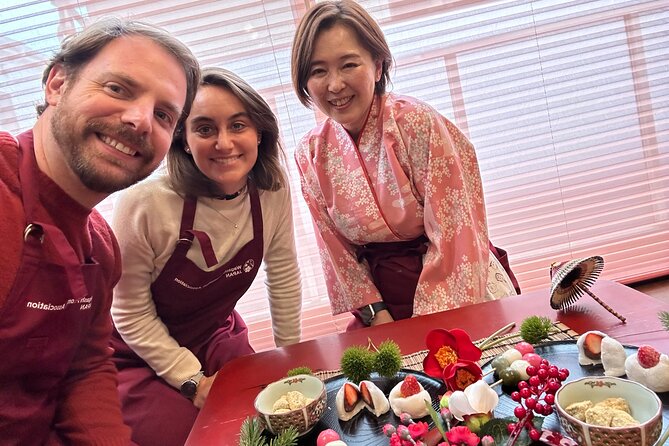
Mochi is far more than a chewy sweet, and Satoko’s class gives you a hands-on way to understand why it matters in Japan. In about 90 minutes, you’ll make several kinds of mochi, learn how they connect to Japanese customs, and sit down with green tea or hojicha to taste your work.
I like two things right away: the recipes use easy-to-find ingredients, and Satoko sends you home with methods you can repeat for family and friends. I also like the home setting in Ota City, where you can pair the class with local shops, a shrine, cafes, or a public bath.
The main consideration is location. You’ll leave central Tokyo for a quiet residential neighborhood, about 15 minutes by train or car, and the home has two cats who stay in another room. Anyone with a strong cat allergy should choose another activity.
In This Review
- Key points to know before booking
- What happens during the 90-minute mochi class
- Why Satoko’s teaching style matters
- From daifuku to isobe-mochi: what you’ll make
- Tasting with green tea or hojicha
- A quiet Ota City neighborhood, not central Tokyo
- Group size, families, and private lessons
- Vegetarian and vegan details
- The cat allergy warning is important
- Is $75.12 good value?
- Cancellation and planning notes
- Who should book this mochi class?
- Should you book the Mochi Sweets Making Class in Tokyo?
- FAQ
- Where does the mochi-making class take place?
- How long does the activity last?
- How far is the class from central Tokyo?
- What kinds of mochi will I make?
- Is mochi ice cream included?
- Do I need to bring cooking equipment?
- Is the class suitable for vegetarians or vegans?
- Are children and solo participants allowed?
- What is the cancellation policy?
Key points to know before booking
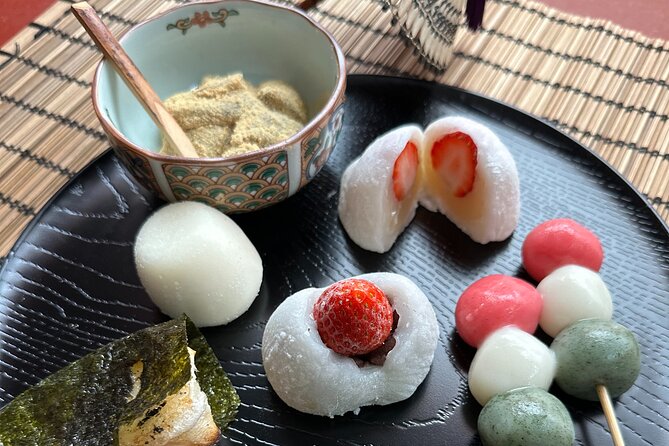
- Four mochi styles in one class: Make strawberry daifuku, dango, warabi-mochi, and isobe-mochi, with other fruit used outside strawberry season.
- Satoko teaches in clear, patient English: The class is built around demonstrations, practice, and plenty of time to ask questions.
- A real home setting in Ota City: You get a calmer view of Tokyo life than you would in a busy commercial cooking studio.
- Eat your creations or take them away: A special box is provided, along with mochi ice cream tasting and a downloadable recipe.
- Good for families and vegetarians: Plant-based ingredients are used, and vegan options are available.
- Strong value at $75.12: The fee includes ingredients, tools, apron, drinks, takeaway packaging, instruction, and photos and videos from the class.
What happens during the 90-minute mochi class
The lesson begins with an introduction to mochi, its place in Japanese tradition, and the different ways people eat it. This opening matters because mochi can look simple, but its role changes with the season, the celebration, and the recipe.
You’ll then work with glutinous rice flour rather than pounding cooked rice in the large wooden style often seen at festivals. That makes the process easier to repeat at home, and it keeps the class practical for a first attempt.
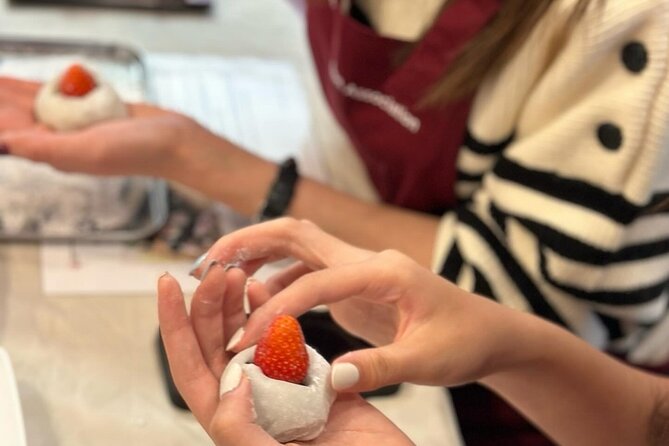
Satoko demonstrates each stage before you try it. You’ll learn how to prepare and shape the mochi, work with fillings, and handle the sticky texture without turning the table into a small white disaster. The pace is step by step, so you do not need previous cooking experience.
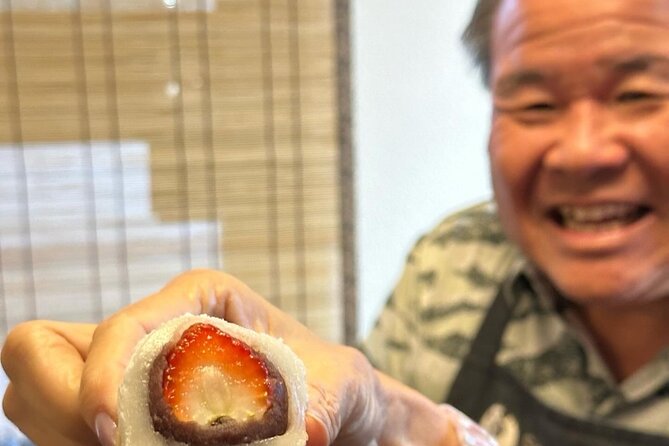
The menu includes strawberry daifuku when strawberries are in season. This is the soft mochi parcel wrapped around fruit and filling, and it is likely to be the most familiar style to anyone who has visited a Japanese sweets shop.
Outside strawberry season, the fruit may change to pineapple, kiwi, or another available option. That is useful if you want a recipe you can adapt at home rather than one tied to a single short season.
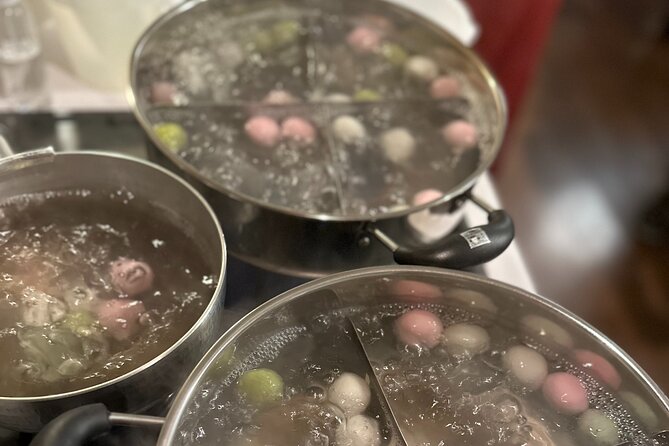
You’ll also make several flavors of dango, the round mochi balls served on skewers. Warabi-mochi gives you a different texture and style, while isobe-mochi brings a savory note to a class that otherwise leans sweet.
The range is one of the best parts of the lesson. You are not making one dessert, packing it away, and leaving. You get a small tour of mochi’s many forms, from fruit-filled sweets to skewered treats and a savory preparation.
A few more Tokyo trips to weigh up
- Matcha Making Class in Tokyo with Authentic Japanese Sweets Set
★ 5.0 · 744 reviews - Tokyo: Matcha Making Experience with Mochi Sweets in Asakusa
★ 4.9 · 388 reviews - Make Traditional Nerikiri Sweets & Matcha experience in Shibuya
★ 5.0 · 130 reviews
Why Satoko’s teaching style matters
Satoko is the host and instructor, and clear English is one of the practical strengths of the class. The lesson includes cultural background, cooking technique, and conversation, so you can ask about both the food and the customs around it.
The teaching style is patient and hands-on. You are shown what to do, then given the chance to try it yourself. That setup works well for children, couples, solo participants, and families who want an activity that does not depend on athletic ability or a high level of Japanese.
Several details make the lesson feel personal. Satoko takes portrait photos and videos during the class, and these are provided for your special experience. That is a nice bonus for a food activity, since your hands will often be covered in flour or filling and you may not have time to take your own pictures.
A Japanese gift is also included as a souvenir. The exact gift is not specified, so I would treat it as a pleasant extra rather than a reason to book.
From daifuku to isobe-mochi: what you’ll make
Strawberry daifuku is the headline sweet, but the seasonal fruit change is worth noting. Pineapple and kiwi give you different flavors and textures, and they show how flexible the basic mochi method can be.
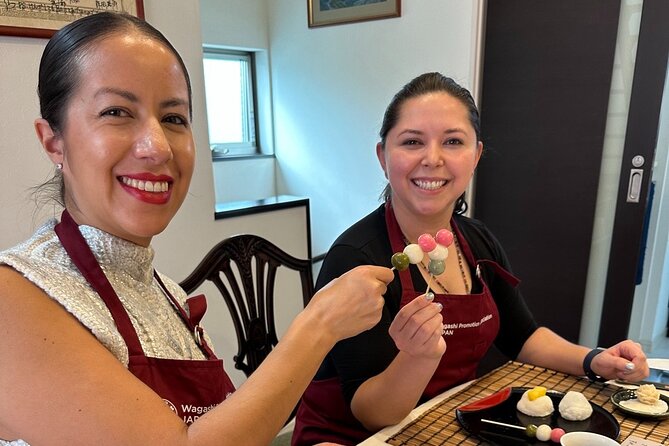
Dango adds a fun visual change. The mochi is shaped into balls and placed on skewers, with several flavors included. This part should appeal to children, though the sticky dough means younger children will need close help from an adult.
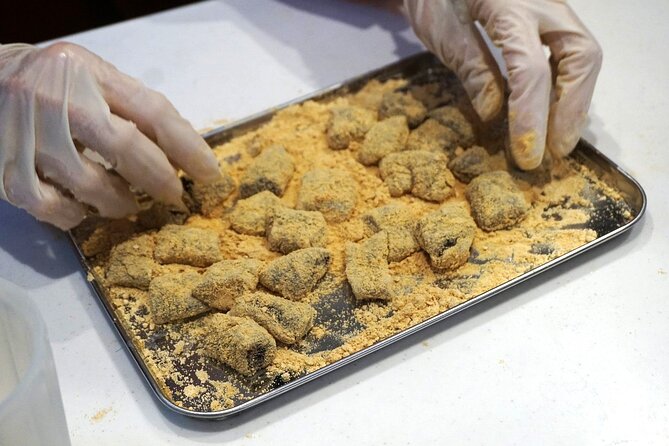
Warabi-mochi is another useful comparison. It is not simply a repeat of daifuku in a new shape. Its texture and presentation differ, helping you understand that mochi covers a family of Japanese sweets rather than one single recipe.
Isobe-mochi gives the menu a savory edge. It is a good reminder that mochi is not limited to dessert. The class also introduces different ways to eat mochi, which gives the cultural lesson a useful connection to the cooking.
You can download the mochi ice cream recipe too. The class includes tasting mochi ice cream, but the precise process for making it may be covered through the downloadable recipe rather than as one of the main hands-on items.
Tasting with green tea or hojicha
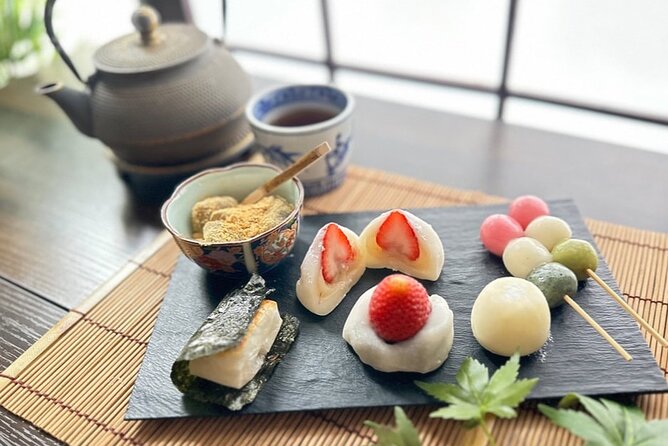
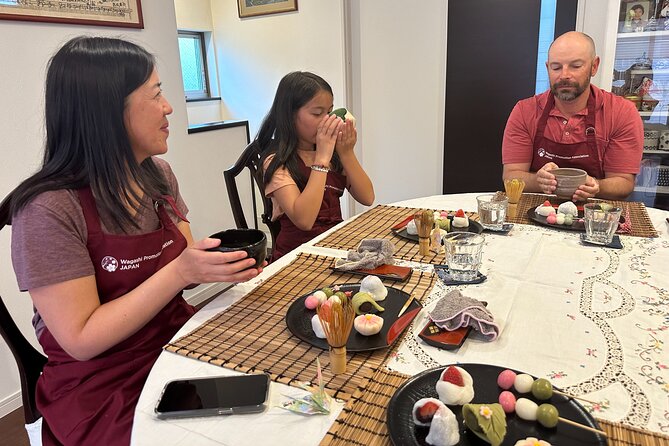
After the making comes the best reward: eating what you have prepared. You can taste your creations with Japanese green tea or hojicha, a roasted green tea with a warmer, toastier flavor.
This shared tasting turns the class into more than a cooking demonstration. You get to compare the textures and flavors while they are fresh, then decide what you prefer before packing some sweets for later.
A special box is supplied if you want to take the mochi with you. Since mochi is soft and perishable, you should treat the box as a short-term takeaway, not as a way to carry sweets around for the rest of a long sightseeing day.
Drinking water is also included. Aprons, hand towels, and special wagashi-making tools are provided, so you do not need to arrive with cooking equipment or a change of clothes.
Same city, a completely different kind of day:
- Mt Fuji and Hakone 1-Day Bus Tour Return by Bullet Train
★ 5.0 · 26,383 reviews - 1-Day Tokyo Bus Tour
★ 5.0 · 14,250 reviews - Tokyo: TOKYO SKYTREE® Admission ticket
★ 4.5 · 11,192 reviews - Tokyo: teamLab Planets TOKYO Digital Art Museum Entry Ticket
★ 4.6 · 9,779 reviews
A quiet Ota City neighborhood, not central Tokyo
The class takes place at 20-15 Kitaminemachi, Ota City, Tokyo 145-0073. The setting is a private residence in a quiet neighborhood, about 15 minutes from central Tokyo by train or car.
That change of setting is part of the appeal. You are not only learning a recipe. You are seeing a calmer side of Tokyo, where local shops, supermarkets, cafes, a shrine, and a famous public bath are close enough to visit before or after the lesson.
The activity ends back at the meeting point, and private transportation is not included. You will need to arrange your own way there and back. Because the address is in a residential area, allow enough time to find the home rather than cutting your arrival close.
The location makes this a good choice if you have already seen the big central districts or want to add a neighborhood stop to your Tokyo plan. If your schedule is packed around Shibuya, Asakusa, or Tokyo Station, the extra movement may make the class less convenient.
Group size, families, and private lessons
The activity is described as private, with only your group taking part. During the off-peak season, groups of more than three people receive a private lesson at no extra cost.
That matters because mochi shaping is easier when the instructor can watch what you are doing. A large class can leave you waiting for help, while a small or private lesson lets Satoko adjust the pace.
The class is suitable for solo participants and families. Children can take part in the shaping and decorating, while adults can focus on the technique and cultural background. The hands-on format also gives families something to do together without splitting into different ability levels.
Group discounts are available. The exact discount is not provided, so check the price for your party before booking.
Vegetarian and vegan details
The recipes use plant-based products and ingredients that are easy to find in your own country. Vegetarian participants can join, and vegan options are available.
That is a strong point for anyone who finds Japanese sweets difficult to assess because fillings and toppings are not always obvious. You should still confirm your needs when booking if you have a strict dietary requirement, since the available fruit and menu details can change by season.
The class is especially useful for plant-based cooks because it focuses on techniques you can repeat without searching for specialist ingredients. You get to learn how the flour behaves, how the sweets are shaped, and how to make several styles from a fairly simple base.
The cat allergy warning is important
Two short-haired cats live in the home. They stay in the bedroom during the lesson, but the class is not recommended for anyone with a strong cat allergy.
This is not a small footnote. The activity takes place in a private residence, so people with serious allergies should not assume that keeping the cats in another room removes the risk.
For everyone else, the home setting is part of what makes the lesson feel relaxed and personal. You should simply weigh that benefit against your own comfort and health needs.
Is $75.12 good value?
At $75.12 per person, the class is not the cheapest food activity in Tokyo, but the fee covers more than a single recipe demonstration. You receive instruction, ingredients, apron rental, hand towel, special tools, drinking water, a takeaway box, a Japanese gift, and tea with your tasting.
You also make several kinds of mochi rather than one item. Add the downloadable recipes and the chance to receive photos and videos from the class, and the price makes sense for a small private activity.
The value is strongest if you want to recreate the sweets at home. A short demonstration followed by one snack would be less useful, but this class gives you a set of techniques and menu ideas to use again.
I would compare it with the cost of a standard Tokyo attraction, then ask what kind of memory you want. If you want a famous view or a major museum, spend elsewhere. If you want a personal food lesson and a souvenir you can eat, this is a fair use of half a day, including transport and neighborhood exploring.
The class is often booked about 42 days in advance. That suggests you should reserve early, especially if you need a particular date or are visiting with family.
Cancellation and planning notes
You receive confirmation when you book, and the activity is near public transportation. Free cancellation is available if you cancel at least 24 hours before the start time.
Cancellations made less than 24 hours before the start time are not refunded, and late changes are not accepted. The cut-off follows Tokyo local time, so check the clock carefully if you are booking from another country.
The class lasts about 1 hour and 30 minutes. Add your journey to Ota City and time for local exploring, and it works best as a planned neighborhood outing rather than a quick stop squeezed between two central attractions.
Who should book this mochi class?
I would recommend it to you if you want to make Japanese food with your own hands, learn why mochi matters, and leave with recipes you can use at home.
It is a particularly good fit for:
- Families looking for a shared activity
- Solo visitors who prefer a friendly lesson to a large group tour
- Couples who enjoy food and local culture
- Vegetarians and people seeking vegan options
- Anyone curious about Japanese sweets beyond packaged souvenirs
- Repeat Tokyo visitors who want a quieter neighborhood experience
You may want to skip it if you have a strong cat allergy, dislike sticky hands-on cooking, or have no time to travel outside central Tokyo. It is also not the right choice if you want a formal wagashi demonstration where you only watch. Here, you are expected to participate.
Should you book the Mochi Sweets Making Class in Tokyo?
Book this class if you want an intimate, practical look at Japanese food culture. Satoko’s clear English, patient instruction, personal home setting, and broad menu give you more than a quick photo opportunity.
The best reason to go is that you can make the sweets again. Strawberry daifuku, dango, warabi-mochi, and isobe-mochi become part of your own cooking memories, not just something you sampled once in Tokyo.
Just plan the neighborhood journey, check the cat allergy issue, and leave enough time to enjoy Ota City before or after the lesson. For families, food lovers, and anyone who values a personal cultural exchange, $75.12 is a reasonable price for this well-packed 90-minute activity.
FAQ
Where does the mochi-making class take place?
The class takes place at a private residence at 20-15 Kitaminemachi, Ota City, Tokyo 145-0073, Japan.
How long does the activity last?
The class lasts approximately 1 hour and 30 minutes.
How far is the class from central Tokyo?
The residential neighborhood is described as about 15 minutes from central Tokyo by train or car.
What kinds of mochi will I make?
The menu includes strawberry daifuku, dango in several flavors, warabi-mochi, and isobe-mochi. Outside strawberry season, fruits such as pineapple or kiwi may be used.
Is mochi ice cream included?
You can taste mochi ice cream during the class, and a mochi ice cream recipe is available for download.
Do I need to bring cooking equipment?
No. An apron, hand towel, special wagashi-making tools, drinking water, and a takeaway box are provided.
Is the class suitable for vegetarians or vegans?
The recipes use plant-based products, the class is suitable for vegetarians, and vegan options are available.
Are children and solo participants allowed?
Yes. The class is suitable for solo participants and families, including groups with children.
What is the cancellation policy?
You can cancel for a full refund up to 24 hours before the experience start time. Cancellations or changes made less than 24 hours before the start time are not accepted for a refund.
Just added around Tokyo
- Private Memorable Tokyo Tour with English Speaking Driver★ 5.0 · 30 reviews
- Private Tokyo Custom Full-Day Tour by Chartered Vehicle★ 5.0 · 16 reviews
- Private Sightseeing to Mt Fuji and Hakone with English Driver★ 5.0 · 51 reviews
- Tokyo Photography Masterclass – Private Photography Lesson★ 5.0 · 25 reviews
- Private Mt. Fuji Day Trip from Tokyo with English-Speaking Driver★ 5.0 · 33 reviews
- 4 Day Tour – Mount. Fuji, Tokyo, Hakone, Kamakura and Yokohama★ 5.0 · 19 reviews
- Private Tokyo Custom Half-Day Tour by Chartered Vehicle★ 4.5 · 13 reviews
- Private Unforgettable Mt Fuji Tour with English Speaking Driver★ 5.0 · 142 reviews
Workshops, compared.
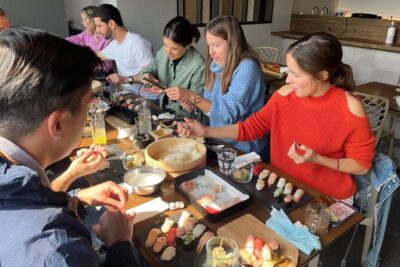
Sushi Making Tokyo Roll and Authentic Japanese Sushi Class
Read our review →
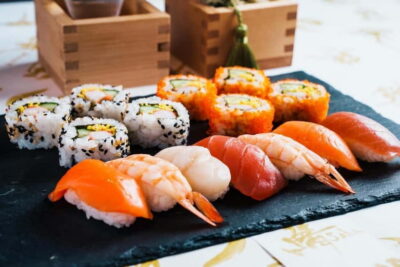
Roll and Authentic Sushi Making Class in Asakusa
Read our review →
Ramen Cooking Class at Ramen Factory in Kyoto
Read our review →
Sushi Making Class in a Happi Coat near a Famous Spot
Read our review →

Sushi Making Osaka Roll and Authentic Japanese Sushi Class
Read our review →
Tokyo Sushi Making Class in Tsukiji with Professional Chef
Read our review →Browse the lists this tour appears in