
REVIEW · CYCLING TOURS
Kyoto Shogun Cycling Tour
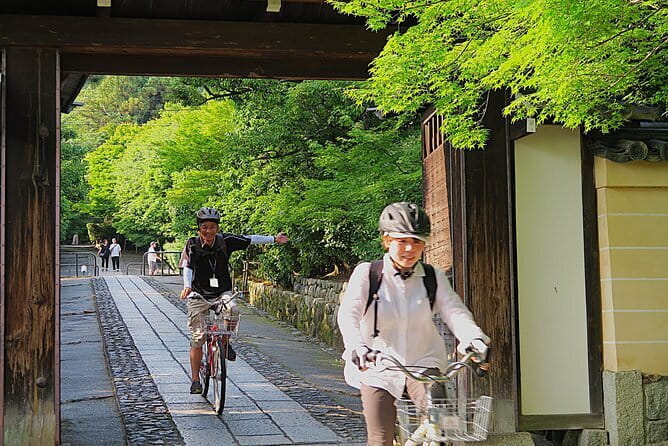
Kyoto’s shogun story makes far more sense when you move through it by bicycle. This route starts near Wara Tenjin in the north and rolls downhill toward central Kyoto, linking Kinkakuji, Toji-in, and Nijo Castle without making you spend the morning shuffling between buses.
I like the small private groups, limited to six people per guide, and the way the tour mixes famous sights with the quieter Toji-in Temple. I also like the practical rain plan: you can keep riding in a poncho or switch to walking with public transport included. The main consideration is price, $153.50 per person, which is fair for a private guided outing but high if you only want a bicycle and basic sightseeing.
In This Review
- Key points to know before you book
- Why this bicycle route works in Kyoto
- Kinkakuji: a dramatic opening at the Golden Pavilion
- Toji-in: a slower hour with Zen design
- Nijo Castle: where the shogun story reaches its finish
- What the guides add to the ride
- Price, group size, and what you receive
- Rain, heat, and the physical side of the ride
- Who should book the Kyoto Shogun Cycling Tour
- My call: a worthwhile private morning for the right visitor
- FAQ
- Where does the Kyoto Shogun Cycling Tour start?
- Where does the tour end?
- How long does the tour last?
- Which attractions are included?
- Is bicycle use included?
- Is matcha included?
- How many people can join one guide?
- Can children join the tour?
- What happens if it rains?
Key points to know before you book
- The route runs downhill from northern Kyoto toward Kyoto Station, making the ride approachable for many people.
- Kinkakuji, Toji-in, and Nijo Castle admissions are included, so the tour covers three major cultural stops.
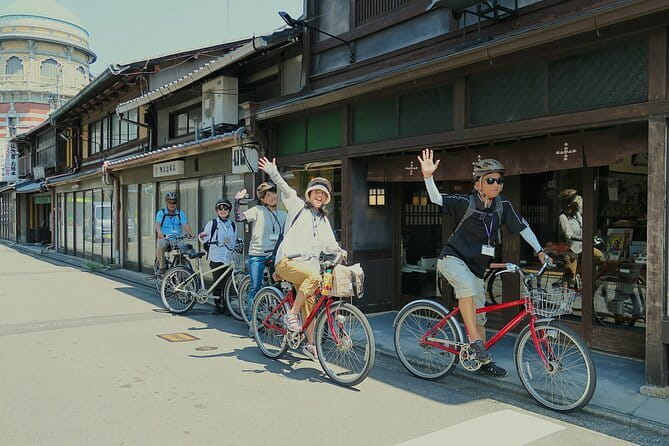
- The group is private and small, with two to six people per guide and an extra guide available for seven to 12.
- Guides such as Seiya, Makoto, Nozomi, and Yasunobu have been praised for clear English, local knowledge, humor, and family-friendly attention.
- Rain does not automatically cancel the ride, since you can use free rainwear or take buses and the metro.
- Children must be at least 10 years old, 145 centimeters tall, and able to ride safely on roads without help.
Why this bicycle route works in Kyoto
Kyoto can be tiring to sightsee on foot. The major temples are spread across different parts of the city, buses can be crowded, and a taxi ride gives you no sense of how the neighborhoods fit together. A bicycle changes that rhythm. You cover ground, notice side streets, and arrive at each temple with a bit more connection to the city around it.
This is not a high-speed cycling challenge. The route is described as an easy downhill ride, and the three main stops receive about an hour at Kinkakuji, an hour at Toji-in, and 90 minutes at Nijo Castle. That timing tells you what this tour is really about: guided cultural sightseeing with a bicycle as the link between the sights.
The experience is private, so your guide can spend more time answering your questions and adjusting the pace than on a large group outing. The small size also matters on narrow lanes and inside temple grounds. A group of two to six people feels much more manageable than a bicycle convoy.
The ride begins at Wara Tenjin mae in the Kinugasa area of northern Kyoto and ends at the Kyoto Cycling Tour Project terminal near Kyoto Station. That point-to-point design is useful. You do not have to pedal back to the starting area after the final castle visit, and you finish near one of Kyoto’s main transport hubs.
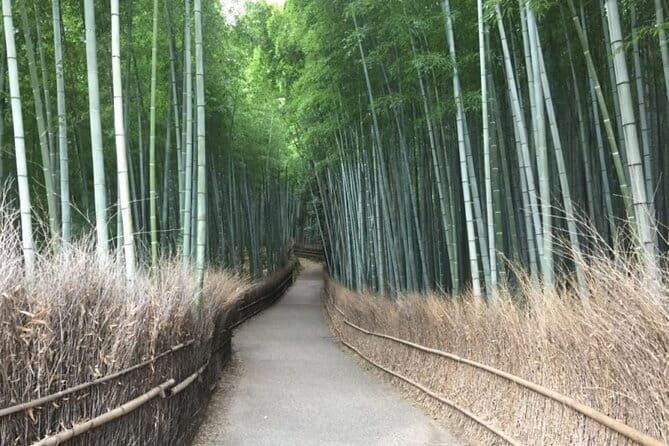
The route is not a complete survey of Kyoto. It focuses on the city’s shogun-era story, with temples and a castle doing most of the historical work. If your priority is Arashiyama bamboo, Gion, or the Imperial Palace, you should check the exact route before booking. Some guide-led Kyoto cycling outings have included those places, but this experience specifically centers on the three listed stops.
A few more Kyoto trips to weigh up
- Hidden Kyoto E-Biking tour
★ 5.0 · 1,843 reviews - Bike Tour Exploring North Kyoto plus Lunch
★ 5.0 · 1,087 reviews - Arashiyama Bamboo Forest & Hidden Gems Bike Tour (Early Bird)
★ 5.0 · 613 reviews
Kinkakuji: a dramatic opening at the Golden Pavilion
Kinkakuji, also called the Golden Pavilion, is the most instantly recognizable stop on the ride. The upper levels of the temple building are covered in gold leaf, and the structure sits beside a carefully arranged pond and garden. You enter with your guide and walk through the grounds rather than simply stopping for a quick photograph.
The setting gives the guide room to explain the building’s connection to the Ashikaga Shoguns. Kinkakuji was once tied to the center of government under the Ashikaga regime, so the stop introduces the political theme that continues through the rest of the morning.
You should allow the full hour here. The pavilion itself is compact, but the surrounding garden is the point. The walk lets you see the temple from several angles and take in the paths, water, and traditional design. Your guide can add context that a photograph and a short sign cannot provide.
The drawback is popularity. Kinkakuji is one of Kyoto’s best-known sights, so it is not the quietest stop on this route. The value comes from having a guide help you understand what you are seeing and from arriving by bicycle instead of arranging this first leg on your own.
Do not expect to go inside the Golden Pavilion itself. The experience described here includes entry to the grounds and a walk around the temple building and gardens. That is still enough for a strong visit, but anyone hoping to explore an interior should set expectations accordingly.
Toji-in: a slower hour with Zen design
Toji-in changes the mood. After the sparkle and crowds associated with Kinkakuji, this temple offers a quieter look at Kyoto’s religious and artistic traditions. It is connected with the Ashikaga family and serves as their resting place, giving the guide another way to explain the people behind the shogun government.
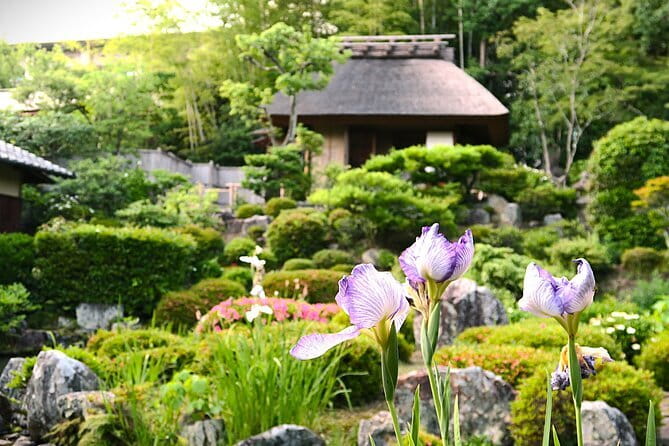
The tour includes the temple interior, its garden, and a small tea house. This is where the idea of wabi-sabi, the Japanese appreciation of simplicity, age, and imperfection, becomes easier to understand. Instead of treating the garden as decoration, your guide can point out how the spaces are shaped for contemplation.
Plan to slow down here. The temple hall and garden reward a calm visit, and the one-hour stop gives enough time to look closely rather than rush through. The atmosphere is an important part of the experience. Toji-in is not merely another historic building between two famous attractions.
This may be the most satisfying stop for you if you prefer gardens, quiet rooms, and traditional design to grand architecture. It also gives the tour a better balance. Kinkakuji delivers visual drama, while Toji-in supplies stillness and a more restrained aesthetic.
The matcha service is not included. That detail matters because the tea house may suggest a tea experience, but you should not assume a bowl of matcha is part of the tour price. The temple visit and admission are included, while the tea service is an extra.
Nijo Castle: where the shogun story reaches its finish
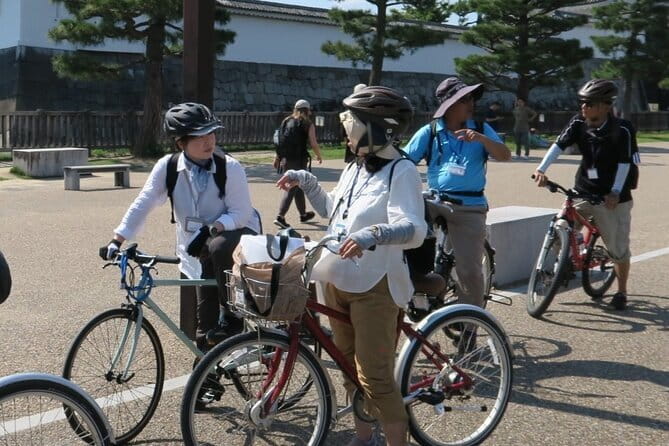
Nijo Castle gives the tour its clearest political ending. Built as the Kyoto residence of the Tokugawa Shoguns, it is linked to the final stage of shogun rule and the events that helped bring that era to a close.
Your guide takes you through the castle grounds, where ornamental carvings and grand buildings show the power and wealth of the Tokugawa government. The castle is less about one perfect view and more about understanding how authority was displayed through architecture, gardens, gates, and formal spaces.
The 90-minute visit is the longest stop, and that feels right. There is more ground to cover, and the castle’s history needs time to land. A guide can connect the earlier Ashikaga sites with the later Tokugawa period, helping you see that shogun rule was not one single chapter but a long sequence of political eras.
Nijo Castle is also a good final stop because it moves the story from religious and family memorials into government and power. By the time you finish, the route has shown you three different expressions of Kyoto’s past: a shogun-linked pavilion, a temple tied to the Ashikaga family, and a fortress residence associated with the Tokugawa rulers.
The castle visit does mean more walking after the bicycle ride. If you are hoping for a nonstop pedal through Kyoto, this is not that kind of outing. It is a cycling tour built around substantial temple and castle visits, so comfortable shoes matter.
Same city, a completely different kind of day:
- PERFECT KYOTO 1-Day Bus Tour
★ 5.0 · 13,518 reviews - Kyoto: Fushimi Inari, Kinkakuji, Bamboo Grove 1 Day Bus Tour
★ 4.8 · 4,316 reviews - Kyoto: Tea Ceremony in a Traditional Tea House in Kiyomizu
★ 4.9 · 3,519 reviews - Kyoto Geisha Walking Tour: Gion District & Hidden Gems
★ 4.7 · 3,273 reviews
What the guides add to the ride
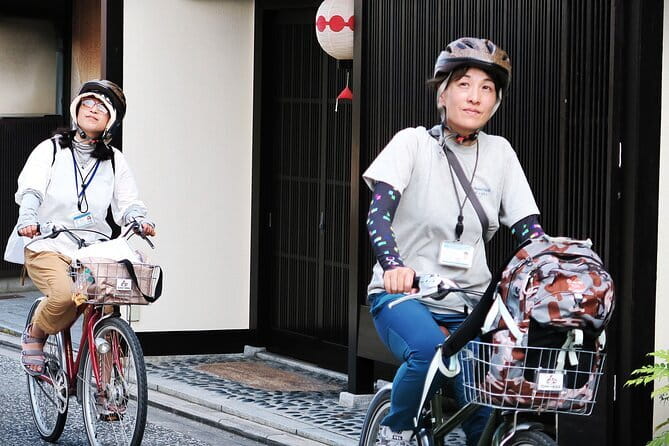
The guide is the biggest variable in a tour like this, and the available feedback points to a strong pattern. Seiya has been praised for polished English and for keeping a 12-year-old engaged. Makoto has been described as personable and willing to spend extra time when a local festival added something worthwhile to the day.
Nozomi has led rides that included clear explanations of Shinto and Buddhist temples, Gion, and the Imperial Palace. Yutaka Kaneda has taken groups along small streets, river routes, geisha districts, and other Kyoto sights. Yasunobu Yagyu has been singled out for insider tips and a broad grasp of Kyoto’s people, culture, and past.
Those names do not mean you can select a particular guide when booking. They show the range of guiding styles associated with the company. You may get a guide who focuses on history, one who keeps the ride light and social, or one who adjusts the route around something happening locally.
The most useful thing to expect is interpretation, not simply navigation. A guide can explain why one temple feels formal and another feels spare, connect the Ashikaga and Tokugawa periods, and help you understand the difference between Shinto and Buddhist sites. That is where the $153.50 price begins to make sense.
English ability has also been a strong point. If you are traveling with children or with family members who do not usually enjoy long history talks, the guide’s personality matters. The ride gives you movement and conversation, rather than three silent visits with a guidebook in hand.
Price, group size, and what you receive
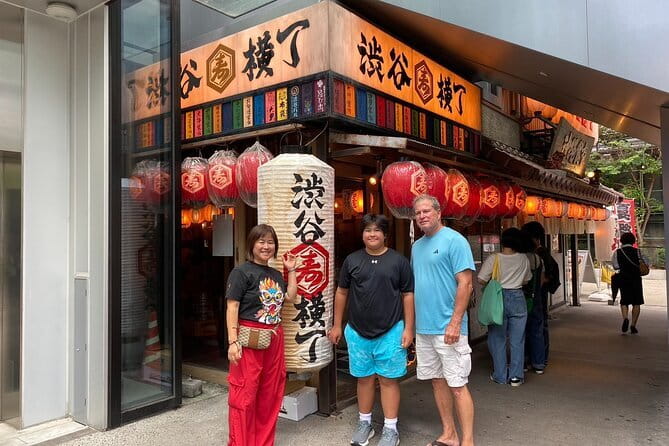
At $153.50 per person, this is a premium half-day activity. You receive a bicycle, helmet, rainwear, a private guide, and admission to Kinkakuji, Toji-in, and Nijo Castle. Those inclusions make the price easier to justify for couples or small families who value a private experience.
The cost is harder to defend if you already know Kyoto well, are comfortable using public transport, and mainly want to cycle independently. In that case, the main purchase is the guide’s time and historical explanation, not the bicycle itself.
The private format is limited to two to six people per guide. One-person bookings are not accepted. Groups of seven to 12 can be accommodated with an additional guide, which keeps the ride from becoming unwieldy.
For a family, the value can be good because the guide can adjust explanations and pace. For a larger group, splitting the cost across several people may make the arrangement more appealing, though an extra guide is needed for seven or more participants.
The tour ends at the Kyoto Cycling Tour Project terminal near Kyoto Station. That is a practical finish if you plan to continue sightseeing in central Kyoto, catch a train, or return to your accommodation from the station area.
Rain, heat, and the physical side of the ride
The tour operates in rain. You have two choices: continue by bicycle with a free rain poncho, or switch to a walking tour using buses or the metro, with that public transport included in the tour fee.
That is a useful policy in Kyoto, where a wet morning can become a serious nuisance. It also means you should not assume the bicycle portion will happen exactly as planned in poor weather. If you care strongly about riding, ask how the rain option will be handled when you book.
The route is described as easy and downhill, but it still requires safe road cycling. Children must be at least 10 years old, at least 145 centimeters tall, and able to ride without assistance. Most people can participate, but the age and height rules are clear for a reason.
Heat is another factor. A previous summer ride was enjoyed despite very hot conditions, but you should take that as a warning to bring water, wear light clothing, and pace yourself during the temple walks. The bicycle may reduce the effort between sights, but it does not remove the heat from the day.
Bikes, helmets, and rainwear are provided. The details of the bicycles are not specified, so you should not book this expecting a particular style or high-performance equipment. This is city sightseeing on a practical bicycle, not a sporting excursion.
Who should book the Kyoto Shogun Cycling Tour
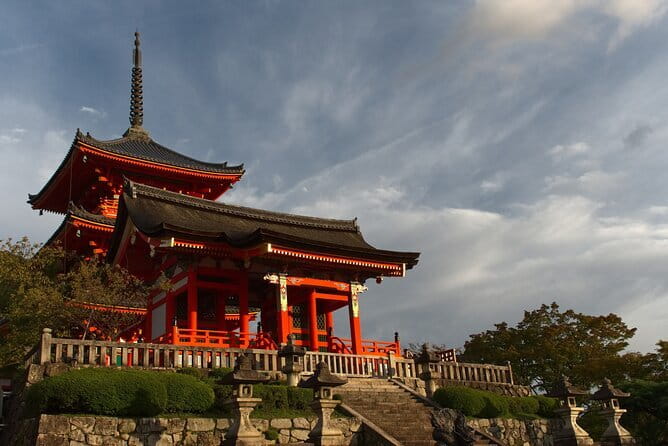
I would consider this tour a strong fit if you want Kyoto’s major sights explained in a clear historical sequence. It works especially well for first-time visitors who find the city’s layout confusing and want to see more than one district without spending the morning waiting for transport.
Families with older children may also like it. The route has enough movement to break up the temple visits, and the guides have experience keeping younger riders involved. The minimum age and height requirements should be checked before you commit.
It is also a good choice for couples or friends who value a private guide and do not want to join a large group. The 3.5-hour length gives you a substantial morning without consuming the whole day.
I would hesitate if you dislike cycling on roads, have trouble with extended walking, or want a slow tea ceremony. Matcha is not included, and the temple and castle visits involve walking. I would also hesitate if your main Kyoto goal is Arashiyama, bamboo, or Gion, since those places are not the stated focus of this route.
The cancellation information needs care. One set of terms says you can request a refund by 18:00 Japan time at least three days before the tour, while another says the experience is non-refundable and cannot be changed. Because those terms conflict, confirm the applicable policy with KCTP before paying.
My call: a worthwhile private morning for the right visitor
Book this tour if you want a guided introduction to Kyoto’s shogun-era sights, prefer a small private group, and like the idea of connecting temples by bicycle rather than bus. The combination of Kinkakuji’s beauty, Toji-in’s quiet garden, and Nijo Castle’s political story gives the morning a clear shape.
The price is not a bargain bicycle rental. It is the cost of a guide, three included admissions, local context, and a point-to-point route that saves you the work of planning. For many visitors, especially families and first-time Kyoto visitors, that is a fair trade.
Skip it if you want independent cycling, a longer ride, or a cheaper way to reach the same sites. But if you want history, movement, and a human guide who can make Kyoto’s eras easier to follow, this is one of the more practical ways to spend three and a half hours.
FAQ
Where does the Kyoto Shogun Cycling Tour start?
The tour starts at Wara Tenjin mae, Kinugasa Oharaicho, Kita Ward, Kyoto, 603-8351, Japan.
Where does the tour end?
It ends at the Kyoto Cycling Tour Project Kyoto Station Cycle Terminal, 552-13 Higashiaburanokojicho, Shimogyo Ward, Kyoto, 600-8235, Japan.
How long does the tour last?
The tour lasts approximately three hours and 30 minutes.
Which attractions are included?
The route includes Kinkakuji Temple, Toji-in Temple, and Nijo Castle. Admission tickets for all three stops are included.
Is bicycle use included?
Yes. Bicycle use, a helmet, and rainwear are included in the tour fee.
Is matcha included?
No. Matcha service is not included.
How many people can join one guide?
The private tour accepts two to six people per guide. Groups of seven to 12 can join if an additional guide is arranged. One-person participation is not accepted.
Can children join the tour?
Children must be at least 10 years old, at least 145 centimeters tall, and able to ride a bicycle safely on the road without assistance.
What happens if it rains?
The tour operates in rain. You can continue cycling with a free rain poncho, or switch to a walking tour using buses or the metro. Public transport for that option is included in the tour fee.
Just added around Kyoto
- Private Guided Traditional Buddhist Cooking in Japan★ 5.0 · 16 reviews
- Kyoto: Gion Geisha District & Sake-in-Hand Walking Tour★ 5.0 · 37 reviews
- Your Private Vacation Photography Session In Kyoto★ 5.0 · 110 reviews
- Kyoto: Zen Meditation at a Private Temple with a Monk★ 5.0 · 25 reviews
- Traditional Japanese Washi Papermaking- Kyoto morning★ 5.0 · 77 reviews
- Kyoto Wagashi(Japanese sweets) Cooking Class near Fushimiinari★ 5.0 · 60 reviews
- Private Pewter Sake Cup Experience with a Kyoto Artisan★ 5.0 · 31 reviews
- Kyoto Private 6 hour Tour: English Speaking Driver Only, No Guide★ 5.0 · 88 reviews
Cycling Tours, compared.

3h Tokyo E-Bike Tour: Hidden Gems, and Local Life with guide
Read our review →
Arashiyama Bamboo Forest & Hidden Gems Bike Tour (Early Bird)
Read our review →
Hiroshima in a Nutshell: Morning Bike Adventure
Read our review →
5 Top Highlights of Kyoto Full Day Bike Tour (E-bike option)
Read our review →Browse the lists this tour appears in