
REVIEW · EVENING EXPERIENCES
Kyoto night walk tour (Gion district)
Kyoto’s Gion district changes character after dark. Lanterns glow along narrow lanes, temple roofs rise above the old streets, and the area feels less like a sightseeing circuit and more like a place with its own quiet rhythm. This private walk with Hiro of Hero Tour Japan takes you from Minamiza Kabuki Theatre through Gion, Yasaka, and toward Kiyomizu-dera.
I like two things right away: the small private format lets you ask questions and set a comfortable pace, and the photography help adds real value for families, couples, and solo visitors. Hiro has also helped people find ramen, barbecue, gyoza, Kobe beef, and other restaurants after the walk.
The main caution is that the tour depends heavily on the individual guide. Most experiences described here were warm and informative, but one serious complaint involved a late staff member who could not answer basic questions. Also, this is a walking tour, so comfortable shoes matter.
In This Review
- Key Points at a Glance
- Meeting Hiro Outside Minamiza Theatre
- Yasaka Shrine Sets the Historical Tone
- Quiet Stone Walls and Gion’s Narrow Lanes
- Yasaka Pagoda Brings the Best Photo Stop
- Walking the Famous Yasaka Slope
- Kiyomizu-dera Depends on the Season
- What You Get for $35
- Guide Style, Flexibility, and One Important Caution
- Who Should Book This Evening Walk?
- Booking, Weather, and Cancellation Details
- Should You Book the Gion Night Walk?
- FAQ
- Where does the Kyoto night walk begin?
- Where does the tour end?
- How long does the tour last?
- How much does the tour cost?
- Is this a private tour?
- Which places are included in the route?
- Is admission included?
- Can I cancel for a full refund?
Key Points at a Glance
- Private evening walk: Only your group takes part, making it easier to ask questions and adjust the pace.
- Four major Kyoto sights: The route includes Yasaka Shrine, the stone-walled Gion area, Yasaka Pagoda, and Kiyomizu-dera.
- Strong photo service: Hiro regularly takes portrait and family photos and sends them after the tour.
- Local food advice: Restaurant suggestions are a recurring part of the experience, and Hiro has sometimes walked people to dinner.
- Short but active route: The advertised duration is about 90 minutes, with plenty of walking on slopes and narrow streets.
- Seasonal temple views: Kiyomizu-dera may be lit up depending on the time of year, but entry is not included.
Meeting Hiro Outside Minamiza Theatre
The tour begins at 194 Kawabatacho, in front of the Minamiza Kabuki Theatre. This is a useful starting point because it places you at the edge of Gion, close to the Kamogawa River and the traditional entertainment quarter.
Give yourself enough time to find the meeting point. A mobile ticket is provided, and confirmation arrives within 48 hours of booking, subject to availability. The tour ends back at the same meeting point, so you do not need to work out a separate return transfer.
Hiro’s style, based on the way he works with different groups, is conversational rather than formal. He has guided families with children, couples, and solo visitors. He also speaks excellent English, according to the supplied experience details, which matters when the tour depends on history, customs, and questions rather than simply following someone from one landmark to another.
The private format is especially useful if you are arriving in Kyoto tired, traveling with children, or hoping for photos without asking strangers to take them. One group even requested a shortened version after a long day, and the guide adjusted the walk while still covering key sights and taking pictures.
A few more Kyoto trips to weigh up
- Kyoto: Gion Magical Night Walking Tour with Geisha Trivia
★ 4.9 · 2,393 reviews - Night Walk in Gion: Kyoto’s Geisha District
★ 4.5 · 2,003 reviews - Kyoto Night Foodie Tour in Gion (9+ dishes + 6 Sake tastings)
★ 5.0 · 1,762 reviews
Yasaka Shrine Sets the Historical Tone
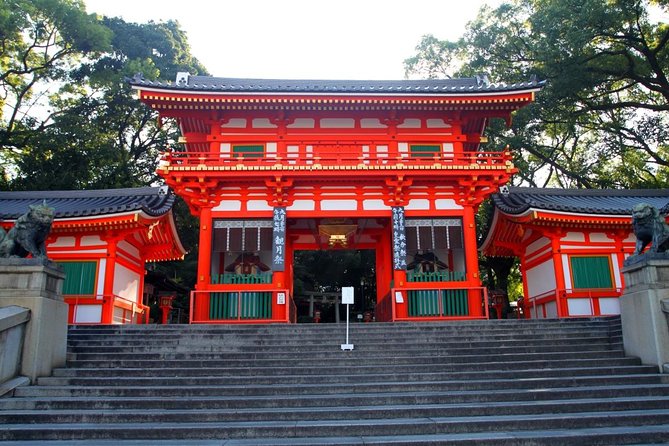
The first planned stop is Yasaka Shrine, with about 15 minutes set aside for an introduction. Admission is free, so you are paying for the explanation and the route, not for an entrance ticket.
This is a good place to begin because the shrine gives you a sense of how religious sites fit into everyday Kyoto. Hiro explains the shrine’s background with local context, rather than leaving you to read a sign and move on. The exact depth may depend on your questions and the pace of your group, but this stop is designed to give the rest of the walk a historical frame.
At night, Yasaka Shrine can feel calmer than it does during the day. You can pay attention to the gates, lanterns, and surrounding paths without trying to see everything at once. I would use this opening stop to tell Hiro what interests you most: architecture, religious customs, local food, photography, or the history of Gion.
The shrine segment is brief. If you want a long temple lecture, this is not that kind of tour. It works better as a friendly introduction before the walk moves into smaller streets.
Quiet Stone Walls and Gion’s Narrow Lanes
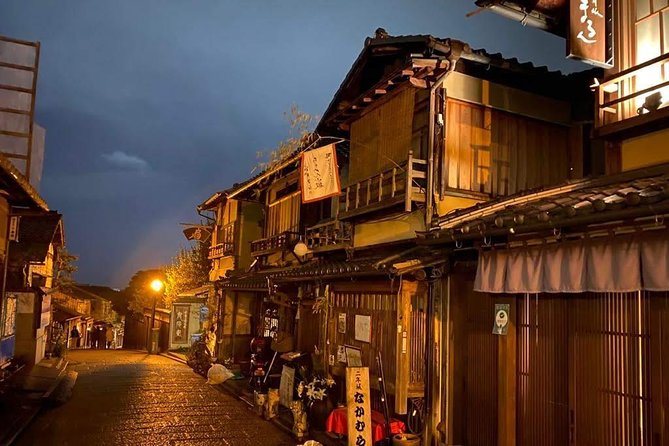
The route then passes through a stone-walled part of the Yasaka and Gion area. Here, silence is part of the experience. The guide does not provide much commentary because the walk passes through a quiet residential setting where visitors are expected to be discreet.
That restraint is important. Gion is not a stage set, and the old lanes are connected to homes, businesses, and traditional establishments. You will get more from this section if you keep your voice low, avoid blocking the street, and follow your guide’s lead on photography.
This is also where a private guide can help you notice details you might pass without understanding. The point is not simply to tick off another lane. It is to see how the older street plan, walls, entrances, and subdued lighting create a different feel from Kyoto’s larger avenues.
Do not expect a long spoken explanation at every corner. The quiet section is deliberately light on narration. For some people, that will feel atmospheric and respectful. For others, it may seem like less direct value during the 90-minute tour.
Yasaka Pagoda Brings the Best Photo Stop
Yasaka Pagoda is the visual centerpiece of the walk. Hiro explains the pagoda’s history, then gives you time to take pictures in front of it. The stop lasts about 20 minutes, and admission is free.
This is where the guide’s photography skills become especially useful. The supplied experience details repeatedly note that Hiro takes family, couple, and solo portraits at attractive locations. That can save you from relying on a timer, a passing stranger, or a hurried selfie.
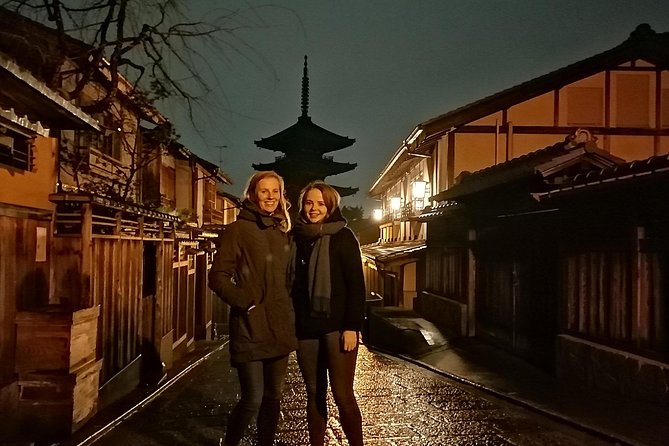
The pagoda is also a strong night photo subject. The dark sky, old streets, and illuminated structure give your pictures a clear sense of place. Ask Hiro to take both posed portraits and a few natural shots as you walk. The people who enjoyed this part most were not necessarily serious photographers. They simply appreciated having good memories of the evening that included everyone in the group.
Keep in mind that the route includes slopes and uneven walking. The famous slope in the Yasaka area comes after the pagoda, so shoes with a secure sole are a smart choice. This is not a difficult hike, but it is more active than a short stroll between two nearby buildings.
Same city, a completely different kind of day:
- PERFECT KYOTO 1-Day Bus Tour
★ 5.0 · 13,518 reviews - Kyoto: Fushimi Inari, Kinkakuji, Bamboo Grove 1 Day Bus Tour
★ 4.8 · 4,316 reviews - Kyoto: Tea Ceremony in a Traditional Tea House in Kiyomizu
★ 4.9 · 3,519 reviews - Kyoto Geisha Walking Tour: Gion District & Hidden Gems
★ 4.7 · 3,273 reviews
Walking the Famous Yasaka Slope
After Yasaka Pagoda, you walk through a well-known slope in the Yasaka area. This section connects the major sights and gives you time to see how the neighborhood changes as you approach Kiyomizu-dera.
The value here is in the transition. Instead of arriving at a temple by taxi and seeing only the entrance, you move through the old streets that lead toward it. That makes the route feel like a connected district rather than a collection of isolated attractions.
The slope can also be one of the more tiring parts of the evening, especially after a full day of temples. Plan your footwear accordingly, and tell Hiro if your group needs a slower pace. The guide has shown flexibility with tired groups, but the advertised experience still involves walking for roughly an hour and a half.
Because the route passes through narrow and quiet spaces, the group size matters. With only your own party taking part, you are less likely to be held up by a large crowd. You can also stop for a photo without coordinating with a busload of people.
Kiyomizu-dera Depends on the Season
The final listed sight is Kiyomizu-dera Temple, with about 10 minutes allocated to the stop. The temple may be lit up during certain seasons, but the exact nighttime view depends on the date of your visit.
Admission to Kiyomizu-dera is not included. That is an important detail when comparing the $35 price with other Kyoto walks. The tour fee covers the guide and private route, but you should be prepared to pay the temple’s entrance charge if the route enters the grounds.
The short time here suggests that Kiyomizu-dera is a closing highlight rather than a full temple visit. If you want to explore the temple buildings, terrace, and grounds at length, plan a separate daytime visit. This evening walk gives you a taste of the setting and the chance to see seasonal illumination when available.
The route then returns to the original meeting point. Depending on the guide and your conversation, you may also receive restaurant advice or help finding dinner. Several groups were guided toward ramen, Japanese barbecue, gyoza, or Kobe beef restaurants, and some were walked partway to a chosen place.
What You Get for $35
At $35 per person, this is a modestly priced private tour in one of Kyoto’s most popular districts. You are not paying for museum tickets or a long formal lecture. You are paying for a local escort, a planned route, cultural explanation, personal attention, and often a set of photographs.
That is good value if you are new to Kyoto and want help getting your bearings on your first evening. It is also useful if you have already seen the main sights but want to understand Gion’s side streets without wandering alone.
The value is less clear if you are comfortable navigating Gion independently and mainly want admission to Kiyomizu-dera. In that case, the added cost of a guide may not appeal. The tour’s strongest extras are the private setting, local suggestions, and photography, so use them actively.
Ask questions. Tell Hiro what food you like. Request pictures of the whole group. The more specific you are, the more the tour can feel like a personal introduction rather than a fixed route.
Guide Style, Flexibility, and One Important Caution
Hiro receives a 4.9 rating from 91 reviews, with a 99 percent recommendation rate. The strongest pattern is clear: people value his friendliness, cultural explanations, restaurant suggestions, and willingness to take photographs.
He has guided solo visitors who wanted company, families with children, and groups interested in Japanese customs. His replies also show a personal, outgoing style. He often chats with people about their hometowns and travel experiences, which can make the walk feel informal and social.
There is one serious warning to keep in mind. A poor experience involved a staff member arriving 15 minutes late, using Apple Maps, and failing to answer basic questions. The operator apologized directly and promised to prevent a repeat. That appears inconsistent with the much larger pattern of positive experiences, but it is still relevant when deciding how much you depend on the guide.
If the guide is late or the experience does not match what was promised, contact the operator promptly. Confirmation is subject to availability, and the listed guide may not always be the person leading the walk. For most people, the practical takeaway is simple: confirm the meeting details and arrive on time.
Who Should Book This Evening Walk?
I would recommend it most strongly for:
- First-time visitors who want a gentle introduction to Gion
- Couples and families who want good nighttime photographs
- Solo visitors who prefer exploring with a local companion
- People interested in customs, history, and everyday Kyoto
- Anyone looking for restaurant suggestions after sightseeing
- Visitors who want quieter side streets instead of only major attractions
You may want another option if you dislike walking on slopes, want extended temple time, or prefer a large group with a fixed professional script. The quiet stone-wall section also requires respect for local residents, so it is not suited to anyone looking for a loud, party-style evening.
Bring comfortable shoes, a charged phone, and a light layer suitable for the evening. If you want to eat afterward, mention that early enough for Hiro to offer useful suggestions.
Booking, Weather, and Cancellation Details
This experience requires good weather. If poor weather causes cancellation, you receive the choice of another date or a full refund.
You can cancel for a full refund up to 24 hours before the start time. Changes or cancellations made less than 24 hours before the start are not accepted for a refund, and the cut-off uses Kyoto local time.
Service animals are allowed, public transportation is nearby, and most people can participate. The activity is private, with only your group taking part. Those details make it a practical choice for many families and small parties, though the walking distance and slopes still deserve attention.
Should You Book the Gion Night Walk?
Book this tour if you want a friendly, personal introduction to old Kyoto rather than a long academic lecture. The combination of Yasaka Shrine, quiet Gion lanes, Yasaka Pagoda, seasonal Kiyomizu-dera views, local food advice, and complimentary photos gives the $35 fee a sensible value.
I would choose it early in your Kyoto stay, ideally on your first or second evening. You can learn the shape of Gion, note places to return to, and ask about dinner before you have spent several days guessing your way around.
Skip it if you want to spend most of the evening inside Kiyomizu-dera or if you prefer to explore independently with a map. For everyone else, especially families, couples, and solo visitors, this is a compact way to see Gion after dark and come away with more than a few dim phone pictures.
FAQ
Where does the Kyoto night walk begin?
The tour begins at 194 Kawabatacho in Kyoto’s Higashiyama Ward, in front of the Minamiza Kabuki Theatre.
Where does the tour end?
The activity ends back at the meeting point.
How long does the tour last?
The walk lasts approximately 1 hour and 30 minutes.
How much does the tour cost?
The listed price is $35 per person.
Is this a private tour?
Yes. Only your group participates in the activity.
Which places are included in the route?
The route includes Yasaka Shrine, a quiet stone-wall district, Yasaka Pagoda, a famous slope in the Yasaka area, and Kiyomizu-dera Temple.
Is admission included?
Admission to Yasaka Shrine and Yasaka Pagoda is listed as free. Admission to Kiyomizu-dera is not included.
Can I cancel for a full refund?
Yes. You must cancel at least 24 hours before the experience start time for a full refund. Cancellations made less than 24 hours in advance are not refunded.
Just added around Kyoto
- Private Guided Traditional Buddhist Cooking in Japan★ 5.0 · 16 reviews
- Kyoto: Gion Geisha District & Sake-in-Hand Walking Tour★ 5.0 · 37 reviews
- Your Private Vacation Photography Session In Kyoto★ 5.0 · 110 reviews
- Kyoto: Zen Meditation at a Private Temple with a Monk★ 5.0 · 25 reviews
- Traditional Japanese Washi Papermaking- Kyoto morning★ 5.0 · 77 reviews
- Kyoto Wagashi(Japanese sweets) Cooking Class near Fushimiinari★ 5.0 · 60 reviews
- Private Pewter Sake Cup Experience with a Kyoto Artisan★ 5.0 · 31 reviews
- Kyoto:Family-Friendly Kimono & Yukata Experience at WARGO★ 5.0 · 147 reviews
Evening Experiences, compared.

Gion Magical Night Walking Tour with Geisha Trivia
Read our review →
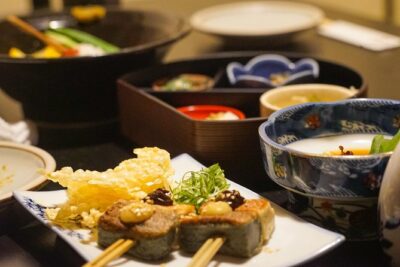
Kyoto Night Foodie Tour in Gion (9+ dishes + 6 Sake tastings)
Read our review →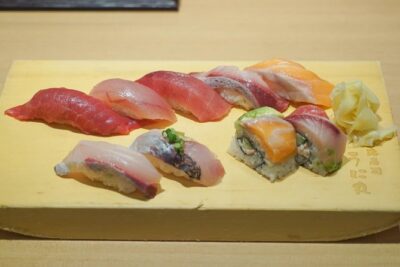
Tokyo Night Foodie Tour in Shinjuku – Seasonal Sushi, Wagyu Beef
Read our review →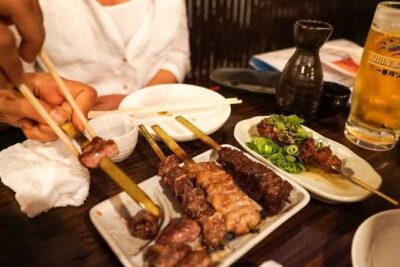
Osaka Bar Hopping Night Walking Tour in Namba (3 bars, 6 tastes)
Read our review →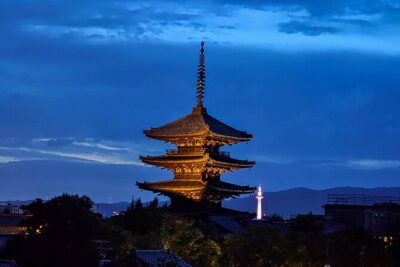
Kyoto Gion Night Walk & Geisha District Guided Tour
Read our review →
Kyoto Ghost Tour: Dark Tales, Urban Legends, Bamboo Forest Night
Read our review →Browse the lists this tour appears in