
REVIEW · CYCLING TOURS
Kyoto Bamboo Forest & Golden Pavilion E-Bike Tour
Kyoto’s famous sights make far more sense when you reach them by bicycle. This half-day ride links Kinkaku-ji, the Golden Pavilion, with Arashiyama’s bamboo groves, using quiet lanes and ordinary neighborhoods between the big attractions. You get temples, shrine traditions, Zen gardens, and a useful look at daily Kyoto in one outing.
I like the way the e-bikes make a roughly 20-kilometer route manageable, and I like the small-group feel, with a listed maximum of eight people. The main thing to consider is that you still need to cycle for several hours, and busy paths near Arashiyama can feel crowded.
In This Review
- Key points at a glance
- Why an e-bike works so well in Kyoto
- Starting near Kitano Tenmangu Shrine
- Kinkaku-ji and the Golden Pavilion’s famous reflection
- Riding through Kyoto’s ordinary neighborhoods
- Tenryu-ji’s Zen garden in Arashiyama
- Walking the Arashiyama Bamboo Forest
- Lunch, local help, and the guide’s role
- Is $99.08 a fair price?
- Who should book this ride?
- Final call: a smart Kyoto sampler for active sightseers
- FAQ
- How long does the Kyoto e-bike tour last?
- How much does the tour cost?
- Where does the tour begin?
- Where does the tour end?
- Which major sights are included?
- Are admission tickets included?
- How many people can join the tour?
- What happens if bad weather cancels the tour?
Key points at a glance
- About 20 kilometers by e-bike: The electric assistance makes a long Kyoto route far less tiring than a standard bicycle.
- Four major stops: Kinkaku-ji, Kitano Tenmangu Shrine, Tenryu-ji Temple, and the Arashiyama Bamboo Forest are all included.
- Quiet streets between sights: You see local neighborhoods, narrow lanes, and everyday Kyoto rather than moving only between tourist entrances.
- Small-group format: The advertised maximum is eight people, though one account describes a group of ten, so confirm the current size when booking.
- Guides add real value: Diego, Jody, Jorge, and Pohan are specifically praised for clear explanations, local stories, patience, and help with food ordering.
- Good for a full morning or afternoon: Allow five to six hours, with admission included at the listed temple and forest stops.
Why an e-bike works so well in Kyoto
Kyoto is spread out more than a first-time map may suggest. Kinkaku-ji sits in the northwest, while Arashiyama is farther west. Connecting these areas by bus or taxi takes time, and walking the full route would be a poor use of your vacation energy.
The e-bike solves that problem. You still pedal and see the city at street level, but the motor helps with distance and any tiring stretches. One participant described the 20-kilometer ride as easy rather than exhausting, which is the key point for anyone who wants to cover ground without turning the day into a fitness test.
I also like the route’s rhythm. You are not simply dropped at one major temple, rushed through it, and driven to another. You ride through side streets and residential areas, then stop for a shrine, a temple, a garden, or a bamboo path. Those transitions give the day texture.
The ride is not a completely private experience. Kyoto’s streets can be busy, and cyclists need to stay alert around crossings, cars, pedestrians, and other bikes. A group can spread out at traffic lights, especially if the pace varies. One account noted that a larger group made it harder to get everyone through a walk signal together.
A few more Kyoto trips to weigh up
- Hidden Kyoto E-Biking tour
★ 5.0 · 1,843 reviews - Bike Tour Exploring North Kyoto plus Lunch
★ 5.0 · 1,087 reviews - Arashiyama Bamboo Forest & Hidden Gems Bike Tour (Early Bird)
★ 5.0 · 613 reviews
Starting near Kitano Tenmangu Shrine
The meeting point is Memory Kyoto Bike Tour at 8-6 Umaryo-cho, Nishikyo Nakagyo-ku, in Kyoto’s Nakagyo Ward. The location is near public transportation, and the activity ends back at the same point, which makes planning your next stop simpler.
Kitano Tenmangu Shrine is one of the day’s most useful introductions to Kyoto. It is linked with Sugawara no Michizane, a deity associated with learning, so the shrine has a special place for students and anyone interested in Japan’s long connection between education, devotion, and good fortune.
The grounds are also known for roughly 1,000 plum trees. If you visit in early spring, their blossoms can change the feel of the shrine completely. Even outside blossom season, the stop gives you a quieter start than jumping directly into one of Kyoto’s most photographed temples.
The listed visit lasts about 30 minutes, and admission is free. That is enough time for a focused look, though not a slow, detailed examination of every building. Your guide’s explanation matters here because the shrine’s significance is easier to grasp with the story of Michizane and the role of learning in Japanese religious life.
Kinkaku-ji and the Golden Pavilion’s famous reflection
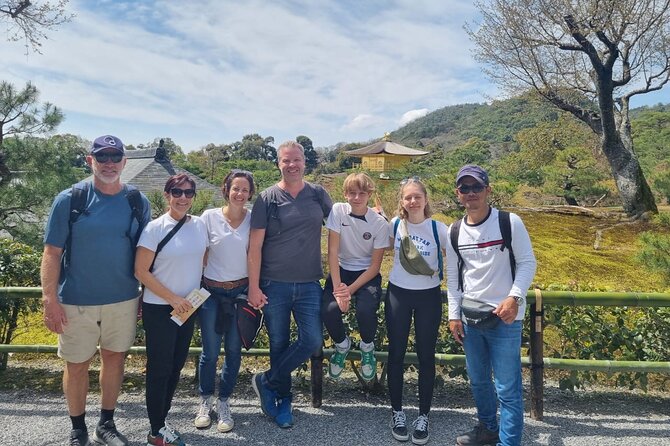
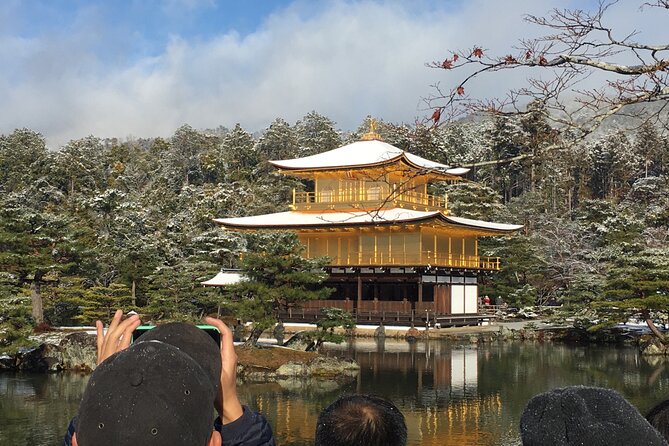
Kinkaku-ji is the visual star of the route. Its gold-leaf exterior rises beside a pond, and the reflection is often the view you came to see. The setting is carefully composed, with the pavilion, water, trees, and hills working together in a single scene.
The visit also has historical depth. The building began as a retirement villa before becoming a Zen Buddhist temple. That change tells you something about how elite residences, religious institutions, and political power have overlapped in Kyoto over the centuries.
You follow a set sightseeing path rather than wandering freely through the temple grounds. That can feel controlled, especially at a busy time, but it also keeps the visit efficient. The listed stop lasts about 45 minutes, with admission included.
A practical advantage of joining a guide is help with the entrance process. One family described a very long line and said the guide got the group inside without waiting. That may depend on the day and the conditions at the entrance, so do not treat it as a guarantee. Still, it shows why local handling can be worth more than a simple bike rental.
Give yourself time to look beyond the gold. The pavilion is the obvious photograph, but the pond reflection and surrounding garden are what make the visit work. Your guide can also explain how the site changed from villa to temple, adding meaning to what might otherwise be a quick photo stop.
Riding through Kyoto’s ordinary neighborhoods
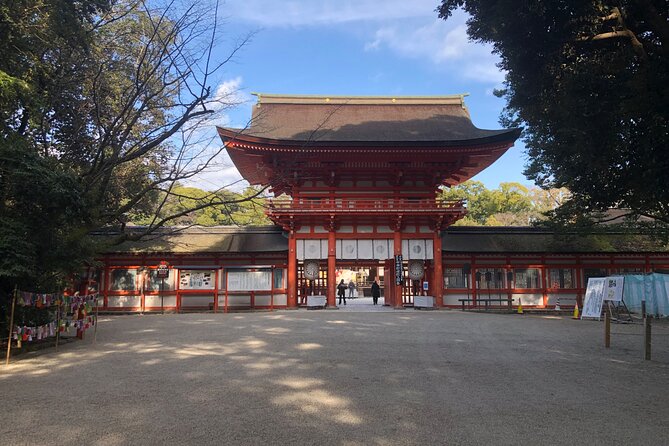
The stretches between the sights are not filler. You pass through a mixture of local neighborhoods, main streets, and narrow alleys. That is where the tour differs from a standard bus loop.
From a bicycle, you move slowly enough to notice the scale of Kyoto. You see the edges of residential streets, the way older lanes connect with larger roads, and the ordinary parts of the city that sightseeing itineraries often skip. You also avoid spending the entire day underground or waiting for a bus.
The guide sets the pace and keeps the group together. Diego is singled out for clear explanations and care with the group, while Jorge is praised for fluent English, stories, and attention to everyone’s needs. Jody is described as friendly and helpful, including during a medical emergency. These details matter because a cycling guide is doing more than explaining temples. The guide is also watching traffic, managing stops, and helping the day run smoothly.
The group size is advertised as no more than eight people, which is a strong number for city cycling. A smaller group can stop more easily and hear the guide without a loudspeaker. One account referred to ten riders, however, so I would confirm the expected group size if that detail is important to you.
Same city, a completely different kind of day:
- PERFECT KYOTO 1-Day Bus Tour
★ 5.0 · 13,518 reviews - Kyoto: Fushimi Inari, Kinkakuji, Bamboo Grove 1 Day Bus Tour
★ 4.8 · 4,316 reviews - Kyoto: Tea Ceremony in a Traditional Tea House in Kiyomizu
★ 4.9 · 3,519 reviews - Kyoto Geisha Walking Tour: Gion District & Hidden Gems
★ 4.7 · 3,273 reviews
Tenryu-ji’s Zen garden in Arashiyama
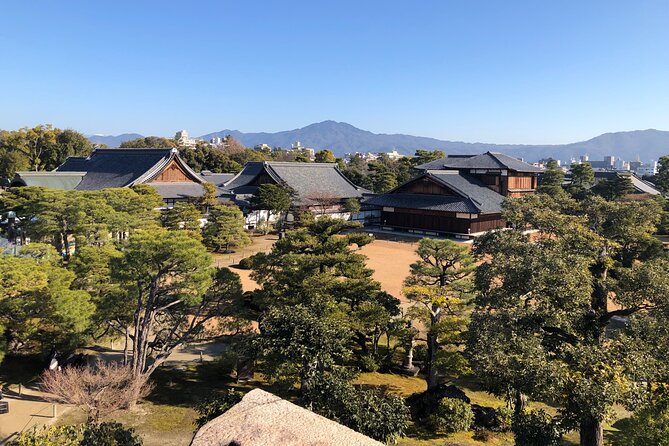
Tenryu-ji gives the Arashiyama portion a calm, formal center. It is a UNESCO World Heritage Site, listed since 1994, and its garden is the main reason to slow down here.
The garden uses water, rocks, trees, and borrowed views in a composed Zen setting. You do not need to know every design term to appreciate it. Simply notice how the garden guides your eye and creates changing views as you walk.
The visit lasts about 45 minutes, with admission included. That is enough for a good walk through the finest garden area, but you may want more time if you enjoy Japanese garden design or want to sit quietly. Since the tour has another major stop nearby, the schedule cannot give you unlimited time.
Tenryu-ji is also a useful counterpoint to Kinkaku-ji. The Golden Pavilion is bright and immediately dramatic. Tenryu-ji asks you to look more slowly. Having both on one route gives the day a better range than visiting two similar temples.
Walking the Arashiyama Bamboo Forest
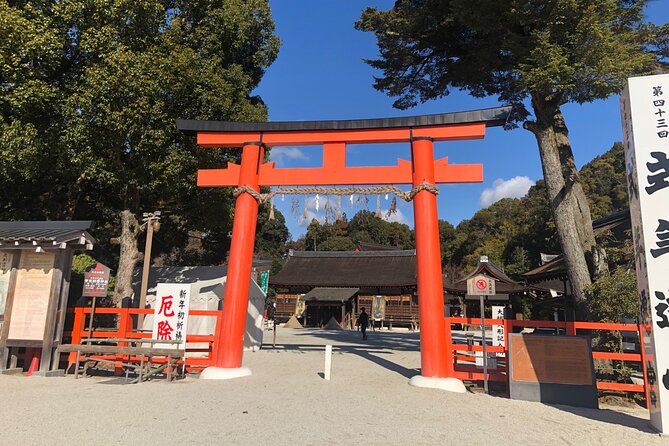
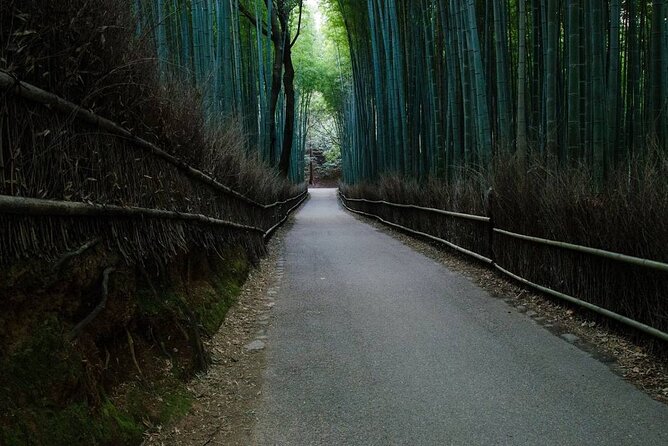
The Bamboo Forest Trail is one of Kyoto’s best-known photo locations. Tall bamboo trunks rise on both sides of the path, creating a narrow corridor that feels removed from the city, even though Arashiyama is a popular area.
The bamboo itself is known for strength, flexibility, durability, and resilience. Those qualities help explain why it has such a strong place in Japanese craft and design. Your guide’s stories can add useful context to what might otherwise be a short walk and a series of photographs.
The listed time here is 45 minutes. That allows for a steady walk and pictures, but the path is not a private retreat. Arashiyama is famous, and popular times can bring many people into the same narrow space. Go expecting an attractive public path, not total silence.
I would bring patience and keep your camera ready, but do not let the photographs become the whole point. Look upward, notice the changing light, and listen for the bamboo moving in the wind. The walk is brief, yet it gives the day a memorable change of pace after the open streets and temple grounds.
Lunch, local help, and the guide’s role
The day has included a lunch stop at a local diner, with guides helping people order. Ramen is also mentioned as part of the food experience. The exact meal, restaurant, and price are not specified, so I would not book this tour solely for lunch.
Still, this kind of stop can be useful. Ordering in an unfamiliar place is easier when someone can explain the menu and keep the group moving. It also gives you a chance to eat somewhere more ordinary than a restaurant selected only for sightseeing traffic.
The guides receive especially strong praise for their personal care. Diego is described as articulate and attentive. Jody is praised for making the history easy to understand and for helping during a medical problem. Jorge is noted for fluent English and a caring manner. Pohan is also named as a guide who added local details and practical tips.
Guide quality can vary by departure, so you may not get the same person. The important point is that the activity depends heavily on the guide. You are paying for route planning, historical context, traffic management, and help throughout the day, not just access to an e-bike.
Is $99.08 a fair price?
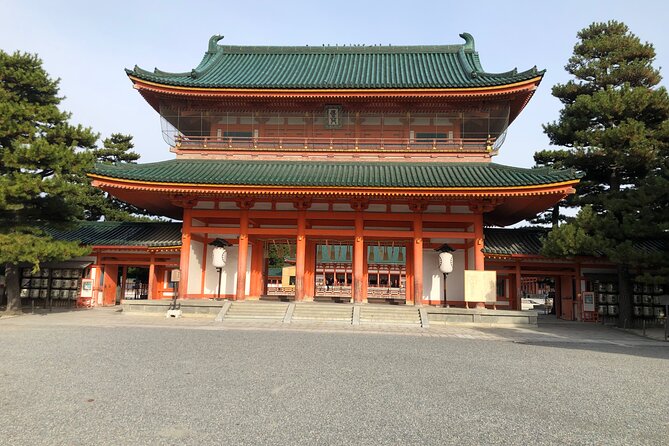
At $99.08 per person, this is not the cheapest way to see Kyoto. You could rent a bicycle independently for less, and the shrine admission is free. But a rental does not solve the route planning, navigation between distant districts, temple explanations, or language help at lunch.
The value is strongest if you have limited time in Kyoto. In five to six hours, you reach two major temple areas, a famous shrine, and the Bamboo Forest without spending much of the day figuring out transport. The Golden Pavilion and Tenryu-ji admissions are included, according to the listed details, which also reduces small extra costs.
You should also count the physical value. The e-bike helps you cover about 20 kilometers while saving energy for walking through the temple grounds. If you are comfortable on a bicycle, that combination can be more efficient than a standard sightseeing day.
The price is less appealing if you dislike cycling, want long unstructured visits, or already know how to navigate Kyoto by bike. You will be following a set route and a group schedule. The experience is designed for seeing a lot in one day, not for lingering at one temple until sunset.
Who should book this ride?
I would choose this tour if you want a practical first look at Kyoto and enjoy moving under your own power. It suits couples, active families, and solo visitors who prefer a guide to handle directions and timing. Children aged 10 and 12 have completed the ride on e-bikes, according to one family account, but you should judge your own children’s comfort with several hours of cycling.
It is also a good fit for people who want more than the standard postcard view. The temples are famous, but the backstreets and neighborhood riding give you a better sense of how the city fits together.
I would hesitate if you have mobility limits that make cycling difficult, if you are uncomfortable riding in city traffic, or if you need a very slow temple visit. The tour requires good weather, and the full route could feel tiring in poor cycling conditions even with electric assistance.
Book with the weather in mind. Free cancellation is available up to 24 hours before the start time for a full refund. Cancellations or changes inside that window are not accepted for a refund, and a weather cancellation offers either another date or a full refund.
Final call: a smart Kyoto sampler for active sightseers
I recommend the Kyoto Bamboo Forest and Golden Pavilion E-Bike Tour if you want to connect several major sights without wasting hours on buses. The strongest reasons are the e-bike assistance, the mix of local streets and landmark stops, and the guide support provided by people such as Diego, Jody, and Jorge.
You should book it for efficient sightseeing with local context, not for a quiet private tour. Check the expected group size, allow five to six hours, and come ready to pedal, walk, and keep a little flexibility around crowds. At $99.08, it offers good value for a first Kyoto visit, especially when your time is short.
FAQ
How long does the Kyoto e-bike tour last?
The tour lasts approximately five to six hours.
How much does the tour cost?
The listed price is $99.08 per person.
Where does the tour begin?
It begins at Memory Kyoto Bike Tour, 8-6 Umaryo-cho, Nishikyo Nakagyo-ku, in Kyoto’s Nakagyo Ward.
Where does the tour end?
The activity ends back at the meeting point.
Which major sights are included?
The route includes Kinkaku-ji Temple, Kitano Tenmangu Shrine, the Arashiyama Bamboo Forest Trail, and Tenryu-ji Temple.
Are admission tickets included?
Admission is included for Kinkaku-ji, the Bamboo Forest Trail, and Tenryu-ji as listed. Kitano Tenmangu Shrine has no admission charge.
How many people can join the tour?
The stated maximum is eight participants. One account describes a group of ten, so confirm the current group size when booking.
What happens if bad weather cancels the tour?
If poor weather causes the activity to be canceled, you can choose another date or receive a full refund.
Just added around Kyoto
- Private Guided Traditional Buddhist Cooking in Japan★ 5.0 · 16 reviews
- Kyoto: Gion Geisha District & Sake-in-Hand Walking Tour★ 5.0 · 37 reviews
- Your Private Vacation Photography Session In Kyoto★ 5.0 · 110 reviews
- Kyoto: Zen Meditation at a Private Temple with a Monk★ 5.0 · 25 reviews
- Private Pewter Sake Cup Experience with a Kyoto Artisan★ 5.0 · 31 reviews
- Traditional Japanese Washi Papermaking- Kyoto morning★ 5.0 · 77 reviews
- Kyoto Wagashi(Japanese sweets) Cooking Class near Fushimiinari★ 5.0 · 60 reviews
- Kyoto Private 6 hour Tour: English Speaking Driver Only, No Guide★ 5.0 · 88 reviews
Cycling Tours, compared.


3h Tokyo E-Bike Tour: Hidden Gems, and Local Life with guide
Read our review →
Arashiyama Bamboo Forest & Hidden Gems Bike Tour (Early Bird)
Read our review →
Hiroshima in a Nutshell: Morning Bike Adventure
Read our review →
5 Top Highlights of Kyoto Full Day Bike Tour (E-bike option)
Read our review →Browse the lists this tour appears in