
REVIEW · ARASHIYAMA BAMBOO TOURS
Kyoto Arashiyama & Sagano Bamboo Private Tour with Government-Licensed Guide
Arashiyama’s bamboo grove is the headline, but the better day is built around what comes after it: mossy temple paths, mountain views, quiet lanes, and a guide who can explain why Kyoto’s western hills mattered to emperors and monks. I like the private format, which lets you ask questions and set a pace that works for your group. I also like the chance to trade the busiest sights for places such as Gioji or Otagi Nenbutsuji.
The main caution is simple: six hours does not cover the entire long list of sights. The experience is a customizable walking tour of three or four places, not a whirlwind visit to every temple and villa named in the description. Entrance fees, transport, lunch, and your guide’s transport costs are extra, so the final bill can rise.
In This Review
- Key points to know before you book
- Why Arashiyama works best with a focused plan
- Togetsukyo Bridge gives you the right first view
- Bamboo Forest Street is beautiful, brief, and crowded
- Tenryuji adds art, gardens, and Zen context
- Jojakkoji, Nisonin, and Gioji slow the day down
- Adashino and Otagi Nenbutsuji offer unusual stone figures
- The imperial villas need special handling
- Daikakuji connects an imperial palace with Buddhism
- Kurama, Yoshimine, and Kibune belong to a different day
- Okochi Sanso is a worthwhile optional garden
- What the guide adds to a walking day
- Six hours on foot requires sensible pacing
- Is $157.82 per person good value?
- Who should book this Arashiyama tour?
- Final booking advice
- FAQ
- How long is the Kyoto Arashiyama and Sagano private tour?
- Is the tour private?
- How many sights can I visit?
- Is hotel pickup included?
- Are entrance fees included?
- Is lunch included?
- Is the guide licensed and English-speaking?
- Can I visit Katsura Imperial Villa on this tour?
- Can I cancel for a full refund?
Key points to know before you book
- The bamboo grove is only the beginning: Pair it with Tenryuji, Jojakkoji, or a quieter temple rather than treating it as the whole day.
- Your guide shapes the experience: Past guides such as Kazuo, Kazz, Tomo, Ken, Satoko, Shoji, and Ted have been praised for flexibility, local suggestions, and care with walking pace.
- You choose three or four sites: Confirm your priorities before the tour, especially if you want a specific temple, garden, or view.
- It is a walking day: Pickup and drop-off are on foot. Public transport or other transport costs are not included.
- Crowds and weather matter: Autumn color can be beautiful but busy, while summer heat, rain, and slippery slopes can make the route tiring.
- The price buys attention, not admission: At $157.82 per person, the value is strongest for couples, families, or friends who want a private plan and live interpretation.
Why Arashiyama works best with a focused plan
Arashiyama sits on Kyoto’s western edge and has attracted visitors since the Heian Period, when court nobles came for its river, hills, and seasonal beauty. Today it is one of Kyoto’s most popular day stops, with shops, restaurants, temples, boat rides, and the famous bamboo paths packed into a relatively small area.
That popularity creates the central challenge. You can walk from one famous sight to another, but without a plan you may spend much of your six hours following the crowd. A private guide can help you decide how much time to give the bamboo grove and which temple deserves the remaining hours.
I would settle the route before meeting. If this is your first visit, a practical combination could be Togetsukyo Bridge, the bamboo grove, Tenryuji, and one quieter temple such as Jojakkoji or Gioji. Families may prefer the bamboo grove, Tenryuji, and the monkey park, although the monkey park is not one of the listed stops and should be requested in advance.
More Private Guided Tours with Driver in Kyoto
- Kyoto 6hr Private Tour with Government-Licensed Guide
★ 5.0 · 1,369 reviews - Kyoto 4hr Private Tour with Government-Licensed Guide
★ 5.0 · 629 reviews - Kyoto: Private Tour with Local Licensed Guide
★ 4.8 · 463 reviews
Togetsukyo Bridge gives you the right first view
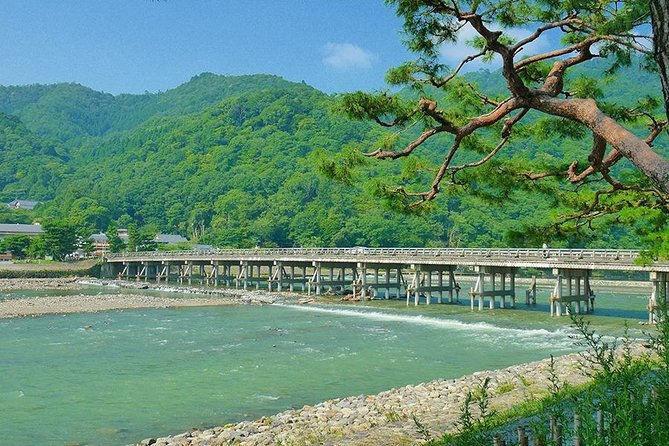
The Togetsukyo Bridge is Arashiyama’s central landmark. Its name means Moon Crossing Bridge, and the present structure was rebuilt in the 1930s on the site of an older Heian-period crossing.
The bridge itself is free to see. The useful part is the setting: the river, wooded hills, and riverside park with cherry trees make this one of Kyoto’s easiest places to understand at a glance. Your guide can also help you get oriented before the walking begins.
Do not expect a long stop here. The planned visit is brief, around 20 minutes, which is enough for photographs and an explanation of the area. If you want a river boat, shopping time, or a meal nearby, that will take time from the temple route.
Bamboo Forest Street is beautiful, brief, and crowded
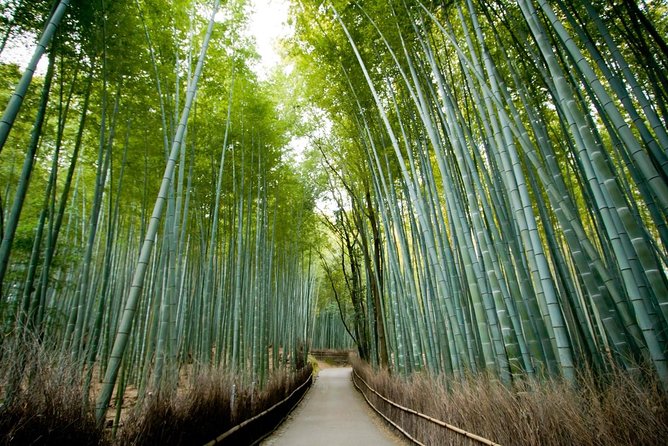
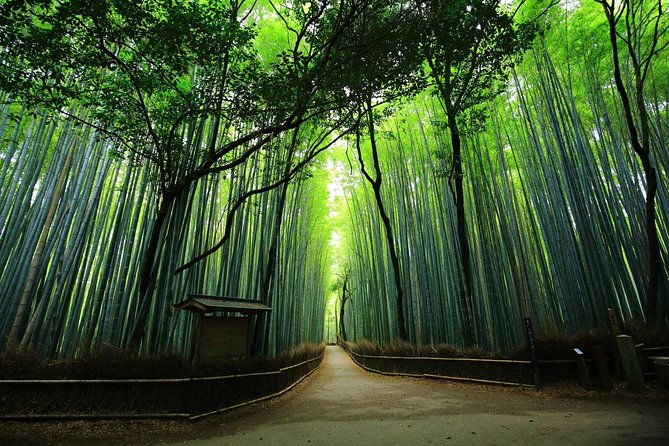
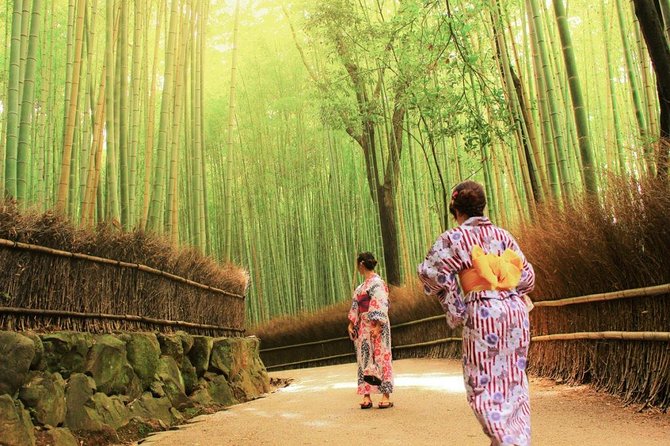
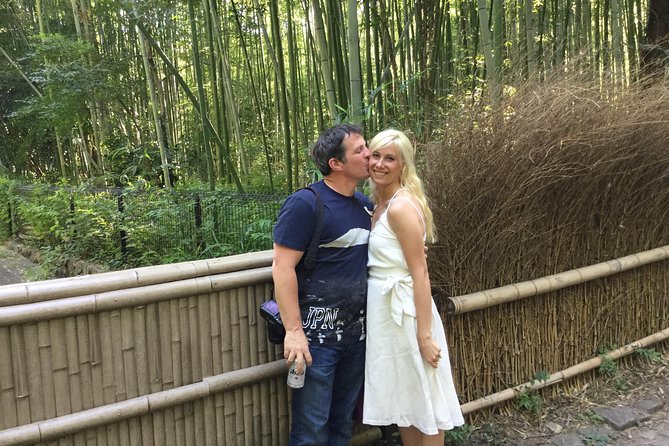
The bamboo path is one of Kyoto’s most recognizable scenes. Tall stalks rise on both sides of the walkway, and a light breeze can make them sway and creak above you. Local workshops have traditionally used bamboo for baskets, cups, boxes, mats, and other household goods.
The path is free, but it is not a private nature walk. At popular times, you may find a steady stream of people, especially during cherry blossom season and autumn color. One useful advantage of a guide is knowing when to visit and how to move through the area without wasting time at the busiest points.
The bamboo grove itself can be seen quickly. One review specifically described it as something that could be covered in about an hour, with little reason to stay if you are not continuing to nearby temples. I agree with that planning advice: treat the grove as one piece of the day, not the entire reason to pay for a six-hour guide.
Tenryuji adds art, gardens, and Zen context
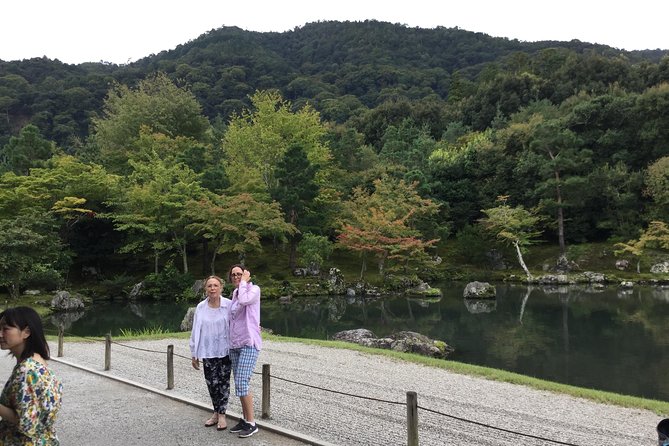
Tenryuji is the major temple of Arashiyama and one of Kyoto’s five great Zen temples. Founded in 1339, it belongs to the group of Kyoto sites recognized as UNESCO World Heritage Sites.
The temple combines buildings with gardens and walking paths, giving you more variety than the bamboo grove. I would choose it if you want a classic Kyoto stop with a strong connection to Zen Buddhism and the Muromachi Period. The grounds also make a sensible pairing with the bamboo path because they sit close to the main Arashiyama sights.
Admission is not included. Ask your guide to explain exactly what your ticket covers and how much time to set aside. The listed timing is about 20 minutes, but that is a quick visit for a major temple and garden. If Tenryuji is a priority, you may need to give it more time and drop another stop.
Same city, a completely different kind of day:
- PERFECT KYOTO 1-Day Bus Tour
★ 5.0 · 13,518 reviews - Kyoto: Fushimi Inari, Kinkakuji, Bamboo Grove 1 Day Bus Tour
★ 4.8 · 4,316 reviews - Kyoto: Tea Ceremony in a Traditional Tea House in Kiyomizu
★ 4.9 · 3,519 reviews - Kyoto Geisha Walking Tour: Gion District & Hidden Gems
★ 4.7 · 3,273 reviews
Jojakkoji, Nisonin, and Gioji slow the day down
The smaller hillside temples north of the main Arashiyama center are where this tour can become more personal and less mechanical.
Jojakkoji was founded in 1596. Its modest buildings, gates, moss, and maple-lined stairs create a quieter setting than the bamboo grove. From several points, you can look out over Kyoto. The route includes slopes and steps, so it is not ideal if you need a completely flat walk.
Nisonin has a similar hillside setting but somewhat larger buildings and a more formal approach. It belongs to the Tendai sect and dates to the mid-ninth century. Trees shade the approach, and the upper grounds offer city views.
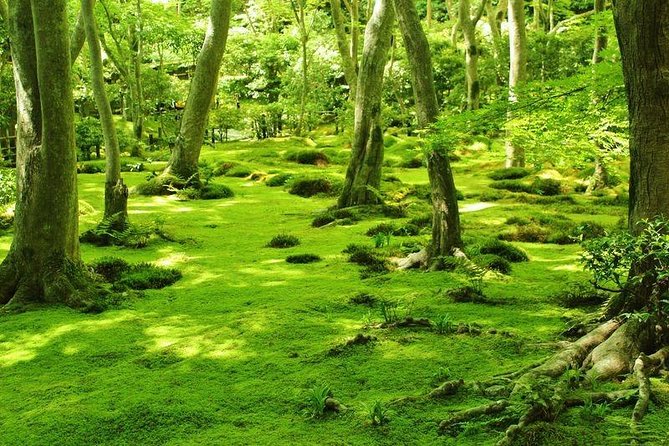
Gioji is smaller and more enclosed by forest. Its moss garden, maple trees, thatched entrance gate, and round window give it a distinctly calm character. I would choose Gioji for atmosphere rather than grand architecture. It was also singled out as a place where the quiet beauty of the moss garden becomes the main experience.
These temples are not all necessary in one day. Pick one or two based on your interests and walking energy. A guide who listens can avoid turning the afternoon into a race between nearly similar hillside visits.
Adashino and Otagi Nenbutsuji offer unusual stone figures
Adashino Nenbutsuji sits at the end of the Saga-Toriimoto Preserved Street. The temple dates to the early ninth century, when Kobo Daishi placed stone figures here for the souls of the dead. Today, hundreds of stone statues fill the grounds, and a short bamboo path runs behind the temple.
About ten minutes farther north is Otagi Nenbutsuji. It is famous for around 1,200 stone rakan figures, each with a different expression. The statues were made in the 1980s and early 1990s, so this is not an ancient collection in the usual sense, but the individuality of the faces makes the visit memorable.
These two temples suit you if you want something beyond the standard Kyoto checklist. They also reward a guide’s explanation, since the religious purpose and visual character of the figures are easy to miss if you simply walk through and take photographs.
The imperial villas need special handling
The description also names Shugakuin Imperial Villa and Katsura Imperial Villa. Both are important, but they do not fit naturally into a short Arashiyama walking route.
Shugakuin was built between 1655 and 1659 by Emperor Gomizuno. It has Lower, Middle, and Upper Villa areas, with traditional buildings, gardens, and surrounding farmland still worked by local farmers under lease arrangements. The grounds are managed by the Imperial Household Agency, and admission is not included.
Katsura Imperial Villa is celebrated for its garden design and Japanese architecture. Its present form was completed in 1645 for the Katsura branch of the Imperial Family. Visits require joining a scheduled tour. The circular route follows the pond, while the palace buildings can only be viewed from outside, and photographs are limited to designated points. English tours are available.
The practical point is to ask about these villas before booking or as soon as your guide contacts you. They require different planning from a casual temple walk, and Katsura’s required tour makes it especially important not to assume it can simply be added at the last minute.
Daikakuji connects an imperial palace with Buddhism
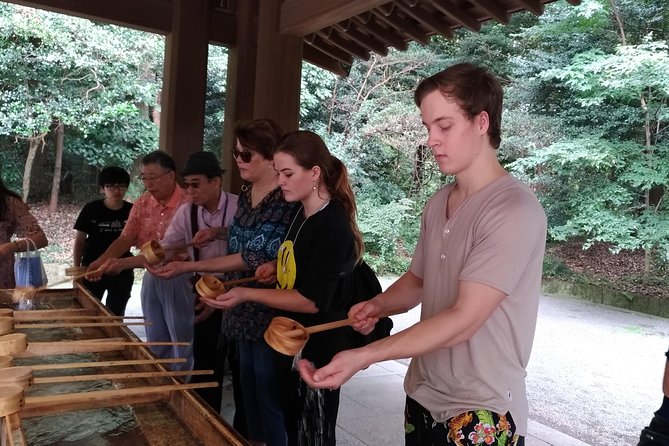
Daikakuji began as Emperor Saga’s detached palace in the early ninth century. It became a temple in 876 and later developed into one of the leading temples of Shingon Buddhism.
The temple has imperial connections that go beyond its origin. Retired emperors once ruled from here, and peace talks at Daikakuji helped reunite Kyoto’s Northern and Southern Imperial Courts after decades of conflict. Beside the main buildings, you will find a large pond and pagoda.
The listed schedule includes Daikakuji twice, which appears to be a duplicate rather than two separate experiences. Do not read this as two different temple visits. Confirm the exact route and time allocation with the provider.
Kurama, Yoshimine, and Kibune belong to a different day
Kurama lies in Kyoto’s northern mountains, less than an hour from the city center. It is known for Kurama-dera and Kurama Onsen, where indoor and outdoor baths are available at an additional cost. The outdoor bath alone costs 1,000 yen for day visitors, while all baths cost 2,500 yen.
Yoshimine-dera sits in Kyoto’s western mountains and climbs a hillside above views toward the city. A priest named Gesan founded it in 1029, and the temple was rebuilt after destruction during the Onin War. Its spacious grounds spread up the slope.
Kibune is a small mountain settlement in a forested valley around Kifune Shrine, associated with water and rain. Its water fortunes reveal their message when you place the paper in water. The shrine’s inner sanctuary lies about one kilometer farther up the valley.
These are appealing places, but they are not sensible add-ons to an ordinary Arashiyama walking day. They require extra transport and time, both of which you pay for separately. If one of them is your main goal, say so clearly and ask whether the guide recommends a separate route.
Okochi Sanso is a worthwhile optional garden
Okochi Sanso was the former villa of actor Okochi Denjiro, who lived from 1896 to 1962. It sits behind the bamboo groves and includes gardens, tea houses, gates, and living quarters.
The buildings are viewed from the outside, so the appeal is the gardens and the setting rather than indoor rooms. At around 20 minutes, it can work well as a short addition if you prefer cultivated scenery to another temple. Ask about admission, since entrance fees are not included.
What the guide adds to a walking day
The strongest feature here is the ability to ask questions as you go. A guide can explain the difference between Zen and Tendai sites, point out how imperial retreats became temples, and help you see bamboo as a working material rather than only a photographic backdrop.
Past guide experiences have included useful personal touches. Ken supplied a one-page sheet on Kyoto history and helped a family include the monkey park. Kazz contacted his group before the tour and adjusted the route around their wish list. Kazuo was praised for building the day around interests, helping find a local artist, suggesting a place to finish, and offering meal ideas.
That level of contact is not guaranteed with every guide, and one poor experience involved a guide who could not answer many questions. I would send a short list of priorities before the start and ask for the guide’s proposed order. This gives you a better chance of matching with the right style.
Six hours on foot requires sensible pacing
The experience lasts about six hours, with pickup and drop-off on foot. There is no private vehicle included, and transport fees for you and your guide are extra. If the chosen sights are spread across different parts of Kyoto, public transportation can add both cost and lost time.
The walking can be tiring. Summer heat and humidity have made the route hard for some groups, while rain can leave hillside paths slippery. One guide took particular care with a participant moving slowly after earlier injuries, but you should still explain mobility concerns before the day begins.
Lunch is also on your own. That is a useful point of flexibility, since you can stop for food when it suits your group, but it means the six-hour schedule is not six full hours of sightseeing. A local lunch suggestion may be one of the guide’s most useful contributions. One guide recommended a beef bento near Rilakkuma, with the warning to avoid the lunch crowd and long queue.
Is $157.82 per person good value?
At $157.82 per person, this is not the cheapest way to see bamboo and temples. You can reach Arashiyama independently and see the free bridge and bamboo path without hiring a guide.
The price becomes easier to justify if you value planning, translation, cultural context, and a route shaped around your group. It is particularly useful for families, first-time visitors, couples with a short Kyoto stay, and anyone who does not want to spend an evening comparing temple maps and train routes.
Remember the add-ons. You pay your own entrance fees, lunch, transportation, and personal expenses. Group discounts are available, and because the tour is private, the cost may make more sense when divided among several people rather than booked for one person alone.
Who should book this Arashiyama tour?
I would choose it if you want more than a quick bamboo photograph and prefer a human explanation of what you are seeing. It is also a good fit if your group has mixed interests, since a private guide can balance gardens, temples, views, food, and family needs.
I would skip it if you only want the bamboo grove, dislike walking, or are happy to research the area yourself. I would also avoid booking it without a clear plan if your real goal is Shugakuin, Katsura, Kurama, or Kibune, since those places need more careful scheduling than the standard Arashiyama route.
The tour has a 4.8 rating from 49 reviews, with 98 percent recommending it. That strong record fits the best use of the experience: a flexible day with an attentive guide, not a fixed bus tour or an all-inclusive sightseeing package.
Final booking advice
Book this private Kyoto tour if you want Arashiyama shaped around your pace and interests. Before the day, confirm your three or four chosen sites, ask how much walking and stair climbing they involve, and check which entrance fees and transport costs you should expect.
For a first visit, I would request Togetsukyo Bridge, the bamboo grove, Tenryuji, and one quieter temple. For a repeat visit, I would lean toward Gioji, Otagi Nenbutsuji, Daikakuji, or Okochi Sanso. Cancel at least 24 hours before the start for a full refund. If bad weather cancels the experience, you can take another date or receive a full refund.
FAQ
How long is the Kyoto Arashiyama and Sagano private tour?
The tour lasts approximately six hours.
Is the tour private?
Yes. Only your group participates in the private activity.
How many sights can I visit?
The tour includes a customizable walking route featuring three or four sites from the available choices.
Is hotel pickup included?
Pickup and drop-off are offered on foot, with the meeting arranged in Kyoto. A private vehicle is not included.
Are entrance fees included?
No. Entrance fees are paid by you. Transportation fees for you and your guide are also not included.
Is lunch included?
No. Lunch is at your own expense.
Is the guide licensed and English-speaking?
The experience includes a government-licensed local English-speaking guide.
Can I visit Katsura Imperial Villa on this tour?
Katsura Imperial Villa is among the possible sights, but visits require joining a tour. English tours are available, and admission is not included.
Can I cancel for a full refund?
Yes, if you cancel at least 24 hours before the experience start time. Cancellations or changes made less than 24 hours before the start are not refunded or accepted.
More Arashiyama Bamboo Tours in Kyoto
- Osaka/Kyoto:Kinkakuji,Arashiyama,FushimiInariShrine,NaraPark
★ 4.1 · 1,596 reviews - Kyoto/Osaka: Nara, Fushimi Inari Taisha, Arashiyama Bus Tour
★ 4.7 · 1,275 reviews - Kyoto Arashiyama Walking Tour: Bamboo, Monkeys, Gardens & Secrets
★ 5.0 · 1,216 reviews - Arashiyama Bamboo, Temple, Monkeys, or Secret Sake Brewery
★ 4.8 · 886 reviews
Just added around Kyoto
- Private Guided Traditional Buddhist Cooking in Japan★ 5.0 · 16 reviews
- Kyoto: Gion Geisha District & Sake-in-Hand Walking Tour★ 5.0 · 37 reviews
- Your Private Vacation Photography Session In Kyoto★ 5.0 · 110 reviews
- Kyoto: Zen Meditation at a Private Temple with a Monk★ 5.0 · 25 reviews
- Traditional Japanese Washi Papermaking- Kyoto morning★ 5.0 · 77 reviews
- Kyoto Wagashi(Japanese sweets) Cooking Class near Fushimiinari★ 5.0 · 60 reviews
- Private Pewter Sake Cup Experience with a Kyoto Artisan★ 5.0 · 31 reviews
- Kyoto Private 6 hour Tour: English Speaking Driver Only, No Guide★ 5.0 · 88 reviews
Arashiyama Bamboo Tours, compared.
Osaka/Kyoto:Kinkakuji,Arashiyama,FushimiInariShrine,NaraPark
Read our review →
Kyoto/Osaka: Nara, Fushimi Inari Taisha, Arashiyama Bus Tour
Read our review →
Kyoto Arashiyama Walking Tour: Bamboo, Monkeys, Gardens & Secrets
Read our review →
Arashiyama Bamboo, Temple, Monkeys, or Secret Sake Brewery
Read our review →
Arashiyama Bamboo Forest, Monkeys, Matcha & Temple Tour
Read our review →
Osaka/Kyoto: Arashiyama, Nara & Fushimi Inari Shrine w/Lunch
Read our review →
Nijo, Kinkaku-ji, Arashiyama, Kiyomizu & Fushimi Inari
Read our review →
Arashiyama Bamboo Forest & Hidden Gems Bike Tour (Early Bird)
Read our review →Browse the lists this tour appears in