
REVIEW · TEA CEREMONY EXPERIENCES
Kimono Rental and Tea Ceremony Experience in Inuyama
Inuyama gives you a rare two-part introduction to Japanese culture: you dress in a kimono at Inuyama Komachi, then walk to a temple teahouse near Inuyama Castle to prepare and drink matcha. The tea ceremony is not just a demonstration. You take part in the formal steps, with patient guidance and time to notice why each movement matters.
I like the way the kimono rental continues beyond the tea ceremony, giving you the rest of the day to explore the castle town. I also like the small, private format, which keeps the tea room calm and lets your own group learn together. The main consideration is cost: at $97.98 per person, this is a worthwhile cultural activity, but the price rises if you add a hair set or accessories.
In This Review
- Key points
- Starting at Inuyama Komachi in the castle town
- Learning the tea ceremony near Inuyama Castle
- What makes making matcha worthwhile
- Wearing the kimono through Inuyama’s old streets
- Why the private format matters
- Is $97.98 good value?
- Practical timing and booking details
- Who will enjoy this Inuyama experience most?
- Final decision: book it for culture, not just photographs
- FAQ
- Where does the kimono and tea ceremony experience begin?
- What time does the activity start?
- How long does the experience last?
- Is the kimono rental included?
- Is the tea ceremony included?
- Are hair styling and accessories included?
- Can I cancel for a full refund?
Key points
- Choose your own kimono at Inuyama Komachi: The outfit selection is part of the experience, not just a costume pickup.
- Make your own matcha: You participate in the tea preparation and learn the purpose behind the formal actions.
- Tea ceremony near Inuyama Castle: The setting adds a strong sense of place, with the castle town and temple area close at hand.
- Keep the kimono for the day: After the ceremony, you can stroll through historic streets and sample local food in traditional dress.
- Private activity for your group: You are not mixed into a large public group, which can make instruction easier to follow.
- Plan for extra costs: Accessories cost ¥550 per person and a hair set costs ¥2,200 per person. Transportation is separate.
Starting at Inuyama Komachi in the castle town
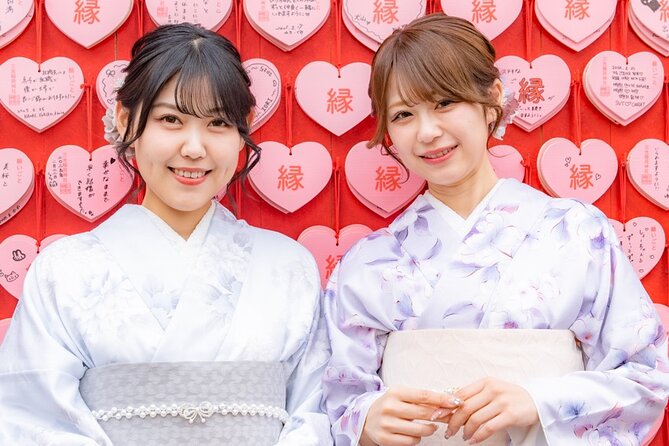
Your experience begins at Inuyama Komachi, at 213 Nishikoken, Inuyama, Aichi 484-0081. The shop is in Inuyama’s castle town, near public transportation, so you can begin close to the historic streets you will later explore.
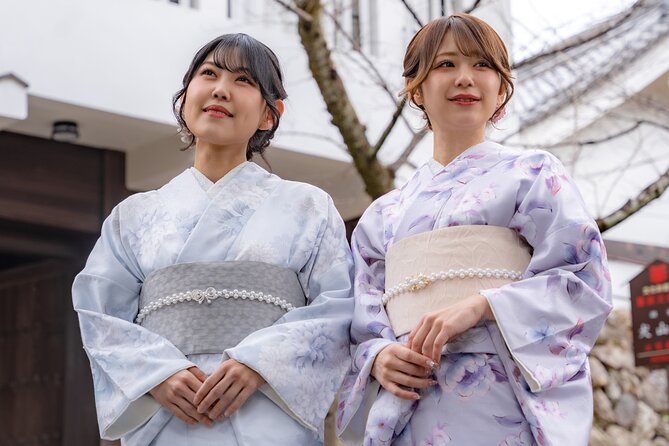
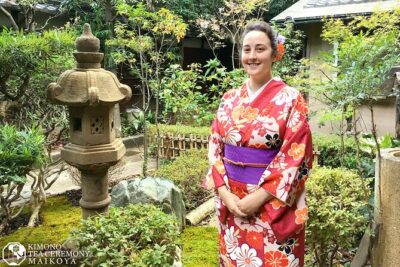
The first task is choosing a kimono. This gives you a personal say in how the day looks. You are not simply handed a standard outfit. You select a favorite kimono, then have it dressed for you at the shop.
The rental process is an important part of the activity because a kimono changes how you move through the town. A short visit to a street or food stall feels different when you are dressed in traditional clothing, and the outfit gives the whole day a clear theme.
You can add accessories for ¥550 per person. A hair set costs ¥2,200 per person. Neither is included in the base price, so decide before booking if you want the full styled look. If photographs matter to you, these extras may feel worthwhile. If your priority is the tea ceremony itself, the standard rental may be enough.
The start time is 11:00 am. Allow enough time to arrive at the shop without rushing. The activity lasts about two and a half hours, though the supplied description also refers to roughly two hours of cultural instruction. Treat the timing as approximate rather than planning a tight connection afterward.
More tea ceremony experiences in Nagoya:
- Nagoya: Japanese Traditional Sweets making and Tea Ceremony
★ 4.9 · 76 reviews - Experience Japanese calligraphy & tea ceremony at a traditional house in Nagoya
★ 5.0 · 16 reviews - Kyoto: Tea Ceremony in a Traditional Tea House in Kiyomizu
★ 4.9 · 3,519 reviews
Learning the tea ceremony near Inuyama Castle
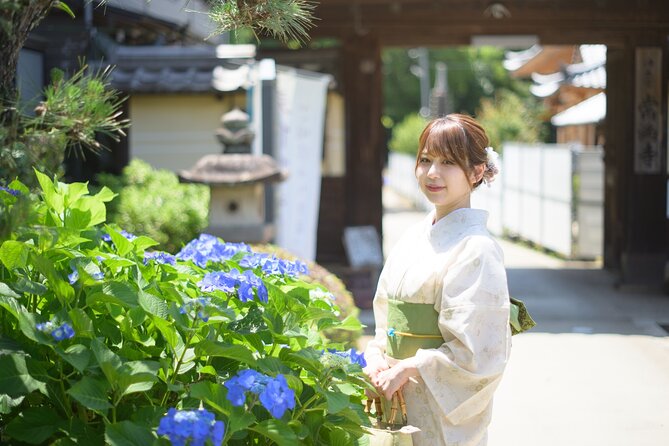
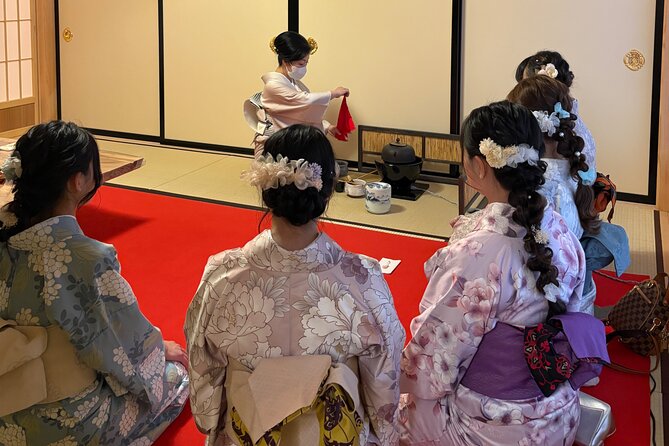
Once dressed, you take part in a tea ceremony at a teahouse within a temple near the national treasure, Inuyama Castle. The location matters. You are not doing a cultural lesson in an anonymous room. The setting connects the ceremony with Inuyama’s old castle town and its long-standing traditions.
The tea ceremony follows formal processes. You learn how to behave in the tea room, how the preparation unfolds, and how each action carries meaning. This is the part of the experience that gives the activity more value than simply putting on a kimono for photographs.
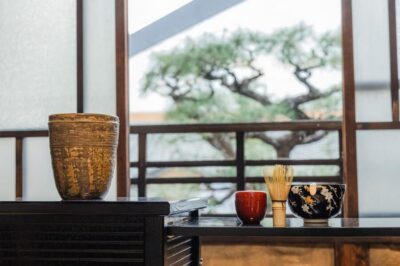
You also make matcha yourself. The hands-on element helps you remember the process, even if it is your first time preparing the tea. You then savor the matcha in the tea room, where the slower pace gives you a quiet break from sightseeing.
The teaching style is gentle and patient. English is not guaranteed as the guide’s language, and one account notes that the instructor did not speak Chinese. Still, careful communication and slow explanations made the steps clear for that group. You should be comfortable learning through demonstration, simple explanations, and watching the actions closely if your preferred language is not available.
That language point is worth considering. The tea ceremony has many small rules, and a detailed spoken explanation may be harder if you do not share a common language with the instructor. On the other hand, the physical steps are demonstrated, and the experience is designed around participation. The current information does not provide a guide’s name or promise a specific language.
What makes making matcha worthwhile
Making matcha yourself is the strongest part of the activity for many people. You are not only holding a bowl while someone else performs the ceremony. You take part in the preparation and see how the tea is made in the traditional setting.
The process also gives you a better sense of the ceremony’s pace. Actions that might seem slow from the outside become easier to understand when you perform them yourself. The emphasis is on care, order, and attention rather than speed.
You will probably find the tea less sweet and more earthy than a modern matcha drink. The point is not a café-style beverage. It is the connection between the tea, the room, the utensils, and the formal gestures.
The activity works well for first-timers because you do not need prior tea ceremony experience. One participant who had practiced in the past found the session a useful reminder of the formal steps. Another first-time participant described it as a valuable chance to understand why each action has meaning.
The instructor’s manner is another strong point. The teaching is described as professional, kind, and patient, without forcing participants to sit on their knees at any point. That last detail matters if you worry about the physical demands of a formal tea room. The information does not promise a specific seating arrangement for every session, but you are not expected to remain kneeling throughout the activity.
Wearing the kimono through Inuyama’s old streets
The rental is for the day, not only for the tea ceremony. After finishing at the teahouse, you return to the meeting point only at the end of the activity, so you can use the remaining rental time to see more of Inuyama.
This is where the experience offers better value than a short dressing session. You can stroll around Inuyama Castle and the surrounding historic streets while wearing the kimono. You can also enjoy local gourmet food along the way.
Inuyama is a good setting for this kind of outing because the activity begins in the castle town and places the tea ceremony near the castle. You do not need to treat the clothing and tea as unrelated stops. They form one cultural day in the same historic area.
Keep your walking plans sensible. A kimono is beautiful, but it is not the easiest outfit for covering a long distance or moving quickly. The information does not provide a specific route, walking distance, or footwear details, so plan a relaxed stroll rather than a packed sightseeing schedule.
You should also remember that the castle visit itself is not included as an admission benefit in the tour details. The activity gives you time to visit the castle and streets afterward, but transportation, food, and any entry costs are your responsibility.
More kimono & culture experiences in Nagoya:
- Nagoya Samurai & Toyota Tour guided by a friendly local
★ 5.0 · 24 reviews - Kyoto Geisha Walking Tour: Gion District & Hidden Gems
★ 4.7 · 3,273 reviews - Kyoto: Gion Magical Night Walking Tour with Geisha Trivia
★ 4.9 · 2,393 reviews - Kyoto: Gion Geisha District Walking Tour – Stories of Geisha
★ 4.7 · 2,187 reviews
Why the private format matters
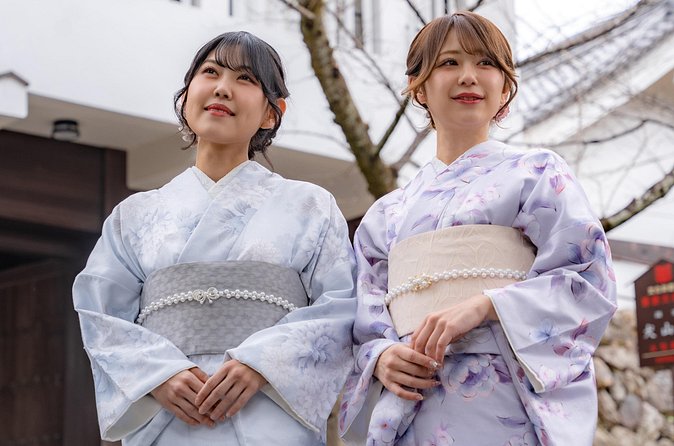
This is a private activity, so only your own group takes part. That makes the experience more personal than a large class. You can focus on your own kimono fitting, ask questions at your pace, and share the tea ceremony with the people you came with.
The private format is especially useful for a family or a group of friends. One group of eight enjoyed learning together, and the activity can work well when everyone wants the same cultural experience without being separated.
A private session does not mean the tea ceremony becomes casual. The formal process remains central. Instead, the private setting gives you a quieter space in which to follow the teacher’s instructions.
It may be less ideal if you prefer meeting strangers from around the world during organized activities. The benefit here is privacy and shared attention, not social mixing.
Is $97.98 good value?
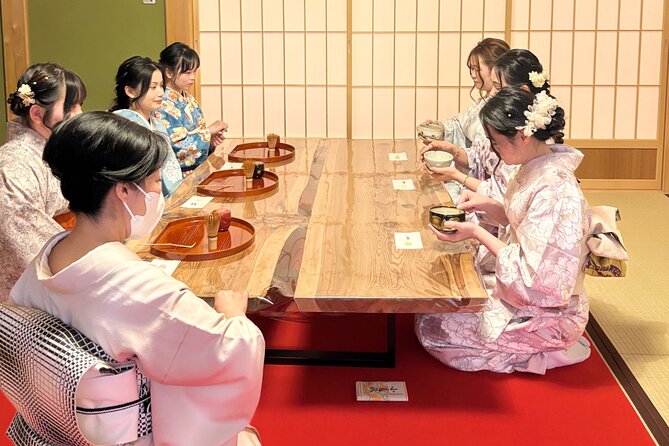
The price is $97.98 per person. That covers the kimono rental and tea ceremony, with the rental lasting for the day. You are paying for two connected experiences rather than a single photo opportunity.
I see the best value in the full-day use of the kimono. If you only attend the tea ceremony and immediately leave, the cost feels higher. If you also explore Inuyama Castle Town, take photographs, and stop for local food, the rental becomes a larger part of your day.
The tea ceremony adds value because you actively prepare the matcha and learn the meaning behind the formal actions. A demonstration alone would be quicker, but it would give you less to do and remember.
Budget separately for the optional ¥550 accessory fee and ¥2,200 hair set. Transportation to Inuyama Komachi is not included, and food or castle admission is also outside the stated inclusions.
For a couple, family, or small private group looking for a focused cultural activity, the price is reasonable if you will use the kimono for several hours. For a budget-conscious visitor who only wants to see Inuyama Castle, the cost may be harder to justify.
Practical timing and booking details
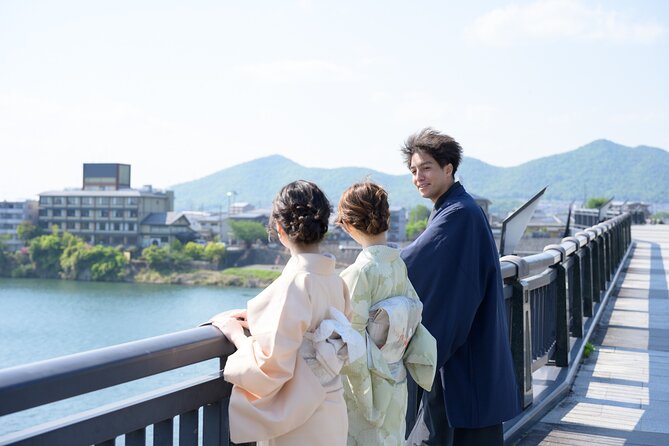
The scheduled start is 11:00 am at Inuyama Komachi. The activity ends back at the same meeting point, which is useful if you plan to continue exploring after the formal portion.
Confirmation is sent within 48 hours of booking, subject to availability. Do not make nonrefundable plans around the activity until your booking is confirmed.
Free cancellation is available if you cancel at least 24 hours before the local start time. A cancellation made less than 24 hours before the start is not refunded, and changes inside that window are not accepted. The activity also requires a minimum number of participants, so a cancellation by the provider for that reason would result in an alternative date or experience, or a full refund.
Because the activity is near public transportation, reaching the meeting point should be manageable, but the supplied details do not name the nearest station or provide a route. Check the exact address before setting out.
Who will enjoy this Inuyama experience most?
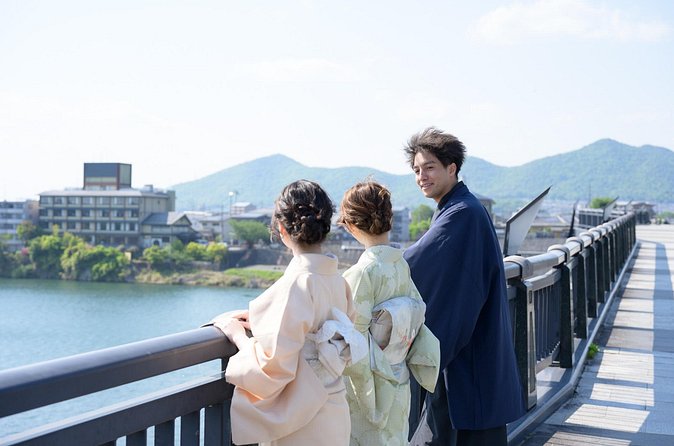
This activity suits you if you want a slower cultural experience with actual participation. You will get more from it if you enjoy learning customs, trying a traditional craft or process, and taking time for photographs and quiet observation.
It is a good fit for first-time visitors to Japan who want something beyond temples and sightseeing. The tea ceremony gives you context for Japanese manners and hospitality, while the kimono lets you experience the historic town in a more personal way.
It also suits returning visitors. If you have already seen major city sights, Inuyama offers a smaller-scale setting and a calmer cultural activity.
Families and groups of friends may appreciate the private format. Couples can also make it a special half-day, especially if they plan to continue around the castle town afterward.
Think twice if you want a fast activity with little preparation. Kimono dressing takes time, the tea ceremony follows a formal pace, and the outfit may make long-distance walking less comfortable. Also consider the language issue if you need detailed instruction in a particular language, since no language guarantee is provided.
Final decision: book it for culture, not just photographs
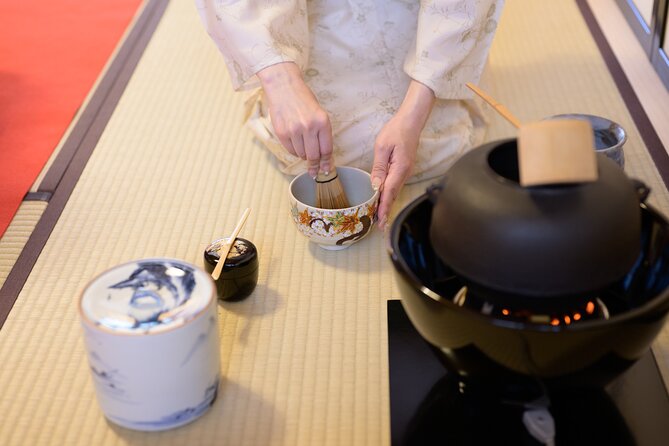
You should book this experience if you want to understand more than the appearance of a kimono. The strongest combination is the day rental, the temple tea room, and the chance to make matcha yourself. You leave with time to explore Inuyama in the same outfit, rather than changing back immediately after a short session.
I would choose it for a first visit to Inuyama, a special occasion, or a group that wants a shared cultural activity. I would skip it if your budget is tight, your schedule is packed, or you only want a quick castle visit.
The calm teaching, formal tea process, and private setting make this a thoughtful choice for anyone who values traditional experiences over speed. Add the hair set only if styling is important to you, and leave room in your schedule for a relaxed walk through the castle town.
FAQ
Where does the kimono and tea ceremony experience begin?
It begins at Inuyama Komachi, located at 213 Nishikoken, Inuyama, Aichi 484-0081, Japan.
What time does the activity start?
The scheduled start time is 11:00 am.
How long does the experience last?
The listed duration is approximately 2 hours and 30 minutes. Another description refers to about two hours of cultural activity, so you should treat the timing as approximate.
Is the kimono rental included?
Yes. The kimono rental is included, and the rental is for the day, allowing you to stroll around Inuyama after the tea ceremony.
Is the tea ceremony included?
Yes. The tea ceremony is included, along with the chance to make matcha yourself.
Are hair styling and accessories included?
No. Accessories are an optional ¥550 per person, and a hair set costs ¥2,200 per person.
Can I cancel for a full refund?
Yes, if you cancel at least 24 hours before the experience start time. Cancellations made less than 24 hours before the start are not refunded, and changes during that period are not accepted.
Just added around Nagoya
- Pub Crawl in Nagoya★ 5.0 · 15 reviews
- Walking Small-Group Nagoya City Tour★ 5.0 · 13 reviews
- Sumo Tournament Experience in Nagoya★ 5.0 · 12 reviews
- Nagoya Endoji Food and Cultural Tour★ 5.0 · 12 reviews
- Nagoya: 2026 Hida Takayama Shirakawa-go Light-up Winter Tour★ 3.5 · 16 reviews
- Private Full-day Nagoya City Tour★ 5.0 · 22 reviews
- Nagoya Street Food Walking Tour of Osu★ 5.0 · 28 reviews
- Nagoya Private Tour with a Local: Highlights & Hidden Gems★ 5.0 · 13 reviews
Tea Ceremony Experiences, compared.
Tea Ceremony in a Traditional Tea House in Kiyomizu
Read our review →


World Heritage Kyoto & Nara Uji Authentic Matcha Experience
Read our review →

Browse the lists this tour appears in