
REVIEW · TEA CEREMONY EXPERIENCES
Experience Japanese calligraphy & tea ceremony at a traditional house in Nagoya
Nagoya’s samurai-era story comes alive in a real kominka house, not a purpose-built cultural attraction. You’ll hear how Owari produced major figures such as Oda Nobunaga, Toyotomi Hideyoshi, and Tokugawa Ieyasu, then practice calligraphy and tea ceremony inside a home with tatami, shoji screens, and a traditional garden.
I like the slow, hands-on pace, especially making ink from a solid ink stick before writing a character you choose. I also like the small group limit of six, which suits the quiet setting and gives you room to ask questions. The main drawback is the price, $179.63 per person, which is a serious spend for two and a half hours.
In This Review
- Key points to know before booking
- A living house instead of a staged attraction
- The 15-minute story of Sengoku Nagoya
- Grinding ink and choosing a character
- Why the calligraphy works for beginners
- Matcha in the tea room
- The hosts and the small-group feel
- Is $179.63 a fair price?
- Who should book this Nagoya experience?
- Practical details for the afternoon
- Should you book it?
- FAQ
- Where does the experience begin and end?
- How long does the activity last?
- How many people can join?
- Is the experience conducted in English?
- What is included in the price?
- Is the finished calligraphy framed?
- Are additional souvenirs included?
- Is the activity near public transportation?
- What should I do if I have a food allergy?
- Can I cancel or change the booking?
Key points to know before booking
- You visit an actual traditional house: The setting includes tatami rooms, shoji paper screens, and a Japanese garden rather than a modern activity venue.
- You make your own ink: You grind an ink stick on an inkstone before learning how to hold and move the brush.
- Your calligraphy is framed: Your finished work is prepared as a framed keepsake during the experience.
- The tea ceremony is hands-on: You first drink matcha served by the host, then try serving tea yourself.
- The history talk comes first: A roughly 15-minute slide presentation sets the Nagoya and Sengoku-period context.
- The group stays small: A maximum of six people helps keep the session personal and calm.
A living house instead of a staged attraction
The address is in Showa Ward, at 4-chōme-32 Yamawakichō, and the activity begins and ends there. It is near public transportation, and the location has been described as reasonably easy to find, though you should still allow enough time to get your bearings before the scheduled start.
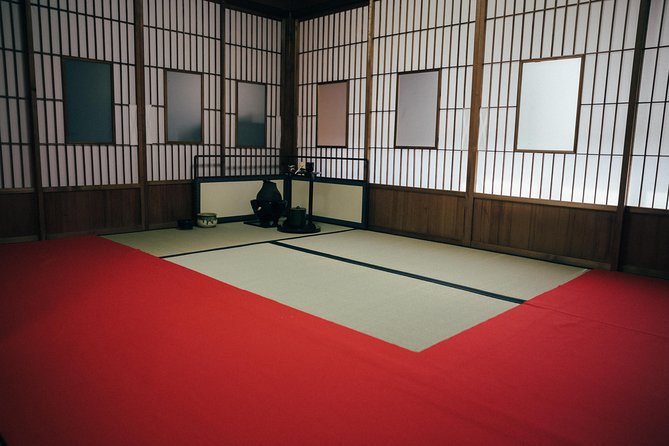
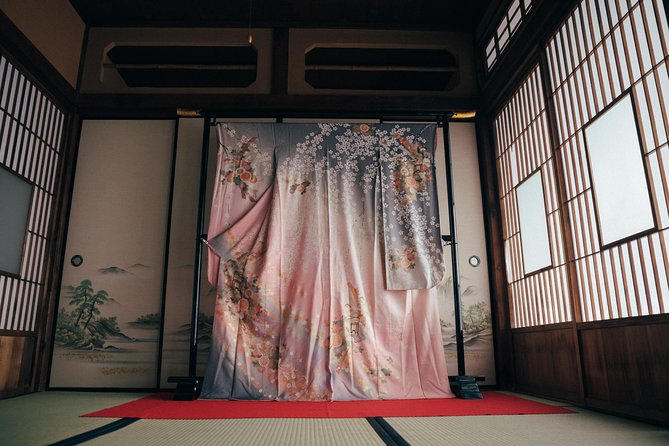
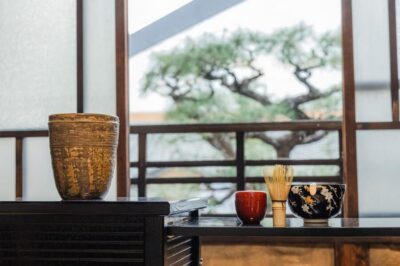
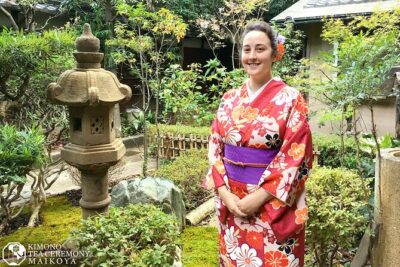
The setting is the heart of this experience. A kominka is an old Japanese farmhouse or traditional house, and this one was used as a home rather than built solely for sightseeing. That distinction matters. You are not simply looking at tatami and shoji as museum objects. You are entering a domestic space where the rooms, garden, and tea setting work together.
The house gives the activity a quiet rhythm. Calligraphy requires concentration, and a tea ceremony depends on attention to small movements. A busy commercial venue would make those moments feel more like a demonstration. Here, the traditional surroundings help the activities make sense.
You can expect to remove yourself, at least briefly, from the modern city around you. Nagoya is a large urban center, but this experience focuses on a quieter side of the city. It is a good fit if you want cultural context without spending an entire day at a museum or traveling far outside town.
More tea ceremony experiences in Nagoya:
- Nagoya: Japanese Traditional Sweets making and Tea Ceremony
★ 4.9 · 76 reviews - Kimono Rental and Tea Ceremony Experience in Inuyama
★ 5.0 · 15 reviews - Kyoto: Tea Ceremony in a Traditional Tea House in Kiyomizu
★ 4.9 · 3,519 reviews
The 15-minute story of Sengoku Nagoya
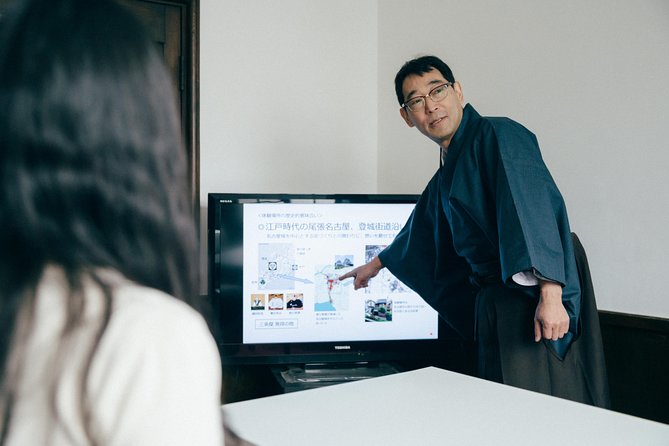
The session begins with a short history commentary, supported by an easy-to-follow slide show. It lasts about 15 minutes and introduces Nagoya and the Owari district during the Sengoku period, the era when competing samurai leaders fought for power across Japan.
The point is not to turn you into a specialist. Instead, the presentation gives you a useful frame for the rest of the visit. Owari, the area around present-day Nagoya, was connected with three of Japan’s best-known samurai-era leaders: Oda Nobunaga, Toyotomi Hideyoshi, and Tokugawa Ieyasu.
That opening explanation is valuable because the cultural activities are not presented as isolated crafts. You get a brief sense of the region’s political and social past before sitting down with a brush and entering the tea room. If you already know some Japanese history, the talk can help connect familiar names to Nagoya. If you know little about the period, it gives you a simple starting point.
The presentation is short enough that it does not take over the experience. You spend most of the two and a half hours doing things yourself. Still, the history section is worth paying attention to, since it explains why Nagoya is being presented as a place of samurai culture rather than simply another Japanese city.
Grinding ink and choosing a character
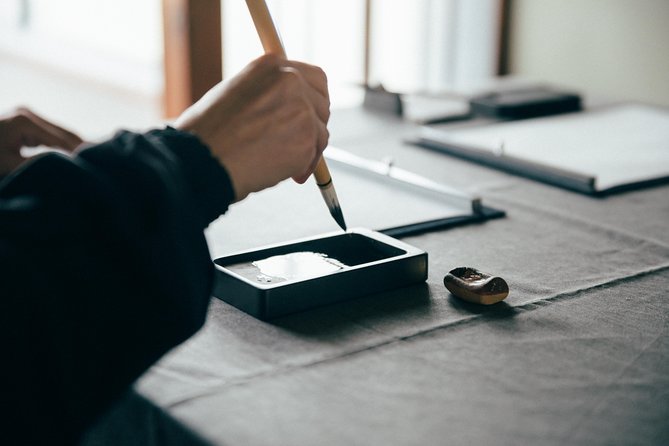
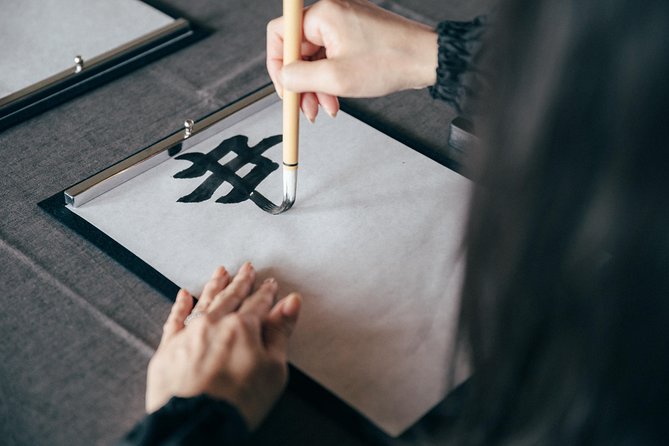
The calligraphy portion begins with materials and technique. You drip water onto an inkstone, then slowly rub a solid ink stick across it. This is a modest but important part of the experience. It takes time, creates a distinctive ink scent, and asks you to slow down before you even pick up the brush.
That preparation separates this from a quick brush-writing demonstration. You are not handed a ready-made marker and told to copy a symbol in thirty seconds. The act of making ink gives you a physical introduction to the patience behind Japanese calligraphy.
You then learn the basics of holding and moving the brush. The information provided does not promise advanced instruction, and you should not expect a professional calligraphy class. Instead, the lesson is aimed at visitors who want to understand the process and create a personal piece.
You select a symbol from sample designs based on its meaning and appearance. This gives you some control over the finished work. You might choose a character that reflects a hope, value, or memory from your trip, though the precise selection depends on the samples available during your visit.
The clean copy of your work is framed as a souvenir. That is one of the strongest practical benefits of the activity. You do not leave with only a temporary practice sheet. You receive a finished piece that can remind you of the afternoon and the slower pace of the house.
The description also lists souvenirs as not included, so it is useful to understand the difference. The framed calligraphy is part of the experience described, while additional souvenirs are not supplied. If you are hoping to shop for other items, this activity is not presented as a shopping stop.
Why the calligraphy works for beginners
You do not need previous brush experience. The activity includes all Japanese calligraphy tools, and the basic instructions cover the brush grip and movement. That makes it suitable for adults or families who want a cultural activity without preparing in advance.
The process also leaves room for imperfect results. Calligraphy is not about producing a mechanically perfect souvenir. Brush pressure, ink flow, and movement all affect the mark, so your final sheet should feel personal rather than factory-made.
I especially like the contrast between the short history talk and the calligraphy work. The presentation uses slides and spoken explanation. The writing session then moves into touch, smell, and movement. You learn a little, then use your hands to take part.
The quiet atmosphere matters here. The ink preparation and brushwork would lose some of their character if you were squeezed into a large group. With no more than six people, the host can explain the basics without turning the session into a loud classroom.
More kimono & culture experiences in Nagoya:
- Nagoya Samurai & Toyota Tour guided by a friendly local
★ 5.0 · 24 reviews - Kyoto Geisha Walking Tour: Gion District & Hidden Gems
★ 4.7 · 3,273 reviews - Kyoto: Gion Magical Night Walking Tour with Geisha Trivia
★ 4.9 · 2,393 reviews - Kyoto: Gion Geisha District Walking Tour – Stories of Geisha
★ 4.7 · 2,187 reviews
Matcha in the tea room
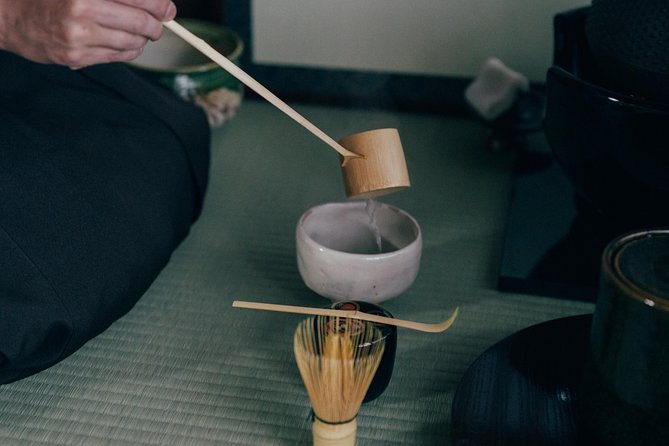
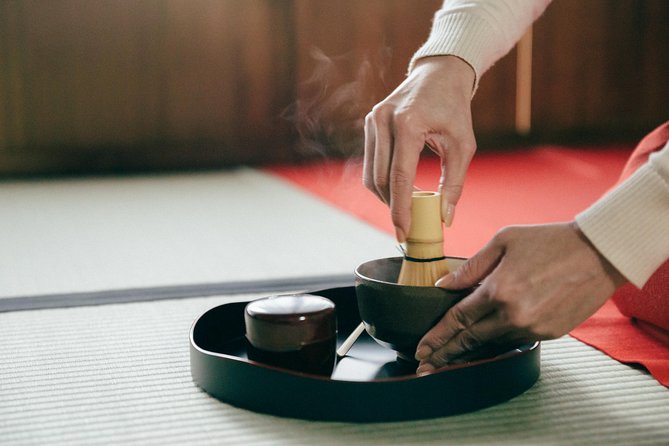
After calligraphy, you move to the tea room for the second half of the experience. The host explains the room’s arrangement and the utensils used for tea preparation. This gives you a chance to understand what you are seeing before you try it.
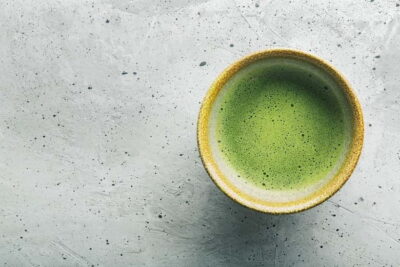
You first take the role of guest. The host serves you a bowl of matcha with Japanese sweets. Matcha has a distinct, grassy bitterness, so the sweets provide a small balance. The supplied experience includes one bowl of matcha and some Japanese sweets, with coffee and tea also listed among the inclusions.
Once you are familiar with the atmosphere, you try serving tea yourself. The activity is not only a performance for you to watch. You participate in the host’s role and get a feel for the care involved in preparing and offering matcha.
The wording emphasizes calming your mind and sensing the spirit of tea ceremony. You should read that as an invitation to pay attention, not as a promise of a religious or formal training session. The experience offers an introduction to the setting, utensils, and basic act of serving tea.
This part should appeal to you if you prefer cultural activities that ask for quiet attention. It may feel slow if you want constant movement or a packed sightseeing schedule. That is also the point. The tea room gives the afternoon a pause.
If you have food allergies, tell the provider in advance because sweets are served. The available information does not specify the ingredients, so do not wait until the day of the activity to raise the issue.
The hosts and the small-group feel
The hosts are Yuzo Mori and his wife. Their home and personal involvement are central to the character of the session. You are welcomed into a place where people actually lived, rather than into a facility designed only for demonstrations.
The experience is conducted with English, making the historical explanation and cultural instructions accessible to English-speaking visitors. The clearest praise has focused on the warm hosts, the history briefing, the writing activity, the flavor of the tea, and the setting.
A group limit of six is a useful detail, not just a marketing number. Six people is small enough for each person to handle the brush and tea utensils without feeling lost in a crowd. It also suits a traditional room, where space and quiet are part of the experience.
The small capacity means availability can be limited. This activity is booked an average of 17 days ahead, so I would not leave it until the final day of a short Nagoya visit. Confirmation is usually sent at booking. If you book within seven days of the date, confirmation may arrive within 48 hours and remains subject to availability.
Is $179.63 a fair price?
At $179.63 per person, this is not a bargain activity. You are paying for two and a half hours, a private-house setting, English instruction, the history presentation, calligraphy materials, a framed calligraphy piece, matcha, and sweets.
The value depends on what you want from a cultural experience. If you only want to taste matcha or write one Japanese character quickly, the price will likely feel high. Nagoya offers other ways to spend an afternoon for less money.
If you value a small group, a personal setting, and guided participation in two related traditions, the cost becomes easier to understand. The activity combines context, instruction, materials, food, and a keepsake. You also avoid the distance and time involved in traveling to a rural farmhouse, since the house is in Nagoya.
The framed calligraphy adds practical value, although you should not treat it as a high-end piece of professional artwork. Its importance is personal. You made the ink, chose the symbol, handled the brush, and took part in the process.
I would compare this price with other hands-on cultural activities, not with a museum admission or a standard tea purchase. You are paying for access to the home, the hosts, the small group, and the time they spend guiding you. For a special occasion, honeymoon, anniversary, or final-day memory of Japan, that may be reasonable. For a budget-conscious itinerary, it may be too much.
Who should book this Nagoya experience?
I would recommend it to you if you want:
- A calm cultural activity rather than a fast sightseeing stop
- A first introduction to Japanese calligraphy
- A basic explanation of Nagoya’s samurai-era connections
- A traditional house with tatami rooms and shoji screens
- A small group instead of a large class
- A physical souvenir made during your visit
- An English-language experience in the city
It also suits couples and families who like to try something together. The activity is not limited to specialists, and most people can participate. You need curiosity and patience more than artistic skill.
You may want to skip it if your main goal is a low-cost activity, a long formal tea ceremony, or intensive calligraphy training. The session introduces both traditions in one visit, so it cannot provide the depth of a multi-day course in either one.
The 2.5-hour length is well judged for this format. It gives enough time for the history briefing, ink preparation, writing, tea explanation, and hands-on serving without requiring a full day. Still, the pace is deliberately unhurried. If you prefer tightly scheduled attractions, plan your expectations accordingly.
Practical details for the afternoon
The mobile ticket makes it easy to keep the booking on your phone. The start and end point are the same, so you do not need to arrange a separate return transfer after tea.
The experience is near public transportation. The address is in Nagoya’s Showa Ward, and it has been described as reasonably easy to find. Because the activity takes place in a house rather than a major attraction, I would allow extra time for the final approach and avoid arriving at the last second.
The maximum group size is six. Most people can participate, but the supplied information does not provide specific accessibility details, so contact the provider if you have mobility or other access concerns.
The activity is non-refundable and cannot be changed for any reason. That rule is important at this price. Book only after checking your Nagoya schedule, and avoid placing it beside a train departure or another reservation that could shift.
Should you book it?
Book this experience if you want a personal introduction to Japanese culture in a genuine home setting. The strongest reasons are the hands-on ink making, the framed calligraphy, the chance to serve matcha yourself, and the short explanation of Nagoya’s Sengoku connections.
I would hesitate only because of the cost and the strict cancellation terms. At $179.63, it needs to be a priority rather than an impulse purchase. If the price fits your budget and you enjoy quiet, guided activities, this is a thoughtful way to spend an afternoon in Nagoya. If you want maximum sightseeing for your money, choose a less specialized option.
FAQ
Where does the experience begin and end?
It begins and ends at 4-chōme-32 Yamawakichō, Showa Ward, Nagoya, Aichi 466-0063, Japan.
How long does the activity last?
The experience lasts approximately 2 hours and 30 minutes.
How many people can join?
The activity has a maximum of six participants.
Is the experience conducted in English?
Yes. The calligraphy and tea ceremony experience includes English guidance and explanation.
What is included in the price?
The price includes coffee and/or tea, one bowl of matcha, Japanese sweets, and all Japanese calligraphy tools.
Is the finished calligraphy framed?
Yes. The clean copy of your calligraphy work is framed as a souvenir during the experience.
Are additional souvenirs included?
No. Additional souvenirs are not included, although the framed calligraphy work is part of the described activity.
Is the activity near public transportation?
Yes. The meeting point is near public transportation.
What should I do if I have a food allergy?
Tell the provider in advance because Japanese sweets are served during the experience.
Can I cancel or change the booking?
No. The experience is non-refundable and cannot be changed for any reason.
Just added around Nagoya
- Pub Crawl in Nagoya★ 5.0 · 15 reviews
- Walking Small-Group Nagoya City Tour★ 5.0 · 13 reviews
- Sumo Tournament Experience in Nagoya★ 5.0 · 12 reviews
- Nagoya Endoji Food and Cultural Tour★ 5.0 · 12 reviews
- Nagoya: 2026 Hida Takayama Shirakawa-go Light-up Winter Tour★ 3.5 · 16 reviews
- Private Full-day Nagoya City Tour★ 5.0 · 22 reviews
- Nagoya Street Food Walking Tour of Osu★ 5.0 · 28 reviews
- Nagoya Private Tour with a Local: Highlights & Hidden Gems★ 5.0 · 13 reviews
Tea Ceremony Experiences, compared.
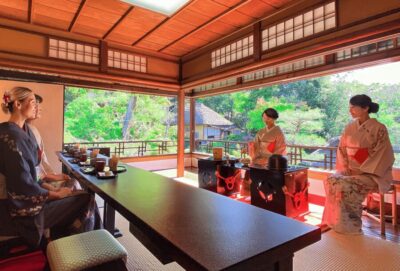
Tea Ceremony in a Traditional Tea House in Kiyomizu
Read our review →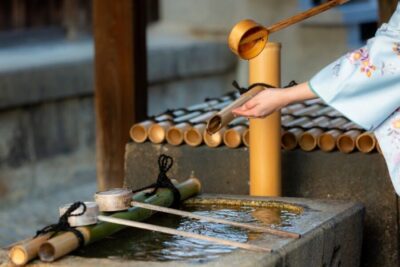
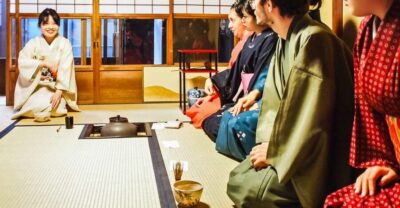

World Heritage Kyoto & Nara Uji Authentic Matcha Experience
Read our review →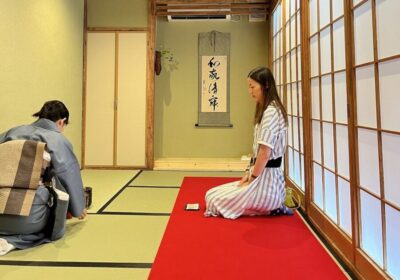
Browse the lists this tour appears in