
REVIEW · DESSERT TOURS
Japanese Traditional Sweets making
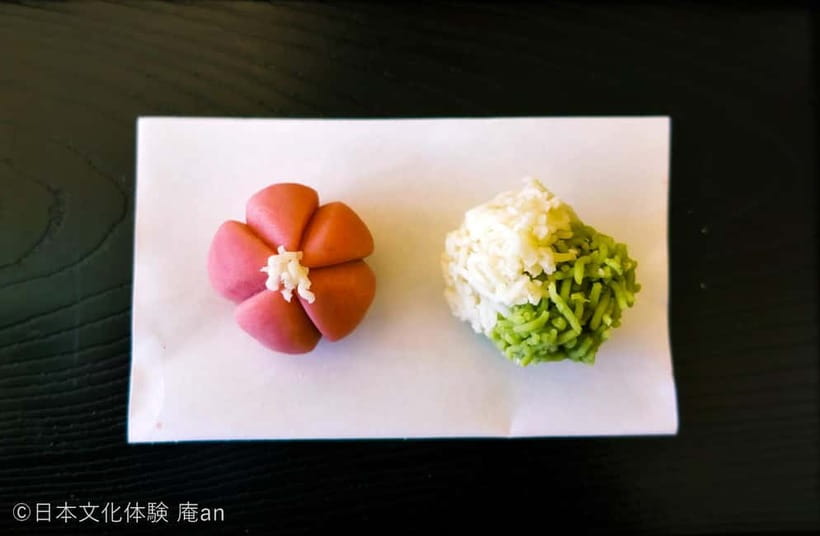
Making two Japanese sweets by hand is a fine way to spend an hour in Tokyo, especially when the ingredients come from long-established Kyoto sweet shops. At AN TOKYO, you shape seasonal nerikiri, a soft bean-paste confection treated almost like edible sculpture, then eat what you make.
I like the low $11 price and the fact that you make two different sweets, not just one sample. I also like the clear seasonal angle: the shapes change with the time of year, so the activity feels tied to Japanese food culture rather than being a generic craft class.
The main caution is pace. The scheduled making time is short, and one recent class felt rushed, with little time for each step and limited visibility from the back of the room. Arrive early, keep your expectations realistic, and ask for English help before the class begins if you need it.
In This Review
- Key points to know before booking
- What you are really making: edible seasonal art
- The 65-minute schedule at AN TOKYO
- Why the Kyoto bean paste matters
- The best value for food lovers on a budget
- The room, visibility, and arrival advice
- English support and the instructor
- Who will enjoy this activity most
- Booking, cancellation, and small extras
- Should you book Japanese Traditional Sweets Making?
- FAQ
- Where does the Japanese sweets-making experience take place?
- How long does the activity last?
- How many sweets will I make?
- Can I eat the sweets after making them?
- Can I take the sweets home?
- Is the class taught in English?
- What happens if I arrive late?
- Can I cancel for a full refund?
Key points to know before booking
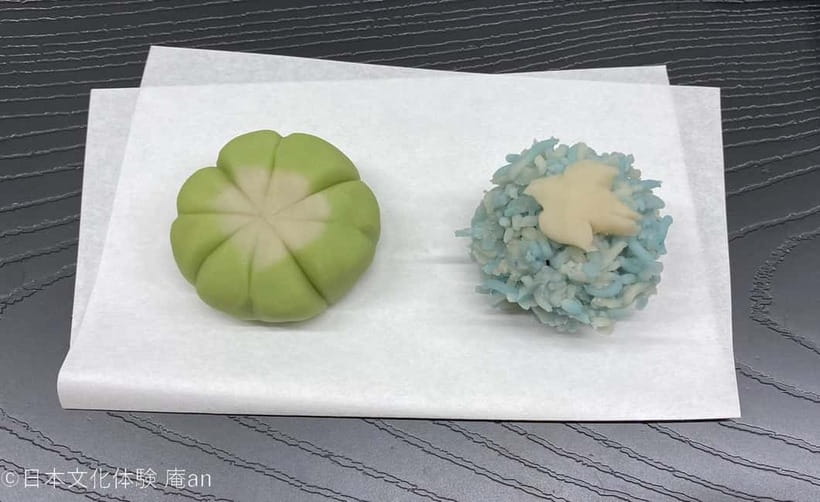
- Two seasonal nerikiri sweets: Make a flower-shaped sweet and a kinton nerikiri during the 65-minute visit.
- Kyoto-sourced bean paste: Use white and red bean paste made by established Kyoto shops.
- A very affordable Tokyo activity: At $11 per person, it costs less than many food workshops.
- Tasting is part of the fun: Eat your finished sweets on site, or buy a take-out box for 100 JPY.
- Japanese-led instruction: The instructor speaks Japanese, with English translation provided as much as possible.
- Timing matters: The making session ends at about 55 minutes, followed by eating time, and late arrivals cannot be accommodated.
What you are really making: edible seasonal art
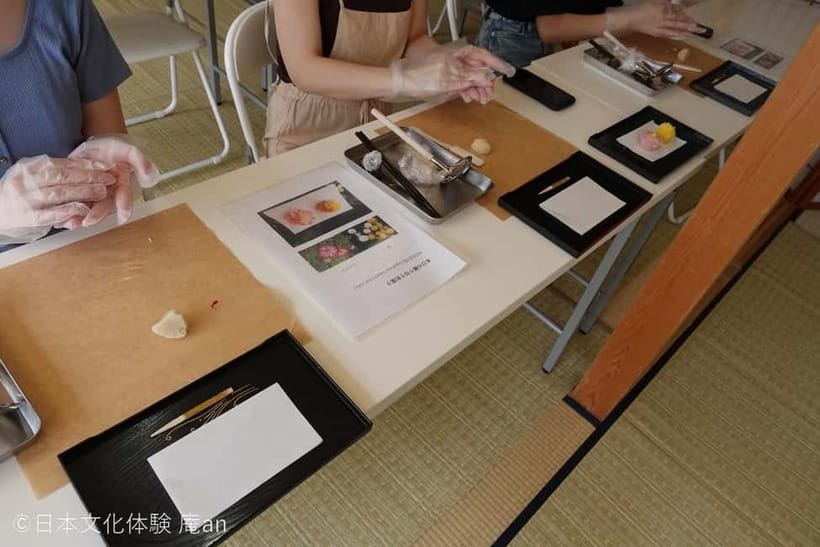
Nerikiri is a traditional Japanese sweet made from smooth bean paste. It is often shaped into flowers, leaves, or other designs connected to the season. The finished sweet is small, delicate, and designed to look as good as it tastes.
This class gives you a practical introduction to that tradition. You do not simply watch someone make a perfect sweet behind a counter. You handle the paste yourself, shape it, and place the finished pieces on a plate for a photo.
That hands-on part matters. Nerikiri looks simple when an experienced maker does it, but the clean shapes and soft folds take care. Your own sweets may not look exactly like the example, which is part of the charm. You get a better sense of the skill involved, and you also get something you can eat at the end.
The ingredients add another useful layer. The white and red bean pastes come from long-established shops in Kyoto. That does not turn the activity into a Kyoto food tour, but it gives the class a connection to one of Japan’s best-known confectionery traditions.
A few more Tokyo trips to weigh up
- Matcha Making Class in Tokyo with Authentic Japanese Sweets Set
★ 5.0 · 744 reviews - Tokyo: Matcha Making Experience with Mochi Sweets in Asakusa
★ 4.9 · 388 reviews - Japanese Traditional Sweets making and Tea Ceremony
★ 4.7 · 50 reviews
The 65-minute schedule at AN TOKYO
The class begins with an explanation of Japanese traditional sweets. This opening should help you understand what nerikiri is and why the shapes change with the season. Since the instructor teaches in Japanese, English translation is offered as much as possible. If you need extra help, contact the operator ahead of time rather than assuming every instruction will be repeated in English.
Next comes the flower-shaped nerikiri. This is the first chance to work with the bean paste and follow the instructor’s shaping steps. The activity is not designed as a long, slow pastry course. You are guided through a set design, with the group moving from one stage to the next.
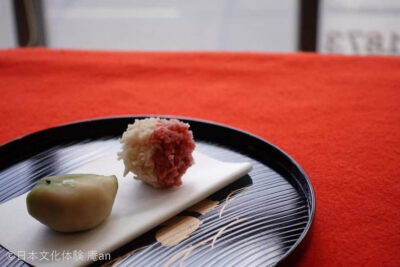
The second sweet is a kinton nerikiri. Kinton designs have a more textured look than a smooth flower shape, so making two styles gives you a useful contrast. You see how the same basic sweet-making material can become different forms through shaping and handling.
The formal experience ends at about 55 minutes. The remaining time is set aside for photographs and eating, with the room departure planned at the 65-minute mark. That schedule is tidy, but it leaves little room for delays or extended questions.
One important point is the speed. A recent class was described as moving through each task in only 30 to 40 seconds before advancing. That may not be every session, but it is a fair warning for anyone who wants a calm, highly detailed lesson. If you enjoy following instructions quickly, the pace may keep things lively. If you prefer patient coaching, this may feel more like a guided activity than a full cooking workshop.
Why the Kyoto bean paste matters
The class uses both white and red bean paste. These are not minor details. Bean paste is the main material in nerikiri, so its texture affects how easy the sweets are to shape and how pleasant they are to eat.
The use of paste from established Kyoto shops gives you a taste of the refined side of Japanese confectionery. Kyoto has a long tradition of sweets made for tea gatherings, seasonal celebrations, and careful presentation. Here, you get to work with an ingredient connected to that tradition, even though the class takes place in Tokyo.
The flavor is gentle rather than sugary in the way some Western candies are. The red bean paste brings a familiar sweet bean taste, while white bean paste is milder and smoother. The class includes eating time, so you can judge the result for yourself instead of leaving with an object that looks pretty but never gets tasted.
You can also buy a take-out box for 100 JPY if you want to carry the sweets away. The activity itself includes the nerikiri-making set, but the box costs extra. An experience completion certificate is also available for 300 JPY. If you want a certificate with your name printed, provide the names in advance. Otherwise, the name area is left blank.
The best value for food lovers on a budget
At $11 per person, this is one of the easier cultural activities to fit into a Tokyo day. The price includes the full nerikiri-making set and the chance to make two sweets. You are not paying for a meal, but you are getting an activity, a small lesson in Japanese confectionery, and something to eat at the end.
That makes the class a good choice when you want a short break from sightseeing. It also works well for solo visitors. The class gives you a simple shared task, so you can meet people without the forced feeling of a formal social event. One highly positive assessment specifically praised it as a good way for solo participants to socialise.
Still, price and depth are linked here. The low cost helps explain why the session is compact and likely designed for group turnover. If you want to learn professional wagashi techniques, work at your own speed, or ask many questions, you may find the format too brief.
I would judge the value this way: for $11, you get a cheerful, unusual activity with good ingredients and an edible result. You do not get a long specialist workshop. That is a reasonable trade if you want a memorable hour rather than a serious cooking course.
Same city, a completely different kind of day:
- Mt Fuji and Hakone 1-Day Bus Tour Return by Bullet Train
★ 5.0 · 26,383 reviews - 1-Day Tokyo Bus Tour
★ 5.0 · 14,250 reviews - Tokyo: TOKYO SKYTREE® Admission ticket
★ 4.5 · 11,192 reviews - Tokyo: teamLab Planets TOKYO Digital Art Museum Entry Ticket
★ 4.6 · 9,779 reviews
The room, visibility, and arrival advice
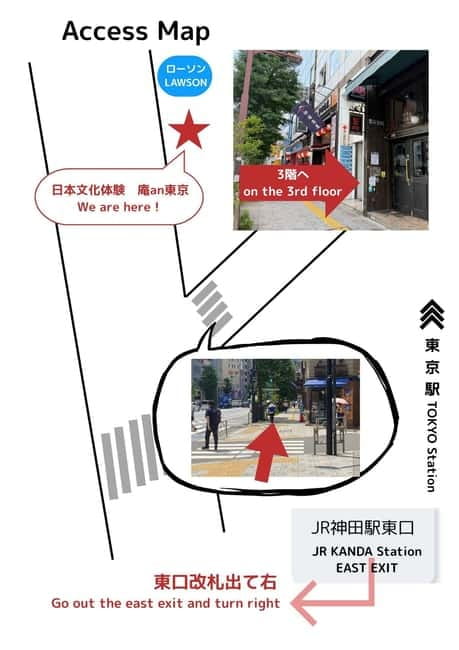
The meeting point is AN TOKYO Japanese Culture Experience at 35.6916541, 139.7715022. The supplied location information identifies it as a large classroom that can hold around 30 people. That capacity affects the feel of the class.
If you sit near the front, you should have a better view of the instructor’s hand movements. From the back, it may be harder to see exactly how the paste is being shaped. This is especially important for nerikiri because small changes in pressure and position can alter the final design.
Arrive with enough time to find the venue and settle in. The class cannot be held for late arrivals, no matter the reason. This is not the sort of activity where you can quietly join after the first demonstration, since missing one shaping step may leave you struggling to catch up.
Coat and bag storage may also be basic. One recent participant found there was nowhere to hang coats, so outerwear and bags had to stay on the floor. Pack lightly if you can, especially if you are visiting during a season when you need a heavy coat.
Only people taking part in the experience may enter. If someone in your party plans to wait while others participate, check with the operator first rather than assuming they can sit inside.
English support and the instructor
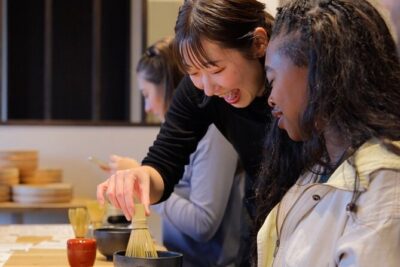
The instructor is Japanese, and the additional information lists Japanese as the class language. English translation is provided as much as possible, but it is not presented as a fully English-led session.
For many people, the visual nature of the activity will help. You can watch the demonstration, copy the hand movements, and use the ingredients in front of you. Even so, the pace makes language support important. Contact AN TOKYO if you want English assistance added, and do so before arriving.
The class has received praise for its instructor and staff. One recent assessment called the class informative and fun, while another simply highlighted the great staff. Those positive points suggest that the basic teaching approach can work well, particularly when the group is attentive and the instructions are easy to see.
At the same time, the warmness of the welcome and the clarity of the teaching may vary by session. One very low assessment described the welcome as cold and the explanations as rushed in both Japanese and English. I would not ignore that warning, especially if you are booking this as a major food experience.
Who will enjoy this activity most
I would recommend the class to you if you want a short, affordable taste of Japanese culture and do not need a long lesson. It suits first-time visitors who want something beyond temples, shopping, and restaurant meals.
It is also a good fit for:
- Solo visitors looking for an easy social activity
- Families with older children who can follow quick instructions
- Food lovers curious about wagashi and bean-paste sweets
- Couples or friends who want a small creative activity
- People with a spare hour in central Tokyo
- Anyone who likes photographing handmade food before eating it
Children under two who sit on a parent’s lap are free. The information does not provide a broader age policy, so families with older children should confirm details if that affects their booking.
I would hesitate to recommend it to you if you want a quiet, private class or detailed one-to-one instruction. It may also disappoint if your main goal is to take the sweets home, since eating on site is the normal finish and the take-out box costs extra.
Booking, cancellation, and small extras
The activity runs between 10:00 and 17:00. Reservations received after 17:00 are processed the following day. Starting times vary, so check availability when choosing your date.
You can reserve now and pay later, which helps if your Tokyo plans are still moving around. Cancellation is free up to 24 hours in advance for a full refund. After that point, cancellation fees apply, and changing the date after a fee has been incurred can also bring an additional specified charge.
Do not count on recovering transport costs if you cancel. The operator does not compensate for travel expenses to the venue. If you are running late, it is better to contact the operator, but the class is not held for delayed arrivals.
The optional extras are modest:
- Take-out box: 100 JPY
- Experience completion certificate: 300 JPY
- Named certificate: request names in advance
The overall rating is 4.1 from 19 assessments, with strong praise for the taste, staff, information, and value, alongside serious concerns about speed and organization. That mixed picture is useful: the concept is appealing and inexpensive, but the quality of your visit may depend on group size, seating, and how much English support you need.
Should you book Japanese Traditional Sweets Making?
Book it if you want two seasonal Japanese sweets, good Kyoto bean paste, and a low-cost activity that fits neatly into a Tokyo itinerary. The tasting, photo time, and chance to shape your own nerikiri make it more memorable than simply buying a sweet at a shop.
Before paying, ask yourself how much patience you have for a fast group lesson. Sit near the front if possible, arrive early, travel light, and request English support in advance. With those precautions, AN TOKYO can give you a pleasant introduction to Japanese confectionery for very little money.
Skip it if you need a slow, highly personal workshop or a guaranteed English-speaking instructor. For everyone else, this is a sensible one-hour cultural stop, with a few rough edges but a genuinely tasty finish.
FAQ
Where does the Japanese sweets-making experience take place?
It takes place at AN TOKYO Japanese Culture Experience in Tokyo. The listed coordinates are 35.6916541, 139.7715022.
How long does the activity last?
The full visit lasts 65 minutes. The making portion and picture time finish at about 55 minutes, followed by eating time before departure.
How many sweets will I make?
You will make two seasonal Japanese traditional sweets called nerikiri. The program includes a flower-shaped nerikiri and a kinton nerikiri.
Can I eat the sweets after making them?
Yes. Eating time is included at the end of the activity, and you can eat your handmade sweets on site.
Can I take the sweets home?
You can purchase a sweets take-out box for 100 JPY. The box is not included in the experience price.
Is the class taught in English?
The instructor is Japanese, and Japanese is the listed language. English translation is provided as much as possible. Contact the operator if you would like to request additional English support.
What happens if I arrive late?
The event will not be held to accommodate delays. Plan to arrive early enough to find the meeting point and be ready when the session begins.
Can I cancel for a full refund?
You can cancel up to 24 hours in advance for a full refund. Cancellation fees apply after that point, and date changes made after a fee has been incurred may also involve a specified charge.
Just added around Tokyo
- Tokyo: Customizable Private Guided Walking Tour★ 4.5 · 129 reviews
- Private Harajuku Omotesando Architecture Tour★ 4.9 · 18 reviews
- Tokyo: Guided Helicopter Ride★ 4.9 · 24 reviews
- Tokyo: Guided Walking Tour of Tsukiji Market with Lunch★ 4.4 · 24 reviews
- Tokyo: Private Personalized Local Food Tour★ 4.5 · 101 reviews
- Tokyo GINZA: KONPARU Japanese Cabaret Show with Drink★ 4.8 · 38 reviews
- Tokyo: Guided Walking Tour of Tsukiji Market with Breakfast★ 4.4 · 134 reviews
- Tokyo: Gotokuji Cat Temple, Shinjuku Cat Cafe & 3D Cat Tour★ 4.9 · 38 reviews
Dessert Tours, compared.
Matcha Making Class in Tokyo with Authentic Japanese Sweets Set
Read our review →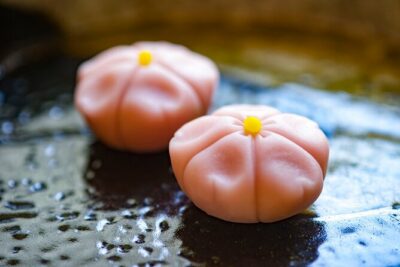
Matcha Making Class in Osaka with Authentic Japanese Sweets Set
Read our review →
Matcha Making Experience with Mochi Sweets in Asakusa
Read our review →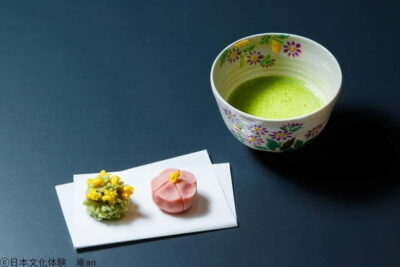
Japanese Traditional Sweets Making and Tea Ceremony
Read our review →
Japanese Traditional Sweets Making and Tea Ceremony
Read our review →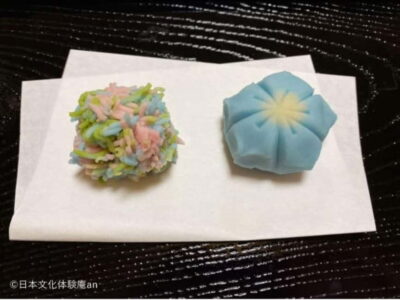
Japanese Traditional Sweets making and Tea Ceremony
Read our review →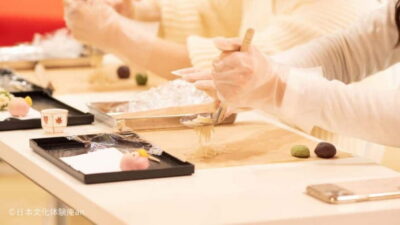
Japanese Traditional Sweets making and Tea Ceremony
Read our review →Browse the lists this tour appears in