
REVIEW · KIMONO & CULTURE EXPERIENCES
Japanese miniature kimono made with origami in Osaka
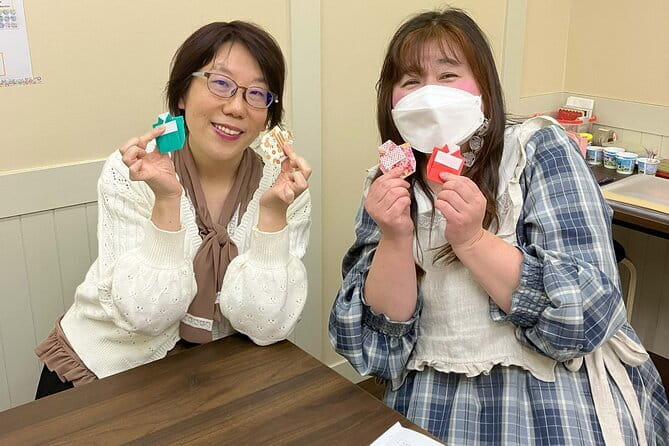
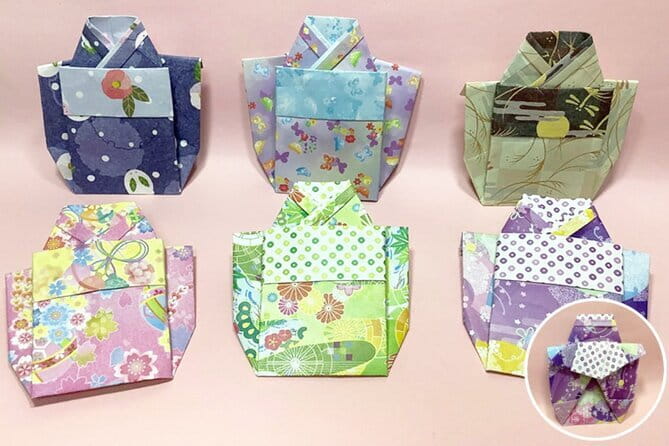
The clever idea here is simple: you turn one sheet of patterned paper into a miniature Japanese kimono, complete with the layered look and back belt. Hiroko teaches the folds step by step, so you do not need prior origami skills. Even children and first-time folders can take part.
I like two things in particular. First, the finished kimono is more than a flat paper shape: it has a pocket-like feature and details that make it suitable as a small gift. Second, you receive a video QR code and folding diagram, so the class can continue after your Osaka visit. The main consideration is that the folds can be tricky at first, especially if your hands are not used to precise paper work.
In This Review
- Key points to know before booking
- Folding a kimono near Abeno Station
- A gentle start for first-time origami folders
- The final patterned kimono
- Choosing from traditional patterns
- A souvenir you can actually recreate
- What the $65.32 price gets you
- Who will enjoy this class most
- Practical details for a smooth visit
- How to fit it into an Osaka day
- Is the miniature kimono class worth booking?
- FAQ
- Where does the origami kimono experience begin?
- How long does the activity last?
- Is the class suitable for beginners and children?
- What is included in the price?
- Can I choose the origami paper?
- What do I take home?
Key points to know before booking
- Make a miniature kimono from one patterned sheet of origami paper, rather than completing a standard beginner model.
- Meet at Abeno Station Exit 7, then walk with the instructor to the classroom.
- Practice once before making the final piece, a helpful step for children and first-time folders.
- Choose from about 20 traditional works if time allows, giving you some say in the final pattern.
- Take home both the finished craft and folding guidance, including a QR code for a video.
- Book for a private session, with only your own group taking part.
Folding a kimono near Abeno Station
This experience begins at the bottom of the stairs at Abeno Station, Exit 7, on the Osaka Metro Tanimachi Line. That meeting point matters because Abeno is close to several of Osaka’s best-known sights. You can pair the class with Abeno Harukas, Tsutenkaku Tower, or Tennoji Zoo without sending yourself across the city.
The building itself contains a range of shops, so this is not a stand-alone rural craft studio. You first meet the instructor at the station, then go together to the classroom. That arrangement is useful if you are unfamiliar with the area, though you should allow enough time to find Exit 7 and reach the stairs.
The location also gives you an easy way to fill the rest of the day. Abeno Harukas offers a major city landmark nearby, while Tennoji and Tsutenkaku give you more sightseeing and shopping choices. The origami class works best as a small, focused stop in a larger Osaka day.
More Kimono & Culture Experiences in Osaka
- Osaka: Sumo Show & Experience w/ Optional Kimono & Hot Pot
★ 4.5 · 609 reviews - Samurai Training Experience KENDO in Osaka
★ 5.0 · 515 reviews - OSAKA NIGHT FUSION Japanese Taiko Kabuki Samurai Dance Show
★ 4.8 · 155 reviews
A gentle start for first-time origami folders
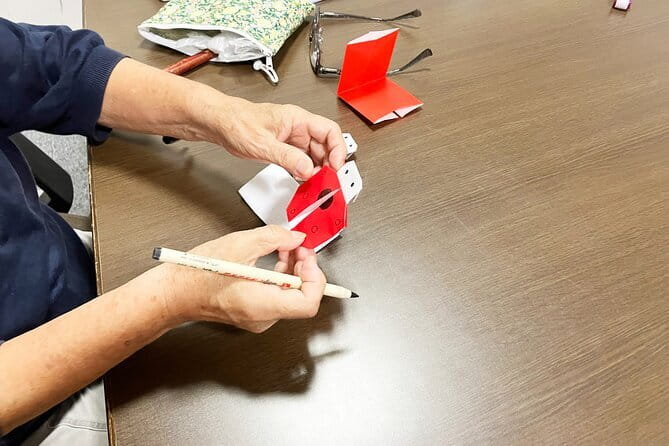
Once inside, you sit at a table of your choice and select an origami paper. The class does not throw you straight into the most difficult folds. Hiroko first leads you through a practice sheet, giving you a chance to get used to creasing, lining up edges, and following the shape as it develops.
That practice round is important. Origami often looks easy until the paper is in your hands. A small crease in the wrong place can change the final shape, and the kimono design has more steps than a basic paper crane. The extra practice helps you understand the rhythm before you use the attractive patterned sheet for your finished piece.
The teaching style is a strong part of the experience. Hiroko is described as patient, clear, bright, and easy to ask questions of. If you get stuck, she can draw or show the next fold again. That personal help is especially useful for children, adults who have not done origami since school, and anyone who finds printed diagrams hard to follow.
The final patterned kimono
After the practice model, you fold the real piece. The paper has a beautiful traditional pattern, which gives the finished kimono its visual appeal. The instructor’s design is original to this class, so you are not simply copying the most common origami kimono found in a book.
The folding process produces a small garment with a recognizable front and back. A belt detail appears on the back, and the design includes a pocket-like area that can hold a tiny item such as a pick, coin, or small note. That makes the finished work more useful than a decoration that must remain on a shelf.
You should expect the final model to require concentration. Several comments describe the folds as difficult at first, but also say that careful instruction made the work manageable. My advice is to slow down rather than force the paper. Listen for each crease, check the alignment, and ask for help as soon as you lose track.
The class is listed at about 90 minutes. Some people may finish at a different pace, and one account describes the session taking about two hours. Treat the advertised time as an approximate guide, especially if you are working with young children or asking for repeated demonstrations.
Choosing from traditional patterns

If you have enough time, you can choose a favorite design from 20 traditional works. This is a nice feature for people who care about color and pattern, since the paper becomes part of the memory of the day.
Do not count on having unlimited time for a long selection process. The class first includes practice, explanation, and the main fold, so your choice depends on the pace of your group. If you have a particular color preference, make it clear early.
The pattern choice also changes the feel of the souvenir. A bright design may suit a child, while a quieter traditional pattern could work well as a gift. Since the activity is private, your group can make choices at its own speed without sharing the table with unrelated participants.
Same city, a completely different kind of day:
- Osaka Go Karting Tour with Funny Costume
★ 5.0 · 2,658 reviews - Osaka Castle: Museum and Tower Entry Ticket
★ 4.5 · 2,380 reviews - Osaka: Shinsekai Food Tour with 13-15 Dishes at 5 Eateries
★ 4.8 · 2,204 reviews - Osaka Food Tour: 13 Dishes at 5 Local Eateries
★ 5.0 · 2,149 reviews
A souvenir you can actually recreate
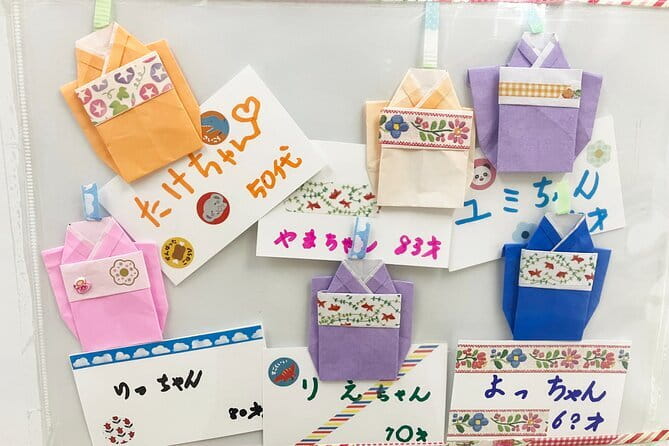
Many craft activities give you a finished object and send you on your way. This one adds a useful follow-up. You receive a QR code for a video and a folding diagram, allowing you to try the kimono again at home.
That matters because the first attempt may not feel perfect. Origami improves with repetition, and the instructions let you revisit the steps while the class is still fresh in your mind. You can also use the guidance to make another kimono for a friend or family member.
The design has a gift-friendly quality. You can place a pick, coin, or otegami, meaning a small letter or note, inside the kimono. This gives you a simple way to turn the craft into a personal present rather than leaving it as a travel keepsake only you will see.
The class materials and tools are included in the price, so you do not need to bring paper or equipment. Travel expenses are not included. Since the meeting point is at Abeno Station, you should budget separately for your transport to and from the area.
What the $65.32 price gets you

At $65.32 per person, this is not a low-cost drop-in craft table. The value comes from the private format, one-on-one help within your group, the original kimono design, the materials, and the instruction that stays with you through the QR video and diagram.
I would compare the price with what you want from a short Osaka activity. If you only want a cheap souvenir, buying a paper craft in a shop will cost less. If you want to learn a small traditional-inspired skill and leave with something you made yourself, the price is easier to justify.
The private setup is especially meaningful for families or couples. You do not have to worry about slowing down strangers, and beginners can ask for help without feeling self-conscious. Group discounts are available, though the exact savings are not provided, so check the total before paying.
The activity is also a reasonable choice for a rainy afternoon. The class takes place indoors and lasts roughly an hour and a half. You still need to arrange your own transport, but the nearby station and surrounding sights make the class easy to combine with other plans.
Who will enjoy this class most
I would recommend this for:
- First-time origami folders who want direct instruction rather than a video-only lesson.
- Families with children, since small children can join and the practice sheet gives them a softer start.
- Couples and private groups looking for a quiet activity with a personal souvenir.
- Craft-minded visitors who like making rather than simply buying.
- People searching for a compact Osaka activity near Tennoji and Abeno attractions.
- Gift hunters who want a handmade item that can hold a small note or object.
You may want to skip it if you dislike careful hand work or want a fast, effortless attraction. The class asks you to pay attention to folds, and the final kimono will reflect your patience. That is part of the charm, but it is not a passive sightseeing stop.
The experience is also less suitable if your schedule is packed tightly. Although the stated duration is about 90 minutes, folding speed varies. Add time for meeting at the station, walking to the classroom, and returning to your sightseeing route.
Practical details for a smooth visit

Confirmation is sent within 48 hours of booking, subject to availability. The activity is offered as a private tour, and only your group participates. That makes the session more personal, but it also means you should make sure your chosen date and group size are correct before booking.
Pickup is listed as available, but the specific meeting instructions direct you to Abeno Station Exit 7. Follow the confirmed meeting details you receive, and look for the instructor at the bottom of the stairs rather than wandering through the surrounding shops.
Most people can participate, and service animals are allowed. The experience is near public transportation, but travel expenses are not included. Free cancellation is available if you cancel at least 24 hours before the local start time. Cancellations or changes inside that window are not refunded or accepted.
The activity averages 155 days of advance booking, which suggests that popular dates may fill well ahead of time. I would reserve early if you have a fixed Osaka itinerary, especially for a private session.
How to fit it into an Osaka day
Abeno gives you several practical pairing choices. You might visit Abeno Harukas before the class, then head to the station for the meeting. Or you could fold the kimono first and continue toward Tsutenkaku Tower and Tennoji Zoo afterward.
Keep your schedule flexible around the class. The most rewarding part is not just making the final object, but getting the folds right with help. Rushing out halfway through the last steps would defeat the point of choosing a hands-on activity.
The area also works well for a mixed-interest group. One person can enjoy shopping, another can look forward to Osaka’s city sights, and everyone can meet for the origami session. Since the class is short, it does not take over your whole day.
Is the miniature kimono class worth booking?
I would book this experience if you want a small, personal activity with a clear connection to Japanese culture and a souvenir you make yourself. The strongest reasons are Hiroko’s patient instruction, the unusual kimono design, the private format, and the take-home video that helps you repeat the craft.
At $65.32, it is best seen as a guided workshop rather than a quick attraction. You are paying for materials, teaching, a private group setting, and a design you are unlikely to find in an ordinary Osaka activity. If your group enjoys crafts, the price can be fair. If you want only a cheap keepsake or have little patience for precise folds, spend your budget elsewhere.
Book it early if the timing fits. Meet carefully at Abeno Station Exit 7, allow more than the bare 90 minutes, and remember that the best result comes from asking questions rather than trying to fold ahead. For a thoughtful gift or a quiet break among Osaka’s larger sights, this little paper kimono makes a memorable choice.
FAQ
Where does the origami kimono experience begin?
Meet at the bottom of the stairs at Abeno Station, Exit 7, in Osaka. The group then goes to the classroom together.
How long does the activity last?
The experience lasts approximately 1 hour and 30 minutes. The actual pace can vary depending on how quickly your group completes the folds.
Is the class suitable for beginners and children?
Yes. Beginners and small children can participate, and the class starts with a practice fold before you make the final kimono.
What is included in the price?
The tools and materials needed for the activity are included. Travel expenses are not included.
Can I choose the origami paper?
Yes. You choose an origami paper at the classroom. If time allows, you can also select a favorite design from 20 traditional works.
What do I take home?
You take home the miniature origami kimono, along with a QR code for a video and a folding diagram so you can enjoy the craft again at home.
Just added around Osaka
- Samurai dress-up and shows, plus Tea Ceremony & Calligraphy★ 5.0 · 27 reviews
- Kyoto & Nara Private customized tour with English speaking Guide★ 4.5 · 99 reviews
- Well-balanced BENTO (lunch box) Cooking Class★ 5.0 · 35 reviews
- Urban Canvas: Osaka Street Art Bike Tour★ 5.0 · 47 reviews
- OSAKA:Feel the Power! Learn Taiko Drum from Professionals★ 5.0 · 28 reviews
- Volleyball in Osaka & Kyoto with Locals!★ 5.0 · 21 reviews
- 1.5〜2 Hours Traditional Kintsugi Work Shop in Namba Osaka★ 5.0 · 75 reviews
- Umami Town Street Food Tour★ 5.0 · 120 reviews
Kimono & Culture Experiences, compared.

Kyoto Geisha Walking Tour: Gion District & Hidden Gems
Read our review →
Gion Magical Night Walking Tour with Geisha Trivia
Read our review →
Gion Geisha District Walking Tour – Stories of Geisha
Read our review →
Best of Kyoto: Gion, Geisha, Pagodas & Cobblestones
Read our review →

Kyoto Gion Geisha District Walking Tour – The Stories of Geisha
Read our review →

Browse the lists this tour appears in