
REVIEW · JAPANESE COOKING CLASSES
Japanese Cooking Class with Local Family in Takayama Old Town
A 200-year-old wooden townhouse on Takayama’s main street is the setting for this unusually personal cooking class. Hisa and Bob welcome you into a family home that was once a local clinic, then guide you through tea, wagashi, seasonal ingredients, and a five-dish Japanese meal.
I like the small private setting, where your group cooks with the hosts rather than following a large demonstration. I also like the chance to learn about dashi, bonito, soy sauces, traditional tools, and local food customs while hearing stories about Takayama. The main consideration is price: at $211.37 per person, this is a costly three-hour activity, so it makes the most sense if meeting local people and entering a historic home matter as much to you as the meal.
In This Review
- Key points to know before booking
- Entering a 200-year-old townhouse on Takayama’s Old Town street
- Tea and wagashi set the pace
- Learning dashi, bonito, and the building blocks of Japanese flavor
- The semi-outdoor kitchen keeps the cooking communal
- Five seasonal dishes, then lunch or dinner together
- Stories about Takayama make the food matter more
- Is $211.37 a fair price?
- Who will enjoy this Takayama cooking class?
- Should you book it?
- FAQ
- Where does the cooking class begin?
- How long does the experience last?
- What time slots are available?
- Is this a private activity?
- What food is included?
- Can I request changes for food restrictions?
- Are alcoholic drinks included?
- What is the cancellation policy?
Key points to know before booking
- A family home with 200 years of history: You visit a private townhouse that once served as a clinic and remains part of Hisa’s family story.
- Hisa and Bob lead the class: Both hosts speak English, and their daughter Tomoa may also help welcome and guide you.
- Five seasonal dishes: You take part in preparing a traditional meal, with the menu adjusted as much as possible for food requests and restrictions.
- Tea, wagashi, and Japanese techniques: The class begins gently with tea and sweets before moving into dashi, bonito, rice, egg, fish, and other home-cooking skills.
- Lunch or dinner included: Choose the 10:00 AM slot for lunch or the 4:30 PM slot for dinner.
- A private three-hour visit: Only your group participates, and the activity starts and ends at 93 Kamisannomachi.
Entering a 200-year-old townhouse on Takayama’s Old Town street
The appeal begins before you chop a single ingredient. The address, 93 Kamisannomachi, sits on the main street of Takayama’s preserved Old Town, but the house itself offers a quieter view of the city than the shopfronts outside.
This wooden townhouse has belonged to Hisa’s family for generations. It was once a local clinic, and the family explains that many babies in the area were born there. That detail gives the building a human scale. You are not simply looking at an old structure. You are hearing how one address served the neighborhood and changed with the family over time.
The home has its quirks, and that is part of the point. This is not a polished museum set up for public display. It is a lived-in private house, normally closed to visitors, with a former clinic area and traditional living quarters. Hisa takes time to explain how different parts of the building were used and designed.
I would allow yourself a few extra minutes around the meeting point, especially if you are already exploring Old Town. The class ends where it begins, making it easy to continue sightseeing or return to your hotel afterward.
More japanese cooking classes in Takayama:
- Sushi Making Tokyo Roll and Authentic Japanese Sushi Class
★ 5.0 · 3,971 reviews - Tokyo: Roll and Authentic Sushi Making Class in Asakusa
★ 4.9 · 1,957 reviews - Ramen Cooking Class at Ramen Factory in Kyoto
★ 5.0 · 1,937 reviews
Tea and wagashi set the pace
The class opens with Japanese tea and wagashi, traditional sweets served in small, delicate portions. This first pause matters. You are not rushed straight into a recipe or handed a list of instructions. Instead, you sit down, meet the family, and get some context for the food you are about to prepare.
The hosts use this time to introduce Japanese home cooking and talk about life in Takayama. The focus is not only on restaurant dishes. You hear about the way food connects to the seasons, the Hida mountain setting, and the family’s slower daily rhythm.
That makes the class useful even if you already know your way around a kitchen. You can ask about ingredients and customs rather than simply copying a recipe. One solo participant arranged for a more informative format and received explanations about seasoning order, soy sauce, dashi, bonito, and the cultural side of Japanese cuisine.
The pace should suit you if you enjoy conversation and background detail. If you want a fast, technical cooking lesson with little discussion, this may feel leisurely.
Learning dashi, bonito, and the building blocks of Japanese flavor
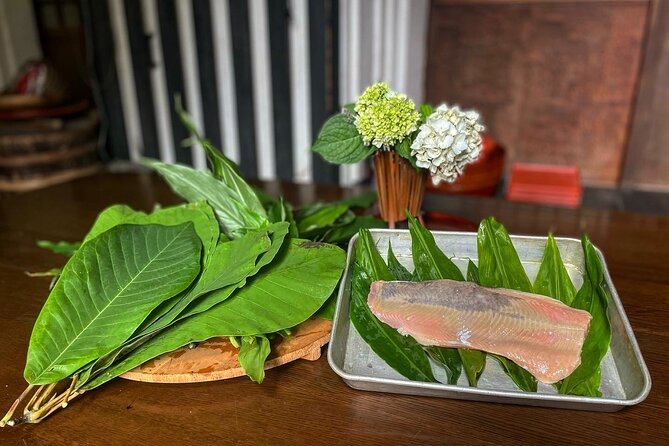
The class gives attention to ingredients that can be easy to overlook when you eat Japanese food abroad. Dashi, the savory stock used in many Japanese dishes, is part of the instruction. You may also learn about bonito and see how it is shaved with a traditional household tool.
This is where the experience becomes more useful than a simple recipe demonstration. The hosts explain how different seasonings work and when they are added. You get a clearer sense of why Japanese food can taste light but still have a strong savory base.
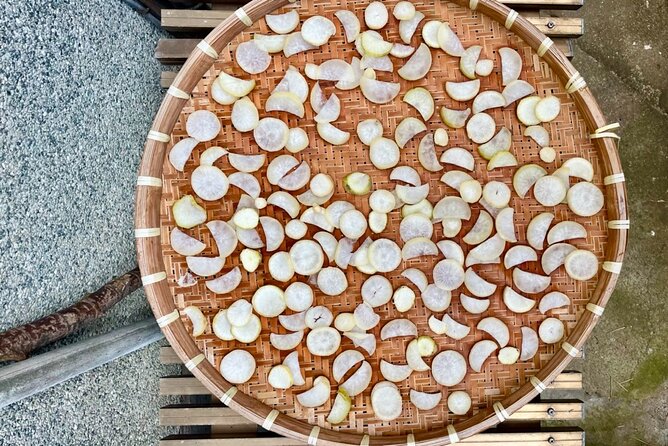
The ingredients vary with the season and with the menu chosen for your session. Examples from past classes include fresh tofu, sashimi, Hida or Japanese Wagyu beef, fish from northern Japan, sushi rolls, rice balls, Japanese omelette, gyoza, and tempura. You should not assume every one of these appears in your class. The information provided describes five seasonal dishes, not a fixed menu.
That flexibility is helpful. If you have a food restriction or a particular request, write to the hosts in advance. They say they will accommodate requests as much as possible. It is wise to discuss this before arrival rather than wait until the cooking begins.
The semi-outdoor kitchen keeps the cooking communal
After the introduction, you put on a traditional apron and move into the semi-outdoor kitchen. The space is described as similar to the kind of kitchen used by earlier generations of the family. Its small size is part of the atmosphere, since the cooking happens side by side rather than with everyone watching from a distance.
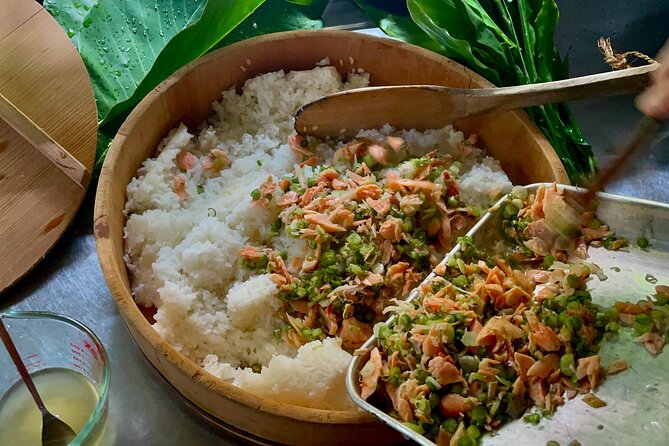
You take part in the preparation. That can include shaping rice balls, rolling sushi, making an omelette, handling fish, preparing tofu, or working with vegetables and other seasonal ingredients, depending on the menu. The hosts demonstrate each step and encourage you to try it yourself.
This hands-on approach also leaves room for mistakes. One participant described an unsuccessful attempt to flip a Japanese egg roll, followed by plenty of laughter. That is a useful expectation to bring with you. You do not need professional knife skills or perfect technique to enjoy the class.
The class is private, so the format works especially well for couples, families, or a small group of friends who want to ask questions freely. A group of four adults found that everyone could participate. Children also appear to fit the relaxed style, with one family saying that making gyoza and tempura became a favorite activity for the children.
The semi-outdoor kitchen may be a consideration depending on the season and your comfort with the setting. The available details do not specify weather protection, heating, or the exact physical layout, so ask the hosts if those points matter to you.
A few more Takayama trips to weigh up
- Ramen & Gyoza Cooking Class in Tokyo with Local Supermarket Visit
★ 5.0 · 823 reviews - Kyoto: Ramen Cooking Class at a Ramen Factory with Souvenir
★ 4.9 · 532 reviews - Kyoto: Ramen, Gyoza, and Onigiri Cooking Class
★ 5.0 · 445 reviews - Kyoto: Japanese Washoku Bento Small Group Cooking Class
★ 5.0 · 380 reviews
Five seasonal dishes, then lunch or dinner together
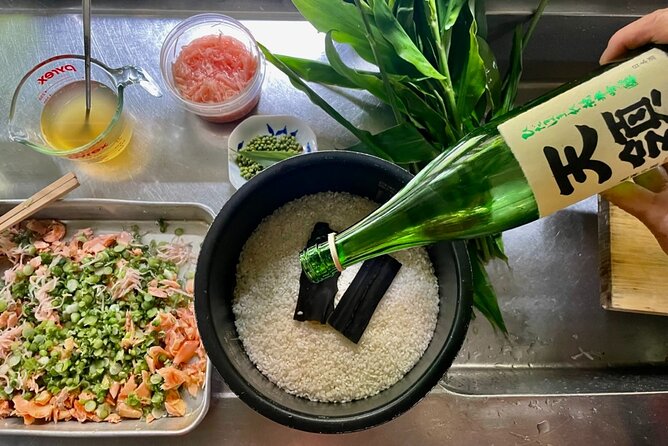
The meal is not an extra served after a demonstration. You prepare the dishes and then eat them with the family in the historic townhouse. That shared table is one of the strongest reasons to choose this class over a standard cooking school.
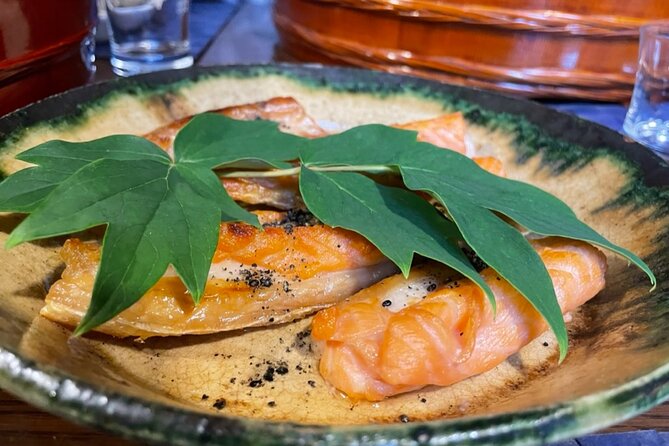
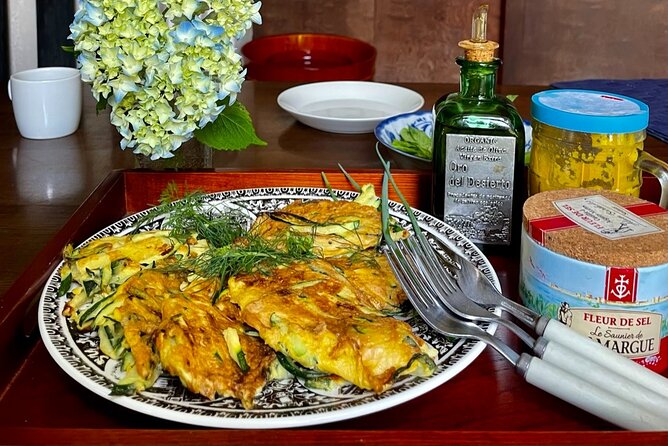
The menu reflects the season and the ingredients available in Takayama. The meal can be plentiful, and past menus have included meat, fish, tofu, sushi, vegetables, and egg dishes. Dessert is fresh seasonal fruit prepared in a Japanese style.
If you book the 10:00 AM start, lunch is included. The 4:30 PM start includes dinner. Coffee and tea are included as well. Alcohol is not part of the price, although one solo participant was offered locally made yuzu sake and umeboshi sake during a particularly personal visit. Treat that as a possible host-provided extra, not a guaranteed part of the tour.
The food seems designed to teach you about home cooking rather than create a restaurant tasting menu. You may leave with a better feel for texture, seasoning, and preparation order, along with a meal you helped make.
Stories about Takayama make the food matter more
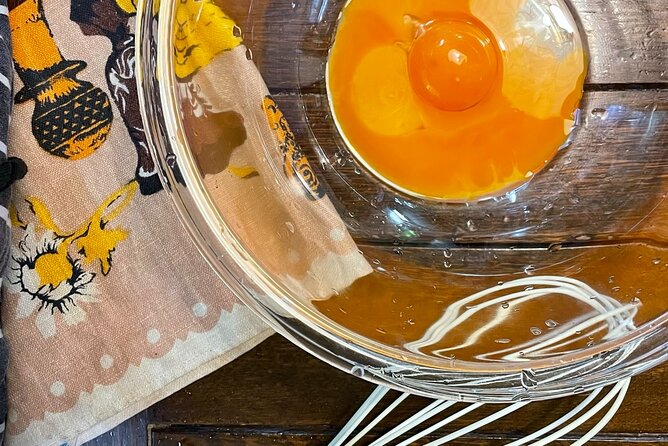
Hisa and Bob do not limit the conversation to recipes. They talk about life in Takayama, the Hida mountains, seasonal living, and the history of their house. Hisa has also shown visitors the local businesses where ingredients for the class were purchased.
That local connection adds value to a short stay in Takayama. You are not only seeing the Old Town from the sidewalk. You are learning how a family connected to that street shops, cooks, preserves traditions, and uses its home.
The hosts are both fluent in English, which makes it easier to ask about ingredients and customs. Their daughter Tomoa has also been part of the welcome and instruction. A solo visitor described being greeted by the whole family, while another class included Tomoa and her father.
The tone is warm and informal. Several descriptions compare the cooking to spending time with old family friends. That does not mean the class lacks structure. There is an introduction, ingredient lesson, guided cooking, and a shared meal. It simply avoids the stiff feeling that can come with a formal group lesson.
Is $211.37 a fair price?
At $211.37 per person, this is not a budget cooking class. You are paying for three hours, lunch or dinner depending on the time, tea and wagashi, a private session, hands-on instruction, and access to a private historic home. The price also covers the hosts’ time and the personal conversation that would be difficult to get in a larger class.
The value depends on what you want from Takayama. If your goal is the cheapest way to learn sushi or tempura, you can likely find a more basic lesson. If you want a polished restaurant-style meal, this may not be the right comparison either.
I see the price as easier to justify for a small private group, a special occasion, or a visitor who places a high value on local contact. It is also a strong option for a solo visitor who wants a genuine conversation with residents rather than another sightseeing stop.
The activity is often reserved well ahead of time, with an average booking lead time of 49 days. That suggests you should plan early if your Takayama dates are fixed, especially since confirmation arrives within 48 hours and remains subject to availability.
Who will enjoy this Takayama cooking class?
I would choose this experience if you:
- Want to meet a local family in a private setting
- Enjoy learning through conversation as well as instruction
- Like historic homes and ordinary daily life more than staged attractions
- Are interested in seasonal Japanese ingredients and home cooking
- Are traveling with a small group or family
- Want lunch or dinner built into a cultural activity
- Have food requests you can explain to the hosts ahead of time
You may want to compare other options if you need a low-cost class, a fixed menu, a large professional kitchen, or a very technical lesson focused only on cooking speed and precision.
The class is near public transportation, and service animals are allowed. The available information does not provide detailed accessibility notes for the townhouse or kitchen, so contact Hisa before booking if you need specific mobility accommodations.
Cancellation is free up to 24 hours before the local start time. Changes or cancellations made inside that window are not accepted for a refund.
Should you book it?
I would book this if you want your Takayama visit to include a real household, a long family story, and a meal prepared with your own hands. The strongest part is the combination of place and people: Hisa and Bob open a private, 200-year-old townhouse, explain how it has been used, then cook with you in a relaxed way.
The $211.37 price deserves a careful look, but the experience offers more than a recipe lesson. Choose the 10:00 AM time for lunch, the 4:30 PM time for dinner, and send any food requests before your visit. If you value personal contact, local context, and a memorable meal over saving money, this is one of the better ways to spend three hours in Takayama.
FAQ
Where does the cooking class begin?
It begins at 93 Kamisannomachi, Takayama, Gifu 506-0846, Japan, on the main street of Takayama’s Old Town.
How long does the experience last?
The class lasts approximately three hours.
What time slots are available?
The listed start times are 10:00 AM and 4:30 PM. The 10:00 AM option includes lunch, while the 4:30 PM option includes dinner.
Is this a private activity?
Yes. Only your group participates in the activity.
What food is included?
The class includes preparation of five seasonal dishes, followed by lunch or dinner depending on the time selected. Tea, coffee, wagashi, and seasonal fruit prepared as dessert are also included.
Can I request changes for food restrictions?
Yes. You can write to the hosts about food requests or restrictions, and they will accommodate them as much as possible.
Are alcoholic drinks included?
No. Alcoholic beverages are not included in the listed experience.
What is the cancellation policy?
You can cancel at least 24 hours before the local start time for a full refund. Cancellations or changes made less than 24 hours before the start are not accepted for a refund.
More Workshops in Takayama
- Kyoto: 45-Minute Tea Ceremony Lesson Experience
★ 4.3 · 2,378 reviews - Tokyo Shinjuku Chopsticks Making Class
★ 5.0 · 1,763 reviews - Tokyo: Sushi Making Class in a Happi Coat near a Famous Spot
★ 4.9 · 1,377 reviews - Chopstick Making Workshop in Ginza
★ 4.8 · 1,366 reviews
Just added around Takayama
- Takayama Old Town Walking Tour with Local Guide★ 4.5 · 50 reviews
- Takayama Local Cuisine, Food & Sake Cultural Tour with Government-Licensed Guide★ 5.0 · 17 reviews
- Takayama Rice Ball and Miso Soup Making at a buddhist temple★ 5.0 · 13 reviews
- Takayama Half-Day Private Tour with Government Licensed Guide★ 5.0 · 69 reviews
- Takayama Half Day Tour (Private Guide)★ 5.0 · 15 reviews
- Private Transfer from Takayama to Kanazawa Including Shirakawago★ 5.0 · 17 reviews
- Takayama: Authentic Sake Tasting at a Historic Brewery★ 5.0 · 65 reviews
- Shuriken Experience in Takayama★ 5.0 · 46 reviews
Japanese Cooking Classes, compared.
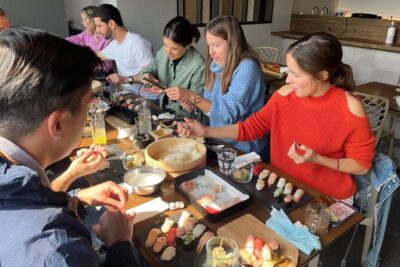
Sushi Making Tokyo Roll and Authentic Japanese Sushi Class
Read our review →
Roll and Authentic Sushi Making Class in Asakusa
Read our review →
Ramen Cooking Class at Ramen Factory in Kyoto
Read our review →
Sushi Making Class in a Happi Coat near a Famous Spot
Read our review →
Sushi Making Osaka Roll and Authentic Japanese Sushi Class
Read our review →
Tokyo Sushi Making Class in Tsukiji with Professional Chef
Read our review →
Ramen & Gyoza Cooking Class in Tokyo with Local Supermarket Visit
Read our review →
Tsukiji Fish Market Guided Tour and Sushi Making with Pro Chef
Read our review →Browse the lists this tour appears in