
REVIEW · KIMONO & CULTURE EXPERIENCES
Japanese Calligraphy Experience in Osaka
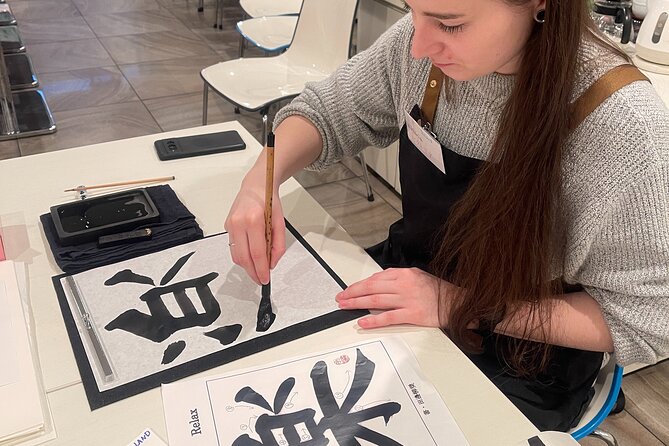
The most rewarding part of this Osaka activity is that you do not just watch a calligrapher work. You learn the basic strokes, choose a kanji, and leave with your own finished artwork in a foldable display case. Instructor Ryusho has 27 years of teaching experience, and the lesson is designed for complete beginners.
I like the clear, hands-on structure and the small maximum group of 10. I also like the thoughtful finish: green tea, Japanese sweets, a commemorative photo, and a portable frame that turns your practice into a useful souvenir.
The main consideration is the fixed 2:00 pm start and the limited choice of 16 prepared kanji. If you want advanced calligraphy training or a long, open-ended lesson, this is not that. It is a friendly introduction with a finished result.
In This Review
- Key points to know before booking
- Why this calligraphy class works as an Osaka souvenir
- What happens during the seven-step lesson
- 1. A short introduction to Japanese calligraphy
- 2. Learning the tools
- 3. Watching the brush demonstration
- 4. Choosing one of 16 kanji
- 5. Practicing with the brush
- 6. Completing the final artwork
- 7. Placing it in the display case
- Green tea, sweets, and the final photo
- The Shinsaibashi location makes this easy to fit into a day
- Group size and the teaching style
- Is $51.24 a fair price?
- Who should book this experience?
- Booking details that matter
- Should you book the Japanese Calligraphy Experience?
- FAQ
- Where does the Japanese calligraphy experience take place?
- What time does the activity start?
- How long does the calligraphy class last?
- How many people can join the experience?
- Can I take my calligraphy artwork home?
- What is included at the end of the class?
Key points to know before booking
- Create a framed kanji artwork: Choose from 16 popular characters, practice with a brush, and mount your final piece in a foldable display case.
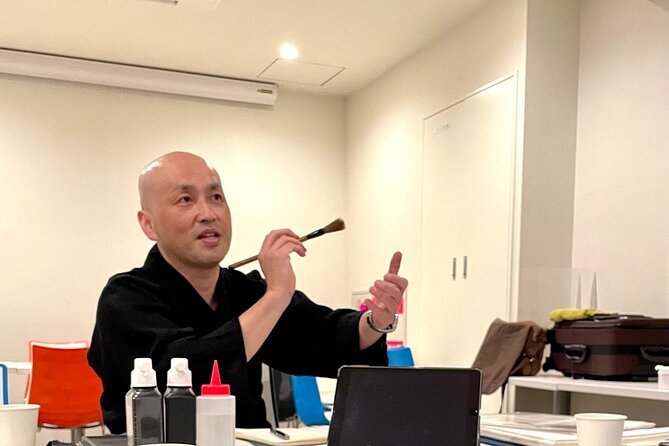
- Learn from instructor Ryusho: The teacher brings 27 years of calligraphy instruction to a lesson aimed at beginners.
- Follow a seven-step class: You receive cultural background, tool guidance, a brush demonstration, practice time, and help completing the final piece.
- Finish with tea and sweets: Green tea and Japanese sweets add a calm Japanese touch after the brushwork.
- Meet in central Shinsaibashi: The hotel venue is on the first floor and about one minute from a subway station.
- Plan for 90 minutes: The class begins at 2:00 pm, returns to the meeting point, and allows up to 10 people.
Why this calligraphy class works as an Osaka souvenir
Many Osaka souvenirs are bought in a shop and packed into your luggage. This experience gives you something with a personal connection to your time in Japan. You select a character, learn how to form it, and put your name on the finished board.
That difference matters. Even if your brush strokes are not perfect, the piece records an activity you took part in rather than something you simply purchased. The final artwork measures 242 by 273 millimeters, and it is placed in a display case styled like a hanging scroll. The case folds, so taking it home is easier than carrying a large piece of wall art.
The class focuses on kanji that are popular outside Japan. The supplied choices are not described individually, so you should expect a prepared selection rather than a completely free choice of any Japanese word. That keeps the activity moving and gives beginners a manageable place to start.
I like this approach for a first encounter with Japanese writing. You do not need to arrive knowing the difference between kanji and other Japanese scripts. The class begins with an explanation of Japanese letters and calligraphy before asking you to pick up the brush.
More Kimono & Culture Experiences in Osaka
- Osaka: Sumo Show & Experience w/ Optional Kimono & Hot Pot
★ 4.5 · 609 reviews - Samurai Training Experience KENDO in Osaka
★ 5.0 · 515 reviews - OSAKA NIGHT FUSION Japanese Taiko Kabuki Samurai Dance Show
★ 4.8 · 155 reviews
What happens during the seven-step lesson
The experience follows a clear sequence. That is useful because Japanese calligraphy can look simple from a distance, yet brush pressure, angle, speed, and pauses all affect the final shape.
1. A short introduction to Japanese calligraphy
Ryusho begins with the cultural background of calligraphy and explains why the art remains important in Japan. Calligraphy has been practiced for more than a thousand years, and the lesson presents it as both writing and character art.
You also hear about Japanese letters before working with the tools. This opening gives the activity more substance than a simple craft workshop. You learn what you are making and why brushwork matters.
The cultural explanation is likely to be brief enough for a 90-minute session. That is good for most visitors, though anyone hoping for a lengthy history lecture should set expectations accordingly.
2. Learning the tools
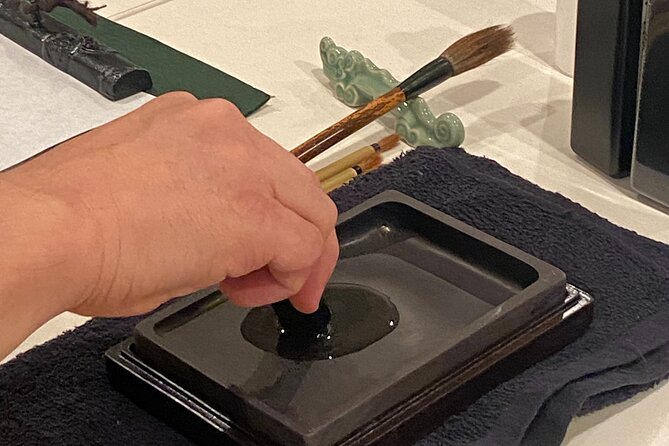
Next, Ryusho explains how to use the calligraphy equipment. The provided information does not list every item by name, but the class specifically covers the tools and how to handle them.
For you, this is an important part of the lesson. A brush is not used like a marker or a pencil. The result depends on how you treat it, and basic tool instruction gives you a better chance of producing a strong final character.
This is also where the activity becomes approachable for people without artistic training. The class is not asking you to copy a finished piece without guidance. It gives you a set of basic rules first.
Same city, a completely different kind of day:
- Osaka Go Karting Tour with Funny Costume
★ 5.0 · 2,658 reviews - Osaka Castle: Museum and Tower Entry Ticket
★ 4.5 · 2,380 reviews - Osaka: Shinsekai Food Tour with 13-15 Dishes at 5 Eateries
★ 4.8 · 2,204 reviews - Osaka Food Tour: 13 Dishes at 5 Local Eateries
★ 5.0 · 2,149 reviews
3. Watching the brush demonstration
Ryusho then demonstrates how to use the calligraphy brush. The demonstration covers the movement of the brush and the way individual strokes are formed.
The class descriptions refer to practice with horizontal, diagonal, and other strokes. That detail is encouraging for beginners because you get time to work on the building blocks before attempting the complete kanji.
Pay attention during this stage. The final character may contain only a few strokes, but each one has a role. Watching the instructor first can help you understand where to begin, where to pause, and how to finish a line.
4. Choosing one of 16 kanji
After the demonstration, you select a favorite kanji from 16 prepared examples. This is the point where the experience becomes personal.
You might choose a character because of its meaning, its shape, or its connection to your trip. Since the choices are prepared in advance, you can focus on learning the form instead of spending class time deciding how to translate an English word into Japanese.
The limited menu is both a benefit and a restriction. It makes the class easier to follow, but you should not book this expecting to write any name, phrase, or sentence you choose. If having a specific word is essential, check the available choices before booking.
5. Practicing with the brush
You then practice writing the chosen character. This is where the peaceful side of calligraphy comes through. You need to slow down, concentrate, and give each stroke room.
The activity presents calligraphy as an art in which your state of mind can appear in the writing. That may sound lofty, but the practical lesson is simple: rushing usually makes brushwork harder. A calm approach helps you pay attention to pressure and direction.
Do not worry about producing a perfect character on the first try. Practice is built into the course, and the instructor is there to show you how the brush should move. The class has received strong praise for being engaging and easy to follow, with participants able to complete a work of their own.
6. Completing the final artwork
Once you have practiced, you write your final kanji on the special board. You also sign your name, making the piece your own.
This is the key moment of the experience. The final board is not just a worksheet. It becomes a display piece that you can take home, and the signature gives it a clear connection to the person who made it.
Your finished character will naturally reflect your level of experience. That is part of its value. You are not buying a professional calligraphy scroll, and the activity does not promise that result. You are creating a beginner’s artwork under instruction.
7. Placing it in the display case
At the end, your board is placed into a display case designed to resemble a hanging calligraphy scroll. The case is foldable and portable.
I consider this a smart detail for anyone carrying souvenirs through Japan. A fragile or awkward item can become a burden during a longer trip. A foldable presentation case makes the finished piece easier to pack and display once you return home.
Green tea, sweets, and the final photo
The class ends with Japanese green tea and sweets while you appreciate the completed work. This gives the final part of the activity a slower pace after the concentration of brush practice.
The tea service is not the main reason to book, but it adds context. You are not simply finishing a craft and being sent away. The closing moment lets you look at the artwork and enjoy a small food tradition connected with the setting.
A commemorative photo is also included. The information does not specify the exact photo arrangement, so expect a simple memory of the activity rather than a professional photo session.
This closing works especially well for couples, families, and friends who want a shared keepsake. Each person can make a different character and compare the finished pieces over tea.
The Shinsaibashi location makes this easy to fit into a day
The activity takes place on the first floor of a hotel at 1-chōme-1-3 Higashishinsaibashi, Chuo Ward, Osaka, 542-0083. It is about a one-minute walk from a subway station, which is a major practical advantage in Osaka.
You do not need to build a long transport plan around the class. The central Shinsaibashi location makes it possible to schedule the experience alongside shopping, sightseeing, or an evening meal in the area.
The start time is 2:00 pm, and the activity lasts about one hour and 30 minutes. Allow enough time to arrive before the start, especially if you are unfamiliar with the station exits. The experience ends back at the meeting point.
The venue is indoors, which makes the class a sensible plan if you want a scheduled cultural activity rather than another outdoor stop. The activity is near public transportation, and most people can participate. No more specific accessibility details are provided, so contact the provider if you have mobility or other access needs.
Group size and the teaching style
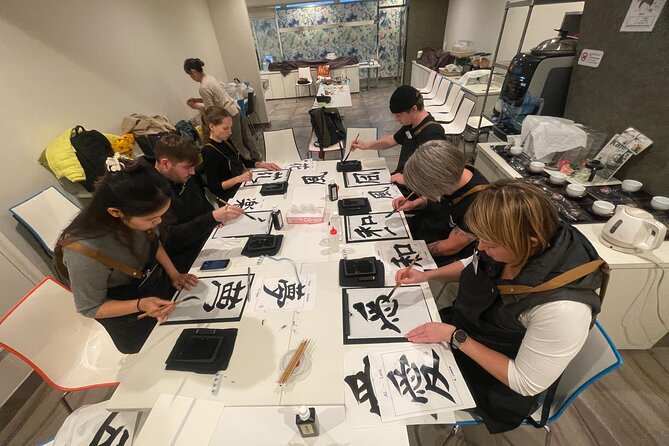
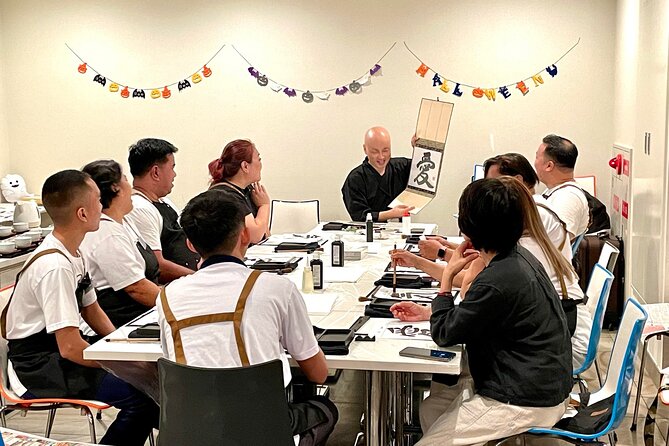
The maximum group size is 10 people. That is small enough to keep the lesson personal without making it a private class.
A small group matters in calligraphy because you may need help with brush control, stroke order, or the shape of your chosen kanji. The instructor can demonstrate and correct technique more effectively than in a large workshop.
Ryusho’s 27 years of teaching experience is one of the strongest reasons to choose this activity. The lesson is built around explanation and demonstration, not just handing you a brush and hoping for the best.
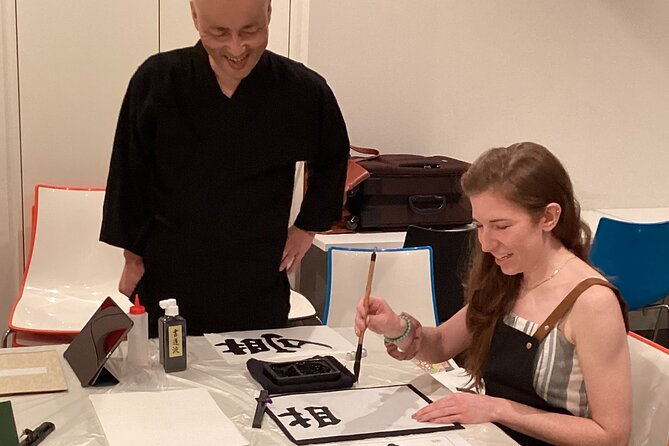
The tone appears encouraging and practical. The instructor gives attention to how each person handles the brush, and the course is structured so everyone works toward a completed piece. This is a good match for you if you want guidance without feeling that you need prior artistic ability.
Is $51.24 a fair price?
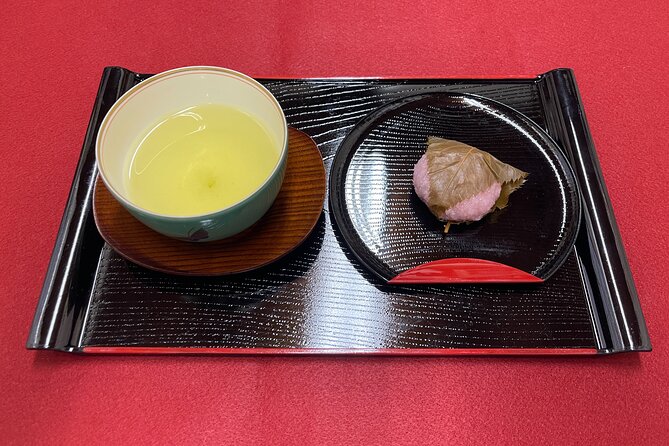
At $51.24 per person, the activity is more expensive than buying a small souvenir, but the price includes instruction, materials, a completed artwork, the display case, tea, sweets, and a commemorative photo.
The best way to judge the value is to ask what kind of experience you want. If you only want a decorative kanji object, a shop will likely be simpler. If you want to understand the brushwork, make the piece yourself, and spend 90 minutes on a traditional Japanese art, the price is more reasonable.
The portable framed artwork adds practical value. You are not leaving with loose paper that may crease in your luggage. You also avoid the uncertainty of trying to buy a calligraphy piece without understanding its meaning.
The experience is commonly booked about 39 days ahead, which suggests you should not assume that a convenient afternoon spot will always be available. That advance-booking pattern is useful to keep in mind when planning an Osaka itinerary, particularly if your schedule is tight.
Who should book this experience?
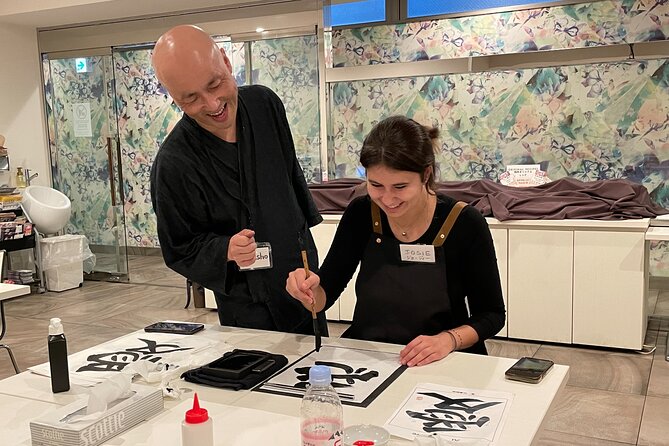
I would recommend it to first-time visitors who want a gentle introduction to Japanese culture. You get explanation, demonstration, practice, and a finished object in one compact session.
It also suits families and mixed-age groups, since the class does not require previous calligraphy skills and most people can participate. Friends and couples may enjoy choosing different kanji and creating a set of related souvenirs.
This is a good choice for anyone who values an activity over another sightseeing stop. The class asks you to concentrate and make something with your hands, which can provide a welcome change from moving through Osaka’s busy commercial areas.
It may be less suitable if you want advanced instruction, a long study of calligraphy history, or complete freedom to select any Japanese phrase. The 16-character selection and 90-minute format keep the experience accessible, but they also limit its depth.
Booking details that matter
Confirmation is received at the time of booking, and a mobile ticket is provided. The meeting point is the hotel in Higashishinsaibashi, and the activity ends there as well.
The cancellation policy is flexible up to a point. You can cancel for a full refund at least 24 hours before the 2:00 pm start time. Cancellations or changes made less than 24 hours before the local start time are not accepted for a refund.
The activity has a 100 percent recommendation rate and a five-star rating based on 21 reviews. The strongest praise centers on Ryusho’s instruction, the engaging structure, and the satisfaction of leaving with a personal artwork.
Should you book the Japanese Calligraphy Experience?
Book it if you want a central Osaka activity that combines instruction, cultural context, and a souvenir you make yourself. Ryusho’s long teaching experience, the small group limit, and the clear seven-step format give beginners a solid introduction without requiring a full day.
I would especially choose this for a free afternoon in Shinsaibashi, for a rainy-day plan, or for a family looking for something more meaningful than shopping. Skip it if you need to write a specific phrase not included among the 16 prepared kanji, or if you are seeking serious advanced training.
For most visitors, the strongest value is the complete package: learn the strokes, make the character, frame it, then enjoy tea and sweets with the finished work in front of you.
FAQ
Where does the Japanese calligraphy experience take place?
It takes place on the first floor of a hotel at 1-chōme-1-3 Higashishinsaibashi, Chuo Ward, Osaka, 542-0083, Japan.
What time does the activity start?
The experience starts at 2:00 pm.
How long does the calligraphy class last?
The activity lasts approximately one hour and 30 minutes.
How many people can join the experience?
The maximum group size is 10 people.
Can I take my calligraphy artwork home?
Yes. You write your chosen kanji on a special 242 by 273 millimeter board, sign it, and place it in a foldable display case styled like a hanging scroll.
What is included at the end of the class?
The experience finishes with Japanese green tea, Japanese sweets, and a commemorative photo.
Just added around Osaka
- Samurai dress-up and shows, plus Tea Ceremony & Calligraphy★ 5.0 · 27 reviews
- Kyoto & Nara Private customized tour with English speaking Guide★ 4.5 · 99 reviews
- Well-balanced BENTO (lunch box) Cooking Class★ 5.0 · 35 reviews
- Urban Canvas: Osaka Street Art Bike Tour★ 5.0 · 47 reviews
- OSAKA:Feel the Power! Learn Taiko Drum from Professionals★ 5.0 · 28 reviews
- Volleyball in Osaka & Kyoto with Locals!★ 5.0 · 21 reviews
- 1.5〜2 Hours Traditional Kintsugi Work Shop in Namba Osaka★ 5.0 · 75 reviews
- Umami Town Street Food Tour★ 5.0 · 120 reviews
Kimono & Culture Experiences, compared.

Kyoto Geisha Walking Tour: Gion District & Hidden Gems
Read our review →
Gion Magical Night Walking Tour with Geisha Trivia
Read our review →
Gion Geisha District Walking Tour – Stories of Geisha
Read our review →
Best of Kyoto: Gion, Geisha, Pagodas & Cobblestones
Read our review →
Kyoto Gion Geisha District Walking Tour – The Stories of Geisha
Read our review →
Browse the lists this tour appears in