
REVIEW · CYCLING TOURS
Full Day Biking Tour Exploring the Best of Kyoto
Kyoto is spread out, and this full-day bike tour gives you a smart way to connect its far-flung sights. You ride from the shop near Kyoto Station through quiet lanes, temple grounds, old neighborhoods, and major attractions, covering in one day what would take several days on foot.
I like the mix of famous stops and ordinary Kyoto streets. I also like the small group, capped at eight riders, and the included lunch at a local-style restaurant. The catch is simple: this is a long, active day. You may ride 18 to 20 miles, walk thousands of steps, and feel it by evening.
In This Review
- Key points to know before booking
- Why cycling works so well in Kyoto
- Starting near Kyoto Station with a Cannondale bike
- Nishi Honganji and Kyoto’s wooden architecture
- Kitano Tenmangu, a shrine with local energy
- Kinkaku-ji and the Golden Pavilion
- Cycling through the former Imperial Palace grounds
- Gion, geisha culture, and careful expectations
- Lunch in a local-style restaurant
- Tofuku-ji and a quieter temple pause
- Fushimi Inari and the torii gates
- The guide can make or break the day
- How hard is 18 to 20 miles in Kyoto?
- Group size, price, and overall value
- Who should book this Kyoto bike tour?
- Should you book it?
- FAQ
- Where does the Kyoto bike tour start and finish?
- How long does the bike tour last?
- How far do you ride?
- What is included in the price?
- What sights are included?
- What age and fitness level is required?
- Can I cancel for a refund?
Key points to know before booking
- You cover a huge section of Kyoto: The route links Nishi Honganji, Kitano Tenmangu, Kinkaku-ji, the Imperial Palace grounds, Gion, Tofuku-ji, and Fushimi Inari.
- The route is mostly flat: Riding is generally easy, but the distance, heat, traffic, and repeated stops make this a serious full-day outing.
- Small roads make city cycling manageable: Guides use back streets and quieter lanes rather than sending you onto Kyoto’s busiest traffic corridors.
- Lunch and water are included: That matters on a day when you are exercising for hours, and the meal is described as hearty and surprisingly good.
- The guide shapes the experience: Guides named in the feedback include Jay, Karl, Juan, Paul, Quinn, Indra, and Jamie. Their humor, local knowledge, and ability to manage the group are central to the day.
- The price reflects a full package: At $119.38 per person, you receive the bike, helmet, lunch, bottled water, guide service, and entrance to Kinkaku-ji.
Why cycling works so well in Kyoto
Kyoto’s best sights are not all clustered together. Kinkaku-ji is in the northwest, Gion lies to the east, and Fushimi Inari is far to the south. Public transport can connect these areas, but changing trains and buses takes time. Walking between them is not realistic for one day.
A bicycle solves that problem while keeping you close to the city. You pass traditional homes, small streets, rivers, temple walls, and neighborhoods that disappear when you sit behind a bus window. The route also gives you a better sense of Kyoto as a working city, not just a string of postcard sights.
The ride is reported as mostly flat and safe-feeling, with guides choosing smaller roads when possible. Still, you are riding in an urban setting. You need to be comfortable on a bicycle, pay attention to the guide, and follow the group’s pace.
The tour lasts about seven to eight hours, though one especially full outing ran from roughly 9 a.m. to 6 p.m. The exact pace may depend on the group, the guide, traffic, and how long you linger at each stop.
A few more Kyoto trips to weigh up
- Hidden Kyoto E-Biking tour
★ 5.0 · 1,843 reviews - Bike Tour Exploring North Kyoto plus Lunch
★ 5.0 · 1,087 reviews - Arashiyama Bamboo Forest & Hidden Gems Bike Tour (Early Bird)
★ 5.0 · 613 reviews
Starting near Kyoto Station with a Cannondale bike
You meet at Cycle Kyoto, at 7 Higashikujō Nishisannōchō in Minami Ward. The shop is about a block south of Kyoto Station, which makes the start convenient if you are staying near the station or arriving by train.
The opening fifteen minutes are used for introductions, bike fitting, and a safety briefing. A high-quality Cannondale bike and helmet are supplied. You also receive bottled water, a useful touch when the day includes steady riding and walking through temple grounds.
The bikes are described as comfortable and suitable for the route. An electric bike upgrade may be available, but the supplied information does not give its price or booking details. If you are uneasy about the distance, ask about that option before the tour begins.
Pack lightly. The bike has only a small front pouch for a phone and wallet, so a larger bag may need to stay on your back all day. That can become tiring, especially during warm weather.
Nishi Honganji and Kyoto’s wooden architecture
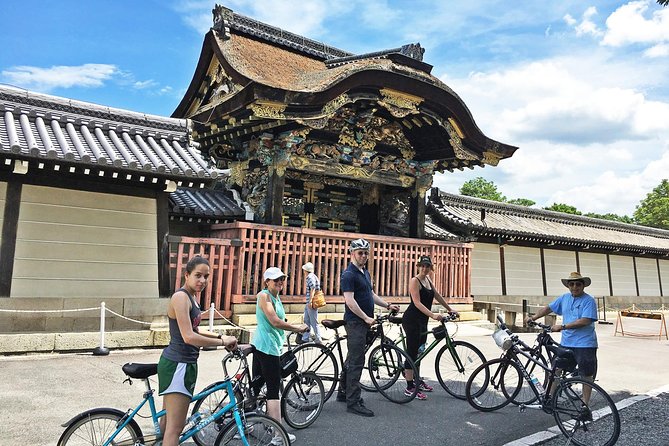
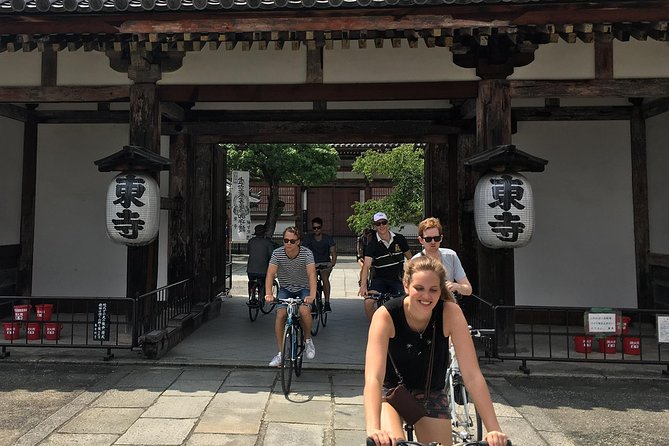
The first sightseeing stop is Nishi Honganji, one of Kyoto’s major Buddhist temples and one of the least visited sites on this route. You spend about fifteen minutes there, entering a vast wooden complex that gives you a sense of scale before the day’s more famous landmarks.
This is a good early stop because it is quieter and less showy than Kinkaku-ji. You get a chance to look at the building itself, its timber construction, and the calm temple setting without beginning the day in a wall of crowds.
The short visit means you should not expect a detailed architectural study. Instead, think of Nishi Honganji as a quick introduction to Kyoto’s religious life and traditional building craft.
Kitano Tenmangu, a shrine with local energy
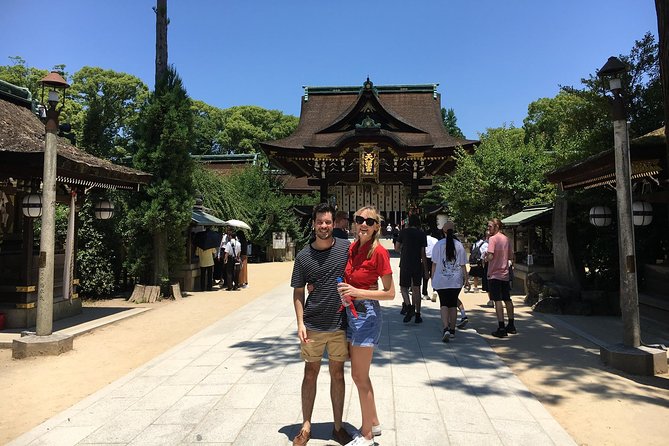
At Kitano Tenmangu Shrine, the group spends around twenty minutes. This is a chance to see a major Shinto site in a more local setting and to observe people visiting for their own reasons, not just taking photographs.
The guide adds context about the shrine’s past and explains what you are seeing. That commentary is important because shrines can look similar at first glance. A good explanation helps you notice the gates, worship rituals, grounds, and purpose of the site.
The stop is short, so you will get an overview rather than a slow, reflective visit. If Kitano Tenmangu becomes a favorite, you can return later with more time.
Same city, a completely different kind of day:
- PERFECT KYOTO 1-Day Bus Tour
★ 5.0 · 13,518 reviews - Kyoto: Fushimi Inari, Kinkakuji, Bamboo Grove 1 Day Bus Tour
★ 4.8 · 4,316 reviews - Kyoto: Tea Ceremony in a Traditional Tea House in Kiyomizu
★ 4.9 · 3,519 reviews - Kyoto Geisha Walking Tour: Gion District & Hidden Gems
★ 4.7 · 3,273 reviews
Kinkaku-ji and the Golden Pavilion
Kinkaku-ji is the day’s most obvious star. The Golden Pavilion is one of Japan’s most recognizable sights, and its bright exterior makes it easy to understand why the grounds draw so many people.
You spend about thirty minutes here, with the guide explaining the site before giving you time to look around. There is also a chance to grab an ice cream and pause after the first major stretch of cycling.
Kinkaku-ji can be crowded, and the visit follows a set path rather than allowing you to roam freely. That is the tradeoff for including it in a day that also reaches the eastern and southern parts of Kyoto. The guide helps you make sense of the stop, but you should not expect a long, quiet temple visit.
Cycling through the former Imperial Palace grounds
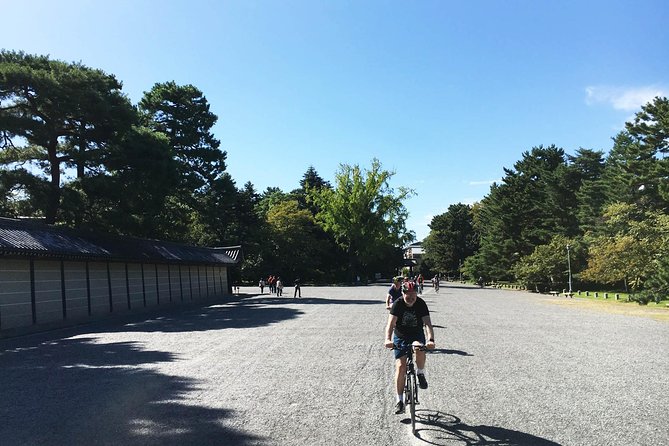
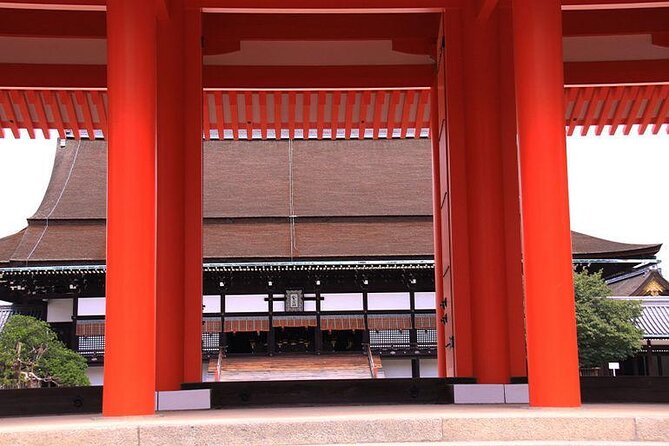
The route then passes through the grounds of Kyoto’s former Imperial Palace, once the seat of Japan’s imperial family. The itinerary gives this stop less detail than the temples, but the setting adds useful political and historical context to the day.
Riding through the grounds also breaks up the sightseeing. After several temple visits, a broad open area and a stretch of cycling can feel welcome. Your guide explains the palace’s past as you move through the area.
As with several stops, the point is not to spend half a day inside one monument. This tour is built around a wide view of Kyoto, and the palace grounds are one piece of that larger picture.
Gion, geisha culture, and careful expectations
Gion is Kyoto’s famous geisha district, with traditional streets and an atmosphere unlike the city’s temple compounds. The stop lasts about fifteen minutes and introduces you to the area’s history and the hidden world of geisha entertainment.
You might catch a glimpse of a geisha or maiko, but that is never guaranteed. Treat the district as a living neighborhood rather than a stage set. The short guided visit is useful for understanding what makes Gion different, but you may want to return independently if you hope to explore its lanes at a slower pace.
The route also provides a chance to see how old Kyoto traditions exist alongside a modern city. That contrast is one of the tour’s strengths.
Lunch in a local-style restaurant
Lunch is included, and this is more than a minor convenience. You are pedaling for most of the day, so a substantial Japanese meal gives you a proper break instead of leaving you to search for food while managing a bicycle and a schedule.
The meal has been described as delicious, including a traditional noodle-house lunch and a family restaurant with local patrons. The exact restaurant and menu can vary, so do not book this expecting one fixed dish.
Tell Cycle Kyoto about dietary requirements in advance. The supplied information specifically asks you to provide those needs ahead of time. Bottled water is also included, though you should still consider bringing extra water in hot or humid weather if permitted.
Tofuku-ji and a quieter temple pause
Tofuku-ji receives only about five minutes on the stated route, making it more of a quick look than a full temple visit. The temple is one of Kyoto’s oldest and largest Zen temples, and the bridge offers attractive views over its spacious grounds.
That short timing is the main limitation. You will not have much time to explore the temple buildings or grounds on this tour. The benefit is that you get another impressive setting without losing the day’s momentum.
If you care deeply about Zen architecture or Tofuku-ji’s seasonal views, plan to return separately. Here, it works as a brief but worthwhile stop on the way to Fushimi Inari.
Fushimi Inari and the torii gates
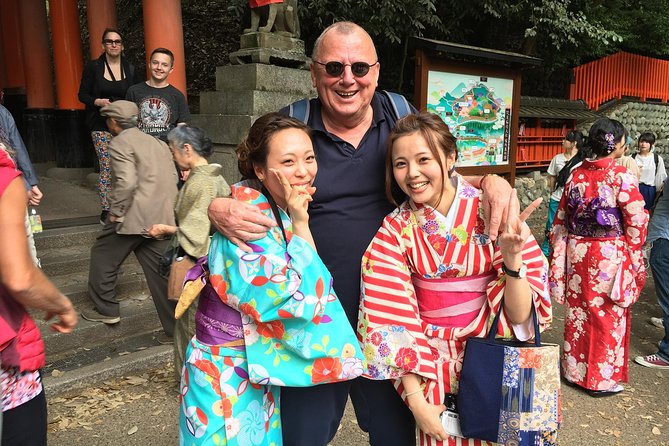
The final major sight is Fushimi Inari-taisha, Kyoto’s most visited attraction. Its long corridors of orange torii gates are famous, but the crowds can make the shrine confusing and slow to navigate.
The guide chooses a practical path through the area, helping you see the shrine without wasting the remaining energy of the day. Commentary may include the meaning of the shrine and the economics behind the thousands of donated torii gates.
Twenty minutes is enough for an introduction and some photographs, but not for walking deep into the entire mountain trail. Fushimi Inari rewards a separate visit if you want to climb farther. On this tour, you get a focused look while still reaching the meeting point before the day ends.
The guide can make or break the day
The guide is the most important variable. The named guides include Quinn, Juan, Paul, Carl or Karl, Indra, Jay, and Jamie or Jaimie. The exact person depends on the date and group, so you cannot assume a particular guide unless Cycle Kyoto confirms it.
The strongest guide experience combines clear riding instructions, good timing, useful historical detail, and humor. Guides such as Jay and Karl are described as especially engaging with families and teens. Juan is associated with a good lunch and careful attention. Paul is praised for organizing stories at each stop and making room for an unexpected street ceremony. Indra is noted for explaining both Kyoto’s past and the culture surrounding it.
One lower-rated account points out that the cycling was enjoyable but the explanations were unclear. That is a fair warning. A bike tour depends heavily on the person leading it, and the quality can vary from one guide to another.
How hard is 18 to 20 miles in Kyoto?
The route is not presented as a hill climb. Most riders find it generally flat, and several descriptions call the riding easy or cruisy. The challenge comes from duration rather than steep terrain.
You may cycle about 18 to 20 miles and walk roughly 14,000 steps during the temple and shrine visits. That is a substantial day even for an active person. Some riders finish delighted but exhausted, especially in warm weather.
You should book this if you ride a bike with confidence and have a moderate fitness level. Riders must be at least 13 years old. The tour can suit teens well, but younger riders need to be comfortable keeping up with a group for many hours.
Wear practical clothes and shoes, and bring sun protection as needed. The supplied details do not specify storage, clothing rules, or seasonal equipment, so ask the operator if you have concerns.
Group size, price, and overall value
The advertised price is $119.38 per person. For a full day, that includes the Cannondale bike, helmet, bottled water, lunch, guide service, and admission to Kinkaku-ji. The group maximum is eight people, although the general description also refers to a maximum of nine, so confirm the exact group limit when booking.
I consider the price reasonable if you want one organized day that connects Kyoto’s main sights. You are paying for transport by bike, route planning, local interpretation, equipment, and food. You also avoid piecing together several buses and train rides.
The value is weaker if you dislike long rides or prefer slow visits inside individual temples. You could spend less by using public transport and visiting fewer sights, but you would lose the backstreet riding and the guide’s running commentary.
The tour has a 4.9 rating from 498 reviews and is recommended by 99 percent of customers. Those figures suggest a strong overall record, but they should not hide the basic fact that the day is demanding and guide-dependent.
Who should book this Kyoto bike tour?
I would choose this tour for a first visit when you want a broad introduction to Kyoto in one day. It is especially useful if you have limited time and want to see both the major sights and quieter parts of the city.
It also suits active couples, families with bike-confident teenagers, and people who find long bus rides dull. The small group keeps the experience more personal than a large sightseeing coach.
I would think twice if you have limited cycling stamina, dislike riding near traffic, or want extended time at each temple. This is a moving overview, not a slow spiritual retreat. You should also avoid booking it as your only Kyoto plan if you want to climb far into Fushimi Inari or spend hours inside Gion.
You can cancel for a full refund up to 24 hours before the local start time. Changes or cancellations inside that window are not accepted for a refund. The tour depends on good weather and a minimum number of riders, with a new date or refund offered if Cycle Kyoto cancels.
Should you book it?
Book this Cycle Kyoto full-day tour if you want exercise, major Kyoto landmarks, quiet lanes, and plenty of historical explanation in a single outing. The included lunch, water, bike, and small group make the $119.38 cost easier to justify.
Skip it if you want a gentle day or prefer to linger at one or two temples. For the right rider, though, this is one of the most efficient ways to understand Kyoto’s size, rhythm, and range in one day.
FAQ
Where does the Kyoto bike tour start and finish?
It starts and ends at Cycle Kyoto, located at 7 Higashikujō Nishisannōchō, Minami Ward, Kyoto, 601-8003, Japan. The shop is near public transportation and about one block south of Kyoto Station.
How long does the bike tour last?
The tour lasts approximately seven to eight hours. The actual day may run longer depending on the group, route pace, and time spent at the stops.
How far do you ride?
The supplied information does not set an official mileage, but the route is described as roughly 18 to 20 miles in several accounts. You also walk during the temple and shrine visits.
What is included in the price?
The price includes use of a Cannondale bicycle, a helmet, bottled water, lunch, and admission to Kinkaku-ji. Other attraction admissions are listed as free.
What sights are included?
The route includes Nishi Honganji, Kitano Tenmangu Shrine, Kinkaku-ji, the grounds of the former Imperial Palace, Gion, Tofuku-ji, and Fushimi Inari-taisha Shrine.
What age and fitness level is required?
Riders must be at least 13 years old, comfortable riding a bicycle, and in moderate physical condition. The route is generally flat but covers a full day and may involve about 18 to 20 miles of cycling.
Can I cancel for a refund?
You can cancel at least 24 hours before the local start time for a full refund. Cancellations or changes made less than 24 hours before departure are not accepted for a refund. If bad weather or insufficient numbers cause the operator to cancel, you can choose another date or receive a full refund.
Just added around Kyoto
- Taste of Nishiki Market Walking Food Tour with Local guide★ 5.0 · 17 reviews
- Kyoto: Sushi Making Class with Sushi Chef★ 4.8 · 64 reviews
- Kyoto: City Secrets eBike Tour★ 4.9 · 196 reviews
- Sacred Pathways: Discover the Philosopher’s Path of Kyoto★ 4.9 · 20 reviews
- Private Tour to Monkey Park and Arashiyama Highlights★ 5.0 · 22 reviews
- Private Nara Tour from Osaka – Meet at Your Hotel★ 5.0 · 22 reviews
- Private Sake Tasting in Central Kyoto with Sake Sommelier★ 5.0 · 13 reviews
- Kyoto : Private Custom Walking Tour With A Local Guide★ 4.6 · 144 reviews
Cycling Tours, compared.

3h Tokyo E-Bike Tour: Hidden Gems, and Local Life with guide
Read our review →
Arashiyama Bamboo Forest & Hidden Gems Bike Tour (Early Bird)
Read our review →
Hiroshima in a Nutshell: Morning Bike Adventure
Read our review →
5 Top Highlights of Kyoto Full Day Bike Tour (E-bike option)
Read our review →Browse the lists this tour appears in