
REVIEW · KIMONO & CULTURE EXPERIENCES
Experience Samurai and traditional Culture to the fullest
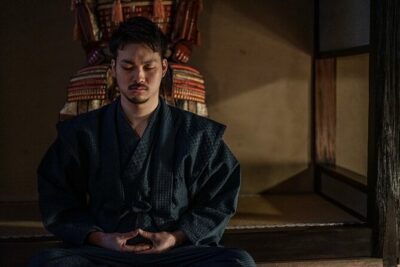
The most unusual part of this Osaka experience is that it treats samurai culture as more than a costume photo. You learn brushwork, tea etiquette, sword handling, and the ideas of duty and self-control before putting on armor for photographs connected with the 1615 Battle of Osaka. The private format and patient instruction are major strengths. I also like that the photography covers the session, rather than leaving you to manage a phone while wearing a helmet and armor. The main consideration is that the advertised $168 price is not cheap for three hours, and the sword work requires focus, not casual posing.
You should arrive 30 minutes early at Excellence Takayama in Joto-ku, carrying a T-shirt for changing. The default language is English, with Spanish, Italian, French, Chinese, Thai, and Indonesian possible only if staff availability is confirmed in advance. This activity suits adults and children age 10 and older who want a hands-on cultural lesson, not just a quick dress-up stop.
In This Review
- Key points before you book
- A samurai lesson, not just a costume change
- Meeting near Osaka Castle
- Calligraphy: start with the brush
- Samurai calligraphy and words of farewell
- Tea ceremony and the rules of hospitality
- Learning to carry a deadly weapon
- Armor and the Battle of Osaka photo session
- What the $168 price buys you
- Who will enjoy this most
- Booking advice and final call
- FAQ
- How long does the samurai experience last?
- How much does the experience cost?
- Is the experience private?
- What languages are available?
- Is transportation included?
- What should I bring?
- Are photographs included?
Key points before you book
- Write a chosen kanji character while learning the basic brush strokes used in Japanese calligraphy.
- Take part in a powdered-green-tea ceremony focused on manners, gestures, courtesy, and hospitality.
- Handle a real samurai sword during supervised trial cutting with a certified professional instructor.
- Wear armor linked to the Battle of Osaka and pose as a Toyotomi soldier for photographs.
- Receive photo data by email, with photography included in the listed price.
- Add the optional seppuku and harakiri session only if you are comfortable with its serious historical theme.
A samurai lesson, not just a costume change
This three-hour private activity near Osaka Castle is built around the values associated with samurai life. The program connects physical skills with ideas such as honor, responsibility, discipline, and beautiful conduct. That gives the session more shape than a standard rental costume and photo package.
You begin by changing into a kimono, described here as a symbol of Japanese culture. The clothing sets the tone for the rest of the visit. You are not simply asked to pose in armor at the start. Instead, you move through a sequence of traditional arts before reaching the battle scene and sword work.
I like this order. Calligraphy and tea ceremony slow the pace, while sword cutting and armor bring energy later. You get both quiet concentration and a more dramatic physical activity within one booking.
The activity is private, which matters when you are learning unfamiliar gestures or handling a sword. You can ask questions without worrying about a large group waiting behind you. The staff have also been praised for taking time with explanations and for helping participants through both calligraphy technique and katana handling.
More Kimono & Culture Experiences in Osaka
- Osaka: Sumo Show & Experience w/ Optional Kimono & Hot Pot
★ 4.5 · 609 reviews - Samurai Training Experience KENDO in Osaka
★ 5.0 · 515 reviews - OSAKA NIGHT FUSION Japanese Taiko Kabuki Samurai Dance Show
★ 4.8 · 155 reviews
Meeting near Osaka Castle
The studio is at Excellence Takayama 1F, 2-3-19 Shiginonishi, Joto-ku, Osaka-shi, Osaka 536-0014. Transportation is not included, and there is no pickup from a hotel or train station, so you need to make your own way there.
Look for a wooden sign reading Honor of the Samurai. Activity pamphlets are placed in front of the store, and kimonos and hakama may be hanging outside to dry. Those details are useful because the meeting point may be easier to identify by its clothing and sign than by the business name alone.
Arrive 30 minutes before your reserved start time. That early arrival is used for instructions and changing clothes, so cutting it close could make the opening feel rushed. Bring a T-shirt, which is the only specific item listed. Pets, baby strollers, alcohol, and drugs are not allowed.
The experience is described as the only place near Osaka Castle where you can experience being a samurai. The actual address is in Osaka City’s Joto-ku, and the activity includes photography on the grounds of Osaka Castle. Check your confirmation carefully for the meeting and photography arrangements, since transportation between locations is not included.
Calligraphy: start with the brush
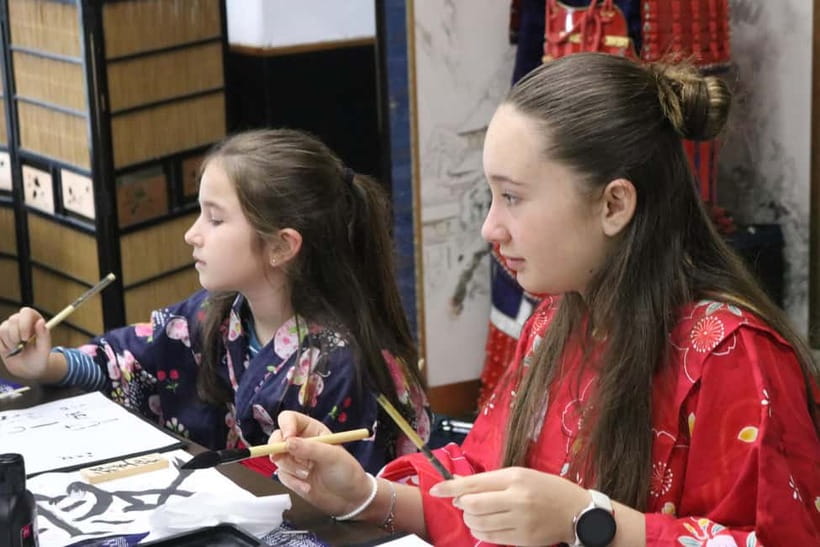
The first hands-on lesson is calligraphy. You learn how to prepare yourself, hold the brush, and use the tools. The instructor introduces three basic brush movements: tome, a stopping stroke; hane, a flicking stroke; and harai, a sweeping stroke.
These small details give the session a useful sense of progression. You do not simply copy a decorative symbol without context. You first learn how the brush behaves, then choose a kanji character and follow its proper stroke order.
The lesson takes about 20 minutes. That is enough time for an introduction, but not enough for mastery. Approach it as a focused cultural exercise rather than a full calligraphy class. The point is to pay attention to posture, pressure, order, and control.
The calligraphy section also ties into the samurai theme. Your chosen character is later used in the samurai calligraphy exercise, where you write it with greater attention to technique. This creates a small sense of personal ownership: you choose the character, practice it, and then produce a more formal version.
Samurai calligraphy and words of farewell
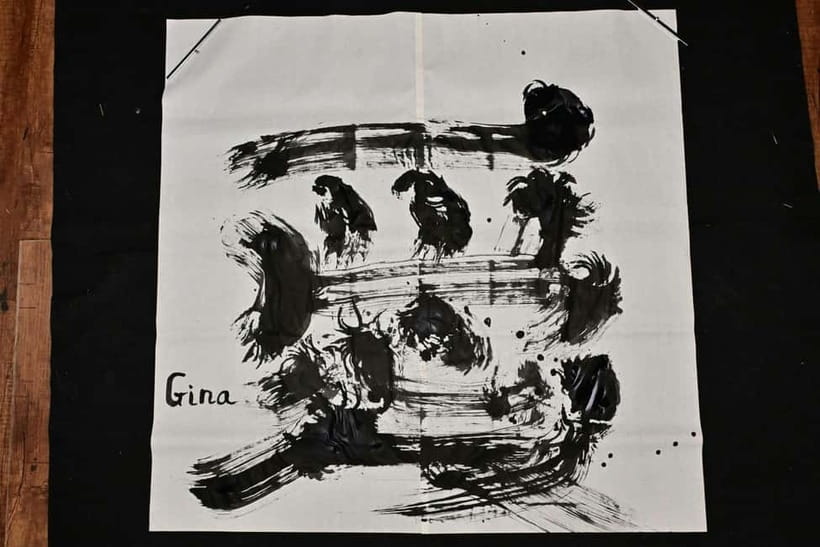
The next stage takes about 10 minutes and is described as samurai calligraphy, using words of resignation. In this context, resignation means a person’s final words before death, rather than simply giving up a job or position. The subject is serious and connects the writing lesson with the samurai ideal of preparing for death.
You write the kanji you selected earlier, concentrating on the technique. The exercise is brief, but its purpose is clear. It asks you to consider how a single character can carry a personal meaning and how a final written message might have mattered in samurai culture.
This part may appeal most to adults and older children who enjoy historical themes. It is not a lighthearted activity, and the language around death is direct. If your group wants only a cheerful photo session, the calligraphy section may feel more solemn than expected.
Same city, a completely different kind of day:
- Osaka Go Karting Tour with Funny Costume
★ 5.0 · 2,658 reviews - Osaka Castle: Museum and Tower Entry Ticket
★ 4.5 · 2,380 reviews - Osaka: Shinsekai Food Tour with 13-15 Dishes at 5 Eateries
★ 4.8 · 2,204 reviews - Osaka Food Tour: 13 Dishes at 5 Local Eateries
★ 5.0 · 2,149 reviews
Tea ceremony and the rules of hospitality
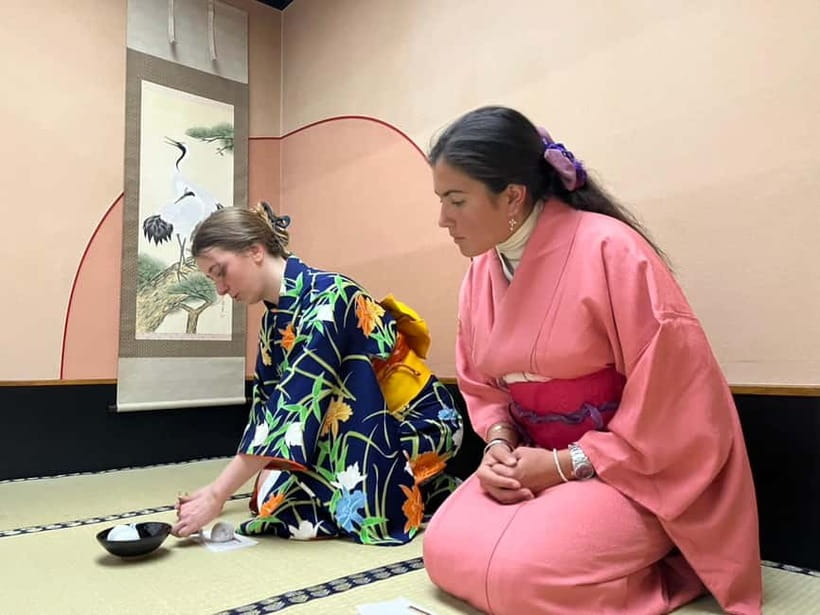
The samurai tea ceremony lasts about 30 minutes. A tea master prepares and serves powdered green tea, while you learn etiquette, manners, careful gestures, and hospitality.
The value here is in the behavior as much as the drink. The ceremony gives you a chance to notice how movement, attention, and respect are expressed through small actions. The program links this conduct with honor in the spirit of Bushido.
You should not expect a full historical lecture on tea ceremony from the information provided. Instead, expect a guided introduction to the actions and attitudes involved. The session can be a welcome change after the concentration of calligraphy, and it gives the three-hour visit a traditional Japanese setting before the more active sword and armor portions.
The tea ceremony is also a practical reason to choose this experience over a basic armor photo package. You leave with a better idea of why Japanese cultural activities often place such importance on preparation and manners.
Learning to carry a deadly weapon
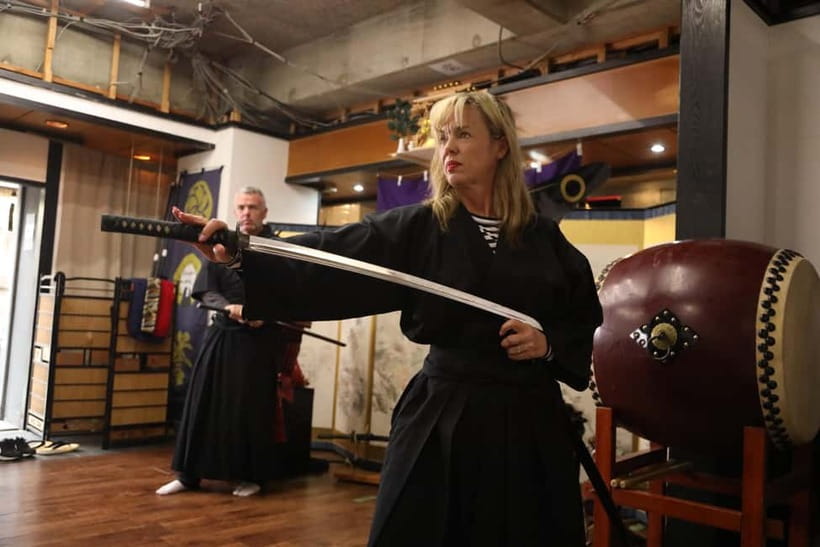
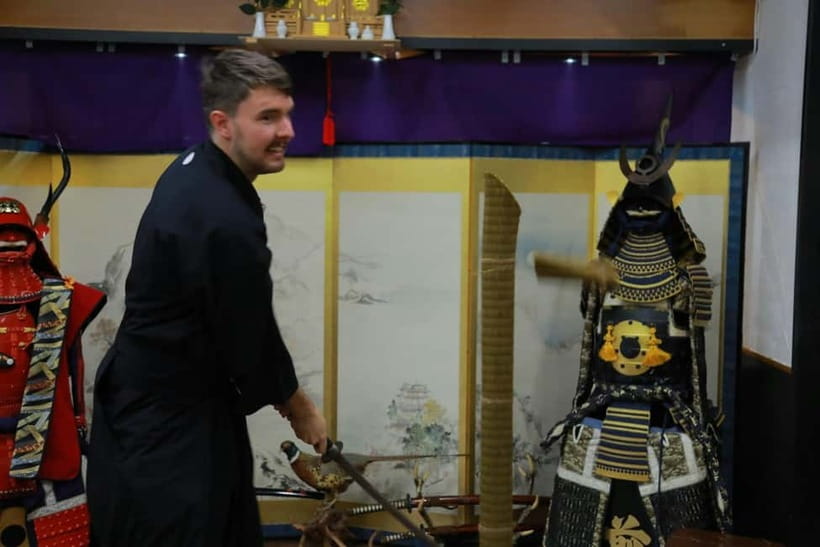
The sword section lasts about 30 minutes and is one of the strongest reasons to book this experience. You learn how to use a samurai sword and are allowed to wear a serious sword during the lesson. Under instruction, you then try trial cutting with a samurai sword.
This is not presented as a prop-handling exercise. The lesson stresses self-respect and responsibility when carrying a deadly weapon. That framing is important. You need to listen closely, follow the instructor’s directions, and treat the sword as a real tool rather than a toy.
A certified professional instructor leads the session. The supplied information does not specify the cutting material or exact sword technique, so do not assume you will receive advanced martial arts training. Think of it as a supervised introduction to the feel, control, and responsibility of sword cutting.
Past participants particularly valued the patient help with katana technique. That makes the private format useful. You can ask for a movement to be shown again and work on your stance without a crowd watching.
There is also a physical element. You may need to maintain concentration and controlled movement while wearing traditional clothing. Follow the staff’s safety guidance, and do not treat the cutting portion as a chance for improvisation.
Armor and the Battle of Osaka photo session
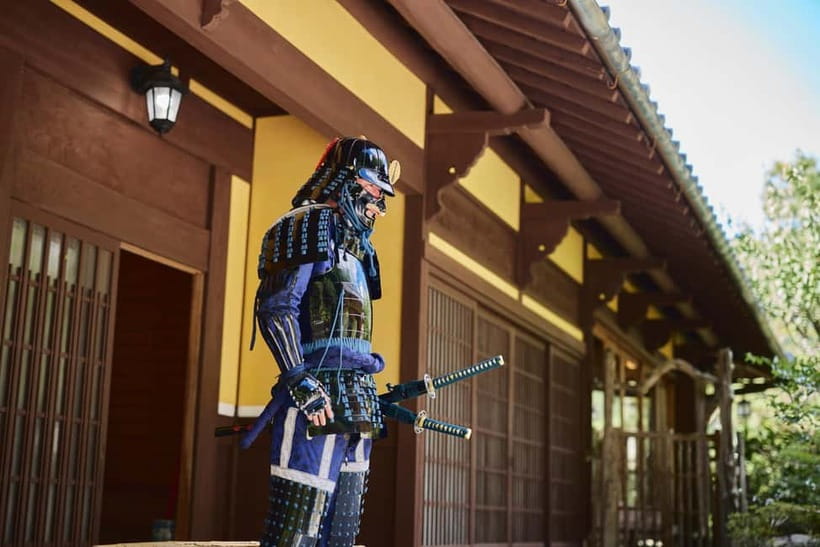
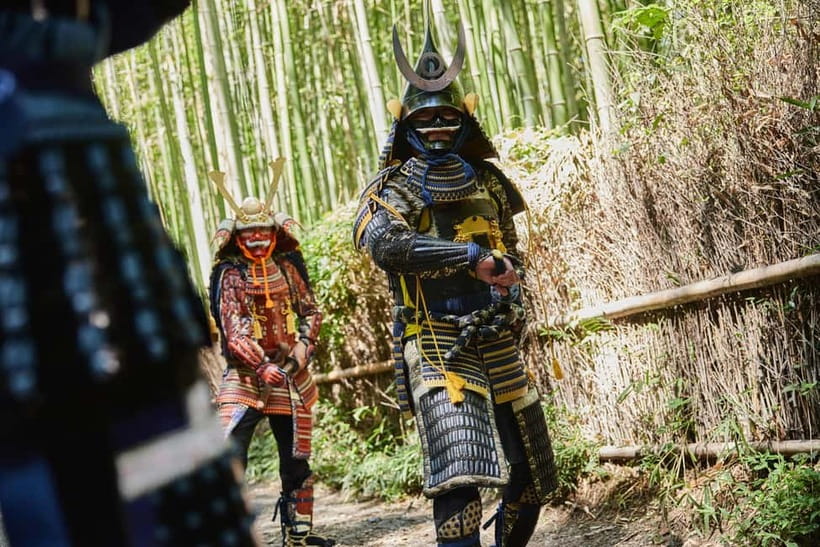
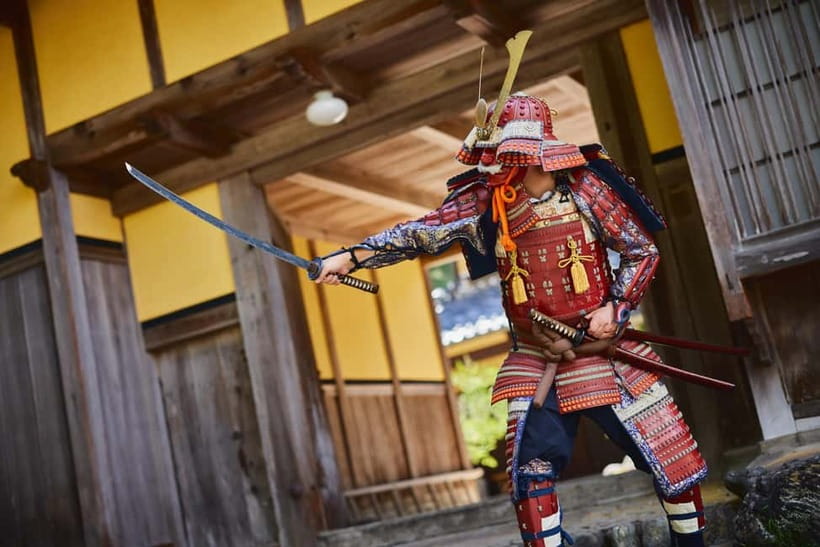
After the cultural lessons, you put on samurai armor. The activity connects the costume and photographs with the Battle of Osaka in April 1615, specifically the Osaka Summer Battle. You take the role of a soldier on Toyotomi’s side and pose as a top soldier.
The armor is included, and the description says it is worn indoors. Photography takes place on the grounds of Osaka Castle, with Osaka Castle in the background for at least one featured photograph. The combination gives the images a clear setting and a historical story rather than a generic studio backdrop.
You should allow time for the armor itself. Armor can change how you move, and the helmet and other pieces may feel substantial. The goal is not only to look the part, but to express your whole body dynamically and put your spirit into one character.
The photographer covers the activities and sends the data to a designated email address. That is a practical advantage. You can concentrate on the lesson and posing instead of asking a companion to keep taking pictures. A paid movie-shooting option is available, but it is not included in the $168 price.
One detail needs careful attention: the itinerary lists both armor and photography as separate 30-minute activities, while the total experience lasts three hours. Expect the schedule to include changing, instructions, movement between activities, and photography. The exact order may vary.
What the $168 price buys you
At $168 per person, this is a premium cultural activity. It is not the right choice if you want the cheapest way to wear a helmet for ten minutes. The price includes samurai clothing, indoor armor use, calligraphy practice, samurai calligraphy, tea ceremony, sword trial cutting, a certified instructor, English-speaking staff, and photo data by email.
The private format improves the value for couples, families with older children, or small groups who want personal instruction. You are paying for a guided sequence rather than one isolated attraction. The photography also adds value because the staff cover the session and you do not need to arrange your own camera work.
The price is harder to justify if you have little interest in calligraphy, tea etiquette, or the historical meaning attached to the sword. In that case, much of the three hours may feel like background to the armor photograph. If you do want several connected activities and a more serious introduction to samurai culture, the cost is easier to defend.
Tips and tax are included. Hotel pickup, train-station pickup, transport, personal expenses, and the movie-shooting option are not.
Who will enjoy this most
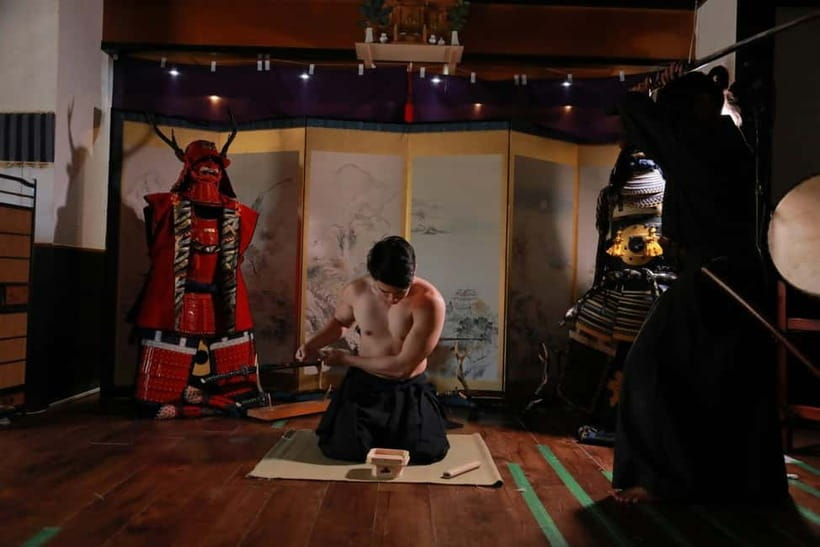
I would choose this experience for someone who wants active participation and a strong souvenir at the end. It works especially well for:
- Couples who want professional photographs with Osaka Castle behind them.
- Families with children age 10 or older who can follow sword-safety instructions.
- Visitors curious about calligraphy, tea ceremony, and samurai traditions in one appointment.
- Small private groups that prefer time for questions and individual coaching.
- Anyone who values a cultural activity with both quiet and physical sections.
It is less suitable for babies, children under 10, and people over 95, who are specifically excluded from the activity. It may also be a poor match if you dislike changing clothes, serious historical themes, or structured instruction.
Language deserves attention. English is the default for interpreters. Spanish, Italian, French, Chinese, Thai, and Indonesian may be available, but you must ask about the staff schedule before booking. Other-language support is limited and cannot be guaranteed.
Booking advice and final call
You can cancel up to 24 hours before the experience for a full refund, and the reserve-now-pay-later option lets you hold a place without paying immediately. Those policies make planning easier, but they do not solve the practical issue of reaching the studio, so plan your transport and allow the required 30 minutes before the start.
I would book this for the combination of patient instruction, sword practice, tea, calligraphy, and armor photography. The strongest praise has focused on the friendly staff, careful explanations, and the quality of the samurai armor and katana experience. Those are exactly the areas where a rushed group activity could fall short.
I would skip it if you only want a quick costume snapshot or if $168 feels too high for a three-hour cultural lesson. For the right person, though, this is a well-shaped Osaka activity: you learn with a brush, practice courtesy over tea, handle a serious sword under supervision, and finish by appearing in armor beside one of Japan’s most recognizable castles.
FAQ
How long does the samurai experience last?
The experience lasts three hours. You should arrive 30 minutes before your reserved start time for instructions and changing clothes.
How much does the experience cost?
The listed price is $168 per person.
Is the experience private?
Yes. The activity is offered as a private group experience.
What languages are available?
English is the default language for interpreters. Spanish, Italian, French, Chinese, Thai, and Indonesian may be available if staff are scheduled, but you should confirm language support before booking.
Is transportation included?
No. Pickup and drop-off at a train station or hotel, transportation, and other personal expenses are not included.
What should I bring?
Bring a T-shirt for changing. Samurai clothing, armor, calligraphy practice, tea ceremony, sword trial cutting, and photography are included.
Are photographs included?
Yes. Photo shooting is included, and the data is sent to a designated email address. Movie shooting is available as a paid option.
Just added around Osaka
- (Ticket Included) Explore Osaka Castle & Museum of History★ 4.8 · 21 reviews
- Hidden Osaka – Yukaku Red Light Tour & Culinary Adventure★ 4.8 · 96 reviews
- Osaka: Walking Tour and Top Highlights★ 4.8 · 104 reviews
- Osaka: Private Ceramic Painting Workshop★ 5.0 · 13 reviews
- Pickleball in Osaka, Kobe & Kyoto with Locals!★ 4.7 · 80 reviews
- Eat Like a Local in Osaka – Private Custom Street Food Tour★ 4.3 · 33 reviews
- Osaka:SUMO BEATS SHOWCASE: Taiko Drum and Wagyu burger!★ 4.2 · 37 reviews
- Kimono photoshoot-Includes 100 photo data★ 5.0 · 21 reviews
Kimono & Culture Experiences, compared.
Kyoto Geisha Walking Tour: Gion District & Hidden Gems
Read our review →
Gion Magical Night Walking Tour with Geisha Trivia
Read our review →
Gion Geisha District Walking Tour – Stories of Geisha
Read our review →
Best of Kyoto: Gion, Geisha, Pagodas & Cobblestones
Read our review →
Kyoto Gion Geisha District Walking Tour – The Stories of Geisha
Read our review →
Browse the lists this tour appears in