
REVIEW · FOOD MARKET TOURS
Eat Like a Local in Osaka – Private Custom Street Food Tour
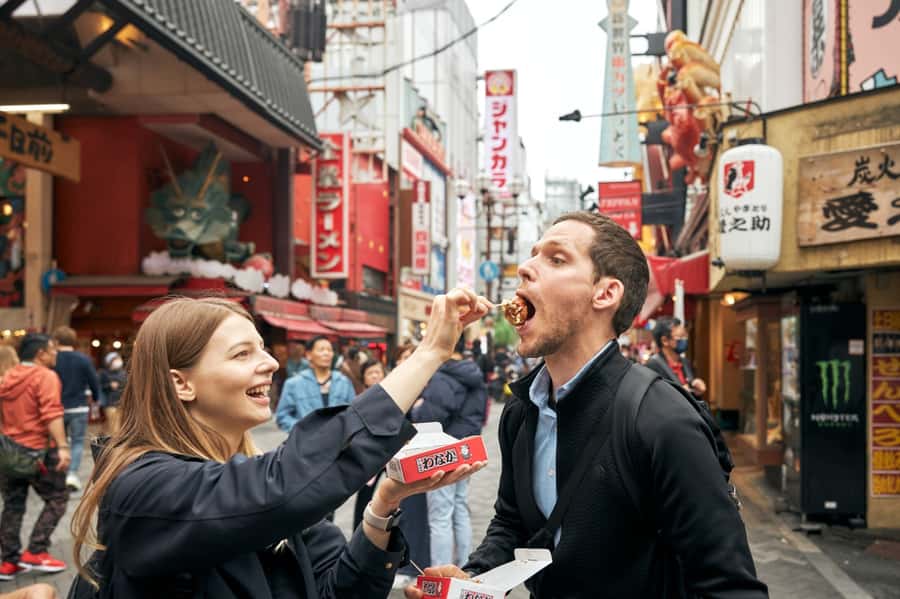
Osaka’s street-food culture makes a strong first impression: neon signs, lantern-lit lanes, sizzling hotplates, and small shops serving food made to eat right away. This private tour gives you a local host to guide you through Dotonbori and Namba while you sample six to eight Osaka classics, including takoyaki, okonomiyaki, oden, yakisoba, and kushikatsu.
I like the personal matching system, since your host gets your food preferences before meeting you. I also like the mix of food and conversation, especially for a first evening in Osaka. The main concern is price: at $169 per person, you will want a host who offers real local context and street-food stops, not simply restaurant meals.
In This Review
- Key points at a glance
- Osaka food culture, one bite at a time
- Before you meet your host
- Starting in Dotonbori after dark
- Takoyaki, hotplates, and Osaka comfort food
- Namba’s lantern-lit lanes and kushikatsu
- What the food stories add
- The included drinks and extra spending
- Walking, timing, and access
- Who will get the most from this tour
- Is $169 per person a fair price?
- Should you book Eat Like a Local in Osaka?
- FAQ
- Where does the tour meet?
- How long does the food tour last?
- How many food tastings are included?
- Are drinks included?
- Is transportation included?
- Is the tour private and wheelchair accessible?
Key points at a glance
- Your food preferences shape the route: A short questionnaire helps match you with a host and plan around your tastes, appetite, and interests.
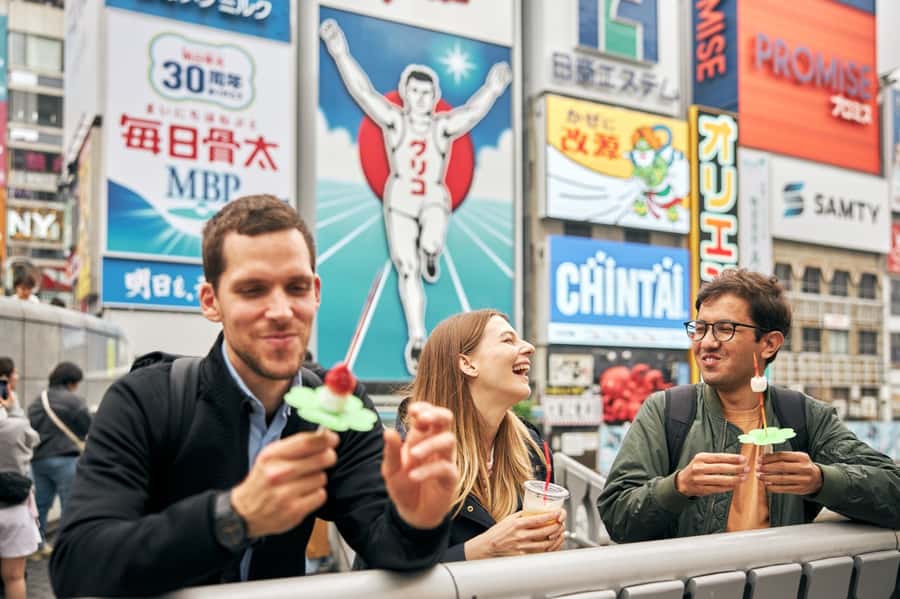
- Six to eight tastings are included: Expect Osaka favorites such as takoyaki, okonomiyaki, oden, yakisoba, and kushikatsu, with exact choices adjusted to you.
- Dotonbori and Namba provide the setting: You walk through Osaka’s best-known food districts, from bright canal-side streets to lantern-lined alleys.
- Two drinks are included: You can choose alcoholic or soft drinks according to your preference.
- This is a private walking tour: A vehicle is not included, and public transport or taxis may cost extra if needed.
- The host can help beyond dinner: You leave with restaurant ideas and food tips for the rest of your Osaka visit.
Osaka food culture, one bite at a time
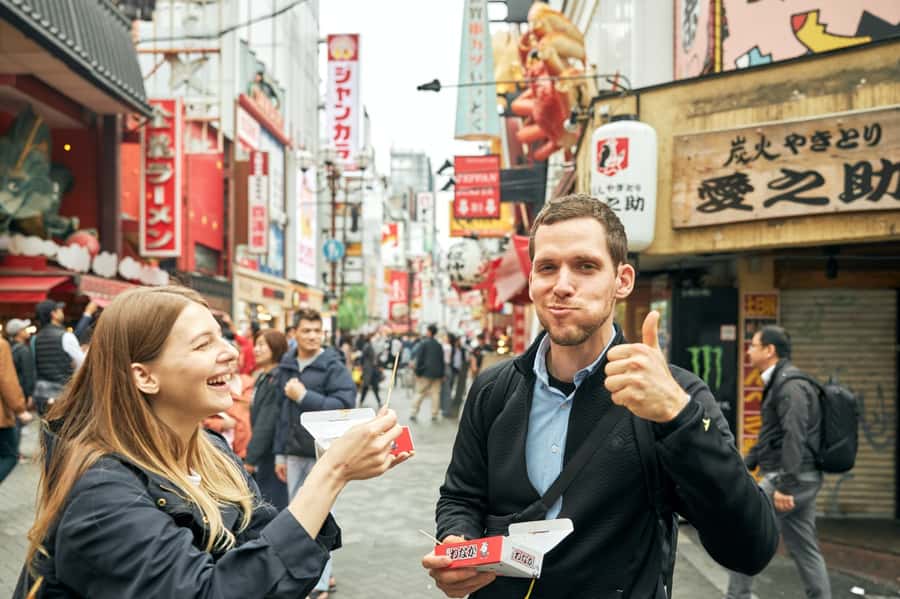
Osaka is often called Japan’s street-food capital, and this tour is built around that idea. Instead of treating food as a quick checklist, your host explains why particular dishes matter in Osaka and how they fit into local life.
That context is useful. Takoyaki is not just a ball of batter with octopus inside. Okonomiyaki is not simply a Japanese pancake. Oden, yakisoba, and kushikatsu each offer a different look at the city’s fondness for warm, filling, casual food.
The tour also gives you a way into Osaka’s crowded food districts without making you plan every stop yourself. Dotonbori can feel like a wall of signs and menus, especially after dark. A host can help you make sense of it, point out places suited to your preferences, and keep the three-hour route moving.
This is still a food walk, not a formal cooking class or a major history tour. The value comes from eating several local specialties while talking with someone who lives in Osaka and can explain the city in everyday terms.
More Food Market Tours in Osaka
- Osaka: Shinsekai Food Tour with 13-15 Dishes at 5 Eateries
★ 4.8 · 2,204 reviews - Osaka Food Tour: 13 Dishes at 5 Local Eateries
★ 5.0 · 2,149 reviews - Hungry Osaka Street Food Tour:15 Tastings & 3 Drinks with a Local
★ 5.0 · 1,727 reviews
Before you meet your host
After booking, you receive an online questionnaire. Use it carefully. This is the part that can make the tour feel personal rather than generic.
Tell the company and your host about foods you already want to try, ingredients you avoid, your comfort level with unfamiliar dishes, and how much walking you prefer. You can also explain if you care more about food traditions, local neighborhoods, casual conversation, or recommendations for later meals.
The matching process is designed to pair you with a local foodie who fits your tastes and personality. The guide languages are English and Japanese. Several past experiences were praised for friendly company, useful local suggestions, and a host who adapted to less adventurous eating.
One useful example comes from a tour led by Lay. She knew the area well, suggested food and restaurants, and shared her experience as an expatriate building a life in Japan. That kind of personal connection can add something a standard food crawl cannot.
Still, matching is not a guarantee of a particular guide or style. Your experience will depend heavily on the person assigned to you. Clear answers on the questionnaire matter, and direct communication with your host is available for itinerary planning.
Starting in Dotonbori after dark
The regular meeting point is Starbucks Coffee at Tsutaya Ebisubashi, at 1 Chome-8-19 Dotonbori. If you stay at a central Osaka hotel, pickup on foot can be arranged instead.
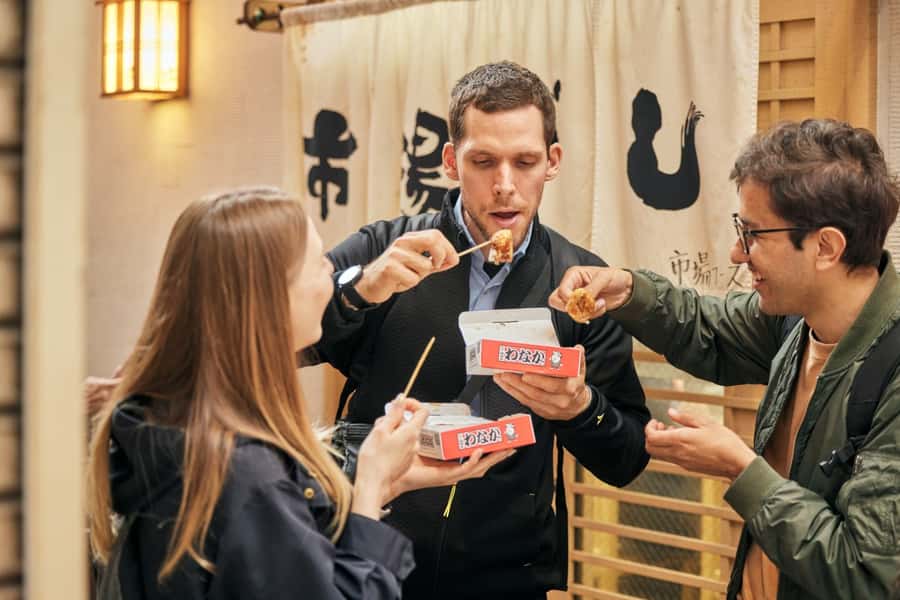
Dotonbori is a logical starting point. It is famous for giant signs, bright lights, the canal, and an intense concentration of food shops. The setting gives you an immediate sense of Osaka’s appetite for casual eating and spectacle.
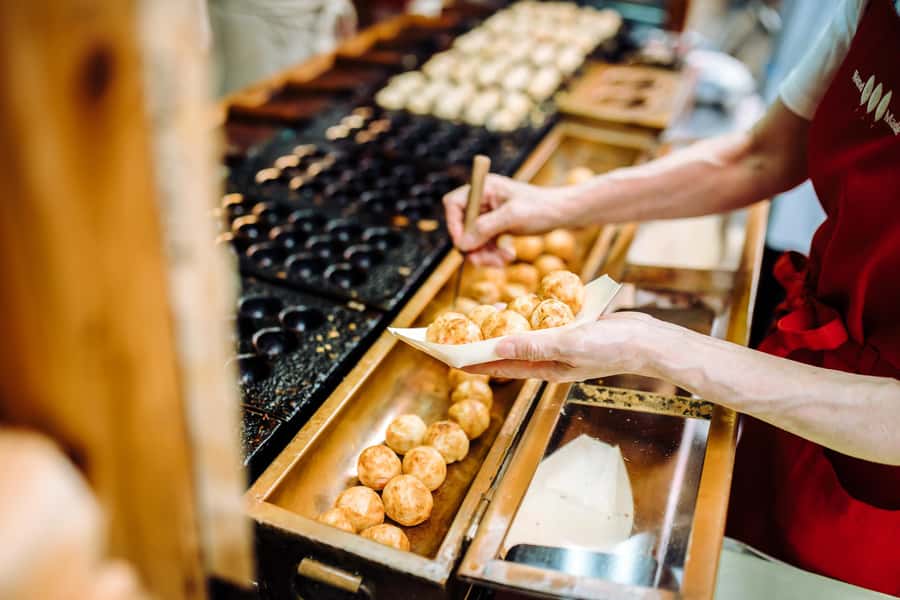
Your host can use the area as a food map rather than a sightseeing checklist. You may stop at a corner counter for takoyaki, one of Osaka’s signature foods, or pause at a hotplate serving yakisoba. The exact route is flexible, so the order depends on your preferences and what your host thinks fits the evening.
The strength of Dotonbori is choice. You can compare different kinds of food within a small area, and the atmosphere is part of the meal. The weakness is that the district is famous enough to draw large crowds and plenty of visitors. If you expect every stop to be a quiet local secret, adjust your expectations.
This is also one reason a private guide can help. You are not left to judge every menu from a photo or choose between several similar-looking stalls. You can ask questions, request a change, or explain that you would rather eat something familiar.
Takoyaki, hotplates, and Osaka comfort food
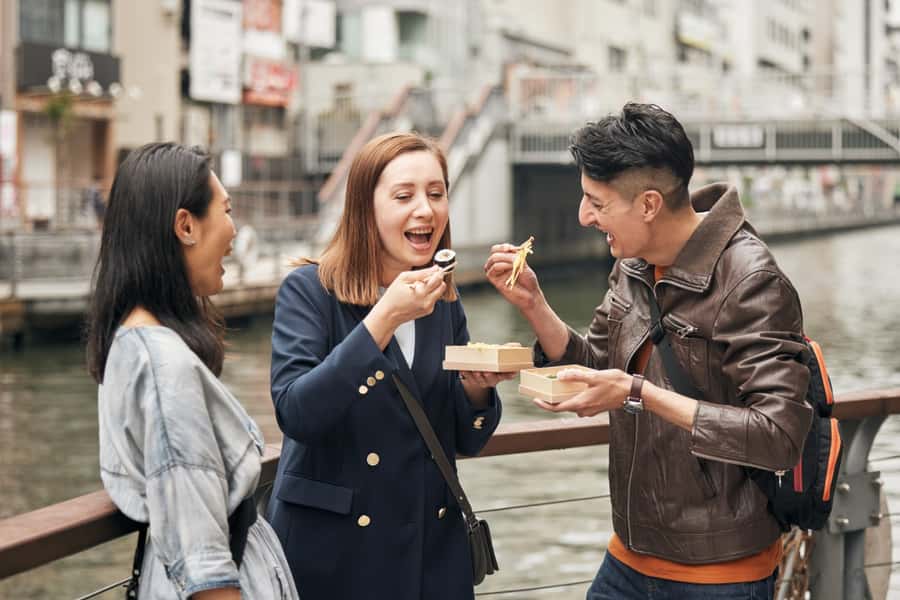
Takoyaki is likely to be one of the most recognizable foods on the route. These small, round pieces of batter are cooked around octopus and served hot, often with sauce and toppings. They are easy to eat in theory, but the filling can stay extremely hot, so take your first bite slowly.
Okonomiyaki offers a different experience. The dish is cooked on a hotplate and built around batter with additional ingredients. The name is often explained as meaning something like grilled as you like it, which fits Osaka’s relaxed approach to food. Your host can explain the local style and how it differs from other versions in Japan.
Yakisoba brings another hotplate favorite into the mix. It is a straightforward, filling noodle dish with a smoky, savory taste. Oden is gentler and more warming, built around ingredients simmered in broth. These dishes show why Osaka food is so appealing: it is comforting, direct, and made for ordinary eating rather than ceremony.
The tour promises six to eight tastings, but tasting does not always mean a full meal at every stop. Portion sizes can vary, and your appetite will affect how much you want to order beyond the included food. If you eat lightly or have dietary restrictions, tell your host before the tour begins.
Same city, a completely different kind of day:
- Osaka Go Karting Tour with Funny Costume
★ 5.0 · 2,658 reviews - Osaka Castle: Museum and Tower Entry Ticket
★ 4.5 · 2,380 reviews - Osaka: Tea Ceremony Experience
★ 4.9 · 1,426 reviews - Osaka Kickstart: Hotspots & Hidden Gems Tour
★ 5.0 · 1,306 reviews
Namba’s lantern-lit lanes and kushikatsu
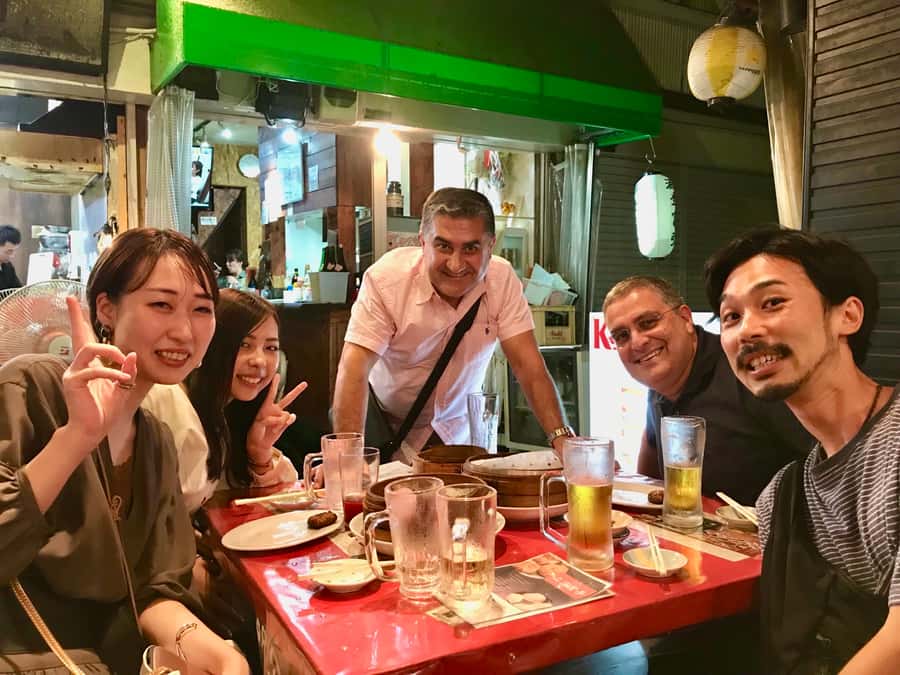
The route can continue through Namba, where smaller alleys and lantern-lit passages offer a change from Dotonbori’s big signs. This part of the walk is valuable because it gives you a more close-up look at Osaka’s everyday dining spaces.
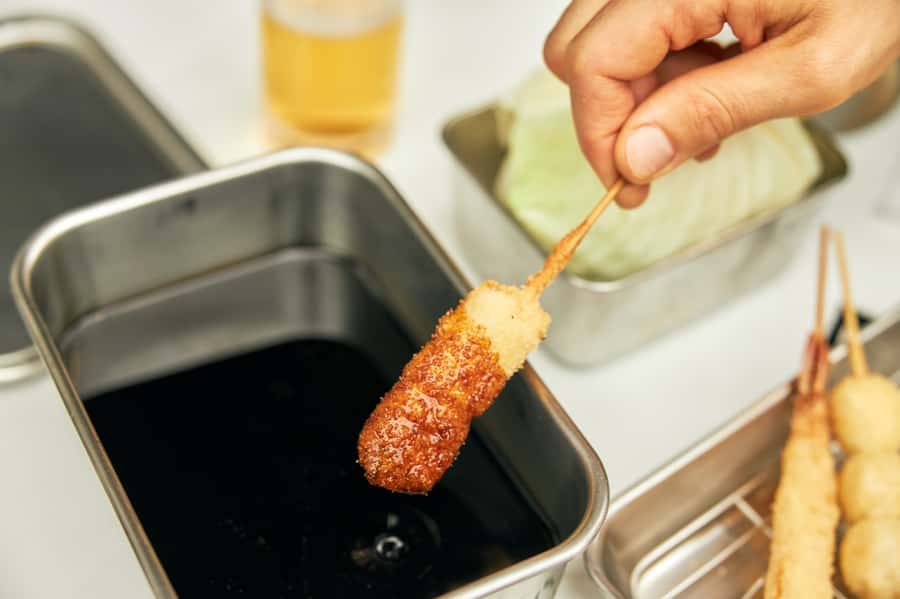
Kushikatsu is one of the key foods associated with Osaka. It consists of skewered ingredients that are coated and fried. The result is crisp, savory, and easy to share, though you should follow the restaurant’s rules about sauces and dipping.
A kushikatsu stand can also be a good place to ask your host how Osaka’s casual dining differs from the food culture you see in Tokyo or Kyoto. The tour is not built around a lecture, but these small explanations can make the evening more memorable.
Namba’s alleys may also be where the experience feels most personal. A host who knows the area can steer you toward a less obvious counter or recommend places to return to later. But the activity description does not promise that every stop will be a street cart or open-air stall. One disappointing experience involved eating inside restaurants instead of sampling street food, so you should confirm your expectations with your host before meeting.
That point matters. In Japan, the line between street food, small counter dining, and casual restaurants is not always as sharp as it is elsewhere. If you specifically want food eaten outdoors or from stalls, say so plainly.
What the food stories add
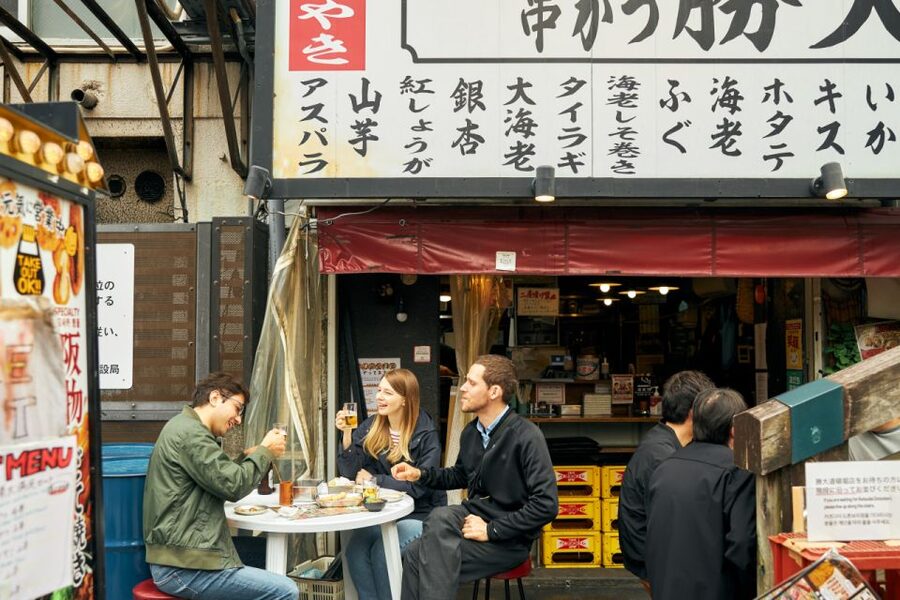
The best part of a private food walk is often the explanation between bites. Your host can discuss where Osaka favorites came from, how the dishes developed, and why they became linked with the city.
You also get a chance to ask questions that a printed guide cannot answer. You might ask which foods locals order often, how to read a menu, where to return for a full meal, or how adventurous you should be with unfamiliar ingredients.
The quality of this side of the tour depends on communication. One past experience was praised for teaching a great deal, while another was criticized for having little information and unclear English. The listed languages are English and Japanese, but fluency and speaking style can vary by host.
I would treat this as a conversation-led food walk, not a guaranteed expert lecture. If learning about food history is your top goal, include that request in the questionnaire and repeat it in your first message to the host.
The included drinks and extra spending
The tour includes two local drinks. You can choose alcoholic or soft drinks, which is helpful if you do not drink or prefer to keep the evening simple.
Additional food and drinks are not included. That sounds obvious, but it matters at $169 per person. Six to eight tastings can be enough for a satisfying meal, yet you may want to order more if portions are small or if a particular dish becomes a favorite.
At this price, the tour is paying for more than food. You are also paying for private guiding, personalized planning, local conversation, and three hours of someone else handling the route. The value is strongest for people who want a social introduction to Osaka food and would otherwise spend a great deal of time choosing places on their own.
The value is weaker if you mainly want the cheapest way to eat takoyaki and okonomiyaki. You could spend far less by visiting Dotonbori on your own. You also need to be comfortable with some uncertainty in the exact dishes and venues, since the route is designed around your preferences rather than a fixed menu.
Walking, timing, and access
The experience lasts three hours and runs at available starting times. An evening start makes sense for Dotonbori and Namba, since the signs and lanterns create much of the atmosphere, but you should check the available time when booking.
This is primarily a walking experience. A private vehicle is not included. Public transport or local taxis may be used to transfer between places, with those costs paid separately. Ask your host about any planned transfers so you know what extra expense to expect.
Central hotel pickup can be arranged on foot. Otherwise, meet at the Dotonbori Starbucks location. Since the tour is listed as wheelchair accessible, mention any mobility needs when you communicate with your host. The route is flexible, but the surrounding entertainment districts can be crowded and busy.
A private group is a real advantage here. You can set the pace, ask for breaks, and avoid being tied to strangers with different food interests. It also makes the tour useful for couples, families, and small groups who want to share one food plan.
Who will get the most from this tour
I would recommend this experience most strongly for a first visit to Osaka, especially if you want an easy introduction on your first or second night. Your host can help you identify foods you want to revisit and give you suggestions for the rest of your stay.
It suits people who enjoy conversation as much as eating. It is also a good fit if you are unsure about ordering Japanese food, have limited time, or want someone to adjust the route around your comfort level.
Less adventurous eaters can benefit too. One past experience worked well because the guide respected a guest’s preference for familiar foods while still showing the specialties of Osaka.
Food enthusiasts should look closely at the customization. If you have strong preferences, this could be more useful than a fixed group tour. But serious street-food purists should confirm that the route includes stalls or food counters rather than only sit-down restaurants.
I would be cautious about booking it solely for a large quantity of food. The tour offers six to eight tastings and two drinks, but it is not an unlimited crawl. It is a guided introduction with a social side.
Is $169 per person a fair price?
The price is high compared with eating independently in Dotonbori. That is the unavoidable comparison. Osaka’s casual food is generally accessible, and you can try several famous dishes without a guide.
The private format changes the calculation. You receive a host matched to your preferences, a flexible three-hour route, two drinks, six to eight tastings, and direct help with food planning. If you value personal attention and want to make confident choices quickly, the cost can be reasonable.
The risk is inconsistency. A strong host can make the evening feel like dinner with a well-informed local friend. A weaker match may provide ordinary food, limited explanation, or restaurant stops that do not fit your idea of street food. The mixed experiences make it especially important to use the questionnaire and message your host with clear requests.
I would book at this price when the personal match matters to you and your time in Osaka is limited. I would skip it when your main aim is simply to eat cheaply or follow a strict list of outdoor stalls.
Should you book Eat Like a Local in Osaka?
Book this private food walk if you want a flexible introduction to Dotonbori and Namba, enjoy talking with a local, and appreciate help choosing among Osaka’s many specialties. The best version of the experience combines good food, useful stories, and advice you can use for the rest of your trip.
Before booking, decide what street food means to you. If you want takoyaki from a stand, kushikatsu at a counter, and food eaten outside, tell your host. If you are happy with small restaurants, say that too.
At $169 per person, this is a splurge, not a budget meal. I see it as worthwhile for first-time visitors who want a private food orientation and do not mind paying for the guide’s time. If you prefer independence, spend the money across several meals and explore Dotonbori at your own pace.
Free cancellation is available up to 24 hours before the tour, and you can reserve now and pay later. Those policies make it easier to hold a spot while you settle your Osaka plans.
FAQ
Where does the tour meet?
The standard meeting point is Starbucks Coffee at Tsutaya Ebisubashi, 1 Chome-8-19 Dotonbori, Chuo Ward, Osaka. Pickup on foot can be arranged from a central Osaka hotel.
How long does the food tour last?
The tour lasts three hours. Available starting times depend on the date you choose.
How many food tastings are included?
You receive six to eight street-food tastings selected around your preferences. Examples include takoyaki, okonomiyaki, oden, yakisoba, and kushikatsu.
Are drinks included?
Yes. Two local drinks are included. You can choose alcoholic or soft drinks.
Is transportation included?
The experience is mainly a walking tour, and a private vehicle is not included. Public transport or local taxis may be used, but those costs are additional and can be discussed with your host.
Is the tour private and wheelchair accessible?
Yes. It is offered as a private group experience and is listed as wheelchair accessible. The guide languages are English and Japanese.
More Food in Osaka
- Osaka Local Foodie Walking Tour in Dotonbori and Shinsekai
★ 5.0 · 985 reviews - Osaka: Kuromon Market Food Walking Tour (6 stops, 6 tastes)
★ 4.6 · 272 reviews - Osaka After Dark: Small-Group Night Food Tour (Max 6)
★ 4.5 · 245 reviews - Eat, Drink & Cycle: Osaka Foodie Bike Tour
★ 5.0 · 224 reviews
More Food & Drink in Osaka
- Hungry Osaka Street Food Tour: 15 Dishes & 3 Drinks
★ 4.9 · 694 reviews - Kuromon Market Food Walking Tour in Osaka (6 stops, 6 tastes)
★ 5.0 · 550 reviews - Osaka: Guided Food Tour with 12 Dishes at 4 Local Eateries
★ 5.0 · 533 reviews - Absolute Osaka Food Tour
★ 5.0 · 309 reviews
Just added around Osaka
- (Ticket Included) Explore Osaka Castle & Museum of History★ 4.8 · 21 reviews
- Hidden Osaka – Yukaku Red Light Tour & Culinary Adventure★ 4.8 · 96 reviews
- Osaka: Walking Tour and Top Highlights★ 4.8 · 104 reviews
- Osaka: Private Ceramic Painting Workshop★ 5.0 · 13 reviews
- Pickleball in Osaka, Kobe & Kyoto with Locals!★ 4.7 · 80 reviews
- Osaka:SUMO BEATS SHOWCASE: Taiko Drum and Wagyu burger!★ 4.2 · 37 reviews
- Kimono photoshoot-Includes 100 photo data★ 5.0 · 21 reviews
- OSAKA:Feel the Power! Learn Taiko Drum from Professionals★ 5.0 · 17 reviews
Food Market Tours, compared.
Shinjuku Food Tour (13 Dishes at 4 Local Eateries)
Read our review →
Tokyo Tsukiji Fish Market Food and Culture Walking Tour
Read our review →
Shinsekai Food Tour with 13-15 Dishes at 5 Eateries
Read our review →
Osaka Food Tour: 13 Dishes at 5 Local Eateries
Read our review →
Shinjuku Food Tour (15 Dishes and 4 Eateries)
Read our review →
Best of Shinjuku: Izakaya Food Tour (4 Stops, 14+ Tastings)
Read our review →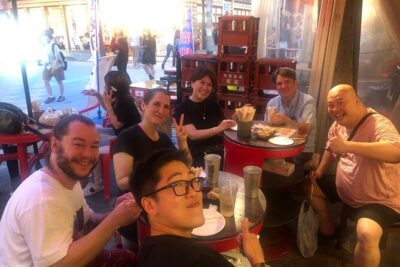
Hungry Osaka Street Food Tour:15 Tastings & 3 Drinks with a Local
Read our review →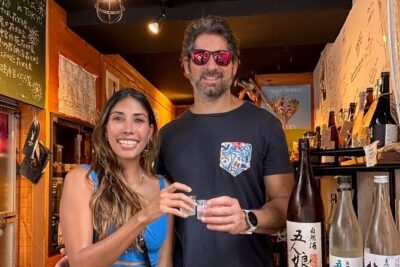
Browse the lists this tour appears in