
REVIEW · CYCLING TOURS
Early Bird E-biking through East Kyoto
Kyoto reveals itself quickly from an e-bike. In one long morning and afternoon, you can pedal from the red gates of Fushimi Inari to Zen temples, the Kamogawa River, the Philosopher’s Path, Gion, and some of the city’s quieter lanes. The early 8:00 a.m. start is a smart move, especially at Kyoto’s busiest sights.
I like two things right away: the small group, limited to eight, and the amount of ground you cover without wearing out your legs. An e-bike helps with Kyoto’s longer stretches and modest hills, while lunch and a cafe stop save you from having to plan every meal. The main caution is simple: this is still a full day on two wheels, with traffic, crowds, uneven surfaces, and some uphill riding.
In This Review
- Key points before you book
- Why an e-bike works so well in Kyoto
- Starting near Kyoto Station at 8:00 a.m.
- Fushimi Inari before the crowds
- Tofuku-ji and the first temple pause
- Kamogawa River riding and the shape of the city
- Ginkaku-ji, lunch, and a busy reality check
- The Philosopher’s Path by bicycle
- Nanzen-ji’s grounds and Heian Shrine
- Gion through the backstreets
- Higashi Hongan-ji and the final cafe stop
- What the $138.74 price buys you
- Guides, pace, and the real experience
- Who should book this Kyoto ride
- Should you book Early Bird E-biking through East Kyoto?
- FAQ
- What time does the tour start?
- Where does the tour meet?
- Where does the tour end?
- How long does the e-bike tour last?
- What equipment is provided?
- Is lunch included?
- Is there a minimum age or height?
Key points before you book
- Nine very different Kyoto stops: You visit Fushimi Inari, Tofuku-ji, Ginkaku-ji, the Philosopher’s Path, Nanzen-ji, Heian Shrine, Gion, and Higashi Hongan-ji, with river riding linking them together.
- An early start that earns its keep: Meeting at 8:00 a.m. gives you a better shot at seeing major sites before the day reaches full speed.
- Small groups matter here: A maximum of eight makes it easier to stay together, ask questions, and adjust the pace.
- Lunch and a cafe break are included: The tour builds food into the day, a useful touch on a six- to seven-hour outing.
- E-bike and helmet provided: You do not need to arrange equipment, but you should already feel comfortable riding a bicycle.
- Guide quality shapes the day: Guides such as Jay, Juan, Indra, Paul, Shaune, Jaime, Julian, Sean, Carl, and Mayco have led this experience, with especially strong praise for their warmth, safety, local tips, and storytelling.
Why an e-bike works so well in Kyoto
Kyoto is often introduced as a city for walking and public transit. Both are useful, but neither gives you quite the same view of the city as a bicycle. The main sights are spread across southern and eastern Kyoto, and moving between them can take time on foot or require several train and bus connections.
An e-bike fills that gap. You still pedal, but the electric assistance makes the longer stretches more manageable. That matters on a route that moves from southern Kyoto to the eastern temple district, then loops through central streets and Gion before returning to the starting point.
You should not mistake electric assistance for effortless transport. The ride lasts about six to seven hours, and some sections pass through busy roads, crowded areas, narrow lanes, and slightly uneven ground. One rider found a few uphill sections challenging, even with the e-bike. A moderate level of physical fitness is required.
The ride also asks you to pay attention. You may need to manage the bike while keeping up with the group and watching surrounding traffic. If you are a nervous cyclist, have not ridden in years, or dislike city riding, this may not be the best way to see Kyoto.
For confident riders, the payoff is large. You can cover far more than you could on foot, while still moving slowly enough to notice canals, backstreets, bridges, and ordinary neighborhoods between the famous monuments.
A few more Kyoto trips to weigh up
- Hidden Kyoto E-Biking tour
★ 5.0 · 1,843 reviews - Bike Tour Exploring North Kyoto plus Lunch
★ 5.0 · 1,087 reviews - Arashiyama Bamboo Forest & Hidden Gems Bike Tour (Early Bird)
★ 5.0 · 613 reviews
Starting near Kyoto Station at 8:00 a.m.
The meeting point is Cycle Kyoto at Higashikujō Nishisannōchō in Minami Ward. The activity ends back there, which makes the beginning and end easy to understand. The location is near public transportation, though one rider found the shop a little tricky to locate, so I would allow extra time rather than arriving at the last minute.
At the start, you receive an e-bike and helmet. The minimum age is 13, and the minimum height is 145 centimeters. Bike fit deserves attention before you set off, especially if you are tall or traveling with teenagers. One family had to request larger bikes after being given two that were much too small for a long ride.
This is worth handling before the first stop. A poorly sized bike can become a real problem after several hours. Tell the operator your height and any bike concerns ahead of time, then check the saddle, handlebars, brakes, and riding position before leaving.
The group limit of eight is one of the tour’s strongest practical features. It is easier for the guide to keep an eye on everyone, answer questions, and make small adjustments than it would be with a large bus-sized group.
Fushimi Inari before the crowds
The first ride takes about 25 minutes along the river to Fushimi Inari-taisha Shrine. This is an excellent opening stop because the shrine is one of Kyoto’s most recognizable sights, yet the early timing gives you a better chance to enjoy its approach before the day becomes crowded.
You spend about 30 minutes exploring on foot. Fushimi Inari is famous for its long corridors of orange torii gates, but even a short visit gives you a feel for the shrine’s scale and atmosphere. Since you are walking rather than cycling through the grounds, wear shoes that can handle steps and uneven surfaces.
The stop is free, and the time is intentionally limited. You will not walk the entire mountain trail in 30 minutes. Instead, you get a focused introduction, then return to the bike and continue. If Fushimi Inari is your top priority, you may want to return independently for a longer visit on another morning.
Tofuku-ji and the first temple pause
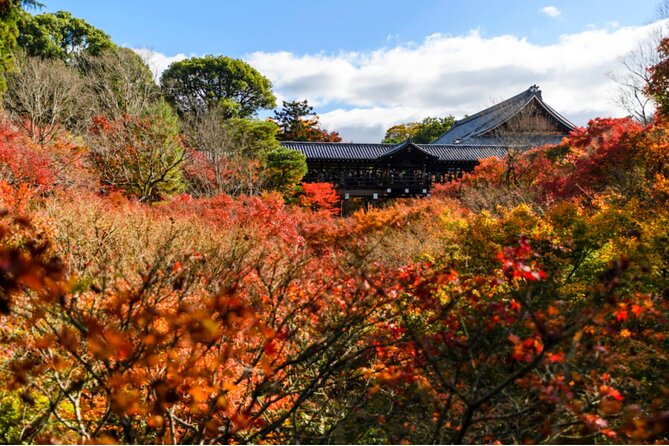
From Fushimi Inari, it is about 15 minutes to Tofuku-ji Temple. The stop lasts roughly 30 minutes and includes time on a picturesque bridge.
Tofuku-ji is a major Zen temple complex with a strong sense of space and careful design. The bridge stop gives you a pleasant view and a chance to slow down after the first riding section. The tour does not present this as a long, detailed temple visit, so think of it as a well-chosen taste rather than a complete examination of the grounds.
The free admission keeps the stop simple. Your guide may add cultural and historical context, but the quality of explanation can vary with the individual guide. Guides such as Indra, Jay, Juan, and Shaune were praised for mixing history with humor and for giving the temples more meaning than a quick photo stop.
Same city, a completely different kind of day:
- PERFECT KYOTO 1-Day Bus Tour
★ 5.0 · 13,518 reviews - Kyoto: Fushimi Inari, Kinkakuji, Bamboo Grove 1 Day Bus Tour
★ 4.8 · 4,316 reviews - Kyoto: Tea Ceremony in a Traditional Tea House in Kiyomizu
★ 4.9 · 3,519 reviews - Kyoto Geisha Walking Tour: Gion District & Hidden Gems
★ 4.7 · 3,273 reviews
Kamogawa River riding and the shape of the city
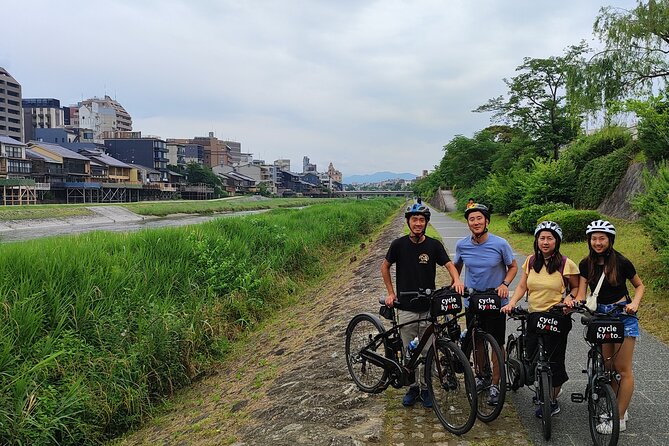
The route then gives you about 30 minutes of extended riding beside the Kamogawa River. This is one of the tour’s most pleasant transitions. Instead of moving from one busy entrance to another, you get open views, a calmer pace, and a look at how Kyoto’s riverside spaces fit into daily life.
This stretch also shows why a bike is useful. The river route links the southern and eastern sights without forcing you back onto a train or bus. You can enjoy the ride itself rather than treating every minute between temples as dead time.
The river section is not a formal sightseeing stop with an admission ticket. That is part of its value. Kyoto is more than its famous gates and gardens, and a riverside ride gives you a better sense of the city between the postcard locations.
Ginkaku-ji, lunch, and a busy reality check
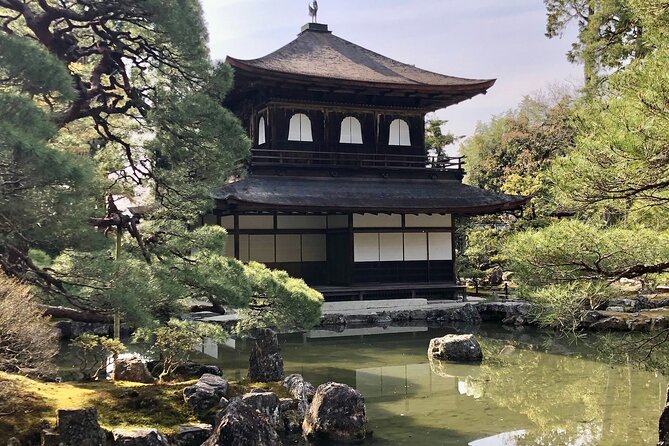
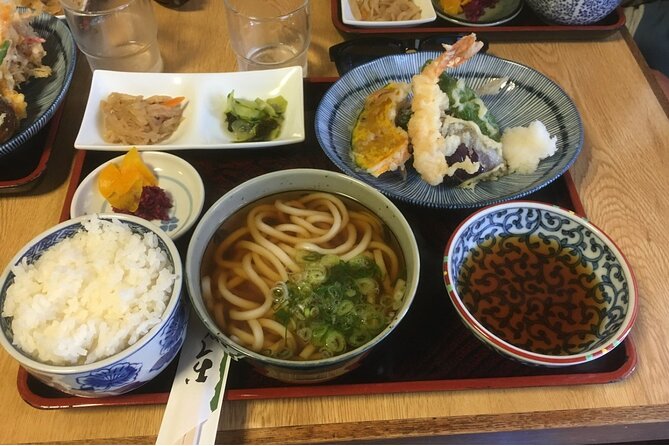
Ginkaku-ji, the Silver Pavilion, comes next. The listed time is about 45 minutes, including lunch at a nearby restaurant. Admission to the temple grounds is included.
Ginkaku-ji is known for its refined garden, moss, paths, and the restrained beauty of its grounds. It offers a different mood from Fushimi Inari’s bright torii gates and Tofuku-ji’s Zen setting. The visit is short enough to keep the day moving, but long enough for a walk through the main grounds.
Lunch is a useful inclusion. You do not have to stop and search for food while managing a group and a bike. Dietary requirements need to be provided in advance, so do not wait until the morning of the tour to mention allergies or restrictions.
The meal itself may be practical rather than a special local-food event. During busy periods, finding a restaurant without a long wait can be difficult, and the lunch stop is near one of Kyoto’s busiest sightseeing areas. If you are paying this price mainly for a memorable food experience, keep expectations moderate. The value is convenience and time saved, not necessarily a destination meal.
The Philosopher’s Path by bicycle
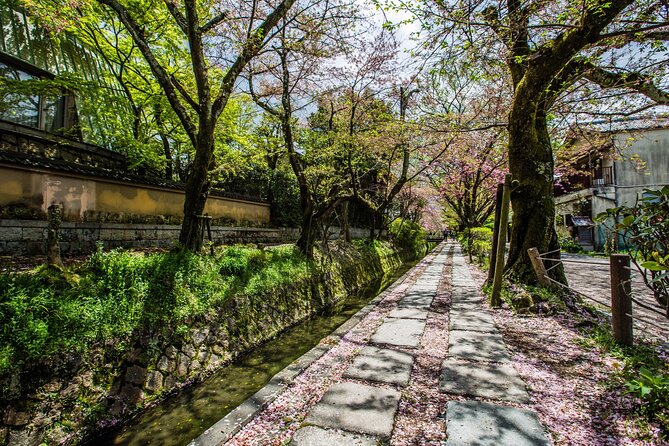
After lunch, you cycle along the Philosopher’s Path for about 45 minutes. This is one of the most attractive sections of the day, especially when seasonal flowers are in bloom.
The path follows a canal through the eastern temple district. Riding gives you more range than walking, although crowded sections may require a slower pace or occasional stops. It is a lovely place to notice small bridges, trees, water, and side streets rather than simply ticking off another major temple.
There is a practical tradeoff here. A bike lets you see more, but a busy pedestrian path is not a place to speed. If you want plenty of time for photographs, tell your guide early. One group had to ask for extra photo time during cherry blossom season, so the fixed schedule may not automatically allow a long pause.
That is a good reminder that this is a guided group ride, not a private photo tour. The guide has to balance individual interests with the overall route. The small group helps, but the day still has a timetable.
Nanzen-ji’s grounds and Heian Shrine
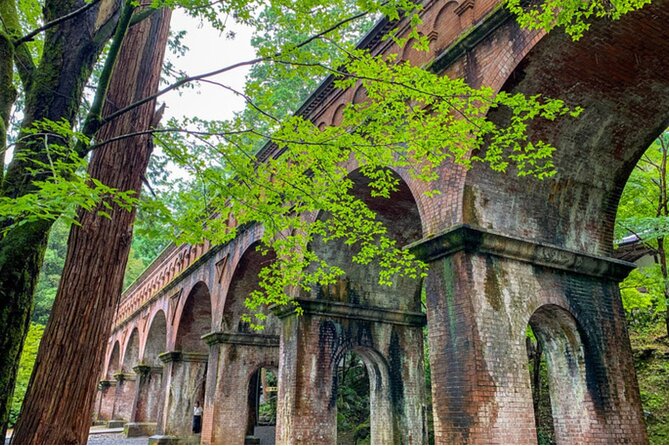
Nanzen-ji follows with about 45 minutes on foot. The temple grounds are known for their broad approach, impressive gates, quiet spaces, and the unusual brick aqueduct that passes through the complex. The mix of religious architecture and later infrastructure makes this one of the more visually varied stops.
You will appreciate having time to leave the bikes and walk. After several riding sections, a temple visit gives your legs a change of position. The stop is free according to the tour details, though some individual areas within temple complexes can have separate admission charges. The included itinerary specifically lists admission for Ginkaku-ji, not for every optional interior or garden.
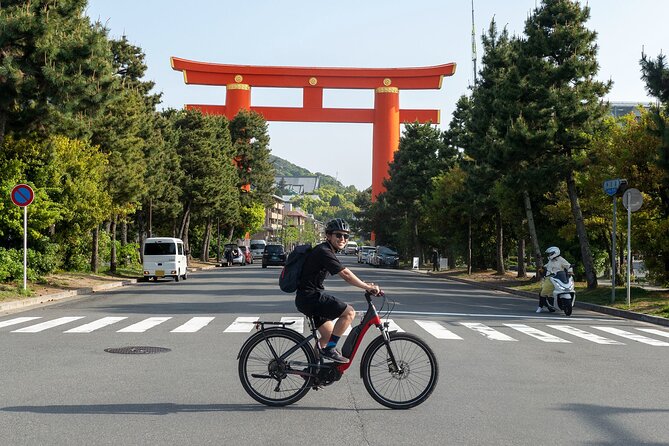
At Heian Shrine, you take about 35 minutes to stroll through the courtyard. Its large torii and spacious grounds give you a very different sense of scale from the smaller lanes and canal paths. The stop is free and works well as a short, open-air walk.
The guide’s role is especially useful at these sites. A good guide can explain how shrine and temple traditions differ, point out what you are seeing, and keep the visit from becoming a string of names with no context. Jaime was praised for a polished and well-organized approach, while Paul was noted for shaping the route around the group’s interests.
Gion through the backstreets
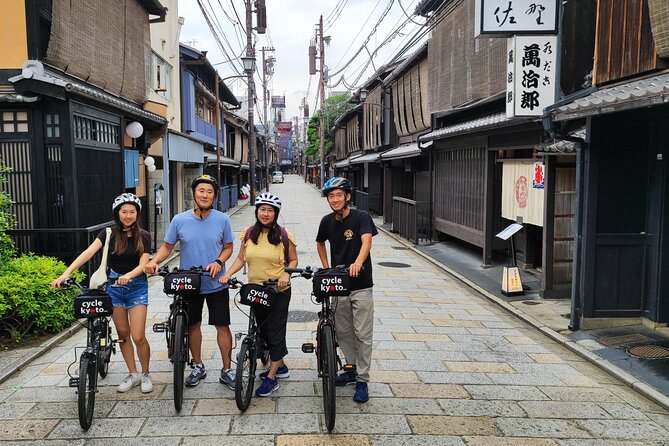
The ride through Gion lasts about 45 minutes. Instead of treating the district as only a place for one famous street, the route moves through backstreets and quieter corners of Kyoto’s traditional entertainment district.
You might catch a glimpse of a Maiko or Geiko, but that should be regarded as a possibility, not a promise. Gion is a working neighborhood, not a stage set. Ride respectfully, keep your distance, and follow the guide’s lead around pedestrians and private areas.
This part of the tour can be more rewarding than simply arriving at a famous photo point. You see how narrow lanes, old-looking facades, restaurants, and modern city life sit side by side. It is also a section where bike awareness matters most. Crowds and tight streets require patience, and you may need to slow down often.
Higashi Hongan-ji and the final cafe stop
The final sightseeing stop is Higashi Hongan-ji Temple, where you spend about 15 minutes walking through its large wooden prayer halls. The scale of the buildings makes a strong final impression, even though the stop is brief.
The listed time also includes a visit to a favorite Kyoto cafe. This coffee break is a thoughtful touch after a long ride. It gives you a chance to sit, ask final questions, and hear local suggestions from the guide before returning to the meeting point.
Several guides were praised for this personal side of the tour. Juan was especially appreciated for sharing favorite food and coffee places, while other guides were noted for warm conversation, humor, and practical Kyoto tips. If you enjoy learning where to eat after the tour, make a point of asking questions during this break.
What the $138.74 price buys you
At $138.74 per person, this is not a cheap way to rent a bicycle. The value depends on how much help you want connecting Kyoto’s scattered sights.
Your price includes the e-bike, helmet, guide, lunch, the cafe stop, and entry to Ginkaku-ji. You also receive a route that handles the planning for you. In one day, you visit a long list of major places without having to decipher bus routes, find bike equipment, or decide where to stop for food.
A self-guided day would cost less, especially if you already have access to a bicycle and are comfortable navigating Kyoto. You would also gain more control over the time spent at each temple. But you would need to plan the route, manage traffic, find lunch, and work out how to connect the southern and eastern sights efficiently.
I see the strongest value for first-time visitors with limited time. The tour acts as an orientation day, showing you which areas deserve a second visit. It is also useful if you want local food suggestions and the ease of following someone who knows the streets.
The price is harder to justify if you mainly want long temple visits, a slow photography schedule, or a serious food-focused outing. The day covers a lot, so each individual stop has a time limit.
Guides, pace, and the real experience
The guide can make or break a full-day tour. The strongest guide experiences here combine safe riding, clear English, local knowledge, and a willingness to adjust the pace.
Jay was praised for being friendly, funny, and well informed about the city. Juan was described as warm and personal, with strong advice on food and coffee. Indra was appreciated for history mixed with humor, while Mayco was praised for good English, a steady pace, and a fun approach.
There was also one serious concern about guide performance. A group found that their guide offered little explanation at the monuments and had to look up information on a phone. That is not a minor issue when the tour’s price includes guiding, not just bicycle transport.
I would ask questions freely throughout the day. If a site interests you, say so. A small group gives you a better chance of shaping the conversation and getting more from each stop.
Who should book this Kyoto ride
I would recommend this tour to:
- First-time Kyoto visitors who want a broad orientation in one day
- Confident cyclists who are comfortable around traffic and pedestrians
- Couples and small families who value a personal guide
- People who want major temples plus rivers, lanes, and neighborhoods
- Anyone who prefers active sightseeing to a bus-based route
I would think twice if you have limited cycling experience, significant mobility concerns, or a strong need for long, unhurried temple visits. The minimum age is 13, and the minimum height is 145 centimeters, but those rules do not replace good judgment about fitness and bike confidence.
Bring comfortable clothing, shoes suitable for walking, and a way to protect yourself from the weather. The tour requires good weather. If poor conditions cancel it, you can choose another date or receive a full refund. You can also cancel for a full refund up to 24 hours before the start time. Dietary needs should be shared ahead of time.
Should you book Early Bird E-biking through East Kyoto?
Book it if you want to see a wide slice of Kyoto in one active day, especially on your first visit. The early start, small group, e-bike, lunch, and carefully linked route solve several problems that can make Kyoto sightseeing tiring.
Go in with realistic expectations. You are sampling many places, not studying each one at length. You are also riding in real city conditions, not gliding along empty paths all day.
For a confident cyclist who wants temples, river views, backstreets, food advice, and a guide who can add meaning to the stops, this is a strong use of one Kyoto day. Before booking, confirm your bike size, share dietary requirements, and make sure you are ready for six to seven hours of movement. Those small checks will do a lot to protect the value of the experience.
FAQ
What time does the tour start?
The tour starts at 8:00 a.m.
Where does the tour meet?
You meet at Cycle Kyoto, Higashikujō Nishisannōchō, Minami Ward, Kyoto, 601-8003, Japan.
Where does the tour end?
The activity ends back at the meeting point.
How long does the e-bike tour last?
The tour lasts approximately six to seven hours.
What equipment is provided?
An e-bike and helmet are provided.
Is lunch included?
Yes. Lunch at a nearby restaurant is included in the time scheduled at Ginkaku-ji. Dietary requirements must be provided in advance.
Is there a minimum age or height?
Yes. The minimum age is 13 years old, and the minimum height is 145 centimeters.
Just added around Kyoto
- Private Guided Traditional Buddhist Cooking in Japan★ 5.0 · 16 reviews
- Kyoto: Gion Geisha District & Sake-in-Hand Walking Tour★ 5.0 · 37 reviews
- Your Private Vacation Photography Session In Kyoto★ 5.0 · 110 reviews
- Kyoto: Zen Meditation at a Private Temple with a Monk★ 5.0 · 25 reviews
- Traditional Japanese Washi Papermaking- Kyoto morning★ 5.0 · 77 reviews
- Kyoto Wagashi(Japanese sweets) Cooking Class near Fushimiinari★ 5.0 · 60 reviews
- Private Pewter Sake Cup Experience with a Kyoto Artisan★ 5.0 · 31 reviews
- Kyoto Private 6 hour Tour: English Speaking Driver Only, No Guide★ 5.0 · 88 reviews
Cycling Tours, compared.

3h Tokyo E-Bike Tour: Hidden Gems, and Local Life with guide
Read our review →
Arashiyama Bamboo Forest & Hidden Gems Bike Tour (Early Bird)
Read our review →
Hiroshima in a Nutshell: Morning Bike Adventure
Read our review →
5 Top Highlights of Kyoto Full Day Bike Tour (E-bike option)
Read our review →Browse the lists this tour appears in