
REVIEW · CYCLING TOURS
Discover Kyoto at Night by Bike
Kyoto changes character after sunset. On this small-group bicycle tour, you roll past lantern-lit lanes, shrines, pagodas, and traditional wooden streets while most daytime crowds have thinned. Fushimi Inari at night is the striking opener, followed by the old quarters of Gion and Higashiyama.
I like the personal scale: a maximum of nine people makes it easier to hear the guide and get help on the road. I also like the range of stops, from the thousands of torii gates at Fushimi Inari to the unusual stone at Yasui-Konpiragu and the photo-friendly slopes of Ninenzaka.
The main caution is pace. This is not only a ride. There are several stops and plenty of explanations, and one participant found that only about 1 hour 45 minutes was spent cycling during a tour that also ran 45 minutes late. You should be comfortable on a bicycle and ready for a mix of riding, standing, and listening.
In This Review
- Key points to know before booking
- Why Kyoto works so well after sunset
- Starting at Fushimi Inari’s thousands of torii
- Lanterns and old lanes in Miyagawa-cho
- Gion after the shops quiet down
- Yasui-Konpiragu and its unusual purpose
- Yasaka Pagoda and the old Higashiyama streets
- Ninenzaka, Kyoto’s best evening photo stop
- How much riding is actually involved
- Is $80 a fair price?
- Who will enjoy this Kyoto night ride?
- What to bring and how to prepare
- Should you book Discover Kyoto at Night by Bike?
- FAQ
- How long does the Kyoto night bicycle tour last?
- What time does the tour start?
- Where does the tour meet?
- Where does the tour end?
- What sights are included?
- Is bicycle use included in the price?
- Is hotel transportation included?
- How many people can join the tour?
- What happens if the weather is poor?
Key points to know before booking
- Fushimi Inari after dark: Spend about 40 minutes near Kyoto’s famous torii gates, free of admission charges.
- A compact group: The tour accepts no more than nine people, with bilingual guidance.
- A broad evening route: Visit Fushimi Inari, Miyagawa-cho, Gion, Yasui-Konpiragu, Yasaka Pagoda, Ninenzaka, and a Higashiyama park.
- A moderate cycling test: You need a moderate fitness level and should already be a reasonably confident rider.
- Straightforward inclusions: The fee covers the bicycle, bottled water, and entrance fees, but not transport to the start or a guide gratuity.
- Weather matters: Poor weather can lead to a new date or a full refund, and the tour may also be canceled if its minimum group size is not met.
Why Kyoto works so well after sunset
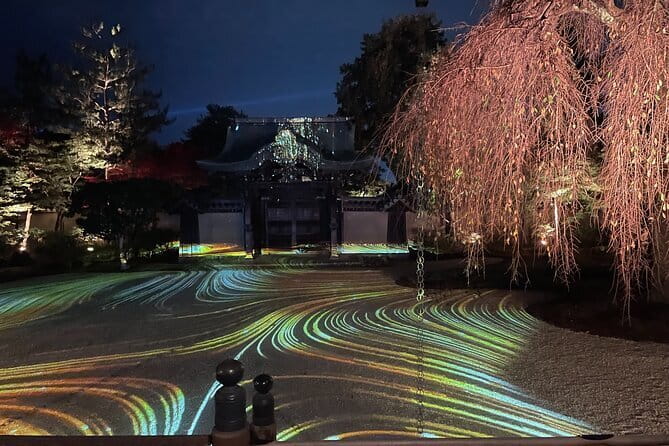
Kyoto can feel crowded and tightly scheduled in daylight. At night, the city’s traditional areas take on a quieter mood, with lanterns picking out wooden facades and narrow lanes. A bicycle lets you cover more ground than a walking tour while keeping you close to the streets and river.
The tour begins at 5:00 pm from the 7-Eleven at 44-1 Higashikujō Kamitonodachō in Minami Ward. The exact light will depend on the season, so part of the ride may take place in evening glow and part under full darkness. The total duration is about 3 hours 45 minutes, and you return to the same meeting point.
That return arrangement is useful. You do not need to work out a second pickup location after the final stop. Hotel transportation is not included, so you should allow time to reach the starting point using Kyoto’s public transport network.
The small group is another practical strength. With up to nine people, the guide can keep an eye on the riders and answer questions without the feel of a large procession. Juan, one of the guides named in the feedback, was especially praised for helping a rider feel safe on the bicycle. Jaime is listed as the experience provider.
A few more Kyoto trips to weigh up
- Hidden Kyoto E-Biking tour
★ 5.0 · 1,843 reviews - Bike Tour Exploring North Kyoto plus Lunch
★ 5.0 · 1,087 reviews - Arashiyama Bamboo Forest & Hidden Gems Bike Tour (Early Bird)
★ 5.0 · 613 reviews
Starting at Fushimi Inari’s thousands of torii
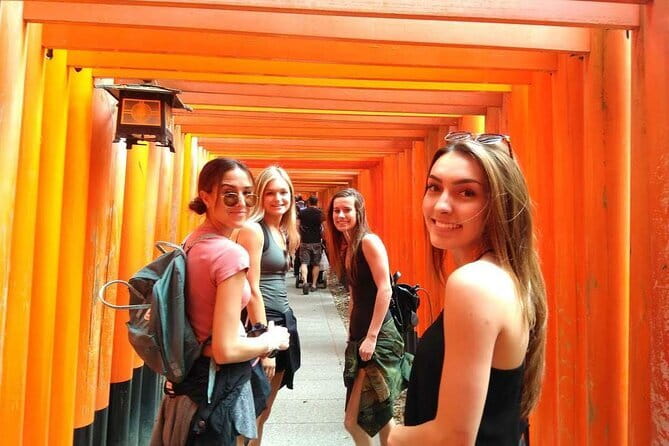
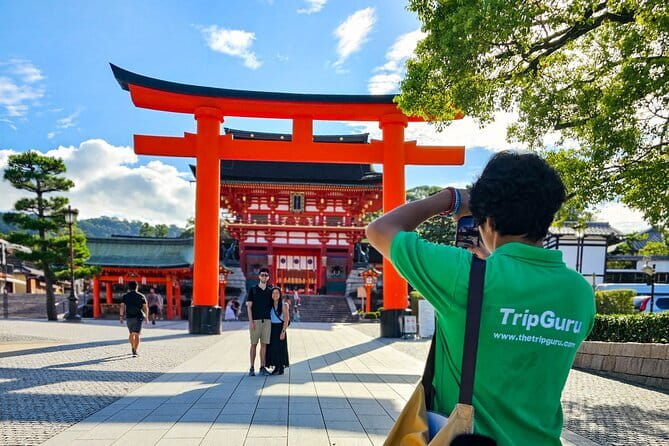
The first stop is Fushimi Inari-taisha, Kyoto’s best-known Shinto shrine and the longest stop on the route, at about 40 minutes. Admission is free. The shrine is famous for its rows of orange torii gates, which climb into the wooded hills behind the main buildings.
At night, you will not get the same broad daylight view of the shrine grounds. Instead, the attraction is the mood created by darkness, lamps, and repeating gates. The setting can feel more atmospheric than a quick daytime visit, though it is also harder to see every detail.
Forty minutes is enough for an introduction and photographs, but it is not a full hike up the mountain. If you want to walk deep into the torii trail, you would need a separate visit. Here, the stop gives you a strong first look before the bicycle becomes the main way of moving through Kyoto.
The free admission is a small value point, but it matters less than the time saved. You arrive with the route organized and a guide ready to explain the place rather than having to fit it into your own evening plan.
Lanterns and old lanes in Miyagawa-cho
The ride continues toward Miyakawa-cho Dori, also written as Miyagawa-cho. This district lies just south of Gion and runs parallel to the Kamogawa River. The planned stop is about 15 minutes.
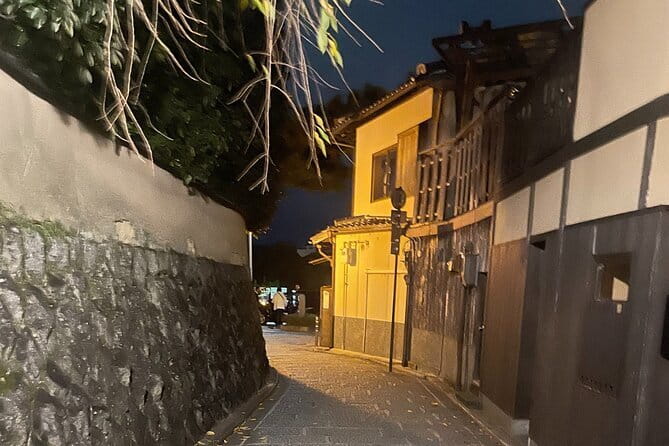
After sunset, the area is known for glowing lanterns, traditional buildings, and a strong connection to Kyoto’s performing arts districts. The tour passes through the atmosphere of the old neighborhood rather than treating it like a museum exhibit. You get a short pause for photographs and orientation, then continue by bike.
This is one of the places where the bicycle format makes sense. Miyagawa-cho is defined by streets and alleys, not one single large sight. Riding between districts helps you see how the older parts of Kyoto connect. You should also expect the guide to pause and talk about the customs and traditions tied to the area.
If you prefer constant motion, this stop may feel brief. If you enjoy context, it adds meaning to the streets you are seeing. The tour’s balance depends in part on how much time the guide spends explaining each area.
Gion after the shops quiet down

Gion receives about 10 minutes on the schedule. Its best-known street, Hanamikoji, is lined with traditional tea houses, known as ochaya. At night, the old facades and subdued lighting give the district a very different feel from a daytime sightseeing street.
The guide can help you understand the difference between seeing a traditional district and treating it as a photo backdrop. You should be respectful here. Gion is a working neighborhood connected to arts and entertainment, not a theme park, so quiet observation is the right approach.
Ten minutes is enough to see the character of Hanamikoji and get a brief explanation, but it is not enough for a long walk through the district. That limitation is worth knowing if Gion is your main reason for booking. The tour offers a snapshot, not an extended cultural program.
The stop also gives you a break from riding. The route uses several short pauses, which may suit you if you want a gentle evening outing. It may disappoint you if your idea of a bike tour means nearly four hours in the saddle.
Same city, a completely different kind of day:
- PERFECT KYOTO 1-Day Bus Tour
★ 5.0 · 13,518 reviews - Kyoto: Fushimi Inari, Kinkakuji, Bamboo Grove 1 Day Bus Tour
★ 4.8 · 4,316 reviews - Kyoto: Tea Ceremony in a Traditional Tea House in Kiyomizu
★ 4.9 · 3,519 reviews - Kyoto Geisha Walking Tour: Gion District & Hidden Gems
★ 4.7 · 3,273 reviews
Yasui-Konpiragu and its unusual purpose
After riding through the maiko and geisha alleyways, the group stops at Yasui-Konpiragu for about 10 minutes. This is one of Kyoto’s more unusual Shinto shrines. People visit to cut ties with unwanted relationships or habits and to form better connections.
That purpose gives the stop a different tone from the grander shrines. It is less about scale and more about a specific personal ritual. The shrine’s admission is free, and the short visit gives you an unusual piece of local religious culture without adding another major ticket cost.
I find this kind of stop useful because it breaks up the familiar Kyoto highlights. Fushimi Inari and Yasaka Pagoda are famous images. Yasui-Konpiragu offers a smaller, more specific story that you might not encounter on a standard sightseeing route.
Again, the visit is short. You will get the basic meaning and a look around, but not a long religious history lesson unless the guide’s pacing allows it.
Yasaka Pagoda and the old Higashiyama streets
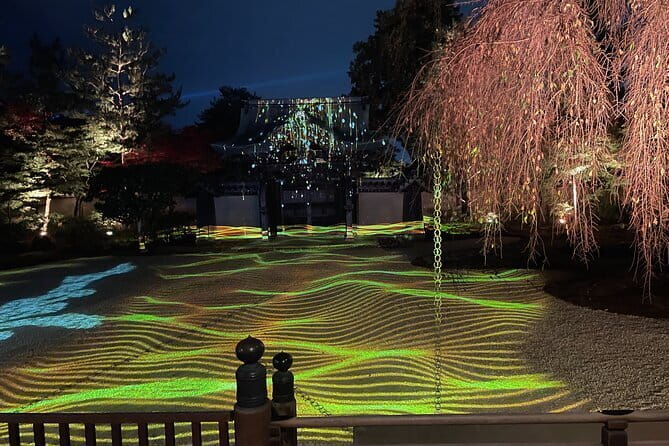
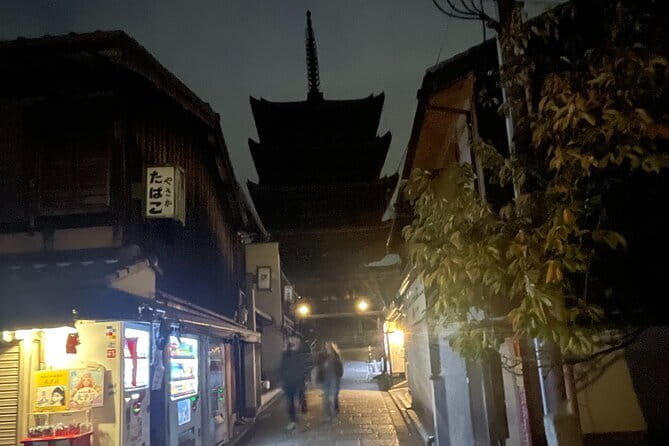
Hōkan-ji Temple, better known as Yasaka Pagoda, is scheduled for about 15 minutes. The pagoda rises among narrow cobblestoned streets and traditional machiya townhouses, making this one of the most recognizable scenes in Kyoto.
The surrounding area is especially rewarding at night. The streets feel more intimate when the day’s crowds thin, and the pagoda provides a clear focal point for photographs. You should be prepared to stop rather than ride continuously, since the value here lies in taking in the view and hearing why this corner is so often photographed.
The route does not appear to include a special interior visit. The attraction is the exterior setting and the surrounding streets. That makes the stop easy to combine with a bicycle outing, but it also means the experience is visual and atmospheric rather than a detailed temple tour.
The cobblestones and narrow lanes are part of the charm, but they also reinforce the need for good bike control. You should listen closely to the guide and ride at a pace that feels safe instead of trying to keep up with a faster rider.
Ninenzaka, Kyoto’s best evening photo stop
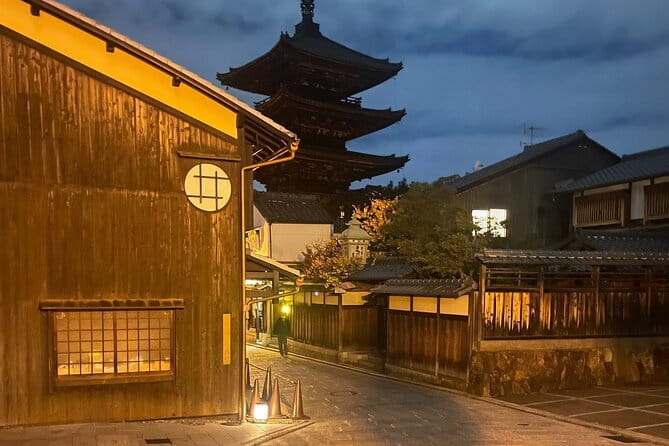
Ninenzaka is the next major area, with about 15 minutes set aside for the visit. This sloping street is often considered one of Kyoto’s most traditional-looking areas, with wooden buildings, stone paving, and views toward the old Higashiyama quarter.
This is likely the strongest photography stop on the route. The evening light can soften the street scene, while the slope and traditional facades give you a classic Kyoto composition. If you want a few memorable pictures without spending hours walking, the short stop is well chosen.
There is a practical issue: Ninenzaka is a walking area in character, and you should not expect to race through it on a bicycle. The guide may have you pause with the bikes and explore a small section on foot. That is another reason to view this as a sightseeing tour with cycling between stops, not as an athletic ride.
The route then includes a park in Higashiyama known for cherry trees, ponds, and wooden bridges. The supplied schedule does not name the park, but it adds a calmer natural setting after the narrow lanes and shrine visits.
How much riding is actually involved
The headline duration can suggest a nearly four-hour cycling session. That is not the best way to picture it. The listed stop times add up to roughly 1 hour 45 minutes, before counting the final park stop, travel between sights, explanations, and any delays.
That structure is good for you if you want to see several parts of Kyoto in one evening without arranging every turn yourself. You ride from one area to another, stop for photographs and stories, then continue. It is less suitable if you want a fast, continuous route with few breaks.
One person found the guide spoke too much and that the tour finished 45 minutes later than planned. The guide acknowledged the concern and said finding a better balance would be a priority. This is useful information, especially if you have dinner reservations or a fixed evening train.
At the same time, a separate experience with Juan involved a solo participant and continued despite the small turnout. That suggests the operator may still run the activity when the group is very small, though the stated policy allows cancellation if the minimum number is not met. A tiny group can make the evening feel more personal, but you should not assume every departure will be private.
Is $80 a fair price?
At $80 per person, this is not the cheapest way to see Kyoto at night. You are paying for the bicycle, a bilingual guide, bottled water, entrance fees, and a planned route linking several distant districts. The value is strongest if you would otherwise spend time figuring out how to connect Fushimi Inari with Gion and Higashiyama in one evening.
The fee also saves you from arranging a bicycle rental and choosing a safe route after dark. For a first visit, that planning help has real value. The maximum of nine people keeps the service more personal than a large bus or mass walking tour.
The price is less convincing if you mainly want to ride. Since much of the tour is spent stopped at sights or listening to explanations, a self-guided rental could suit you better if you already know Kyoto and want more time on the road.
I would judge the cost by your priorities. Choose it for guided access, evening atmosphere, and a broad first look at southern and eastern Kyoto. Skip it if you want a strenuous bike workout or a tightly timed activity with no chance of running long.
Who will enjoy this Kyoto night ride?
This tour suits you if you:
- Have a moderate level of fitness and can ride a bicycle with confidence.
- Want to see several famous Kyoto areas in one evening.
- Prefer a small group and a bilingual guide.
- Enjoy short explanations and cultural context at each stop.
- Like taking photographs in traditional streets and shrine settings.
- Are comfortable with a flexible pace that may include extra standing time.
You should think twice if you are a first-time cyclist. One person specifically advised against taking the tour if you are not already a fairly proficient rider. The route includes city streets, narrow historic lanes, and cobblestoned areas, so basic control matters more than speed.
You should also leave room in your evening schedule. The planned duration is approximately 3 hours 45 minutes, but a talkative guide or a longer stop can push the finish later. Hotel transfers are not included, so you need to arrange your own way to and from the 7-Eleven meeting point.
What to bring and how to prepare
Wear clothes that let you pedal comfortably and shoes suited to walking during the stops. The tour provides a bicycle and bottled water, but you should not count on hotel transportation or a meal being included.
Check the weather before setting out. The activity requires good weather, and poor conditions can lead to a new date or a full refund. You receive confirmation when booking, and the mobile ticket makes the entry process simple.
Try to arrive ready to ride at 5:00 pm. The meeting point is at 7-Eleven, 44-1 Higashikujō Kamitonodachō, Minami Ward, Kyoto, 601-8002. Since the tour returns there, you can plan your onward route before the evening begins.
Free cancellation is available until 24 hours before the start time for a full refund. Cancellations or changes made within 24 hours are not refundable, based on local time. The same 24-hour rule applies if you need to adjust the booking.
Should you book Discover Kyoto at Night by Bike?
I would book this tour if you want a guided introduction to Kyoto’s southern and eastern districts after dark, especially if Fushimi Inari, Gion, Yasaka Pagoda, and Ninenzaka are all on your wish list. The strongest features are the small group, the unusual mix of famous and lesser-known stops, and the chance to see lantern-lit streets by bicycle.
I would not book it for a high-speed ride. The itinerary includes substantial time standing and listening, and the finish may run late. Go in expecting a cultural sightseeing tour that uses bicycles for transport between stops, not a long-distance cycling challenge.
For most reasonably fit riders who want a memorable first evening in Kyoto, the 4.9 rating from 45 ratings and 98 percent recommendation point to a strong choice. Just confirm that you can handle the bicycle confidently and keep your post-tour plans flexible.
FAQ
How long does the Kyoto night bicycle tour last?
The tour lasts approximately 3 hours 45 minutes.
What time does the tour start?
The scheduled start time is 5:00 pm.
Where does the tour meet?
You meet at the 7-Eleven at 44-1 Higashikujō Kamitonodachō, Minami Ward, Kyoto, 601-8002, Japan.
Where does the tour end?
The activity ends back at the same meeting point.
What sights are included?
The route includes Fushimi Inari-taisha Shrine, Miyakawa-cho Dori, Gion, Yasui-Konpiragu, Hōkan-ji Temple, also called Yasaka Pagoda, Ninenzaka, and a Higashiyama park with cherry trees, ponds, and wooden bridges.
Is bicycle use included in the price?
Yes. Bicycle use, bottled water, and all entrance fees are included.
Is hotel transportation included?
No. Transportation to and from your hotel is not included.
How many people can join the tour?
The tour has a maximum of nine participants.
What happens if the weather is poor?
If poor weather causes the tour to be canceled, you can choose a different date or receive a full refund. The operator may also offer a new date, another experience, or a full refund if the minimum number of participants is not reached.
Just added around Kyoto
- Private Guided Traditional Buddhist Cooking in Japan★ 5.0 · 16 reviews
- Kyoto: Gion Geisha District & Sake-in-Hand Walking Tour★ 5.0 · 37 reviews
- Your Private Vacation Photography Session In Kyoto★ 5.0 · 110 reviews
- Kyoto: Zen Meditation at a Private Temple with a Monk★ 5.0 · 25 reviews
- Private Pewter Sake Cup Experience with a Kyoto Artisan★ 5.0 · 31 reviews
- Traditional Japanese Washi Papermaking- Kyoto morning★ 5.0 · 77 reviews
- Kyoto Wagashi(Japanese sweets) Cooking Class near Fushimiinari★ 5.0 · 60 reviews
- Kyoto Private 6 hour Tour: English Speaking Driver Only, No Guide★ 5.0 · 88 reviews
Cycling Tours, compared.


3h Tokyo E-Bike Tour: Hidden Gems, and Local Life with guide
Read our review →
Arashiyama Bamboo Forest & Hidden Gems Bike Tour (Early Bird)
Read our review →
Hiroshima in a Nutshell: Morning Bike Adventure
Read our review →
5 Top Highlights of Kyoto Full Day Bike Tour (E-bike option)
Read our review →Browse the lists this tour appears in