
REVIEW · ARASHIYAMA BAMBOO TOURS
Bamboo LED Lantern Making Experience in Kyoto Arashiyama
Arashiyama is famous for looking at bamboo. This experience lets you work with it yourself. You meet Noriko at Saga-Arashiyama Station, walk through part of the bamboo forest while learning about the plant and the area, then continue to her family workshop to cut, drill, and decorate a bamboo keepsake.
I like the personal scale. The class is listed for a maximum of six people, though another description says it can be capped at eight, so it remains far smaller than a typical group tour. I also like that you choose your own bamboo and pattern, rather than receiving a ready-made souvenir.
The main consideration is the hands-on work. You use drills and other workshop tools under instruction, so this is not a passive craft demonstration. Fresh green bamboo can also need careful drying after the class, as one past participant reported mold developing under bubble wrap. The provider acknowledged the issue and said it was working with heated, dried bamboo as a more stable option.
In This Review
- Key points to know
- Why this is more than another Arashiyama photo stop
- Meeting at Saga-Arashiyama Station at 2:00 pm
- Walking the bamboo forest with Noriko
- Choosing bamboo, patterns, and a project
- Using the workshop tools safely
- What your finished bamboo lantern is like
- How the class works for families
- The value of the $79.26 price
- Who should book this Arashiyama activity
- Practical details before you book
- Should you book the bamboo lantern workshop?
- FAQ
- Where does the bamboo craft experience begin?
- What time does the activity start?
- How long does the experience last?
- Where does the experience end?
- Is the Bamboo Forest included?
- What can I make during the workshop?
- Are tools and materials included?
- How many people can join the class?
- Can I cancel for a full refund?
Key points to know
- Meet Noriko at Saga-Arashiyama Station: The activity begins at 2:00 pm, making it easy to pair with a morning visit to other Kyoto sights.
- Walk through part of the Bamboo Forest Trail: Noriko explains bamboo, local culture, temples, and the surrounding area along the way.
- Make your own design: Choose a bamboo piece and use a prepared pattern or create something more personal.
- Work in a family home workshop: Noriko and her husband guide you through cutting, drilling, and finishing the craft.
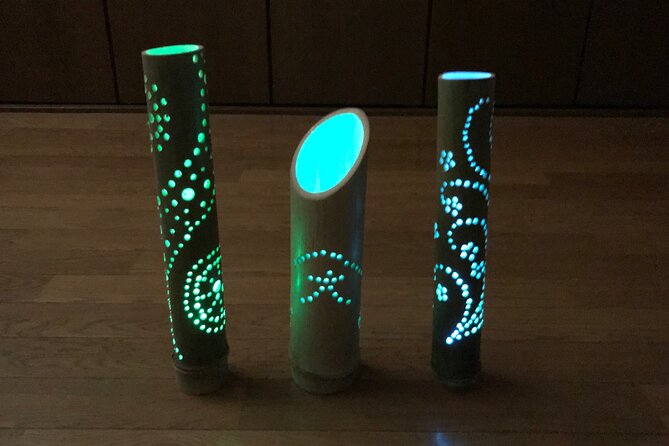
- Take home a useful souvenir: The main project is an LED lantern, with other choices such as a sake cup, sake bottle, teacup, or smartphone holder.
- Allow about three hours: The walk, instruction, craft session, and return to the meeting point make this a substantial afternoon activity.
Why this is more than another Arashiyama photo stop
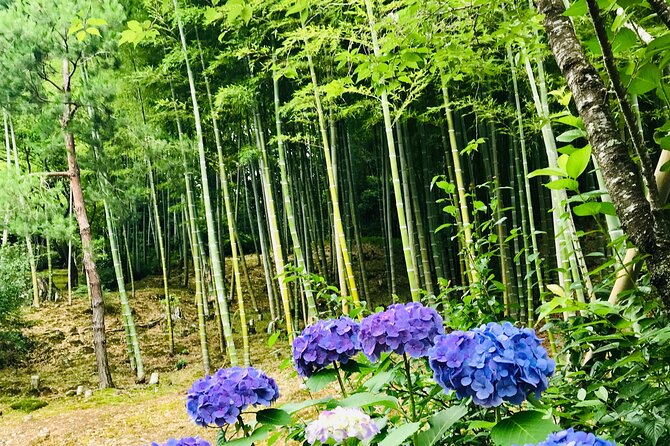
The Bamboo Forest Trail is one of Kyoto’s most recognizable sights. It is also a place where you can easily spend twenty minutes taking pictures and leave without learning much about bamboo itself.
This activity gives the forest a purpose. As you walk, Noriko explains the mysterious plant, the local area, and the culture around it. The walk is not simply a transfer from the station to the workshop. It provides context for the material you will soon handle.
You should expect to walk only part of the famous forest route before leaving the busiest section for quieter streets. That is a useful trade. You still get the classic bamboo setting, but the afternoon continues in a more relaxed neighborhood rather than keeping you on a crowded photo path.
The walk may also pass a shrine or temple area, depending on the route used that day. Noriko has been praised for explaining local history and the surrounding area in clear English. She is also happy to answer questions, which makes the experience feel more like a conversation than a speech.
More arashiyama bamboo tours in Kyoto:
- Kyoto: Fushimi Inari, Kinkakuji, Bamboo Grove 1 Day Bus Tour
★ 4.8 · 4,316 reviews - Osaka/Kyoto:Kinkakuji,Arashiyama,FushimiInariShrine,NaraPark
★ 4.1 · 1,596 reviews - Kyoto/Osaka: Nara, Fushimi Inari Taisha, Arashiyama Bus Tour
★ 4.7 · 1,275 reviews
Meeting at Saga-Arashiyama Station at 2:00 pm
The meeting point is Saga-Arashiyama Station at 11-1 Sagatenryuji Kurumamichicho, Ukyo Ward, Kyoto. Your guide meets you there at 2:00 pm, and the activity ends back at the same meeting point.
This arrangement is practical. You do not need to search for a private workshop in an unfamiliar neighborhood. It also lets you build a day around the experience. You might visit nearby Arashiyama sights earlier, eat lunch before the 2:00 pm start, and then use the workshop as the calmer second half of your day.
Lunch is not included, so plan to eat beforehand or after the activity. Since the experience lasts about three hours, beginning with food and water is sensible, especially in hot weather. The walk is described as steady rather than strenuous, but the class still involves standing, moving around the workshop, and using tools.
If you have a leg injury or another mobility concern, contact the operator before booking. One person who could not manage the forest walk was still collected and taken to the workshop, but that was a special accommodation, not a standard promise of the tour.
Walking the bamboo forest with Noriko
The forest portion adds meaning to the craft. Instead of treating bamboo as scenery, Noriko points out what makes the plant unusual and explains its place in Arashiyama.
You may see the most familiar part of the Bamboo Forest Trail, but this is not advertised as a full forest sightseeing tour. The forest walk is one part of a larger activity, and the focus is on learning enough to make the workshop feel connected to the place.
I would not book this solely for a long guided walk through every part of Arashiyama’s bamboo area. If that is your main goal, you will need separate sightseeing time. I would book it if you want a short introduction followed by a real craft session.
The guide’s English is a major practical benefit. Noriko has answered detailed questions about bamboo, Japanese culture, temples, and the local area. Families especially appreciated her patience with children, including an 11-year-old who had many questions and a seven-year-old who needed extra help.
Choosing bamboo, patterns, and a project
At the workshop, you choose a piece of bamboo and decide what to make. The bamboo lantern is the clearest choice, and the process is designed to leave you with a working decorative object rather than a small flat craft.
Prepared paper patterns are available. You can use one as it is, change it, or design your own. If you already have a personal idea, bring a simple sketch or think through your design before arriving. One useful tip from the experience is that the prepared patterns are attractive, but the class also gives you room to make something more individual.
The choice of bamboo matters. Each piece has its own shape, size, and natural markings, so your finished lantern will not look factory-made. That is part of the appeal, though it also means the result may not be perfectly uniform.
Other possible projects include a sake cup, sake bottle, teacup, or smartphone holder. The exact choice and available materials may vary, so confirm the preferred craft when booking if you have your heart set on something other than a lantern.
Same city, a completely different kind of day:
- PERFECT KYOTO 1-Day Bus Tour
★ 5.0 · 13,518 reviews - Kyoto: Tea Ceremony in a Traditional Tea House in Kiyomizu
★ 4.9 · 3,519 reviews - Kyoto Geisha Walking Tour: Gion District & Hidden Gems
★ 4.7 · 3,273 reviews - Kyoto: Tea Ceremony Ju-An at Jotokuji Temple
★ 4.9 · 3,207 reviews
Using the workshop tools safely
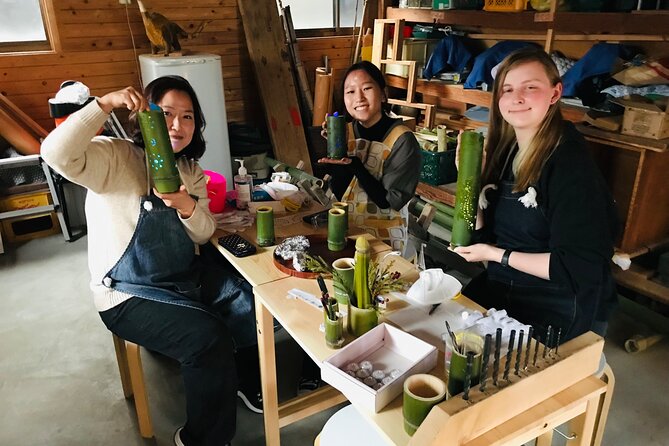
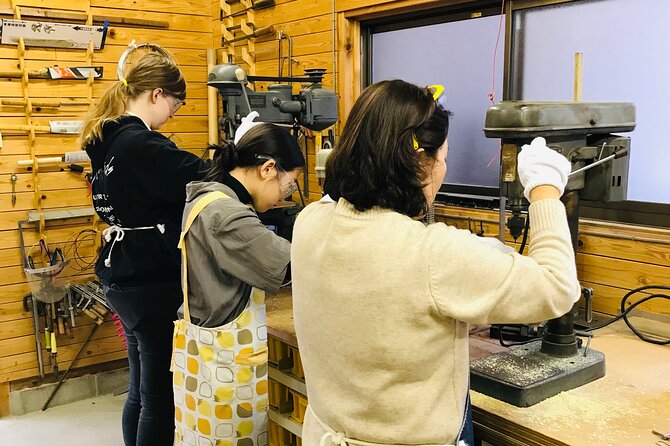
Noriko and her husband explain each stage before you begin. The supplied materials, tools, and machines are included in the price, so you do not need craft experience or equipment.
The lantern process involves cutting the bamboo, attaching or transferring the pattern, and drilling holes into the surface. The workshop provides practice and clear safety guidance before you work on the final piece. Noriko’s husband often stays close while children use the drill press or other equipment.
That makes this a good family activity, but children should still be supervised and able to follow instructions. The class is not a free-form play session. You are making a real object with workshop tools, and patience matters.
Adults who enjoy making things will probably get the most from this. You can take your time with the pattern and hole placement, ask questions, and make small choices that affect the final look. If you prefer simply watching an artisan work, this may feel more active than expected.
The workshop itself is described as clean, bright, and comfortable. Tea and snacks may be offered during a break, giving you a chance to pause before finishing the lantern.
What your finished bamboo lantern is like
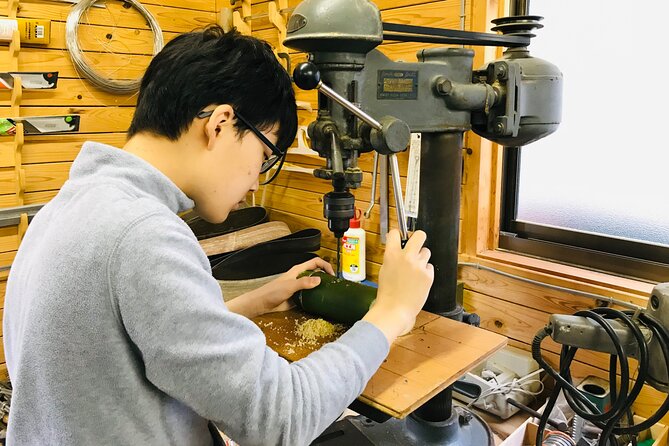
The finished piece is a personal Kyoto souvenir with a practical use. You can place a small light inside it for soft mood lighting, although the supplied information does not clearly state whether a light unit is included. Ask before the class if you need the LED component provided.
The project is appealing because it carries a visible connection to Arashiyama. You saw the bamboo growing in the forest, learned about it from a local guide, chose your own section, and worked it into an object. That story gives the souvenir more meaning than a mass-produced item from a shop.
Do not expect every lantern to look professionally made. Small variations are part of the process, and your design may show a few uneven holes or handmade edges. The instruction helps you produce something attractive, but this is still your work.
There is one care issue worth knowing. The class traditionally used fresh green bamboo, and one participant later found mold after the lamp was wrapped in bubble wrap while still moist. Noriko apologized, said she would change the wrapping method, and planned to introduce heated dry bamboo for better stability and longer life.
I would ask how your piece should be dried, stored, and transported before leaving. Do not seal damp bamboo in luggage for a long period. This is a manageable concern, but it is important if you are buying the activity mainly for a lasting souvenir.
How the class works for families
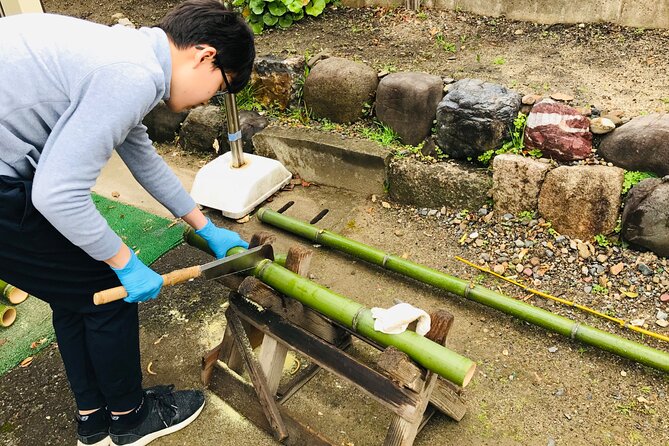
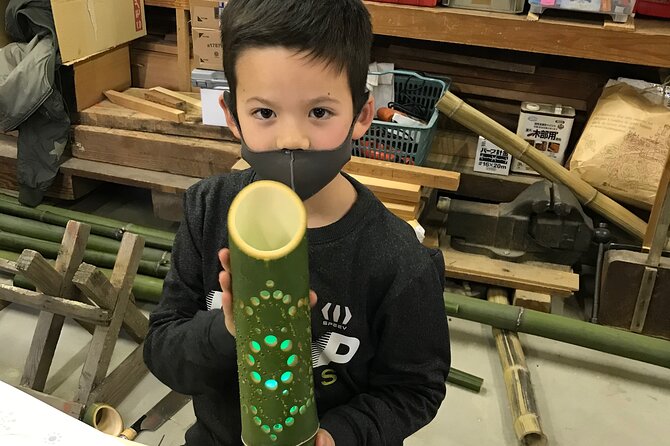
This is one of the stronger family choices in Arashiyama. Children can select designs, handle parts of the process, and leave with something they made themselves. The instructor’s patient approach is especially useful for children who ask many questions or need repeated demonstrations.
The age range that works best is not stated, so use common sense. Young children may need an adult beside them throughout the drilling stage. The activity suits families with school-age children who can listen carefully and take part safely.
It also works for couples, friends, and solo visitors. You do not need to bring a group to make the class worthwhile. A solo participant can spend more time talking with Noriko and refining a design, while couples can make matching or contrasting lanterns.
The class size helps here. With a maximum of six people according to the additional details, Noriko and her husband can provide direct help. The overview also describes the class as capped at eight, so check the current capacity when booking, but either figure points to a small workshop rather than a crowded room.
The value of the $79.26 price
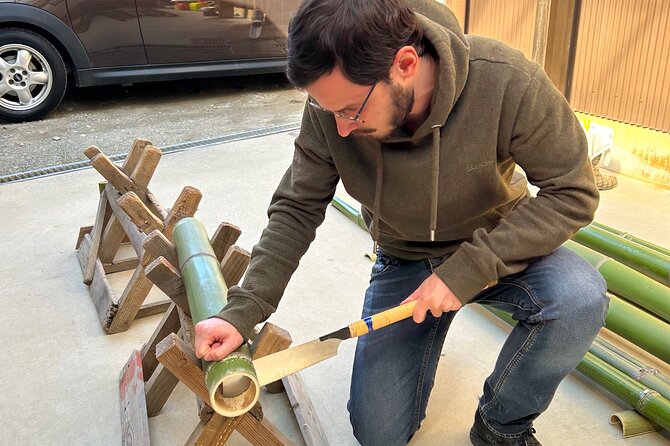
At $79.26 per person, this is not a bargain-priced craft lesson. The value depends on what you want from your afternoon in Kyoto.
You are paying for about three hours, a guided walk through Arashiyama, instruction from Noriko and her husband, use of workshop machines, materials, and a finished handmade object. The small class size also matters. You receive more individual help than you would in a large group demonstration.
Compared with a simple souvenir purchase, the price is easier to justify if you care about the making process. You are not just carrying home a bamboo lamp. You are spending an afternoon learning about the material and shaping it yourself.
The value is weaker if you want a quick activity or have limited time in Arashiyama. The walk and workshop together take a meaningful part of the day, and lunch is extra. You should also allow for the possibility that your lantern will need careful drying and packing.
The activity is commonly booked around 16 days ahead, which suggests you should reserve before your Kyoto dates are fixed in stone. The free cancellation policy gives you some flexibility: cancel at least 24 hours before the local start time for a full refund. Changes or cancellations inside that 24-hour window are not accepted for a refund.
Who should book this Arashiyama activity
I would recommend it most strongly to:
- Families looking for an activity beyond sightseeing
- Couples who want a shared souvenir-making project
- Solo visitors who enjoy crafts and conversation
- People who want a quieter break from Kyoto’s major sights
- Anyone who prefers a handmade keepsake to a shop-bought gift
- Visitors curious about bamboo as a useful material, not just a forest backdrop
You should think twice if you dislike tools, standing, or making decisions about a design. The craft is guided, but you still have to participate.
It may also be less suitable for someone seeking a full historical tour of Arashiyama. Noriko provides local information during the walk, but the central purpose is making bamboo crafts.
Practical details before you book
The activity offers a mobile ticket, and confirmation is received at booking. It is near public transportation, and service animals are allowed. Most people can participate, though the workshop equipment means you should mention any needs in advance.
Wear clothes and shoes that are comfortable for a walk and a hands-on class. The supplied information does not list a dress code, but you will have a better time in clothing you can move in and do not mind wearing during workshop work.
Because the activity begins at 2:00 pm, do not assume you can arrive late after a distant Kyoto attraction. Meet at the station with time to spare. The class returns to the station at the end, which makes onward travel simple.
The experience requires a minimum number of participants. If the operator cancels because that number is not reached, you will be offered another date or experience, or receive a full refund.
Should you book the bamboo lantern workshop?
Book it if you want Arashiyama to be more than a quick walk and a set of photographs. Noriko’s explanations, the small class, the family workshop, and the chance to choose your own bamboo turn a familiar Kyoto sight into a personal afternoon.
The strongest reason to go is the complete arc: forest, local guidance, workshop, and handmade souvenir. The main cautions are the price, the three-hour commitment, and the need to care for fresh bamboo properly after the class.
For families and craft-minded visitors, I think the $79.26 cost is reasonable for the amount of personal instruction and the object you take home. Ask about the current bamboo material and drying advice, then book ahead if the timing works. If you want a passive tour, choose something else. If you want to make part of your Kyoto memory with your own hands, this is a smart pick.
FAQ
Where does the bamboo craft experience begin?
It begins at Saga-Arashiyama Station, at 11-1 Sagatenryuji Kurumamicho, Ukyo Ward, Kyoto, 616-8373, Japan.
What time does the activity start?
The scheduled start time is 2:00 pm.
How long does the experience last?
The activity lasts approximately three hours.
Where does the experience end?
It ends back at the meeting point at Saga-Arashiyama Station.
Is the Bamboo Forest included?
Yes. The activity includes a walk through the Bamboo Forest Trail, with explanations about bamboo and the Arashiyama area.
What can I make during the workshop?
You may choose a bamboo LED lantern, sake cup, sake bottle, teacup, smartphone holder, or another available bamboo craft. The lantern is the main project described.
Are tools and materials included?
Yes. Materials and the use of tools and machines are provided.
How many people can join the class?
The additional details state a maximum of six participants. The experience description also refers to a small group capped at eight, so confirm the current capacity when booking.
Can I cancel for a full refund?
Yes, if you cancel at least 24 hours before the experience start time. Cancellations or changes made less than 24 hours before the start are not refunded.
Just added around Kyoto
- Private Guided Traditional Buddhist Cooking in Japan★ 5.0 · 16 reviews
- Kyoto: Gion Geisha District & Sake-in-Hand Walking Tour★ 5.0 · 37 reviews
- Your Private Vacation Photography Session In Kyoto★ 5.0 · 110 reviews
- Kyoto: Zen Meditation at a Private Temple with a Monk★ 5.0 · 25 reviews
- Private Pewter Sake Cup Experience with a Kyoto Artisan★ 5.0 · 31 reviews
- Traditional Japanese Washi Papermaking- Kyoto morning★ 5.0 · 77 reviews
- Kyoto Wagashi(Japanese sweets) Cooking Class near Fushimiinari★ 5.0 · 60 reviews
- Kyoto Private 6 hour Tour: English Speaking Driver Only, No Guide★ 5.0 · 88 reviews
Arashiyama Bamboo Tours, compared.

Osaka/Kyoto:Kinkakuji,Arashiyama,FushimiInariShrine,NaraPark
Read our review →
Kyoto/Osaka: Nara, Fushimi Inari Taisha, Arashiyama Bus Tour
Read our review →
Kyoto Arashiyama Walking Tour: Bamboo, Monkeys, Gardens & Secrets
Read our review →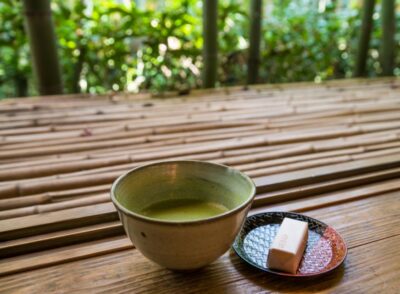
Arashiyama Bamboo, Temple, Monkeys, or Secret Sake Brewery
Read our review →
Arashiyama Bamboo Forest, Monkeys, Matcha & Temple Tour
Read our review →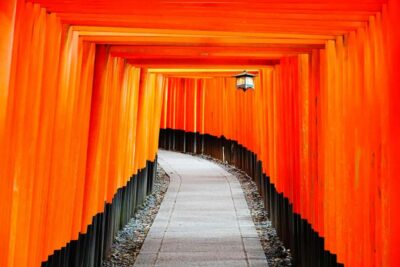
Osaka/Kyoto: Arashiyama, Nara & Fushimi Inari Shrine w/Lunch
Read our review →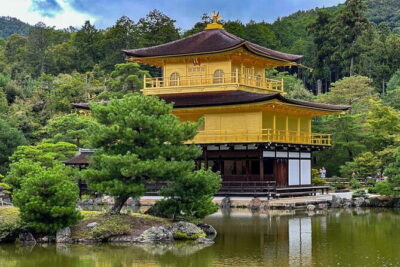
Nijo, Kinkaku-ji, Arashiyama, Kiyomizu & Fushimi Inari
Read our review →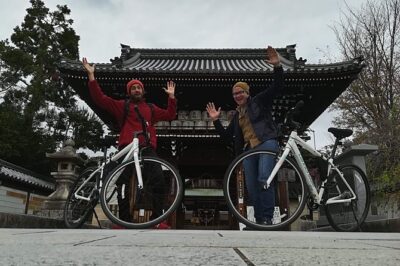
Arashiyama Bamboo Forest & Hidden Gems Bike Tour (Early Bird)
Read our review →Browse the lists this tour appears in