
REVIEW · ARASHIYAMA BAMBOO TOURS
Arashiyama from Kyoto: Private & Personalized with a Local Guide
Arashiyama is more than its famous Bamboo Grove. This private six-hour walk can take you from crowded lanes to mossy temple gardens, a hillside monkey park, and the quiet grounds of Okochi Sanso Villa. Your guide shapes the day around your interests instead of marching every group through the same checklist.
I like two things right away: four temple admissions are included, and the guide can change course when your group needs it. Families have spent extra time at the monkeys, while guides such as Ada and Shingo have substituted quieter shrines when rain or crowds spoiled the usual route. The main drawback is the amount of walking, including a steep climb to Monkey Park, and the $288.17 per-person price is easier to justify for a private group than for a couple on a tight budget.
In This Review
- Key points at a glance
- Why a private guide changes Arashiyama
- Starting near Kyoto Station
- Bamboo Grove: beautiful, but go in with realistic expectations
- Okochi Sanso Villa and the value of its gardens
- Choosing four temples from five
- Tenryu-ji
- Jojakko-ji
- Gio-ji
- Otagi Nenbutsu-ji
- Daikaku-ji
- Monkey Park Iwatayama requires real effort
- What the guides add, and where quality can vary
- Six hours, one private group, and plenty of walking
- Is $288.17 per person good value?
- Who should book this Arashiyama walk?
- FAQ
- How long does the Arashiyama private tour last?
- What is included in the tour price?
- Which four temples can I visit?
- Is transportation included?
- Where does the tour start and finish?
- Can I cancel for a full refund?
- Should you book it?
Key points at a glance
- Private six-hour format: Only your group takes part, with a route shaped by your interests and pace.
- Four temple tickets included: Choose four from Tenryu-ji, Jojakko-ji, Gio-ji, Otagi Nenbutsu-ji, and Daikaku-ji.
- Bamboo, monkeys, and gardens: The day combines Arashiyama’s best-known sights with quieter religious sites.
- A serious walking workout: Monkey Park sits at the top of a steep hill, and the full route can mean many hours on your feet.
- Good family flexibility: Guides including Alex, Brenda, Mia, and Dairyn have adjusted routes for young children, teenagers, special needs, and limited time.
- Transport is not included: Public transit or taxis may be used between sites, with those costs discussed separately with your host.
Why a private guide changes Arashiyama
Arashiyama can feel like two different places. Around the Bamboo Grove and Tenryu-ji, you may find heavy foot traffic, especially later in the day. A few turns away, the lanes become calmer, temple gardens open into quiet corners, and the foothills give you a slower look at western Kyoto.
A private guide helps with that contrast. You complete a short questionnaire after booking, sharing interests, must-sees, and preferences. Your host then contacts you to plan the route. If you care about Japanese Buddhism, you can spend more time at temples. If you have children, you can give priority to the monkeys, snacks, and easy-to-follow stories. If you have seen the standard sights before, your guide can steer you toward less familiar shrines and neighborhoods.
The experience is not a private car tour. It is mainly a walking day, with public transportation or local taxis possibly used between distant stops. That matters because six hours in Arashiyama can cover a lot of ground, but you will feel the distance in your legs.
More arashiyama bamboo tours in Kyoto:
- Kyoto: Fushimi Inari, Kinkakuji, Bamboo Grove 1 Day Bus Tour
★ 4.8 · 4,316 reviews - Osaka/Kyoto:Kinkakuji,Arashiyama,FushimiInariShrine,NaraPark
★ 4.1 · 1,596 reviews - Kyoto/Osaka: Nara, Fushimi Inari Taisha, Arashiyama Bus Tour
★ 4.7 · 1,275 reviews
Starting near Kyoto Station
The stated meeting point is Mister Donut in the JR Kyoto Station Building. Pickup is offered, and some guides have met groups at their hotels, but you should confirm the exact arrangement with your host after booking.
Starting at Kyoto Station is practical if you have just arrived by train. It also means the day may begin with a transfer toward Arashiyama before the walking starts. Transportation costs are not included, so ask your host how the group will move between sites and what you should budget for.
The return point is back at the meeting point. That makes the tour less useful if you need to finish at a different Kyoto neighborhood, though you can ask about the day’s route during planning.
Bamboo Grove: beautiful, but go in with realistic expectations
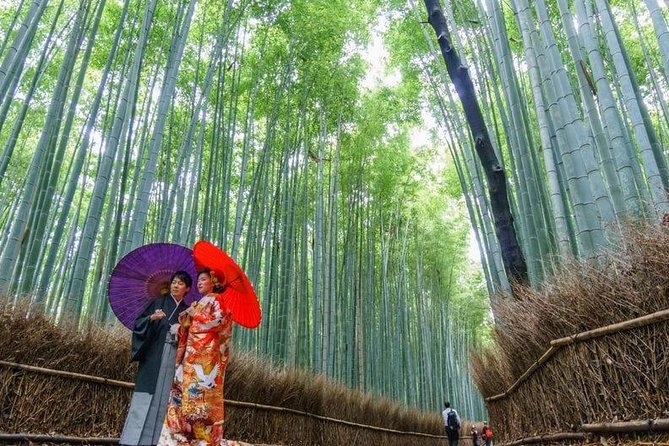
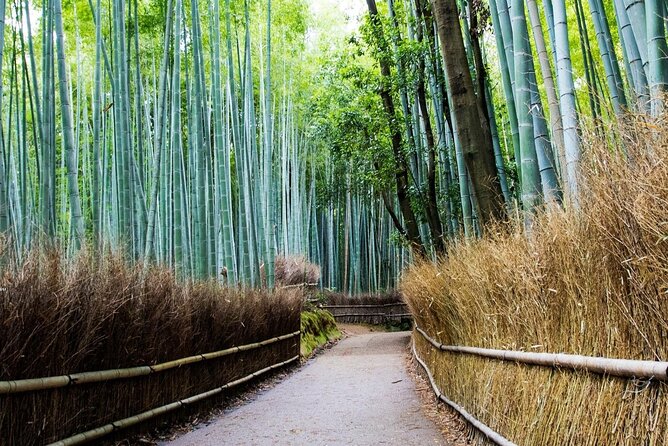
The Bamboo Grove is the obvious draw. Tall stalks frame a narrow path, and the green walls create one of Kyoto’s most recognizable scenes. It is worth seeing, but do not expect solitude simply because the setting looks peaceful in photographs.
A useful tip is to request an early start if the grove is a priority. One of the clearest practical comments about the experience was that the grove would feel more serene without the crowds. Your guide can help you approach it in a way that fits the rest of the day, but no private tour can remove the popularity of this public sight.
There are also few places to sit and linger along the busiest stretch. If you want time for photographs, tell your host early. If you prefer a quiet walk over a famous photo stop, the route can shift toward smaller shrines, gardens, and temple grounds.
One guide, Shingo, began a December visit at Adashino Temple, where the group found a much quieter bamboo setting before moving downhill. That is the kind of adjustment a custom tour can make useful: you still get the bamboo experience, but not only the most crowded path.
Okochi Sanso Villa and the value of its gardens
Okochi Sanso Villa is included, and it gives the day a different mood from the public grove. This former home and garden belonged to a Japanese film actor and is recognized as a national cultural property. The grounds offer carefully arranged views and a chance to see how a traditional residence and garden work together.
The villa is one of the better inclusions here because it adds atmosphere rather than another quick temple stop. You can ask your host about the design, the property’s history, and the way the garden uses the mountain setting. One family particularly enjoyed the gardens toward the end of the walk, which makes sense if you need a calmer finish after busy paths and uphill sections.
Do not treat this stop as a place to rush through. If gardens matter to you, tell your guide in advance so the timing does not get swallowed by the Bamboo Grove or Monkey Park.
A few more Kyoto trips to weigh up
- Fushimi Inari Hidden Hiking Tour (Private Option Available)
★ 5.0 · 1,750 reviews - Private Kyoto Tour with a Local, Highlights & Hidden Gems, Personalised
★ 5.0 · 1,543 reviews - Kyoto 6hr Private Tour with Government-Licensed Guide
★ 5.0 · 1,369 reviews - 10 Must-see Spots in Kyoto One Day Private Tour (up to 7 people)
★ 5.0 · 1,108 reviews
Choosing four temples from five
The tour includes admission to four of these five temples: Tenryu-ji, Jojakko-ji, Gio-ji, Otagi Nenbutsu-ji, and Daikaku-ji. The ability to choose is important because these sites offer very different experiences.
Tenryu-ji
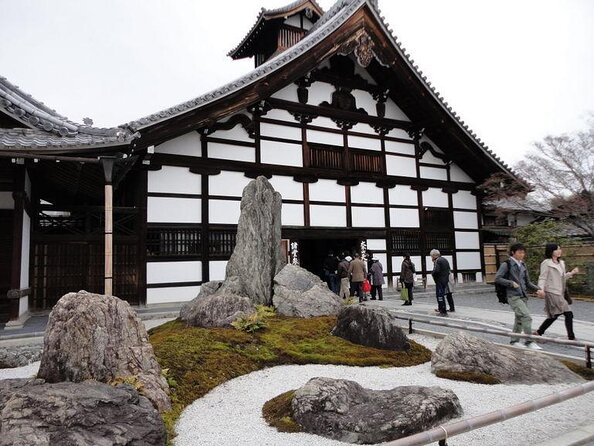
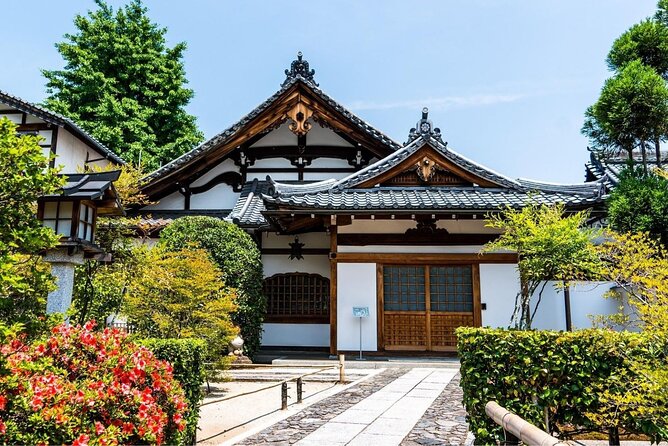
Tenryu-ji is the major name on the route. It is a UNESCO World Heritage site and one of Kyoto’s five great Zen temples. Its garden is the main attraction, with water, trees, and mountain views arranged in a classic temple setting.
Choose Tenryu-ji if you want a strong introduction to Zen temple design and a famous Arashiyama stop. It is also close to the central tourist area, so it fits naturally with the Bamboo Grove. The tradeoff is popularity. You may find more people here than at the smaller temples.
Jojakko-ji
Jojakko-ji sits on the slopes of Ogura Mountain. It is known for moss gardens, wooded paths, and a 12-meter pagoda with broad views over Arashiyama.
I would put this high on the list for anyone who prefers greenery, quiet paths, and a little uphill exploration. The climb may be manageable for many visitors, but it adds to an already active day. The view is part of the reward, so do not choose it if steep or uneven walking will make the tour uncomfortable.
Gio-ji
Gio-ji is one of the five choices, and its appeal is its intimate temple setting. The supplied tour details do not spell out a full stop description, so ask your host what role it will play in your customized route and how much walking is involved.
It may suit you if you want a smaller temple atmosphere rather than another large complex. Your guide can also help decide if it fits better than one of the more distant options.
Otagi Nenbutsu-ji
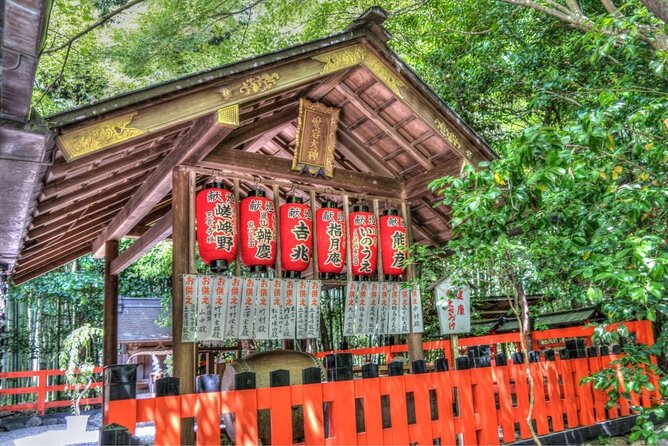
Otagi Nenbutsu-ji is a wonderfully unusual stop. More than 1,200 rakan statues fill the grounds, each with a different face and pose. Instead of formal sameness, you get a collection of playful, weathered figures that rewards close looking.
This is an excellent pick if you enjoy art, odd details, and places that feel different from the standard Kyoto temple visit. It lies farther toward Arashiyama’s outskirts, so reaching it may mean extra walking or public transportation. The distance is worthwhile for many people, but it should be weighed against the six-hour limit.
Daikaku-ji
Daikaku-ji began as an imperial villa and later became a temple. It connects the area to court culture and to The Tale of Genji, Japan’s first novel, whose scenes are associated with this setting.
The pond garden gives you room to slow down and look. I would choose Daikaku-ji if you enjoy literature, imperial history, and broad, serene temple grounds. It may be less appealing if your priority is only the most famous Arashiyama sights in a short visit.
Because only four of the five temple tickets are included, make your preferences clear before the day. Additional tickets for attractions not covered in the inclusions cost extra.
Monkey Park Iwatayama requires real effort
Monkey Park Iwatayama is one of the most memorable parts of the route, but it is not a gentle stroll. The park sits up a steep hill, and one description compared the climb to walking up a 40-story building. That is a useful warning, particularly for older visitors, anyone with a recent injury, or families carrying small children.
At the top, Japanese macaques move freely in their natural habitat. You can enjoy city views and learn how to behave around the animals. The park offers a more direct encounter with nature than the temple stops, but you must follow the local rules and keep respectful distance.
Families often value this stop. Alex spent extra time there with young children, and another family found the monkeys to be the highlight for their kids. Teenagers also responded well to the mix of temples, views, and animals.
Still, do not book this route assuming the park is an easy add-on. Wear supportive shoes, take the climb at your own speed, and tell your guide if you need regular pauses. Hide adjusted the day for a guest with a sprained ankle, and Milos allowed an older guest to set the walking pace. That kind of flexibility is useful, but it does not remove the hill.
What the guides add, and where quality can vary
The strongest part of this experience is the host. Alex is repeatedly praised for being friendly, flexible, and able to keep children and teenagers engaged. Brenda has adapted days for families with young children, while Mia worked patiently with a child with autism. Dairyn helped a time-pressed vegetarian family find suitable food ideas and fit in the most important sights.
Ada changed the plan during heavy rain, replacing the Bamboo Grove with lesser-known shrines and historic sites. Shingo used Adashino Temple and a quieter bamboo area to avoid a more crowded opening. These examples show what personalization should mean in practice: not just choosing a start time, but changing the day when weather, mobility, age, or interest calls for it.
The record is not perfect. One guest reported a guide no-show caused by an office booking error, and another felt the assigned guide lacked enough site knowledge. Those are serious concerns, even though the overall rating is 4.7 from 45 reviews and 93 percent recommend the experience.
You cannot request a particular guide with certainty from the information provided, but you can use the pre-tour contact well. State your walking ability, children’s ages, interests, food needs, and must-see stops. Ask direct questions about the route and transportation. The more specific you are, the more useful the customization is likely to be.
Six hours, one private group, and plenty of walking
Six hours is enough for a full look at Arashiyama, but not enough to linger everywhere. The route may include the Bamboo Grove, Okochi Sanso Villa, Monkey Park, and four temples, with travel between some sites. Your host will need to balance famous stops, quieter places, meal breaks, and your pace.
Food and drinks are not included. Some guides have led groups to ramen, markets, Japanese cracker shops, or lunch spots, but those are additions to discuss with your host. If lunch is important, include it in your questionnaire rather than hoping it appears during the walk.
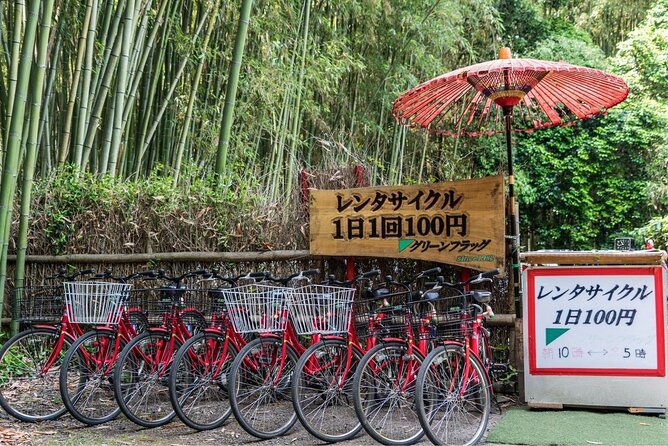
The walking also affects the value. A private guide can save you from wasting time on wrong turns and help you choose worthwhile stops, but you are still paying for a personal walking experience rather than transport. Public transit is reported to be easy to use, yet fares and taxis are extra.
Is $288.17 per person good value?
At $288.17 per person, this is not the cheapest way to see Arashiyama. You are paying for a private host, a customized plan, admission to four selected temples, Okochi Sanso Villa, and Monkey Park Iwatayama. For a family or small group that wants help coordinating a demanding day, the price can make sense.
The value is strongest if you have limited time in Kyoto, want cultural context, or need the route adjusted for children or different walking speeds. A guide can also help you find quieter lanes and make practical choices when rain or crowds interfere.
The price is harder to defend if you are comfortable using public transportation, researching temples yourself, and skipping some admissions. You also need to add food, drinks, transit or taxi costs, and optional gratuities. Group discounts are offered, so check the final rate for your party rather than judging only by the per-person figure.
Who should book this Arashiyama walk?
I would recommend it to first-time Kyoto visitors who want nature, temples, monkeys, and a human guide in one day. It is especially useful for families, people with only one full day in Kyoto, and anyone who wants a route built around personal interests rather than a fixed schedule.
It also suits repeat visitors who have already seen the main sights and want smaller temples or unusual stops such as Otagi Nenbutsu-ji. History fans may prefer Daikaku-ji and Tenryu-ji, while garden lovers should give Okochi Sanso and Jojakko-ji enough time.
I would hesitate if you dislike hills, need a mostly seated tour, or want guaranteed transport. I would also compare the cost with a self-guided day if your group is small and independent.
FAQ
How long does the Arashiyama private tour last?
The experience lasts approximately six hours.
What is included in the tour price?
The price includes a private personalized walking tour, a local host, admission to four of five listed temples, Okochi Sanso Villa, and Monkey Park Iwatayama.
Which four temples can I visit?
You can select four from Tenryu-ji, Jojakko-ji, Gio-ji, Otagi Nenbutsu-ji, and Daikaku-ji. Additional tickets for attractions not included cost extra.
Is transportation included?
No. This is mainly a walking tour. Public transportation or local taxis may be used between sites, but those costs are additional and can be discussed with your host.
Where does the tour start and finish?
The stated meeting point is Mister Donut in the JR Kyoto Station Building. The activity ends back at the meeting point. Pickup may be offered, so confirm the details with your host.
Can I cancel for a full refund?
Yes. You can cancel at least 24 hours before the local start time for a full refund. Changes or cancellations made less than 24 hours before the start time are not accepted or refunded.
Should you book it?
Book this tour if you want Arashiyama arranged around your group, not around a fixed bus schedule. The best reasons are the private format, the ability to swap temples, and guides who have shown real flexibility with children, rain, mobility limits, and tight schedules.
Before booking, be honest about how much walking you can handle. Ask about the Monkey Park climb, tell your host which four temples matter most, and request an early Bamboo Grove visit if crowds worry you. If you do that, the $288.17 price can buy a very efficient and personal day in one of Kyoto’s most rewarding districts.
Just added around Kyoto
- Private Guided Traditional Buddhist Cooking in Japan★ 5.0 · 16 reviews
- Kyoto: Gion Geisha District & Sake-in-Hand Walking Tour★ 5.0 · 37 reviews
- Your Private Vacation Photography Session In Kyoto★ 5.0 · 110 reviews
- Kyoto: Zen Meditation at a Private Temple with a Monk★ 5.0 · 25 reviews
- Traditional Japanese Washi Papermaking- Kyoto morning★ 5.0 · 77 reviews
- Kyoto Wagashi(Japanese sweets) Cooking Class near Fushimiinari★ 5.0 · 60 reviews
- Private Pewter Sake Cup Experience with a Kyoto Artisan★ 5.0 · 31 reviews
- Kyoto Private 6 hour Tour: English Speaking Driver Only, No Guide★ 5.0 · 88 reviews
Arashiyama Bamboo Tours, compared.
Osaka/Kyoto:Kinkakuji,Arashiyama,FushimiInariShrine,NaraPark
Read our review →
Kyoto/Osaka: Nara, Fushimi Inari Taisha, Arashiyama Bus Tour
Read our review →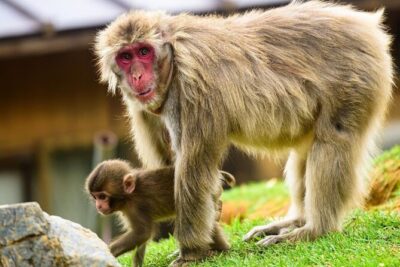
Kyoto Arashiyama Walking Tour: Bamboo, Monkeys, Gardens & Secrets
Read our review →
Arashiyama Bamboo, Temple, Monkeys, or Secret Sake Brewery
Read our review →
Arashiyama Bamboo Forest, Monkeys, Matcha & Temple Tour
Read our review →
Osaka/Kyoto: Arashiyama, Nara & Fushimi Inari Shrine w/Lunch
Read our review →
Nijo, Kinkaku-ji, Arashiyama, Kiyomizu & Fushimi Inari
Read our review →
Arashiyama Bamboo Forest & Hidden Gems Bike Tour (Early Bird)
Read our review →Browse the lists this tour appears in