
REVIEW · WALKING TOURS
Wasabi Farm Walking Tour & Lunch
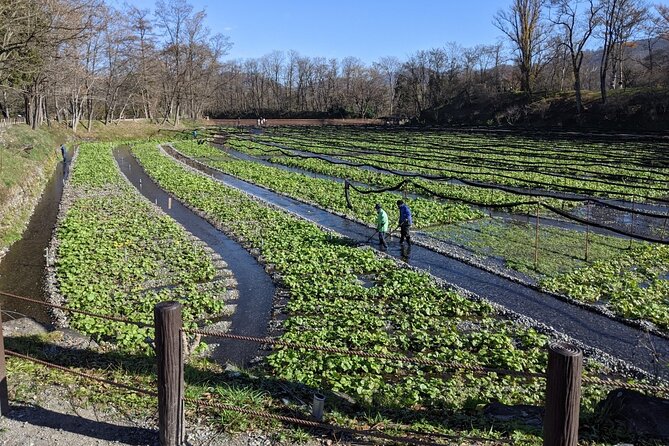
Wasabi is not just the green paste beside your sushi. At Daio Wasabi Farm in Azumino, you’ll see the plant growing in carefully managed water, learn why Nagano suits it so well, and taste the real thing with lunch. The farm was founded in 1915 and remains one of Japan’s largest wasabi farms.
I like the private group format, since it gives you room to ask questions rather than trail behind a large crowd. I also like the mix of food and place: a guided walk followed by Shinshu soba, miso, and fresh wasabi makes this more than a photo stop.
The main catch is the wasabi ice cream. The tour description says a tasting is included, but the inclusions also list ice cream among the extra purchases. Plan to pay separately unless the provider confirms it is covered. Peak-season restaurant waits are another possibility.
In This Review
- Key points before you book
- Why a wasabi farm makes a good Nagano stop
- Meeting the guide at 10:30 a.m.
- Walking through Daio Wasabi Farm
- What you learn about real wasabi
- Shinshu lunch with soba and miso
- The wasabi ice cream question
- Is $70.94 a fair price?
- Weather, timing, and what to plan for
- Who will enjoy this most
- Should you book the Daio Wasabi Farm tour?
- FAQ
- Where does the Wasabi Farm Walking Tour begin?
- What time does the tour start?
- How long does the tour last?
- Is lunch included?
- Is entry to Daio Wasabi Farm included?
- Is wasabi ice cream included?
- Can vegetarian or vegan guests join?
- What happens if bad weather cancels the tour?
Key points before you book
- Daio Wasabi Farm dates to 1915, giving the walk a useful link to Nagano’s farming past.
- A private guide leads your group, with English support and commentary about cultivation, local life, and Japanese food.
- The farm itself is free to enter, so much of the $70.94 price pays for guiding and lunch.
- Lunch centers on Shinshu food, including soba, miso, and wasabi prepared for the table.
- Guides have helped with practical travel details, including directions to the farm and information in the mostly Japanese museum.
- The visit lasts about two hours, beginning and ending at the farm at 10:30 a.m.
Why a wasabi farm makes a good Nagano stop
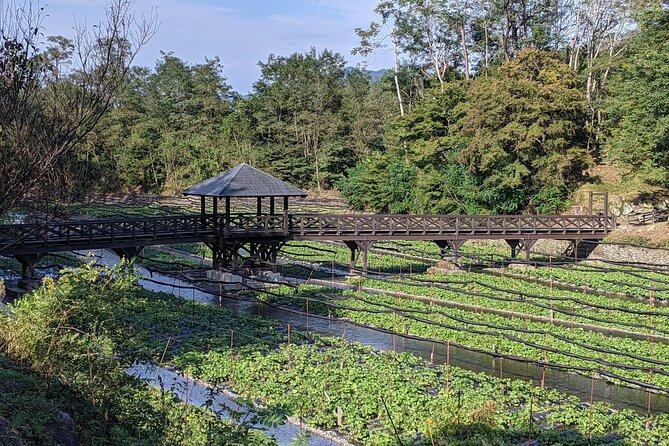
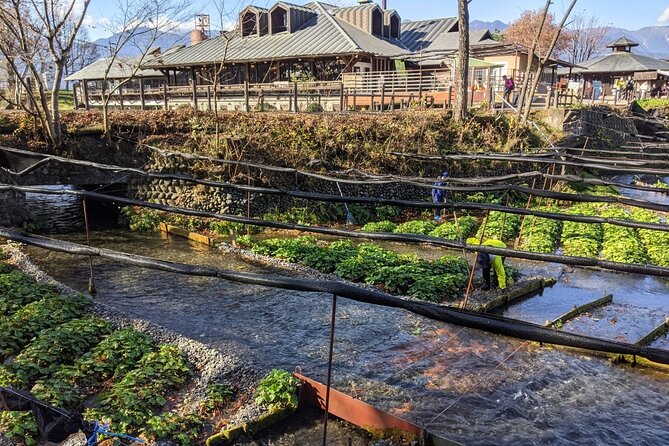
Nagano is known for mountain scenery, rice fields, soba, and clean water. Wasabi fits neatly into that picture, but its growing conditions are more exacting than most visitors expect. The plant needs a steady supply of clean, cool water, and the farm’s channels and plots show how much care goes into producing an ingredient often treated as a small garnish.
That is the appeal of this visit. You are not simply looking at a crop from a path. You are learning why the crop grows here and how it reaches the Japanese table. A guide adds the missing layer, especially since much of the farm’s museum information is in Japanese.
I would particularly recommend this to anyone interested in cooking. Freshly grated Japanese wasabi has a cleaner, more delicate flavor than the familiar dyed horseradish paste served in many restaurants abroad. Lunch gives you a chance to understand that difference in a practical way, rather than through a lecture alone.
The setting also gives you a quiet break from city sightseeing. One guide described the farm and walk as peaceful, and that fits the character of the place. You may hear water more often than traffic, with the Japanese Alps forming the wider backdrop.
More Walking Tours in Nagano
- Matsumoto Castle Town Walking Tour
★ 4.8 · 58 reviews - Food & Cultural Walking Tour around Zenkoji temple in Nagano
★ 5.0 · 58 reviews - Matsumoto Discovery – Half Day Walking Tour
★ 5.0 · 43 reviews
Meeting the guide at 10:30 a.m.
You meet at Daio Wasabi Farm in Hotaka, Azumino, and finish at the same place. The listed start time is 10:30 a.m., and the total visit takes about two hours.
This arrangement is simple once you reach the farm, but getting there deserves attention. The farm is near public transportation, yet the exact route can be tricky for some people. Past visitors have valued the guide’s help with directions, so check your transport plan before the morning of the tour.
The group can have up to 12 people, while the tour is described as private for your own group. That combination matters. You should not expect a large coach-style outing, and your guide can adjust explanations to your questions and interests.
The farm is open and spread out, so wear shoes suitable for a walking tour. The supplied information does not give a required walking distance or a detailed accessibility statement. Most people can participate, but anyone concerned about mobility should ask the provider before booking.
Walking through Daio Wasabi Farm
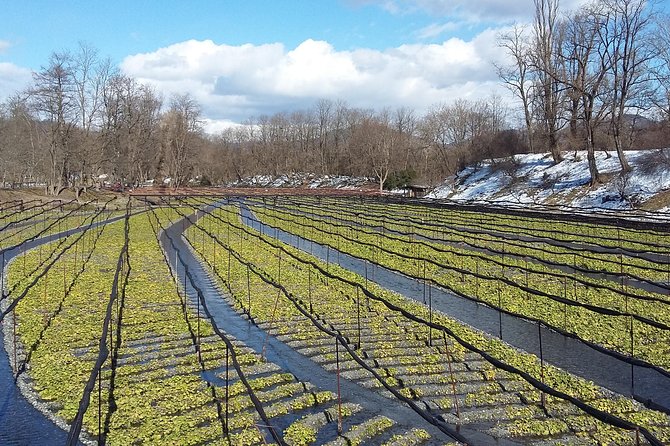
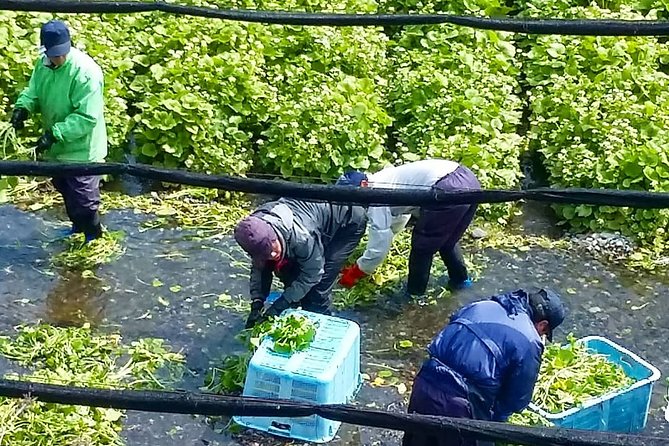
The first hour focuses on Daio Wasabi Farm itself. Founded in 1915, it has the scale and history to make the subject feel substantial. You will see fields and water channels, hear about how wasabi is cultivated, and gain a better sense of why this plant is considered special in Japanese cuisine.
The farm is photogenic, but the pictures are not the whole point. Water is central to the story. Your guide can explain the growing method and the local conditions that make the Azumino area suitable for wasabi.
Guides have made a clear difference here. Akiko has been praised for explaining the farm and then connecting the walk to lunch. Naomi has also led tours with a useful mix of farm information and food. Tom has taken groups to less familiar corners of the property and translated parts of the museum, which is helpful when the printed material is mainly Japanese.
Tim has been singled out for explaining both wasabi production and the wider Nagano region. Carole has provided French explanations, showing that language support may extend beyond English, though you should confirm your preferred language when booking.
The guide assigned to you will vary. That is worth noting because the personal quality of the tour depends heavily on the person leading it. The available feedback points to guides who are friendly, clear, and willing to answer broader questions about Japanese culture, but no specific guide is guaranteed.
What you learn about real wasabi
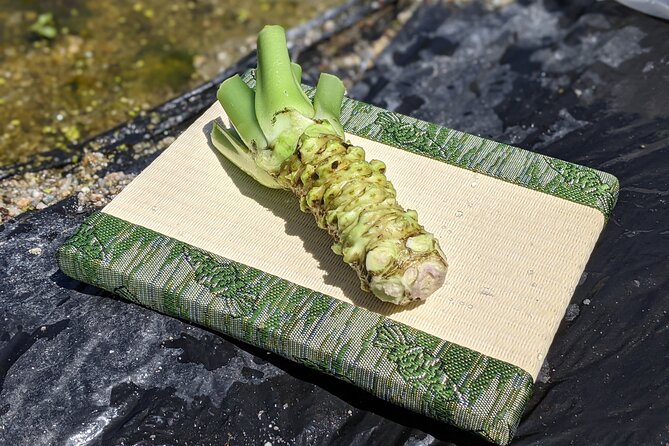
Most people know wasabi as a sharp green condiment. The farm gives you a more useful picture. You learn that wasabi is a plant with particular water and cultivation needs, not simply a powder mixed with liquid in a tube.
The walk also explains its place in Japanese food. Wasabi is closely associated with sushi, but its flavor works with other local foods as well. Freshly grated wasabi is often gentler and more fragrant than the strong heat many people expect.
This is where a guide earns the fee. You could walk around the farm on your own because entry to the farm is free, but you would miss much of the context. The museum can also be difficult to follow if you do not read Japanese. A guide can translate key information, explain unfamiliar terms, and point out details you might otherwise pass without noticing.
The commentary is not limited to farming. Several guides have also discussed Japanese customs, Nagano, and practical suggestions for later stops in Japan. If you enjoy asking questions, the small group format should suit you well.
Same city, a completely different kind of day:
- 1-Day Snow Monkeys, Zenko-ji Temple & Sake in Nagano
★ 5.0 · 1,020 reviews - Nagano: Snow Monkeys, Zenkoji Temple & Sake Day Trip
★ 4.9 · 833 reviews - From Tokyo: Snow Monkey 1 Day Tour with Beef Sukiyaki Lunch
★ 4.6 · 295 reviews - Tokyo: Snow Monkey & Nagano Customiseable Private Day Tour
★ 4.8 · 138 reviews
Shinshu lunch with soba and miso
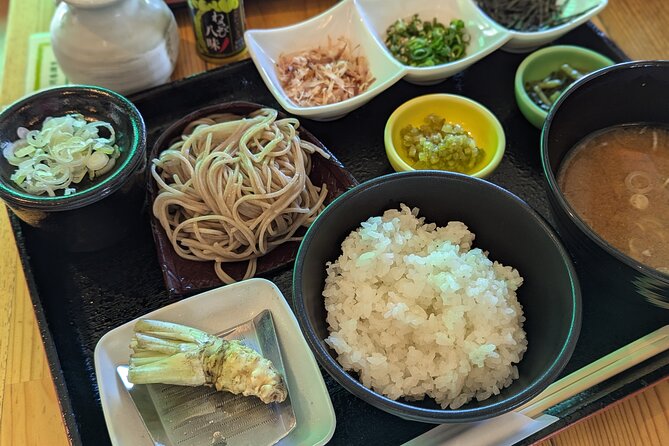
The second hour is set aside for lunch at Daio Wasabi Farm. The meal is designed around Shinshu food, the old name for Nagano Prefecture. Expect local specialties such as Shinshu soba and Shinshu miso, along with other dishes chosen to show how fresh wasabi is used.
The best detail is the freshly grated wasabi served with the meal. Rather than treating wasabi as an afterthought, the lunch lets you taste it with soba and local foods. I like this because it connects the morning walk to something you can actually eat.
Lunch is included in the price. Vegetarian and vegan guests can be accommodated, and families with young children can also be catered for. State your needs when booking rather than waiting until you sit down.
There is one practical warning. During peak periods, the farm restaurant may be full, and the tour operator may not be able to reserve a table in advance. You could face a wait before eating. That does not cancel the value of the lunch, but it means the two-hour schedule is approximate, especially during busy seasons.
The wasabi ice cream question
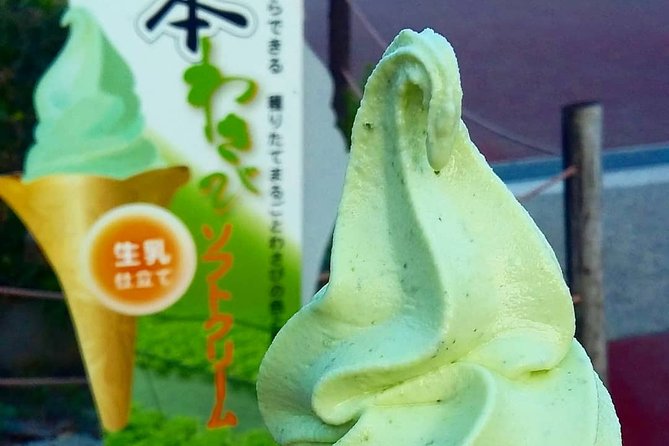
Wasabi ice cream is the playful part of the visit. It gives you a chance to try wasabi in a sweet food, and one past participant found it surprisingly good.
But the payment information is inconsistent. The main description presents a wasabi ice cream tasting as part of the outing, while the inclusions specifically exclude snacks and drinks, including wasabi ice cream, beer, and sausages. The safest approach is to treat the ice cream as an optional purchase and confirm before you go.
The same applies to other farm food and souvenir purchases. Your lunch is included, but extra snacks, drinks, beer, sausages, ice cream, and souvenirs are not. Bring a little spending money if you want to sample more than the set meal.
Is $70.94 a fair price?
At $70.94 per person, this is not a cheap farm admission. The farm itself is free, so you are paying mainly for the private guide, interpretation, and included lunch.
That can be fair value if you want to understand what you are seeing. Without a guide, Daio Wasabi Farm can still be a pleasant stop, but the growing methods, museum material, and regional food connections may not be clear. The guided format turns a free attraction into a focused two-hour lesson with a meal attached.
The price makes less sense if you only want a quick look at the fields or a snack. You could enter the farm independently and buy food on your own. This tour is best for people who value explanation, easy conversation, and a planned lunch more than the lowest possible cost.
The maximum group size of 12 helps keep the fee from feeling like a large packaged outing. If your booking is truly private for your party, you also gain flexibility in questions and conversation. Confirm how the private arrangement applies to your reservation, since the published capacity is still listed as 12 people.
Weather, timing, and what to plan for
The tour requires good weather. If poor weather cancels it, you are offered another date or a full refund. You can also cancel for a full refund up to 24 hours before the 10:30 a.m. start time. Changes or cancellations inside that window are not accepted, and local time controls the deadline.
Rain does not necessarily ruin the farm. One French-speaking participant had a rewarding visit on a wet day, with clear explanations and a pleasant walk. Still, bring weather-appropriate clothing and shoes, since the visit takes place outdoors.
The 10:30 a.m. start works well if you want lunch during the second half of the tour. It is less suitable if you are trying to fit several distant Nagano attractions into the same morning. The farm is the focus, and the restaurant wait during peak season can stretch the schedule.
A mobile ticket is provided, and confirmation arrives when you book. Keep the meeting location handy: Daio Wasabi Farm, Hotaka, Azumino, Nagano 399-8303. You return to the farm at the end, so this is easy to combine with independent time on the property before or after the guided portion.
Who will enjoy this most
I would choose this tour if you like food origins, local agriculture, and small cultural details. It also suits people who want a quieter outing away from urban Japan without giving up a clear structure.
Families can consider it because children can be accommodated at lunch, and the subject is visual and unusual. Food-focused visitors will get the most from the fresh wasabi and Shinshu meal. Anyone interested in Japanese culture can use the guide for questions beyond the farm itself.
This is less ideal if you dislike walking, need a tightly timed schedule, or only want a quick photo at a famous farm. It may also disappoint if you assume every extra food item is included. Confirm the ice cream arrangement and allow time for a restaurant wait during busy periods.
Should you book the Daio Wasabi Farm tour?
Book it if you are already planning to visit Azumino and want the farm to make sense, not just look pretty. The strongest reasons are the private guide, the translation help in the museum, and the chance to eat fresh wasabi with a regional lunch.
At $70.94, the tour earns its keep through explanation and convenience rather than admission. I would especially choose it for first-time visitors to Nagano, food lovers, families, and anyone who wants a calm half-day outing with a clear local connection.
Skip it if you are comfortable exploring independently and do not need a guide or included meal. Either way, check the ice cream policy before paying. That small detail is the one part of the offer that needs clarification.
FAQ
Where does the Wasabi Farm Walking Tour begin?
The tour begins at Daio Wasabi Farm, Hotaka, Azumino, Nagano 399-8303, Japan.
What time does the tour start?
The scheduled start time is 10:30 a.m.
How long does the tour last?
The visit lasts approximately two hours, with about one hour for the farm walk and one hour for lunch.
Is lunch included?
Yes. A Japanese lunch set featuring wasabi is included, with Shinshu specialties such as soba and miso.
Is entry to Daio Wasabi Farm included?
Entry to the farm itself is free of charge.
Is wasabi ice cream included?
The information is mixed. The tour description mentions a wasabi ice cream tasting, but the inclusions exclude snacks and drinks, including wasabi ice cream. Confirm this with the provider, and be prepared to pay separately.
Can vegetarian or vegan guests join?
Yes. Vegetarian and vegan meals can be arranged, and families with young children can also be accommodated.
What happens if bad weather cancels the tour?
If poor weather causes cancellation, you can choose a different date or receive a full refund. Free cancellation for a full refund is also available up to 24 hours before the scheduled start time.
More Farms in Nagano
- Mt. Fuji Private Chartered Tour with Nature and Wasabi Farm
★ 5.0 · 24 reviews - Miyajima Guided Tour and Fresh Oyster Farm Tour
★ 5.0 · 20 reviews
More Lunch Experiences in Nagano
- Snow Monkey Park, Soba Lunch and Shibu Onsen Tour
★ 5.0 · 12 reviews - Bike Tour Exploring North Kyoto plus Lunch
★ 5.0 · 1,087 reviews - Tokyo: Mt.Fuji & Lake Kawaguchiko 1-Day Bus Tour w/Optional Lunch
★ 4.5 · 839 reviews - Osaka/Kyoto: Arashiyama, Nara & Fushimi Inari Shrine w/Lunch
★ 4.4 · 754 reviews
Just added around Nagano
- 1-Day Tateyama-Kurobe Tour: Walking on the ‘Roof of Japan’★ 5.0 · 20 reviews
- Snow Monkeys, Hokusai & Sake: A Perfect Day in Nagano★ 5.0 · 19 reviews
- Ski or Snowboard Lesson in Shiga Kogen (4Hours)★ 5.0 · 34 reviews
- Snow Monkey Park & Miso Production Day Tour from Nagano★ 5.0 · 18 reviews
- Snow Monkey Park, Soba Lunch and Shibu Onsen Tour★ 5.0 · 12 reviews
- Nagano Private Two Day Tour★ 5.0 · 29 reviews
- Nagano Spring: 1-Day Cherry Blossoms & Snow Monkeys Guided Tour★ 5.0 · 31 reviews
- Private Snow Monkey Tour – Conveniently Resort Hop and Sightsee★ 5.0 · 47 reviews
Walking Tours, compared.

Kyoto Geisha Walking Tour: Gion District & Hidden Gems
Read our review →
Tokyo Tsukiji Fish Market Food and Culture Walking Tour
Read our review →
Gion Magical Night Walking Tour with Geisha Trivia
Read our review →
Imperial Palace and Shogun Historical Walking Tour
Read our review →
Gion Geisha District Walking Tour – Stories of Geisha
Read our review →

Asakusa Walking Tour with Sensoji Temple Visit
Read our review →
Kyoto Gion Geisha District Walking Tour – The Stories of Geisha
Read our review →Browse the lists this tour appears in