
REVIEW · FOOD MARKET TOURS
Tokyo’s Kitchen: Tsukiji Market Food & Culture Walk
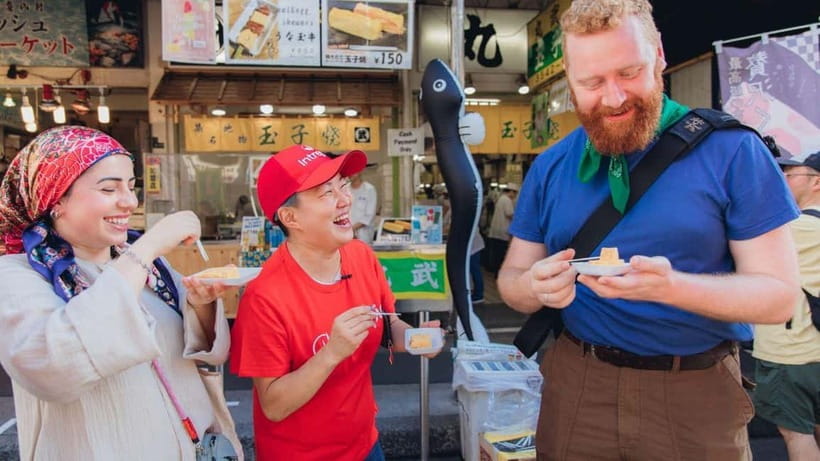
Tsukiji is best understood with someone who knows where to pause. This three-hour walk takes you from Kabukiza Theatre to the market’s food stalls, shrines, and small shops, with tastings of sushi, sashimi, tamagoyaki, snacks, and seasonal wagashi along the way. I like the six-person limit, which helps your guide keep the group together in the narrow lanes. I also like the link between food and faith, from Kabuki Inari Shrine to the market’s Shinto and Buddhist traditions.
The main drawback is that this is a tasting walk, not a behind-the-scenes market tour. You will see the public-facing Tsukiji Outer Market, and one past participant wanted more access to the working side. Come hungry, but not expecting a full restaurant meal or a tuna-auction visit.
In This Review
- Key points at a glance
- Starting at Kabukiza Theatre and Kabuki Inari Shrine
- Reading Tsukiji Outer Market one bite at a time
- Tastings that turn into a small Japanese food lesson
- From sushi technique to market tradition
- Namiyoke Inari Jinja and the quieter side of Tsukiji
- What the three-hour format feels like
- Is $80 a fair price?
- Who will enjoy this market walk most
- Should you book Tokyo’s Kitchen?
- FAQ
- Where does the Tsukiji food tour begin?
- Where does the tour finish?
- How long does the experience last?
- What language is the tour conducted in?
- How large is the group?
- What food and drinks are included?
- Can vegetarian or vegan participants join?
- What should I wear, and can children join?
Key points at a glance
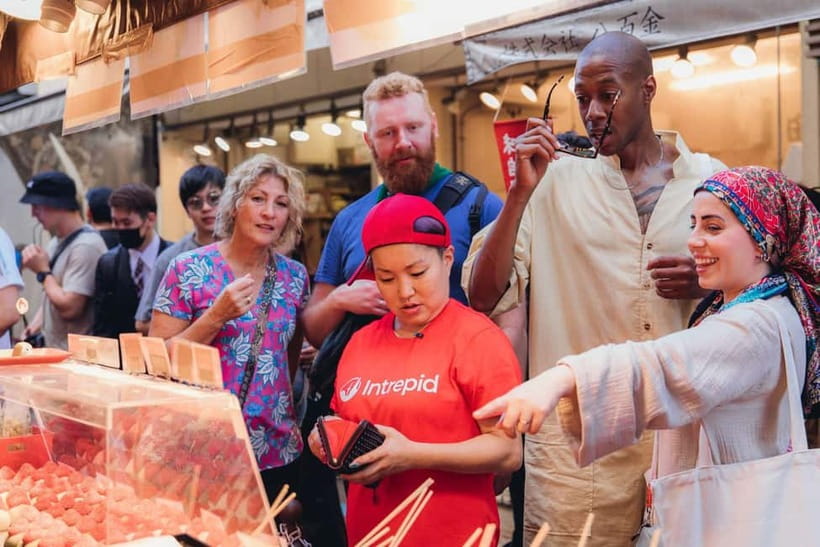
- Small group of six: Your guide can answer questions, adjust tastings, and keep you moving through crowded lanes.
- A full morning of samples: Expect sushi, sashimi, tamagoyaki, Japanese snacks, wagashi, tea, and possibly sake.
- Food with a story: Learn how sushi developed and why market customs connect with Buddhist and Shinto beliefs.
- Friendly vendor contacts: Guides such as Oku and Shino have introduced people at stalls where they can explain how foods are made.
- Two shrine visits: Kabuki Inari Shrine begins the walk, while Namiyoke Inari Jinja adds a quiet cultural pause near the market.
- Practical planning matters: Wear closed-toe shoes, skip breakfast, and report dietary needs before you arrive.
Starting at Kabukiza Theatre and Kabuki Inari Shrine
The meeting point is easy to identify but deserves a little care. Meet at Higashi-ginza Station, Exit 3, at street level, in front of Kabukiza Theatre, on the Harumi Street side near the small shrine and torii gate. This is a useful place to meet because the theatre is a clear landmark, but station exits in Tokyo can still be confusing. Give yourself time to get upstairs and find the correct side of the building.
The morning begins at Kabuki Inari Shrine. Your guide introduces simple Japanese customs before the group heads toward Tsukiji. You will learn the basic gestures used to show respect at a shrine, an approachable way to start the day without needing prior knowledge of Japanese religion.
This first stop also gives the walk a wider purpose. Tsukiji is not only a place to buy seafood. Food, work, cleanliness, gratitude, and respect overlap here, and the shrine helps explain that connection before you enter the market lanes.
More Food Market Tours in Tokyo
- Tokyo: Shinjuku Food Tour (13 Dishes at 4 Local Eateries)
★ 5.0 · 6,603 reviews - Tokyo Tsukiji Fish Market Food and Culture Walking Tour
★ 5.0 · 3,184 reviews - Tokyo: Shinjuku Food Tour (15 Dishes and 4 Eateries)
★ 4.9 · 2,033 reviews
Reading Tsukiji Outer Market one bite at a time
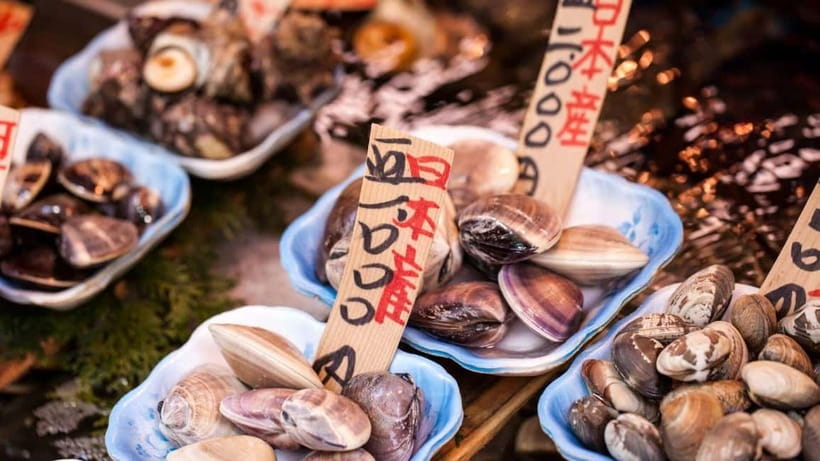
Tsukiji Outer Market is a working food district made up of shops, stalls, snack counters, and specialist sellers. The famous inner fish market and tuna auction moved to Toyosu, but Tsukiji remains a major place to buy and eat food in central Tokyo. That distinction matters. You are not touring the old auction floor. You are exploring the public market area where food shops continue to serve local life.
Without a guide, it is easy to walk past an interesting stall without knowing what it sells or how to order. A local English-speaking guide can translate, point out unfamiliar ingredients, and explain what you are tasting. The small group makes a real difference here. The lanes can be crowded, and people who stop to take photos can quickly lose sight of their companions.
The walk may introduce you to foods ranging from strawberries, soybeans, matcha, and dashi to Kobe beef, tuna, tamagoyaki, and prepared seafood. The exact selection can vary, since this is a market rather than a fixed restaurant menu. That variety is part of the appeal, but it also means you should not book this expecting a precise list of dishes.
Several people who took the walk with guides named Mikki, Oku, Mihori, Shino, Yumi, and others found the guides warm and energetic. Oku, in particular, used photos, maps, and models to explain what the group was seeing. His friendly relationships with sellers helped the group approach stalls in a relaxed way rather than trying to work out every exchange alone.
That personal connection is one of the strongest reasons to pay for the tour. You are not simply buying food. You are paying for interpretation, translation, and a smoother path through a market that can feel confusing on a first visit.
Tastings that turn into a small Japanese food lesson
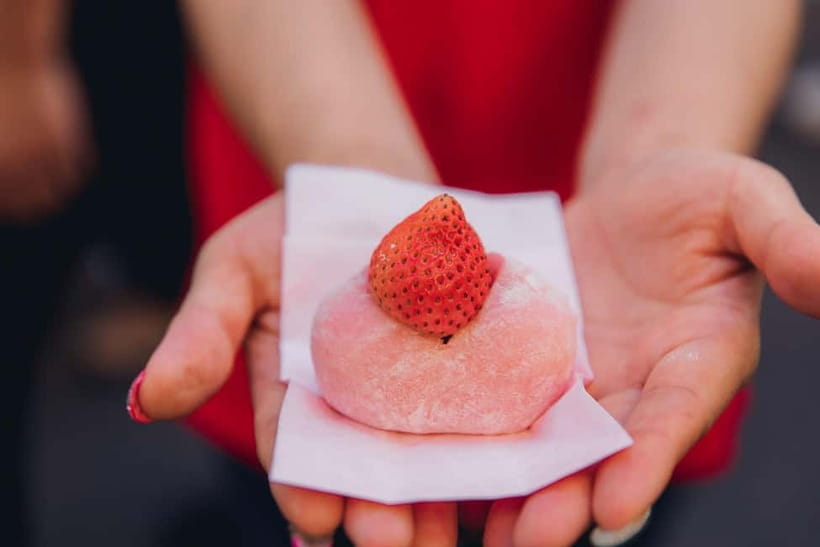
The food is the center of the morning, and you should arrive ready to sample rather than eat one large meal. Tastings may include fresh sushi or sashimi, tamagoyaki, Japanese snacks, seasonal wagashi, green tea, and sake. Some people also tried Kobe beef skewers, pepper cola tea, and other unusual drinks or bites.
The portions are described as small, but there can be many of them. That is why I would skip breakfast, while still avoiding the mistake of arriving painfully hungry. You need enough room to taste several items, and the market walk involves standing and moving between stops.
Tamagoyaki is especially useful as a market lesson. You may see where the sweet Japanese omelet is made and learn about the care involved in producing it. Dashi, soybeans, matcha, seafood, and wagashi offer other ways to see how Japanese cooking depends on good ingredients and careful preparation.
The sushi portion may come toward the end of the walk. One guide prepared a feast of fresh sushi and had the group grind its own wasabi. Another tasting included sashimi and sake after the shrine visit. These details can differ by guide and market conditions, so think of them as possible highlights rather than guaranteed items in a fixed order.
Sake is available only to people aged 20 and older under Japanese law. Anyone younger receives a non-alcoholic option. Dietary restrictions should be shared when booking. Vegetarian and vegan choices are possible, but the market’s focus on seafood means the range may be limited.
From sushi technique to market tradition
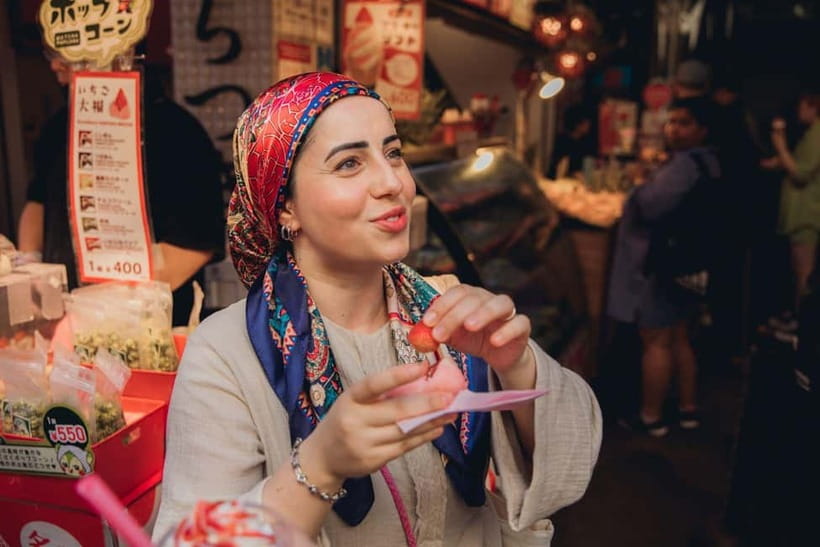
A good guide adds context without turning breakfast into a lecture. The walk explains the history of sushi and the way Tsukiji changed after the tuna auction relocated to Toyosu. That background helps you understand why the Outer Market still matters even though the most famous wholesale activity is elsewhere.
You also hear about the relationship between Tsukiji, Buddhist beliefs, and Shinto spirit. The point is not to label every food custom as religious. It is to show how gratitude, ritual, shrine visits, and respect for ingredients sit beside the daily business of buying and selling food.
This is where the experience becomes more useful than a simple food crawl. You learn why certain gestures matter, how the market developed, and how food is tied to community life. I appreciate that the tour makes room for ordinary questions. You can ask about a strange snack, a cutting method, a shrine ritual, or the difference between foods you have only seen on a menu.
The guide’s relationship with vendors can add another layer. You might see tamagoyaki being prepared or receive a clearer explanation of a product than you would get by pointing at it alone. Still, remember that the market is operating for business. The tour does not promise access to private production areas, and the public stalls remain the main setting.
Same city, a completely different kind of day:
- Mt Fuji and Hakone 1-Day Bus Tour Return by Bullet Train
★ 5.0 · 26,383 reviews - 1-Day Tokyo Bus Tour
★ 5.0 · 14,250 reviews - Tokyo: TOKYO SKYTREE® Admission ticket
★ 4.5 · 11,192 reviews - Tokyo: teamLab Planets TOKYO Digital Art Museum Entry Ticket
★ 4.6 · 9,779 reviews
Namiyoke Inari Jinja and the quieter side of Tsukiji
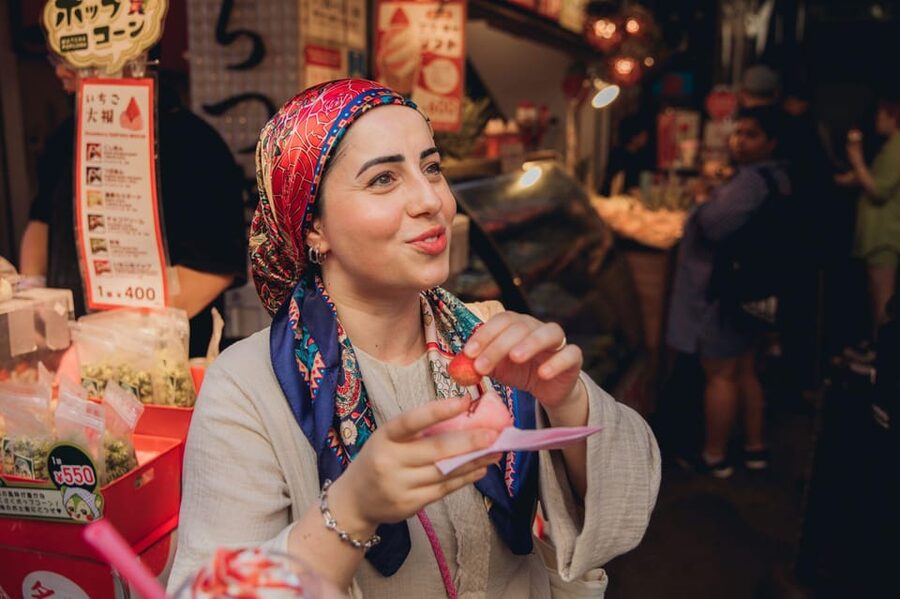
The route includes Namiyoke Inari Jinja, a historic shrine near the market. It offers a change of pace after the food stalls, with a chance to learn more about local customs in a calmer setting.
This stop helps tie the morning together. You begin at Kabuki Inari Shrine, enter a market shaped by food and spiritual traditions, then pause at another shrine before finishing near the fish market. The ritual lesson is simple enough for first-time visitors, and you do not need to prepare in advance.
I like this part because it keeps the tour from becoming a series of tastings. The food is memorable, but the shrine visit gives you a better sense of how Japanese public spaces can hold commerce, tradition, and quiet reflection close together.
What the three-hour format feels like
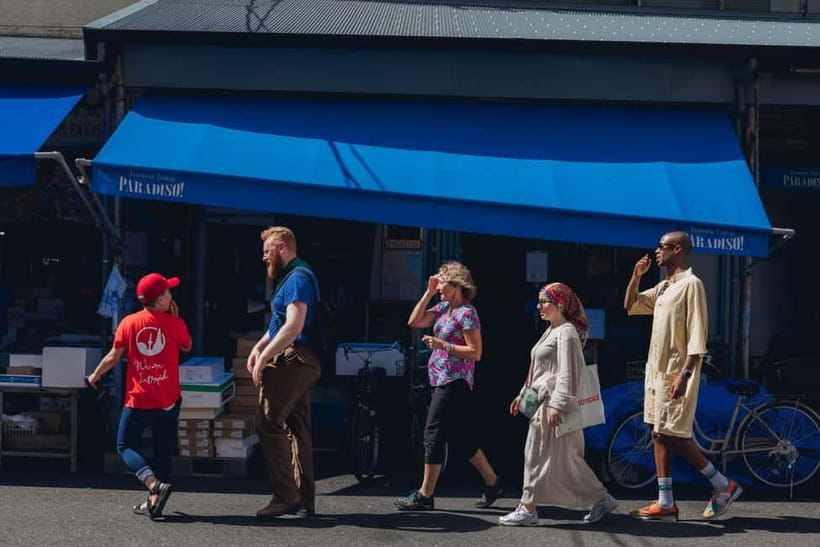
Three hours is a sensible length for Tsukiji. It gives you time to taste several foods and hear the stories behind them without requiring a full day devoted to one district. A morning start also suits the market, since seafood and prepared foods are central to the area’s early activity.
The pace involves walking, standing, eating, and stopping in busy lanes. Closed-toe shoes are a smart choice because market floors can be wet. Rain and wind can make the experience less comfortable, so check the forecast and dress for the weather rather than treating this as an indoor food tour.
The group limit is officially six people, though some departures may be smaller. One couple had only two people on its tour, and another small group had three. A smaller departure gives you more time for questions and makes it easier to follow the guide from stall to stall.
This is not the right choice if you want to browse every shop at your own speed. You will follow a planned route, and the group needs to stay together. The upside is that you can return later with a better idea of what interests you.
Is $80 a fair price?
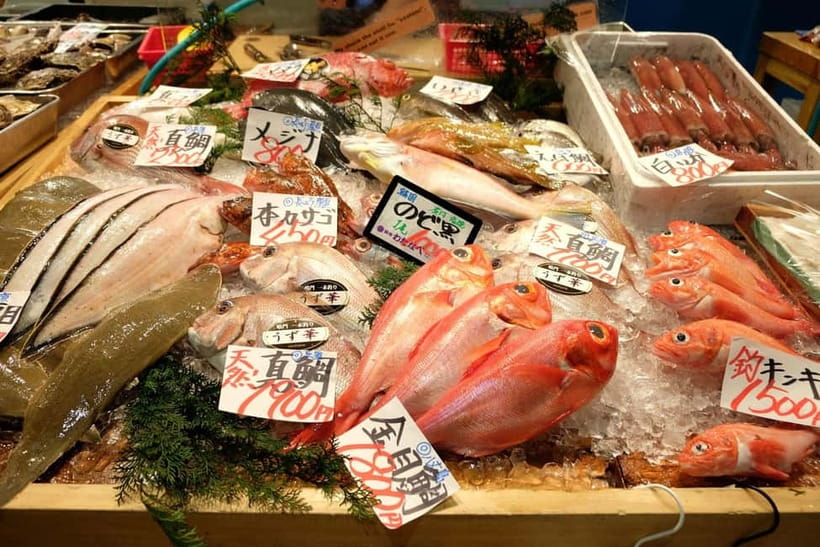
At $80 per person, the walk is not a cheap way to buy breakfast. You could spend less by visiting Tsukiji alone and choosing one or two snacks. The value comes from the number of tastings, the English explanations, the small group, and the help navigating a market where menus and signs may be unfamiliar.
The price makes more sense if you are new to Tokyo food or nervous about ordering at open stalls. It also works well as one of your first activities in the city. A morning with Mikki, Oku, Mihori, Shino, or another local guide can give you a list of foods to seek out during the rest of your stay.
It makes less sense if you already know Tsukiji well, speak Japanese, or mainly want access to wholesale operations. The tour does not include the old tuna auction, and it does not promise a private look behind every stall. One person specifically wanted more of the market’s working side, which is a fair caution for anyone expecting an industrial tour.
Additional food and drinks are not included beyond the planned tastings. Keep a little money available if something catches your eye, but do not assume that every appealing snack is part of the tour price.
Who will enjoy this market walk most
I would recommend this experience to first-time Tokyo visitors who want a clear introduction to Japanese food. It is also a good fit for curious eaters who want to try unfamiliar items with help from a local guide.
Families can take part, and children aged five and under join free when arranged in advance. The food choices may not suit every young child, but the short tastings and shrine customs can give families several things to notice beyond eating.
It is also useful for people who prefer a social morning in a small group. Several departures included only a handful of people, which allows conversation with the guide and other participants without the feel of a large organized crowd.
I would hesitate to recommend it to someone with strict dietary limits unless those needs are discussed before booking. Vegetarian and vegan options are available where possible, but seafood is central to Tsukiji. I would also steer away from it if you dislike wet floors, crowded market lanes, or standing while eating.
The tour is carbon neutral and operated by a certified B Corp. That will not change the food on your plate, but it may matter if you prefer a company that presents the activity as support for local people and responsible travel.
Should you book Tokyo’s Kitchen?
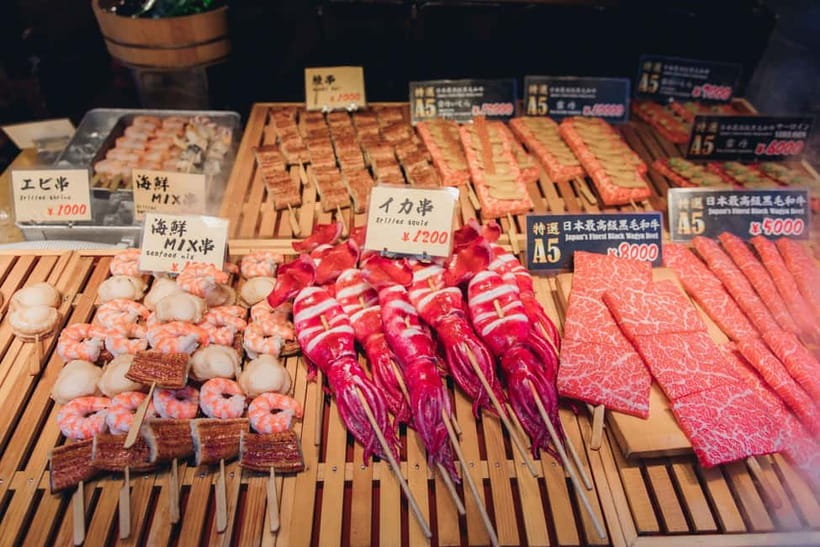
Book this walk if you want a guided introduction to Tsukiji’s food and customs, not simply a meal. The strongest parts are the six-person format, the variety of small tastings, the shrine visits, and guides who can speak with vendors and explain what you are seeing.
Skip it if your main goal is behind-the-scenes access to the old fish auction or a completely self-directed market visit. For most first-time visitors, though, $80 is a reasonable trade for less guesswork, more tasting, and a better understanding of why Tsukiji remains important after the auction moved to Toyosu. Arrive at Higashi-ginza with an empty but comfortable stomach, closed-toe shoes, and a willingness to try something you cannot yet pronounce.
FAQ
Where does the Tsukiji food tour begin?
It begins at Higashi-ginza Station, Exit 3, at the top of the escalator on street level. Meet in front of Kabukiza Theatre on the Harumi Street side, by the small shrine and torii gate.
Where does the tour finish?
The walk finishes at TSUKIJI FISH MARKET.
How long does the experience last?
The tour lasts three hours. Starting times vary, so check availability when booking.
What language is the tour conducted in?
The tour is conducted in English by a live English-speaking guide.
How large is the group?
The group is limited to six participants. Some departures may be smaller.
What food and drinks are included?
Planned tastings include fresh sushi, Japanese snacks, and seasonal wagashi sweets. Depending on the route and guide, you might also sample sashimi, tamagoyaki, tea, Kobe beef, or sake. Additional food and drinks are not included.
Can vegetarian or vegan participants join?
Vegetarian and vegan options are available where possible, but choices may be limited because Tsukiji is a seafood market. Share dietary needs before booking.
What should I wear, and can children join?
Closed-toe shoes are recommended because market floors can be wet. Children aged five and under join free when arranged in advance. Alcohol is available only to people aged 20 and older, with non-alcoholic alternatives for younger participants.
More Food in Tokyo
- Tokyo Night Foodie Tour in Shinjuku – Seasonal Sushi, Wagyu Beef
★ 5.0 · 1,161 reviews - Tokyo: Tsukiji Fish Market Food and Culture Walking Tour
★ 4.7 · 757 reviews - Tsukiji Fish Market: Street Food & Culture Walking Tour
★ 5.0 · 669 reviews - Tsukiji Fish Market Small-Group Food Walking Tour
★ 5.0 · 621 reviews
More Food & Drink in Tokyo
- Best of Shinjuku: Izakaya Food Tour (4 Stops, 14+ Tastings)
★ 5.0 · 1,863 reviews - Tokyo: Tsukiji Fish Market Food and Walking tour
★ 5.0 · 1,724 reviews - Eat and Drink Like a Local: Tokyo Ueno Food Tour-Taverns&Ramen
★ 5.0 · 957 reviews - Tokyo: Shibuya Food Tour (13 dishes and 4 Eateries)
★ 5.0 · 770 reviews
Just added around Tokyo
- Private Memorable Tokyo Tour with English Speaking Driver★ 5.0 · 30 reviews
- Private Tokyo Custom Full-Day Tour by Chartered Vehicle★ 5.0 · 16 reviews
- Private Sightseeing to Mt Fuji and Hakone with English Driver★ 5.0 · 51 reviews
- Tokyo Photography Masterclass – Private Photography Lesson★ 5.0 · 25 reviews
- Private Mt. Fuji Day Trip from Tokyo with English-Speaking Driver★ 5.0 · 33 reviews
- 4 Day Tour – Mount. Fuji, Tokyo, Hakone, Kamakura and Yokohama★ 5.0 · 19 reviews
- Private Tokyo Food Tour – A Journey Through Time Through Food★ 5.0 · 36 reviews
- Private Tokyo Custom Half-Day Tour by Chartered Vehicle★ 4.5 · 13 reviews
Food Market Tours, compared.
Shinjuku Food Tour (13 Dishes at 4 Local Eateries)
Read our review →
Tokyo Tsukiji Fish Market Food and Culture Walking Tour
Read our review →
Shinsekai Food Tour with 13-15 Dishes at 5 Eateries
Read our review →
Osaka Food Tour: 13 Dishes at 5 Local Eateries
Read our review →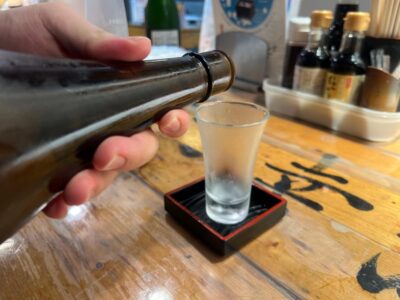
Shinjuku Food Tour (15 Dishes and 4 Eateries)
Read our review →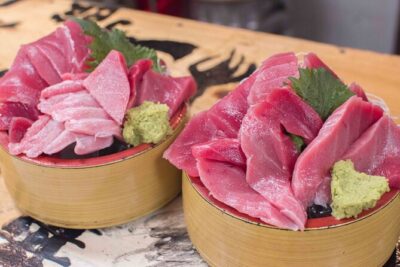
Best of Shinjuku: Izakaya Food Tour (4 Stops, 14+ Tastings)
Read our review →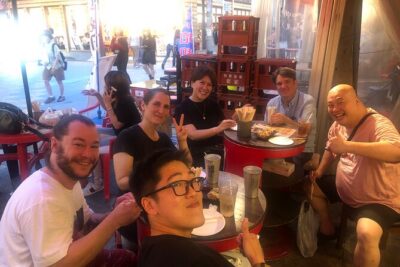
Hungry Osaka Street Food Tour:15 Tastings & 3 Drinks with a Local
Read our review →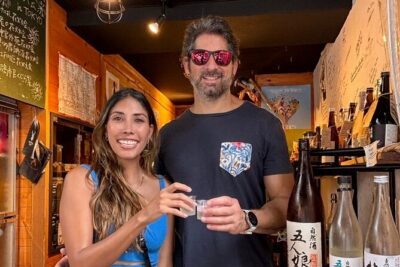
Browse the lists this tour appears in