
REVIEW · WALKING TOURS
Tokyo: Shibuya Highlights Walking Tour
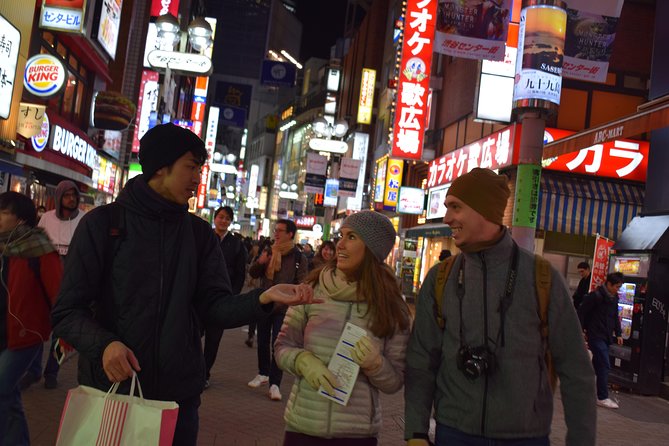
Shibuya Scramble is the star here, but the best part is seeing what lies beyond the flashing signs and packed sidewalks. You cross the famous intersection, then follow a local guide into restaurant streets, bar lanes, station shortcuts, and quieter corners that are easy to miss on your own. The upper-level view of the crossing gives you the photo most first-time visitors want without leaving you stranded in the middle of the crowd.
I like two things right away: the group size is capped at six, and the guide does more than point out landmarks. You get useful tips on ramen, restaurants, shopping, photo spots, and places where taking pictures is not appropriate. Guides such as Sakura, Hiroko, Fumino, Izumi, and Rick have been singled out for friendly, clear English and a warm local touch.
The main drawback is the clock. Ninety minutes is enough for a smart introduction, not a full tour of Shibuya, and the route cannot wait for late arrivals. The guide waits only five minutes at the meeting point, so you need to arrive early and allow extra time to find the Hachiko exit.
In This Review
- Key points at a glance
- Why this is a smart first look at Shibuya
- Meeting Hachi and crossing Shibuya Scramble
- Finding the best view of the crossing
- From neon streets to local bars and restaurants
- The quieter side of a crowded district
- What the small group changes
- Is the 90-minute length enough?
- English, accessibility, and booking flexibility
- Who will get the most from this walk?
- Should you book the Shibuya Highlights Walking Tour?
- FAQ
- Where does the Shibuya Highlights Walking Tour meet?
- How do I reach the meeting point?
- How long does the tour last?
- What language is the tour conducted in?
- How many people can join the tour?
- Does the tour include food or drinks?
- Is transportation included?
- Is the tour wheelchair accessible?
- Does the tour operate in bad weather?
- What happens if I arrive late?
Key points at a glance
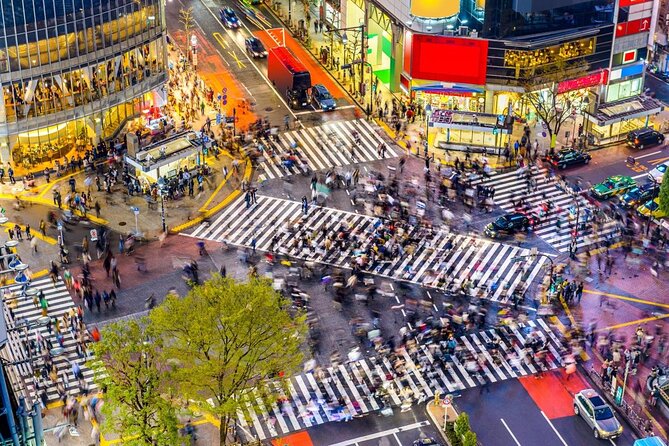
- A compact route through famous and less obvious Shibuya: You see the scramble, Hachi statue, food streets, bars, shops, and quieter local corners.
- A small group capped at six people: This makes it easier to ask questions and keep pace through crowded streets.
- Useful advice for the rest of your Tokyo stay: Guides share food, shopping, sightseeing, and photo suggestions suited to your interests.
- A strong photo opportunity above Shibuya Scramble: You get a wider view of the crossing than you can usually manage from street level.
- A guide-led introduction rather than a shopping tour: The focus is on orientation, local customs, neighborhood background, and what to explore afterward.
- Rain or shine operation: Bring an umbrella or raincoat, since the experience takes place outdoors.
Why this is a smart first look at Shibuya
Shibuya can feel like several neighborhoods packed into one. You have giant signs, department stores, rail lines, tiny drinking alleys, restaurants, arcades, and side streets all pressing against one another. I find that a local-led walk helps you make sense of the area before you spend hours wandering without a plan.
This tour begins at Hachi, the famous dog statue outside Shibuya Station. The statue is more than a meeting landmark. It gives your guide a natural way to explain Hachi’s story and the emotional place the dog holds in Tokyo’s popular culture. It also gives you a clear starting point in an area where station exits can otherwise be confusing.
From there, you head toward Shibuya Scramble. The crossing is often treated as a quick photo stop, but it is worth pausing to understand how the space works. Several streams of people move at once when the traffic lights change, creating the image that has made Shibuya famous around the world. Your guide helps you approach it with some context rather than simply pushing through the crowd.
The route then moves beyond the obvious sights. That change is important. You still get the neon, shops, and city energy, but you also see the restaurant lanes and bar streets that give Shibuya its local character. I would book this early in your stay because the recommendations can help shape the days that follow.
More Walking Tours in Tokyo
- Tokyo Tsukiji Fish Market Food and Culture Walking Tour
★ 5.0 · 3,184 reviews - Tokyo: Imperial Palace and Shogun Historical Walking Tour
★ 5.0 · 2,251 reviews - Tokyo: Shinjuku Local Bar and Izakaya Guided Walking Tour
★ 4.9 · 1,794 reviews
Meeting Hachi and crossing Shibuya Scramble
The meeting point is SHIBU HACHI BOX, the tourist information center in front of the Hachi statue. You should leave JR Shibuya Station through the Hachiko Exit, then look for the information center. At the desk, tell a staff member that you are joining the tour.
Give yourself more time than the map suggests. Shibuya Station is large, and arriving at the correct station does not mean you are near the correct exit. The guide can wait only five minutes, and late arrivals cannot join partway through the walk. That rule is strict but understandable: the group is moving through crowded public streets, and stopping to search for a missing participant would affect the whole route.
The opening explanation about Hachi helps set the tone. You are not just being marched from one photo stop to another. The guide provides background about the district and gives you a way to read what you are seeing.
Then comes the crossing. You will walk through the intersection at street level, surrounded by people heading in several directions. If this is your first visit, the experience can feel more exciting once you know where to look and when to move. It is also a good chance to watch the guide’s pace and learn how to stay together in a busy public space.
Finding the best view of the crossing
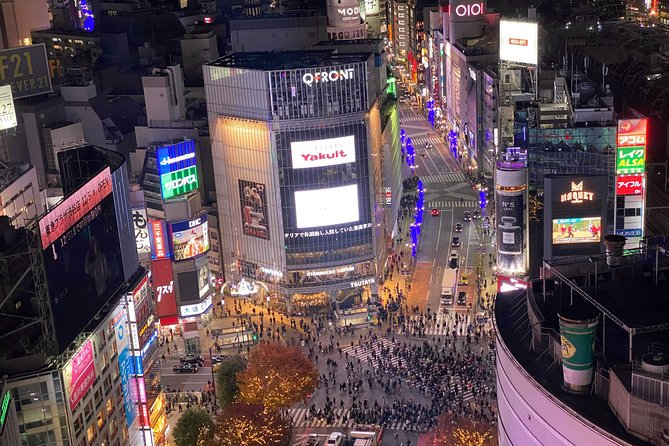
One of the tour’s most useful features is the search for a good viewpoint. Street level gives you the sensation of the crossing, but a higher vantage point lets you see its full pattern: the streams of pedestrians, the surrounding signs, the station, and the dense blocks beyond.
The exact viewing spot may vary, but the guide takes you to a place that many people would not locate easily on their own. That matters because Shibuya’s most famous view is often crowded, difficult to frame, or blocked by other people. Several guides also take photos for the group, so you are not limited to hurried selfies.
I would pay attention to the guide’s timing advice here. One participant found a late afternoon start in winter especially attractive as the daylight faded and the city lights came on. The tour lasts 90 minutes, so the look of Shibuya changes with the season and starting time. Check the available departures and choose a time that matches the kind of photos you want.
The tour does not promise a particular rooftop or paid observation deck, so you should not book it expecting a formal attraction with a long viewing session. Think of this as a short, well-placed stop within a neighborhood walk. Its value is that someone who knows the area takes you to the right kind of viewpoint without making you hunt for it.
From neon streets to local bars and restaurants
After the crossing, the route turns toward the streets filled with places to eat and drink. Shibuya is famous for nightlife, but a first-time visitor can have trouble judging which lanes are worth exploring and how the district changes away from the main roads.
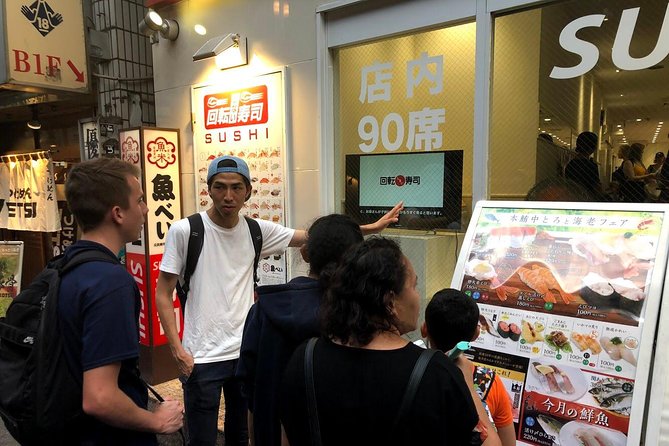
Your guide points out restaurants, bars, and pubs, then adds practical suggestions for later. The advice is one of the strongest reasons to take this tour. Guides have recommended ramen spots, lunch places, shops, popular stores, and quieter places to visit. You can ask about the kind of meal or neighborhood experience you want instead of relying only on signs and online searches.
The tour does not include food or drinks, so you do not stop for a tasting session. That keeps the price low and the route moving, but it also means you should plan a meal before or after the walk. If a restaurant catches your eye, save its name or take a photo of the entrance. Shibuya’s streets can look similar later, and one useful tip from a past participant was to photograph places along the way so they are easier to find afterward.
The bar and pub section is best understood as local orientation. You see the kind of places Shibuya is known for without having to commit to a nightlife plan during the tour. If you want a more food-focused activity, this is not the right format. If you want reliable ideas for where to eat after the walk, it works well.
Same city, a completely different kind of day:
- Mt Fuji and Hakone 1-Day Bus Tour Return by Bullet Train
★ 5.0 · 26,383 reviews - 1-Day Tokyo Bus Tour
★ 5.0 · 14,250 reviews - Tokyo: TOKYO SKYTREE® Admission ticket
★ 4.5 · 11,192 reviews - Tokyo: teamLab Planets TOKYO Digital Art Museum Entry Ticket
★ 4.6 · 9,779 reviews
The quieter side of a crowded district
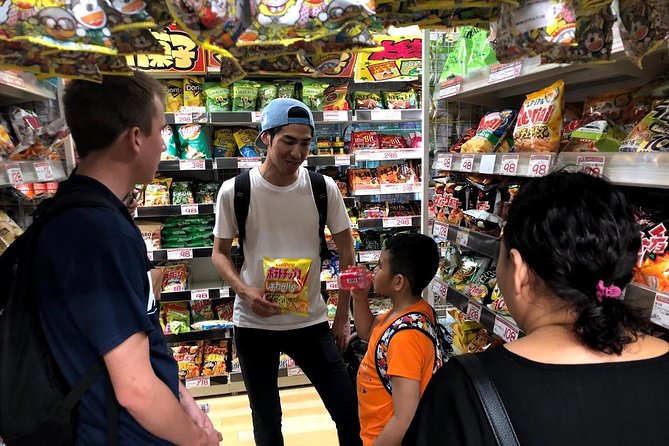
The route does not stay in the loudest part of Shibuya. You move away from the main crush and see less populated streets and corners that are easy to overlook. One guide-led stop included Drunkards Alley, while other parts of the walk used station shortcuts and calmer areas close to the main action.
That contrast gives the tour its shape. Shibuya is not only a wall of screens and a mass of pedestrians. It also has small-scale streets, local eating places, and pockets of calm. I like this part because it gives you a more useful mental map. Afterward, you can return to the big sights but also know where to go when you want a break.
The phrase hidden sights can sound grander than the experience itself, so keep expectations sensible. You are not entering secret buildings or restricted areas. You are seeing ordinary streets and useful corners that a guide can point out because they are part of the local routine. For many people, that is more valuable than another landmark.
The guide may also explain where photography is unwelcome. That sort of advice is easy to miss when you explore alone. It helps you avoid awkward moments and shows that good sightseeing in Japan includes paying attention to local manners, not just collecting images.
What the small group changes
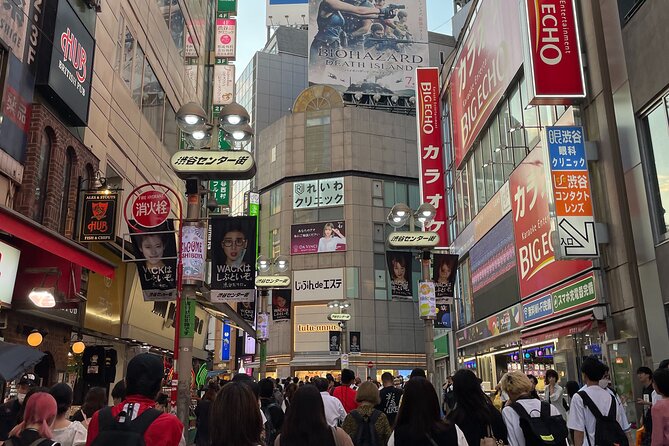
The tour allows no more than six participants. That is a major advantage in Shibuya, where a large group can block sidewalks and lose people at crossings. A small party can stop without creating as much trouble, and you can hear the guide more easily near traffic and crowds.
The format also leaves room for conversation. Participants have asked about restaurants, shops, local customs, and what to do next. Some departures have been private or nearly private because only one or a few people booked. That can turn a fixed walking route into a more personal exchange.
You should still understand the limit of a small group. Six people are not the same as a private tour, and the route remains 90 minutes long. The guide must balance different interests and keep the group moving. Still, the size is much more manageable than a tour with 20 or 25 people following a flag.
The named guides vary by departure. Sakura has been praised for her energy, restaurant advice, and local connection. Hiroko has been noted for keeping children interested and for explaining the district clearly. Fumino, Izumi, Rick, Yoshi, Roko, Hayato, and Mayuka have also led well-received walks. You cannot assume a particular guide unless the booking information confirms one, but the range of names shows that the experience is not built around a single personality.
Is the 90-minute length enough?
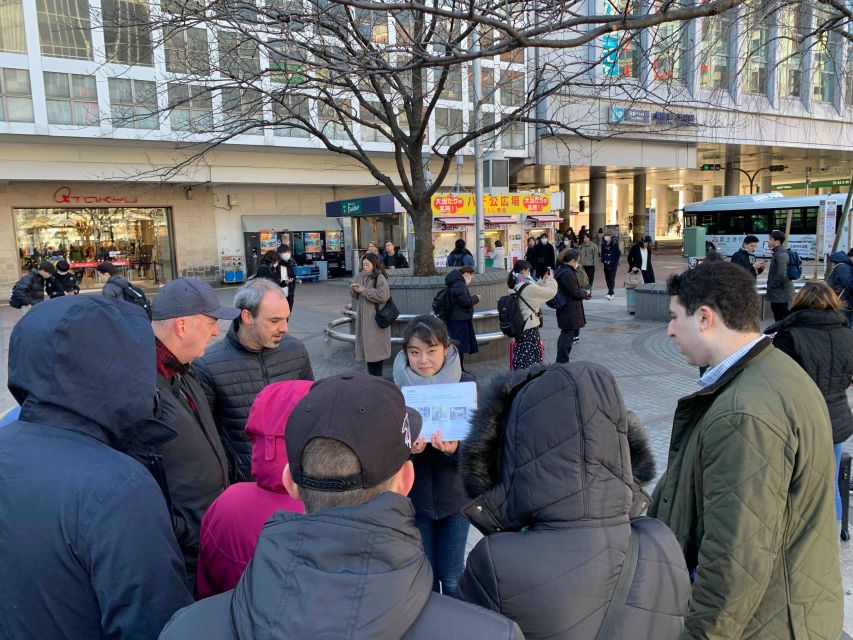
For a first orientation, yes. You can cover the key crossing, a viewpoint, food and nightlife streets, and some less crowded areas in an hour and a half. That makes the tour easy to fit into an arrival day or a morning before shopping.
For a full study of Shibuya, no. You will not have time to browse stores, eat a meal, enter several attractions, or linger at every stop. One participant felt the area covered was short, which is a fair criticism if you want a long neighborhood walk.
I see the short length as part of the value. At $19 per person, you are paying for a guided introduction, not an all-day commitment. The tour can save you time at the start of your visit, then you can return to the streets and places that suit you. It is especially useful for families, first-time visitors, and anyone who wants a local map in their head before exploring alone.
Comfortable clothes are the only stated clothing requirement, but sensible walking shoes are a practical choice. The tour runs in rain or sunshine, so carry an umbrella or raincoat when rain is forecast. You do not need to arrange transportation, and hotel pickup and drop-off are not included.
English, accessibility, and booking flexibility
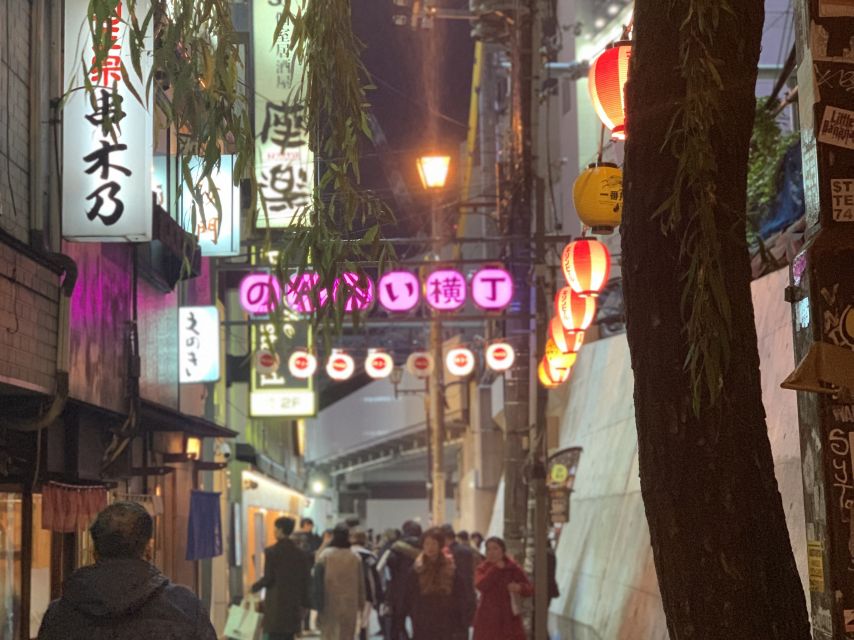
The live guide speaks English. The guide explanations have also been supported at times by a picture book with English text, which can help when discussing local details in a noisy street setting.
The tour is listed as wheelchair accessible. Because the route uses public streets and station areas, you should still consider asking the supplier about your specific mobility needs before booking, especially if you need detailed information about surfaces or crowd conditions. The provided information confirms accessibility, but it does not describe every section of the route.
The price is $19 per person, and food, drinks, and transportation are extra. You can cancel up to 24 hours ahead for a full refund, and the reserve-now, pay-later option lets you hold a place without paying immediately. Those terms are useful if your Tokyo schedule is still changing.
Who will get the most from this walk?
I would choose this tour if you are visiting Shibuya for the first time and want an introduction before tackling the district on your own. It also suits you if you care about food recommendations, local etiquette, and finding a good photo angle more than visiting indoor attractions.
Families can benefit from the short route and small group. A guide has kept children aged seven and ten interested, and another family with young adult children enjoyed the pace. The walk also worked well for a participant with an infant when the group was very small.
You may want something else if you dislike walking in crowds, want a long food tasting, or prefer to explore independently with no fixed schedule. You should also skip it if you cannot arrive at the meeting point on time. The five-minute waiting limit leaves almost no room for a wrong station exit.
Should you book the Shibuya Highlights Walking Tour?
I would book it near the start of a Tokyo visit, ideally before a planned shopping or restaurant day in Shibuya. For $19, the small group, local advice, crossing experience, and hard-to-find photo viewpoint make it a good-value orientation.
Choose a departure that suits the light if photography matters, and arrive early at SHIBU HACHI BOX. Bring rain protection, wear comfortable clothes, and save the names of restaurants and shops as you go. If you want to understand Shibuya quickly and then explore it with better bearings, this short walk earns its place.
FAQ
Where does the Shibuya Highlights Walking Tour meet?
The meeting point is SHIBU HACHI BOX, the tourist information center in front of the Hachi dog statue.
How do I reach the meeting point?
Leave JR Shibuya Station through the Hachiko Exit. When you reach SHIBU HACHI BOX, tell someone at the desk that you are joining the tour.
How long does the tour last?
The walking tour lasts 90 minutes.
What language is the tour conducted in?
The live tour guide speaks English.
How many people can join the tour?
The group is limited to six participants.
Does the tour include food or drinks?
No. Food and drinks are not included.
Is transportation included?
No. Transportation and hotel pickup and drop-off are not included.
Is the tour wheelchair accessible?
Yes. The activity is listed as wheelchair accessible.
Does the tour operate in bad weather?
Yes. It operates rain or shine. Bring an umbrella or raincoat when it rains.
What happens if I arrive late?
The guide can wait only five minutes at the starting point. Latecomers cannot join in the middle of the tour, so contact JLB Tours as soon as possible if you cannot arrive on time.
Just added around Tokyo
- Tokyo: Customizable Private Guided Walking Tour★ 4.5 · 129 reviews
- Private Harajuku Omotesando Architecture Tour★ 4.9 · 18 reviews
- Tokyo: Guided Helicopter Ride★ 4.9 · 24 reviews
- Tokyo: Guided Walking Tour of Tsukiji Market with Lunch★ 4.4 · 24 reviews
- Tokyo: Private Personalized Local Food Tour★ 4.5 · 101 reviews
- Tokyo GINZA: KONPARU Japanese Cabaret Show with Drink★ 4.8 · 38 reviews
- Tokyo: Guided Walking Tour of Tsukiji Market with Breakfast★ 4.4 · 134 reviews
- Tokyo: Gotokuji Cat Temple, Shinjuku Cat Cafe & 3D Cat Tour★ 4.9 · 38 reviews
Walking Tours, compared.
Kyoto Geisha Walking Tour: Gion District & Hidden Gems
Read our review →
Tokyo Tsukiji Fish Market Food and Culture Walking Tour
Read our review →
Gion Magical Night Walking Tour with Geisha Trivia
Read our review →
Imperial Palace and Shogun Historical Walking Tour
Read our review →
Gion Geisha District Walking Tour – Stories of Geisha
Read our review →
Asakusa Walking Tour with Sensoji Temple Visit
Read our review →
Kyoto Gion Geisha District Walking Tour – The Stories of Geisha
Read our review →Browse the lists this tour appears in