

REVIEW · WALKING TOURS
Tokyo: Shibuya Crossing & Hidden Streets Walking Tour
Shibuya is more than a giant crossing and a wall of video screens. This two-hour walk connects the district’s nuclear-age mural, tiny drinking alleyways, youth streets, rooftop park, nightlife quarter, and loyal bronze dog into one useful introduction. It gives you a quick sense of how old and new Tokyo sit side by side.
I like two things especially. First, the route has real variety: Nonbei Yokocho feels worlds away from Miyashita Park, even though both are close to the station. Second, the guides are praised for practical help, from taking photos at the crossing to suggesting food, vegan meals, drinks, and shopping areas. The main drawback is the pace. Two hours is enough for orientation, not for long stops or a slow look inside every district.
In This Review
- Key points to know before you book
- Why this two-hour Shibuya walk works
- Finding SABON Shibuya Mark City
- Nonbei Yokocho: a small taste of older Tokyo
- Myth of Tomorrow gives the route some weight
- Shibuya Crossing: more than a quick photograph
- Miyashita Park changes the pace
- Center Gai puts you in the middle of youth culture
- Maruyama-cho shows Shibuya after dark
- Hachiko gives the walk a clear finish
- What the guides add to the experience
- How much value do you get for $22?
- Who should book this walk?
- FAQ
- How long is the Shibuya walking tour?
- What is the price?
- Where does the tour start?
- Where does the tour finish?
- What language is the tour offered in?
- What sights are included?
- Is a guide included?
- Can I cancel for a refund?
- Do I need to pay when booking?
- Should you book the Shibuya walk?
Key points to know before you book
- A compact introduction to Shibuya: Seven stops fit into two hours, so you see the district’s main character without giving up half a day.
- The meeting point needs care: SABON Shibuya Mark City is on the building’s third floor, and the directions can be tricky for a first day in Tokyo.
- The route mixes famous and overlooked sights: Shibuya Crossing and Hachiko are familiar, while Nonbei Yokocho and Maruyama-cho add local texture.
- The guide makes the difference: Loc, Kumi, Rio, Grey, Daichi, Zach, and Annette are among the guides praised for clear explanations, friendly conversation, and useful recommendations.
- Solo visitors can benefit: Guides have helped with photos at the crossing and adjusted the pace or content for families, teenagers, and people with questions.
- The price is modest: At $22 per person, this works well as a first-day orientation, especially if you want help finding places to eat and shop afterward.
Why this two-hour Shibuya walk works
Shibuya can be confusing at first. The station is large, the streets change character quickly, and the best-known sights are scattered among department stores, narrow lanes, arcades, restaurants, and nightlife streets. A local guide gives the area a thread.
This is not a museum-heavy tour or a food crawl. The included service is the local guide, and the experience is built around walking, explanation, photos, and neighborhood suggestions. You should arrive ready to keep moving and listen outdoors.
The route also gives you a useful contrast. You begin with Taro Okamoto’s Myth of Tomorrow, a serious work about the effects of nuclear destruction, then move into the noise and motion of Shibuya Crossing. Later, the walk turns toward alleyways, public space, shopping streets, and nightlife. That change of mood is the point.
More Walking Tours in Tokyo
- Tokyo Tsukiji Fish Market Food and Culture Walking Tour
★ 5.0 · 3,184 reviews - Tokyo: Imperial Palace and Shogun Historical Walking Tour
★ 5.0 · 2,251 reviews - Tokyo: Shinjuku Local Bar and Izakaya Guided Walking Tour
★ 4.9 · 1,794 reviews
Finding SABON Shibuya Mark City
The tour starts at SABON inside Mark City on the third floor. This detail matters more than it may sound. Shibuya Station and Mark City can be hard to read when you are tired, carrying luggage, or arriving straight from the airport.
Give yourself extra time. The guide will hold a sign, but you should not count on finding the meeting point at the last second. The stated coordinates are 35.6586643, 139.6999525, which you can enter into your map app before leaving your hotel.
The tour warns against arriving late. That is sensible on a compact walking route. A delayed start can mean less time at the final stops, and the group may already be moving through the station area. If you are staying near Shibuya, locate Mark City in advance so you can focus on the walk rather than the starting point.
Nonbei Yokocho: a small taste of older Tokyo
Nonbei Yokocho, often translated as Drunkard’s Alley, is one of the route’s most appealing contrasts. The narrow lane offers a glimpse of an older Shibuya, with small drinking establishments and a more intimate scale than the broad streets around the station.
The scheduled stop is about 10 minutes, so expect an explanation and a quick look rather than a meal. That short visit is still useful. A guide can explain how this pocket fits into Shibuya’s past and point out details you might pass without noticing.
I would not book this walk expecting time to sit down in one of the bars. The route does not include food or drinks, and the stop is brief. Think of Nonbei Yokocho as a visual and cultural introduction, then ask your guide for suggestions if you want to return later.
Myth of Tomorrow gives the route some weight
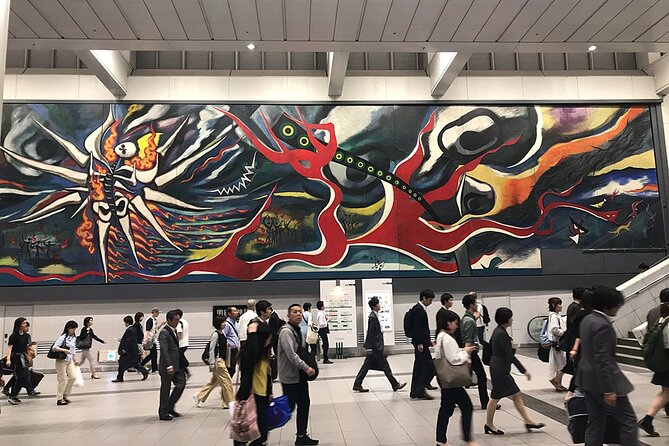
Many Shibuya walks rush straight to the crossing. This one starts with Myth of Tomorrow, a large mural by Taro Okamoto. Its subject is the impact of nuclear destruction, but the work also carries a message of hope.
That opening gives the tour more substance than a simple photo circuit. You begin by considering modern Japan’s painful past before moving into one of Tokyo’s most energetic commercial districts. The guide’s explanation can help you understand why the mural matters instead of treating it as just another station decoration.
The itinerary allows around 10 minutes here, including a photo stop and guided explanation. That is enough for an introduction, though anyone deeply interested in Okamoto’s art may want to return independently for a longer look.
Same city, a completely different kind of day:
- Mt Fuji and Hakone 1-Day Bus Tour Return by Bullet Train
★ 5.0 · 26,383 reviews - 1-Day Tokyo Bus Tour
★ 5.0 · 14,250 reviews - Tokyo: TOKYO SKYTREE® Admission ticket
★ 4.5 · 11,192 reviews - Tokyo: teamLab Planets TOKYO Digital Art Museum Entry Ticket
★ 4.6 · 9,779 reviews
Shibuya Crossing: more than a quick photograph
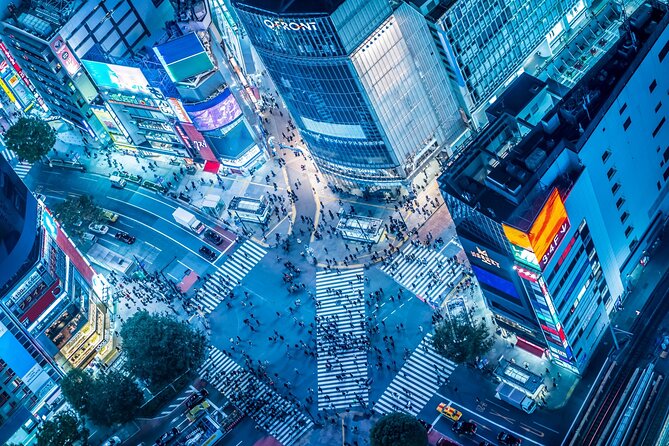
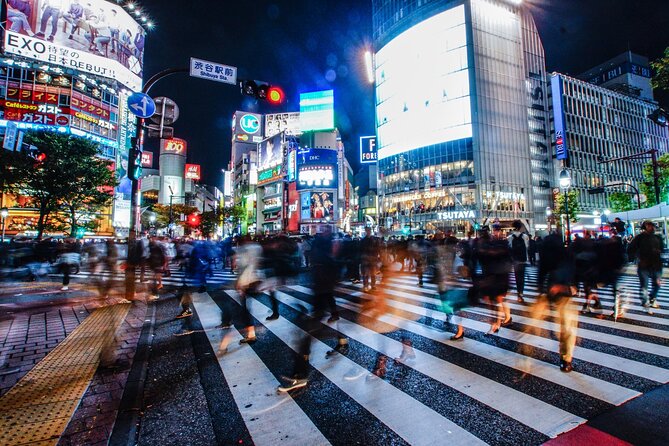
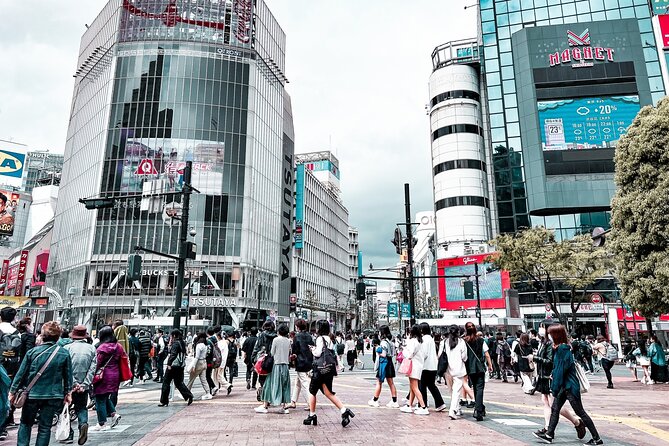
The crossing is the obvious star. At busy times, people stream across from several directions while giant signs and screens frame the scene. It is a short experience, but it gives you a clear picture of Shibuya’s public energy.
A guide is useful here for simple practical reasons. You may want help choosing where to stand, timing a photo, or understanding how to cross without stopping in the middle of the flow. Several visitors specifically appreciated help with photos, which is valuable if you are traveling alone.
The scheduled crossing stop lasts about 10 minutes. Do not expect a long discussion of every nearby building or a private viewing platform. This is the street-level experience, followed by guidance on what to notice and where to explore later.
The crossing can also be crowded and noisy. If you prefer quiet streets, this will be the most intense part of the walk. That is not a flaw, but it is worth knowing before you book.
Miyashita Park changes the pace
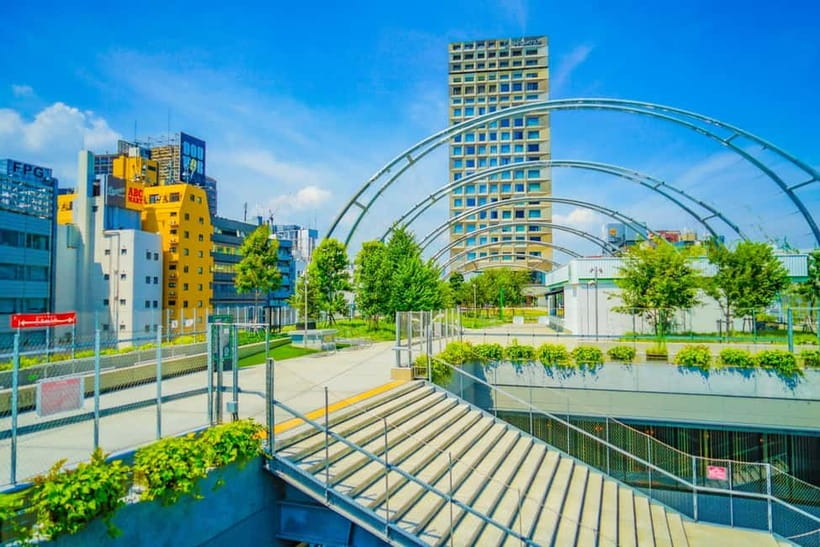
After the crossing and station area, the route reaches Miyashita Park for about 20 minutes. This is the longest stop, and the change in setting helps balance the crowded streets.
Miyashita Park is a multi-level urban park, giving you a more open place to pause and look at how Tokyo reuses limited city space. The stop is less about one historic object and more about modern city life, public space, and Shibuya’s younger feel.
I like this part because it prevents the tour from becoming a parade of intersections. You get a chance to slow down, hear the guide, and ask questions. Still, it is a public urban space, not a garden escape. Keep your expectations realistic. The attraction is its design and place in the district, not rural calm.
Center Gai puts you in the middle of youth culture
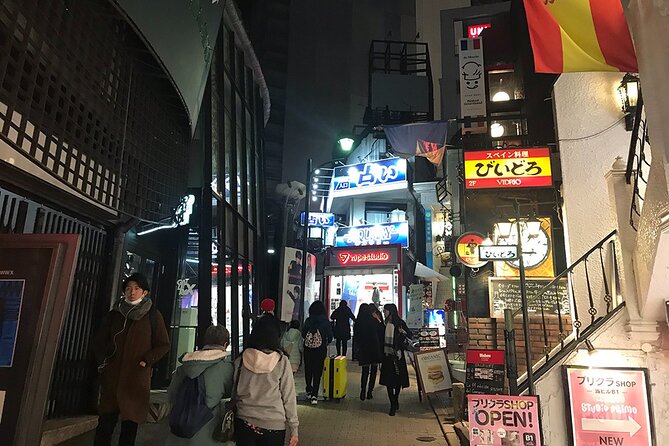
Center Gai brings the tour back into Shibuya’s commercial heart. This is one of the streets most associated with youthful style, shops, signs, restaurants, and late-day energy.
The 10-minute guided visit is best used as orientation. Your guide can explain what makes the district different from the nearby station zone and point out areas worth returning to for shopping or food. Several guides have also offered useful suggestions for vegan food and places to eat or drink, so this is a good moment to ask specific questions.
Center Gai is not a place where you should expect a quiet lecture. It is crowded, active, and full of distractions. That is exactly why a short guided pass works. You get the basic map, then can return later with more time and a clearer idea of what interests you.
Maruyama-cho shows Shibuya after dark
Maruyama-cho adds another layer. Its older streets are now linked with modern nightlife, making it a good example of Shibuya’s habit of changing without wiping away every trace of the past.
The stop lasts about 10 minutes. You will not tour nightlife venues as part of the stated route, but you will walk through the area and hear how its character has developed. If you are planning an evening meal or drinks, this is a practical place to ask your guide for suggestions.
The word nightlife is important here. The atmosphere may feel different depending on the time of day, and some people will find the area more interesting after sunset. The tour’s schedule can include daytime or early evening starts, so you should treat this as a neighborhood introduction rather than a full night out.
Hachiko gives the walk a clear finish
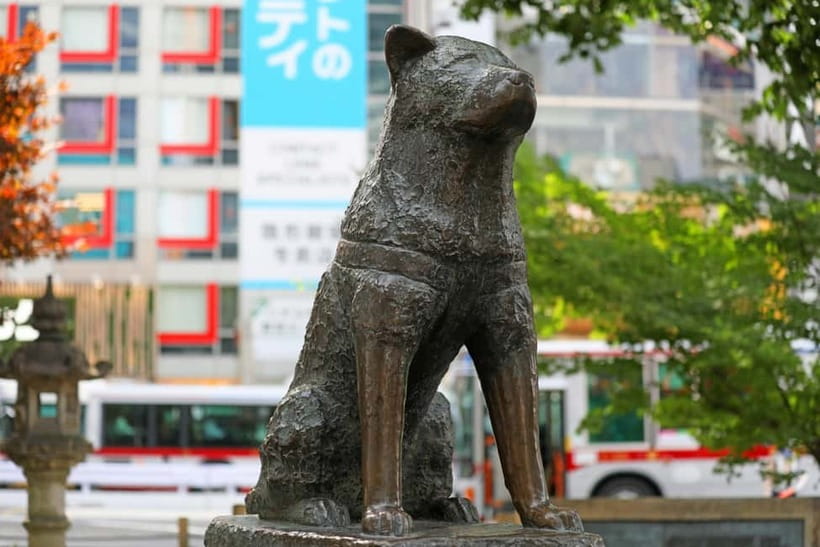
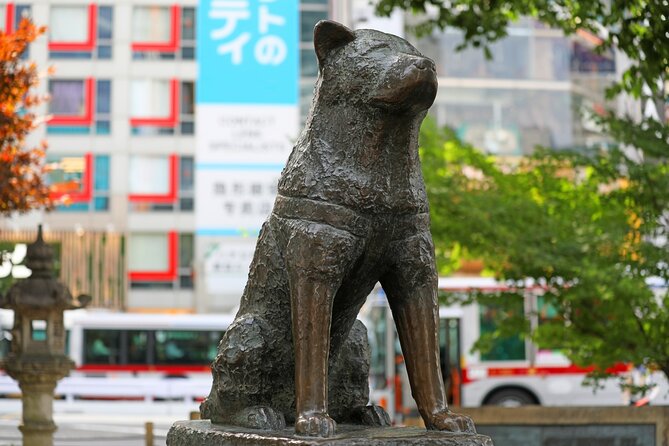
The tour ends at the Hachiko Memorial Statue, near the heart of Shibuya. Hachiko is known as a symbol of loyalty, and the statue has become one of the district’s most recognizable meeting points.
Ending here makes practical sense. You finish near a major landmark and can continue to the crossing, station, shops, or a meal. It also gives the walk a simple story arc, from Okamoto’s reflection on catastrophe to Hachiko’s story of devotion.
The statue is popular and often surrounded by people taking photos. Your guide can explain its importance, but you should not expect a quiet memorial setting. Use the ending to ask final questions and get directions for your next stop.
What the guides add to the experience
The guide is the heart of this walk. Names assigned on different dates have included Loc, Kumi, Rio, Grey, Daichi, Zach, and Annette. The strongest pattern is clear communication, friendly conversation, and an ability to answer questions about both Shibuya and Japan more broadly.
Loc is repeatedly praised for historical context, storytelling, photos, and practical advice. Rio has been appreciated for welcoming groups, adapting explanations for teenagers, and giving useful local recommendations. Grey has helped families and offered food and shopping suggestions, including vegan options. Daichi has been described as flexible about walking speed and questions.
That range matters. You are not simply memorizing facts at fixed stops. You can ask about where to eat, how the neighborhoods connect, or what to revisit later. One guide even helped a solo participant with photos at the crossing, a small service that can make the experience much easier.
Guide quality can vary by individual, of course. The supplied guide roster includes several people, so you may not get a specific name unless the booking system lets you request one. Still, the repeated praise for the team’s friendliness and clear English is a strong reason to consider this tour.
How much value do you get for $22?
At $22 per person, this is reasonably priced for a two-hour guided walk in central Tokyo. You are paying for local explanation and route planning, not entrance tickets, transport, meals, or a long specialist lecture.
The value is strongest if this is your first time in Shibuya. In two hours, you get the basic orientation needed to return on your own. You also save the time and uncertainty of trying to connect the mural, crossing, alley, park, youth district, nightlife quarter, and Hachiko statue yourself.
The value is lower if you already know Shibuya well or want extensive time at each stop. The schedule is brisk, with most stops limited to 10 minutes and Miyashita Park receiving 20 minutes. Independent exploration will let you linger, shop, eat, and photograph at your own pace.
The reserve-now-and-pay-later option can help if your plans are still shifting. Free cancellation is available up to 24 hours before the tour for a full refund. Check the available starting times when booking, since the activity lasts two hours but does not list one fixed departure for every date.
Who should book this walk?
I would recommend it to first-time Tokyo visitors, solo visitors who want help with photos, couples seeking an easy district introduction, and families who prefer a short activity rather than a full-day tour. It also suits anyone who wants practical food and shopping advice before exploring Shibuya independently.
The route works well for people curious about both modern Tokyo and older neighborhood traces. You get the famous crossing, but you also see Nonbei Yokocho and Maruyama-cho, where the district feels less like a postcard and more like a lived-in city.
You may want something else if your priority is food tasting, shopping time, nightlife entry, art museums, or a slow historical walk. There is no stated meal, admission ticket, or transport included. The focus is walking and explanation.
Wear comfortable shoes and keep your schedule flexible enough to arrive early. Shibuya’s station area can eat up time, and being late is the easiest way to weaken an otherwise efficient two-hour outing.
FAQ
How long is the Shibuya walking tour?
The tour lasts two hours.
What is the price?
The listed price is $22 per person.
Where does the tour start?
It starts at SABON Shibuya Mark City, inside Mark City on the third floor.
Where does the tour finish?
The walk finishes at the Hachiko Memorial Statue.
What language is the tour offered in?
The live guided tour is offered in English.
What sights are included?
The route includes Nonbei Yokocho, Myth of Tomorrow, Shibuya Crossing, Miyashita Park, Center Gai, Maruyama-cho, and the Hachiko Memorial Statue.
Is a guide included?
Yes. The local guide fee is included.
Can I cancel for a refund?
You can cancel up to 24 hours in advance for a full refund.
Do I need to pay when booking?
The reserve-now-and-pay-later option lets you book without paying anything today.
Should you book the Shibuya walk?
Book it if you want a short, well-rounded first look at Shibuya rather than a single famous photo stop. The route gives you context, practical neighborhood advice, and a sensible mix of major sights and less obvious streets for $22.
Skip it if you already know the district or want to spend your time eating, shopping, or exploring at your own speed. For most first-time visitors, though, the two-hour format is the sweet spot: short enough to fit into a packed Tokyo schedule, yet broad enough to show why Shibuya is more than its crossing.
Just added around Tokyo
- Private Memorable Tokyo Tour with English Speaking Driver★ 5.0 · 30 reviews
- Private Tokyo Custom Full-Day Tour by Chartered Vehicle★ 5.0 · 16 reviews
- Private Sightseeing to Mt Fuji and Hakone with English Driver★ 5.0 · 51 reviews
- Tokyo Photography Masterclass – Private Photography Lesson★ 5.0 · 25 reviews
- Private Mt. Fuji Day Trip from Tokyo with English-Speaking Driver★ 5.0 · 33 reviews
- 4 Day Tour – Mount. Fuji, Tokyo, Hakone, Kamakura and Yokohama★ 5.0 · 19 reviews
- Private Unforgettable Mt Fuji Tour with English Speaking Driver★ 5.0 · 142 reviews
- Private Tokyo Food Tour – A Journey Through Time Through Food★ 5.0 · 36 reviews
Walking Tours, compared.

Kyoto Geisha Walking Tour: Gion District & Hidden Gems
Read our review →
Tokyo Tsukiji Fish Market Food and Culture Walking Tour
Read our review →
Gion Magical Night Walking Tour with Geisha Trivia
Read our review →
Imperial Palace and Shogun Historical Walking Tour
Read our review →
Gion Geisha District Walking Tour – Stories of Geisha
Read our review →
Asakusa Walking Tour with Sensoji Temple Visit
Read our review →
Kyoto Gion Geisha District Walking Tour – The Stories of Geisha
Read our review →Browse the lists this tour appears in