
REVIEW · FOOD MARKET TOURS
Tokyo: Private Tsukiji Fish Market Tour with 3 food stops
Tsukiji is at its best when you treat it as more than a place to grab seafood. This two-hour private walk links market stalls with a Shinto shrine and a Buddhist temple, giving you food, local customs, and a little breathing room in one compact outing.
I like the three included tastings, since they remove some of the guesswork from a market packed with choices. I also like the private format. Your guide can slow down, answer questions, and adjust the visit to your pace instead of shepherding you through with a larger crowd.
The main consideration is depth. Some guides, including Shuto and Sowar, have been praised for their explanations and personal attention, but the experience can vary. If you want a long, detailed lecture on Tsukiji’s history, two hours may feel too short, and one past guest found the market commentary too light.
In This Review
- Five things to know before booking
- Starting at LAWSON Tsukiji 4 Chome Store
- Inside Tsukiji Uogashi Kaiko Bridge Building
- A quiet pause at Namiyoke Inari Jinja
- Three tastings through Tsukiji Outer Market
- Tsukiji Hongan-ji and the Buddhist side of the neighborhood
- Finishing near Tsukiji Station
- What $49 per person really buys
- The private format and guide quality
- Who should book this Tsukiji walk?
- Practical booking advice
- FAQ
- How long is the Tsukiji private tour?
- Where does the tour meet?
- Where does the tour finish?
- Are food tastings included?
- Which languages are available?
- Is the tour private and wheelchair accessible?
- Should you book this tour?
Five things to know before booking
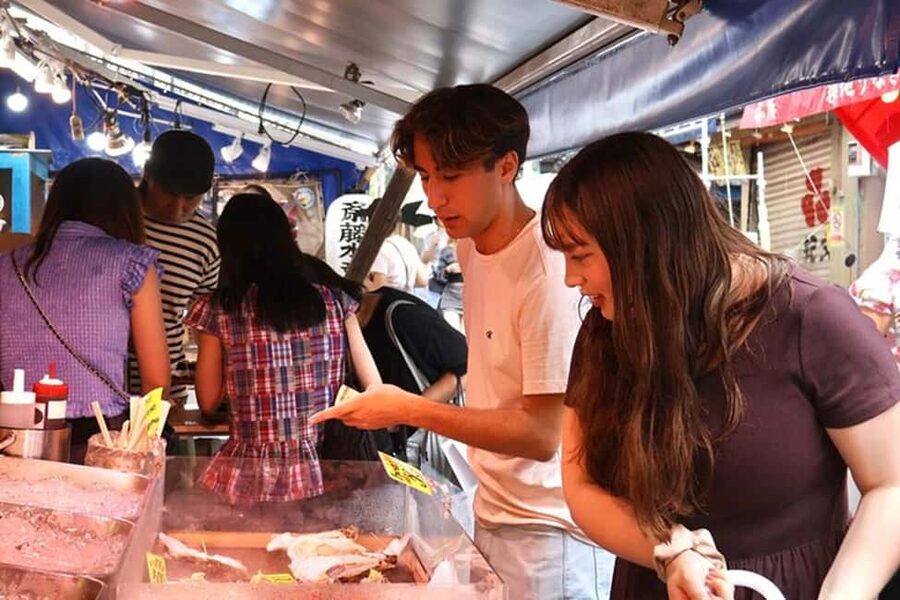
- Three food samples are included: Your guide selects three local foods, so you can taste the market without paying extra for the main food stops.
- The route mixes food with worship: Namiyoke Inari Jinja and Tsukiji Hongan-ji add a useful look at Shinto and Buddhism.
- It is fully private: You explore with your own group and guide, with no unrelated participants joining.
- The walk ends near Tsukiji Station: The meeting point is at LAWSON Tsukiji 4 Chome Store, and the tour finishes at Tsukiji Station.
- The guide can shape the morning: Sowar adjusted one visit for a guest who did not want to eat so early, while other guides have focused on local favorites and prayer customs.
- The value depends on your expectations: At $49 per person, it is a fair introduction to Tsukiji, but not a full culinary crawl or a long historical seminar.
Starting at LAWSON Tsukiji 4 Chome Store
The tour begins in front of LAWSON Tsukiji 4 Chome Store. That gives you a clear, practical meeting point in the market area rather than sending you to an obscure alley or a large station exit.
Arrive early. The guide waits 15 minutes after the scheduled start, but a no-show after that point receives no refund. If you are running late, contact the tour provider directly through the supplied email or emergency contact and wait for a response. The two-hour clock begins at the planned meeting time, so lateness can shorten your visit.
This matters in Tokyo, where a few missed turns or a slow station exit can eat into a short tour. Have the meeting address ready on your phone, and allow extra time if you are coming from another part of the city.
The guide speaks English or Japanese, and the group is private. That combination is useful if you have questions about food, customs, or the best way to approach a stall. It also means the tour is not locked into the pace of a larger group.
More Food Market Tours in Tokyo
- Tokyo: Shinjuku Food Tour (13 Dishes at 4 Local Eateries)
★ 5.0 · 6,603 reviews - Tokyo Tsukiji Fish Market Food and Culture Walking Tour
★ 5.0 · 3,184 reviews - Tokyo: Shinjuku Food Tour (15 Dishes and 4 Eateries)
★ 4.9 · 2,033 reviews
Inside Tsukiji Uogashi Kaiko Bridge Building
The first stop is Tsukiji Uogashi Kaiko Bridge Building, with about 15 minutes to look around. This provides a quick introduction to the market setting before the longer food portion begins.
Do not expect 15 minutes to cover every corner. Think of this as a short orientation. You can get a feel for the market’s working food culture, watch the movement around the shops, and ask your guide what you are seeing before heading onward.
This early stop is especially useful if Tsukiji is your first Japanese food market. A guide can explain what belongs to a shop, what is intended for immediate eating, and how to move politely through narrow commercial spaces. The quality of that explanation will depend on your individual guide, so ask direct questions if you want more than a quick introduction.
The compact timing also keeps the tour moving. You are not spending half the visit in one building before reaching the main tasting area.
A quiet pause at Namiyoke Inari Jinja
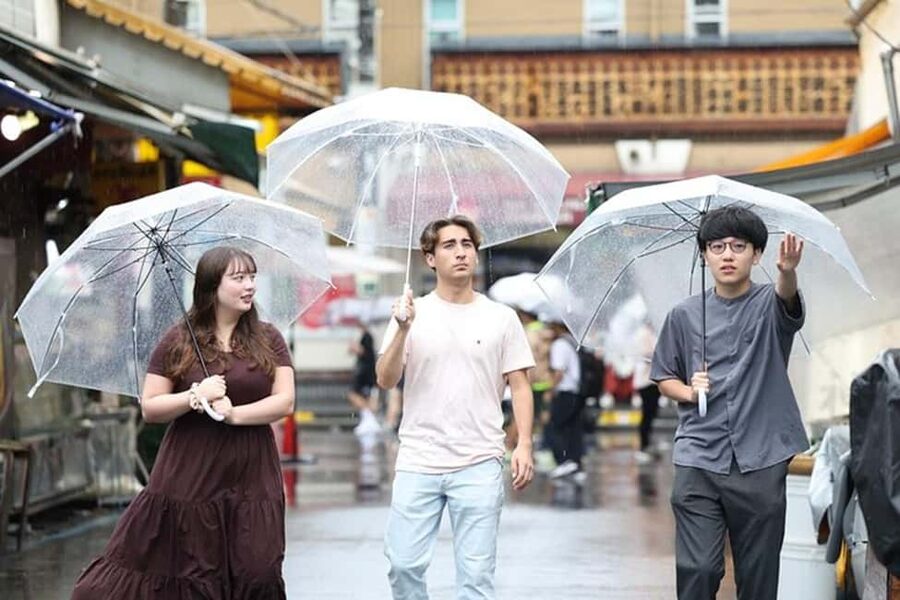
Next comes Namiyoke Inari Jinja, a Shinto shrine visited for about 10 minutes. This is a welcome change of pace after the market’s food stalls and commercial energy.
The shrine gives your guide a chance to explain basic Shinto customs. One particularly useful detail from the guide-led experience is instruction on how to pray at both the shrine and the Buddhist temple later in the route. That kind of practical help is valuable because Japanese religious sites have their own customs, and a little guidance helps you take part respectfully.
Ten minutes is enough for a short visit and an explanation, but not for an extended historical talk. If the shrine interests you, ask about its connection to the market and local workers. The tour description promises cultural context, but it does not specify the full depth of the shrine commentary.
I like this stop because it prevents the tour from becoming a simple eat-and-leave outing. You get a glimpse of how food, work, and religious practice meet in the same neighborhood.
Three tastings through Tsukiji Outer Market
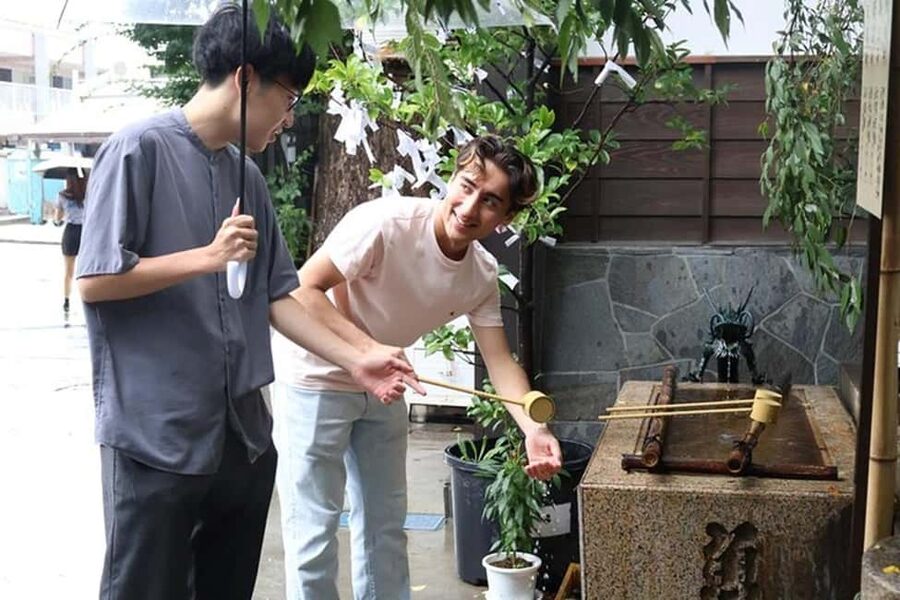
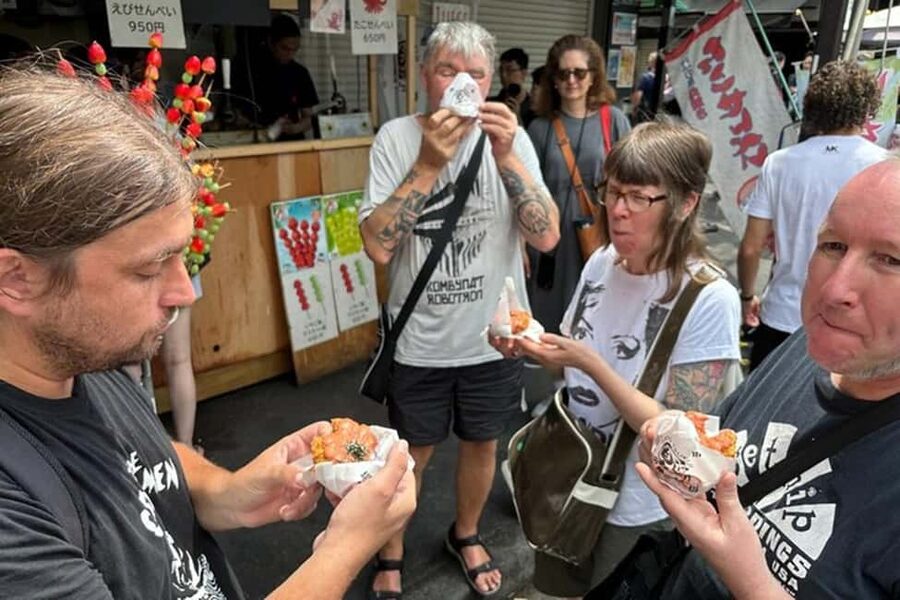
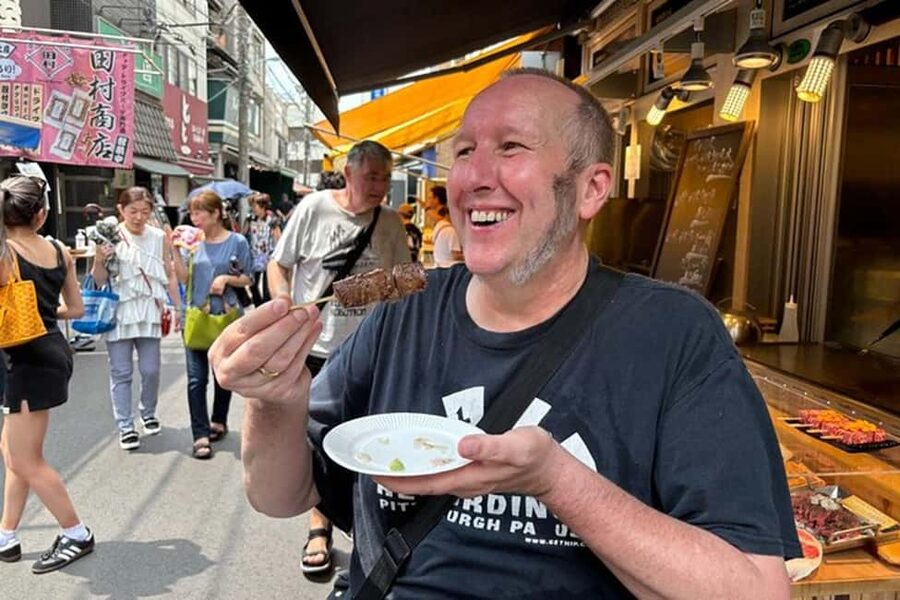
The longest part of the experience is the Tsukiji Outer Market, with about 55 minutes for street food, tasting, and browsing. This is where the tour earns most of its $49 price.
Three must-try local foods are included. The guide selects them, so the exact choices are not fixed in the information provided. That is both a benefit and a limitation. You receive local recommendations rather than a standard menu, but you cannot book this tour expecting a particular dish.
A good approach is to tell the guide about dietary restrictions, dislikes, or foods you have already tried at the start. The guide may be able to adjust the choices, although no specific dietary accommodation is promised. Also tell the guide if you are not hungry. Sowar adapted one visit for someone who felt it was too early to eat, showing that the private format can allow some flexibility.
The tastings are not the same as a full meal. Three samples can introduce you to Tsukiji’s flavors, but you may still want lunch afterward, especially if you have a large appetite. Additional food and drink purchases are not included.
I like the tasting structure for a first visit. Tsukiji can feel like a wall of choices, and a local guide gives you a starting point. You can spend less time wondering which stall to choose and more time noticing how the market works.
The food portion also offers the best opportunity to ask useful questions:
- Why is this item popular locally?
- Is it normally eaten on the spot?
- What is the best way to eat it?
- Which foods are worth buying later?
- Where do local people stop for a drink or snack?
The guide may have strong personal recommendations. One guide was praised for showing local favorites, and another for giving good food and drink suggestions. Those small tips can be more useful than a long list of famous stalls because they help you decide what to do after the tour ends.
Still, set your expectations carefully. One rating specifically found that the market explanations lacked enough context about history, culture, and daily life. That criticism is fair to keep in mind. The tour promises a friendly local guide and selected tastings, not a specialist lecture on fish commerce or Japanese food history.
Same city, a completely different kind of day:
- Mt Fuji and Hakone 1-Day Bus Tour Return by Bullet Train
★ 5.0 · 26,383 reviews - 1-Day Tokyo Bus Tour
★ 5.0 · 14,250 reviews - Tokyo: TOKYO SKYTREE® Admission ticket
★ 4.5 · 11,192 reviews - Tokyo: teamLab Planets TOKYO Digital Art Museum Entry Ticket
★ 4.6 · 9,779 reviews
Tsukiji Hongan-ji and the Buddhist side of the neighborhood
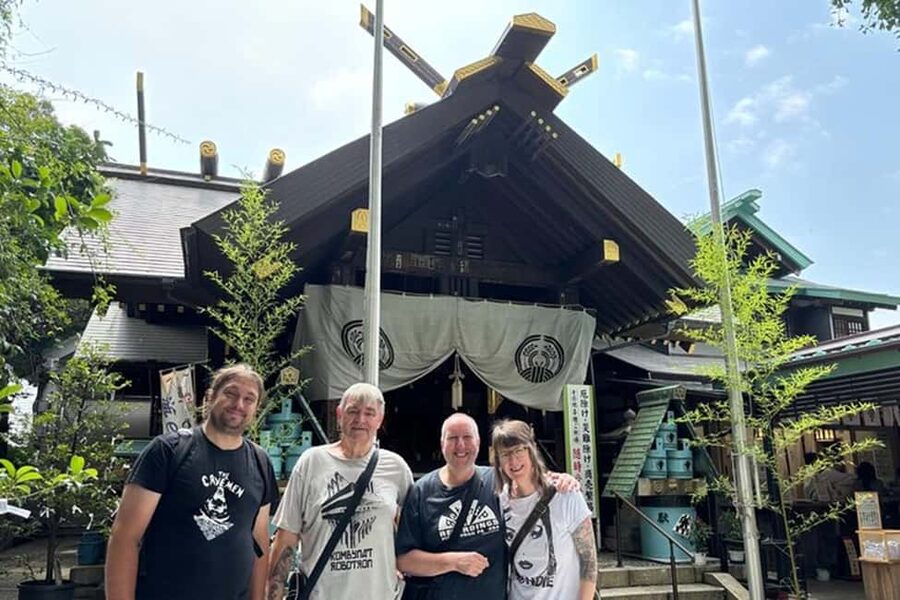
The route then moves to Tsukiji Hongan-ji for about 30 minutes of sightseeing. This is the longest single cultural stop and gives the food-focused walk a second religious viewpoint.
The tour pairs a Shinto shrine with a Buddhist temple, which helps you see two major strands of Japanese religious life in one short route. Your guide can explain how to behave at the temple and how the visit differs from the shrine stop.
The temple is also a useful place to slow down. After the market’s stalls and tasting activity, half an hour allows time for sightseeing and questions without making you rush straight to the finish.
The exact depth of the temple explanation will depend on the guide. Shuto was praised for explaining history and teaching proper prayer at both religious sites. If you have a strong interest in architecture, worship, or local history, say so clearly. A private tour gives you a better chance of shaping the conversation than a fixed group walk.
The stop also adds value for people who are not focused only on seafood. You still get the market, but the route has enough culture to suit a mixed-interest couple or family.
Finishing near Tsukiji Station
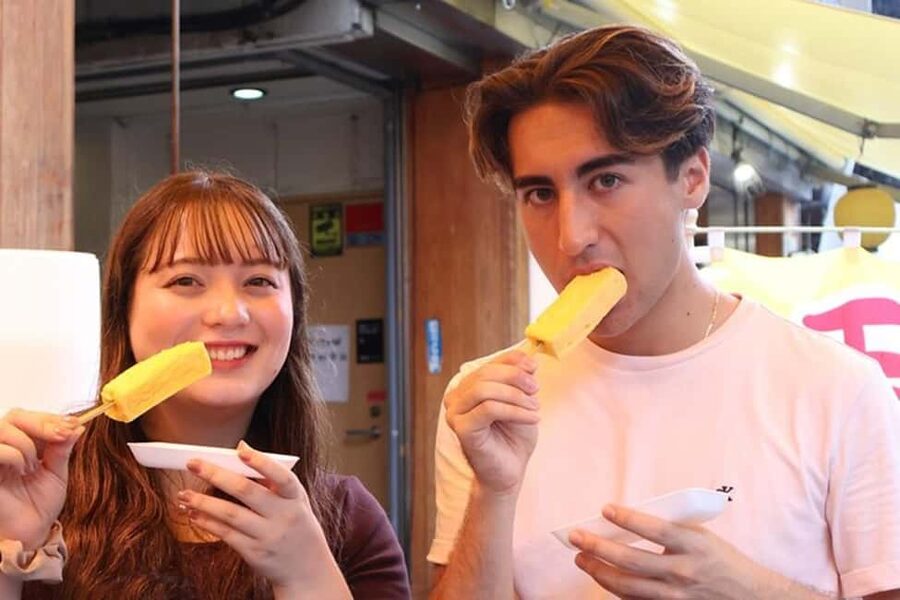
The tour ends at Tsukiji Station. This is convenient if you want to continue sightseeing, return to your hotel, or find a larger meal after the tastings.
The route is a walking tour, so wear comfortable shoes. The activity is listed as wheelchair accessible, although the market environment can include tight spaces and active pedestrian areas. If you use a wheelchair, contact the provider before booking to confirm that the exact route and food stops suit your needs.
Because the tour lasts only two hours, the ending is clean and useful. You are not left in an unfamiliar part of Tokyo with another long transfer. You can continue your day from the station or stay nearby for more food.
What $49 per person really buys
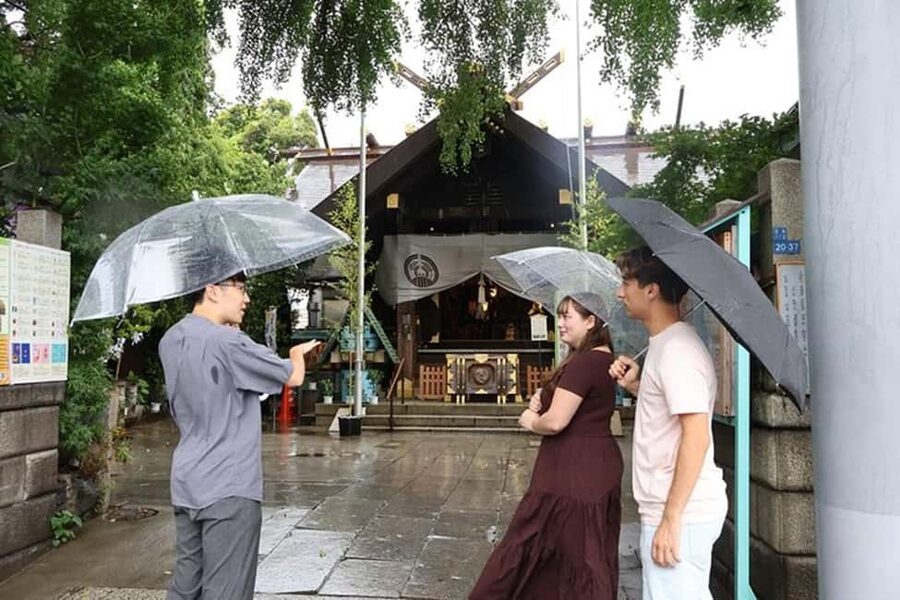
At $49 per person, this is not the cheapest way to wander Tsukiji. You can walk through the area independently and buy snacks one at a time. The price makes more sense if you value three things: a private guide, three selected tastings, and a cultural route that includes both a shrine and a temple.
A private booking is the biggest value point. You are not sharing the guide with strangers, and you can ask questions that match your interests. For two people, the total cost is higher than a self-guided visit, but the personal attention may justify it for a first day in Tokyo.
The included food also helps control your spending. You know three key tastings are part of the price, while extra purchases remain your choice. If you are careful with food spending, you can treat the included samples as your main market meal and decide later if you want more.
The score of 4.7 from 15 ratings suggests a strong experience overall, but the range matters. The most praised features are the guides’ friendliness, flexible pace, food recommendations, and ability to explain prayer customs. The weak point is inconsistent depth in the market storytelling.
I would book it for an introduction, not as the final word on Tsukiji. If you want a comfortable first look with food and culture in one package, the price is reasonable. If you already know the market and want detailed professional interpretation, you may find the tour too basic.
The private format and guide quality
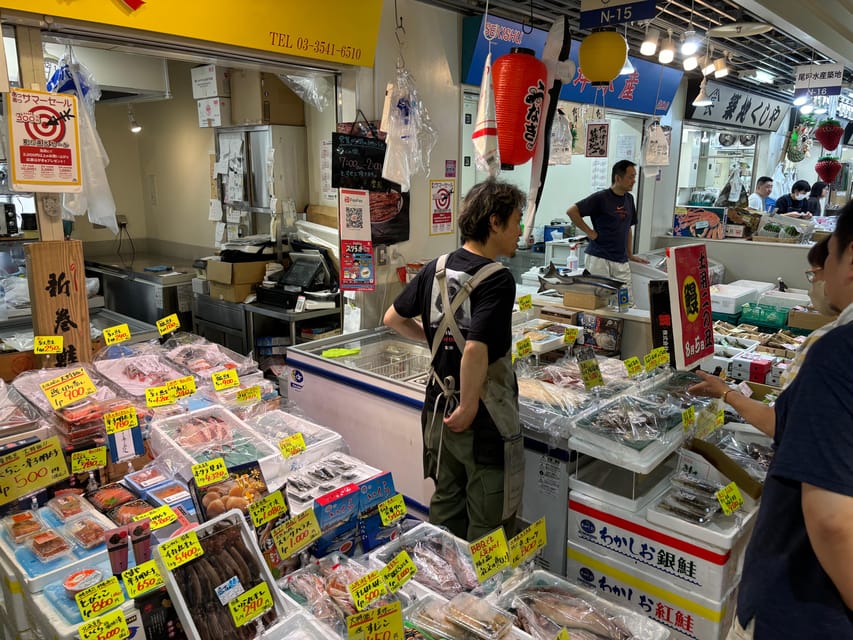
The private setup changes the feel of the tour. You can stop for a question, move at a relaxed pace, or spend more time on a favorite food or cultural point. There are no other participants to accommodate.
It also means your experience depends more on the assigned guide. Shuto has been praised for history, market knowledge, and teaching correct shrine and temple etiquette. Sowar was described as professional, personable, and able to adjust the visit when eating early did not suit the group.
Those are useful signs, but the feedback is not uniform. One person wanted more explanation about the market’s history, culture, and daily life. Another liked the overview but wanted more insider facts. That tells you how to get the most from the booking: arrive with questions and make your interests clear.
Ask for more context if the guide is moving too quickly. Ask for food and drink suggestions if you want practical advice. Ask about prayer steps at the shrine and temple if cultural etiquette matters to you. A private tour gives you room to do this.
The guide’s personality is also important. Several ratings praised friendly conversation and a relaxed visit. That suits people who prefer an informal walk over a formal lecture.
Who should book this Tsukiji walk?
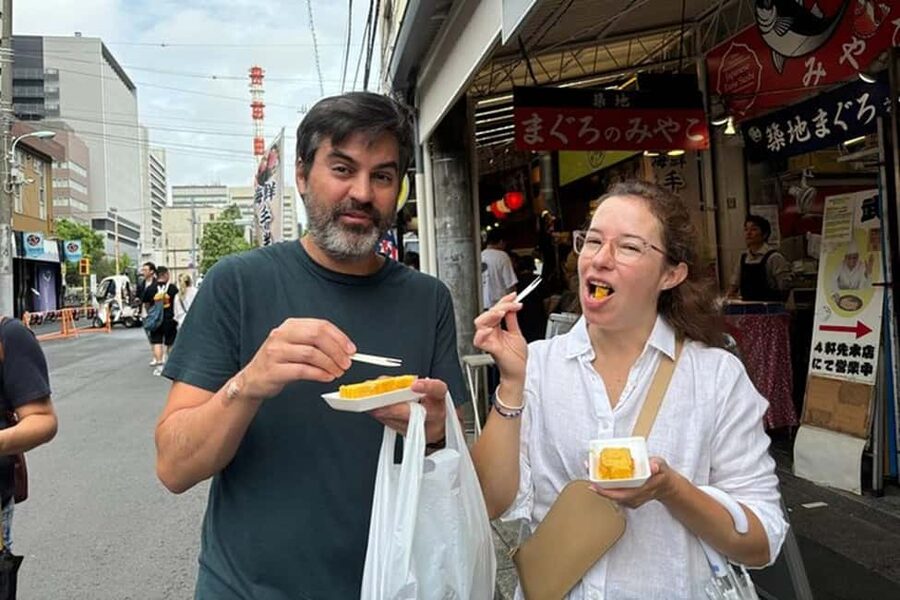
I would recommend this experience to:
- First-time visitors who want a simple introduction to Tsukiji
- Couples or families who prefer a private pace
- People who want food tastings but do not want to plan every stall themselves
- Visitors interested in both market culture and Japanese religious customs
- Anyone who wants English or Japanese guiding
- People who value local food recommendations and casual conversation
It is less suitable if you want a large number of tastings, a sit-down meal, or a detailed specialist account of Tsukiji’s development. It may also disappoint independent food experts who already know exactly which stalls they want to visit.
The two-hour length works well as a morning activity or as a first stop before a wider Tokyo day. It gives you an introduction without taking over your schedule.
Practical booking advice
You can cancel up to 24 hours before the tour for a full refund, and the reserve-now, pay-later option keeps your plans flexible. The starting times vary, so check availability for the date you want.
Remember that the tour time starts at the scheduled meeting time. Arriving late can reduce your time in the market, and failing to appear within 15 minutes counts as a no-show unless you have contacted the provider in advance.
Photos are included and sent after the tour. That is a pleasant extra, especially if you prefer to keep your phone away while eating or listening.
Additional expenses are not included. Bring money or a payment method for anything beyond the three selected foods, including extra snacks and drinks.
FAQ
How long is the Tsukiji private tour?
The walking tour lasts two hours.
Where does the tour meet?
Your guide meets you in front of LAWSON Tsukiji 4 Chome Store.
Where does the tour finish?
The tour finishes at Tsukiji Station.
Are food tastings included?
Yes. Three local foods selected by the guide are included in the tour price. Additional food and drink purchases are not included.
Which languages are available?
The live guide is available in English or Japanese.
Is the tour private and wheelchair accessible?
Yes. It is a private group experience and is listed as wheelchair accessible.
Should you book this tour?
Book it if you want a relaxed first taste of Tsukiji with three included foods, a private guide, and two short cultural visits. The combination is well chosen, and the guide’s flexibility can make the morning feel personal rather than scripted.
Skip it if you want a full meal, many tastings, or detailed academic-level market history. The experience is strongest as a friendly introduction, especially when your guide offers personal recommendations and explains shrine and temple customs. At $49 per person, it is a sensible choice for that purpose, as long as you arrive ready to ask questions and keep your expectations focused on an overview rather than an exhaustive study of Tsukiji.
More Food in Tokyo
- Tokyo Night Foodie Tour in Shinjuku – Seasonal Sushi, Wagyu Beef
★ 5.0 · 1,161 reviews - Tokyo: Tsukiji Fish Market Food and Culture Walking Tour
★ 4.7 · 757 reviews - Tsukiji Fish Market: Street Food & Culture Walking Tour
★ 5.0 · 669 reviews - Tsukiji Fish Market Small-Group Food Walking Tour
★ 5.0 · 621 reviews
More Food & Drink in Tokyo
- Best of Shinjuku: Izakaya Food Tour (4 Stops, 14+ Tastings)
★ 5.0 · 1,863 reviews - Tokyo: Tsukiji Fish Market Food and Walking tour
★ 5.0 · 1,724 reviews - Eat and Drink Like a Local: Tokyo Ueno Food Tour-Taverns&Ramen
★ 5.0 · 957 reviews - Tokyo: Shibuya Food Tour (13 dishes and 4 Eateries)
★ 5.0 · 770 reviews
Just added around Tokyo
- Private Memorable Tokyo Tour with English Speaking Driver★ 5.0 · 30 reviews
- Tokyo Photography Masterclass – Private Photography Lesson★ 5.0 · 25 reviews
- Private Tokyo Custom Full-Day Tour by Chartered Vehicle★ 5.0 · 16 reviews
- Private Sightseeing to Mt Fuji and Hakone with English Driver★ 5.0 · 51 reviews
- Private Mt. Fuji Day Trip from Tokyo with English-Speaking Driver★ 5.0 · 33 reviews
- 4 Day Tour – Mount. Fuji, Tokyo, Hakone, Kamakura and Yokohama★ 5.0 · 19 reviews
- Private Unforgettable Mt Fuji Tour with English Speaking Driver★ 5.0 · 142 reviews
- Private Tokyo Food Tour – A Journey Through Time Through Food★ 5.0 · 36 reviews
Food Market Tours, compared.
Shinjuku Food Tour (13 Dishes at 4 Local Eateries)
Read our review →
Tokyo Tsukiji Fish Market Food and Culture Walking Tour
Read our review →
Shinsekai Food Tour with 13-15 Dishes at 5 Eateries
Read our review →
Osaka Food Tour: 13 Dishes at 5 Local Eateries
Read our review →
Shinjuku Food Tour (15 Dishes and 4 Eateries)
Read our review →
Best of Shinjuku: Izakaya Food Tour (4 Stops, 14+ Tastings)
Read our review →
Hungry Osaka Street Food Tour:15 Tastings & 3 Drinks with a Local
Read our review →
Browse the lists this tour appears in