
REVIEW · GARDEN & PALACE TOURS
Tokyo Private Tour! Edo Castle & Imperial Palace East Gardens
The best part of this tour is the way it turns a pleasant garden walk into a readable chapter of Tokyo’s past. You’ll pass through Ote-mon Gate, see the remains of Edo Castle, and stroll through Ninomaru Garden while your guide explains how shoguns, emperors, and modern Japan connect.
I like two things right away: the private format, which lets you ask questions and set the pace, and the guides’ range of subjects. Naoko, Mikio, Shigeru, Akiyoshi, Yoshiko, and others have been praised for explaining history, Japanese life, plants, and the present role of the Imperial Family. The main catch is simple: the gardens are free, and this tour does not enter the Inner Palace, so its value depends on how much you want an expert guide.
In This Review
- Key points to know before you book
- What this two-hour Tokyo walk actually covers
- Starting at Wadakura Fountain National Park
- Ote-mon Gate and the first sense of old Edo
- Edo Castle ruins and the story beneath your feet
- Ninomaru Garden and the quieter side of the palace grounds
- How much the private guide adds
- The private pace works well for families and curious adults
- Practical planning for weather, walking, and timing
- What the 98 percent recommendation tells you
- Should you book Tokyo Private Tour: Edo Castle and East Gardens?
- FAQ
- Does the tour enter the Imperial Palace?
- How long does the experience last?
- Is this a private tour?
- Where does the tour begin and end?
- Is admission to the East Gardens included?
- Can I cancel for a full refund?
Key points to know before you book
- Edo Castle ruins give the walk a strong historical focus, even though the original castle buildings are no longer intact.
- Ote-mon Gate and Ninomaru Garden are core stops, along with the palace grounds, old bridges, trees, flowers, and heritage buildings.
- You get a private guide for about two hours, not a large shared group.
- The Imperial Palace itself is not open on this experience, and admission to the Inner Palace is not included.
- Guides can shape the walk around your questions and pace, with several guides praised for clear English and patient explanations.
- Bring practical heat and baggage plans, since the tour is outdoors and entry includes a baggage inspection.
What this two-hour Tokyo walk actually covers
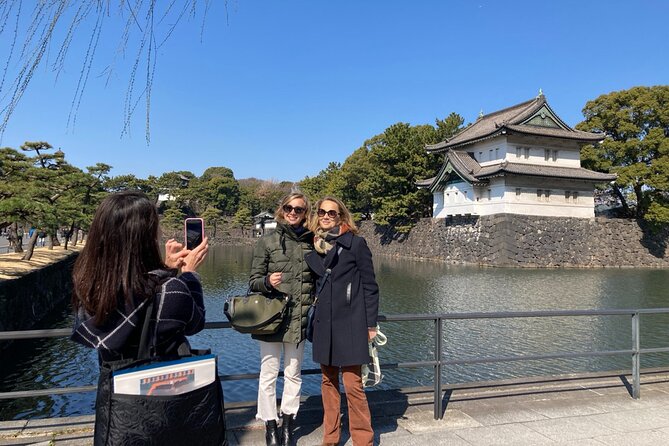
This is a walking tour of the Imperial Palace East Gardens, not a palace interior visit. That distinction matters. The name can make you picture grand reception rooms or a guided look inside the emperor’s residence, but you remain in the public East Gardens and surrounding grounds.
That is not a small area of Tokyo history. The gardens occupy part of the former Edo Castle site, where the Tokugawa shoguns ruled Japan during the Edo period. You’ll see stonework, gates, garden design, open spaces, and castle remains rather than a fully rebuilt fortress.
Your guide handles the route, beginning at Wadakura Fountain National Park and returning you to the same meeting point after roughly two hours. That makes the outing easy to pair with another Tokyo activity, provided you leave enough time to reach the fountain and do not schedule something far across the city immediately afterward.
The private setup is useful here. You are not simply following a flag through a garden. You can stop to ask about the royal family, the shogunate, Japanese customs, plants, or the changes from old Tokyo to modern life. Several guides have been praised for answering detailed questions instead of rushing through prepared facts.
More Garden & Palace Tours in Tokyo
- Tokyo: Imperial Palace and Shogun Historical Walking Tour
★ 5.0 · 2,251 reviews - Tokyo Castle & Imperial PalaceーShogun Walking Tour
★ 4.7 · 1,068 reviews - Tokyo: Imperial Palace Japanese History Walking Tour
★ 4.9 · 987 reviews
Starting at Wadakura Fountain National Park
The meeting point is Wadakura Fountain National Park at 3-1 Kōkyogaien in Chiyoda City. This is a sensible place to begin because it puts you near the palace grounds and gives the guide a clear place to meet your group.
The activity ends back at the same point. That round-trip arrangement is convenient if you are using public transportation or want to continue exploring central Tokyo afterward. The tour is listed as being near public transportation, though you should still allow time to find the exact fountain area.
Before entering the palace grounds, expect a baggage inspection. This is especially important if you have been shopping. Japanese knives or other objects that could be treated as weapons should be left in a coin locker or similar storage before the meeting.
That rule is easy to overlook on a day that combines sightseeing with shopping in Tsukiji or Asakusa. Plan your purchases around the tour rather than arriving with a shopping bag full of knives or similar items.
Ote-mon Gate and the first sense of old Edo
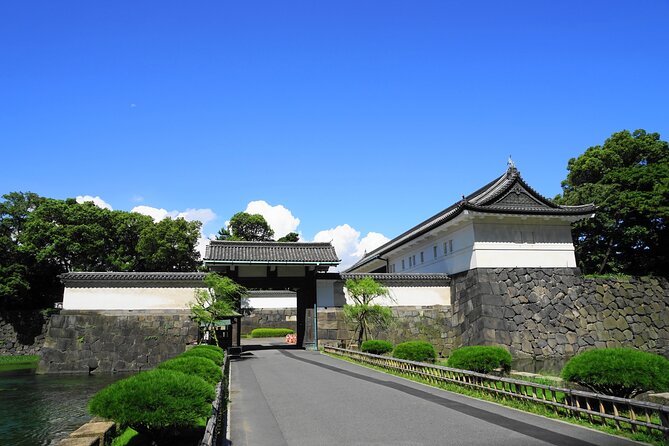
Ote-mon Gate is one of the main historical entry points connected with the former castle grounds. It gives the walk a strong beginning because the route moves quickly from modern Tokyo into a place shaped by the political order of Edo Japan.
Here, a guide can explain why gates mattered, how castle compounds were organized, and how authority was displayed through walls, entrances, and controlled movement. The value is not only in looking at old stone and timber. It is in understanding what those structures were meant to do.
You may also see an old bridge and historic buildings or remnants along the route. The tour description promises beautiful nature as well as heritage features, so the experience shifts between garden scenery and political history.
This balance works well for people who do not want a museum lecture. You get fresh air, open paths, and photo stops, but the guide gives the setting a purpose. A good explanation can help you picture the castle site during the Edo period, even though modern Tokyo now surrounds it.
Edo Castle ruins and the story beneath your feet
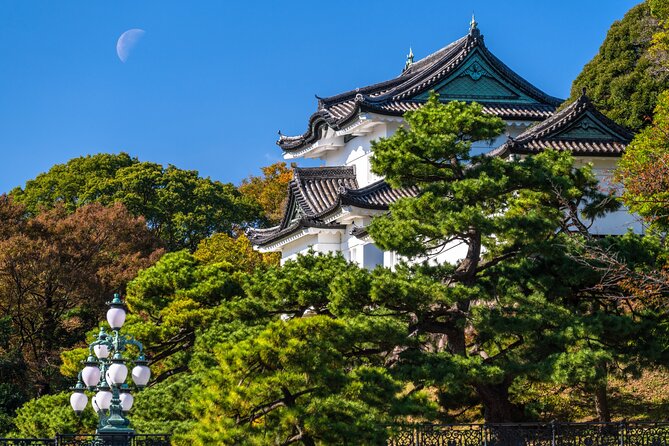
The Edo Castle ruins are the tour’s most important historical feature. The castle is not presented as a complete reconstructed building, so set your expectations correctly. You’ll be looking at surviving foundations, stone walls, site remains, and the shape of the old compound rather than walking through intact shogun-era rooms.
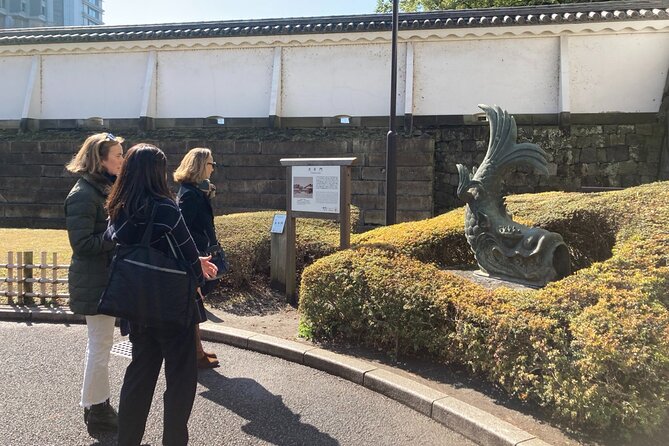
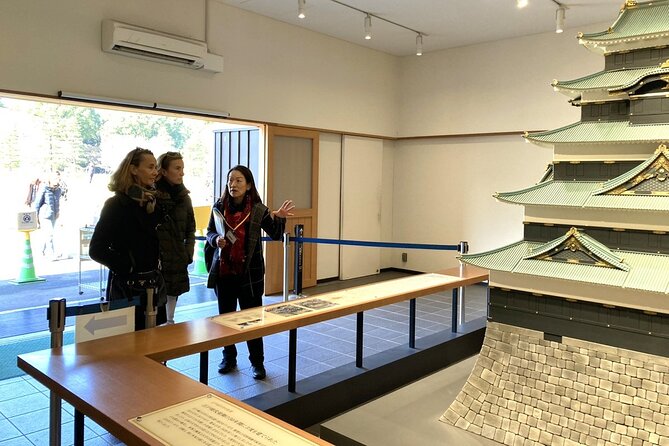
This is where the guide’s role earns its fee. On your own, you can see the stones and read posted information, but it is harder to grasp the scale and importance of the site. Guides such as Shigeru have been praised for explaining each part of the garden in detail, while other guides have brought the former castle to life by describing how it would have looked during the Edo period.
The history also reaches beyond the castle. Guides have discussed Japanese life in general, the shift into modern culture, and the ongoing role of the Imperial Family. That broader discussion can make the palace grounds feel less like an isolated monument and more like a place where different eras overlap.
If you enjoy asking questions, this is likely the strongest part of the tour. If you already know Tokyo’s political history and prefer to wander silently, you may find the free public garden enough on its own.
Same city, a completely different kind of day:
- Mt Fuji and Hakone 1-Day Bus Tour Return by Bullet Train
★ 5.0 · 26,383 reviews - 1-Day Tokyo Bus Tour
★ 5.0 · 14,250 reviews - Tokyo: TOKYO SKYTREE® Admission ticket
★ 4.5 · 11,192 reviews - Tokyo: teamLab Planets TOKYO Digital Art Museum Entry Ticket
★ 4.6 · 9,779 reviews
Ninomaru Garden and the quieter side of the palace grounds
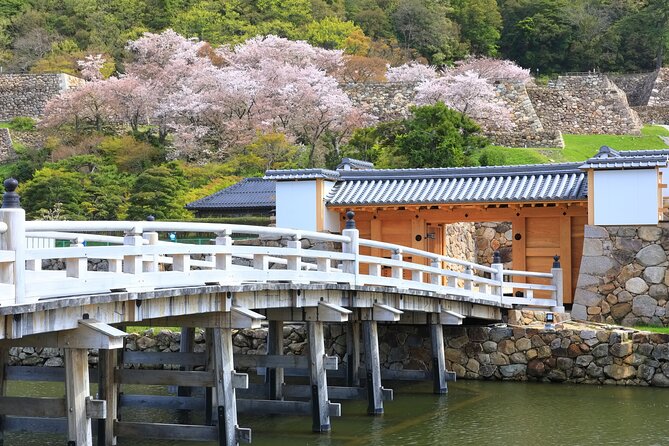
Ninomaru Garden provides a change of mood. After the castle remains and formal history, you get a calmer walk among carefully arranged plants, water, bridges, and seasonal scenery.
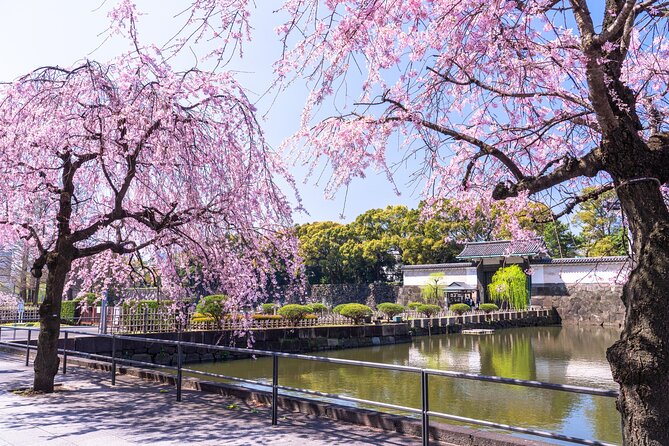
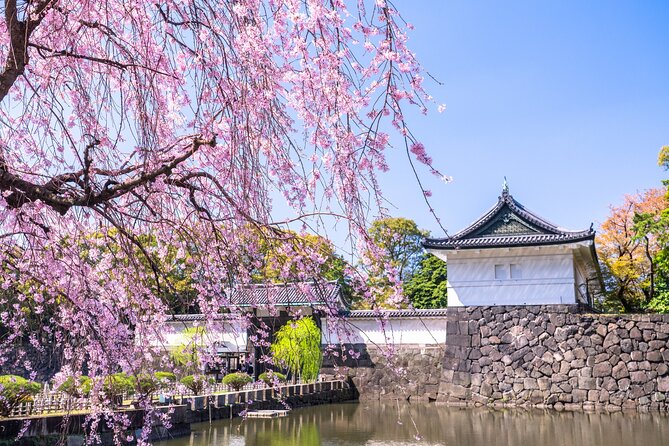
The exact flowers and colors depend on the time of year. One guide specifically explained that many plants bloom in different seasons, with cherry blossoms especially beautiful in March and April. That makes spring an appealing time to visit, though the garden is not limited to one season.
The plant life can also add variety for families. One child and parent particularly enjoyed a guide’s detailed explanations about the garden’s plants. If you like botany, ask your guide to slow down and identify what you are seeing.
This is also a good place for photographs and a short rest. The grounds offer a welcome pause from Tokyo’s busy streets, but remember that you are still taking an outdoor walk. Heat and direct sun can affect the experience. At 35 degrees Celsius, some groups found the conditions difficult, though umbrellas and neck coolers were provided during one particularly hot visit.
Do not assume those items are guaranteed for every departure. Still, the experience shows why a private guide can help: the pace can be adjusted, and breaks can be taken when needed.
How much the private guide adds
The gardens do not charge an admission fee, and information is available independently. That makes the price of $65.41 per person a question of service, not entry.
For a solo visitor, the cost may feel high compared with walking through the East Gardens alone. For a couple, family, or small group, the calculation improves because the private format gives everyone direct access to one guide. Group discounts are also listed, so check the price for your party rather than judging the per-person figure in isolation.
I would pay for this tour when history is a major reason for your Tokyo visit, or when you want help making sense of the castle site. Two hours is enough to cover the main points without turning the outing into an all-day commitment.
The guide quality matters more than the free admission. Naoko has been praised for a lively and friendly approach. Akiyoshi has discussed history, daily Japanese life, and the Imperial Family. Mikio has been described as prompt, warm, and able to answer questions in excellent English. Shigeru has received praise for patient, detailed explanations, including plant life and historical sites.
There is also one clear warning. One booking ended after about 45 minutes because the guide’s English was very difficult for the group to understand. That appears to be an exception among the supplied feedback, but communication can make or break a history tour. If detailed English explanation is essential to you, contact the provider before booking and state your needs clearly.
The private pace works well for families and curious adults
A private tour is especially useful for families, since children can ask questions without holding up a large group. One family enjoyed a morning walk with Hirashima, who shared a great deal of history, while another parent and child appreciated Shigeru’s plant explanations.
You can also move at your own speed. One fast-walking group was pleased that the guide matched its pace while still giving the information it wanted. That flexibility is harder to achieve on a fixed group tour.
The format suits first-time Tokyo visitors who want historical context but do not want to spend hours researching the palace grounds in advance. It also fits repeat visitors who have seen the major city sights and want a quieter, more focused outing.
I would be less quick to recommend it to someone who only wants palace access. The Inner Palace is not part of the visit, and the tour cannot change that. You should book this for the East Gardens, Edo Castle site, and guided interpretation, not for a look inside the emperor’s residence.
Practical planning for weather, walking, and timing
Set aside about two hours, but dress for an outdoor walk rather than a formal palace visit. Comfortable shoes make sense, and sun protection is worth bringing, particularly in warm months.
The experience has drawn praise even in hot weather, but heat can slow you down. Ask about breaks if you need them. The private setting should make it easier to manage the pace, though no tour can remove Tokyo’s summer conditions.
The mobile ticket is convenient, and confirmation is received at booking. Free cancellation is available up to 24 hours before the start time for a full refund. Cancellations or changes made less than 24 hours before the start are not accepted for a refund, and the local Tokyo cut-off time applies.
The experience requires a minimum number of participants. If the provider cancels because that minimum is not met, you will be offered another date or experience, or receive a full refund.
Most people can participate, and the tour is near public transportation. The supplied information does not promise a fully accessible route or describe mobility equipment, so ask the provider directly if you have specific access requirements.
What the 98 percent recommendation tells you
The overall score is 4.9 from 105 ratings, with a 98 percent recommendation rate. The praise is remarkably consistent in a few areas: guides arrive on time, explain the site clearly, answer questions, and make the walk more enjoyable than an unassisted visit.
The strongest recurring quality is personal interpretation. People have singled out Naoko, Mikio, Shigeru, Ishida, Yoshiko, Taka, Hirashima, and Akiyoshi for warmth, clear English, patience, and strong command of the subject. One Spanish-speaking participant also praised Shigeru and received a small Japanese paper souvenir.
The weaker point is expectation setting. At least two comments made clear that the tour name could suggest access to the Imperial Palace itself. Read the details carefully: you visit the East Gardens and castle grounds, not the Inner Palace.
That distinction does not make the tour poor. It simply tells you what you are buying. You are paying for a guide through a free historical garden, with the hope of gaining context and conversation that you would not get from walking alone.
Should you book Tokyo Private Tour: Edo Castle and East Gardens?
Book it if you want the former Edo Castle site explained in plain language, prefer a private pace, and value questions over a quick photo stop. It is a particularly good fit for families, first-time visitors, history fans, and anyone who wants a calm break from central Tokyo’s crowded streets.
Skip it if you mainly want to enter the Imperial Palace, or if you are happy reading signs and exploring free gardens independently. At $65.41 per person, the cost is justified by the guide, not by admission.
Before you commit, remember three things: meet at Wadakura Fountain National Park, leave shopping knives and similar items in storage before the baggage inspection, and confirm that the language level will suit your group. Get those details right, and this can be a compact, useful way to understand one of Tokyo’s most important historic sites.
FAQ
Does the tour enter the Imperial Palace?
No. The activity visits the Imperial Palace East Gardens and former Edo Castle grounds. Admission to the Inner Palace is not included.
How long does the experience last?
The tour lasts approximately two hours.
Is this a private tour?
Yes. Only your group participates in the private activity.
Where does the tour begin and end?
It begins at Wadakura Fountain National Park, 3-1 Kōkyogaien, Chiyoda City, Tokyo. The tour ends back at the meeting point.
Is admission to the East Gardens included?
The East Gardens admission is free. The price covers the tour guide, not entry to the Inner Palace.
Can I cancel for a full refund?
Yes, if you cancel at least 24 hours before the experience start time. Cancellations or changes made less than 24 hours in advance are not accepted for a refund.
Just added around Tokyo
- Private Memorable Tokyo Tour with English Speaking Driver★ 5.0 · 30 reviews
- Private Tokyo Custom Full-Day Tour by Chartered Vehicle★ 5.0 · 16 reviews
- Private Sightseeing to Mt Fuji and Hakone with English Driver★ 5.0 · 51 reviews
- Tokyo Photography Masterclass – Private Photography Lesson★ 5.0 · 25 reviews
- Private Mt. Fuji Day Trip from Tokyo with English-Speaking Driver★ 5.0 · 33 reviews
- 4 Day Tour – Mount. Fuji, Tokyo, Hakone, Kamakura and Yokohama★ 5.0 · 19 reviews
- Private Unforgettable Mt Fuji Tour with English Speaking Driver★ 5.0 · 142 reviews
- Private Tokyo Food Tour – A Journey Through Time Through Food★ 5.0 · 36 reviews
Garden & Palace Tours, compared.

Imperial Palace and Shogun Historical Walking Tour
Read our review →
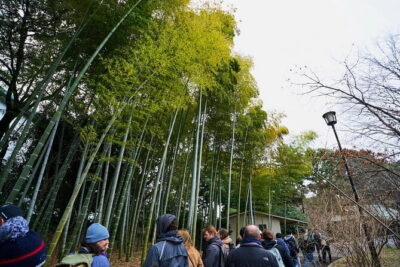
Tokyo Castle & Imperial PalaceーShogun Walking Tour
Read our review →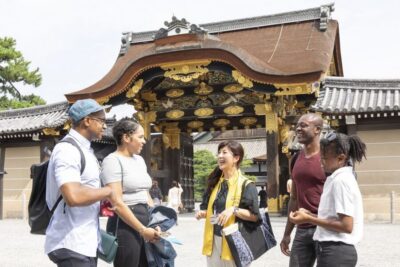
Nijo-jo Castle and Ninomaru Palace Guided Tour
Read our review →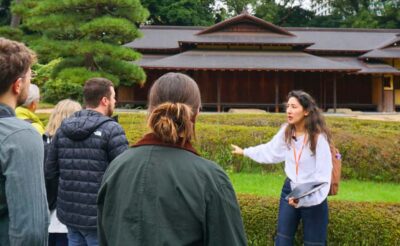

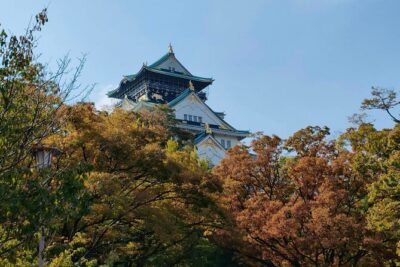
Ultimate Osaka Walking Tour: Castle, Dotonbori & Hidden Gems
Read our review →Tokyo Castle & Imperial PalaceーShogun Walking Tour
Read our review →Browse the lists this tour appears in