
REVIEW · SUMO EXPERIENCES
Tokyo: Not a show- a professional sumo practice with experts
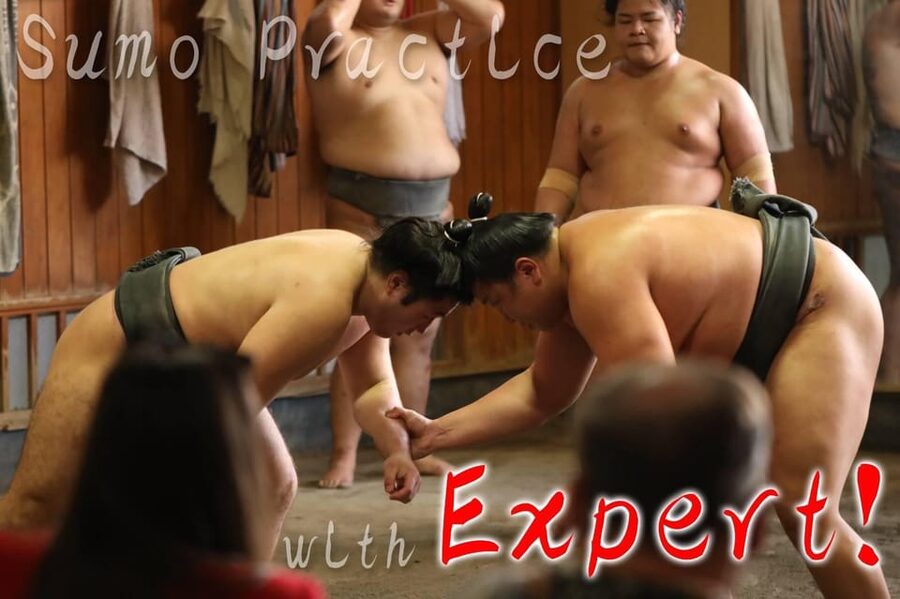
The rare thing here is not a staged bout but a real morning practice inside Takasago-beya Sumo Stable. You sit close to the wrestlers, stay quiet, and watch the warm-ups, drills, sparring, and cool-downs as they happen. I like the genuine setting and the access to Shinya, a former national newspaper sumo journalist who can explain the customs behind what you see.
I also like the small group, limited to 10 people, and the chance to ask detailed questions rather than simply watch a scripted show. The main drawback is practical: you sit on the floor for a long stretch, and some people found the cushions and small stools uncomfortable after 90 minutes or more.
In This Review
- What makes this sumo visit special
- Why a working stable beats a staged sumo show
- Meeting at Ryogoku Station and reaching the stable
- What you see during two hours at Takasago-beya
- Floor seating, cushions, and comfort
- Shinya’s sumo explanations and question time
- A short look at the Kokugikan
- Ryōgoku Edo NOREN and the final 30 minutes
- Photos with wrestlers and respectful behavior
- Is the $103 price fair?
- Who should book this experience?
- My verdict on the Takasago-beya visit
- FAQ
- Where does the sumo experience meet?
- How long does the activity last?
- How long do you spend inside the sumo stable?
- Is this a real sumo practice or a performance?
- Can I take a photo with a sumo wrestler?
- Can I ask questions about sumo?
- Do I sit on chairs during practice?
- Are children under five allowed?
- Are food and drinks included?
- How large is the group?
What makes this sumo visit special
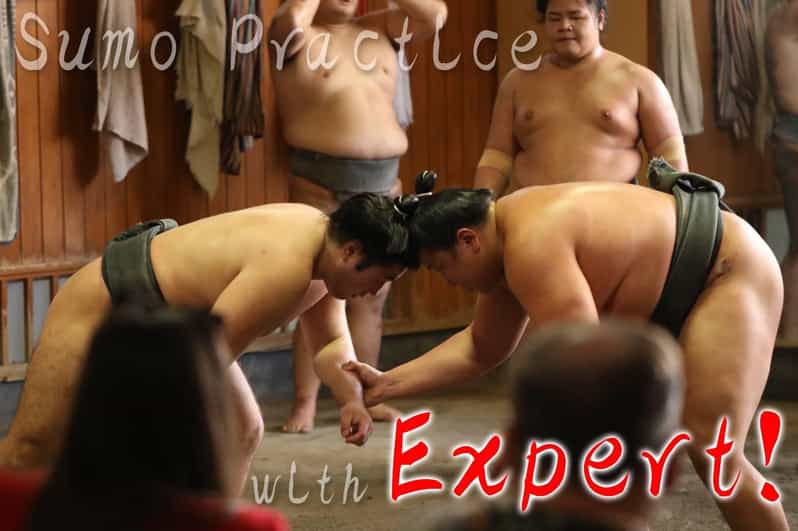
- Real stable practice: Watch professional wrestlers train in their own sumo stable, not in a theater or tourist arena.
- Shinya’s ringside context: Ask questions of a guide with years of experience covering sumo as a journalist and photographer.
- Very close viewing: The seating can put you only a few inches from the wrestlers, so you see the force and discipline at close range.
- A quiet, respectful format: This is observation, not audience participation or a comedy act.
- Ryogoku’s sumo landmarks: Continue to the Kokugikan and Ryōgoku Edo NOREN after practice.
- Small-group access: With no more than 10 participants, the question period feels personal rather than rushed.
Why a working stable beats a staged sumo show
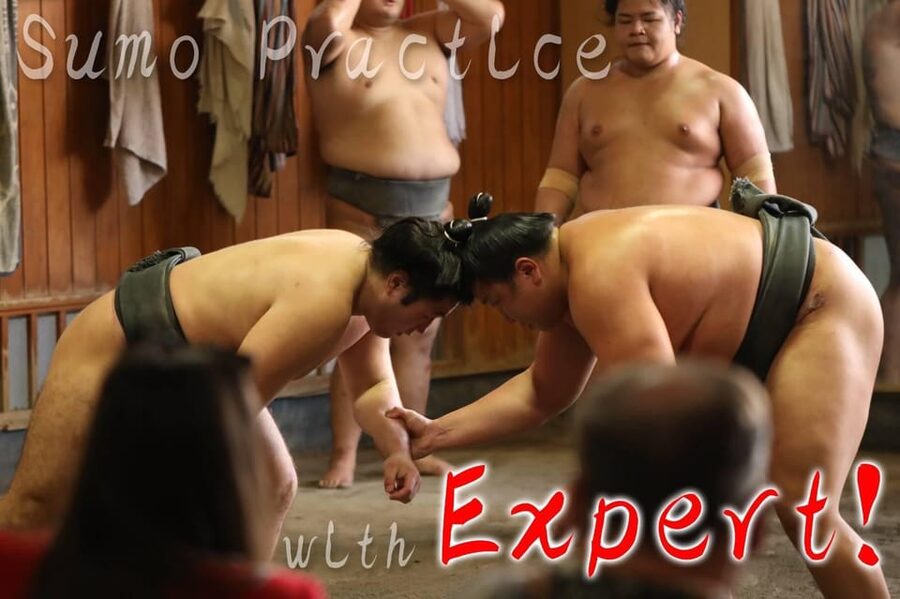
Tokyo offers several sumo-themed activities, but they are not all aiming at the same thing. Some are built around entertainment, demonstrations, and easy family participation. This experience takes a different path. You enter a professional stable during training and watch wrestlers work through their routine without performing for a tourist audience.
That distinction matters. In a show, the action is arranged so you always know where to look. At Takasago-beya, you need to pay attention. A wrestler may be stretching while another works through repeated clashes. The room can become quiet, then suddenly fill with the slap of bodies and feet.
I like this lack of polish. It lets you see sumo as a demanding daily practice rather than a colorful spectacle. You may watch older wrestlers guide younger men, see the repetition behind competition, and notice how much effort goes into exercises that look simple from a distance.
You also need to accept the rules of the setting. Keep quiet during practice, turn off your phone, and follow the guide’s instructions. You are being admitted to a working place, not a photo studio. That restraint is part of the value.
More Sumo Experiences in Tokyo
- Tokyo: Sumo Show and Dining Experience
★ 4.8 · 2,742 reviews - the SUMO show
★ 5.0 · 1,960 reviews - Tokyo Shinjuku Sumo Show & Experience with Photo
★ 5.0 · 1,750 reviews
Meeting at Ryogoku Station and reaching the stable
The meeting point is at the ground-level A2 exit of Ryogoku Station on the Toei Oedo Line, marked E12. From the east exit of JR Ryogoku Station, it is about a five-minute walk. The operator sends the final meeting details before the date, so check your message carefully, especially if you are arriving by a different train line.
From the meeting point, the group walks to the stable. The route itself is short, but one practical warning is worth noting: one participant found the pace brisk and had trouble keeping up at crossing lights. Stay with the group and leave enough time to arrive before practice begins.
The early start is part of the experience. Sumo training takes place in the morning, and the exact starting time depends on availability. You should not treat this as a flexible late-morning sightseeing stop. Confirm the time in advance and plan your train route before breakfast.
The group is capped at 10 people. That is useful here because the stable has a limited viewing area, and a smaller party gives you a better chance of seeing the action and asking questions. It does not guarantee a private visit, though. If more than one group is present, the room can feel crowded.
What you see during two hours at Takasago-beya
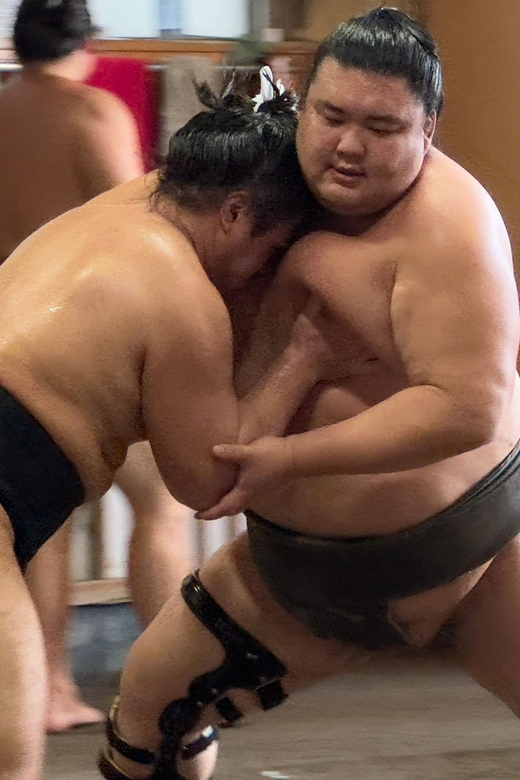
The stable visit lasts about two hours, though the actual practice can vary. You may see warm-ups, strength work, technical drills, sparring, and recovery exercises. One particularly useful feature is the chance to observe the full session rather than a short demonstration.
The practice can be surprisingly intense. One participant expected a tourist activity and remained absorbed for roughly an hour as the wrestlers worked. Another described seeing the athletes warm up, train, and cool down from only a few inches away.
From this distance, you notice details that disappear in a tournament seat. The contact is loud. The repeated pushes and throws show how much balance, timing, and conditioning matter. You also see the difference between watching a match and watching people prepare for one.
The room is not narrated continuously. This is the most important limitation for curious first-time viewers. You may not know why a ritual is performed, what a belt color means, or how one exercise differs from another while it is happening.
That quiet also protects the training. Shinya gives context before and after the practice, and you can ask questions, but the schedule may not leave time for every subject. One participant specifically wished for commentary during the session or a recorded explanation of the rituals. If you want a nonstop explanation, this may feel too sparse.
I think the silence is still the right choice. A running commentary could turn the stable into a theater and distract from the wrestlers. Go in expecting observation first and explanation second.
Floor seating, cushions, and comfort
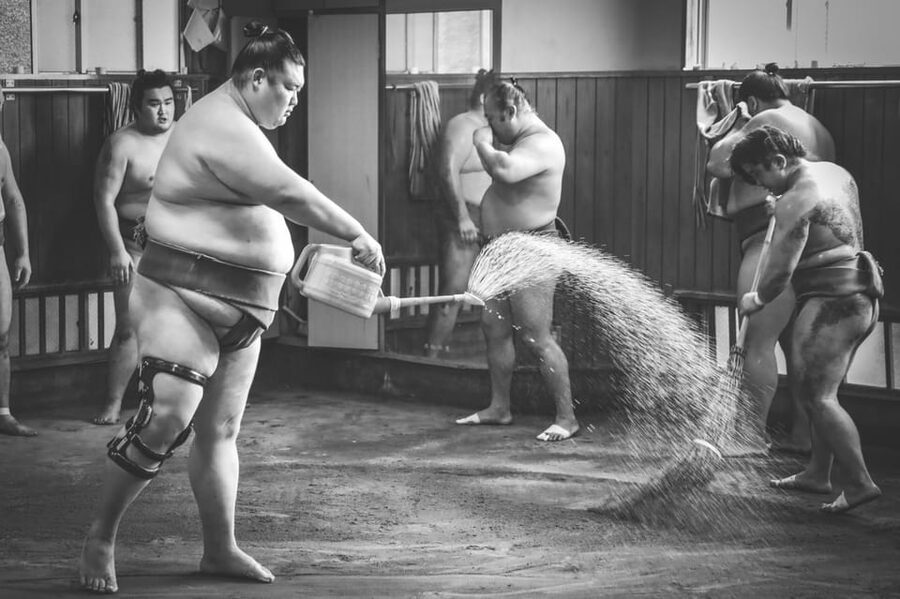
You sit on the floor to watch the practice, with a floor cushion available. Depending on the arrangement, small stools may also be used. This is a cultural setting, not a western-style auditorium with padded rows and generous legroom.
For many people, the close position will be a highlight. You may have a direct view of the training area, with no large barrier between you and the wrestlers. For others, the same setup becomes uncomfortable. One experienced participant warned that anyone very heavy or not flexible may struggle after more than 90 minutes.
Wear clothing that lets you sit comfortably and follow the stable’s etiquette. Do not count on being able to stretch, stand, or move around whenever you like. The cushion helps, but it does not turn floor seating into a chair.
Children under five are not permitted on this activity. Older children may appreciate the spectacle, but the quiet rules and long seated period make this better for children who can watch patiently.
Same city, a completely different kind of day:
- Mt Fuji and Hakone 1-Day Bus Tour Return by Bullet Train
★ 5.0 · 26,383 reviews - 1-Day Tokyo Bus Tour
★ 5.0 · 14,250 reviews - Tokyo: TOKYO SKYTREE® Admission ticket
★ 4.5 · 11,192 reviews - Tokyo: teamLab Planets TOKYO Digital Art Museum Entry Ticket
★ 4.6 · 9,779 reviews
Shinya’s sumo explanations and question time
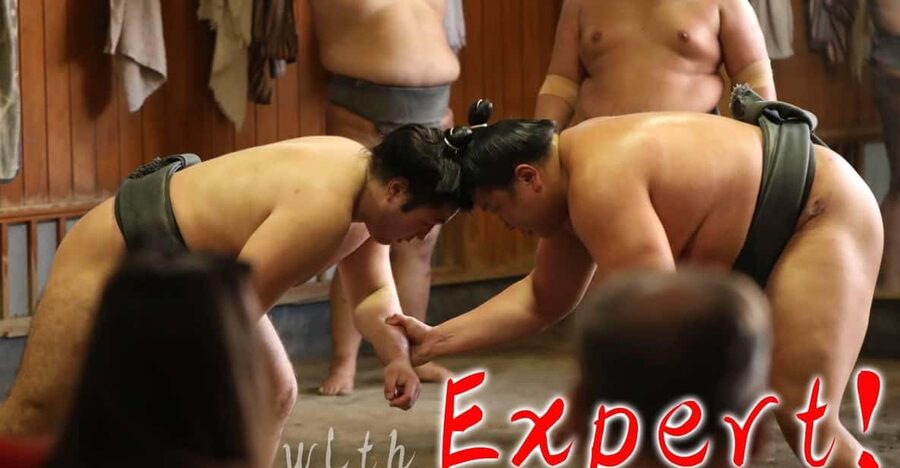
The guide is one of the strongest parts of the experience. Shinya is described as a former national newspaper journalist and sumo reporter and photographer. That background gives his explanations a useful angle: he can discuss not only basic rules and rituals, but also the people, tournament world, and customs surrounding the sport.
I would use the question period well. Ask about the training exercises you just saw, the daily life of wrestlers, the meaning of the rituals, or details that are difficult to understand from a televised tournament. The format suits beginners, but it also works for people who already follow sumo and want answers beyond the usual introduction.
His English is generally described as clear and engaging, although one participant found it less polished than a native speaker’s. That is a fair expectation to set. You are booking access to specialist insight, not a formal academic lecture.
The guide’s enthusiasm helps. Sumo can seem mysterious if you only know the bout itself. Shinya connects the movements, etiquette, and customs so you can watch the next tournament with a sharper eye. He also has interests outside sumo, including baseball, so sports fans may find easy conversation after the formal explanations.
A short look at the Kokugikan
After the stable, the tour walks to Ryogoku Kokugikan for about 15 minutes of guided sightseeing. The Kokugikan is the district’s major sumo venue, and seeing it after a practice session gives you useful context.
The stop is brief, so do not expect a full museum visit or a tournament-day experience. Its value comes from linking the quiet training room with the public arena where professional sumo reaches its biggest audience. After watching wrestlers practice, the building has more meaning than it would as a quick exterior photo stop.
The exact access and sights can depend on the day and the tour’s movement through the area. Keep your expectations focused on a short guided introduction.
Ryōgoku Edo NOREN and the final 30 minutes
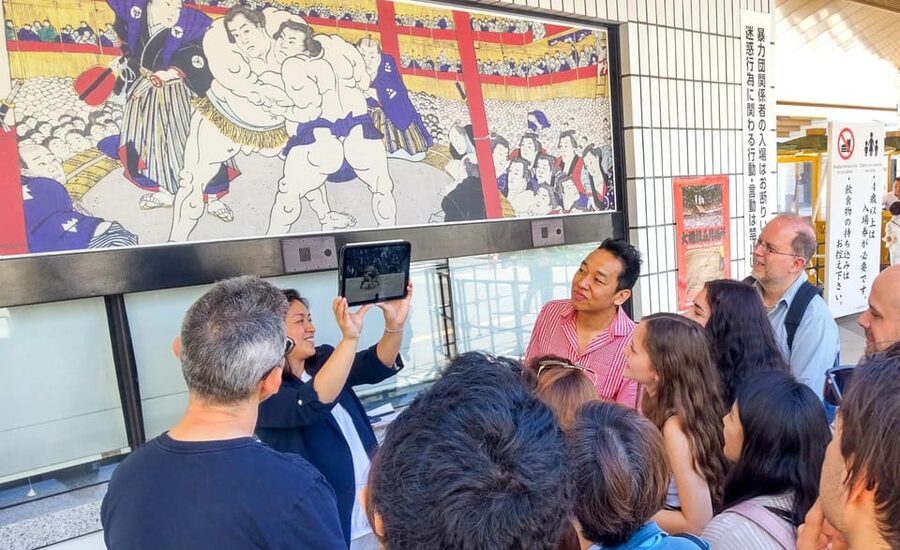
The final stop is Ryōgoku Edo NOREN, where the group spends about 15 minutes on a guided visit and another 30 minutes for shopping and sightseeing. This gives you time to look around at your own pace after the more structured stable visit.
It is a sensible ending. The stable requires quiet and concentration, while the final stop lets you talk, browse, and take in more of the local setting. The tour finishes at Ryogoku Station, so you can continue around eastern Tokyo without returning to the original meeting point.
Food and drinks are not included. That is easy to manage because the visit ends at a station area with time for your own plans, but budget for breakfast or a drink separately. Tips are also not included.
Photos with wrestlers and respectful behavior
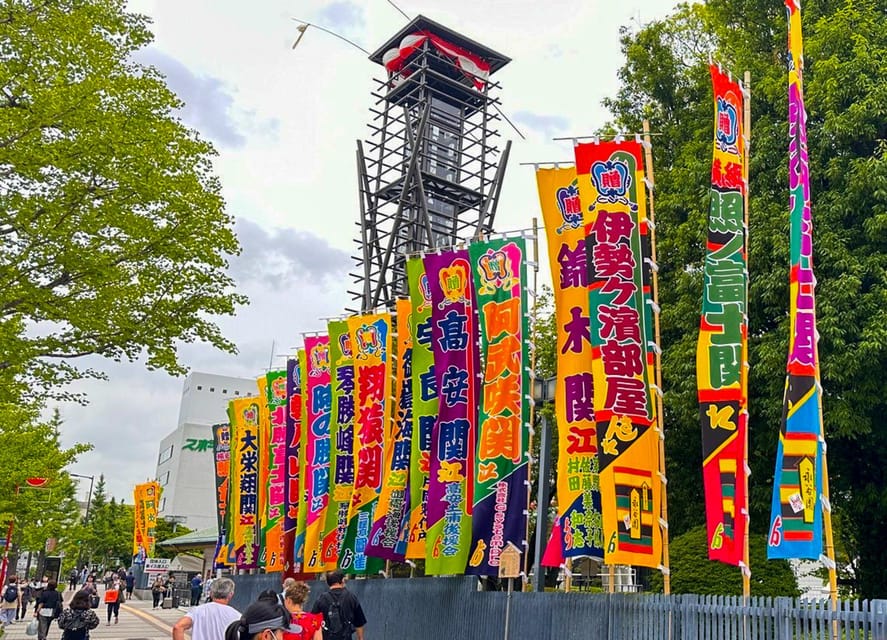
A photo with a sumo wrestler is included, and it is usually arranged after you have watched the practice. This is a meaningful souvenir because it follows time spent observing the wrestlers at work, rather than being the entire point of the activity.
Still, the photo should be treated as a privilege, not a guaranteed personal meeting with every wrestler. Follow the guide’s instructions, keep the process quick, and remain respectful. The stable is allowing visitors into a private working environment.
The experience avoids the clownish feel that can appear in some sumo-themed activities. You are not asked to pretend to be a wrestler or take part in a comic bout. The focus stays on the professionals and their discipline.
Is the $103 price fair?
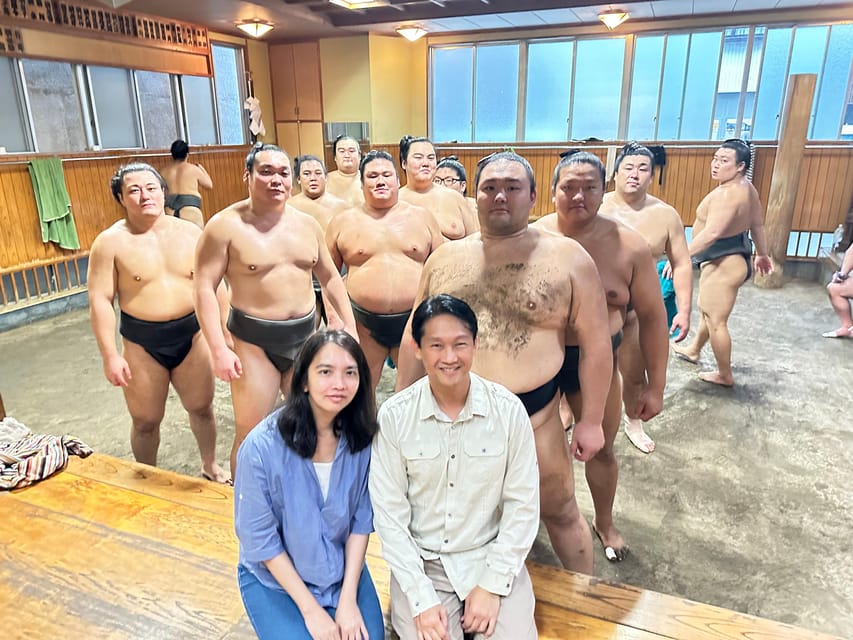
At $103 per person, this is not a cheap neighborhood walk. You are paying for special access, a small group, an English-speaking guide, the wrestler photo, the question session, and roughly two hours inside a professional stable.
The value depends on what you want. If your goal is a quick, lighthearted introduction for young children, a less expensive show may suit you better. If you care about seeing real training and having a serious conversation with someone who has covered sumo professionally, the price is easier to justify.
I consider it good value for a visitor who has limited time in Tokyo and cannot attend a tournament. It also makes sense for someone who already knows the basics and wants closer contact with the sport. The stable visit is the part you are paying for. The Kokugikan and Edo NOREN stops add context, but they are short and should not be mistaken for the main event.
A 4.9 rating from 67 reviews supports the strong impression this experience has made, but the practical caveats still matter. The floor seating, early meeting time, variable commentary, and possible crowding can affect your enjoyment.
Who should book this experience?
I would choose this tour if you want an authentic sumo setting, care about Japanese customs, or have already tried and rejected the idea of a staged show. It is especially good for adults, older children, sports fans, photographers, and anyone who enjoys seeing skilled work up close.
It suits first-time sumo viewers because Shinya explains the basics. It also suits serious fans because the question session can go beyond a standard tourist introduction.
I would think twice if you need comfortable chair seating, constant narration, or a highly controlled performance. You should also avoid booking it if you cannot manage a quiet morning visit or a long period on the floor.
The cancellation policy gives you some flexibility: you can cancel up to 24 hours before the activity for a full refund, and you can reserve now and pay later. The tour is offered in English and Japanese, but the English guide is the key choice for most international visitors.
My verdict on the Takasago-beya visit
Book it if you want to see sumo as a living discipline rather than a packaged show. The close viewing, real training room, photo with a wrestler, and Shinya’s background make this one of the more substantial sumo experiences in Tokyo.
Just prepare properly. Confirm the early start, arrive at the correct station exit, wear comfortable clothes for floor seating, silence your phone, and bring questions. If you do that, you get a rare look at the work behind the tournament, followed by a short tour of Ryogoku’s main sumo landmarks.
FAQ
Where does the sumo experience meet?
Meet at the ground-level A2 exit of Ryogoku Station on the Toei Oedo Line, station E12. It is about a five-minute walk from the east exit of JR Ryogoku Station.
How long does the activity last?
The full activity lasts about three hours.
How long do you spend inside the sumo stable?
The visit to Takasago-beya Sumo Stable lasts about two hours.
Is this a real sumo practice or a performance?
It is a professional morning practice at a real sumo stable, not a staged tourist show.
Can I take a photo with a sumo wrestler?
Yes. A photo with a sumo wrestler is included.
Can I ask questions about sumo?
Yes. The activity includes a question and answer session with a long-time sumo expert. The guide is Shinya, a former national newspaper sumo journalist and photographer.
Do I sit on chairs during practice?
Customers sit on the floor, and a floor cushion is available. Small stools may also be used, but the seating can become uncomfortable after a long period.
Are children under five allowed?
No. The activity is not suitable for children under five.
Are food and drinks included?
No. Food, drinks, and tips are not included.
How large is the group?
The group is limited to 10 participants. Live guiding is available in English and Japanese.
More Show in Tokyo
- Mt Fuji & Hakone Cruise, Drum Show Bullet Train 1 Day from Tokyo
★ 4.0 · 7,413 reviews - Mt Fuji & Hakone Cruise, Drum Show Bus 1 Day from Tokyo
★ 4.0 · 1,287 reviews - Tokyo: Sumo Show and Experience in Shinjuku
★ 4.8 · 1,001 reviews - Tokyo:Luxury Sumo Show Experience & Japanese cuisine & Drink
★ 4.7 · 577 reviews
Just added around Tokyo
- Tokyo: Customizable Private Guided Walking Tour★ 4.5 · 129 reviews
- Private Harajuku Omotesando Architecture Tour★ 4.9 · 18 reviews
- Tokyo: Guided Helicopter Ride★ 4.9 · 24 reviews
- Tokyo: Guided Walking Tour of Tsukiji Market with Lunch★ 4.4 · 24 reviews
- Tokyo: Private Personalized Local Food Tour★ 4.5 · 101 reviews
- Tokyo GINZA: KONPARU Japanese Cabaret Show with Drink★ 4.8 · 38 reviews
- Tokyo: Guided Walking Tour of Tsukiji Market with Breakfast★ 4.4 · 134 reviews
- Tokyo: Gotokuji Cat Temple, Shinjuku Cat Cafe & 3D Cat Tour★ 4.9 · 38 reviews
Sumo Experiences, compared.
Sumo Show Experience with Chicken Hot Pot and a Photo
Read our review →
Tokyo Shinjuku Sumo Show & Experience with Photo
Read our review →
Sumo Show & Experience w/ Optional Kimono & Hot Pot
Read our review →
Authentic Sumo Experience in Tokyo: Enter the Sanctuary
Read our review →Browse the lists this tour appears in