
REVIEW · GARDEN & PALACE TOURS
Tokyo: Imperial Palace East Gardens and Tokyo Station Tour
Tokyo’s past comes into focus on this walk from Edo Castle ruins to the red-brick face of Tokyo Station. You’ll move from moats, guardhouses, gardens, and samurai-era defenses into Marunouchi’s polished offices and public art. The route gives you a useful slice of Tokyo’s transformation without asking you to spend half a day in a museum.
I like the clear change of scene, from the peaceful East Gardens to the grand scale of Tokyo Station. I also like the human touch of guide Yuki, whose humor and vivid explanations help you picture the castle as it was 400 years ago. The main drawback is the amount of walking in open areas, so hot weather, rain, or uncomfortable shoes can take some shine off the experience.
In This Review
- Key points at a glance
- From Starbucks to the old castle gate
- Ninomaru Garden and the art of controlled space
- East Gardens, guardhouses, and castle defenses
- Nijubashi and the imperial view
- A ten-minute walk into Marunouchi
- Tokyo Station and the city’s modern face
- What the guide adds for $38
- Timing, clothing, and small practical matters
- Who should book this walk?
- Should you book the Imperial Palace to Tokyo Station walk?
- FAQ
- How long does the Imperial Palace and Tokyo Station tour last?
- How much does the tour cost?
- Where does the tour begin?
- Where does the tour finish?
- Is admission to the Imperial Palace East Gardens included?
- Which landmarks are included?
- What languages are available?
- Is the tour wheelchair accessible?
- What should I bring?
- Can I cancel for a full refund?
Key points at a glance
- Edo Castle made visible: See Ote-mon Gate, the Hyakunin Bansho Guardhouse, old castle areas, and the Fujimi-yagura watchtower.
- Ninomaru Garden: Pause among carefully designed garden scenery that contrasts with Tokyo’s dense city streets.
- Nijubashi views: Learn about the imperial grounds and see one of the palace area’s best-known viewpoints.
- Marunouchi in context: Connect the old castle district with modern buildings, public art, and Tokyo’s business center.
- Tokyo Station finish: End beside the beautifully restored red-brick exterior, a memorable final stop.
- Flexible format: The 150-minute walk costs $38 per person, includes a live multilingual guide, and allows cancellation up to 24 hours before departure.
From Starbucks to the old castle gate
The meeting point is the Starbucks Coffee Imperial Palace Garden Wadakura Fountain Park store. That gives you a practical place to orient yourself before the walk, though you should confirm the exact meeting instructions and starting time when booking.
From here, the route heads toward the Imperial Palace East Gardens. The setting changes quickly. Office towers and broad city streets give way to stone walls, moats, trees, and formal palace grounds. This contrast is one of the tour’s strongest features. You do not study Tokyo’s past as a separate subject. You see it occupying the same center of town as the present-day capital.
Your guide provides the links between the sites. The most praised part of the experience is the explanation of Edo Castle, the Edo period, and the shogunate. Yuki is singled out for making the past easy to picture, with humor and practical storytelling rather than a dry list of dates.
That matters here because the remains are not always self-explanatory. A stone wall or guardhouse can look like a quiet garden feature until you understand its job within the castle complex. A good guide helps you read the site, and this walk appears especially strong in that role.
More Garden & Palace Tours in Tokyo
- Tokyo: Imperial Palace and Shogun Historical Walking Tour
★ 5.0 · 2,251 reviews - Tokyo Castle & Imperial PalaceーShogun Walking Tour
★ 4.7 · 1,068 reviews - Tokyo: Imperial Palace Japanese History Walking Tour
★ 4.9 · 987 reviews
Ninomaru Garden and the art of controlled space
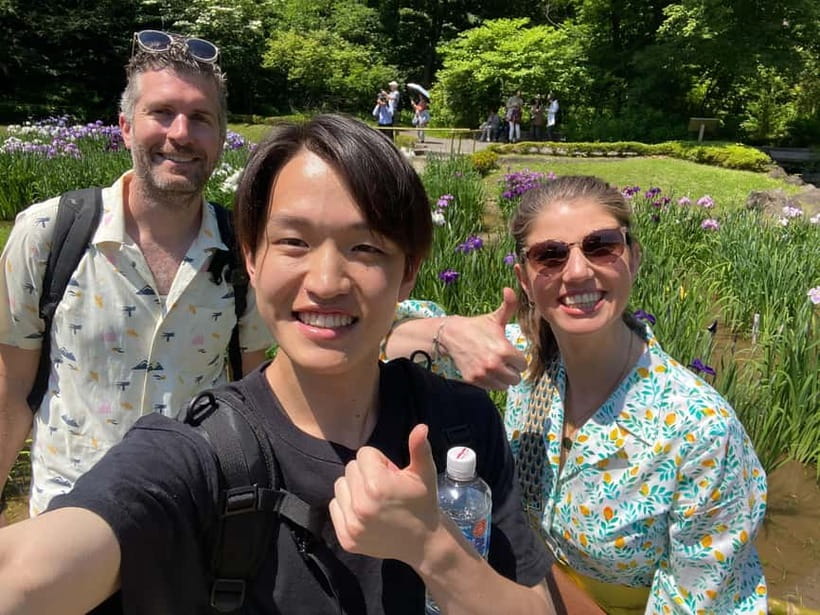
Ninomaru Garden is one of the gentler sections of the route. Its appeal comes from the careful arrangement of water, plants, paths, and viewing points. You get a chance to slow down and notice how garden design creates changes in mood and perspective.
The garden also helps explain the difference between a defensive castle and a residence shaped by ceremony. Edo Castle was a political center, but its grounds were not only about walls and military power. Gardens offered a setting for movement, quiet observation, and formal life.
I would pay attention to the guide’s explanation here rather than rushing to take photographs. The value of a guided visit is not simply seeing the garden. It is understanding why the garden is arranged as it is and how that design fits the larger castle grounds.
There is no admission charge for the East Gardens, so you are not saving money on an expensive ticket by booking this experience. The $38 price is paying mainly for interpretation, direction, and a structured route. If you already know the castle grounds well and prefer reading signs at your own pace, that may feel like a high price. If the site is new to you, the context can make the fee worthwhile.
East Gardens, guardhouses, and castle defenses
The guided visit to the Imperial Palace East Gardens lasts about 30 minutes within the larger 150-minute experience. Expect key stops including Ote-mon Gate, the Hyakunin Bansho Guardhouse, the Honmaru area, and remains associated with Edo Castle.
Ote-mon Gate helps set the scale of the old stronghold. It was not simply an entrance for casual visitors. Approaching a major castle through gates, walls, and guarded passages was part of the castle’s security system and its display of power.
The Hyakunin Bansho Guardhouse adds another useful detail. Its name points to a large guard presence, making it easier to picture the layers of control around the castle. These smaller structures can be easy to pass without a guide. Here, you get a sense of how the site worked rather than seeing only an attractive old wall.
The Honmaru area brings you closer to the castle’s central ground. You will also see a scale model of the Edo Castle main keep. This is a valuable stop because little remains at full height, and a model can give you a clearer idea of the structure that once dominated the site.
The Fujimi-yagura watchtower offers another piece of the defensive story. The word refers to a tower used for viewing Mount Fuji, though the important point on this walk is its role as a surviving castle feature and watchtower. The site connects grand views with military design.
This section rewards attention, but it is not a complete castle visit in the European sense. You are seeing foundations, walls, gardens, towers, and models rather than walking through a fully intact palace. I would book it for the story of the former castle complex, not for grand interiors.
Nijubashi and the imperial view
The route includes scenic views of Nijubashi, one of the most recognizable palace-area sights. The bridge and surrounding grounds offer a more formal view of the Imperial Palace, quite different from the earthy remains of Edo Castle in the East Gardens.
This is where the tour shifts from the age of the shogunate to Japan’s imperial era. Your guide explains that change while you look across a carefully maintained space that remains important to the country’s public identity.
For photography, this is one of the places to keep your camera ready. Flash photography is not allowed, and the rules also say backpacks are not permitted, so pack light and use a small bag only if it complies with the site’s requirements. Bring water, sunscreen, and a hat, but do not assume that every item you carry will be accepted inside the grounds.
The tour is listed as wheelchair accessible. Still, the route includes a moderate amount of walking through gardens and outdoor historical areas. If mobility is a concern, contact the provider before booking to confirm how the route will work on your chosen date.
Same city, a completely different kind of day:
- Mt Fuji and Hakone 1-Day Bus Tour Return by Bullet Train
★ 5.0 · 26,383 reviews - 1-Day Tokyo Bus Tour
★ 5.0 · 14,250 reviews - Tokyo: TOKYO SKYTREE® Admission ticket
★ 4.5 · 11,192 reviews - Tokyo: teamLab Planets TOKYO Digital Art Museum Entry Ticket
★ 4.6 · 9,779 reviews
A ten-minute walk into Marunouchi
After the palace grounds, you walk for about ten minutes toward Marunouchi. This short transfer is more than a way to get from one stop to another. It marks the change from a protected historic district to one of Tokyo’s most important business areas.
Marunouchi is known for modern architecture, offices, art, and broad urban spaces. The tour uses this district to show how Tokyo has built its present around the old castle center. The effect is strongest when you keep looking back at the earlier parts of the walk. Moats and guardhouses are not far from high-rise buildings and corporate streets.
The guide also points out art and architectural details along the way. Exact buildings and artworks are not specified, so I would treat this as an interpretive city walk rather than a formal architecture tour with a fixed list of interiors.
That distinction helps set expectations. You are not booking access to private offices or a series of museum galleries. You are learning how a central Tokyo district works and how its buildings relate to the palace grounds nearby.
Tokyo Station and the city’s modern face
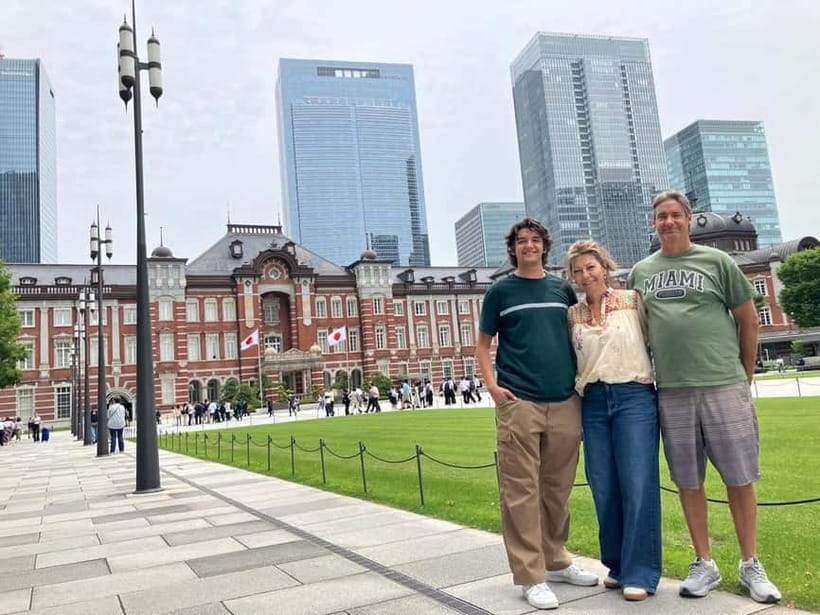
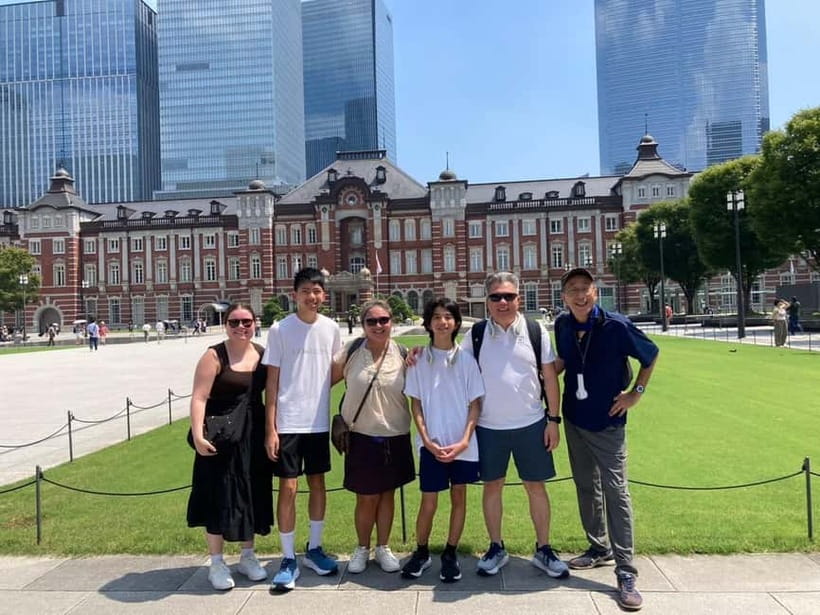
The tour ends at Tokyo Station, where the beautifully restored red-brick exterior provides a strong final image. After the quiet gardens and castle remnants, the station feels broad, busy, and proudly modern.
The building also fits the theme of the walk. Tokyo Station represents the city’s later transformation into a major modern capital. Its architecture gives you a visual ending to the story that began with samurai rule and continued through imperial Japan.
Finishing here is practical. Tokyo Station is a major transport hub, so you can continue sightseeing, find a meal, or head back to your hotel after the tour. The experience does not return you to the starting point, and that is worth noting when planning your day.
I like tours that end somewhere useful rather than sending you back across town. Just allow a few minutes to get your bearings inside the station area. Tokyo Station is large, and the exterior finish point is more useful for sightseeing than for an exact underground rail connection.
What the guide adds for $38
At $38 per person, this is a moderate-cost walking tour rather than a bargain sightseeing ticket. Since the East Gardens do not require an admission fee, the price rests on the guide’s value.
The strongest evidence here is the repeated praise for Yuki’s clear, humorous delivery and her ability to make the castle’s past easy to imagine. Her approach seems to suit people who want solid historical information without a lecture-heavy tone. She is also described as kind, organized, hospitable, and attentive to the background of each place.
You can request or encounter live guiding in English, Japanese, Spanish, Chinese, or French. The available language may depend on the departure you choose, so check before paying if language is important to your decision.
The tour’s short length also affects the value. In 150 minutes, you get a guided introduction rather than an exhaustive study of the palace grounds, Marunouchi, or Tokyo Station. That is a good fit for a first look, a limited schedule, or an arrival day when you want a useful orientation.
I would choose this tour over wandering alone if you want the political story of Edo Castle explained on site. I would skip it if you prefer a slow garden visit, long photography stops, or a full-day exploration of palace-related attractions.
Timing, clothing, and small practical matters
Comfortable shoes are essential. The route covers outdoor grounds and includes a moderate amount of walking, with no promise of long seated breaks. Wear weather-appropriate clothing, and add a hat, sunscreen, and water during warmer months.
Tokyo’s weather can change your experience quickly because much of the route is outside. Check the forecast before leaving. On a hot day, start with water already in hand. On a wet or cool day, bring suitable outerwear rather than relying on city shops along the route.
Smoking and flash photography are not allowed. Backpacks are also listed among the prohibited items, so avoid arriving with a large daypack. The guidance to bring a camera should be read alongside that restriction: carry a smaller permitted camera or bag and follow the guide’s instructions.
The experience offers free cancellation up to 24 hours before departure and a reserve-now, pay-later option. Those terms are useful if your Tokyo schedule is still moving, but you still need to check the available start times for your date.
Who should book this walk?
I would recommend it to first-time visitors who want a strong introduction to central Tokyo’s past and present. It also suits history fans, people interested in Japanese gardens, and anyone who wants a guided route instead of piecing together the palace area alone.
Families and mixed-age groups may appreciate the variety. Children who tire of gardens can look for the old castle defenses, while adults get the political and architectural background. The route does require walking, so the group should be comfortable outdoors for most of two and a half hours.
It is less suitable for anyone seeking access to the Imperial Palace interior. The experience focuses on the East Gardens, surrounding historical sites, Nijubashi views, Marunouchi, and the exterior of Tokyo Station.
The perfect audience is someone who likes a story with visible evidence. You see the walls, gates, guardhouse, tower, garden, bridge, office district, and station, then connect them through the guide’s explanation.
Should you book the Imperial Palace to Tokyo Station walk?
Book it if you want historical context with a practical city route. The tour covers a lot without becoming an all-day commitment, and Yuki’s clear, humorous style appears to be a major strength. The shift from Edo Castle remains to Marunouchi and Tokyo Station gives you a useful way to understand Tokyo’s changing identity.
Think twice if you dislike walking, need long stops for photography, or want a detailed visit inside palace buildings. For most first visits, though, $38 is reasonable for a live multilingual guide, a well-chosen route, and a finish at one of Tokyo’s most useful landmarks. The published rating is five out of five from 16 ratings, and the praise consistently centers on the guide’s explanations, organization, kindness, and ability to make the past feel real.
FAQ
How long does the Imperial Palace and Tokyo Station tour last?
The tour lasts 150 minutes, or two and a half hours.
How much does the tour cost?
The listed price is $38 per person.
Where does the tour begin?
It begins at Starbucks Coffee Imperial Palace Garden Wadakura Fountain Park.
Where does the tour finish?
The tour finishes at Tokyo Station.
Is admission to the Imperial Palace East Gardens included?
There is no admission fee required for entry to the Imperial Palace East Gardens, and the guided visit is included.
Which landmarks are included?
Stops include Ote-mon Gate, the Hyakunin Bansho Guardhouse, Ninomaru Garden, the Honmaru area, Edo Castle ruins, the Fujimi-yagura watchtower, Nijubashi views, Marunouchi, and the exterior of Tokyo Station.
What languages are available?
Live guides are available in English, Japanese, Spanish, Chinese, and French.
Is the tour wheelchair accessible?
Yes, the activity is listed as wheelchair accessible.
What should I bring?
Wear comfortable shoes and weather-appropriate clothing. A hat, camera, sunscreen, and water are also recommended.
Can I cancel for a full refund?
Yes. You can cancel up to 24 hours in advance for a full refund.
Just added around Tokyo
- Private Memorable Tokyo Tour with English Speaking Driver★ 5.0 · 30 reviews
- Tokyo Photography Masterclass – Private Photography Lesson★ 5.0 · 25 reviews
- Private Tokyo Custom Full-Day Tour by Chartered Vehicle★ 5.0 · 16 reviews
- Private Sightseeing to Mt Fuji and Hakone with English Driver★ 5.0 · 51 reviews
- Private Mt. Fuji Day Trip from Tokyo with English-Speaking Driver★ 5.0 · 33 reviews
- 4 Day Tour – Mount. Fuji, Tokyo, Hakone, Kamakura and Yokohama★ 5.0 · 19 reviews
- Private Unforgettable Mt Fuji Tour with English Speaking Driver★ 5.0 · 142 reviews
- Private Tokyo Food Tour – A Journey Through Time Through Food★ 5.0 · 36 reviews
Garden & Palace Tours, compared.

Imperial Palace and Shogun Historical Walking Tour
Read our review →
Tokyo Castle & Imperial PalaceーShogun Walking Tour
Read our review →
Nijo-jo Castle and Ninomaru Palace Guided Tour
Read our review →

Ultimate Osaka Walking Tour: Castle, Dotonbori & Hidden Gems
Read our review →Tokyo Castle & Imperial PalaceーShogun Walking Tour
Read our review →Browse the lists this tour appears in