
REVIEW · WALKING TOURS
Tokyo: Full Course Tour: Explore 15 Must-Sees & Hidden Gems
The clever idea here is simple: instead of spending your first Tokyo day trying to decode the train map, you follow a local guide across the city and see its major districts in one sweep. In 10 hours, you move from the forested Meiji Shrine and Harajuku to Shibuya, Tsukiji, the Imperial Palace, Akihabara, Ueno, and Asakusa.
I like the small group of up to seven people, which gives the guide room to answer questions and adjust the pace. I also like the practical teaching: how to use the metro, how to behave at shrines and temples, where to find worthwhile food, and how everyday Japanese customs fit together. Guides including Yasuko and Michiko have been praised for clear English, thoughtful pacing, and personal attention.
The catch is the physical demand. You may walk around 20,000 steps, often through crowded streets and stations, and the tour is not suitable for people with mobility problems, low fitness, pregnancy, or back trouble. The long route gives you a superb city orientation, but it leaves little time for lingering.
In This Review
- The quick facts that matter most
- Why this works well as your first Tokyo day
- Yoyogi, Meiji Shrine, and Harajuku begin the day quietly
- Shibuya delivers Tokyo’s best-known urban scene
- Tsukiji is the day’s main food stop
- Imperial Palace, Marunouchi, and Tokyo Station show Tokyo’s polished side
- Akihabara adds anime, games, and pop culture
- Ueno Park and Ameyoko reveal another side of the city
- Asakusa finishes with Tokyo’s oldest major temple
- What the $90 price really buys you
- Prepare for the 20,000-step reality
- Who should book this Tokyo tour?
- FAQ
- How long does the Tokyo Full Course Tour last?
- Where does the tour begin?
- Where does the tour finish?
- How many people can join the group?
- What language is the tour conducted in?
- Are admission fees included?
- How much should I budget for transportation?
- Do I need a transport card?
- What should I wear?
- Can children join the tour?
The quick facts that matter most
- Sixteen stops appear in the full plan: The sightseeing route includes Meiji Shrine, Harajuku, Shibuya, Tsukiji, the Imperial Palace, Marunouchi, Tokyo Station, Akihabara, Ueno, and Asakusa, with several sub-stops counted separately.
- Every listed attraction is free to enter: You still pay for metro and JR fares, food, drinks, and any optional purchases.
- Expect roughly 20,000 steps: Comfortable athletic shoes are essential. High heels, oversized luggage, strollers, and baby carriages are not allowed.
- The route uses Tokyo’s public transport: Bring a pre-charged Suica, Pasmo, or Icoca card. Transport costs are about 1,500 yen, or roughly $10.
- Tsukiji is the main food break: Lunch and snacks are purchased separately, with vegetarian and vegan choices available.
- The tour ends at Asakusa Shrine: It begins outside the west exit of JR Yoyogi Station and runs in one direction across central Tokyo.
Why this works well as your first Tokyo day
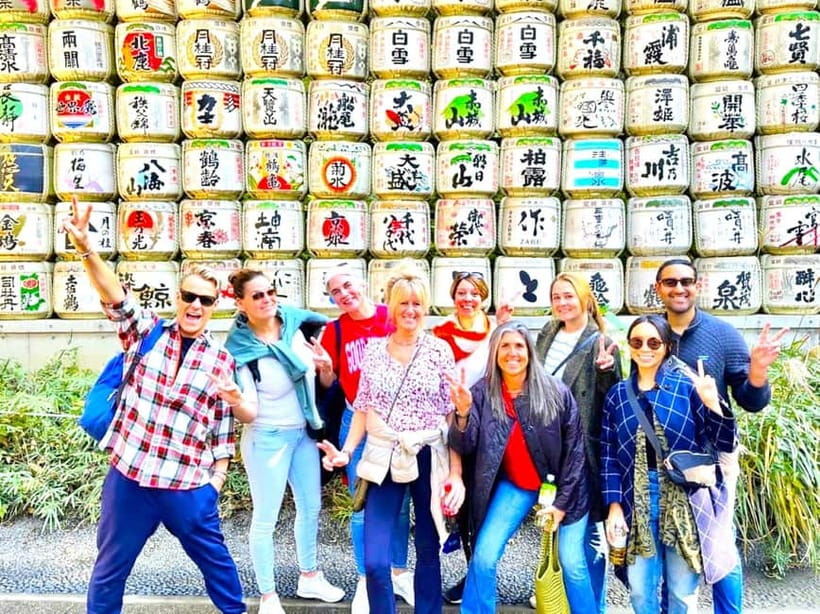
Tokyo can feel like several cities joined by rail. One neighborhood has shrine gates and old wooden buildings. The next has giant video screens, comic shops, and office towers. A good first-day tour helps you understand how these districts relate to one another.
This route gives you that broad picture quickly. You do not simply visit one famous temple and go home. You learn how to move between very different parts of the city, while your guide explains Japanese etiquette, local values, food customs, and daily routines along the way.
That practical side may be the best value. A guide can show you how to handle a station, when to keep quiet on a train, and how to approach a shrine without making a cultural blunder. You also receive restaurant suggestions, including well-known places and smaller local options.
The limited group size helps. With no more than seven participants, it is easier to hear the guide in a busy area and ask for help with food or transport. Yasuko has been singled out for adjusting the route to individual wishes while keeping the day organized. Michiko was also praised for watching the pace and helping one participant arrange a taxi back to the hotel.
Still, this is a survey tour, not a slow cultural walk. Most stops last 10 to 30 minutes. Tsukiji receives 90 minutes, but the Imperial Palace, Marunouchi, Tokyo Station, and Shibuya each receive a short visit. You will see a lot, but you will not study every site in depth.
More Walking Tours in Tokyo
- Tokyo Tsukiji Fish Market Food and Culture Walking Tour
★ 5.0 · 3,184 reviews - Tokyo: Imperial Palace and Shogun Historical Walking Tour
★ 5.0 · 2,251 reviews - Tokyo: Shinjuku Local Bar and Izakaya Guided Walking Tour
★ 4.9 · 1,794 reviews
Yoyogi, Meiji Shrine, and Harajuku begin the day quietly
Meet your guide outside the west ticket gate at JR Yoyogi Station. The departure is strict, so arrive early. Late arrivals cannot join, and there are no refunds in that situation.
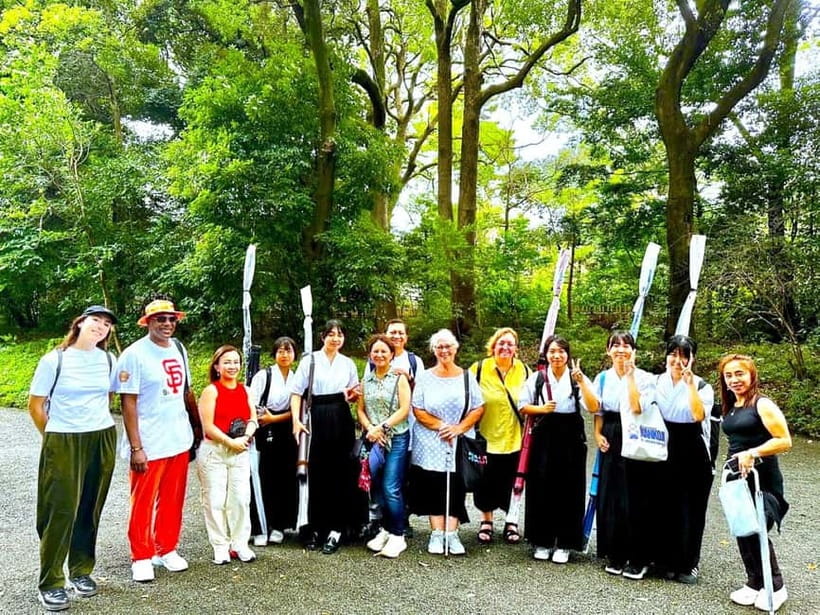
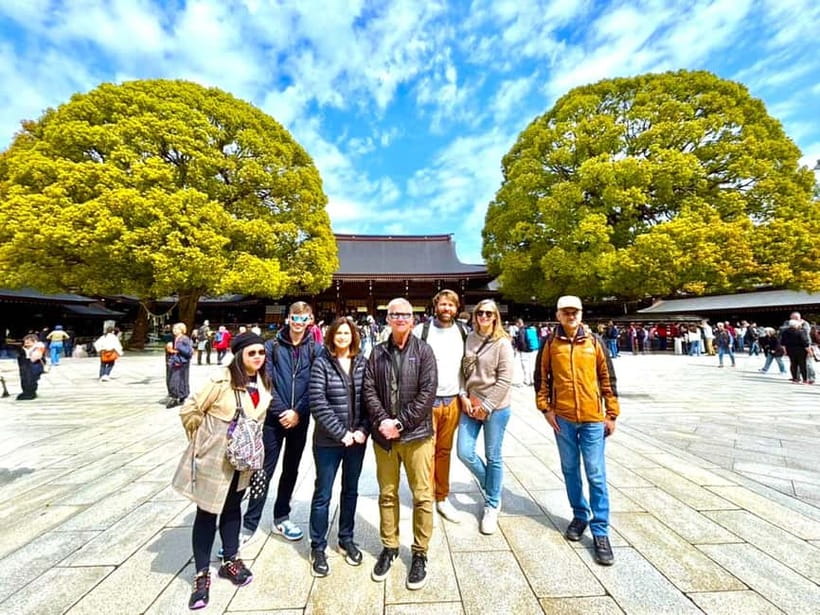
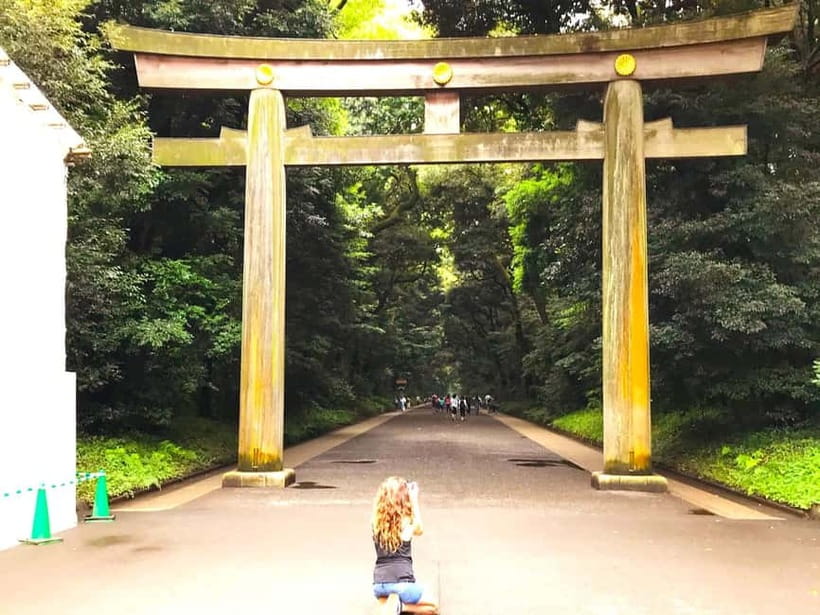
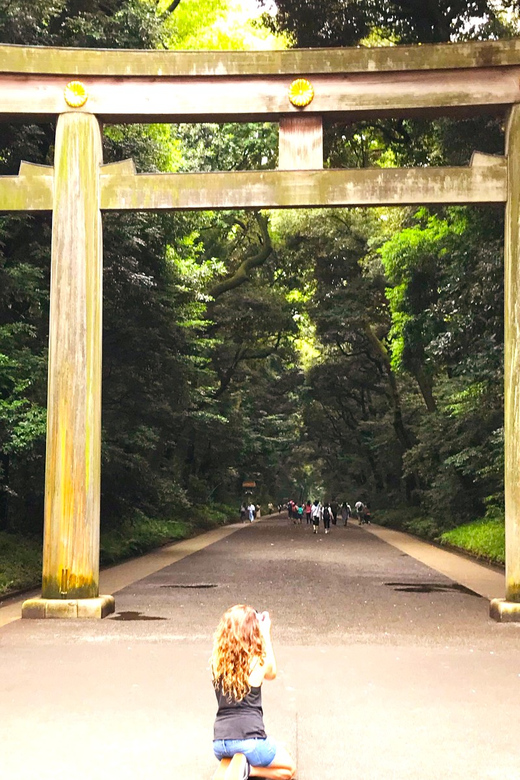
The first stop is Meiji Jingu, reached through a broad wooded setting that feels far removed from Tokyo’s traffic. The shrine is dedicated to Emperor Meiji and Empress Shoken, and it offers a calm introduction to Shinto practice.
Your guide can help you with the basic customs: bowing at the entrance, rinsing your hands, and making a respectful offering. You do not need to be religious to appreciate the visit. It is a useful place to learn how sacred spaces fit into ordinary Japanese life.
The scheduled visit lasts about 30 minutes. That is enough for an introduction and a look at the main approach, but not enough for an unhurried wander through every path.
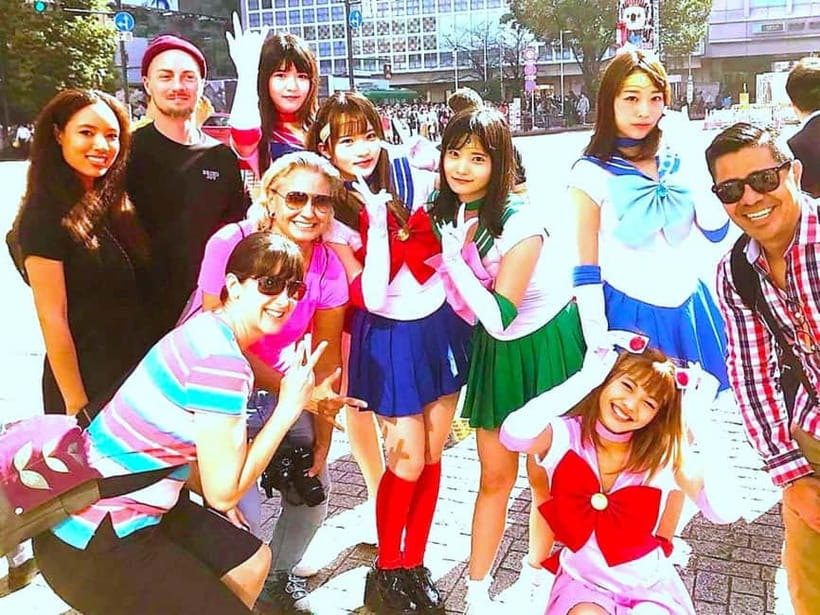
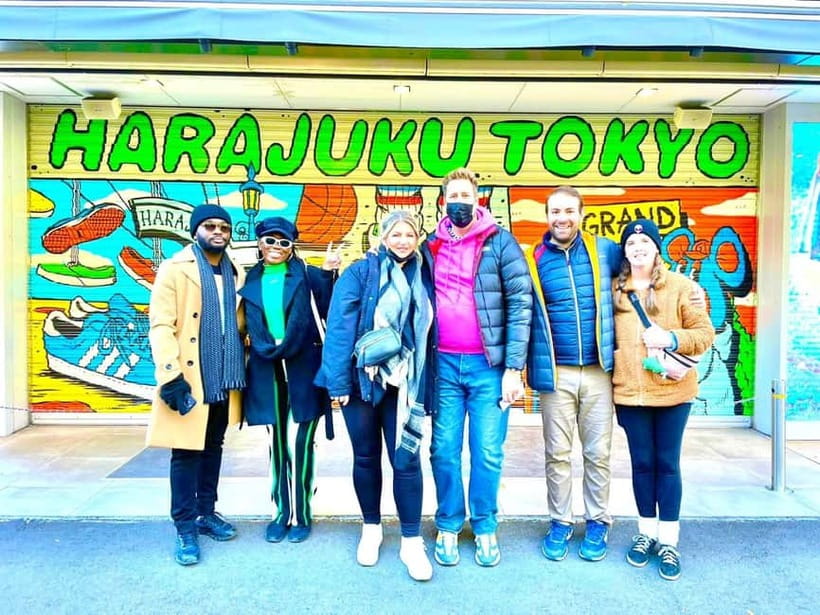
Next comes Harajuku, where the mood changes sharply. Fashion shops, youth culture, cute goods, and street snacks replace the quiet shrine grounds. The tour spends another 30 minutes here, giving you a quick look at the district’s style and energy.
This is a good contrast early in the day. You see that Tokyo’s traditional and modern sides are not kept in separate zones. They often sit within a few minutes of each other.
Shibuya delivers Tokyo’s best-known urban scene
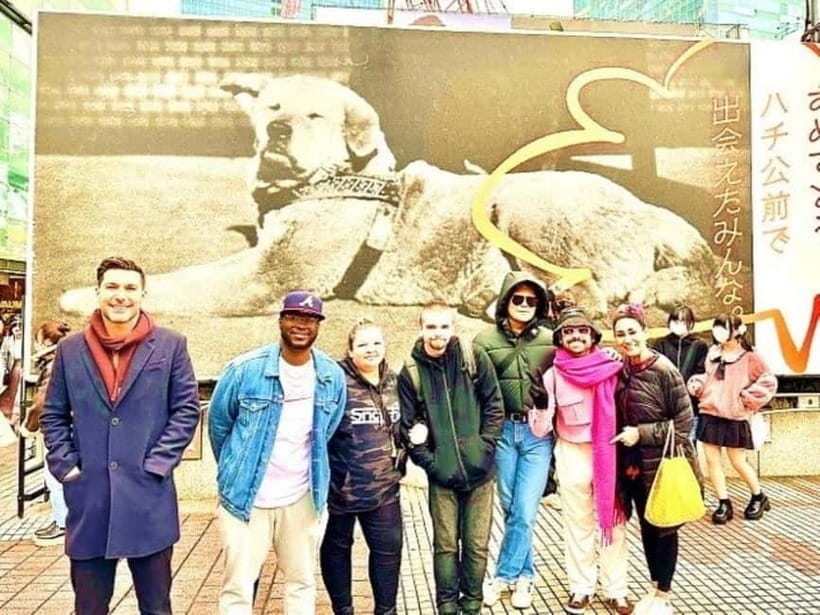
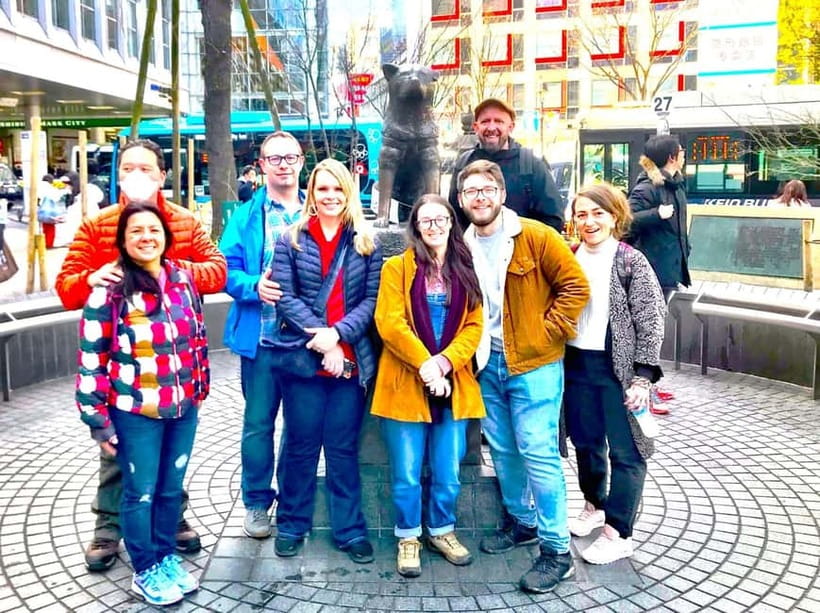
From Harajuku, the route heads toward Shibuya and the Hachiko Statue. The story of Hachiko, the dog remembered for waiting faithfully for his owner, gives the meeting point a human detail amid the traffic and commercial signs.
The stop is short, about 10 minutes, so expect a photo and a brief explanation rather than a long pause. Your guide can also help you understand why this statue functions as such a popular meeting place.
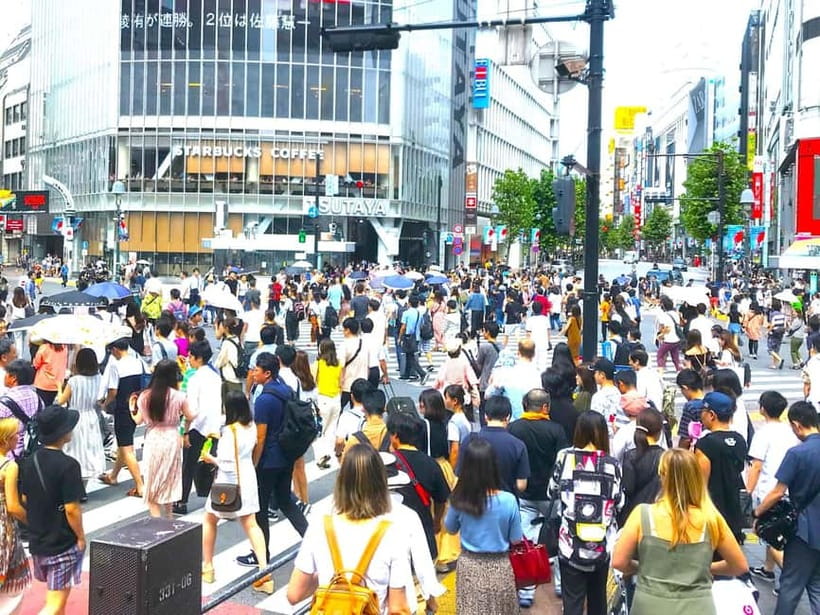
Then you cross Shibuya Scramble. The crossing is famous because several streams of people move through the intersection at once, while the surrounding screens and buildings create one of Tokyo’s most recognizable city views.
You have about 10 minutes here. That is enough for the crossing and photos, but you will not have time to shop or visit the neighborhood’s many department stores. If Shibuya is high on your personal list, you may want to return on another day.
The metro ride after Shibuya lasts about 30 minutes. This is not wasted time. It is part of the lesson in using Tokyo’s rail system, though you should keep your transport card ready and stay close to the guide.
Tsukiji is the day’s main food stop
Tsukiji Honganji Temple offers a surprising change. Its architecture has Indian-inspired details and stained glass, making it unlike the more familiar wooden temple designs you may see elsewhere in Tokyo.
The scheduled visit lasts 30 minutes. Look closely at the exterior before heading into the Tsukiji Outer Market, known as Japan’s Kitchen.
Tsukiji is where the tour slows down. You have about an hour and a half to look at food stalls, fresh seafood, snacks, and specialty shops. Lunch is not included, so this is the point where you pay for what you choose.
Cash matters here. The instructions specifically call for Japanese yen because some shops and food sellers accept cash only. Vegetarian and vegan options are available, but the guide can point you toward suitable choices rather than providing a prepaid meal.
I like this arrangement because you can choose your own appetite and budget. You are not locked into one restaurant or a fixed menu. The drawback is that food costs vary, and a market stop can become expensive if you keep sampling.
This is also one of the few places where you have real freedom to browse. Keep an eye on the meeting time, since the tour has a tight schedule after lunch.
Same city, a completely different kind of day:
- Mt Fuji and Hakone 1-Day Bus Tour Return by Bullet Train
★ 5.0 · 26,383 reviews - 1-Day Tokyo Bus Tour
★ 5.0 · 14,250 reviews - Tokyo: TOKYO SKYTREE® Admission ticket
★ 4.5 · 11,192 reviews - Tokyo: teamLab Planets TOKYO Digital Art Museum Entry Ticket
★ 4.6 · 9,779 reviews
Imperial Palace, Marunouchi, and Tokyo Station show Tokyo’s polished side
After Tsukiji, a 10-minute subway ride brings you toward the Imperial Palace. The visit to the palace grounds is brief, about 15 minutes, but you can see the stone walls and get a sense of the site’s connection to Edo Castle.
Do not expect an interior palace tour. This is an exterior orientation stop. The value is in the setting and the story, especially when your guide connects the former castle town to modern Tokyo.
Marunouchi follows with another short 15-minute walk. This district places sleek office towers beside imperial-era surroundings. It is a useful reminder that Tokyo’s development did not erase every older layer.
Tokyo Station Square receives another 15 minutes. The red-brick station building is one of the city’s most distinctive landmarks, and it makes a strong photo stop.
These three locations are grouped efficiently, but the timing is tight. If you want extensive palace gardens, shopping in Marunouchi, or a detailed look inside the station, plan to return independently.
Akihabara adds anime, games, and pop culture
A 10-minute train ride leads to Akihabara. The district is the route’s clearest expression of Japanese anime, gaming, electronics, and pop culture.
The official sightseeing time is about 30 minutes. That gives you a first look at the neon signs and specialist shops, but it is not enough for serious shopping. Akihabara can easily consume half a day if you want to browse multiple floors or look for a particular item.
The guide’s role here is especially useful for first-time visitors. You can ask what kinds of shops fit your interests and how the district developed its reputation. You also get a chance to compare the neighborhood’s playful commercial style with the formal Marunouchi streets visited earlier.
Keep purchases light. Oversized luggage is not allowed, and you still have several stops and train rides ahead.
Ueno Park and Ameyoko reveal another side of the city
The next train ride takes about 10 minutes to Ueno Park. The park is associated with museums, art, and samurai history, and the 30-minute stop provides a broad introduction.
The tour does not include museum entry, and there is no time for a full gallery visit. The park works better here as a cultural overview. You can see how public green space, museums, and historic associations come together in central Tokyo.
Ameya-Yokocho follows with 15 minutes of market streets and local food. The area has a more rough-edged, commercial feel than Marunouchi, making it another useful contrast.
The stop is short, so you will likely focus on the atmosphere and a few quick food or shopping sights. If you enjoy markets, you may want to return after the tour with more time and cash.
Asakusa finishes with Tokyo’s oldest major temple
The final area is Asakusa, one of the strongest parts of the route. Senso-ji is Tokyo’s oldest temple and the spiritual center of the district.
You have about 30 minutes to see the temple area. This is enough to understand the main approach, notice the gate and lanterns, and learn the basic customs from your guide. As with Meiji Shrine, follow the local etiquette rather than treating the site as only a photo backdrop.
Asakusa Shrine, within the Senso-ji grounds, receives another 10 minutes. It offers a quieter Shinto counterpoint to the larger Buddhist temple.
The tour finishes here, not at a central hotel or rail station. Asakusa has plenty of transport links, but you should confirm your return route before setting off. The advertised evening izakaya celebration is described as an optional final experience, yet dinner is not included, so clarify the plan and budget before booking if that part matters to you.
What the $90 price really buys you
The price is $90 per person, with the guide fee and taxes included. You pay extra for around 1,500 yen in rail fares, food, drinks, and any shopping.
The attractions themselves are free to enter. That makes the price easier to judge: you are paying mainly for route planning, local interpretation, public transport help, and the ability to cover a large part of Tokyo without organizing it yourself.
For a first day, that can be good value. A local guide removes much of the stress from moving between Yoyogi, Shibuya, Tsukiji, Marunouchi, Akihabara, Ueno, and Asakusa. The small group also gives you more personal attention than a large coach tour.
The value is weaker if you already know Tokyo’s rail system or prefer to spend an hour at each site. Independent travelers with plenty of time can visit these areas on their own for much less. This tour earns its price through convenience and context, not through included meals or paid admissions.
Prepare for the 20,000-step reality
Wear supportive walking shoes and easy-moving clothes. The route includes stations, sidewalks, market streets, temple approaches, and long periods on your feet.
The tour runs in rain, so carry an umbrella or raincoat. Bring cash in yen and a pre-charged Suica, Pasmo, or Icoca card. A transport ticket is not included, and you should not rely on buying everything with a bank card.
The tour is for leisure visitors only. Participants under 18 need an accompanying adult, and children under 13 require a private tour. The experience is not suitable for pregnant people, wheelchair users, people with back trouble, people with a cold, or anyone with a low fitness level.
There is also a no-alcohol rule. Stay with the guide throughout the day, since the guide cannot leave the group to search for someone who wanders away.
Who should book this Tokyo tour?
I would choose this tour if you are visiting Tokyo for the first time, want a fast orientation, and like having a local explain the small rules that guidebooks often miss. It is also a good fit if you want to compare Tokyo’s major districts in one day rather than base yourself in one neighborhood.
The strongest feature is the guide. Yasuko and Michiko have been praised for friendly conversation, clear English, deep local knowledge, and attention to each person’s condition. That personal care matters on a long walking day.
I would skip it if you dislike fixed schedules, have limited stamina, or want long museum visits and leisurely meals. The route is ambitious, and some stops are little more than introductions.
Book it for your first full day if you can handle the walking. Then use what you learn to return to your favorite districts at a slower pace. That is where this tour makes the most sense: it gives you the map, the manners, and a well-packed first look at Tokyo.
FAQ
How long does the Tokyo Full Course Tour last?
The tour lasts 10 hours.
Where does the tour begin?
It begins outside the ticket gate at the west exit of JR Yoyogi Station, at 1-chome-34 Yoyogi, Shibuya City, Tokyo.
Where does the tour finish?
The tour finishes at Asakusa Shrine.
How many people can join the group?
The group is limited to seven participants.
What language is the tour conducted in?
The live tour guide speaks English.
Are admission fees included?
The listed attractions are free to enter, and the guide fee and taxes are included. Food, drinks, public transport, and any other entrance fees are not included.
How much should I budget for transportation?
Metro and JR fares cost approximately 1,500 yen, or about $10.
Do I need a transport card?
Yes. Bring a pre-charged Suica, Pasmo, or Icoca card for the metro and train rides.
What should I wear?
Wear comfortable sporty shoes and clothing that allows easy movement. The route can involve about 20,000 steps.
Can children join the tour?
People under 18 must be accompanied by an adult. Children under 13 require a private tour, and the activity is not suitable for children under 13 in the regular group format.
Just added around Tokyo
- Tokyo: Customizable Private Guided Walking Tour★ 4.5 · 129 reviews
- Private Harajuku Omotesando Architecture Tour★ 4.9 · 18 reviews
- Tokyo: Guided Helicopter Ride★ 4.9 · 24 reviews
- Tokyo: Guided Walking Tour of Tsukiji Market with Lunch★ 4.4 · 24 reviews
- Tokyo: Private Personalized Local Food Tour★ 4.5 · 101 reviews
- Tokyo GINZA: KONPARU Japanese Cabaret Show with Drink★ 4.8 · 38 reviews
- Tokyo: Guided Walking Tour of Tsukiji Market with Breakfast★ 4.4 · 134 reviews
- Tokyo: Gotokuji Cat Temple, Shinjuku Cat Cafe & 3D Cat Tour★ 4.9 · 38 reviews
Walking Tours, compared.
Kyoto Geisha Walking Tour: Gion District & Hidden Gems
Read our review →
Tokyo Tsukiji Fish Market Food and Culture Walking Tour
Read our review →
Gion Magical Night Walking Tour with Geisha Trivia
Read our review →
Imperial Palace and Shogun Historical Walking Tour
Read our review →
Gion Geisha District Walking Tour – Stories of Geisha
Read our review →
Asakusa Walking Tour with Sensoji Temple Visit
Read our review →
Kyoto Gion Geisha District Walking Tour – The Stories of Geisha
Read our review →Browse the lists this tour appears in