
REVIEW · WALKING TOURS
Tokyo Full Course Tour: Explore 15 Must-See Sights & Hidden Gems
Tokyo rarely reveals itself in one tidy neighborhood. This tour tackles the city at full speed, linking Meiji Jingu, Shibuya Crossing, Tsukiji, Akihabara, Ueno, and Asakusa in one long day. You move by metro and on foot, with a local guide explaining the customs and stories that connect these very different districts.
I like two things right away: the group is capped at five people, and guides such as Yasuko, Michiko, and Takashi can shape the day around the group. I also like the practical mix of famous sights, local streets, sushi, and a possible drink with small dishes at an izakaya.
The trade-off is the pace. Ten hours, many neighborhoods, and several train rides leave little time to linger. You should also budget separately for metro fares, lunch, drinks, and any other food.
In This Review
- Key points at a glance
- Why this tour works as a first day in Tokyo
- Meiji Jingu and Harajuku: shrine calm beside youth culture
- Hachiko and Shibuya Crossing in quick succession
- Tsukiji Hongwanji Temple and the fish market
- The Imperial Palace, Marunouchi, and Tokyo Station
- Akihabara and Ueno: technology, entertainment, and public park space
- Ameyoko and the final temple district
- Sushi, an izakaya, and the real cost of the day
- How demanding is the 10-hour route?
- Which guide style suits this experience?
- Who should book this Tokyo tour?
- Should you book the Tokyo Full Course Tour?
- FAQ
- How long does the Tokyo Full Course Tour last?
- How many people can join the tour?
- Where does the tour begin?
- Where does the tour end?
- Are transportation, food, and drinks included?
- Is the tour suitable for children?
- What happens if I arrive late or cancel?
Key points at a glance
- Up to 15 Tokyo sights in one day: The route covers major landmarks and less obvious local stops across the city.
- A maximum of five people: A small group makes it easier to ask questions and stay close to the guide.
- A useful first-day orientation: You see enough of Tokyo to decide which districts deserve a second visit.
- Sushi at Tsukiji: The schedule allows about 90 minutes for the market and a sushi lunch at a Japanese restaurant.
- Metro travel is part of the lesson: You learn how to get around Tokyo, but transportation costs are extra.
- A strong guide can shape the experience: Yasuko and Michiko receive special praise for clear explanations and warm, attentive help.
Why this tour works as a first day in Tokyo
I see this as a city sampler rather than a slow sightseeing walk. You begin in western Tokyo, cross through central districts, and finish in Asakusa in the east. That gives you a useful sense of how spread out Tokyo is, while showing how quickly the city changes from shrine forest to neon streets, markets, office avenues, and old temple grounds.
The small group matters here. On a full-day route with repeated station transfers, a guide can keep everyone together and answer questions without shouting across a large crowd. Yasuko is praised for patient explanations and personal help, while Michiko is noted for clear accounts of Japanese history and culture. Takashi has also adjusted a day for a guest who wanted to visit the zoo and see pandas.
That flexibility is valuable, but it is not a promise that every stop can be changed. The published route is packed, so you should tell the provider about important requests before the day begins.
The title promises 15 sights, while the named schedule lists 14 principal stops. The route may include an extra local stop or small sight along the way, but you should not book this expecting 15 lengthy visits. Most stops last 10 to 30 minutes.
More Walking Tours in Tokyo
- Tokyo Tsukiji Fish Market Food and Culture Walking Tour
★ 5.0 · 3,184 reviews - Tokyo: Imperial Palace and Shogun Historical Walking Tour
★ 5.0 · 2,251 reviews - Tokyo: Shinjuku Local Bar and Izakaya Guided Walking Tour
★ 4.9 · 1,794 reviews
Meiji Jingu and Harajuku: shrine calm beside youth culture
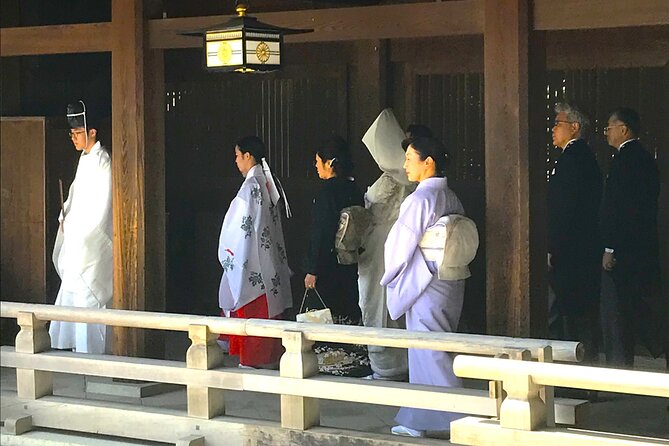
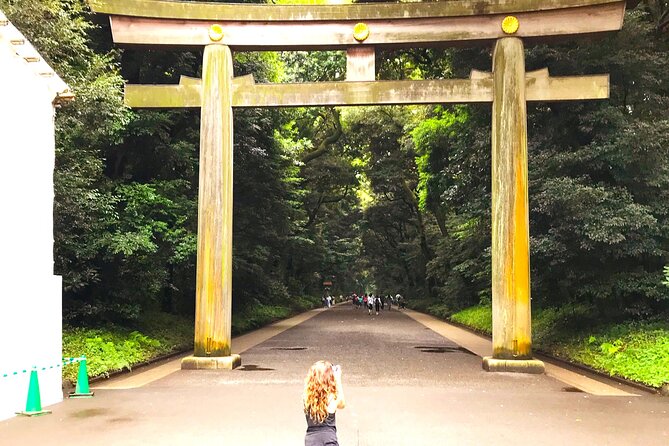
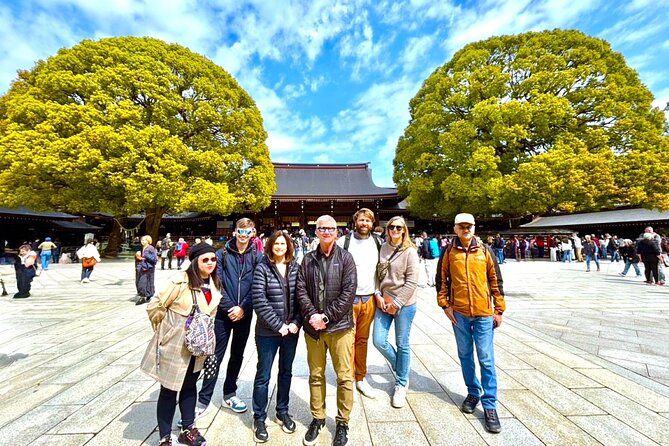
The day begins at Meiji Jingu, one of Tokyo’s best places to see Shinto customs in a quiet setting. You get 30 minutes here, enough for the guide to explain the shrine and basic Japanese religious traditions, though not enough for an unhurried visit.
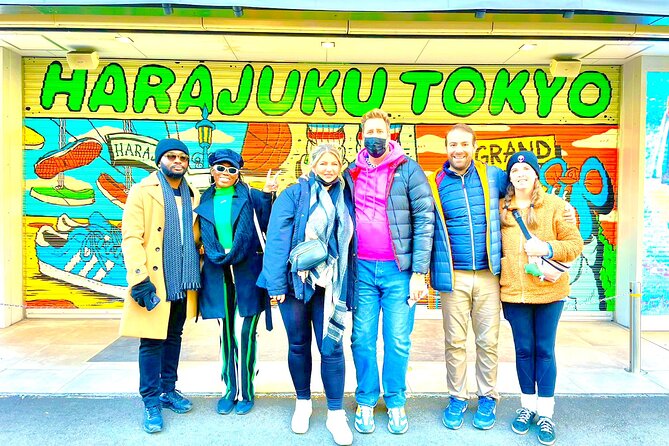
From there, the group heads to Harajuku fashion street. The contrast is the point. Meiji Jingu offers broad paths and traditional rituals, while Harajuku presents Tokyo’s youth style and street fashion. Thirty minutes gives you a quick look rather than a shopping session.
I would pay attention to the guide’s cultural explanation here. The value is not only in seeing a shrine and a fashion district. It is in understanding how both fit into modern Tokyo, where old customs and rapidly changing trends share the same few blocks.
If you want time to browse shops or take many photographs, this portion may feel short. Keep your camera ready, listen closely, and save detailed shopping for another day.
Hachiko and Shibuya Crossing in quick succession
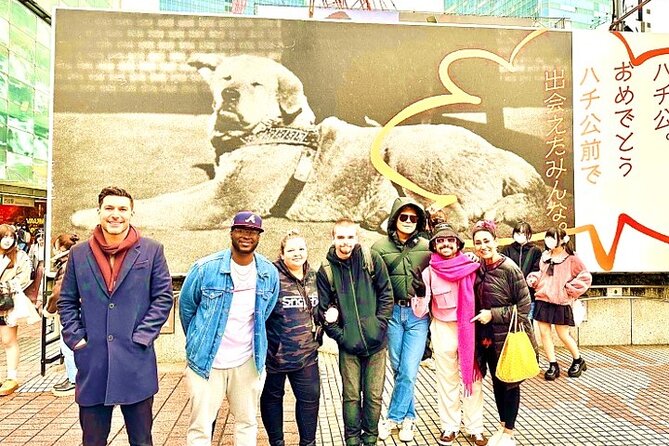
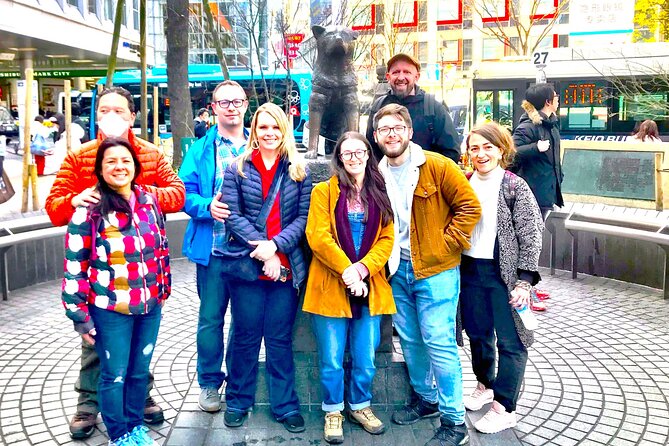
The Hachiko stop lasts about 10 minutes and introduces one of Tokyo’s most familiar meeting points. The statue honors Hachiko, the loyal dog associated with Shibuya, and the surrounding station area gives you a useful glimpse of daily city movement.
Next comes Shibuya Crossing, with another 10-minute stop. You see the famous intersection and experience one of Tokyo’s best-known public spaces, but the schedule does not include a long pause in a café, observation deck, or department store.
This is a good example of the tour’s method: short visits let you collect a broad picture of Tokyo. You will not study every area in detail, but you will know which places you want to revisit. If Shibuya is high on your list, note the station exit and the surrounding streets so you can return on your own.
Tsukiji Hongwanji Temple and the fish market
Tsukiji Hongwanji Temple receives about 30 minutes. The temple adds a different style of worship and architecture to the day, and your guide can place it in the wider story of Japanese religious life.
The next stop, Tsukiji Fish Market, gets roughly 90 minutes. This is one of the more substantial sections of the tour and includes time for sushi lunch at a Japanese restaurant. The market offers a chance to see the food culture of Tokyo at close range, while the meal gives the group a break after the morning’s walking and train travel.
Food and drinks are not included in the $104.34 tour price. Bring cash, since the practical information specifically recommends having it ready. The sushi meal is an important part of the experience, so keep room in your budget rather than treating the advertised price as the full cost of the day.
The market can be crowded and busy, and 90 minutes passes quickly once you walk, choose a restaurant, and eat. You should follow the guide closely and avoid wandering off, since the group is expected to remain with the host.
Same city, a completely different kind of day:
- Mt Fuji and Hakone 1-Day Bus Tour Return by Bullet Train
★ 5.0 · 26,383 reviews - 1-Day Tokyo Bus Tour
★ 5.0 · 14,250 reviews - Tokyo: TOKYO SKYTREE® Admission ticket
★ 4.5 · 11,192 reviews - Tokyo: teamLab Planets TOKYO Digital Art Museum Entry Ticket
★ 4.6 · 9,779 reviews
The Imperial Palace, Marunouchi, and Tokyo Station
After lunch, the route shifts to central Tokyo. At the Imperial Palace, you walk outside for about 15 minutes. This is an exterior view, not a palace interior visit, so set your expectations accordingly.
Marunouchi follows with another 15-minute look at one of Tokyo’s polished business districts. The broad streets and modern buildings contrast with the shrine, market, and neighborhood streets earlier in the day.
Tokyo Station’s Marunouchi Ekimae Hiroba also gets about 15 minutes. The station area is a useful stop because it links Tokyo’s grand railway network with the city’s central business core. The schedule lists admission as not included, though the tour description does not specify a separate attraction ticket. Your main expense here is likely transportation, which is also outside the tour fee.
These three short stops work best as orientation points. You see how Tokyo’s political center, office district, and major railway hub relate to one another. You will not have time for museums, palace gardens, or a long station exploration.
Akihabara and Ueno: technology, entertainment, and public park space
Akihabara gets 30 minutes. The district is known for electronics, games, anime, and related pop culture, though this tour offers only a quick street-level introduction. If you have a particular shop or product in mind, you will probably need to return later.
The route then heads to Ueno Park for another 30 minutes. The park changes the mood again, giving you open public space after the dense streets of Akihabara. Depending on the day’s timing and the guide’s choices, you might find the park more interesting as a break than as a full attraction visit.
One review describes Takashi changing the route for a guest who wanted to see pandas at the zoo. That shows that the guide may be able to respond to individual interests, but you should request such a change in advance and understand that time limits may prevent it.
This section is especially useful if you have only two days in Tokyo. You get a first look at districts that appeal to very different interests, then can decide where to spend a free afternoon.
Ameyoko and the final temple district
Ameyoko Shopping Street receives about 15 minutes. It is a market street with a more everyday feel than the polished Marunouchi district. The short stop is enough to see the atmosphere and understand the area’s role as a busy shopping corridor, but not enough for serious browsing.
The tour then reaches Asakusa Higashi Hongan-ji Temple, identified in the schedule alongside Asakusa’s Sensoji area, for about 30 minutes. This is one of the day’s strongest historical sections. Asakusa gives you a more traditional side of Tokyo, with temple grounds, religious buildings, and streets built around visitors coming to worship and shop.
Asakusa Shrine follows for 10 minutes. The brief stop lets the guide explain the relationship between the shrine and the surrounding temple area. Since the tour ends near Asakusa Station, you can continue exploring after the official route if your energy holds up.
The finish is well chosen. After a day of crossing Tokyo, Asakusa provides a calmer place to end, and you are already positioned in one of the city’s best-known historic districts.
Sushi, an izakaya, and the real cost of the day
The tour price is $104.34 per person, before food and transportation. For a maximum of five people and about 10 hours with a local guide, I consider that a reasonable price if you want orientation and company rather than a self-guided day.
Still, calculate the full cost. You pay for metro rides, sushi lunch, drinks, and any snacks separately. The tour description also mentions enjoying a drink at an izakaya bar, and one account describes ending the day with drinks and appetizers. Because food and beverages are explicitly excluded, treat this as a possible part of the social experience, not an included benefit.
You should prepare a Suica or PASMO, or another transportation IC card, before the tour. That makes transfers simpler and avoids stopping to buy individual tickets. Carry cash as well, since small food shops and market businesses may be easier to handle with it.
The value is highest for someone who wants an efficient overview. If you prefer a slow food tour, long temple visits, or extended shopping, the same price may feel less worthwhile because the schedule keeps moving.
How demanding is the 10-hour route?
You need moderate physical fitness. The day combines walking, standing, station transfers, and public transportation. No serious hiking is described, but Tokyo stations can involve long corridors, stairs, and busy platforms.
Wear comfortable shoes and keep your belongings manageable. A small group can move quickly, and the instructions are strict: arrive on time, follow the host, and do not split away from the group. Late arrivals are not accepted and do not receive a refund.
The tour starts at Yoyogi Station and ends around Asakusa Station. That cross-city route is convenient if you want to see both sides of Tokyo, but it is not ideal if you need to return to the starting area during the day.
The program is for people aged 18 and over unless accompanied by a guardian. Children under 13 require a request for a private tour. Anyone who is unwell or under the influence of alcohol cannot participate, with no refund.
Which guide style suits this experience?
The guide is the main variable. The strongest accounts focus on Yasuko and Michiko for their clear cultural explanations, kindness, and ability to keep the group interested through a long day. Yasuko is also described as attentive to personal needs, while Michiko has been praised for combining Tokyo’s major sights with a local restaurant and an evening drink.
That kind of guide makes a fast route more rewarding. Instead of simply pointing at a shrine or crossing, the guide can explain why the place matters and answer questions as you move.
The route is not designed as a silent photo walk. You should expect conversation, cultural context, and instructions about staying with the group. If you enjoy asking questions, this is a good setting. If you want complete independence, a private itinerary or self-guided day may suit you better.
One past account also mentions a kimono dress option. It is not described as a standard inclusion, so ask about it before booking rather than assuming it is part of the regular program.
Who should book this Tokyo tour?
I would choose this tour if you have only a short stay and want to see Tokyo’s major districts before deciding where to return. It is also a good fit for a first or second day, when a guide can help you understand the city’s train system and broad layout.
You should book it if you like:
- A full day with a clear route
- Small groups and direct access to a guide
- A mix of shrines, markets, shopping streets, and city landmarks
- Cultural explanations alongside sightseeing
- Sushi and a possible izakaya stop
- Walking and public transportation
I would think twice if you want long visits at each attraction, dislike fixed schedules, or need an easy-paced day. The tour covers a lot, but the reward is breadth, not depth.
The cancellation terms are strict. The experience is non-refundable and cannot be changed for any reason. Poor weather or failure to reach the minimum group size can lead to a different date, another experience, or a full refund, but a late arrival or personal cancellation does not receive the same protection.
Should you book the Tokyo Full Course Tour?
Book this tour if you want to get your bearings fast and see how Tokyo’s very different neighborhoods fit together. The small group, local guides, sushi stop, and broad route give you far more context than simply ticking off landmarks on a map.
The key is to accept the pace. Bring an IC card, cash, comfortable shoes, and enough money for lunch, drinks, and fares. Arrive early at Yoyogi Station, stay with the guide, and save your favorite district for a return visit.
For a first look at Tokyo, the $104.34 fee is fair. For a slow, highly focused cultural walk, it is too packed. Your choice should come down to one question: do you want to see a lot today, or understand one area in greater detail?
FAQ
How long does the Tokyo Full Course Tour last?
The tour lasts approximately 10 hours.
How many people can join the tour?
The group has a maximum of five travelers.
Where does the tour begin?
The meeting point is Yoyogi Station at 1 Chome-34 Yoyogi, Shibuya, Tokyo 151-0053, Japan.
Where does the tour end?
The tour ends around Asakusa Station at 1-chōme-1-3 Asakusa, Taito City, Tokyo 111-0032, Japan.
Are transportation, food, and drinks included?
No. Transportation expenses and food and beverage expenses are not included. You should prepare a Suica or PASMO card and carry cash.
Is the tour suitable for children?
Anyone under 18 must be accompanied by a guardian. If you include someone under 13, you must request a private tour.
What happens if I arrive late or cancel?
The tour starts on time, and late arrivals cannot join without a refund. The experience is non-refundable and cannot be changed for any reason. If poor weather or an insufficient number of participants causes the provider to cancel, you may be offered another date, another experience, or a full refund.
Just added around Tokyo
- Private Memorable Tokyo Tour with English Speaking Driver★ 5.0 · 30 reviews
- Private Tokyo Custom Full-Day Tour by Chartered Vehicle★ 5.0 · 16 reviews
- Private Sightseeing to Mt Fuji and Hakone with English Driver★ 5.0 · 51 reviews
- Tokyo Photography Masterclass – Private Photography Lesson★ 5.0 · 25 reviews
- Private Mt. Fuji Day Trip from Tokyo with English-Speaking Driver★ 5.0 · 33 reviews
- 4 Day Tour – Mount. Fuji, Tokyo, Hakone, Kamakura and Yokohama★ 5.0 · 19 reviews
- Private Unforgettable Mt Fuji Tour with English Speaking Driver★ 5.0 · 142 reviews
- Private Tokyo Food Tour – A Journey Through Time Through Food★ 5.0 · 36 reviews
Walking Tours, compared.

Kyoto Geisha Walking Tour: Gion District & Hidden Gems
Read our review →
Tokyo Tsukiji Fish Market Food and Culture Walking Tour
Read our review →
Gion Magical Night Walking Tour with Geisha Trivia
Read our review →
Imperial Palace and Shogun Historical Walking Tour
Read our review →
Gion Geisha District Walking Tour – Stories of Geisha
Read our review →
Asakusa Walking Tour with Sensoji Temple Visit
Read our review →
Kyoto Gion Geisha District Walking Tour – The Stories of Geisha
Read our review →Browse the lists this tour appears in