
REVIEW · WALKING TOURS
Tokyo: Full Course Tour: Explore 10 Must-Sees & Hidden Gems
Tokyo is easiest to understand when you see its sharp contrasts in one day: a forest shrine, a fish market, an imperial avenue, a neon arcade district, and the famous Shibuya crossing. This seven-hour small-group tour links those very different parts of the city by metro and on foot, with a local guide explaining what you are seeing along the way.
I like two things right away. First, the route gives you a useful first-day map of Tokyo instead of trapping you in one neighborhood. Second, all the listed attractions are free to enter, so your $77 mainly pays for the guide, planning, and help with a city that can be confusing at street level. The drawback is real: expect roughly 20,000 steps, changing trains, and a brisk pace that will not suit anyone with limited mobility or low fitness.
In This Review
- Key points at a glance
- A useful first day in Tokyo
- Starting with konbini culture and Meiji Jingu
- Shibuya’s Hachiko and the crossing
- Tsukiji Honganji and the Outer Market
- Imperial Palace, Marunouchi, and Tokyo Station
- Akihabara’s electric pop culture
- Sensoji and Asakusa Shrine
- Moving through Tokyo by metro
- What the $77 price really covers
- The walking demands are not minor
- Who should book this Tokyo tour
- FAQ
- How long is the Tokyo Full Course Tour?
- Where does the tour meet?
- How many people can join the group?
- Are transportation fares included?
- Is food included?
- Is the tour suitable for children or people with mobility concerns?
- Should you book it?
Key points at a glance
- About 20,000 steps in seven hours: Wear proper walking shoes and expect a full, active day.
- Tokyo’s big contrasts: Visit Meiji Jingu, Shibuya, Tsukiji, the Imperial Palace area, Asakusa, and Akihabara.
- Born-and-raised local guides: Guides such as Sam and Yasuko explain customs, history, transport, and everyday life.
- Small group of up to seven: A compact group makes it easier to ask questions and keep together in stations.
- Food is your responsibility: Lunch and snacks at Tsukiji are not included, with vegetarian and vegan choices available.
- Transport costs extra: Budget about 1,500 JPY, or roughly $10, for metro and JR fares.
A useful first day in Tokyo
This is not a slow neighborhood walk. It is a city sampler, designed to show you many sides of Tokyo before you decide where to spend more time later.
The route covers up to 10 major attractions and local stops, though the detailed plan names 12 places. That suggests the exact number can vary with timing, crowd levels, and how long your group spends at each site. You should think of it as a broad Tokyo orientation rather than a leisurely visit inside every attraction.
The meeting point is outside the ticket gates at the west exit of JR Yoyogi Station. That location is practical for the opening stop at Seven-Eleven and the nearby Meiji Jingu area, but you need to arrive early. The tour leaves on time, and late arrivals cannot join.
The guide is the main reason to choose this format. Sam and Yasuko are among the guides named for this experience, and the strongest praise centers on their explanations, kindness, and ability to answer questions. Yasuko has also used maps and iPad slides to help people understand where they are in the city. That sort of visual help matters when you are moving through several large districts in a single day.
More Walking Tours in Tokyo
- Tokyo Tsukiji Fish Market Food and Culture Walking Tour
★ 5.0 · 3,184 reviews - Tokyo: Imperial Palace and Shogun Historical Walking Tour
★ 5.0 · 2,251 reviews - Tokyo: Shinjuku Local Bar and Izakaya Guided Walking Tour
★ 4.9 · 1,794 reviews
Starting with konbini culture and Meiji Jingu
The first stop, Seven-Eleven, may sound too ordinary for a sightseeing route. In Tokyo, it is a smart introduction to konbini culture, the world of convenience stores that serve as quick food stops, cash points, parcel counters, and daily-life fixtures.
You can look at the snacks, prepared meals, drinks, and small practical items that make these stores so useful. Food purchases are not included, so this is also a chance to buy a small breakfast or snack if needed. Bring cash, since some smaller shops and food stops may not accept cards.
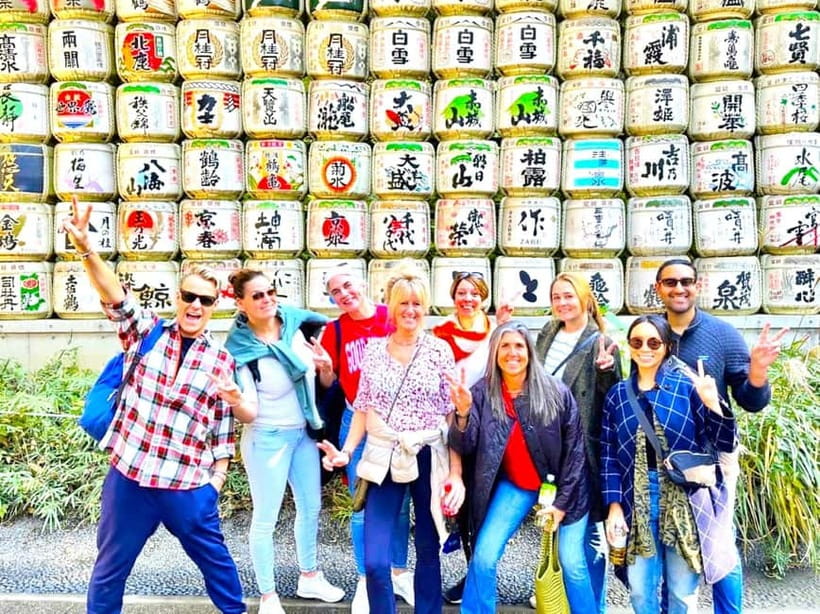
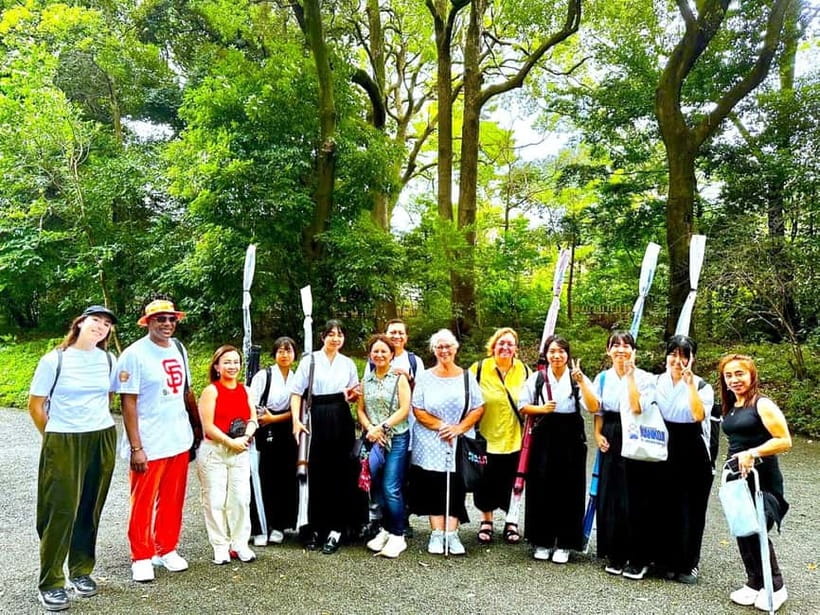
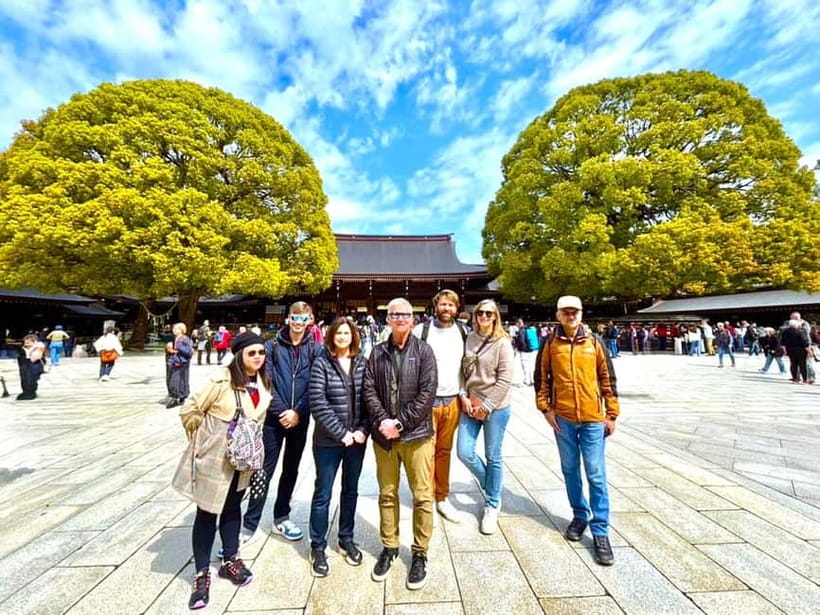
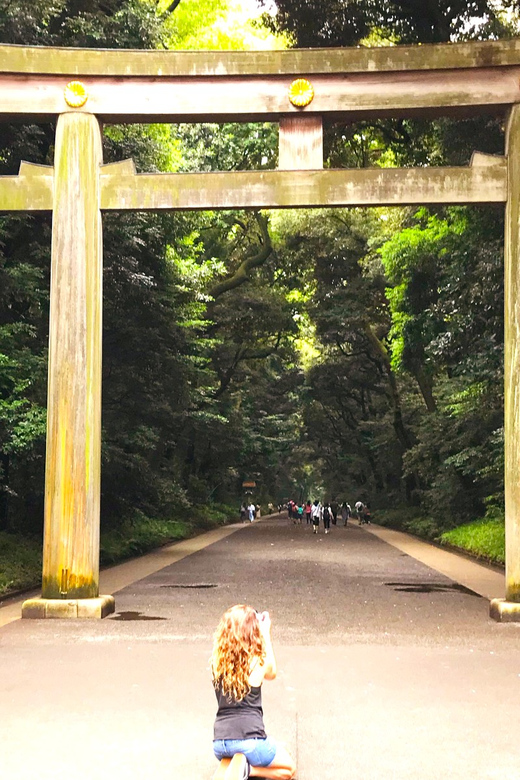
From there, the tour moves toward Meiji Jingu. The shrine’s wooded setting gives you a sharp change from the city streets. You will learn about Shinto customs and the way people behave at a Japanese shrine, including basic manners that are useful for the rest of your trip.
I like this pairing because it begins with ordinary Tokyo life, then shifts to a major spiritual site. The limitation is time. Meiji Jingu can reward a quiet, unhurried visit, while this tour needs to keep moving.
Shibuya’s Hachiko and the crossing
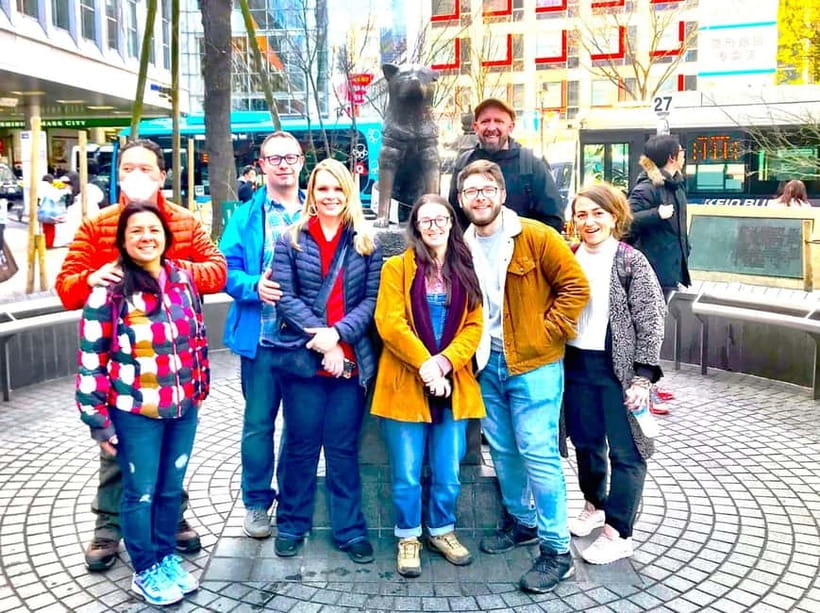
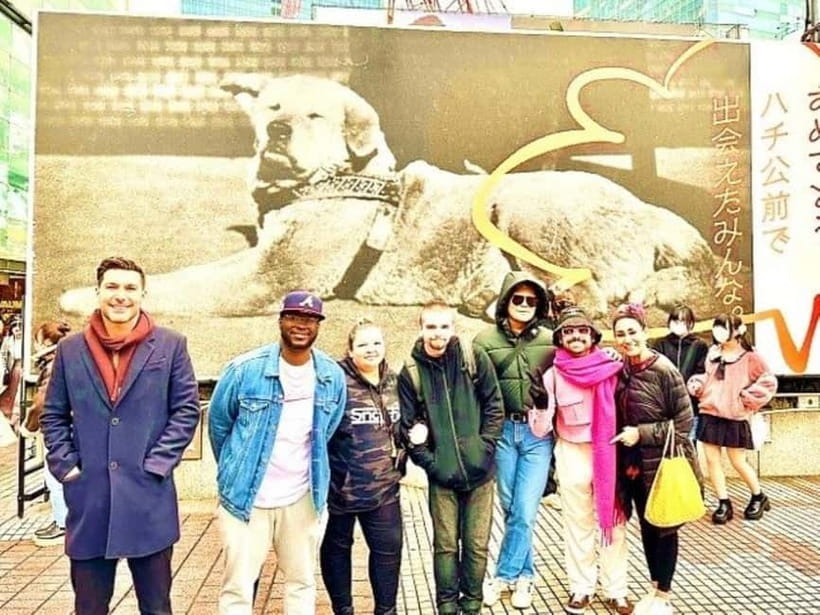
Shibuya brings the tour into one of Tokyo’s most recognizable public spaces. At the Hachiko statue, your guide explains the true story behind Japan’s famous loyal dog. The stop is brief but useful, since the statue is both a meeting point and a symbol of loyalty in modern Tokyo.
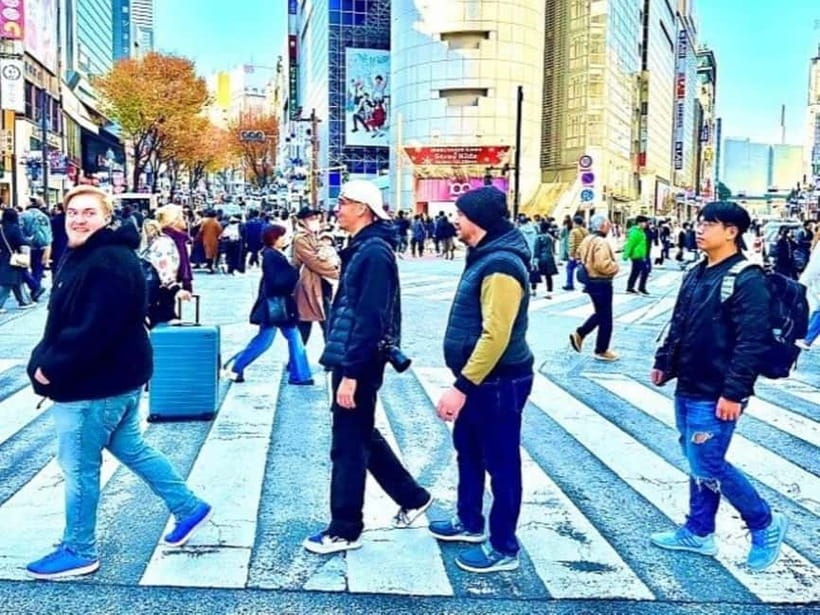
Next comes Shibuya Scramble Crossing. You will cross with the waves of pedestrians and get the classic view of Tokyo’s organized rush. The experience is more than a photo opportunity. Your guide can help explain how the crossing fits into the district’s youth culture, shopping streets, and wider image as a modern Tokyo center.
This is one of the tour’s most efficient sections. You do not need a separate plan to locate Hachiko or the crossing, and you can ask questions while the guide keeps the group oriented. You should not expect a long shopping break here. The focus is on seeing the district and understanding its role in the city.
Tsukiji Honganji and the Outer Market
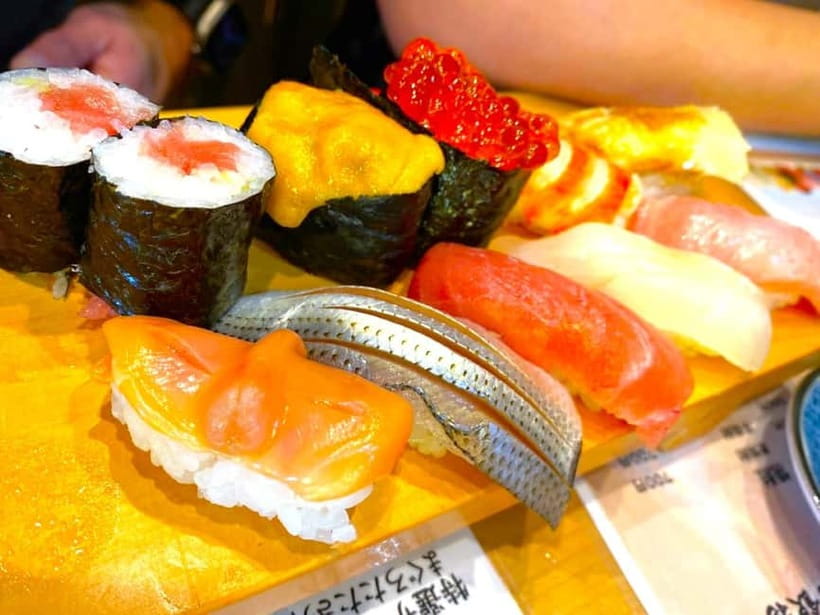
Tsukiji shifts the mood again. Before entering the Outer Market, you visit Tsukiji Honganji Temple, known for its unusual Indian-inspired architecture and stained glass. It does not look like a typical Japanese temple, which makes it an especially worthwhile stop on a route that already includes more traditional temple sites.
Then comes Tsukiji Outer Market, one of the best places on this route to pause for food. You may find fresh seafood, Wagyu, snacks, and other Japanese specialties, but lunch and drinks are not included. Carry yen and allow room in your budget for sampling.
The market is also where the pace can become less predictable. Narrow lanes, food counters, and browsing take time, and the group still has several districts ahead. Ask your guide which foods are worth prioritizing if you have only a short break. Vegetarian and vegan options are available, but tell the guide about your needs early in the day.
Tsukiji is valuable because it connects food with daily life rather than treating Japanese cuisine as a formal museum subject. At the same time, do not expect a dedicated food tour. You are making a market stop within a much larger city route.
Same city, a completely different kind of day:
- Mt Fuji and Hakone 1-Day Bus Tour Return by Bullet Train
★ 5.0 · 26,383 reviews - 1-Day Tokyo Bus Tour
★ 5.0 · 14,250 reviews - Tokyo: TOKYO SKYTREE® Admission ticket
★ 4.5 · 11,192 reviews - Tokyo: teamLab Planets TOKYO Digital Art Museum Entry Ticket
★ 4.6 · 9,779 reviews
Imperial Palace, Marunouchi, and Tokyo Station
The Imperial Palace area provides a look at Tokyo’s political and imperial center. You will walk near the grounds of the former Edo Castle, with its stone walls and broad historic setting.
The stop is mainly about the exterior areas and surrounding streets. Entrance fees are not part of the tour, and all listed attractions are described as free to enter, so the route is not built around a palace interior visit. Your guide’s explanation helps connect the site to Tokyo’s earlier identity as Edo and to the city’s modern role as Japan’s capital.
Marunouchi offers a different view. Sleek office towers sit beside the imperial grounds, making this one of the clearest places to see old and new Tokyo close together. It is a good walking section for people who want more than temples and pop culture.
Tokyo Station completes this part of the route with its red-brick exterior. It is a historic gateway as well as a major transport hub. The guide can help you read the city’s transport system in practical terms, which is useful if you plan to return to the station on your own.
This trio is less flashy than Shibuya or Akihabara, but I consider it important. It shows how Tokyo’s central districts work, and it gives you a better sense of the city’s scale.
Akihabara’s electric pop culture
Akihabara brings the tour into Tokyo’s anime, gaming, and electronics identity. Known as Electric Town, the district offers a strong contrast with Meiji Jingu, Tsukiji, and the Imperial Palace.
You will explore the area on foot and receive context about its pop culture role. The itinerary does not promise time for extended shopping, specific stores, or purchases, so treat this as an introduction rather than a shopping expedition.
That distinction matters. Akihabara can easily fill half a day if you want to browse carefully, compare products, or visit specialized shops. On this tour, you get a quick orientation and can mark the places you want to revisit later.
The benefit is variety. One day includes Shinto practice, market food, imperial architecture, office towers, rail history, and Japanese pop culture. Few first-day routes make those connections as clearly.
Sensoji and Asakusa Shrine
Asakusa provides the final major dose of old Tokyo. At Sensoji, you approach through Kaminarimon Gate and enter the area around Tokyo’s oldest temple. The route lets you see one of the city’s most important Buddhist sites and explains its place in traditional Tokyo.
Asakusa Shrine sits within the Sensoji grounds and adds a Shinto counterpart to the Buddhist temple. Your guide will explain the different histories and roles of the two sites, which is helpful because visitors can easily treat the entire complex as one attraction.
This is a strong closing area because it pulls together themes introduced earlier: religious manners, local history, public spaces, and the difference between Shinto and Buddhism. It is also another place where respectful behavior matters. Listen carefully to the guide’s advice about how to move through temple and shrine grounds.
Asakusa can be crowded, and seven hours of walking may make the final section feel tiring. Still, the contrast between Asakusa and Akihabara is one of the day’s best features.
Moving through Tokyo by metro
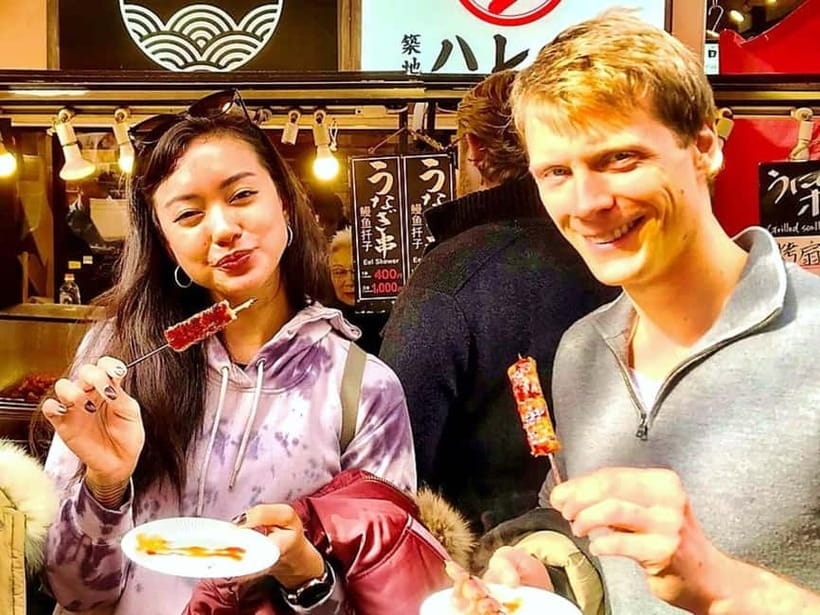
The tour uses metro and JR trains between areas, then continues on foot. Transport fares are not included, and you should budget about 1,500 JPY, or around $10, for the day.
You are expected to bring a pre-charged Suica, Pasmo, or Icoca card. This is not just a payment detail. The guide uses the transport system as part of the lesson, showing you how to move around Tokyo with more confidence after the tour ends.
You should stay with the group at all times. Large stations can be confusing, and the guide cannot leave the group to search for someone who wanders away. Keep your ticket or IC card ready, follow the meeting instructions, and avoid bringing luggage that slows you down.
The metro sections also explain why this tour moves quickly. Tokyo’s major districts are spread across the city. Seeing them in one day requires efficient transfers and a willingness to walk between stations, shrines, markets, and plazas.
What the $77 price really covers
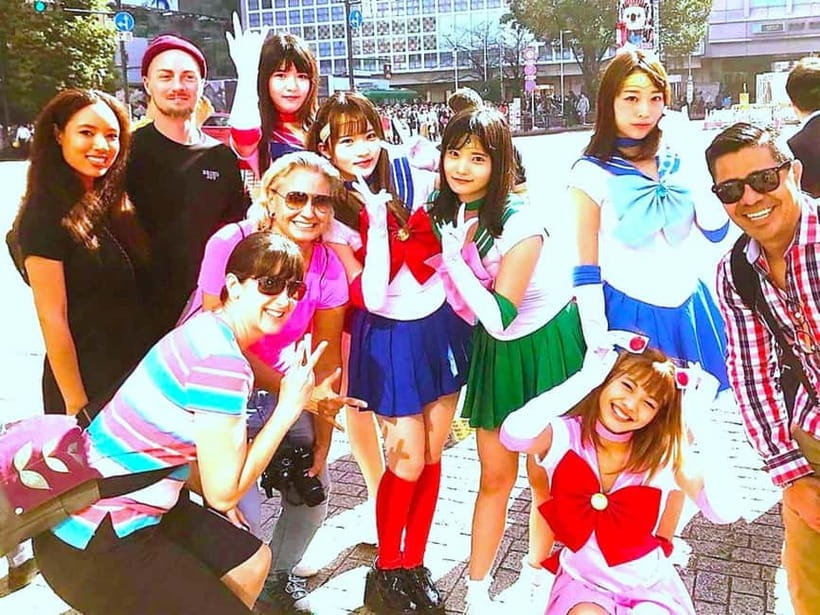
At $77 per person, the price is reasonable if you value orientation and local explanation. Your admission costs are minimal because the places on the route are free to enter, but you are paying for the guide’s time, route planning, transport help, and cultural context.
You will still need money for three things:
- Metro and JR fares, about 1,500 JPY
- Lunch at Tsukiji
- Snacks and drinks
The value is strongest for a first day, a short stay, or a stopover. If you already know Tokyo well and prefer to linger in one neighborhood, the packed route may not be the best use of your money.
The group limit of seven is another positive. It is small enough for direct questions without the cost of a private tour. Under-13s require a private tour, and anyone under 18 must be accompanied by an adult.
The walking demands are not minor
The 20,000-step estimate should guide your decision. You need sporty shoes, easy-moving clothes, and enough energy for repeated walking after train rides.
The tour is not suitable for pregnant people, wheelchair users, people with back problems, people with a cold, or those with a low level of fitness. High heels, large luggage, baby strollers, and baby carriages are not allowed. Alcohol and intoxication are also prohibited.
Rain does not automatically stop the tour. Bring an umbrella or raincoat, since the route proceeds in wet weather. You should also carry cash, because some shops and food stops accept cash only.
This is a poor match if you want air-conditioned breaks, long meals, or lots of time for photographs. It is a good match if you like active sightseeing and want a guide to handle the complicated parts of Tokyo.
Who should book this Tokyo tour
I would choose this tour for a first visit when you want to get your bearings fast. It is especially useful if you have only one full day, a short stopover, or several unplanned days after the tour when you can return to the areas you liked best.
It also suits you if you want cultural explanation rather than a simple list of photo stops. Guides such as Sam and Yasuko are praised for making history, etiquette, and daily customs easy to understand. Their use of maps and iPad slides can help you see how the districts fit together.
I would be more cautious if you have already spent time in Tokyo or prefer a slow pace. You may see many places, but you will not fully explore each one. The itinerary is best understood as a guided overview with useful local advice.
Free cancellation is available up to seven days before the tour for a full refund. Confirm the starting time when booking, and plan your route to JR Yoyogi Station well in advance.
FAQ
How long is the Tokyo Full Course Tour?
The tour lasts seven hours. Starting times vary, so you need to check availability for the date you want.
Where does the tour meet?
Meet outside the ticket gates at the west exit of JR Yoyogi Station, at 1-chōme-34 Yoyogi, Shibuya City, Tokyo 151-0053.
How many people can join the group?
The small group is limited to seven participants.
Are transportation fares included?
No. Metro and JR fares cost about 1,500 JPY, or approximately $10, and you need a pre-charged Suica, Pasmo, or Icoca card.
Is food included?
No. Lunch at Tsukiji, snacks, and drinks are extra. Vegetarian and vegan options are available.
Is the tour suitable for children or people with mobility concerns?
Children under 13 are not accepted on the group tour, and anyone under 18 must have an adult with them. The tour is not suitable for pregnant people, wheelchair users, people with back problems, people with a cold, or those with a low level of fitness.
Should you book it?
Book this tour if you want a fast, well-organized introduction to Tokyo and can handle a long day on your feet. The combination of Meiji Jingu, Shibuya, Tsukiji, the Imperial Palace area, Akihabara, and Asakusa gives you a useful sense of the city’s range.
Skip it if your priority is slow photography, extended market eating, shopping, or a deep visit to one temple or district. At $77, the tour earns its value through the local guide and the practical lessons: how to use transport, how to behave at sacred sites, and where to return after you have found your favorite part of Tokyo.
Just added around Tokyo
- Tokyo: Customizable Private Guided Walking Tour★ 4.5 · 129 reviews
- Private Harajuku Omotesando Architecture Tour★ 4.9 · 18 reviews
- Tokyo: Guided Helicopter Ride★ 4.9 · 24 reviews
- Tokyo: Guided Walking Tour of Tsukiji Market with Lunch★ 4.4 · 24 reviews
- Tokyo: Private Personalized Local Food Tour★ 4.5 · 101 reviews
- Tokyo GINZA: KONPARU Japanese Cabaret Show with Drink★ 4.8 · 38 reviews
- Tokyo: Guided Walking Tour of Tsukiji Market with Breakfast★ 4.4 · 134 reviews
- Tokyo: Gotokuji Cat Temple, Shinjuku Cat Cafe & 3D Cat Tour★ 4.9 · 38 reviews
Walking Tours, compared.
Kyoto Geisha Walking Tour: Gion District & Hidden Gems
Read our review →
Tokyo Tsukiji Fish Market Food and Culture Walking Tour
Read our review →
Gion Magical Night Walking Tour with Geisha Trivia
Read our review →
Imperial Palace and Shogun Historical Walking Tour
Read our review →
Gion Geisha District Walking Tour – Stories of Geisha
Read our review →
Asakusa Walking Tour with Sensoji Temple Visit
Read our review →
Kyoto Gion Geisha District Walking Tour – The Stories of Geisha
Read our review →Browse the lists this tour appears in