
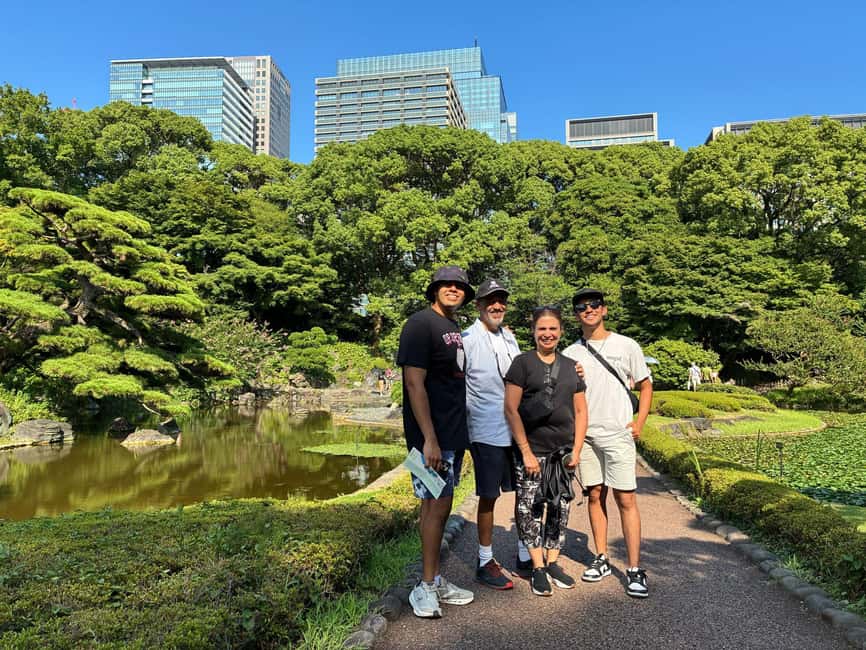
REVIEW · GARDEN & PALACE TOURS
Tokyo: Edo Castle Ruins & Imperial Palace East Garden Tour
Edo Castle was once the seat of shogun power, and its surviving stone walls, gates, moats, and guard posts make that story easy to picture. This two-hour walk connects those remains with the formal gardens of today’s Imperial Palace, so you get both Japan’s military past and its quiet present.
I like the small-group format, which gives you a better chance to ask questions than a large city tour. I also like the route’s clear highlights: Otemon Gate, the Tenshu-dai keep site, and the koi-filled Ninomaru Garden. The main thing to consider is that you cannot enter the palace buildings or inner grounds, and the experience may feel too light if you want a long, detailed lecture on Japanese history.
In This Review
- Key points to know before you book
- Edo Castle and the Imperial Palace in two hours
- Meeting at Wadakura Fountain
- Otemon Gate and the first castle defenses
- Doshin Bansho and Hyakunin Bansho
- Edo Castle ruins and the Honmaru main hall site
- The Tenshu-dai and the castle keep model
- Trees, Suwa no Chaya, and a quieter side of the grounds
- Ninomaru Garden and its koi pond
- What this tour does not include
- Guide style and the value of the commentary
- Practical details for a smooth visit
- Should you book the Edo Castle ruins tour?
- FAQ
- Where does the tour meet?
- How long does the tour last?
- What language is the tour conducted in?
- Does the tour enter the Imperial Palace buildings?
- Is admission included?
- What should I bring?
- Is the tour accessible for wheelchair users?
Key points to know before you book
- Otemon Gate sets the scene: Enter through the castle’s great outer gate and learn how visitors and soldiers were controlled.
- The old guardhouses are unusually useful stops: Doshin Bansho and Hyakunin Bansho help explain the layered defenses of Edo Castle.
- The Tenshu-dai offers the best historical viewpoint: See where the castle keep once rose and look across the surrounding area.
- Ninomaru Garden softens the military story: Its pond, koi, trees, and traditional garden design give the walk a calm finish.
- Guide quality matters: Mari and Isao receive praise for friendly, patient explanations, but one low rating describes a guide who said very little.
- This is an outdoor history walk: Wear comfortable shoes, bring water and a camera, and expect no access to palace interiors.
Edo Castle and the Imperial Palace in two hours
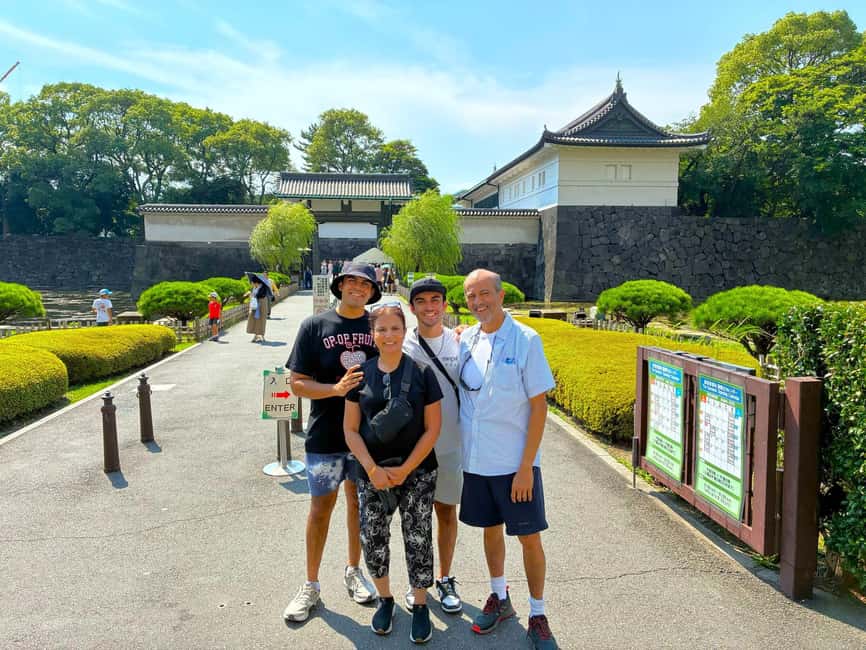
This tour gives you a compact introduction to one of Tokyo’s most important historic sites. You begin near Wadakura Fountain and then walk into the grounds of the former Edo Castle, following a route through gates, guard stations, ruins, the old main hall site, the keep area, and the East Gardens.
The setting can seem deceptively peaceful. Today, you see lawns, trees, stonework, ponds, and carefully arranged gardens. But these were once the center of political power under the Tokugawa shoguns. The tour’s value comes from learning how to read those quiet remains as parts of a defended fortress and a working seat of government.
At $37 per person, the price is reasonable if your guide gives the history real attention and answers questions. You are not paying for a long museum visit or access to palace rooms. You are paying for a guided walk through an important site where the stones and layout make more sense with context.
The tour lasts two hours, so it is easy to fit into a busy Tokyo schedule. It is also short enough that the pace should not become tiring for most people who are comfortable walking. Still, this is not a fully seated or indoor activity. The supplied information specifically says it is not suitable for children under six, people with mobility impairments, or wheelchair users.
More Garden & Palace Tours in Tokyo
- Tokyo: Imperial Palace and Shogun Historical Walking Tour
★ 5.0 · 2,251 reviews - Tokyo Castle & Imperial PalaceーShogun Walking Tour
★ 4.7 · 1,068 reviews - Tokyo: Imperial Palace Japanese History Walking Tour
★ 4.9 · 987 reviews
Meeting at Wadakura Fountain
Your meeting point is outside the Wadakura Free Rest Area, in front of the entrance. Look for the guide holding a yellow sign. This detail matters in central Tokyo, where a simple landmark can save you from wandering around a large public space looking for a person you have never met.
The walk begins with the Wadakura Fountain National Park and the fountain itself. Your guide explains that the fountain was built to commemorate a royal wedding. You spend about ten minutes here, which is enough for an introduction without letting the opening stop take over the tour.
You then move to the Wadakura Moat for around five minutes. This is a short stop, but it helps you see the practical side of the castle. Moats were not decoration. They formed part of the system that kept attackers away from the inner areas.
I like starting here because the fountain and park provide a gentle transition into the castle story. You get a modern imperial reference first, then begin tracing the older fortress that occupied this ground. Bring water, especially in warm weather, since most of the experience takes place outdoors.
Otemon Gate and the first castle defenses
Otemon Gate is one of the route’s strongest visual stops. It was the main entrance to the castle’s eastern side, and its size gives you a sense of the importance of Edo Castle. Your guide spends about ten minutes here, explaining how the entrance worked and why gates were designed as more than simple openings in a wall.
The castle’s defenses depended on controlled movement. An entrance could be watched, slowed, redirected, or closed. As you stand near Otemon Gate, you can better understand how a large political center protected itself through walls, moats, checkpoints, and trained guards.
The route continues to the Ote San-no-mon Gate Ruins for another ten minutes. Ruins can be easy to skim past when you are on your own. A guide can point out what the remains represent and connect them with the larger defensive plan.
This is where the tour should appeal to anyone who likes history made visible. You are not only hearing names from a textbook. You are standing among surviving parts of the system that once managed access to the shogun’s castle.
Doshin Bansho and Hyakunin Bansho
The Doshin Bansho guardhouse and Hyakunin Bansho guardhouse add human detail to the stonework. These stops help you picture the men who monitored the castle’s approaches, checked movement, and supported the wider security network.
You spend roughly ten minutes at the Hyakunin Bansho. The name refers to a guardhouse associated with one hundred guards, and the stop is meant to explain the castle’s samurai heritage and defensive structure. The Doshin Bansho is also part of this early section, giving you another look at how the entrance zone was staffed.
I find guardhouses especially useful on a castle tour because they keep the story from becoming only about rulers and grand buildings. The shoguns may dominate the historical narrative, but a fortress worked through ordinary routines: watch duty, inspections, rules, and controlled passage.
The quality of the explanation matters here. Some guides have been praised for answering questions patiently and explaining the palace and Japan’s past with enthusiasm. One low-rated experience described little commentary and felt like an ordinary park walk. That contrast is worth keeping in mind. The physical route is fixed, but the guide determines how much meaning you take from it.
Same city, a completely different kind of day:
- Mt Fuji and Hakone 1-Day Bus Tour Return by Bullet Train
★ 5.0 · 26,383 reviews - 1-Day Tokyo Bus Tour
★ 5.0 · 14,250 reviews - Tokyo: TOKYO SKYTREE® Admission ticket
★ 4.5 · 11,192 reviews - Tokyo: teamLab Planets TOKYO Digital Art Museum Entry Ticket
★ 4.6 · 9,779 reviews
Edo Castle ruins and the Honmaru main hall site
After the entrance defenses, you reach the main Edo Castle ruins. This section receives about fifteen minutes of guided explanation. The castle was not simply a single keep. It was a broad complex with gates, courtyards, residences, official spaces, gardens, and layers of defense.
The route then reaches the site of Edo Castle Honmaru, the main hall area, for about ten minutes. Honmaru was the core section of the castle. This stop gives you a sense of how central the site was to the shogunate’s rule, even though the original main buildings are no longer standing.
Do not expect a complete reconstructed palace here. The pleasure is in reading the site itself and using your guide’s explanation to imagine its former scale and purpose. If you need grand interiors, ornate rooms, and displays of furnishings, this walk will not provide them.
For me, the open setting is also the limitation. There is no single dramatic building to carry the whole visit. The experience works best when you enjoy fragments, spatial clues, and historical explanation. A good guide can make those fragments click into place.
The Tenshu-dai and the castle keep model
The Tenshu-dai is the base where Edo Castle’s great keep once stood. The tour spends about ten minutes at the site and also includes a restoration model of the Edo Castle keep. Together, these two elements help bridge the gap between what remains and what once dominated the castle.
The model is useful because the keep itself is not standing. You can compare the physical base under your feet with a visual sense of the structure that once rose above it. This is one of the clearest points on the walk for understanding the difference between a historic ruin and a reconstructed attraction.
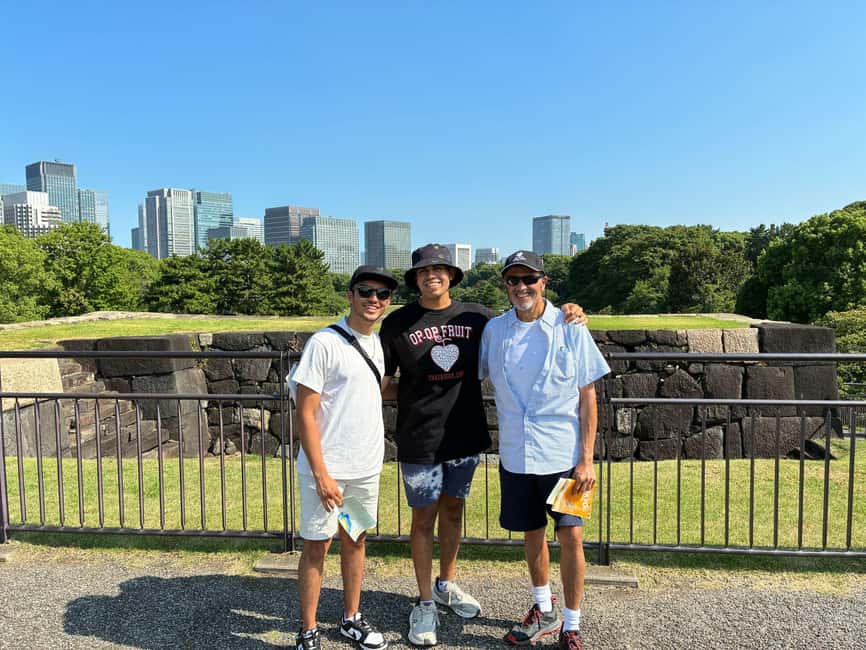
From the Tenshu-dai, you can enjoy panoramic views of the surrounding area. The view is not a replacement for entering a tower, but it gives you a strong sense of the site’s position and scale. You can look outward from the place where the castle’s highest structure once helped define the complex.
This stop will likely be a highlight if you enjoy city views with a historical edge. It also gives the tour a pause after the denser gate and guardhouse section. Bring a camera, but remember that flash photography is not allowed.
Trees, Suwa no Chaya, and a quieter side of the grounds
The route includes a stop labeled 都道府県の木, referring to the trees associated with Japan’s prefectures. The tour allows about ten minutes here. This adds a national and civic layer to the garden setting, shifting the focus away from castle defense and toward the plants and symbols found around the grounds.
You also visit Suwa no Chaya, a traditional tea house, with about ten minutes of guided time. The provided details do not indicate that tea service is included, so treat it as a scenic and cultural stop rather than a tea tasting.
These locations break up the stonework and military story. You get a chance to notice the way the East Gardens combine historical remains with plantings and peaceful paths. The change of mood is welcome, especially during a fast two-hour walk.
The guide’s role remains important. A short explanation can turn a tree collection or tea house into a meaningful part of the visit. Without that context, these stops may feel like pleasant but ordinary park scenery.
Ninomaru Garden and its koi pond
The Imperial Palace East Gardens receive about fifteen minutes, followed by another fifteen minutes in Ninomaru Garden. This is the calmest part of the route and one of its most appealing features.
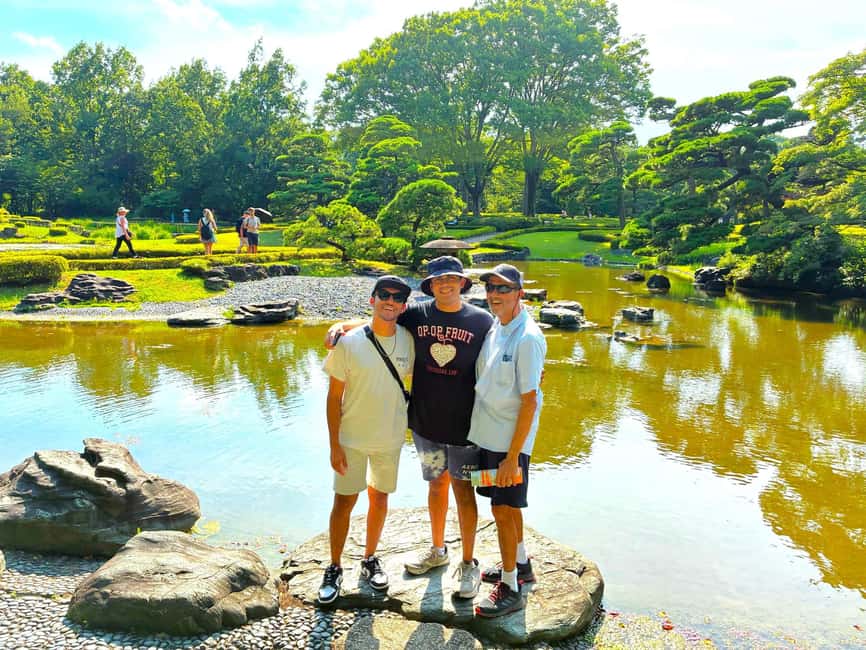
Ninomaru Garden includes a pond with koi fish, along with the ordered beauty you expect from a traditional Japanese garden. After the castle gates and guard posts, the pond offers a chance to slow down and simply look. The garden is not a separate side trip tacked onto the end. It helps show how the site has changed from a fortified political center to a place of public beauty and reflection.
I would save a little energy for this final section. Some people rush through gardens because they expect the main attraction to be the ruins. Here, the garden is part of the point. It gives you a more complete picture of the grounds and makes the tour feel less like a march from one stone foundation to the next.
The tour returns to the Wadakura Free Rest Area after the garden. Since the beginning and end are at the same place, you do not have to arrange a pickup or figure out where the walk finishes.
What this tour does not include
The name Imperial Palace can create the wrong expectation. You are not entering the palace buildings, and you cannot enter the inner grounds where the Imperial Family resides. The focus is on the East Gardens and the former Edo Castle remains.
That limitation is not a minor footnote. If you are hoping to see royal rooms, ceremonial interiors, or private palace areas, choose a different activity. This tour is better for learning about the site from its outdoor remains.
Admission to Edo Castle and the Imperial Palace area is included, as is a live English-speaking guide and a commemorative photo opportunity. Food and drinks are not included, and there is no hotel pickup or drop-off. Plan to eat before or after the walk rather than expecting a meal stop.
The tour is available as a private or small-group experience. A smaller group can be worthwhile here because the best part of a guided historic site is the chance to ask focused questions. It also gives you a better chance of hearing the guide clearly near open gates and garden paths.
Guide style and the value of the commentary
The strongest praise is directed at the guides’ personal manner. Mari is described as helping people learn a great deal, while Isao is praised for being cheerful, kind, and willing to answer questions. Another guide is praised for taking extra time to explain the history of the palace and Japan with care and enthusiasm.
That is exactly what this route needs. The castle remains are important, but they are not self-explanatory. A guide who gives dates, explains the defensive layout, and responds to questions can turn a simple walk into a useful history lesson.
The feedback is not uniformly positive. One person felt the experience was little more than a park walk and expected more discussion of the palace and Japan. Another felt the tour could easily be done independently. I think that is fair. If you already know Edo-period history and prefer reading signs at your own pace, the $37 may not feel essential.
If you are new to the subject, the guide can save you time and help you notice details you would otherwise miss. When booking, the small-group or private option is likely the better choice if available, especially if you care about conversation rather than only following a fixed route.
Practical details for a smooth visit
Meet outside the Wadakura Free Rest Area, in front of the entrance, and look for the yellow sign. Check the available starting times when booking, since the activity lasts two hours but the exact departure time can vary.
Wear comfortable shoes. The tour involves walking between multiple outdoor stops, and the grounds are not suited to wheelchair users or people with mobility impairments according to the activity information. Children under six are not accepted.
Bring water and a camera. Smoking and flash photography are not allowed. Since the route is outdoors, your comfort may depend on the weather, though no specific weather policy is provided.
English is the listed tour language. Cancellation is free up to 24 hours before the start time, and you can reserve now while paying later. Those terms give you some useful flexibility when planning a Tokyo schedule.
Should you book the Edo Castle ruins tour?
Book this tour if you want a short, guided introduction to Edo Castle, with clear stops at Otemon Gate, the guardhouses, the Tenshu-dai, and Ninomaru Garden. It suits first-time visitors who want historical context without giving up half a day.
The $37 price makes sense when the guide is active, patient, and ready for questions. Mari, Isao, and other highly praised guides appear to offer that kind of personal attention. Still, the mixed feedback shows why your expectations should be precise: this is an outdoor walk through ruins and gardens, not a palace interior tour.
Skip it if you want access to the Imperial Family’s buildings, a long academic lecture, or a fully accessible route. Choose it if you enjoy seeing history in the layout of a place, want a manageable two-hour activity, and like finishing with koi ponds and a quiet Japanese garden.
FAQ
Where does the tour meet?
Meet outside the Wadakura Free Rest Area, in front of the entrance. The guide will be holding a yellow sign.
How long does the tour last?
The tour lasts two hours and returns to the Wadakura Free Rest Area.
What language is the tour conducted in?
The live tour guide speaks English.
Does the tour enter the Imperial Palace buildings?
No. The tour does not enter the palace buildings or the inner grounds of the Imperial Palace. It focuses on the East Gardens and the historic remains of Edo Castle.
Is admission included?
Yes. Admission to Edo Castle and the Imperial Palace area is included, along with a live guide and a commemorative photo opportunity.
What should I bring?
Bring comfortable shoes, water, and a camera. Flash photography and smoking are not allowed.
Is the tour accessible for wheelchair users?
No. The activity is not suitable for wheelchair users, people with mobility impairments, or children under six years old.
Just added around Tokyo
- Tokyo: Customizable Private Guided Walking Tour★ 4.5 · 129 reviews
- Private Harajuku Omotesando Architecture Tour★ 4.9 · 18 reviews
- Tokyo: Guided Helicopter Ride★ 4.9 · 24 reviews
- Tokyo: Guided Walking Tour of Tsukiji Market with Lunch★ 4.4 · 24 reviews
- Tokyo: Private Personalized Local Food Tour★ 4.5 · 101 reviews
- Tokyo GINZA: KONPARU Japanese Cabaret Show with Drink★ 4.8 · 38 reviews
- Tokyo: Guided Walking Tour of Tsukiji Market with Breakfast★ 4.4 · 134 reviews
- Tokyo: Gotokuji Cat Temple, Shinjuku Cat Cafe & 3D Cat Tour★ 4.9 · 38 reviews
Garden & Palace Tours, compared.

Imperial Palace and Shogun Historical Walking Tour
Read our review →
Tokyo Castle & Imperial PalaceーShogun Walking Tour
Read our review →
Nijo-jo Castle and Ninomaru Palace Guided Tour
Read our review →

Ultimate Osaka Walking Tour: Castle, Dotonbori & Hidden Gems
Read our review →Tokyo Castle & Imperial PalaceーShogun Walking Tour
Read our review →Browse the lists this tour appears in