
REVIEW · WALKING TOURS
Tokyo: Dark Side of Tokyo Shinjuku Red Light Walking Tour
Kabukicho is Tokyo with its daytime mask removed: glowing signs, narrow lanes, tiny bars, late-night restaurants, and a steady flow of people heading somewhere. This two-hour walk through Shinjuku’s after-dark districts gives you a useful first look at an area that can feel confusing on your own.
I like the route for two reasons. First, it moves beyond the obvious neon and explains how Kabukicho changed from a red-light district into a broader entertainment center. Second, the food advice is practical. Guides such as Dani, Loc, Danny, Huy, Gray, and Paulina have helped visitors choose ramen, okonomiyaki, and other local stops after the walk. The main drawback is the meeting point, which can be hard to find inside the huge Shinjuku Station area, especially on your first day in Japan.
In This Review
- Key points about the Shinjuku night walk
- Why Shinjuku is best understood after sunset
- Finding the group at Shinjuku Station
- Omoide Yokocho, old lanes beside the station
- Kabukicho, Tokyo’s famous entertainment district
- Golden Gai, tiny bars and big character
- Hanazono Shrine, a quiet turn in the route
- 2 Chome and Shinjuku’s LGBTQ district
- What the guides add to the experience
- Is $29 good value for two hours?
- Who should book this Shinjuku tour?
- Cancellation and booking flexibility
- My verdict: a smart first look at Shinjuku after dark
- FAQ
- How long does the Tokyo Shinjuku night walking tour last?
- Where does the tour start?
- Which neighborhoods does the walk visit?
- What languages are available?
- Is the tour suitable for children?
- Can I cancel the booking?
Key points about the Shinjuku night walk
- Five distinct stops: See Omoide Yokocho, Kabukicho, Golden Gai, Hanazono Shrine, and Shinjuku’s 2 Chome district.
- A useful introduction to nightlife: Learn how izakayas, bars, entertainment venues, and red-light businesses fit into modern Shinjuku.
- Strong guide-led storytelling: Guides including Dani, Loc, Danny, Huy, Gray, Shota, Daichi, and Paulina are praised for clear explanations, humor, and local advice.
- A good first-night activity: The route helps you get your bearings and gives you ideas for food and drinks later in your trip.
- Adults only: The tour is not suitable for children under 18, and alcohol and drugs are not allowed during the activity.
- Good value at $29: For two hours of explanation, neighborhood orientation, and local recommendations, the price is modest.
Why Shinjuku is best understood after sunset
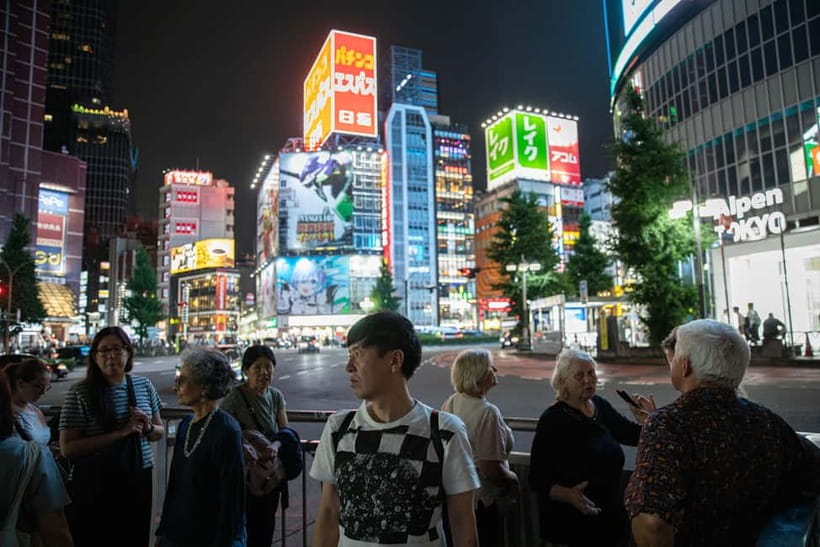
Shinjuku is not one single neighborhood. It is a huge station district with department stores, office towers, restaurants, shrines, narrow drinking lanes, and entertainment streets packed into a small area. At night, the changes are quick. One block feels polished and modern, the next feels cramped and old-fashioned.
That contrast is the main reason to take this walk. You are not just looking at neon signs. You are learning how different parts of Shinjuku work, where visitors can wander freely, and which streets require a bit more care and common sense.
The tour focuses on the eastern side of Shinjuku, with Kabukicho at its center. This is commonly described as Tokyo’s red-light district, but that label only tells part of the story. Today, the area includes restaurants, karaoke venues, bars, clubs, theaters, hotels, arcades, and other forms of entertainment. A good guide helps you separate the visible signs from the less obvious social and commercial customs behind them.
The tone is informative rather than sensational. That matters. The best part of this walk is not gawking at an unfamiliar neighborhood. It is learning how Japanese nightlife differs from what you may know at home, and understanding what you are seeing without making careless assumptions.
More Walking Tours in Tokyo
- Tokyo Tsukiji Fish Market Food and Culture Walking Tour
★ 5.0 · 3,184 reviews - Tokyo: Imperial Palace and Shogun Historical Walking Tour
★ 5.0 · 2,251 reviews - Tokyo: Shinjuku Local Bar and Izakaya Guided Walking Tour
★ 4.9 · 1,794 reviews
Finding the group at Shinjuku Station
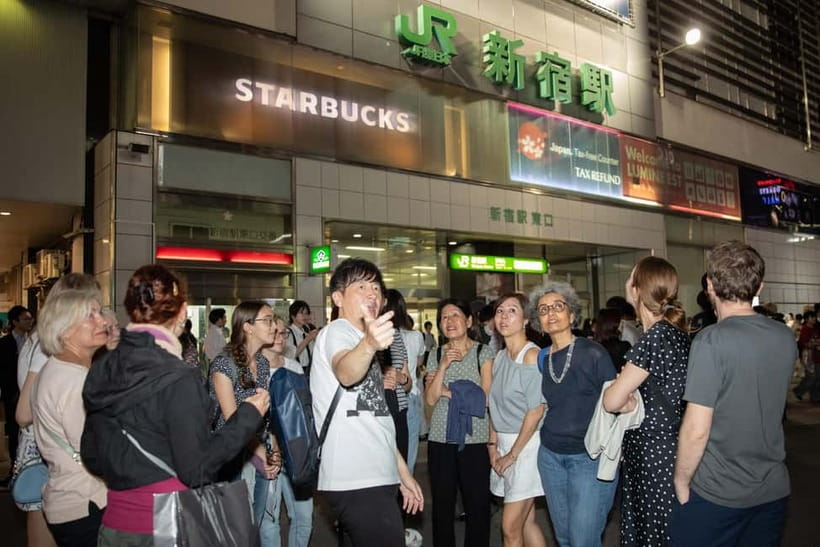
You can start at the Shinjuku Tourist Information Center or the Shinjuku Station East Exit Police Box, depending on the option you book. The second point is near one of the station’s main exits, but the station itself is enormous and crowded.
Give yourself extra time. The meeting point can be confusing because many tour groups gather around the same general area. Look carefully at your booking details, and do not assume that stepping out of the station means you are already in the right place.
This tour does not wait for late arrivals. That is understandable in a crowded district, but it makes preparation important. I would aim to arrive early, especially if you are arriving by train, carrying luggage, or still learning how Japanese station exits are labeled.
The guide may be holding a sign or waiting in a specified spot, but the exact arrangement can vary. Confirm the meeting instructions before leaving your hotel. This small bit of planning can prevent a rushed start to an otherwise relaxed evening.
Omoide Yokocho, old lanes beside the station
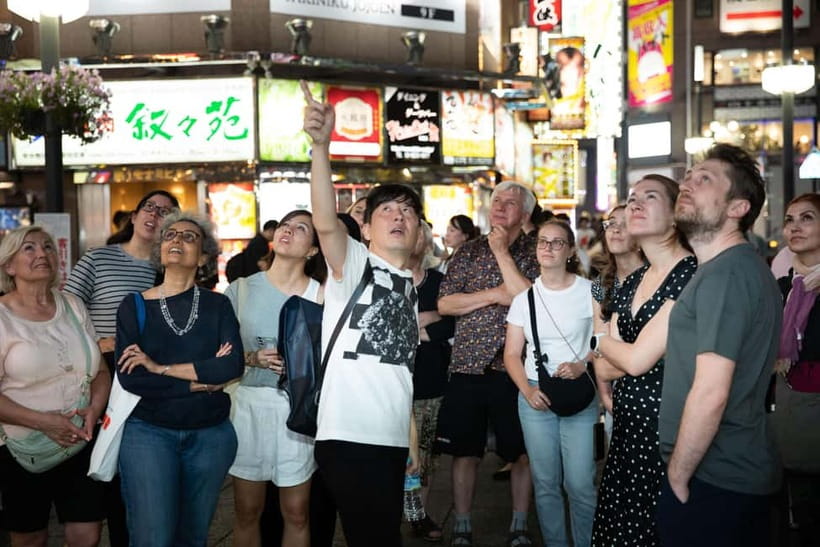
The first major stop is Omoide Yokocho, a compact group of narrow lanes filled with small eateries and traditional-style drinking spots. Its scale is a sharp contrast to the wide roads, department stores, and tall buildings around Shinjuku Station.
This is a good place for the guide to explain how older food and drinking districts fit into modern Tokyo. You might see small grills, izakayas, and tightly packed storefronts. The appeal is visual, but the real value comes from learning how to read the signs and understand the setting.
Omoide Yokocho is also useful for food planning. The tour does not include a meal, so you are free to return later if a place catches your eye. Guides often provide recommendations for ramen, okonomiyaki, and other casual meals nearby. Dani, Loc, and Danny are especially noted for giving specific suggestions rather than vague advice to try something local.
Keep in mind that the lanes are narrow and busy. This is a guided visit, not a long dining stop, so you should not expect to sit down and eat during the scheduled walk. Think of it as a preview that helps you decide where to return.
Kabukicho, Tokyo’s famous entertainment district
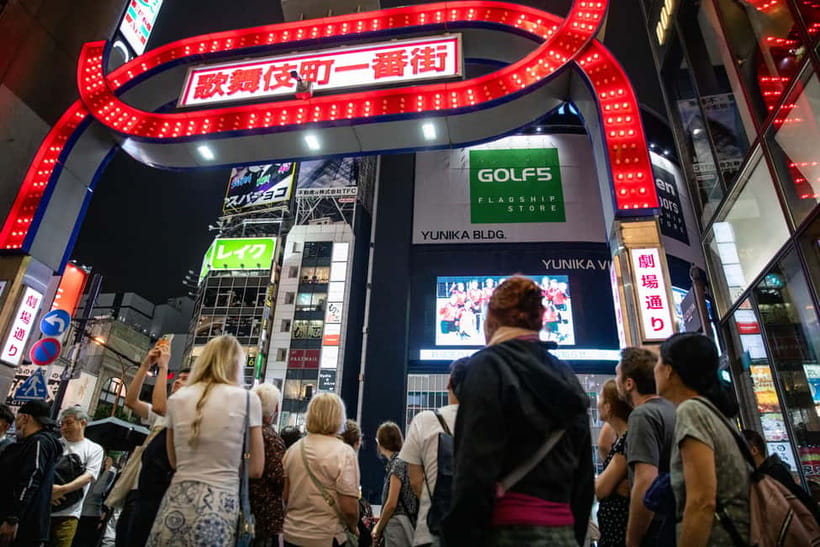
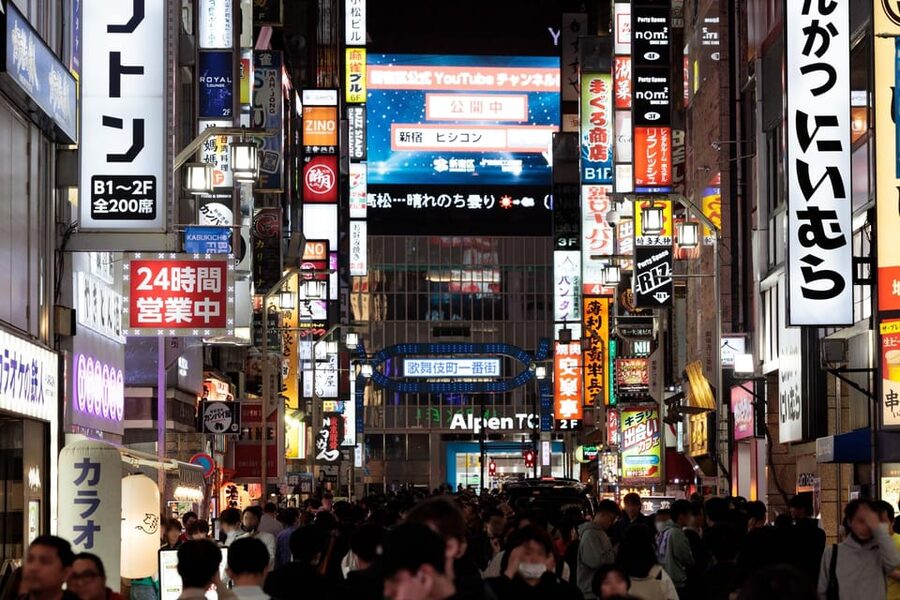
Kabukicho receives the longest stop, about 40 minutes, and it is the heart of the tour. Here, large entertainment buildings, bright advertising, bars, restaurants, and side streets create the image most people associate with Shinjuku at night.
The guide explains the district’s past and present, including its connection to the red-light trade and its later growth into a wider entertainment area. This context helps you understand why some streets feel open and casual while others are more closely tied to adult businesses or invitation-based venues.
You will pass bars, izakayas, and entertainment complexes while hearing about Japanese nightlife customs. The useful lesson is that a glowing sign does not always tell you exactly what a business offers, and a friendly invitation from a street tout may not be aimed at the kind of evening you want.
The tour is not designed to take you inside adult venues. Instead, it gives you a street-level look at the district and helps you understand its boundaries. Several guides, including Dani, Danny, and Daichi, are praised for answering direct questions about the less polished side of Japanese nightlife without turning the subject into cheap theater.
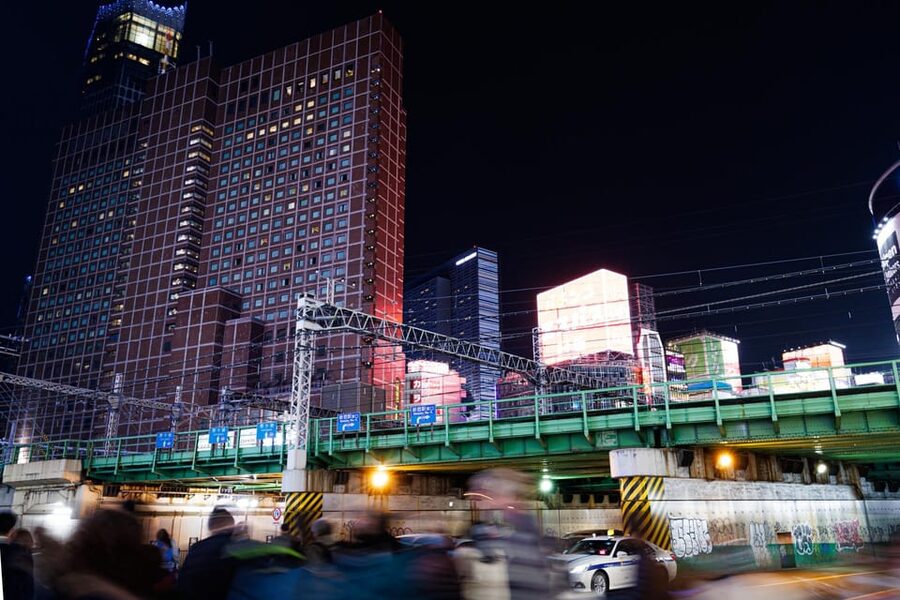
This section also gives you a chance to admire Shinjuku’s tall buildings and modern entertainment centers. The mix is part of the appeal: sleek towers rise behind older lanes, while traditional food culture sits beside highly commercial nightlife.
You should stay with the group here. Kabukicho is generally easy to reach, but its streets can be confusing, and the atmosphere changes from one block to the next. The tour’s value is partly practical: you can look around with a guide first, then decide which parts you want to revisit independently.
Same city, a completely different kind of day:
- Mt Fuji and Hakone 1-Day Bus Tour Return by Bullet Train
★ 5.0 · 26,383 reviews - 1-Day Tokyo Bus Tour
★ 5.0 · 14,250 reviews - Tokyo: TOKYO SKYTREE® Admission ticket
★ 4.5 · 11,192 reviews - Tokyo: teamLab Planets TOKYO Digital Art Museum Entry Ticket
★ 4.6 · 9,779 reviews
Golden Gai, tiny bars and big character
Golden Gai is another highlight, with about 20 minutes set aside for the area. It is known for a dense group of very small bars packed into narrow lanes. The scale is intimate, almost startling after the broad streets and tall buildings elsewhere in Shinjuku.
A short guided visit is the right format here. You get the atmosphere and the background without committing to a bar you may not understand or feel ready to enter. The guide can explain how these small drinking spaces differ from larger chain venues and why the area has such a strong identity.
Do not expect every bar to welcome walk-ins or foreign visitors in the same way. Some spaces may be tiny, private, or aimed at regular customers. That does not make the stop less worthwhile. It simply means Golden Gai is best approached with respect and curiosity, not as a theme park.
The short time here also means you may want to return on another evening if you find a bar that suits you. The tour gives you a first orientation, but it does not promise a full night out or a drink at a particular venue.
Hanazono Shrine, a quiet turn in the route
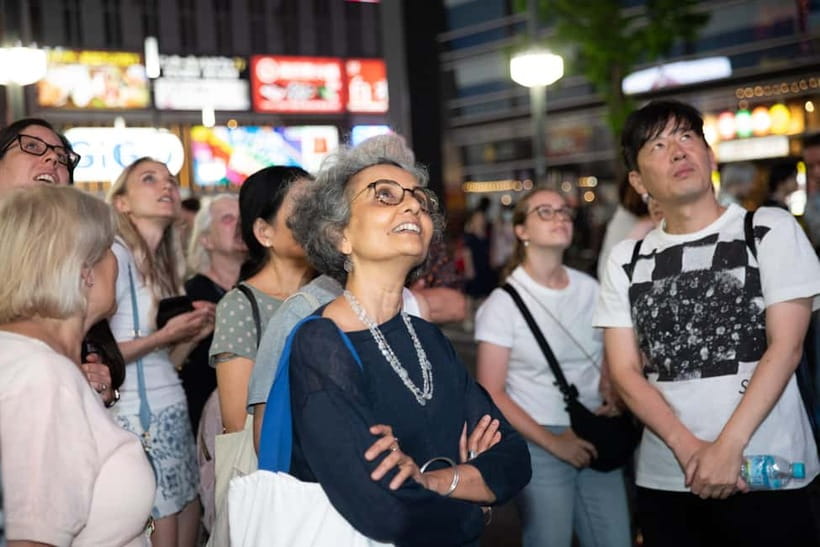
Hanazono Shrine provides a welcome change of pace. After the signs, crowds, and narrow entertainment streets, a shrine introduces a more traditional side of the same district.
The stop lasts about 20 minutes and helps show that old and new Tokyo are not neatly separated. A shrine can sit close to restaurants, bars, and skyscrapers, yet still feel distinct from them. That contrast is one of the clearest lessons of the route.
Your guide can also explain the shrine’s place in local life and Japanese customs. This makes the stop more than a photo pause. It gives you a chance to consider how religious spaces, commercial streets, and ordinary city life exist side by side.
Be mindful of your behavior here. Keep voices low, follow posted instructions, and treat the shrine as an active place of worship rather than simply a backdrop for nighttime photos.
2 Chome and Shinjuku’s LGBTQ district
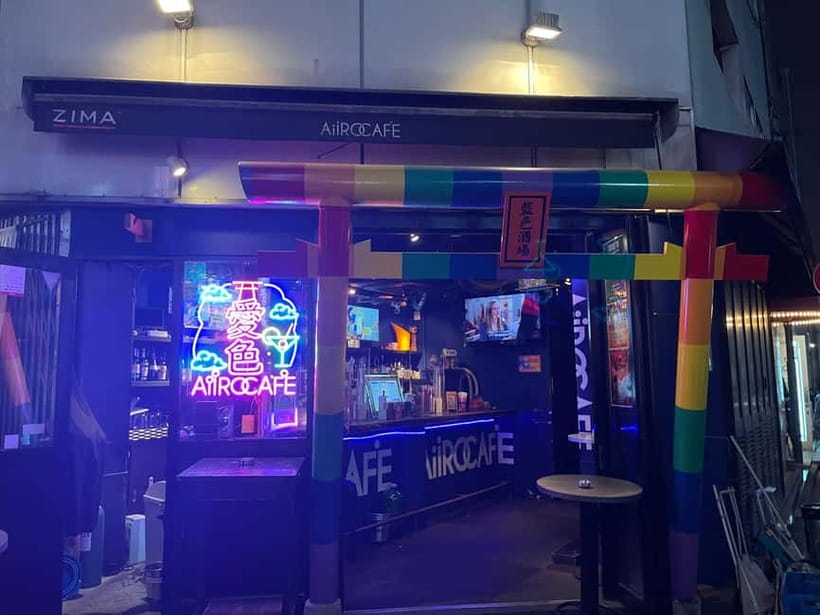
The final neighborhood is 2 Chome, one of Tokyo’s best-known LGBTQ districts. The tour highlights its neon lights, bars, and nightlife character while placing the area within the wider story of Shinjuku.
This section broadens the tour beyond the usual red-light district presentation. Tokyo nightlife is not one thing, and 2 Chome shows another form of community and entertainment within the same central city area. The guide can explain the district’s social role and point out how its atmosphere differs from Kabukicho and Golden Gai.
You should treat the area with the same courtesy you would show any local neighborhood. Avoid photographing people without permission, and remember that many venues serve a regular community rather than existing solely for sightseeing.
The walk ends near Shinjuku Golden-Gai or in 3 Chome, depending on the arrangement. That is useful because you remain in a central part of Shinjuku with plenty of options for dinner or a later drink. It also means the tour finishes with you ready to continue the evening, not stranded far from the action.
What the guides add to the experience
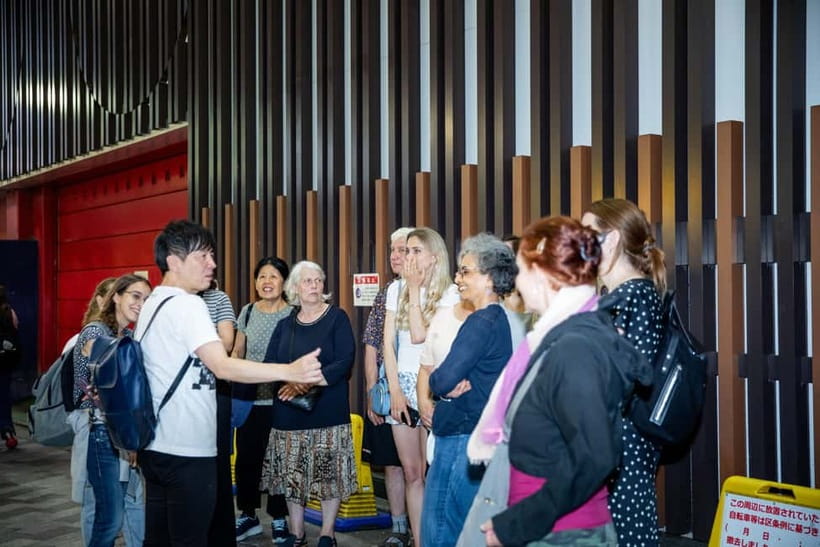
The route is fixed, but the personality of the guide shapes the evening. Names associated with this experience include Dani, Daniel, Danny, Loc, Huy, Gray, Paulina, Polina, Shota, and Daichi. The guide assigned to your departure may be different, so you should not book solely to meet one particular person.
The strongest pattern is clear explanation mixed with humor. Loc is praised for storytelling and restaurant advice. Danny is described as friendly, professional, and good at placing each area in its social context. Huy is noted for a direct style and funny stories, while Gray is praised for patience, humor, and answers to detailed questions.
Paulina and Polina are also frequently highlighted for friendly explanations and practical help in the busy station and nightlife zones. Daichi is noted for explaining Japanese nightlife customs with enthusiasm, while Shota’s outgoing manner helps create a social group atmosphere.
English and Spanish are available. If you want to ask about Japanese customs, food, nightlife etiquette, or the difference between districts, this is the kind of walking tour where questions improve the experience. You will get more from it if you speak up rather than simply follow behind the guide.
Is $29 good value for two hours?
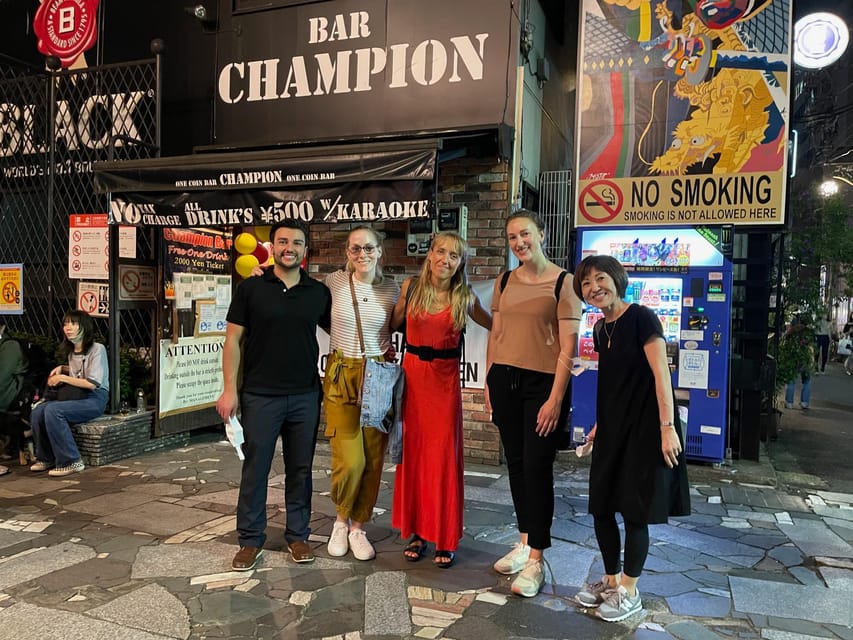
At $29 per person, this is a reasonably priced introduction to Shinjuku. You are paying for a live guide, a carefully ordered route through several distinct areas, and advice that can save you time later.
The tour does not include food, drinks, entry fees, or a longer night out. That keeps the price down, but it also means you should see it as an orientation rather than a complete nightlife package.
I find the value strongest at the beginning of a Tokyo stay. On your first or second night, the walk can help you understand where you are and give you a short list of places to revisit. Several guides recommend ramen, okonomiyaki, or other restaurants at the end, and some groups continue together for food afterward.
The value is lower if you already know Shinjuku well or mainly want to party. In that case, two hours of explanation may feel slower than simply choosing a restaurant or bar yourself. For a first visit, though, the cost is modest compared with the confusion and missed details that can come from wandering without context.
Who should book this Shinjuku tour?
This walk suits adults who want to understand Tokyo nightlife without committing to a full evening inside bars or clubs. It is especially useful for solo visitors and couples who want a safer-feeling introduction to unfamiliar streets, as well as small groups interested in food and local customs.
You should book it if you enjoy:
- Learning the story behind a neighborhood
- Walking through narrow lanes and busy streets
- Asking questions about social customs
- Finding food ideas for later
- Seeing both modern entertainment zones and a traditional shrine
- Meeting other international visitors during a short group activity
It is less suitable for anyone under 18, people who dislike crowded city streets, or visitors looking for a quiet cultural tour. The subject matter includes red-light districts and adult nightlife, so it may not fit families or anyone wanting a polished, conventional sightseeing route.
Wear comfortable shoes and expect to walk at a steady pace. The route includes crowded streets, narrow alleys, and busy station areas. You should also avoid alcohol and drugs during the activity, as they are not allowed.
Cancellation and booking flexibility
You can cancel up to 24 hours before the activity for a full refund. The reserve-now, pay-later option lets you hold a place without paying immediately, which is useful while you are still arranging a Tokyo schedule.
Check the available starting times before booking. The exact meeting point depends on the option selected, and you should read those instructions closely because the Shinjuku Station area is difficult to navigate.
My verdict: a smart first look at Shinjuku after dark
I would book this tour early in a Tokyo visit, ideally on your first night in Shinjuku or near the start of your stay. The route gives you five different viewpoints in two hours: old food lanes, red-light streets, tiny bars, a shrine, and an LGBTQ nightlife district.
The strongest reason to go is the guide’s interpretation. Dani, Loc, Danny, Huy, Gray, Paulina, and the other guides associated with the experience bring humor, local context, and useful restaurant suggestions. The biggest practical warning is the meeting point, so arrive early and confirm exactly where you need to stand.
At $29, this is a good buy if you want orientation, background, and food ideas rather than a packaged party night. Book it if you want to see Shinjuku’s less obvious side with some context. Skip it if you already know the district or prefer to explore nightlife entirely on your own.
FAQ
How long does the Tokyo Shinjuku night walking tour last?
The advertised duration is two hours. The pace and exact timing can vary, so check the available start times when booking.
Where does the tour start?
There are two possible starting points: the Shinjuku Tourist Information Center or the Shinjuku Station East Exit Police Box. The meeting point depends on the option you choose.
Which neighborhoods does the walk visit?
The route includes Omoide Yokocho, Kabukicho, Golden Gai, Hanazono Shrine, and Shinjuku’s 2 Chome district.
What languages are available?
The tour is available with a live guide in English or Spanish.
Is the tour suitable for children?
No. The activity is not suitable for children under 18 years old.
Can I cancel the booking?
Yes. You can cancel up to 24 hours in advance for a full refund. A reserve-now, pay-later option is also available.
Just added around Tokyo
- Tokyo: Customizable Private Guided Walking Tour★ 4.5 · 129 reviews
- Private Harajuku Omotesando Architecture Tour★ 4.9 · 18 reviews
- Tokyo: Guided Helicopter Ride★ 4.9 · 24 reviews
- Tokyo: Guided Walking Tour of Tsukiji Market with Lunch★ 4.4 · 24 reviews
- Tokyo: Private Personalized Local Food Tour★ 4.5 · 101 reviews
- Tokyo GINZA: KONPARU Japanese Cabaret Show with Drink★ 4.8 · 38 reviews
- Tokyo: Guided Walking Tour of Tsukiji Market with Breakfast★ 4.4 · 134 reviews
- Tokyo: Gotokuji Cat Temple, Shinjuku Cat Cafe & 3D Cat Tour★ 4.9 · 38 reviews
Walking Tours, compared.
Kyoto Geisha Walking Tour: Gion District & Hidden Gems
Read our review →
Tokyo Tsukiji Fish Market Food and Culture Walking Tour
Read our review →
Gion Magical Night Walking Tour with Geisha Trivia
Read our review →
Imperial Palace and Shogun Historical Walking Tour
Read our review →
Gion Geisha District Walking Tour – Stories of Geisha
Read our review →
Asakusa Walking Tour with Sensoji Temple Visit
Read our review →
Kyoto Gion Geisha District Walking Tour – The Stories of Geisha
Read our review →Browse the lists this tour appears in