
REVIEW · SUMO EXPERIENCES
Tokyo: Authentic Sumo Wrestling Experience with Lunch
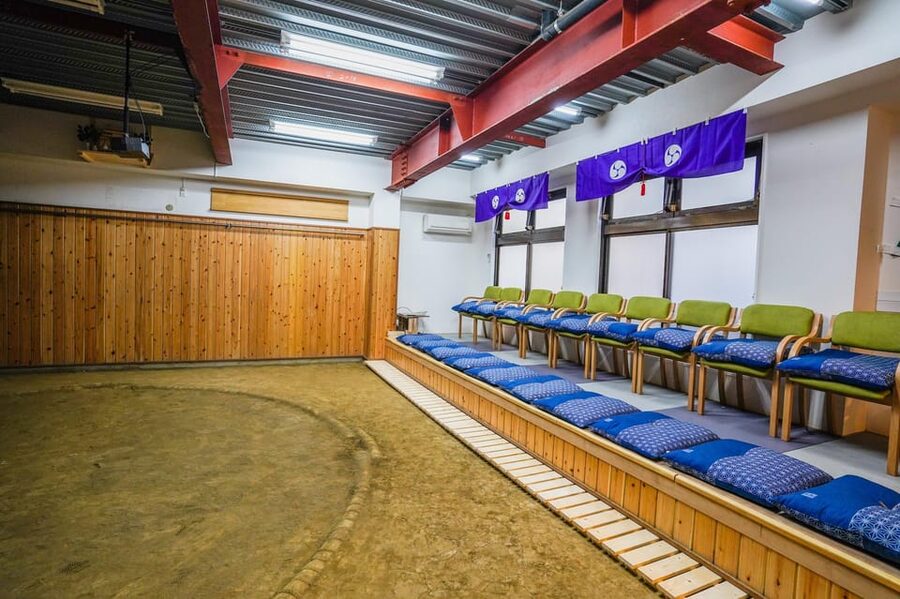
The best part of this four-hour experience is the setting: you watch morning sumo practice from beside the ring inside a real sumo stable, not from the distant seats of a tournament hall. You see the warmups, footwork, pushes, and ritual movements at close range, then try some of them yourself.
I like two things in particular. First, the guide turns a sport that can seem mysterious into something you can follow, explaining the rankings, rules, training schedule, and customs in clear English. Second, the lunch is part of the cultural experience. You help make chicken dumplings for chanko-nabe, then eat with the wrestlers around a table once used in the sumo room.
The main drawback is that this is not a passive sightseeing stop. You may be asked to stretch, perform sumo exercises, or face a rikishi in the ring. The bout is optional, but the tour is not a good fit if you have mobility problems, high blood pressure, a heart condition, a cold, or another pre-existing medical condition.
In This Review
- Key points to know before you book
- Why this sumo visit feels different from watching a tournament
- Starting at Shin-Kawasaki Station
- Walking through the stable’s private spaces
- Watching morning practice beside the ring
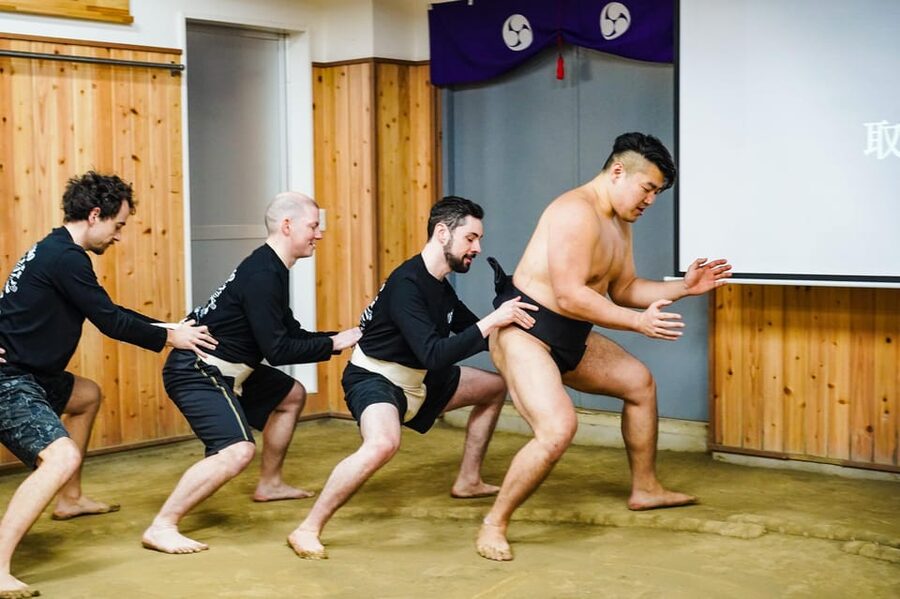
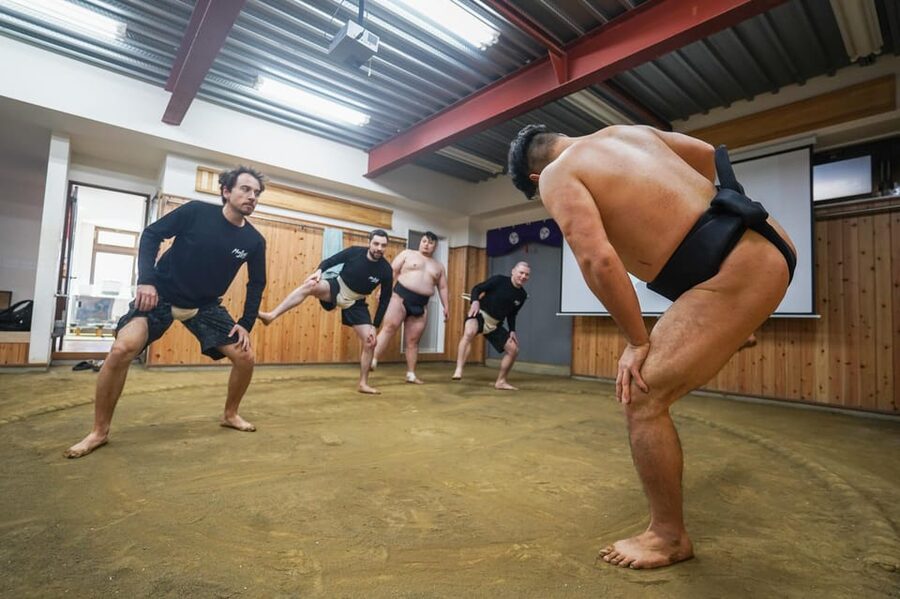
- Trying the exercises, stances, and footwork
- Learning the rules before the optional bout
- Making chanko-nabe with the wrestlers
- Photos, handprints, and the included T-shirt
- Is $166 a fair price?
- Who will enjoy this experience most?
- Should you book the Shin-Kawasaki sumo experience?
- FAQ
- Where does the sumo experience meet?
- How long does the experience last?
- How far is the experience from Tokyo and Yokohama?
- Is the tour conducted in English?
- Do I have to wrestle with a sumo wrestler?
- Is lunch included?
- Can dietary requests or allergies be accommodated?
- Is the experience wheelchair or stroller accessible?
Key points to know before you book
- Practice happens inside a real sumo stable: The building was officially used until 2022, giving the visit a genuine connection to the sport.
- You sit close to the ring: The morning session lets you watch how practice starts and why each movement matters.
- The bout is your choice: You can try a match with a sumo wrestler, or simply watch and take part in lighter exercises.
- Lunch is hands-on: You make chicken dumplings for chanko-nabe and share the meal with the wrestlers.
- The guides make the sport accessible: Guides including Charlie, Mayu, Masao, Jim, and Fuji have been praised for clear explanations and friendly help.
- The practical extras are useful: Your price includes tour photos, a T-shirt, and a paper handprint keepsake.
Why this sumo visit feels different from watching a tournament
A professional sumo tournament gives you the drama of official bouts, packed arenas, and formal competition. This experience gives you something a tournament cannot: a look at the daily work behind the spectacle.
You see the practice area, dining room, and bath before sitting by the ring. Those ordinary rooms matter. Sumo is not only a short match in a circular ring. It is a demanding way of life, with training, meals, rest, rank, and strict customs tied together.
The stable was officially used until 2022, so you are visiting a genuine former sumo training setting rather than a theater built for tourists. The tour is designed for people with little or no knowledge of the sport, but it also gives committed sumo fans a closer look at how wrestlers prepare.
I especially like the scale of the visit. You are not just shown a photograph or given a quick explanation before being sent on your way. The morning practice, hands-on drills, bout demonstration, lunch, questions, and photos make up a full half-day.
That said, the atmosphere is participatory. You should not book this expecting four quiet hours of observation. The guide will encourage you to join in, and the wrestlers may gently tease your efforts. It is friendly fun, but you need to be comfortable with attention and a little physical activity.
More sumo experiences in Japan:
- Tokyo: Sumo Show Experience with Chicken Hot Pot and a Photo
★ 4.8 · 6,678 reviews - Tokyo: Sumo Show and Dining Experience
★ 4.8 · 2,742 reviews - the SUMO show
★ 5.0 · 1,960 reviews
Starting at Shin-Kawasaki Station
Your meeting point is simple: go outside the only ticket gate at Shin-Kawasaki Station and stand in front of the Kiyoken shumai shop. The guide carries a red or orange sign marked Magical Trip.
This is one of the easier meeting points around Tokyo because there is only one station gate. Still, arrive early. The group must leave on time, and you cannot join later, reschedule, or receive a refund if you miss the group.
The stable is near Kawasaki, roughly 10 minutes from Yokohama Station and 20 minutes from Tokyo Station. That makes this a useful choice if your Tokyo plans include both the capital and Yokohama. The experience returns you to the same Kiyoken location at Shin-Kawasaki Station.
The tour lasts four hours. Check the available starting time carefully when booking, since the exact start may vary. A morning schedule is important here because the practice session is built around the wrestlers’ training routine.
Walking through the stable’s private spaces
After meeting your guide, you head to the sumo stable and learn how the sumo world is organized. The tour includes a look at the dining room, bath, and practice area, with explanations of the customs connected to each space.
This introduction gives the rest of the morning some structure. When you later watch a wrestler push, stamp, squat, or repeat a drill, you have a better sense of why the movement is done and how it fits into the training day.
The guide also explains the ranking system and the usual lifestyle of a wrestler. Masao, one guide praised for using pictures and slides, has explained the stances, rankings, and basic history in a way that works well for first-time viewers. Other guides named during the experience include Charlie, Mayu, Jim, and Fuji.
The English explanations are a key part of the value. Sumo rules can seem full of small details, and a guide helps you notice what is happening rather than simply watching two large men push each other. You learn what ends a bout, what the opening movements mean, and why balance is as important as strength.
Watching morning practice beside the ring
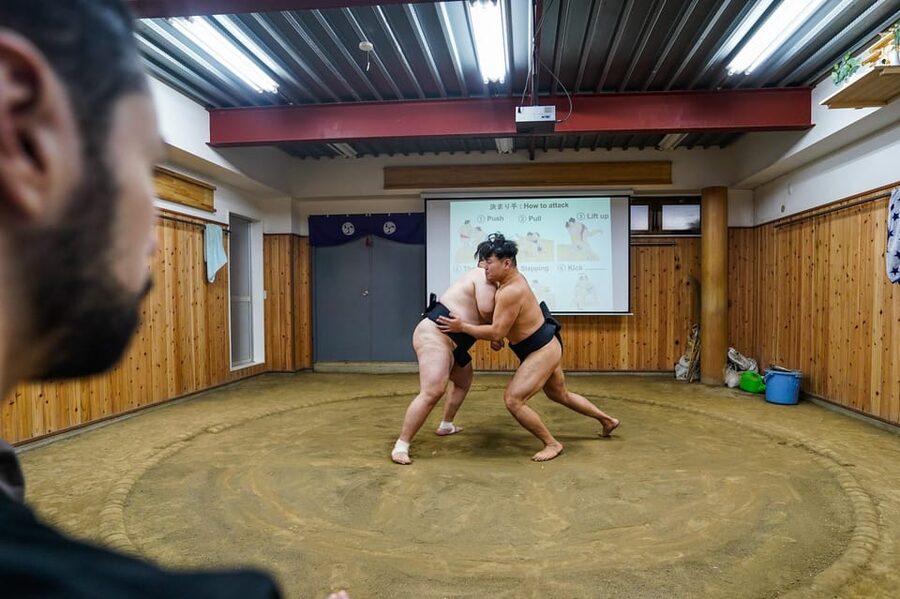
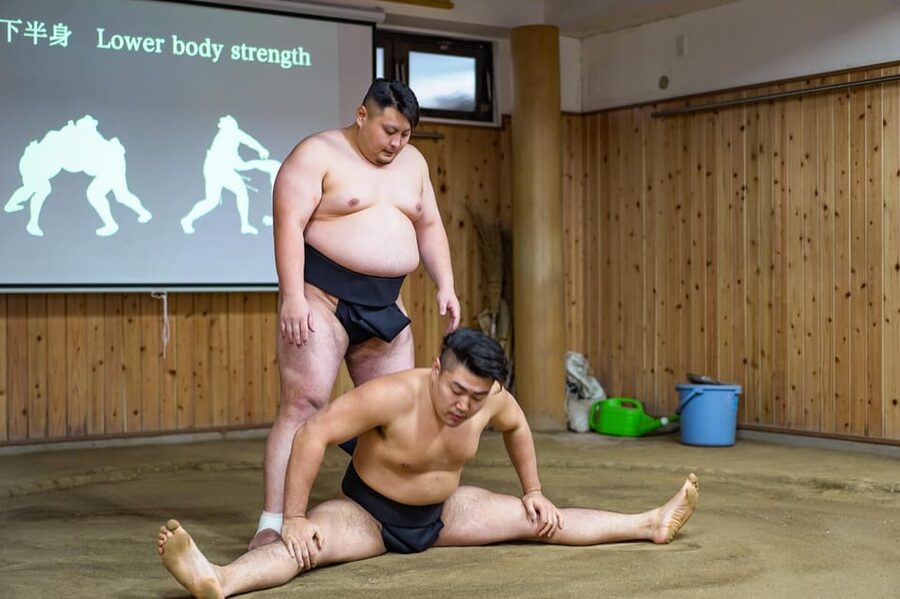
The heart of the visit is the practice session. You sit directly in front of the sumo ring and watch the training begin. This is a close-up view, so you can follow the repeated movements and the physical effort without the distance of a stadium seat.
The session shows the work behind a match. Sumo wrestlers use controlled drills to build balance, leg strength, timing, and power. Your guide explains the purpose of the movements rather than leaving you to guess.
For many people, this is the most authentic part of the experience. The wrestlers are not putting on a short stage show alone. You are watching a practice routine in a place connected to their working life.
You should also expect a slower start. One visitor found the opening part less brisk, though the four-hour schedule soon gathered pace and passed quickly. That is a fair warning if you prefer tightly packed sightseeing. The explanations and introduction take time because they set up the physical demonstrations that follow.
A few more Japan trips to weigh up
- Bike Tour Exploring North Kyoto plus Lunch
★ 5.0 · 1,087 reviews - Tokyo: Mt.Fuji & Lake Kawaguchiko 1-Day Bus Tour w/Optional Lunch
★ 4.5 · 839 reviews - Osaka/Kyoto: Arashiyama, Nara & Fushimi Inari Shrine w/Lunch
★ 4.4 · 754 reviews - Kyoto Zen Meditation & Garden Tour at a Zen Temple with Lunch
★ 5.0 · 441 reviews
Trying the exercises, stances, and footwork
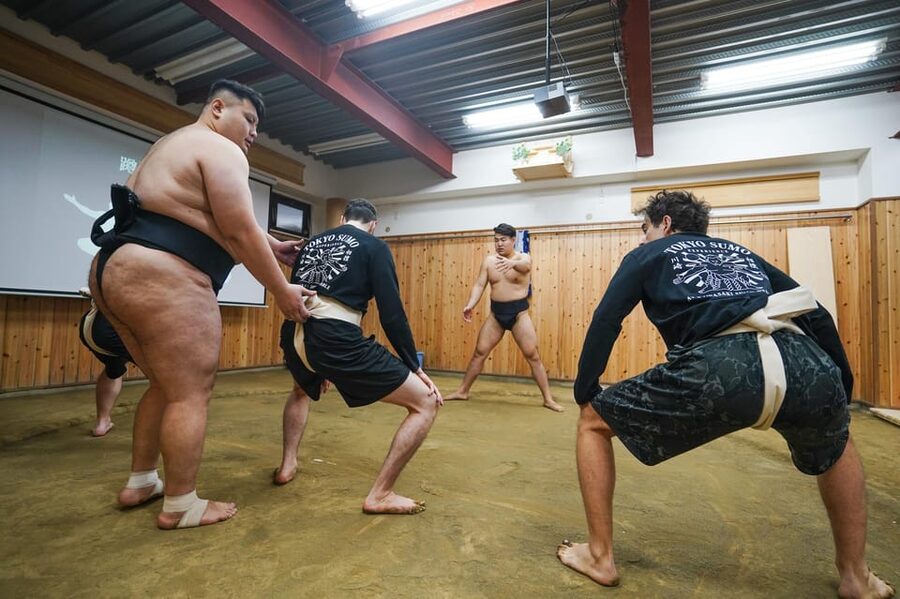
After watching, you get the chance to try some of the same movements. The guide explains the basics, and the wrestlers demonstrate them before you have a go.
This is where the sport becomes easier to understand. A stance that looks simple can feel demanding when you try to hold it. A small shift in weight suddenly makes sense when you see how easily balance can be lost.
The activities are not presented as a test of athletic ability. The tone is light, and the wrestlers are described as patient, funny, and gentle with participants. You can take part at your own level, though anyone with a medical condition should follow the restrictions and avoid booking this activity.
The contrast between your effort and the wrestlers’ control provides plenty of laughs. It also gives you respect for the strength and discipline involved. You see why sumo is not simply about body size.
Learning the rules before the optional bout
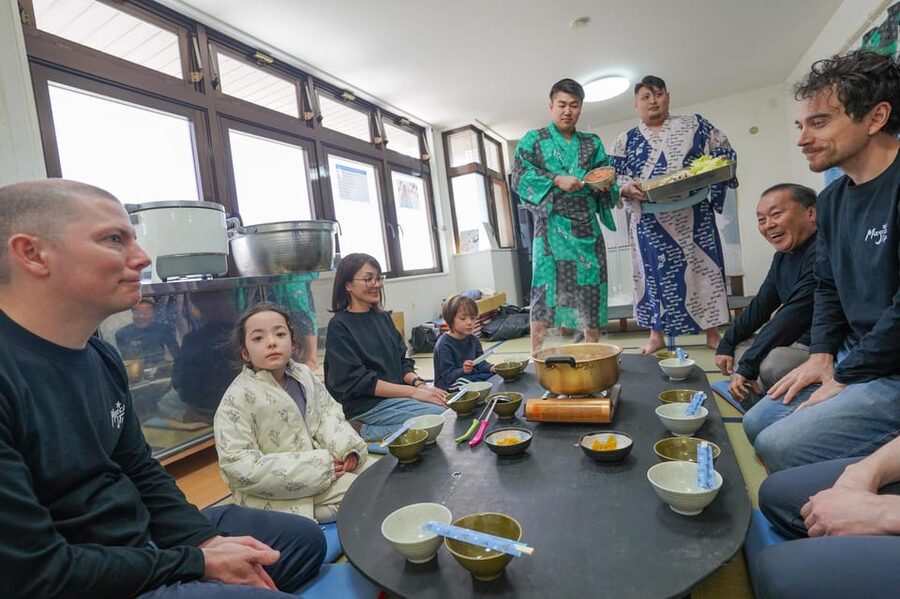
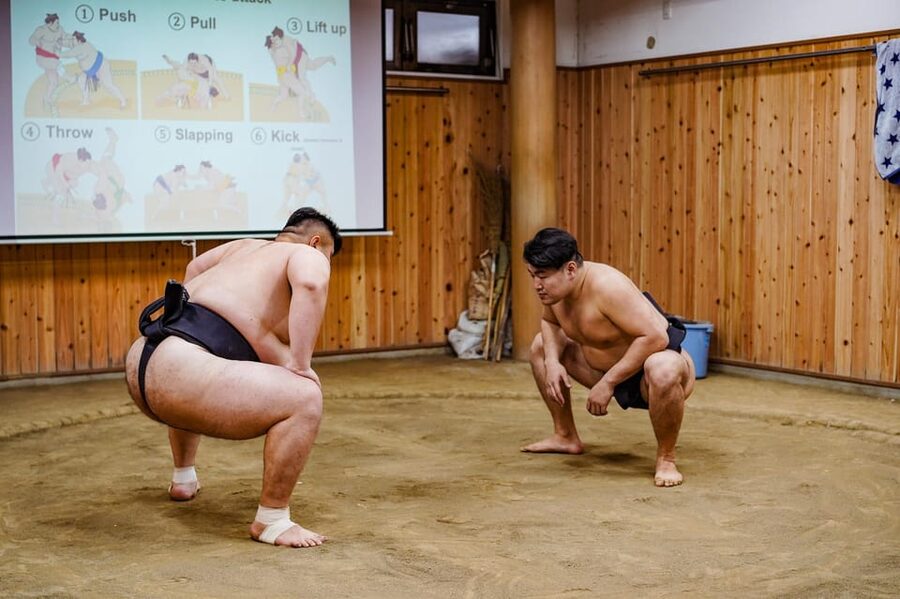
Before the match, your guide explains the rules, techniques, and common moves. The wrestlers then show how a real bout begins.
This order works well. You first watch practice, then attempt basic movements, then see a proper demonstration with the rules explained. By the time the optional match arrives, you understand more of what you are seeing.
If you want, you can enter the ring and wrestle with a sumo wrestler as if it were a real bout. Several participants have enjoyed wearing a loincloth or taking part in a sumo-themed dress-up moment, but the exact presentation can vary. The important point is that the match is optional.
The wrestlers clearly have the advantage, and the bout is handled as a safe, humorous demonstration rather than a serious contest. You may be pushed aside in seconds, but that is part of the fun. If you prefer not to wrestle, you can watch others, practice the movements, and still receive the explanations and lunch.
For families, couples, and friends, this is likely to be the most memorable part. It is also the part most likely to make you feel self-conscious, so tell yourself in advance that the goal is not to win. The goal is to understand the sport by feeling how difficult it is.
Making chanko-nabe with the wrestlers
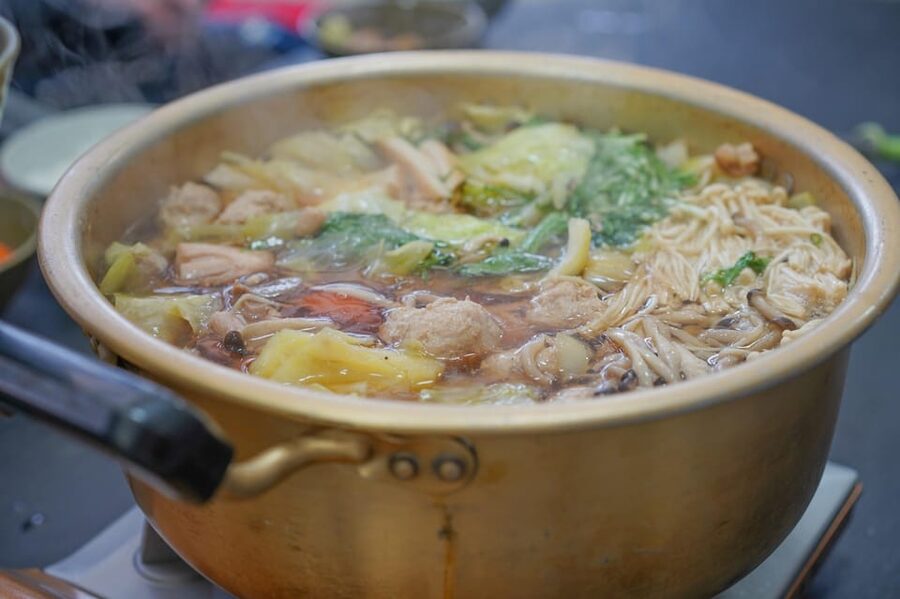
After the physical portion, the mood changes from training to lunch. Chanko-nabe is the hearty hot pot associated with sumo wrestlers, and you help make chicken dumplings before eating.
The meal is valuable because it connects food with the wrestler’s daily routine. You are not simply handed a dish called chanko-nabe and told that it helps wrestlers build their bodies. You take part in preparing one element, then sit down around a table actually used in the sumo room.
The meal also gives you time to ask questions. Conversation with the wrestlers is an important part of the visit, especially after you have watched them train and tried their exercises. Questions about food, practice, daily life, rankings, and matches fit naturally here.
Several people have found the soup particularly tasty, and the lunch is often described as satisfying. If you need a vegetarian option or have an allergy, contact the operator at least one day before the tour. Requests made on the day cannot be handled.
Food is prepared in kitchens that do not belong to MagicalTrip, so allergy-free meals cannot be guaranteed. Substitutions may not always be possible. This is a real concern for anyone with a serious allergy, not a minor booking detail.
Additional food and drinks are not included. The main lunch is covered, but you should not assume that every extra order or beverage will be part of the price.
Photos, handprints, and the included T-shirt
The final part adds a friendly souvenir element. You can take pictures with the wrestlers, and some sessions include yukata or kimono dress-up photos. You can also make a memorial handprint on paper.
The handprint is a particularly nice keepsake because it connects the visit to the people you met, rather than being a generic Tokyo souvenir. A T-shirt is included as well, along with the tour photos.
One practical note: there has been a sales pitch for extra items such as T-shirts and kimono after the main experience. The included T-shirt is part of the package, but you may be offered additional merchandise. If you are trying to keep the morning focused, simply treat these extras as optional.
Is $166 a fair price?
At $166 per person, this is not a cheap activity. You are paying more than you would for a museum ticket or a standard walking tour, so the value depends on how much you want personal access and participation.
The price includes an English-speaking guide, the stable visit, the practice session, the exercises, the optional bout, lunch with the wrestlers, photos, and a T-shirt. It also covers a rare setting that is difficult to arrange independently. You are not just buying a seat at a show. You are paying for explanations, access to a working sumo environment, a meal, and direct contact with the wrestlers.
I think the price makes the most sense if sumo is high on your Japan list or if you want one major hands-on cultural activity during your stay. It is also useful for a family or small group that wants something everyone can talk about afterward.
The value is weaker if you only want to watch official matches. In that case, spending the money on tournament tickets, if available, may better match your interests. The tour is also less suitable for a person who dislikes audience participation or cannot manage the physical section.
Free cancellation is available up to two days in advance for a full refund. That gives you some room to adjust plans, but it does not protect you from arriving late on the day.
Who will enjoy this experience most?
I would recommend it to first-time sumo viewers because the guide explains the sport from the ground up. You do not need to know the rankings, rules, or rituals before arriving.
It also suits families, couples, friends, and people who want a break from temples and city streets. The mix of watching, learning, moving, eating, and talking keeps the morning varied.
It is a strong choice for someone who has dreamed of entering a sumo ring. The bout is optional, so you can still book it if one person in your group wants to wrestle and another prefers to observe.
I would think twice if you have walking problems or need step-free access. Parts of the stable are not accessible by wheelchair or stroller, and the tour is not recommended for people with heart problems, colds, high blood pressure, or pre-existing medical conditions.
You should also be punctual and ready to follow the group schedule. This is a shared experience, not a private visit, and the group cannot wait for late arrivals.
Should you book the Shin-Kawasaki sumo experience?
Book it if you want more than a photo of a sumo wrestler. The combination of a real stable, close-up practice, simple training drills, an optional bout, and chanko-nabe lunch gives you a clear look at both the sport and the life around it.
The strongest reasons to go are the access beside the ring, the friendly English explanations, and the chance to ask questions over a meal. The main cautions are the price, the physical participation, the strict start time, and the limits around dietary requests.
If those points work for you, this is one of the most personal sumo experiences available near Tokyo. You leave with a better grasp of the sport, a full lunch, photos, a handprint, and a much humbler view of your own pushing power.
FAQ
Where does the sumo experience meet?
Meet the guide just outside the ticket gate at Shin-Kawasaki Station. There is only one ticket gate. The meeting point is in front of the Kiyoken shumai shop, and the guide holds a red or orange Magical Trip sign.
How long does the experience last?
The experience lasts four hours. Check the available starting times when booking.
How far is the experience from Tokyo and Yokohama?
The stable is about 20 minutes from Tokyo Station and 10 minutes from Yokohama Station.
Is the tour conducted in English?
Yes. The live tour guide language is English.
Do I have to wrestle with a sumo wrestler?
No. The match is optional. You can watch the demonstration and take part in the exercises without joining a bout.
Is lunch included?
Yes. Lunch with the sumo wrestlers is included. You make chicken dumplings for chanko-nabe and eat together around a table used in the sumo room. Additional food and drinks are not included.
Can dietary requests or allergies be accommodated?
Tell the operator about dietary requests or allergies at least one day before the tour. Requests made on the day cannot be accommodated. Allergy-free food cannot be guaranteed, and substitutions may not always be possible.
Is the experience wheelchair or stroller accessible?
Some locations on the tour are not accessible by wheelchair or stroller. The experience is not recommended for people with mobility problems.
Just added around Japan
- Tokyo: Customizable Private Guided Walking Tour★ 4.5 · 129 reviews
- Private Harajuku Omotesando Architecture Tour★ 4.9 · 18 reviews
- Tokyo: Guided Helicopter Ride★ 4.9 · 24 reviews
- Tokyo: Guided Walking Tour of Tsukiji Market with Lunch★ 4.4 · 24 reviews
- Tokyo: Private Personalized Local Food Tour★ 4.5 · 101 reviews
- Tokyo GINZA: KONPARU Japanese Cabaret Show with Drink★ 4.8 · 38 reviews
- Tokyo: Guided Walking Tour of Tsukiji Market with Breakfast★ 4.4 · 134 reviews
- Tokyo: Gotokuji Cat Temple, Shinjuku Cat Cafe & 3D Cat Tour★ 4.9 · 38 reviews
Sumo Experiences, compared.
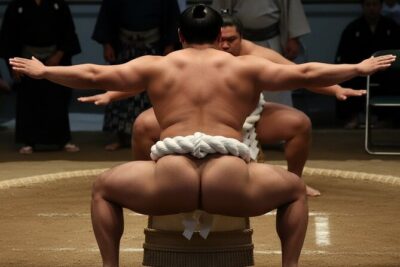
Sumo Show Experience with Chicken Hot Pot and a Photo
Read our review →
Tokyo Shinjuku Sumo Show & Experience with Photo
Read our review →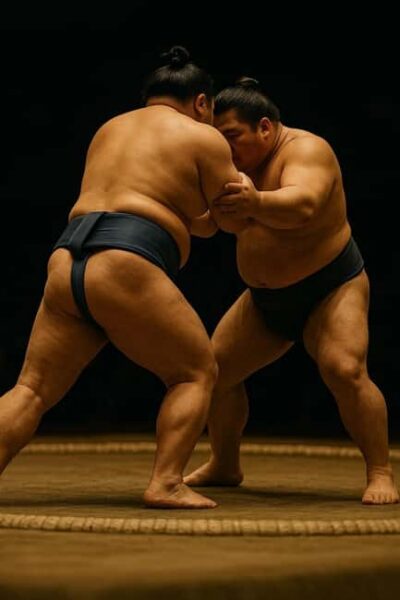
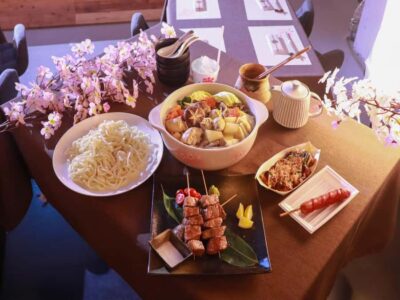
Sumo Show & Experience w/ Optional Kimono & Hot Pot
Read our review →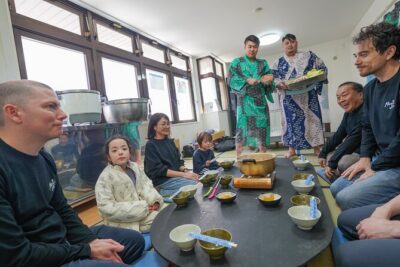
Authentic Sumo Experience in Tokyo: Enter the Sanctuary
Read our review →Browse the lists this tour appears in