
REVIEW · WALKING TOURS
Tokyo: Asakusa Walking Tour with Japanese Comedian
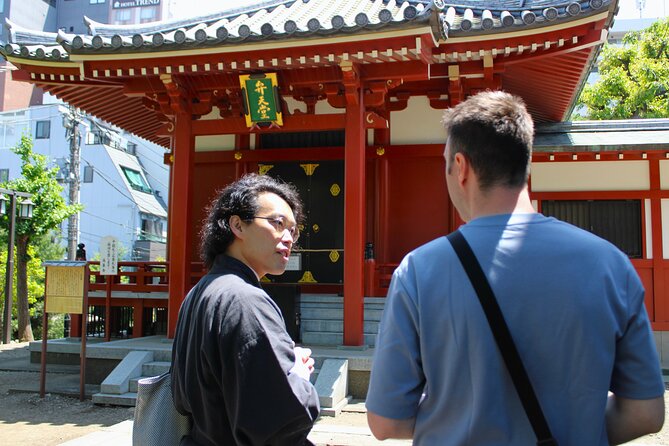
Asakusa is one of Tokyo’s easiest districts to enjoy badly. You can walk through the famous Kaminarimon Gate, snap a photo, and leave without understanding what you saw. This tour fixes that. Ryo, a Japanese comedian and former Asakusa rickshaw driver, turns the temple district into a readable story, mixing Buddhist and Shinto customs with jokes and practical local advice.
I like the small-group format, which gives you room to ask questions and stop for photos without losing the guide in a crowd. I also like the balance between famous sights and quieter corners, including old statues, gates, shrines, and memorials that are easy to miss on your own.
The main consideration is timing. Ninety minutes goes quickly, and the tour focuses heavily on the Senso-ji complex. Start early if you want cooler weather and fewer people, but go later if you want more market activity and open food stalls.
In This Review
- Key points to know before you book
- Why Ryo makes Asakusa easier to understand
- Starting above Asakusa at the Tourist Information Center
- Kaminarimon and the approach along Nakamise Street
- Bentendo, the Bell of Time, and a quieter side of Senso-ji
- Nitenmon Gate and the connection between temple and shrine
- Yogodo and Awashimado: why the smaller sites matter
- Nishi-sando and the melon bread stop
- Hozomon and the final visit to Senso-ji
- What the 90-minute schedule feels like
- Small-group value at $37.99
- Who should book this Asakusa walk
- Should you book it?
- FAQ
- How long is the Asakusa walking tour?
- Who leads the tour?
- What sights are included?
- Where does the tour begin?
- Where does the tour end?
- How large is the group?
- Is the tour suitable for most people?
- Can I cancel for a full refund?
Key points to know before you book
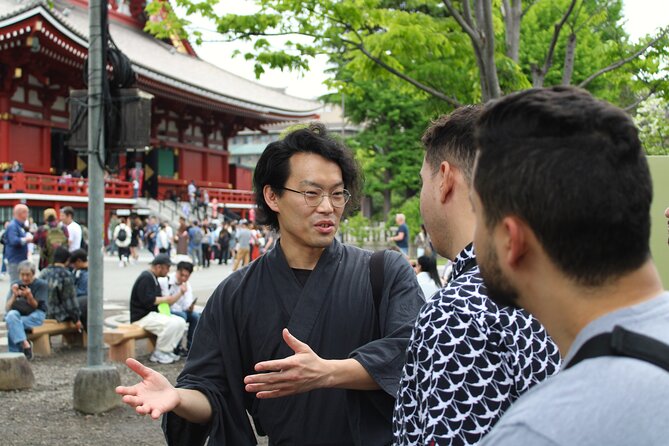
- Ryo brings comedy to temple history: Expect humor, conversation, and cultural explanations rather than a dry list of dates.
- The route covers Asakusa’s core sights: You’ll see Kaminarimon, Nakamise Shopping Street, Senso-ji, Asakusa Shrine, Nitenmon Gate, and several smaller religious sites.
- Early morning is the quietest choice: An 8 a.m. start can beat the heat and crowds, while the market becomes livelier later in the morning.
- The group is designed to stay small: The highlights describe a cap of six, while the booking details list a maximum of eight people.
- You get more than landmark photos: Ryo explains symbolism, Buddhist and Shinto traditions, local customs, and places you might otherwise walk past.
- The price is modest for a guided introduction: At $37.99, it is a useful first look at Asakusa, especially if you want context before exploring alone.
Why Ryo makes Asakusa easier to understand
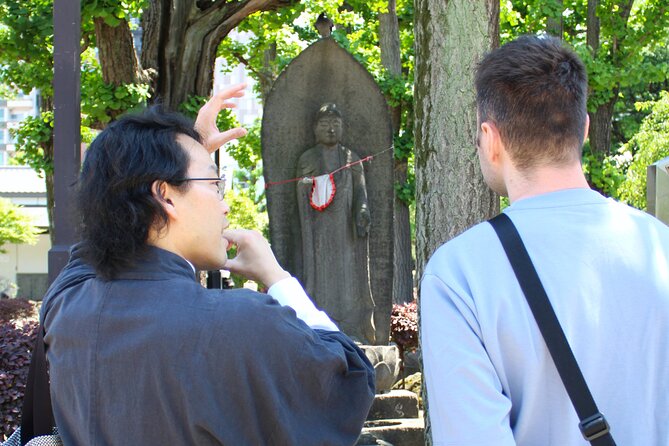
The appeal here is not simply that the guide is funny. Comedy helps with a real problem in Asakusa: the district contains many gates, statues, halls, shrines, bells, and rituals, and they can begin to blur together.
Ryo gives each place a role. He explains how Senso-ji and Asakusa Shrine relate to one another, why the area contains both Buddhist and Shinto sites, and what certain symbols mean. His English is described as very good, and the experience is built around questions and conversation.
That personal approach matters in a small group. You can ask about Japanese customs, local shops, food, or the difference between a temple and shrine. Families and teenagers seem especially well suited to the format because the humor keeps the information moving. At the same time, the tour is not presented as a comedy performance with a few facts added. The main subject remains Asakusa’s culture and religious history.
Ryo’s background as a former rickshaw driver also helps. He knows the district beyond its main photo stops and can offer recommendations for snacks, souvenirs, and nearby places. A comedy show after the tour is possible if you are lucky, but it is not part of the guaranteed walking itinerary.
More Walking Tours in Tokyo
- Tokyo Tsukiji Fish Market Food and Culture Walking Tour
★ 5.0 · 3,184 reviews - Tokyo: Imperial Palace and Shogun Historical Walking Tour
★ 5.0 · 2,251 reviews - Tokyo: Shinjuku Local Bar and Izakaya Guided Walking Tour
★ 4.9 · 1,794 reviews
Starting above Asakusa at the Tourist Information Center
The tour begins at the Asakusa Culture Tourist Information Center, near Asakusa Cruise Pier. The first stop uses the building’s eighth-floor viewpoint, where you can look across the district and get your bearings before walking into it.
This is a smart opening. From street level, Asakusa can feel like a tangle of lanes and temple grounds. A high view helps you see how the shopping streets, religious complex, and surrounding city fit together.
You spend about 10 minutes here, and admission is free. It is not a major sightseeing stop by itself, but it gives the rest of the walk a clearer shape. Be ready to move on quickly rather than linger for a long photo session.
Kaminarimon and the approach along Nakamise Street
From the information center, you enter the main Asakusa area through Kaminarimon, the Thunder Gate. Its large lantern is one of Tokyo’s most familiar images, and it marks the approach to Senso-ji.
The next stretch is Nakamise Shopping Street, the traditional commercial path leading toward the temple. Here, the tour shifts from city orientation to daily culture. You’ll see shops selling souvenirs, sweets, and traditional items, though the exact level of activity depends on the time of day.
The formal stop is about 10 minutes. That is enough for an explanation and photographs, but not enough to browse every shop. If shopping is a major goal, plan to return after the tour. One useful timing detail is that the markets may not fully open until around 10 a.m. An early tour gives you a calmer walk and cooler conditions, but a later one offers more open stalls and food choices.
Bentendo, the Bell of Time, and a quieter side of Senso-ji
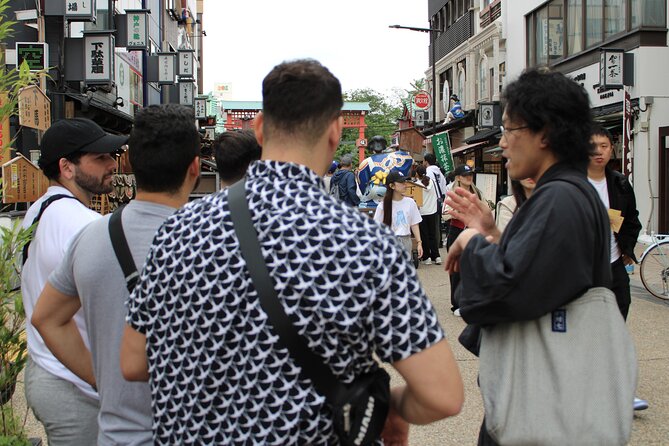
After the main approach, the route takes you to Bentendo, a smaller temple associated with art and prosperity. It receives only about five minutes, but that brief stop shows why a guided walk can be more useful than a simple visit to the main hall.
The next stop is the Bell of Time. During the Edo period, a monk at Senso-ji regularly rang the bell to tell people the time. It is a small detail, yet it connects the temple to the rhythm of old city life rather than treating it as a frozen monument.
These stops are close together, and the pace is brisk. That works well if you want to cover a lot in a short visit. It is less suitable if you prefer long periods of quiet reflection at every religious site.
You then reach the area known as Senso-ji Nisombutsu, with two bronze statues and four stone statues of Buddhist deities dating from the 17th century. This is described as a calm spot, a welcome pause from the busier approach to the temple.
Ryo’s role is particularly useful here. Small religious figures often have no obvious explanation in English, and their purpose can be missed entirely. The value is not just knowing their names. It is understanding why they are placed there and how they fit into the wider religious setting.
Same city, a completely different kind of day:
- Mt Fuji and Hakone 1-Day Bus Tour Return by Bullet Train
★ 5.0 · 26,383 reviews - 1-Day Tokyo Bus Tour
★ 5.0 · 14,250 reviews - Tokyo: TOKYO SKYTREE® Admission ticket
★ 4.5 · 11,192 reviews - Tokyo: teamLab Planets TOKYO Digital Art Museum Entry Ticket
★ 4.6 · 9,779 reviews
Nitenmon Gate and the connection between temple and shrine
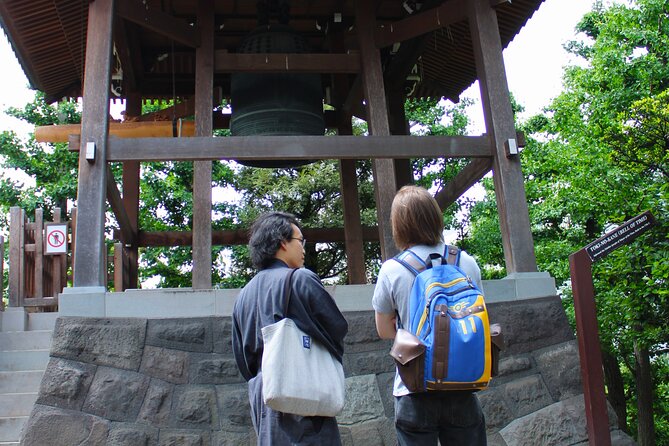
Nitenmon Gate is one of the route’s strongest stops. Located to the right of Senso-ji’s main hall, it is a designated National Cultural Property in Japan. The gate was once used as a shogun’s gate, which gives it a political and historical layer beyond its architectural appearance.
You spend about 10 minutes here. That is enough time for Ryo to explain the gate and let you take photographs without rushing through the area.
Nearby is Asakusa Shrine, which is important because it is closely tied to the origin of Senso-ji. The shrine honors three deities connected with the temple’s founding story. You’ll also see the garage used for three large portable shrines carried during local festivals.
This pair of stops gives you one of the clearest lessons of the tour: temples and shrines can share the same district, but they are not the same thing. Senso-ji is Buddhist, while Asakusa Shrine is Shinto. A guide can explain the relationship in plain terms and help you notice the different gates, buildings, and customs.
Asakusa Shrine receives about 10 minutes. It is worth asking questions here, especially if you are curious about Japanese festivals or how portable shrines are used. The tour does not promise that a festival will be taking place, so think of this as a cultural explanation and site visit, not a festival experience.
Yogodo and Awashimado: why the smaller sites matter
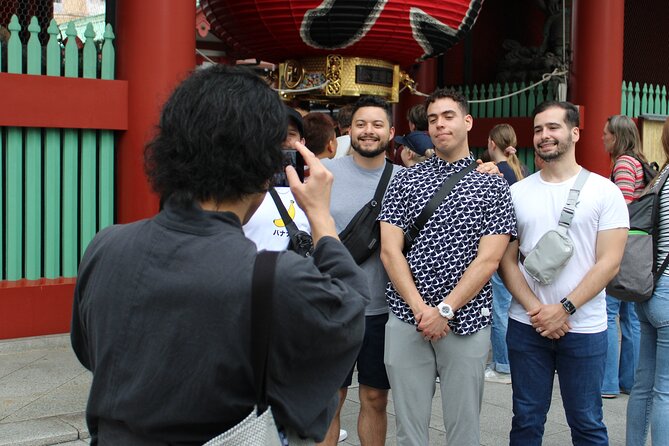
The route continues to Yogodo and Awashimado, both within the Senso-ji area. Yogodo receives about five minutes, while Awashimado receives about 10.
The supplied information gives fewer details about these two stops than about Kaminarimon or Nitenmon. That is not necessarily a weakness. Their purpose seems to be showing you the wider temple grounds rather than rushing from one major landmark to another.
This is where Ryo’s local knowledge can make the biggest difference. A sign or building that looks minor may carry meaning you would not find in a standard guidebook. The walk also gives you a better sense of Senso-ji as a working religious compound with many connected spaces, rather than a single photogenic hall.
Do not expect every stop to feel like a grand attraction. Some are short introductions, and the reward comes from the overall sequence.
Nishi-sando and the melon bread stop
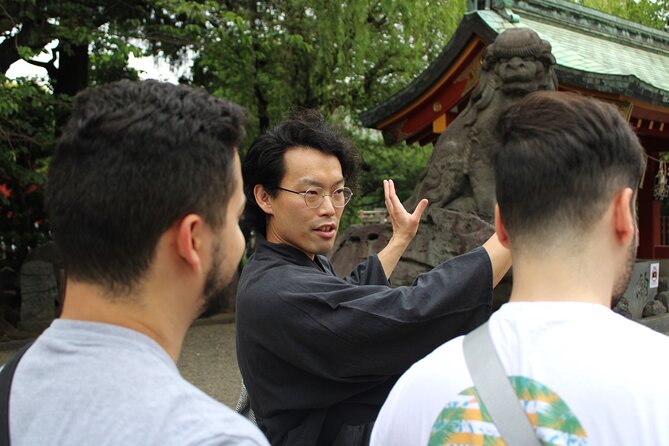
At Asakusa Nishi-sando, the group can stop at Kagetsudo for melon bread, a popular Japanese sweet. The stop is listed at about five minutes, and the food is optional rather than the central purpose of the tour.
The recommendation is useful because it adds a simple local snack to a sightseeing route. Melon bread is a sweet bun with a crisp, cookie-like top, and it is one of the food items most closely associated with this part of Asakusa.
Food stops on walking tours can sometimes feel rushed, so keep your expectations modest. You may have time to try the snack, but this is not a food tour with a long tasting session. If you already know you want the melon bread, have a little flexibility in your schedule.
Hozomon and the final visit to Senso-ji
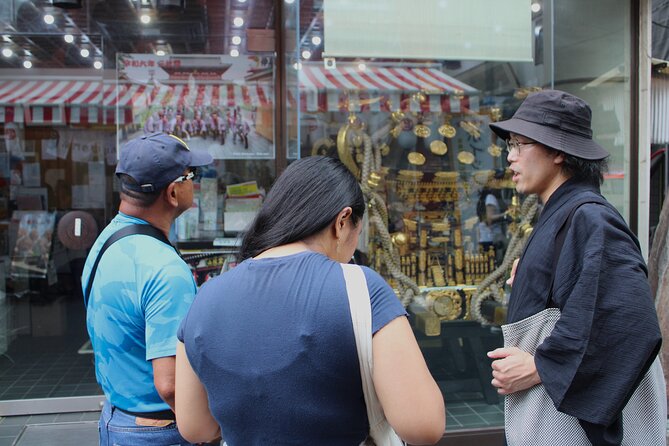
Before reaching the main hall, you stop at Hozomon, another major gate with a pair of guardian statues. Like Kaminarimon, it frames the temple approach. Unlike Kaminarimon, it feels closer to the religious heart of Senso-ji.
The final stop is Senso-ji itself, described as Tokyo’s oldest temple, with about 1,400 years of history. This is the destination of the tour and receives about 10 minutes.
Ryo explains the temple’s connection with Kannon Bodhisattva, a compassionate Buddhist figure. That background helps explain why Senso-ji has drawn people for centuries and why the site remains important beyond its fame as a sightseeing stop.
The tour ends in front of the main hall. This is practical because you are already in the center of Asakusa, close to more shops, food, side streets, and transport options. You can continue exploring on your own, return to a place you want to photograph, or head toward another part of Tokyo.
What the 90-minute schedule feels like
The advertised duration is about one hour and 30 minutes. The itinerary includes 12 stops, but several receive only five minutes. That tells you what kind of experience this is: a focused introduction with many short explanations, not a slow temple meditation walk.
The pace appears manageable for most people, and the activity information says most people can participate. You are walking outdoors, though, so summer heat, rain, and crowded paths can affect comfort.
Morning is the best choice if you want clear paths and cooler air. Several people who arranged an 8 a.m. start found the area much quieter before the crowds arrived around 9 a.m. The tradeoff is that many market shops may not open until 10 a.m.
A later start gives you more of the shopping-street atmosphere and better access to snacks, but you will contend with more people. If photographs and calm temple grounds matter most, choose early. If shopping and food matter most, consider a later time.
Small-group value at $37.99
At $37.99 per person, this tour sits at a reasonable price for a short guided experience in central Tokyo. You are not paying for an admission ticket because the stops are free. You are paying for the guide’s time, explanations, route planning, English communication, and local recommendations.
The small group improves that value. With a group of six, or up to eight according to the additional tour details, you can usually hear the guide more easily than in a large walking group. You also have a better chance to ask about a detail that interests you.
The price is especially fair for a first visit to Asakusa. Without a guide, you can see the main gates and temple, but you may miss the meaning behind the smaller statues, the relationship between Senso-ji and Asakusa Shrine, and the quieter corners around the complex.
It is less compelling if you have already spent several hours studying the district and prefer to wander independently. The route is concentrated around the temple area, so it does not attempt to cover all of Tokyo or every part of Asakusa.
Group discounts are available, and the tour uses a mobile ticket. Confirmation arrives when you book. Service animals are allowed, and the start is near public transportation.
Who should book this Asakusa walk
I would choose this tour for a first visit to Asakusa, particularly if you want a friendly introduction before exploring farther on your own. It suits solo visitors, couples, families, and small groups who like asking questions rather than listening silently to a prepared speech.
It also works well for people who find religious architecture hard to interpret. Ryo explains Buddhist and Shinto sites in a way that connects buildings, legends, objects, and customs.
Families with older children and teenagers may appreciate the humor. The walking distance is not described in detail, but the tour lasts about 90 minutes and includes many outdoor stops. If someone in your group has difficulty walking or standing, confirm that the route fits their needs before booking.
I would be more cautious about booking if your main goals are extensive shopping, a long food tasting, or a broad tour of Tokyo. The melon bread stop is brief, and the walk remains centered on Senso-ji and its surrounding grounds.
Free cancellation is available if you cancel at least 24 hours before the start time. Cancellations within 24 hours are not refunded, and changes during that period are not accepted.
Should you book it?
Book this tour if you want history with a human voice, a small group, and a lively guide who can explain why Asakusa looks the way it does. Ryo’s mix of English, cultural insight, local recommendations, and comedy is the main reason to choose it over simply following a map.
Choose an early start for quiet lanes and cooler weather. Choose a later start for open markets and more food activity. At $37.99, the walk offers solid value for a short, focused introduction to Tokyo’s oldest temple district.
FAQ
How long is the Asakusa walking tour?
The tour lasts approximately one hour and 30 minutes.
Who leads the tour?
The guide is Ryo, a Japanese comedian who has also worked as a rickshaw driver in Asakusa.
What sights are included?
The route includes the Asakusa Culture Tourist Information Center, Kaminarimon Gate, Nakamise Shopping Street, Bentendo, the Bell of Time, Senso-ji Nisombutsu, Nitenmon Gate, Asakusa Shrine, Yogodo, Awashimado, Asakusa Nishi-sando, Hozomon, and Senso-ji Temple.
Where does the tour begin?
It begins at the Tokyo Cruise Asakusa Pier at 1-chōme-1-1 Hanakawado, Taito City, Tokyo.
Where does the tour end?
The walk ends in front of the main hall of Senso-ji Temple at 2-chōme-3-1 Asakusa, Taito City, Tokyo.
How large is the group?
The tour highlights describe a group capped at six people. The additional information lists a maximum of eight travelers, so check the booking details for your selected date.
Is the tour suitable for most people?
The activity information says most people can participate. It is near public transportation, and service animals are allowed.
Can I cancel for a full refund?
Yes. You can receive a full refund by canceling at least 24 hours before the experience start time. Cancellations or changes made within 24 hours are not accepted for a refund.
Just added around Tokyo
- Private Memorable Tokyo Tour with English Speaking Driver★ 5.0 · 30 reviews
- Private Tokyo Custom Full-Day Tour by Chartered Vehicle★ 5.0 · 16 reviews
- Private Sightseeing to Mt Fuji and Hakone with English Driver★ 5.0 · 51 reviews
- Tokyo Photography Masterclass – Private Photography Lesson★ 5.0 · 25 reviews
- Private Mt. Fuji Day Trip from Tokyo with English-Speaking Driver★ 5.0 · 33 reviews
- 4 Day Tour – Mount. Fuji, Tokyo, Hakone, Kamakura and Yokohama★ 5.0 · 19 reviews
- Private Unforgettable Mt Fuji Tour with English Speaking Driver★ 5.0 · 142 reviews
- Private Tokyo Food Tour – A Journey Through Time Through Food★ 5.0 · 36 reviews
Walking Tours, compared.

Kyoto Geisha Walking Tour: Gion District & Hidden Gems
Read our review →
Tokyo Tsukiji Fish Market Food and Culture Walking Tour
Read our review →
Gion Magical Night Walking Tour with Geisha Trivia
Read our review →
Imperial Palace and Shogun Historical Walking Tour
Read our review →
Gion Geisha District Walking Tour – Stories of Geisha
Read our review →
Asakusa Walking Tour with Sensoji Temple Visit
Read our review →
Kyoto Gion Geisha District Walking Tour – The Stories of Geisha
Read our review →Browse the lists this tour appears in