
REVIEW · FOOD MARKET TOURS
Tokyo: 3-Hour Food Tour of Shinbashi at Night
Shinbashi after dark is Tokyo with its tie loosened. This three-hour walk takes you behind the station and into the narrow lanes where office workers eat, drink, smoke, and shake off the day. You’ll try ramen, tender Wagyu, regional sake, and a traditional dessert while learning how this slice of Tokyo’s pub culture works.
I like the small group of 10 or fewer, which makes a tiny restaurant or crowded counter much easier to manage. I also like the practical guidance: past guides such as Ray, Yappy, Francois, Tommy, Marc, and Yoko have helped visitors understand ordering, meal customs, and where to eat later in the trip.
The main consideration is the $170 price, which is not cheap for three hours. Food stops and sake are included, but extra food, drinks, transport, gratuity, and optional hotel pickup cost more. You also need to arrive on time, since the guide waits only five minutes.
In This Review
- Key points at a glance
- Why Shinbashi works so well at night
- Starting beside the old steam engine
- Ramen, Wagyu, and the rhythm of several stops
- Ramen for comfort and context
- Wagyu with a smoky edge
- Local dishes and small pub plates
- Sake tasting beyond the word sake
- A dessert finish and the social side of Tokyo
- What the guides add to the meal
- Is $170 a fair price?
- Who should book this Shinbashi food walk?
- Should you book it?
- FAQ
- Where does the Shinbashi food tour meet?
- How long does the tour last?
- What food and drink are included?
- Is the tour suitable for people under 20?
- Is hotel pickup included?
- What happens if I arrive late?
Key points at a glance
- Shinbashi’s steam engine meeting point: Meet in front of the decommissioned steam locomotive at the Hibiya exit of Shinbashi Station.
- A working neighborhood after dark: See where Tokyo’s office crowd goes for ramen, grilled meat, sake, and a few hours of relief after work.
- Several proper food stops: The menu includes local dishes, Wagyu, ramen, sake, and dessert rather than one large meal in one restaurant.
- Regional sake tasting: Learn how Japanese sake, also called nihonshu, can change in aroma and flavor from one pour to the next.
- Small and adult-only: The tour accepts up to 10 people, and everyone must be at least 20 years old.
- Useful local coaching: Guides explain food and bar manners, share restaurant suggestions, and may help you feel less lost in compact Japanese eateries.
Why Shinbashi works so well at night
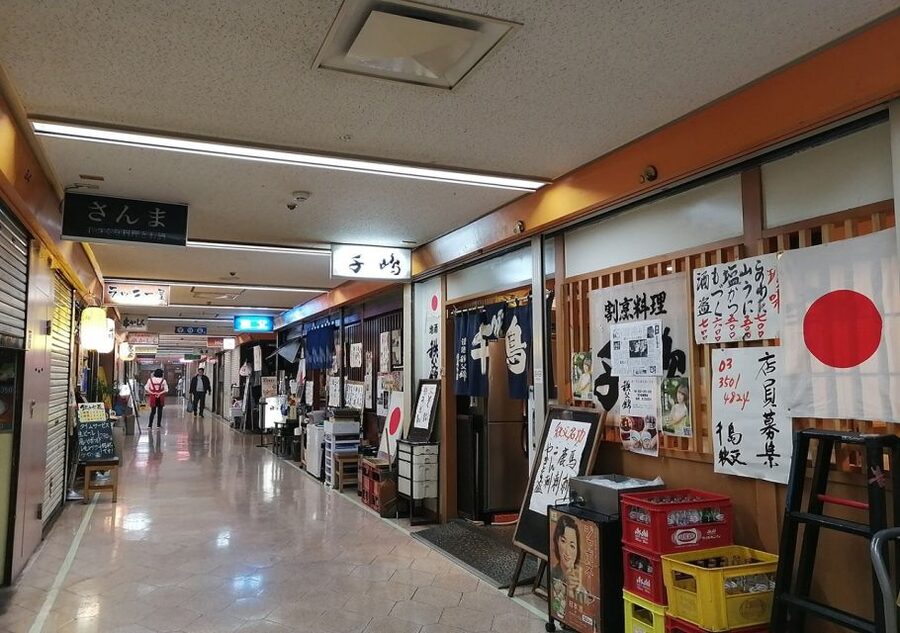
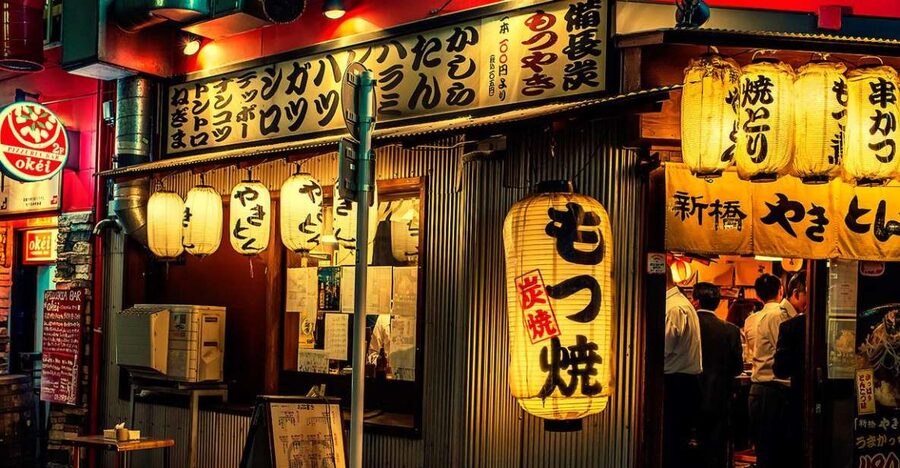
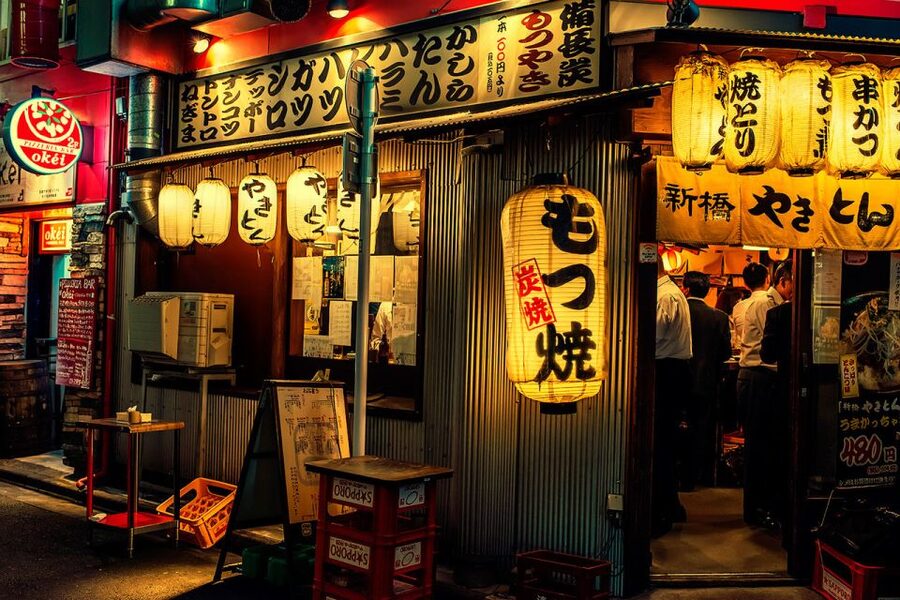
Shinbashi is close to Tokyo’s business core, but it feels far less polished than the grand shopping districts. Its backstreets are packed with small eateries and drinking spots built for regulars, especially people finishing a long day in an office.
That makes the neighborhood a good match for a food walk. You are not simply moving from one famous dish to another. You are seeing how food fits into daily life. A bowl of ramen can be a quick solo supper. A few plates of grilled meat can turn into a long evening with colleagues. A sake tasting can be the start of a conversation rather than the final course.
I find this setting more useful than a tour built only around postcard sights. You get a look at the part of Tokyo that many first-time visitors pass by while heading toward bigger attractions. The guide’s job is to make these narrow lanes readable, since much of the appeal lies in small signs, compact counters, and places you might not choose on your own.
Shinbashi also has a rougher edge. Smoking is allowed in most areas, so smoke may be part of the walk or the dining atmosphere. If that would bother you, consider this before booking. This is an after-work district, not a quiet, smoke-free food hall.
More Food Market Tours in Tokyo
- Tokyo: Shinjuku Food Tour (13 Dishes at 4 Local Eateries)
★ 5.0 · 6,603 reviews - Tokyo Tsukiji Fish Market Food and Culture Walking Tour
★ 5.0 · 3,184 reviews - Tokyo: Shinjuku Food Tour (15 Dishes and 4 Eateries)
★ 4.9 · 2,033 reviews
Starting beside the old steam engine
The meeting point is easy to identify: the decommissioned steam engine at the Hibiya exit of Shinbashi Station. Shinbashi is a large station area, so give yourself extra time to find the correct exit rather than relying on a last-minute phone call.
The timing rule matters. Your guide can wait only five minutes after the scheduled start, then must leave with the group. Once the tour begins, the guide cannot provide directions by phone. This is partly practical, since the group needs to stay on schedule, and partly a courtesy to the restaurants expecting the party.
Wear comfortable walking shoes. The route is designed around backstreets and several food stops, so you will spend much of the evening on foot, moving between compact establishments. Transport is not included, but the walking format is part of the experience rather than an inconvenience.
The group limit of 10 is a real advantage here. Small Japanese restaurants often have little spare room, and a large tour could easily overwhelm the setting. A smaller party should also make it easier to ask questions and follow the guide’s explanations.
Ramen, Wagyu, and the rhythm of several stops
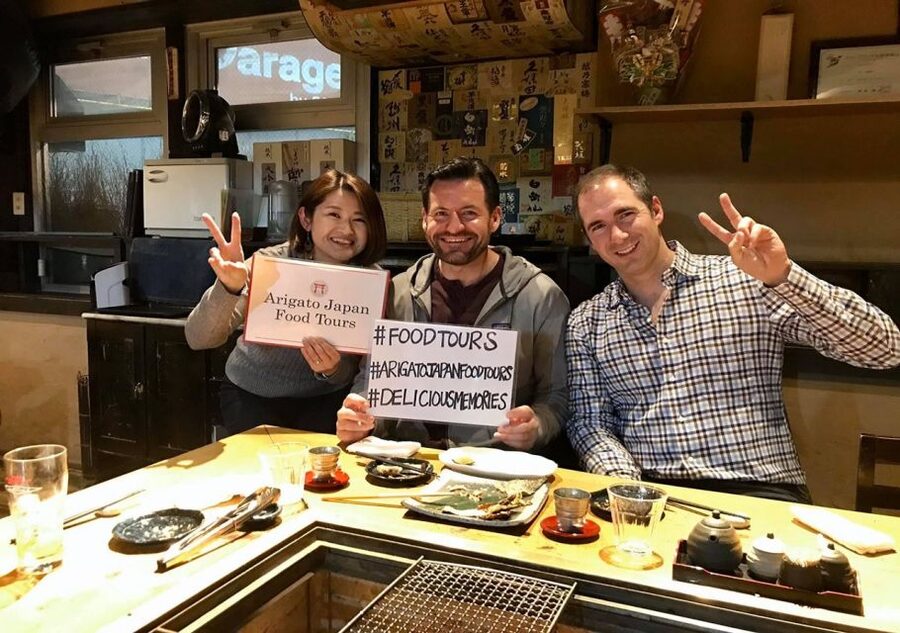
The food is presented as a series of stops, not a single formal dinner. That gives you variety and lets you see different kinds of local dining rooms. Exact restaurants can vary, but the advertised tasting includes ramen, Wagyu, local dishes, sake, and a traditional dessert.
Ramen for comfort and context
A steaming bowl of ramen is one of the evening’s anchors. The appeal is not only the noodles and broth. Ramen shows how a Japanese meal can be quick, filling, and intensely focused, often served in a place where people come alone and eat without fuss.
You can expect the guide to explain what you are eating and how the stop fits into local food culture. That is valuable if you are unsure about ordering, slurping, or handling a meal in a small shop. You are not left to decode a menu while a line forms behind you.
The drawback is that ramen can be filling early in a food tour. If you normally eat lightly at night, pace yourself. There are several tastings ahead, and the point is to sample rather than rush through each plate.
Same city, a completely different kind of day:
- Mt Fuji and Hakone 1-Day Bus Tour Return by Bullet Train
★ 5.0 · 26,383 reviews - 1-Day Tokyo Bus Tour
★ 5.0 · 14,250 reviews - Tokyo: TOKYO SKYTREE® Admission ticket
★ 4.5 · 11,192 reviews - Tokyo: teamLab Planets TOKYO Digital Art Museum Entry Ticket
★ 4.6 · 9,779 reviews
Wagyu with a smoky edge
The Wagyu stop brings a different texture and mood. The meat is described as buttery and tender, with a delicate smoky char from searing. It offers a taste of the celebratory side of Japanese dining, though in a small tasting format rather than a full steak dinner.
This is one reason the price can make more sense for some people. You are paying for access to several food settings, guidance, and dishes that might cost more or be harder to order separately. Still, do not book expecting an unlimited feast. Included food is part of a planned tasting, and anything extra is your responsibility.
Local dishes and small pub plates
The tour also includes additional local dishes at several food stops. These smaller servings matter because Japanese pub culture often revolves around sharing plates, trying a little of many things, and ordering another drink when the conversation is going well.
The guide helps connect the food to the place. Instead of treating each dish as an isolated bite, you get a clearer sense of how workers use these restaurants after office hours. Guides have also helped with meal customs, including ways to show respect before eating and thank staff when leaving.
That kind of coaching can be more useful than a long lecture. You leave with habits you can use on your own, especially if you plan to return to an izakaya or small counter restaurant later in Japan.
Sake tasting beyond the word sake
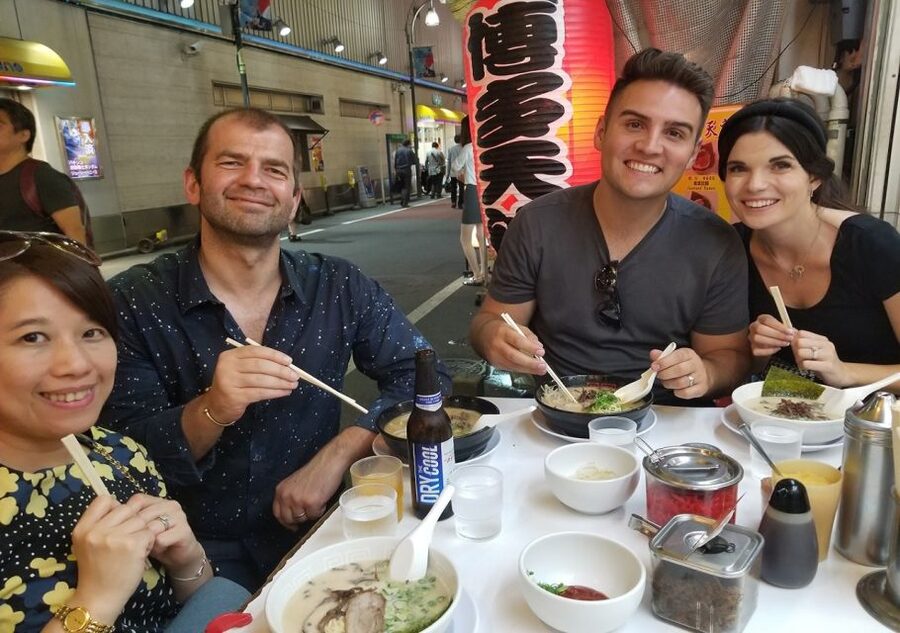
The sake tasting is a central part of the evening. The experience focuses on regional varieties and how their aromas and flavors shift as you taste. The drink may be familiar by name, but a guided tasting can show you that sake is not one single flavor.
You may find one pour crisp and aromatic, another smoother, and another more complex. The useful part is having someone explain what you are noticing without making the process feel like an exam. If you think you do not like sake, this is a good chance to test that assumption. One person who expected to dislike it discovered a preference for nihonshu after trying different styles.
You should bring your passport or another ID card. The tour is for adults aged 20 and over, and age restrictions apply even if you are not planning to drink much. Anyone under 20 cannot join.
The included tasting is not a license to order freely all night. Additional drinks and food are available at your own expense. Keep that in mind when working out the final cost, particularly if you tend to continue drinking after the planned stops.
A dessert finish and the social side of Tokyo
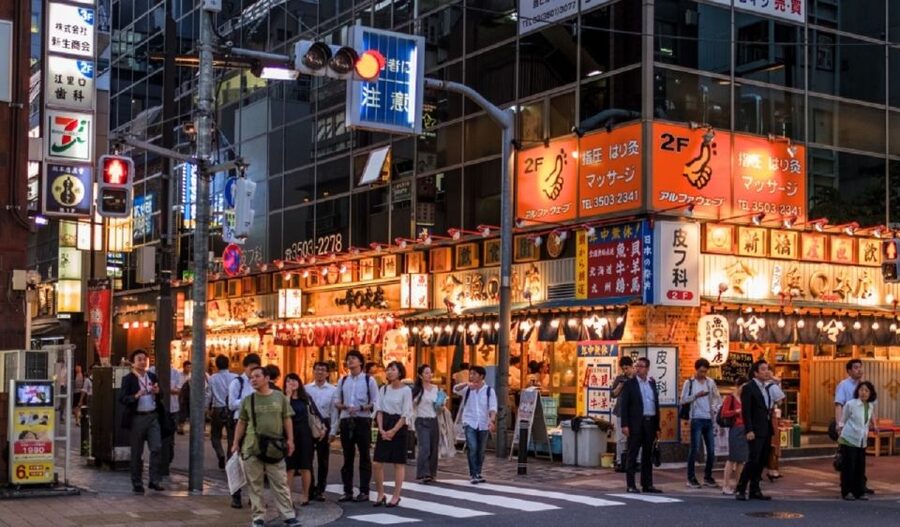
The final stop is a traditional dessert, which gives the evening a clean finish after savory food and alcohol. The exact dessert is not specified, so do not book this expecting one particular sweet. The point is to end with a Japanese treat and a change of pace.
The social atmosphere may be just as memorable as the food. You are eating alongside people using Shinbashi as their regular after-work district, not as a sightseeing stage. That does not mean every stop will be quiet or intimate. The neighborhood permits smoking in most areas, and evening crowds can make some places feel close and lively.
Past guides have added personal touches. Yappy has been praised for making the evening fun and easy to follow, while Francois once arranged a birthday surprise and joined the group for karaoke afterward. Karaoke is not listed as part of the tour, so treat it as a possible extra rather than a promised stop. If you want that sort of add-on, ask about it and expect to pay separately.
What the guides add to the meal
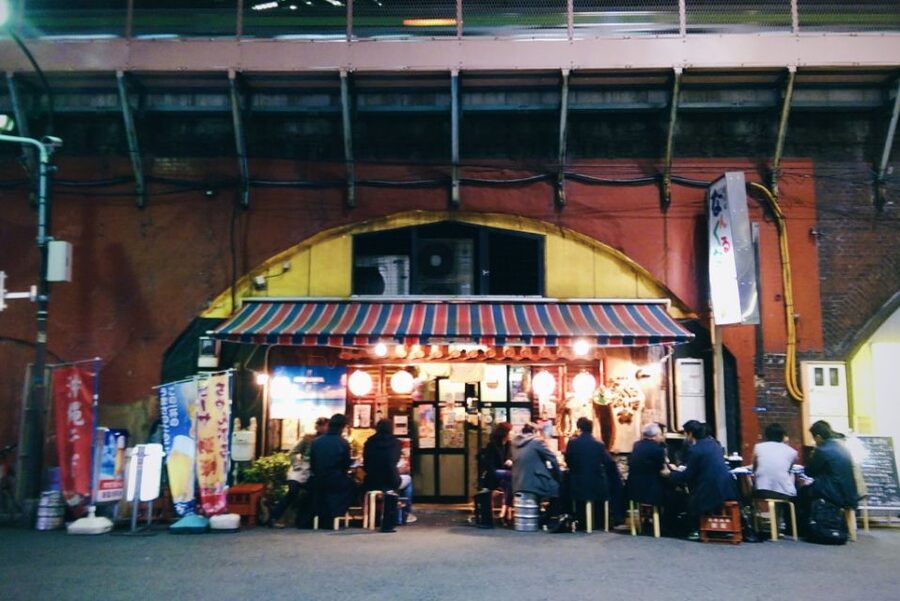
The guide is not just there to lead you from station to restaurant. The strongest part of the experience is the interpretation between bites.
Ray has been noted for explaining food and bar culture with visual aids, including simple ways to bless a meal and thank restaurant staff. Tommy has provided suggestions for the rest of a Tokyo stay. Marc has been singled out for knowing good places, and Yoko has combined food, history, and local customs in a relaxed way.
Guide assignments can change, so you should not book on the assumption that one particular person will lead your tour. The larger point is the guide’s role: helping you understand what you are seeing and giving you enough confidence to try similar places without help later.
That advice has lasting value. A list of restaurants is useful for one night. Knowing how an izakaya works, how to approach a compact counter, and how to order a few dishes is useful for the rest of your trip.
Is $170 a fair price?
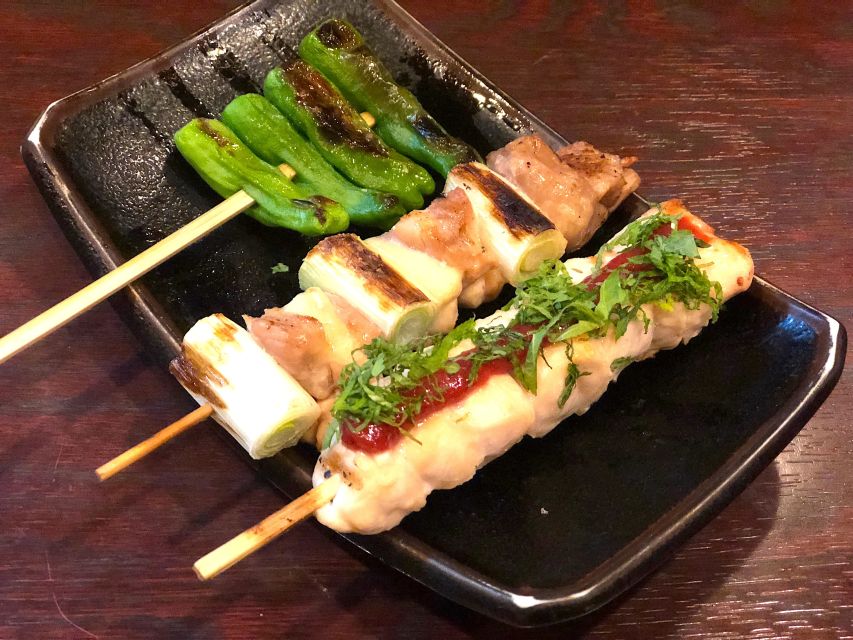
At $170 per person, this is a premium food walk. You are not paying only for the ingredients. The cost also covers an English-speaking guide, several included food stops, and a sake tasting in a neighborhood where the best places may be difficult to locate or navigate on your own.
For a first evening in Tokyo, that can be good value if you want a guided introduction to Japanese pub culture. You get a meal’s worth of food, a neighborhood walk, and practical help with customs. The small group also keeps the experience more personal than a large bus-style food outing.
The value is weaker if you are mainly looking for a cheap dinner. Tokyo offers many affordable meals, and this tour does not include every drink or dish you might want. Add gratuity, possible extra orders, and any transportation costs to your budget.
I would also compare the timing with your plans. Three hours is long enough to feel substantial but short enough to fit into an evening. It works best when you can give the whole night to Shinbashi rather than trying to squeeze in a major attraction afterward.
Free cancellation is available up to 24 hours before the start, and you can reserve now and pay later. Those policies help if your Tokyo schedule is still shifting, but they do not change the need to arrive at the station on time.
Who should book this Shinbashi food walk?
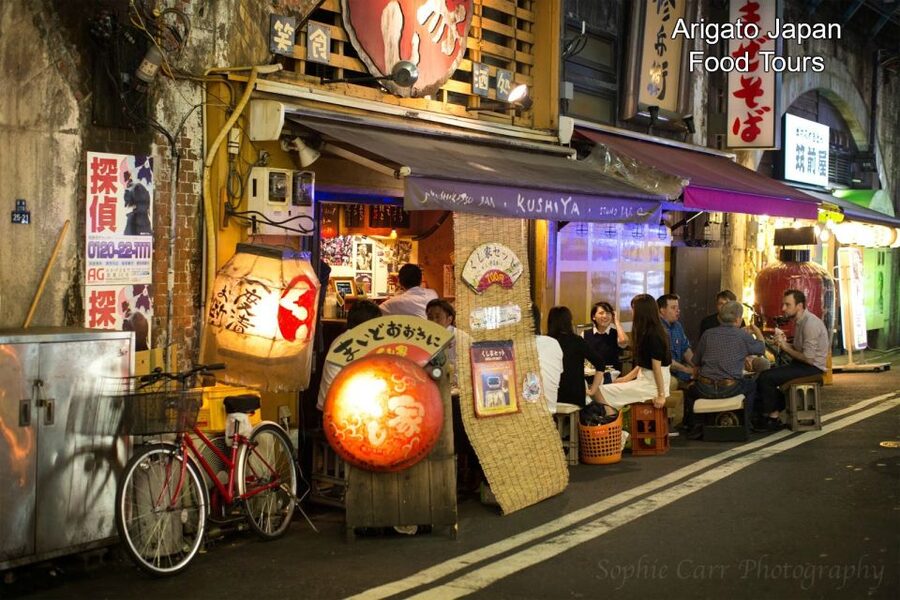
I would recommend it to first-time visitors who want a guided start to Japanese food culture, especially anyone nervous about ordering in small local restaurants. It is also a good fit for couples, friends, and solo visitors who enjoy tasting several things instead of sitting through one long dinner.
Food-focused people will appreciate the range: ramen, Wagyu, local dishes, regional sake, and dessert. Culture-focused people will like seeing how office workers unwind and how food and drink shape the after-work evening.
This tour is less suitable for anyone under 20, anyone who avoids alcohol completely, or anyone who dislikes smoky dining areas. It may also disappoint you if you want a precise menu, a luxury meal, or a quiet private experience. The restaurants are part of a working district, and the atmosphere is informal.
Come hungry, but not famished. Wear good walking shoes, carry identification, and arrive early at the steam engine. Most of all, stay open to trying food in places that do not look designed for sightseeing.
Should you book it?
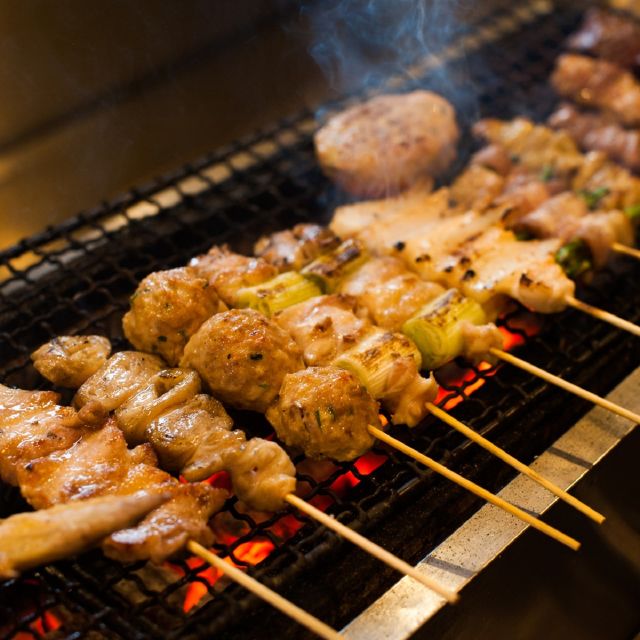
Book this tour if you want to understand Tokyo through its evening food habits, not just collect a few famous dishes. The strongest reasons are the small group, the local backstreets, the sake tasting, and the guide’s practical help with customs and restaurant etiquette.
Skip it if $170 feels too high for a three-hour tasting or if smoking and extra drink costs are deal breakers. For everyone else, it offers a useful first look at Shinbashi, with enough food and local guidance to shape the rest of your Tokyo nights.
FAQ
Where does the Shinbashi food tour meet?
Meet in front of the decommissioned steam engine at the Hibiya exit of Shinbashi Station.
How long does the tour last?
The tour lasts three hours.
What food and drink are included?
The tour includes local dishes at several food stops, a sake-tasting experience, ramen, Wagyu, and a traditional dessert.
Is the tour suitable for people under 20?
No. Only adults aged 20 and over are permitted to join.
Is hotel pickup included?
No. Hotel pickup is not included, though it may be arranged for an additional charge.
What happens if I arrive late?
The guide can wait only five minutes after the scheduled start time. After that, the tour departs, and the guide cannot provide directions by phone once the tour has begun.
More Food in Tokyo
- Tokyo Night Foodie Tour in Shinjuku – Seasonal Sushi, Wagyu Beef
★ 5.0 · 1,161 reviews - Tokyo: Tsukiji Fish Market Food and Culture Walking Tour
★ 4.7 · 757 reviews - Tsukiji Fish Market: Street Food & Culture Walking Tour
★ 5.0 · 669 reviews - Tsukiji Fish Market Small-Group Food Walking Tour
★ 5.0 · 621 reviews
More Food & Drink in Tokyo
- Best of Shinjuku: Izakaya Food Tour (4 Stops, 14+ Tastings)
★ 5.0 · 1,863 reviews - Tokyo: Tsukiji Fish Market Food and Walking tour
★ 5.0 · 1,724 reviews - Eat and Drink Like a Local: Tokyo Ueno Food Tour-Taverns&Ramen
★ 5.0 · 957 reviews - Tokyo: Shibuya Food Tour (13 dishes and 4 Eateries)
★ 5.0 · 770 reviews
Just added around Tokyo
- Private Harajuku Omotesando Architecture Tour★ 4.9 · 18 reviews
- Tokyo: Customizable Private Guided Walking Tour★ 4.5 · 129 reviews
- Tokyo: Guided Helicopter Ride★ 4.9 · 24 reviews
- Tokyo: Guided Walking Tour of Tsukiji Market with Lunch★ 4.4 · 24 reviews
- Tokyo: Private Personalized Local Food Tour★ 4.5 · 101 reviews
- Tokyo GINZA: KONPARU Japanese Cabaret Show with Drink★ 4.8 · 38 reviews
- Tokyo: Guided Walking Tour of Tsukiji Market with Breakfast★ 4.4 · 134 reviews
- Tokyo: Gotokuji Cat Temple, Shinjuku Cat Cafe & 3D Cat Tour★ 4.9 · 38 reviews
Food Market Tours, compared.
Shinjuku Food Tour (13 Dishes at 4 Local Eateries)
Read our review →
Tokyo Tsukiji Fish Market Food and Culture Walking Tour
Read our review →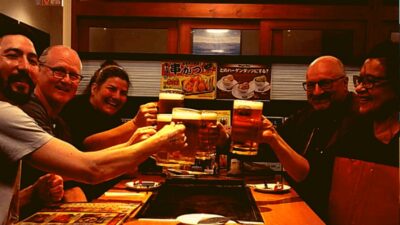
Shinsekai Food Tour with 13-15 Dishes at 5 Eateries
Read our review →
Osaka Food Tour: 13 Dishes at 5 Local Eateries
Read our review →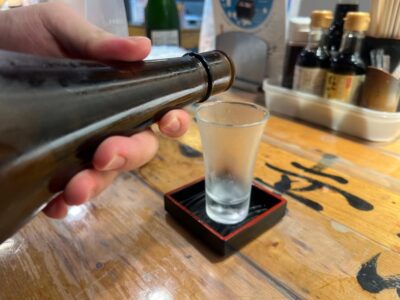
Shinjuku Food Tour (15 Dishes and 4 Eateries)
Read our review →
Best of Shinjuku: Izakaya Food Tour (4 Stops, 14+ Tastings)
Read our review →
Hungry Osaka Street Food Tour:15 Tastings & 3 Drinks with a Local
Read our review →
Browse the lists this tour appears in