
REVIEW · WALKING TOURS
The Old Quarter of Tokyo – Yanaka Walking Tour
Tokyo’s Yanaka district feels like a different city from the neon streets of Ginza or the towers around Shinjuku. Here, you walk past wooden homes, temple grounds, quiet lanes, and neighborhood shops, with a guide explaining how old Tokyo survived war, fires, and rapid modernization.
I like two things especially: the small maximum of 10 people keeps the walk personal, and the route connects religion with ordinary life rather than treating temples as isolated photo stops. The local food finish at Yanaka Ginza is another smart touch.
The main consideration is that this is a walking tour with no included food or drinks, so comfortable shoes, water, and sun protection matter. In hot or humid weather, three hours outdoors can feel longer than expected.
In This Review
- Key Points About the Yanaka Walk
- Why Yanaka Makes a Good Change From Central Tokyo
- Meeting at Nippori Station and Getting Started
- Tennoji Temple and the Yanaka Buddha
- Walking Through Yanaka Cemetery
- Ueno-Sakuragi Atari and the Old Cider Tree
- Enju-ji Temple and the God of Strong Legs
- Nezu Shrine and Its Red Torii Gates
- Hebimichi and Everyday Residential Tokyo
- Yanaka Ginza: A Tasty Finish
- What the $40 Price Delivers
- Pace, Weather, and What to Wear
- Who Will Get the Most From This Tour
- Should You Book the Yanaka Walking Tour?
- FAQ
- How long is the Yanaka walking tour?
- Where does the tour begin?
- Where does the tour end?
- How many people can join the tour?
- Is the tour conducted in English?
- Are food and drinks included?
- Are admission tickets included?
- What should I wear for the walk?
- Can I cancel for a full refund?
Key Points About the Yanaka Walk
- Old Tokyo in a modern city: See wooden houses, temples, shrines, and residential lanes that offer a sharp contrast to central Tokyo.
- A small group of up to 10: The format gives you room to ask questions and receive help with photos and local customs.
- Religion explained clearly: Learn how Buddhist temples and Shinto shrines differ, and how the two traditions exist side by side in Japan.
- Nezu Shrine’s red torii gates: Enjoy one of the most photogenic stops, with a chance to learn proper shrine etiquette.
- A useful food finish: The tour ends at Yanaka Ginza, where you can shop, browse, and buy local snacks at your own cost.
- Strong guide feedback: Aya, Junko, Rei, Mami, Mei, Kiyo, and Polina have all been singled out for clear English, patience, local knowledge, and warm personalities.
Why Yanaka Makes a Good Change From Central Tokyo
Tokyo is famous for speed, scale, bright signs, and crowded train stations. Yanaka gives you a quieter view of the city without requiring a long trip into the countryside. The district has a residential feel, with narrow back streets, low wooden buildings, small temples, and shops serving local needs.
That contrast is the main reason to book this walk. You still get a close look at Tokyo, but the focus shifts from famous modern sights to how people lived, worshipped, shopped, and rebuilt.
Some wooden homes in the area survived the World War II bombings and earlier disasters. The walk does not simply point at old buildings and move on. Guides explain the older living style, the Edo period, religious customs, and the ways the neighborhood has changed while keeping much of its character.
I also like the scale of the route. You are not trying to cover half of Tokyo in three hours. Instead, you spend time in one district and see how its temples, cemetery, streets, food shops, and homes fit together.
More Walking Tours in Tokyo
- Tokyo Tsukiji Fish Market Food and Culture Walking Tour
★ 5.0 · 3,184 reviews - Tokyo: Imperial Palace and Shogun Historical Walking Tour
★ 5.0 · 2,251 reviews - Tokyo: Shinjuku Local Bar and Izakaya Guided Walking Tour
★ 4.9 · 1,794 reviews
Meeting at Nippori Station and Getting Started
The tour begins at Nippori Station, at 2 Chome-19 Nishinippori in Arakawa City. This is a practical starting point for a walking route through Yanaka, and the tour ends at Yanaka Ginza, at 3-chome-13-1 Yanaka in Taito City.
The start and finish are in different places, which is useful if you want to continue exploring after the walk. You are not required to return to the station where you began. Instead, the final stop places you near shops and food stalls, making it easy to continue your afternoon at your own pace.
The group can have up to 10 people. That is small enough for a guide to answer questions without turning every stop into a lecture. Several guides, including Aya and Junko, have been praised for taking time with individual questions, offering to take photographs, and using printed images to explain subjects that are difficult to picture from the street.
Guide assignments can vary, so you should not book expecting one specific person. The guide names connected with this experience include Aya, Junko, Rei, Mami, Mei, Kiyo, and Polina. The useful common thread is an English-speaking local guide who can explain the area and help you read the setting beyond its surface appearance.
Tennoji Temple and the Yanaka Buddha
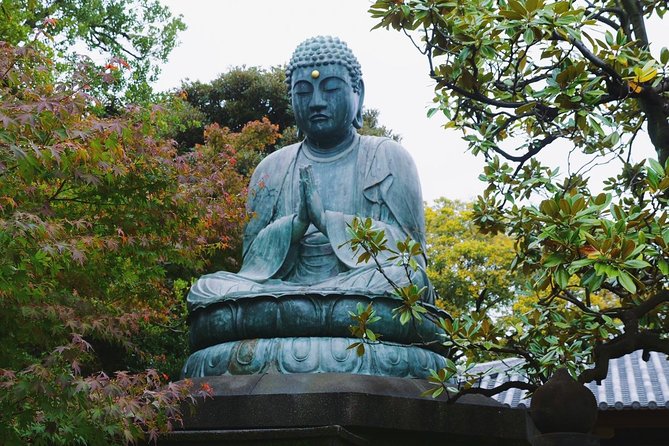
The first listed stop is Tennoji Temple, where you see the Yanaka Buddha, created in 1690. The visit lasts about 15 minutes and admission is free.
This is a good opening stop because it introduces the religious side of Yanaka without overwhelming you at the start. Your guide explains the temple’s story and aspects of Japanese religion, giving you a base for understanding later Buddhist and Shinto sites.
A short stop also makes sense here. You get time to look, listen, and ask questions, but the tour does not spend the whole morning at one temple. If you are especially interested in Japanese religious art or temple architecture, 15 minutes may feel brief. For most people, though, the stop works as an introduction rather than a full temple visit.
Pay attention to the guide’s explanation of customs. Japanese religious sites can appear simple if you do not know what you are seeing. A guide helps connect the object, the practice, and the story.
Walking Through Yanaka Cemetery
From Tennoji, the route continues into Yanaka Cemetery for roughly 15 minutes. Admission is free.
A cemetery may not be the first place you choose on a city tour, but it offers a direct look at Japanese customs and attitudes toward remembrance. The guide explains what a Japanese cemetery is like and how local people behave there.
This stop adds useful cultural balance. Temples and shrines can become a string of beautiful buildings if you only take photographs. The cemetery helps you see religion as part of daily life, family tradition, and local space.
You should expect a respectful visit rather than a dramatic attraction. Keep your voice low, follow the guide’s instructions, and treat the area as an active place of remembrance. The quiet setting also gives the walk a pause before the more social stops later in the route.
Same city, a completely different kind of day:
- Mt Fuji and Hakone 1-Day Bus Tour Return by Bullet Train
★ 5.0 · 26,383 reviews - 1-Day Tokyo Bus Tour
★ 5.0 · 14,250 reviews - Tokyo: TOKYO SKYTREE® Admission ticket
★ 4.5 · 11,192 reviews - Tokyo: teamLab Planets TOKYO Digital Art Museum Entry Ticket
★ 4.6 · 9,779 reviews
Ueno-Sakuragi Atari and the Old Cider Tree
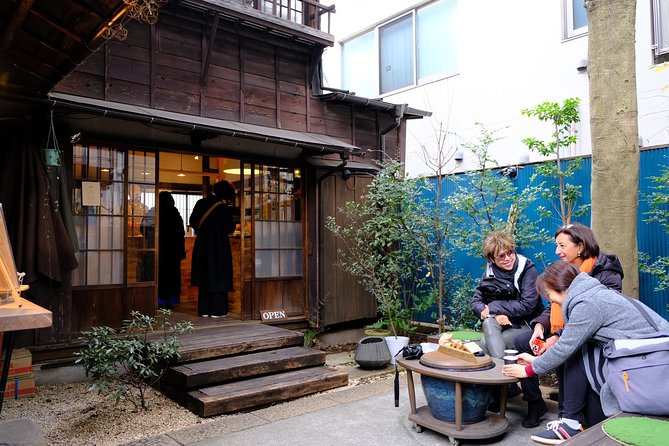
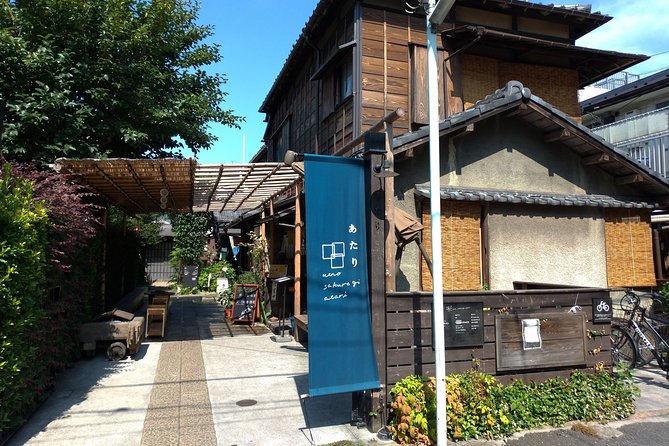
Ueno-Sakuragi Atari provides a break after the temple and cemetery visits. Around 80-year-old wooden houses have been renovated into a cafe, bakery, and beer hall, creating a community space for local people.
The stop lasts about 15 minutes. Admission is not included, and the tour information lists food, drinks, and personal spending separately. You can look around without buying anything, or use the break to purchase something if you wish.
This is one of the most useful parts of the walk because it shows how Yanaka’s older buildings remain part of present-day life. Preservation here is not only about keeping houses frozen in time. The buildings have new purposes, while their age and design remain visible.
The route also includes a 100-year-old cider tree, described as a symbol of Yanaka. It is a small detail, but this is the kind of neighborhood marker that you might miss without someone pointing it out. A local guide can explain why a tree, alley, shop, or building matters to the people who live nearby.
Enju-ji Temple and the God of Strong Legs
Enju-ji Temple is a brief stop of about five minutes. It is unusual because the temple is associated with a deity of strong legs rather than a more familiar Buddhist figure.
People with foot problems write wishes on wooden boards at the site. Your guide explains the practice and the meaning behind it.
The stop is short, but it adds humor and human detail to the route. Religious sites are not all about grand buildings or famous statues. Some are closely tied to very practical hopes, such as staying healthy enough to walk, work, and carry on with daily life.
Admission is listed as not included, although the tour information does not specify a separate entrance charge. Treat this as a quick stop where the guide’s explanation is the main value.
Nezu Shrine and Its Red Torii Gates
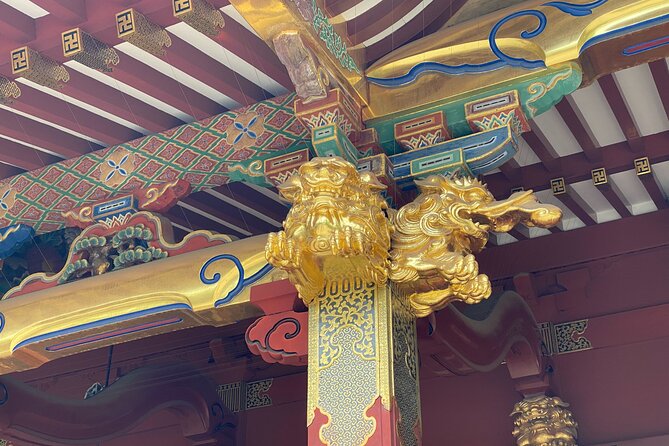
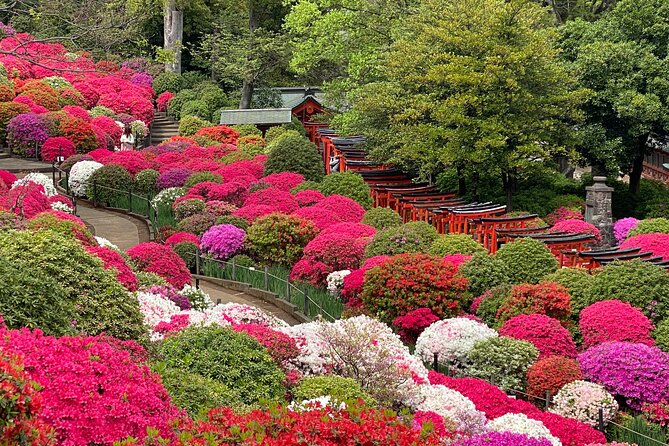
Nezu Shrine is the visual centerpiece for many people. The tour spends about 20 minutes here, and admission is free.
You see rows of red torii gates similar in style to those at Fushimi Inari Shrine in Kyoto. They provide strong photo opportunities, but the guide also explains shrine etiquette, which makes the visit more useful than a quick picture stop.
This is a Shinto shrine, so it gives you a chance to compare Shinto practice with the Buddhist sites earlier in the walk. The tour is particularly helpful if you are unsure about what to do at a shrine. Your guide can explain the respectful behavior expected there without making the process feel stiff.
Twenty minutes is enough to see the main features and take photographs, though it is not a detailed architectural tour. The shrine may also be the busiest point on the route, especially compared with the residential lanes. Still, the visit fits well into the walk because it combines beauty, cultural context, and a clear lesson in local manners.
Hebimichi and Everyday Residential Tokyo
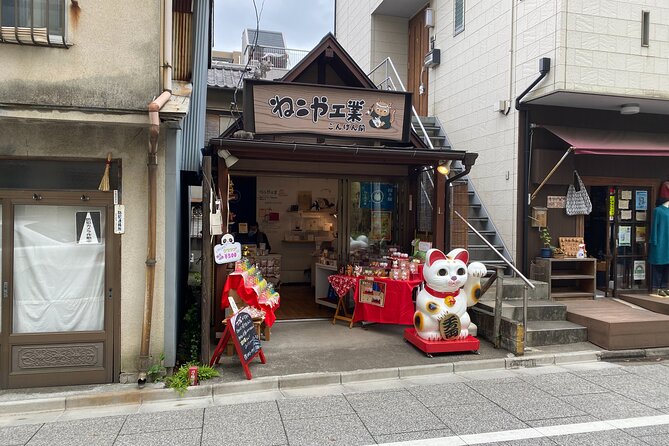
After Nezu Shrine, you follow Hebimichi, a back street in a residential area. The name refers to a snake-like road, and the route gives you a closer look at ordinary neighborhood life.
This section may be the least flashy part of the experience, but I consider it one of the most valuable. You see the scale of local streets and homes, rather than only the sights prepared for visitors. The guide can point out details that would otherwise pass without notice.
You should also remember that this is a lived-in area. Keep noise down, do not block narrow paths, and ask before photographing people or private homes. The point is to observe daily life respectfully, not to turn residents into scenery.
The quiet streets help explain why Yanaka feels so different from Tokyo’s major shopping and entertainment districts. The contrast is not manufactured for the tour. It comes from the area’s residential character and its survival through major periods of change.
Yanaka Ginza: A Tasty Finish
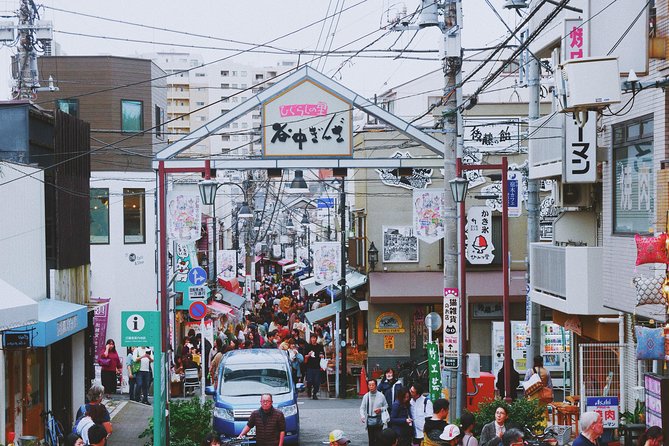
The tour ends at Yanaka Ginza Shopping Street, with about 20 minutes devoted to the area. Admission is not included, and food purchases are your responsibility.
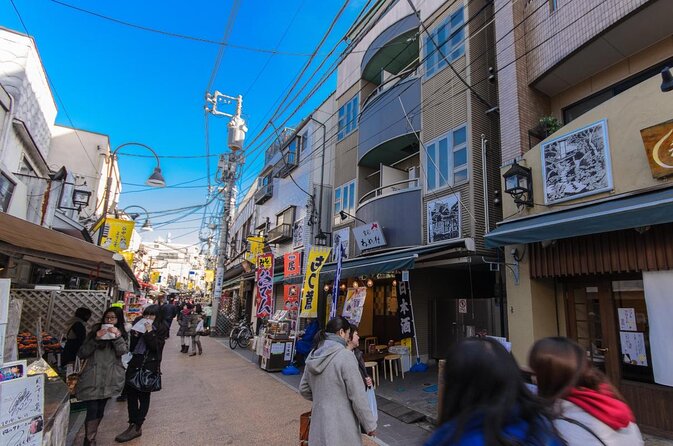
This is a practical ending. Rather than finishing at a station with no clear next step, the walk leaves you among shops, sweets, and local foods. Your guide explains what to look for and how the shopping street reflects normal Japanese life.
You can use the final stop in different ways. Buy a snack, browse local products, ask for suggestions, or stay longer after the official tour ends. The tour itself does not include a meal, so budget extra if you want to sample food.
The shopping street also gives the route a change of pace. After temples, graves, and quiet lanes, you finish in a more social commercial setting. It is still local in character, but less solemn and more useful for an afternoon break.
What the $40 Price Delivers
At $40 per person, this is not the cheapest way to walk around Yanaka. You can enter the district on your own and visit free temples, shrines, and public streets without paying for a guide.
The value comes from the interpretation. You are paying for about three hours of structure, local explanation, cultural context, and help noticing details. If you already know Japanese religious customs and feel comfortable finding small sites independently, the price may seem less compelling.
For a first visit, I think the cost is reasonable, especially with a group capped at 10 people. The tour covers several different types of places and includes practical orientation for food and shopping at the end. It also saves you from spending time researching which streets and sites connect naturally.
The free admission at Tennoji Temple, Yanaka Cemetery, and Nezu Shrine keeps extra costs low. Still, food, drinks, and personal expenses are not included, and gratuities are optional. Bring enough cash or another accepted payment method for the snacks and drinks you may want at Yanaka Ginza or Ueno-Sakuragi Atari.
Pace, Weather, and What to Wear
The route lasts approximately three hours and includes several walking sections between stops. It is described as a pleasant, well-paced walk, with a break around the middle at Ueno-Sakuragi Atari.
You should wear comfortable shoes. Yanaka is best understood on foot, and even an easy pace can become tiring if your shoes are poor. Sun protection and a hat are wise, particularly in hot weather. One participant faced 35-degree heat and high humidity, so summer conditions deserve serious attention.
The experience requires good weather. If poor weather cancels the tour, you are offered another date or a full refund. You can also cancel for a full refund up to 24 hours before the start time. Changes or cancellations made less than 24 hours before the start are not accepted for a refund.
A mobile ticket makes arrival simple, but you should still check the meeting details before leaving for Nippori Station. The activity is near public transportation, and most people can participate. Service animals are allowed.
Who Will Get the Most From This Tour
I would choose this walk if you have already seen, or plan to see, Tokyo’s major modern districts and want a calmer counterpoint. It is also a strong first activity for anyone who wants cultural background before visiting more temples and shrines elsewhere in Japan.
The tour suits you if you like:
- Small groups rather than large coach outings
- Local stories and cultural explanations
- Residential streets and older buildings
- Short visits to several different sites
- Food suggestions without a forced group meal
- Time to ask questions in English
It may not suit you if you want a fast list of famous attractions, a food tour with tastings included, or a deep visit inside every temple. The route is about seeing a district as a whole, not collecting major landmarks.
Families and older adults should consider the three-hour walking format and the weather. The information says most people can participate, but the tour still involves outdoor walking and time on residential streets.
Should You Book the Yanaka Walking Tour?
Book it if you want Tokyo to feel more human-sized for a few hours. The strongest parts are the clear connection between Buddhist temples, Shinto shrines, cemeteries, homes, and shopping streets, plus the chance to ask questions in a small group.
The guide can make a real difference. Guides such as Aya, Junko, Rei, Mami, Mei, Kiyo, and Polina have been praised for clear English, patience, humor, local familiarity, and thoughtful answers. Some use photographs to explain older buildings or customs, and several have helped with pictures and food suggestions.
Skip it if you would rather explore freely, avoid walking in the heat, or spend your money on a food-focused activity. For most visitors seeking a quieter, older side of Tokyo, though, $40 is a fair price for three hours of context and a well-planned route.
FAQ
How long is the Yanaka walking tour?
The tour lasts approximately three hours.
Where does the tour begin?
The meeting point is at Nippori Station, at 2 Chome-19 Nishinippori, Arakawa City, Tokyo 116-0013, Japan.
Where does the tour end?
The tour ends at Yanaka Ginza, at 3-chome-13-1 Yanaka, Taito City, Tokyo 110-0001, Japan.
How many people can join the tour?
The maximum group size is 10 travelers.
Is the tour conducted in English?
Yes. The experience includes an English-speaking local guide.
Are food and drinks included?
No. Food, drinks, and personal expenses are not included. You can buy local foods and sweets at Yanaka Ginza at your own cost.
Are admission tickets included?
Admission is free at Tennoji Temple, Yanaka Cemetery, and Nezu Shrine. Ueno-Sakuragi Atari and Enju-ji Temple are listed as not included.
What should I wear for the walk?
Wear comfortable shoes and bring sun protection and a hat, especially in hot or humid weather.
Can I cancel for a full refund?
Yes, if you cancel at least 24 hours before the experience start time. Cancellations or changes made less than 24 hours before the start are not refunded. If poor weather cancels the experience, you are offered a different date or a full refund.
Just added around Tokyo
- Tokyo: Customizable Private Guided Walking Tour★ 4.5 · 129 reviews
- Private Harajuku Omotesando Architecture Tour★ 4.9 · 18 reviews
- Tokyo: Guided Helicopter Ride★ 4.9 · 24 reviews
- Tokyo: Guided Walking Tour of Tsukiji Market with Lunch★ 4.4 · 24 reviews
- Tokyo: Private Personalized Local Food Tour★ 4.5 · 101 reviews
- Tokyo GINZA: KONPARU Japanese Cabaret Show with Drink★ 4.8 · 38 reviews
- Tokyo: Guided Walking Tour of Tsukiji Market with Breakfast★ 4.4 · 134 reviews
- Tokyo: Gotokuji Cat Temple, Shinjuku Cat Cafe & 3D Cat Tour★ 4.9 · 38 reviews
Walking Tours, compared.
Kyoto Geisha Walking Tour: Gion District & Hidden Gems
Read our review →
Tokyo Tsukiji Fish Market Food and Culture Walking Tour
Read our review →
Gion Magical Night Walking Tour with Geisha Trivia
Read our review →
Imperial Palace and Shogun Historical Walking Tour
Read our review →
Gion Geisha District Walking Tour – Stories of Geisha
Read our review →
Asakusa Walking Tour with Sensoji Temple Visit
Read our review →
Kyoto Gion Geisha District Walking Tour – The Stories of Geisha
Read our review →Browse the lists this tour appears in