
REVIEW · WORKSHOPS
Sushi Class in Osaka Dotonbori
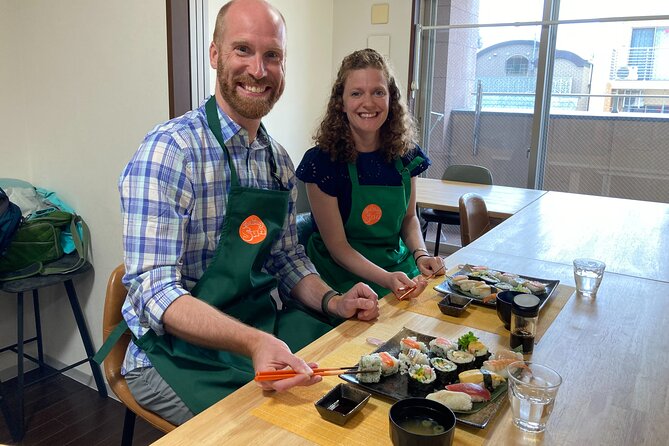
Osaka’s sushi tradition gets a hands-on introduction in this small class, where you make three very different kinds of sushi rather than simply watching a chef work. The most distinctive dish is oshizushi, a square pressed sushi associated with the Kansai region and Osaka.
I like the intimate group size, capped at eight, and the fact that the class ends with a filling meal of your own sushi and miso soup. I also like the patient teaching style, with instructors such as Yoshi, Ami, and Jaimi helping beginners and answering questions. The main drawback is finding Room 807 inside Masters Residence Dotonbori I, so allow extra time and do not rely on Google Maps alone.
In This Review
- Key points at a glance
- Three kinds of sushi in one Osaka morning
- What happens from the 9:30 start
- Salad rolls, omelet, and the first real success
- Nigiri teaches the small details
- Osaka’s pressed sushi is the signature lesson
- Small groups make the class more useful
- Finding Room 807 in Dotonbori
- Is $71.16 a fair price?
- Dietary choices and practical limits
- Who should book this sushi class
- Should you book Cooking Sun’s Dotonbori class?
- FAQ
- Where does the sushi class take place?
- What time does the class start?
- How long does the activity last?
- What types of sushi will I make?
- Is miso soup included?
- Can vegetarians join the class?
- Is a gluten-free option available?
- How many people can join the class?
- What happens if I need to cancel?
Key points at a glance
- Three sushi styles: Make salad rolls, hand-formed nigiri, and traditional Osaka oshizushi.
- Small class: The maximum group size is eight, giving you useful one-on-one help.
- A complete meal: Eat your finished sushi with miso soup at the end.
- Good dietary planning: Vegetarian options with or without eggs, plus gluten-free options, are available if requested when booking.
- Beginner-friendly teaching: Ingredients are prepared in advance, and aprons are provided.
- Dotonbori location: The class begins and ends at Cooking Sun, in Room 807 of Masters Residence Dotonbori I.
Three kinds of sushi in one Osaka morning
This is not a quick sushi demonstration. You work through three styles, each showing a different technique and a different side of Japanese food culture.
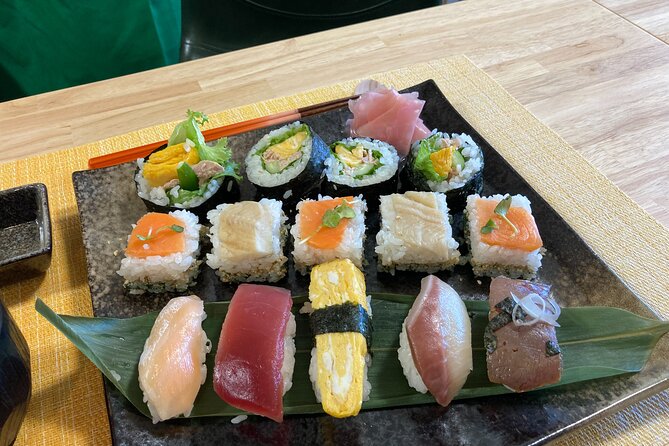
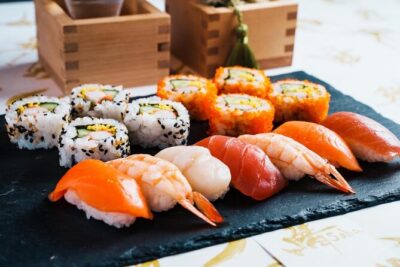
The first is a salad roll. It combines crab-flavored kamaboko, lettuce, cucumber, avocado, tuna mixed with mayonnaise, nori, and a center of tamagoyaki, or Japanese rolled omelet. It is a friendly starting point because you can see how the fillings are arranged before the roll is cut.
Next comes nigiri-zushi, the familiar hand-formed sushi made with a small piece of vinegared rice and a topping. The lesson covers the basic idea of shaping rice into a bite-sized form and placing fish, shellfish, or omelet on top. For a first class, this is the technique you are most likely to want to practice again at home.
The third style is oshizushi, also called pressed or box sushi. You fill a square wooden mold with sushi rice and toppings, then press it so the rice holds together. The finished block is cut into pieces just before eating.
That last dish gives the class a real Osaka angle. Oshizushi is a traditional Kansai style, and its square shape makes it different from the rolled and hand-shaped sushi most people know best. You are not only learning how to assemble food. You are learning why Osaka’s sushi table can look different from Tokyo’s.
A few more Osaka trips to weigh up
- Sushi Making Osaka Roll and Authentic Japanese Sushi Class
★ 5.0 · 1,220 reviews - Matcha Making Class in Osaka with Authentic Japanese Sweets Set
★ 5.0 · 509 reviews - Osaka: Ramen and Gyoza Cooking Class in Dotonbori
★ 5.0 · 378 reviews
What happens from the 9:30 start
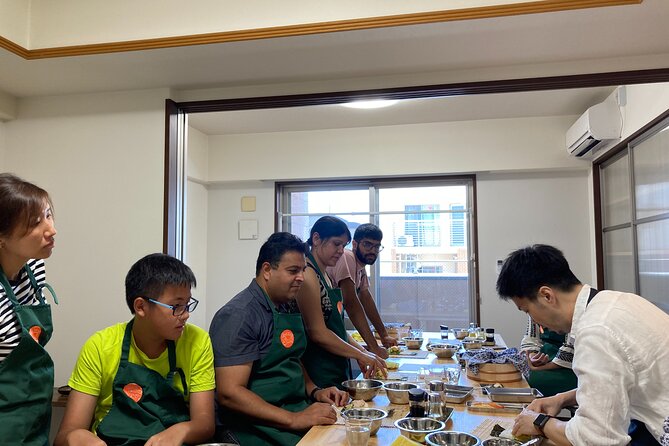
The class starts at 9:30 am and lasts about three hours. That timing works well if you want a substantial lunch and still have most of the afternoon free in Osaka.
Your ingredients are prepared before the class, which keeps the session focused on sushi-making rather than shopping, chopping, or handling raw kitchen prep. An apron is provided, so you can take part without packing special clothing.
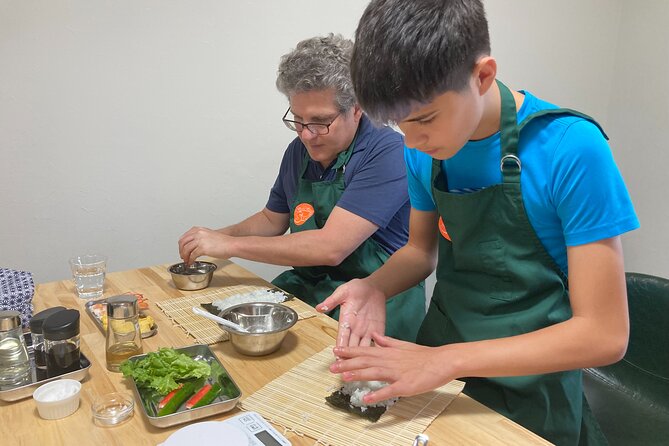
The instruction is broken into clear steps. You receive demonstrations, then make each item with help from the teachers. The pace is designed for beginners, and the small class limit matters here. You can ask questions, correct your technique, and get help with shaping rice or handling the mold instead of trying to follow from the back of a crowded room.
English communication is an important part of the experience. The instructors have been praised for speaking clearly and slowly, and for explaining beyond the basic hand movements. You can ask about ingredients, sushi customs, regional differences, and the background of the dishes. Some teaching pairs include Ami and Jaimi, while Yoshi has also led sessions.
The teaching style may feel calm rather than theatrical. That is useful if you want to learn carefully, though anyone expecting a high-energy cooking show could find the presentation fairly quiet. The goal is participation and explanation, not entertainment from a celebrity chef.
Salad rolls, omelet, and the first real success
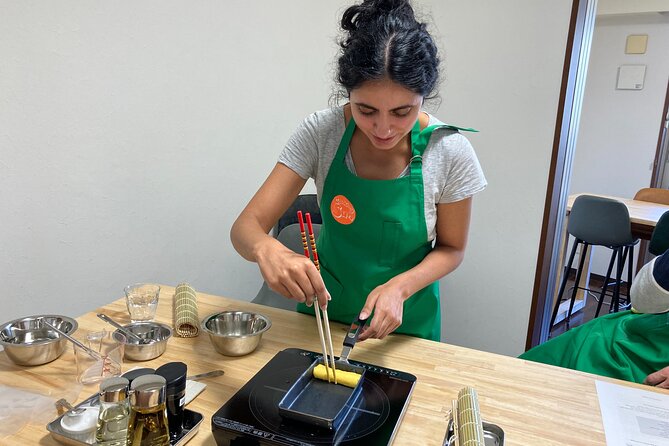
The salad roll is a sensible opening dish because it lets you focus on layout and rolling technique. You arrange nori and the prepared fillings, including avocado, cucumber, lettuce, tuna with mayonnaise, crab-flavored kamaboko, and tamagoyaki.
Tamagoyaki is a rolled Japanese omelet with a soft, layered texture. Including it gives you an ingredient that may be familiar in sushi restaurants but less familiar in your own kitchen. One young participant was especially pleased to learn the egg-roll technique, which can look harder than it is before you try it.
The roll also shows how texture matters. Crisp vegetables, creamy avocado, seasoned tuna, egg, and nori all need to fit into one neat shape. You will learn that sushi is not only about fresh fish. Balance, cutting, rice, and proportion matter just as much.
For vegetarians, the class can prepare a version with eggs or one without eggs. You need to request the correct option at booking. Gluten-free preparation is also available by request, so do not wait until the morning of the class to raise the issue.
Nigiri teaches the small details
Nigiri looks simple because it has so few parts. That is exactly why it can be tricky. A small portion of vinegared rice needs to hold its shape without being crushed, and the topping needs to sit neatly on top.
The instructor demonstrates the process before you try it. This is where direct help is especially useful. A little too much pressure can turn the rice dense, while too little can make it fall apart before it reaches your plate.
The class uses toppings such as fish, shellfish, and omelet as examples of the ingredients traditionally placed on nigiri. The precise selection can depend on the class preparation, so you should think of the lesson as a technique class rather than a promise of a particular fish menu.
I like that this section connects the sushi you see in restaurants with the work behind it. You get a better sense of why a small, tidy piece of nigiri takes care and why rice quality and seasoning are so important.
Same city, a completely different kind of day:
- Osaka Go Karting Tour with Funny Costume
★ 5.0 · 2,658 reviews - Osaka Castle: Museum and Tower Entry Ticket
★ 4.5 · 2,380 reviews - Osaka: Shinsekai Food Tour with 13-15 Dishes at 5 Eateries
★ 4.8 · 2,204 reviews - Osaka Food Tour: 13 Dishes at 5 Local Eateries
★ 5.0 · 2,149 reviews
Osaka’s pressed sushi is the signature lesson
Oshizushi is the most locally distinctive part of the class. In this Kansai style, toppings go into a square wooden frame with sushi rice. You press the contents by hand, then remove the compact block and cut it into pieces.
The mold gives you a different kind of control from rolling a maki or shaping nigiri. Instead of trying to form one piece at a time, you create a firm slab that must hold together when sliced. The final square pieces are also easy to share, which helps explain why box sushi remains a popular Osaka food.
This section adds value to the class because you are learning something tied to the city, not only a global restaurant staple. If you have already made simple rolls elsewhere, oshizushi gives you a fresh reason to take this class in Osaka.
The finished sushi is eaten after all three styles are complete. You also receive miso soup, turning the lesson into lunch rather than a series of small samples. Several participants found the meal surprisingly filling, so you may not need to plan a large lunch immediately afterward.
Small groups make the class more useful
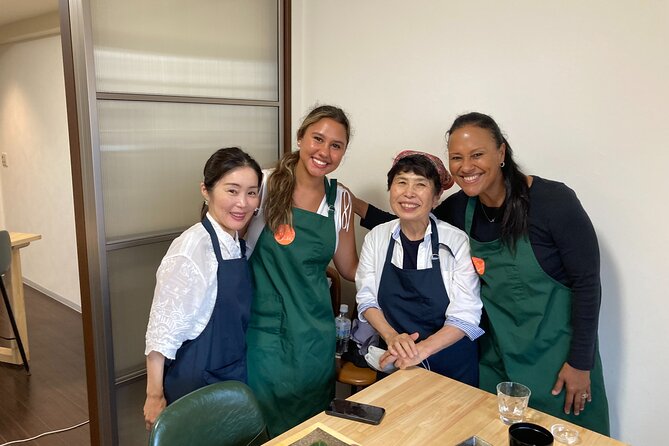
The class accepts no more than eight people. That is small enough for the instructors to watch your technique and respond to individual needs.
This matters for families and mixed-skill groups. A child can participate alongside adults, and one family found that their daughter could sit with them and take part. The instructors have also been patient with people who had physical difficulties, adjusting support when needed.
Solo visitors can book too. The group setting gives you company without requiring you to bring a partner, and one solo participant ended up receiving particularly direct attention from the staff.
The class is also suitable for couples and parents with older children who enjoy making food. It is less suited to someone who wants a purely social food tour with lots of restaurant stops. You spend the morning in one room, working through a focused lesson.
Finding Room 807 in Dotonbori
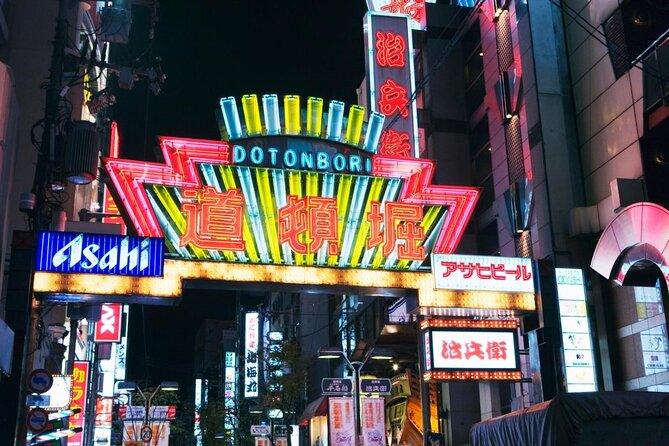
The address is Cooking Sun, 542-0082 Osaka, Chuo Ward, Shimanouchi, 2-chōme 9-14, Room 807. The meeting and end point are the same.
When you arrive at Masters Residence Dotonbori I, go to Room 807. Press 807 and then the 呼出, or call, button so the staff can open the door.
Give yourself extra time for this part. The building can be easy to miss, and Google Maps has directed some people to the building across the street. Look for the placard identifying Masters Residence Dotonbori I rather than assuming the first map pin is correct.
The location is near public transportation, but the supplied directions do not name a specific station or walking route. I would arrive early, especially for a 9:30 start. Being five minutes late in a hands-on class can mean missing the first demonstration.
Is $71.16 a fair price?
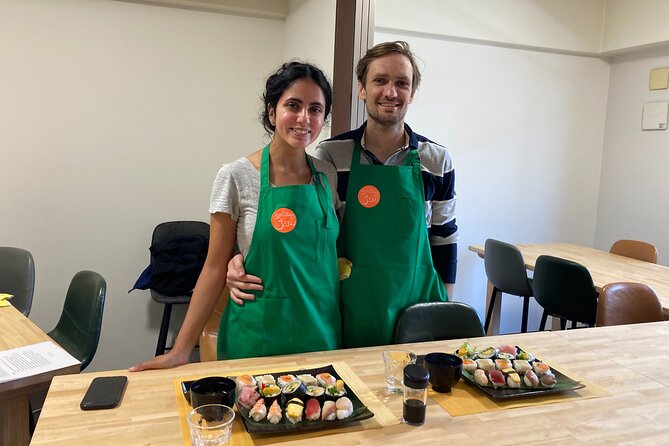
At $71.16 per person, this is not the cheapest meal you can find in Osaka. The price makes more sense when you count the full package: about three hours of instruction, prepared ingredients, an apron, three sushi styles, miso soup, and a complete meal.
You are also paying for a small class rather than a large demonstration. The eight-person maximum gives the teachers time to help with practical details, which is where a cooking class earns its value.
I would consider it good value if you want to take a useful skill home. The lesson can spark ideas about fillings and combinations, and you may leave wanting to buy ingredients and try the techniques again.
It is less worthwhile if you only want to eat excellent sushi. Osaka has many places where you can order sushi without spending three hours making it. Book this class for the activity, the regional dish, and the chance to understand the food, not simply as a cheaper restaurant meal.
The experience is often reserved well ahead, with an average booking lead time of 74 days. That suggests you should secure a place early if the morning fits your schedule, particularly during a busy Osaka visit.
Dietary choices and practical limits
Vegetarian preparation is available with eggs or without eggs. Gluten-free preparation is also available. You must request these choices when booking so the ingredients can be arranged in advance.
The supplied information does not provide a separate list of allergens, fish substitutions, or a detailed menu for each dietary version. If your needs are strict, use the booking request to explain them clearly rather than relying on a last-minute conversation.
Ingredients are prepared for you, which makes the class accessible to beginners and keeps the pace moving. The benefit is a smooth workshop. The tradeoff is that you will not be doing every stage of a restaurant kitchen preparation process.
The class ends where it begins, at the Dotonbori meeting point. Confirmation is provided when you book, and the cancellation rule allows a full refund if you cancel at least 24 hours before the local start time. Changes or cancellations inside that window are not accepted for a refund.
Who should book this sushi class
I would choose this for a first-time sushi maker, a solo visitor, a couple, or a family with children who can follow a guided cooking lesson. It suits people who like to ask questions and want more than a quick photo opportunity.
It is especially useful for anyone curious about Osaka food traditions. The pressed sushi lesson gives the class a local identity, while nigiri and salad rolls provide techniques you can recognize and reuse.
You may want to skip it if you dislike structured activities, need a fully spontaneous morning, or only want a restaurant meal. The class also requires some care with timing because the address is inside a residential-style building and the room is not immediately obvious from the street.
Should you book Cooking Sun’s Dotonbori class?
Book it if you want a friendly, small-scale cooking lesson with a meal at the end. The strongest reasons are the patient English instruction, the eight-person limit, the three contrasting sushi styles, and the chance to make Osaka-style oshizushi.
I especially like that you do not spend the entire class copying one basic roll. You learn rolling, hand shaping, and pressing, then sit down to eat the results with miso soup.
Allow extra time to find Masters Residence Dotonbori I, request dietary needs before booking, and reserve well ahead if your dates are fixed. For a visitor who wants to understand Japanese food by making it, $71.16 is a reasonable price for three focused hours and a substantial lunch.
FAQ
Where does the sushi class take place?
The class takes place at Cooking Sun in Osaka’s Chuo Ward, inside Masters Residence Dotonbori I, Room 807. The address is 2-chōme 9-14 Shimanouchi, Osaka 542-0082.
What time does the class start?
The scheduled start time is 9:30 am.
How long does the activity last?
The class lasts approximately three hours.
What types of sushi will I make?
You will make a salad roll, nigiri-zushi, and oshizushi, also called pressed or box sushi.
Is miso soup included?
Yes. After making the sushi, you eat the finished dishes with miso soup.
Can vegetarians join the class?
Yes. Vegetarian options are available with eggs or without eggs. You must request your preference when booking.
Is a gluten-free option available?
Yes. A gluten-free option is available if you request it when booking.
How many people can join the class?
The maximum group size is eight participants.
What happens if I need to cancel?
You can cancel for a full refund up to 24 hours before the experience start time. Cancellations or changes made less than 24 hours before the start are not accepted for a refund.
Just added around Osaka
- Samurai dress-up and shows, plus Tea Ceremony & Calligraphy★ 5.0 · 27 reviews
- Kyoto & Nara Private customized tour with English speaking Guide★ 4.5 · 99 reviews
- Well-balanced BENTO (lunch box) Cooking Class★ 5.0 · 35 reviews
- Urban Canvas: Osaka Street Art Bike Tour★ 5.0 · 47 reviews
- OSAKA:Feel the Power! Learn Taiko Drum from Professionals★ 5.0 · 28 reviews
- Volleyball in Osaka & Kyoto with Locals!★ 5.0 · 21 reviews
- 1.5〜2 Hours Traditional Kintsugi Work Shop in Namba Osaka★ 5.0 · 75 reviews
- Umami Town Street Food Tour★ 5.0 · 120 reviews
Workshops, compared.
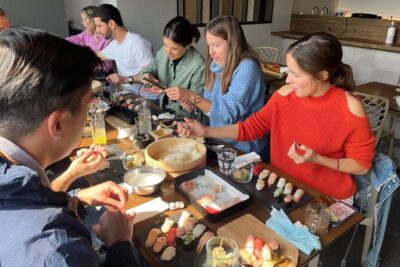
Sushi Making Tokyo Roll and Authentic Japanese Sushi Class
Read our review →
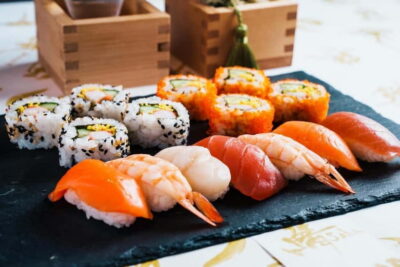
Roll and Authentic Sushi Making Class in Asakusa
Read our review →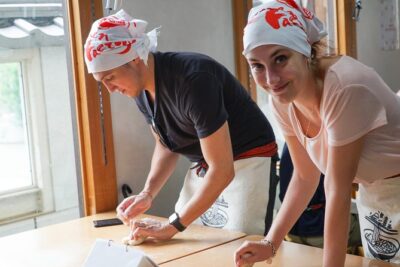
Ramen Cooking Class at Ramen Factory in Kyoto
Read our review →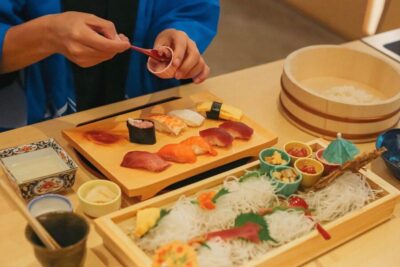
Sushi Making Class in a Happi Coat near a Famous Spot
Read our review →
Sushi Making Osaka Roll and Authentic Japanese Sushi Class
Read our review →
Tokyo Sushi Making Class in Tsukiji with Professional Chef
Read our review →Browse the lists this tour appears in