
REVIEW · FOOD MARKET TOURS
Shinjuku Golden Gai Food Tour
Shinjuku’s Golden Gai is best understood on foot, with a guide who can explain the maze of narrow lanes, tiny bars, and postwar history as you eat. This three-hour evening tour moves from Omoide Yokocho through Kabukicho and ends in Golden Gai, where karaoke may join the night.
I like the four food stops, which give you a useful spread of Japanese dishes instead of one long dinner. I also like the small group limit of 10, plus two drinks included in the price. The main drawback is cost: at $217 per person, you are paying for guidance, access, and context, not simply for the food. A few stops may also change, and seating is not always guaranteed.
In This Review
- Key points to know before you book
- Why this tour works in Shinjuku after dark
- Starting near Shinjuku Station at 5 p.m.
- Omoide Yokocho and old Tokyo in a narrow lane
- Yakitori, ramen, sushi, and seasonal dishes
- Kabukicho, Tokyo’s famous entertainment district
- Hanazono Shrine, a quiet pause amid the neon
- Golden Gai after the food stops
- What $217 buys you
- The guide can make or break the evening
- Who should book this Shinjuku night walk?
- Should you book it?
- FAQ
- How long does the Shinjuku Golden Gai Food Tour last?
- What time does the tour start?
- Where does the tour begin?
- Where does the tour end?
- How many food stops are included?
- Are drinks included?
- Is the tour suitable for vegetarians?
- Are children allowed on the tour?
- Can I cancel for a refund?
Key points to know before you book
- Omoide Yokocho opens the evening: Walk past old-style bars and compact eateries in a lane known as Memory Lane.
- The food covers several Japanese favorites: Expect stops that may include yakitori, ramen, sushi, and seasonal dishes.
- Two drinks are included: One drink is enjoyed during the evening, with another included as part of the tour package.
- Golden Gai is the grand finale: More than 200 small pubs, karaoke bars, and stalls crowd this famous nightlife quarter.
- Guides shape the experience: Sandra, Ray, Alex, Wesley, Yoshi, Giulia, and others have led tours praised for cultural explanations and easy conversation.
- Come hungry and wear sensible shoes: The tour involves walking, standing, tight spaces, and several food stops.
Why this tour works in Shinjuku after dark
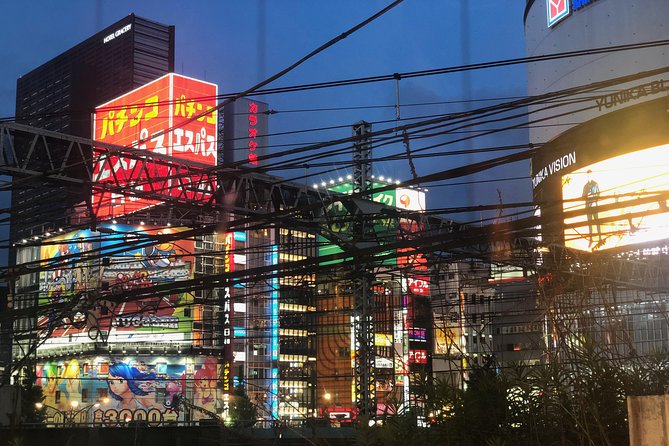
Shinjuku can feel like several cities packed into one district. Bright signs, station crowds, office towers, shrines, small restaurants, and narrow drinking lanes all sit close together. The trouble is knowing where to go once you leave the main streets.
That is the useful part of this experience. You meet at 5 p.m. near Shinjuku Station and let the guide handle the route. Instead of spending your first Tokyo evening studying restaurant maps, you follow a local English-speaking guide through places that can be hard to read from the outside.
I see this as a food walk with a strong neighborhood component. You are not signing up for a polished restaurant crawl or a high-end sushi meal. You are paying to understand Shinjuku’s nightlife districts while trying several dishes and getting help with Japanese dining customs.
The small group cap of 10 matters here. Golden Gai venues are tiny, and a large group would be awkward. Even with a small group, the cramped setting can mean standing room or a short wait. That is part of the character of the area, but it is worth knowing before you book an expensive evening.
More Food Market Tours in Tokyo
- Tokyo: Shinjuku Food Tour (13 Dishes at 4 Local Eateries)
★ 5.0 · 6,603 reviews - Tokyo Tsukiji Fish Market Food and Culture Walking Tour
★ 5.0 · 3,184 reviews - Tokyo: Shinjuku Food Tour (15 Dishes and 4 Eateries)
★ 4.9 · 2,033 reviews
Starting near Shinjuku Station at 5 p.m.
The meeting point is Tajimaya Coffee, at 1 Chome 26 in Nishishinjuku. The precise meeting address is important because Shinjuku Station has many exits and several different neighborhoods spread around it. Give yourself extra time to get there, especially if this is your first evening in Tokyo.
The tour begins with an introduction to the guide and the group. Guides have included Sandra, Ray, Alex, Wesley, Yoshi, Giulia, Osmar, Daniel, and others. The strongest part of the tour, based on the experiences described, is often the guide’s ability to keep the group together, explain what you are seeing, and make conversation easy.
That human element can save the evening when the meeting point is confusing. One guide waited while a group had trouble finding the start, which is the sort of small kindness that matters in a city where station exits can feel like a puzzle.
You should arrive ready to walk and eat. The activity calls for moderate physical fitness, and the route includes narrow streets, restaurant stops, and likely periods of standing. Comfortable shoes will help more than dressing up for dinner.
Omoide Yokocho and old Tokyo in a narrow lane
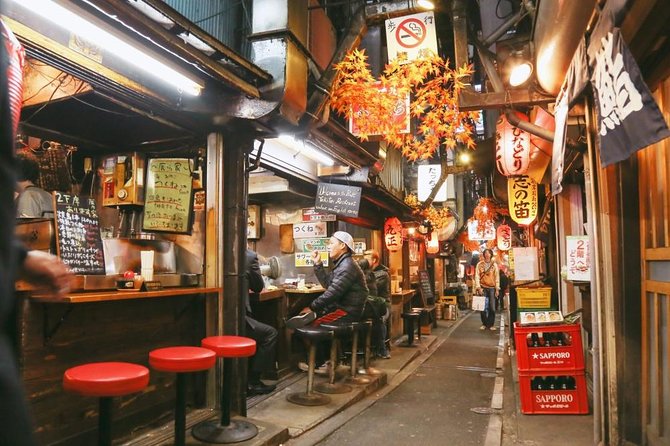
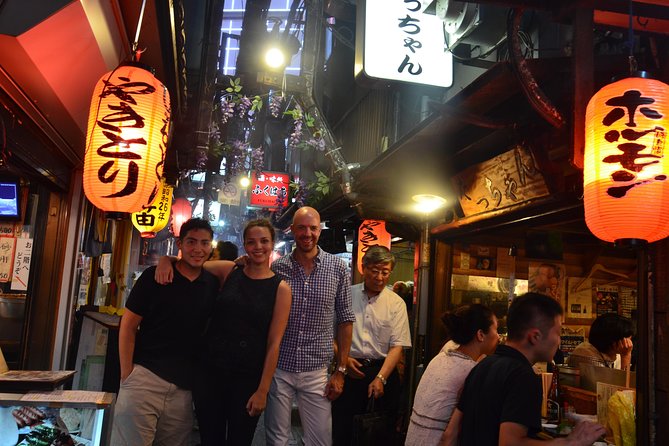
The first major area is Omoide Yokocho, whose name means Memory Lane. It is a compact passage lined with small food spots and bars, many of them carrying an old Tokyo feel that contrasts sharply with Shinjuku’s huge signs and modern towers.
The route passes bars that have remained much as they were since around 1950. That does not mean every business is unchanged, but it gives the guide a chance to explain how this part of Shinjuku developed and why the lane still feels close and informal.
This is a good place to pay attention to the setting rather than rush toward the next dish. The cooking spaces are small. Tables can be close together. The appeal is not polished design. It is the sense of eating in a place built for regulars, workers, and night owls.
The listed stop is brief, but the walk through the area adds useful context. You learn why Shinjuku became one of Japan’s best-known entertainment centers and how food, drinking, and nightlife fit together here.
Yakitori, ramen, sushi, and seasonal dishes
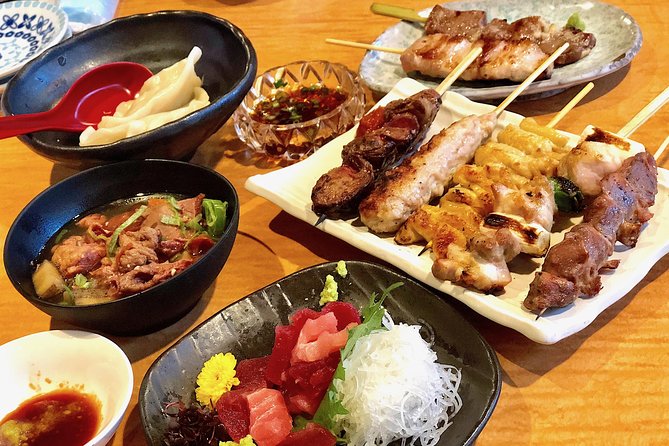
The food portion is spread across four stops. The dishes named for the experience include yakitori, ramen, sushi, and other local or seasonal items. The exact places and menu may change because restaurants have their own schedules, public holidays, weather issues, and other practical limits.
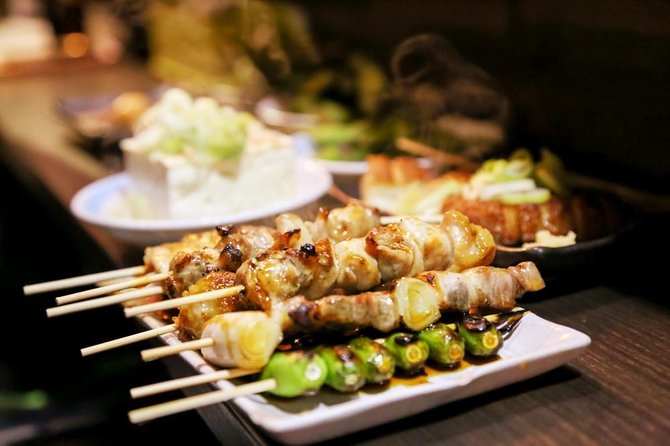
Yakitori is a natural choice for this neighborhood. These grilled skewers are easy to share and offer several textures and flavors in a small serving. They also suit the intimate izakaya setting, where you may be eating close to the grill and other customers.
Ramen provides a more substantial bowl and often becomes the meal’s anchor. Several people particularly enjoyed the ramen, with one calling it the best ramen of their life. That is personal taste, of course, but the bowl gives you a chance to compare a casual local meal with the sushi and skewers served elsewhere.
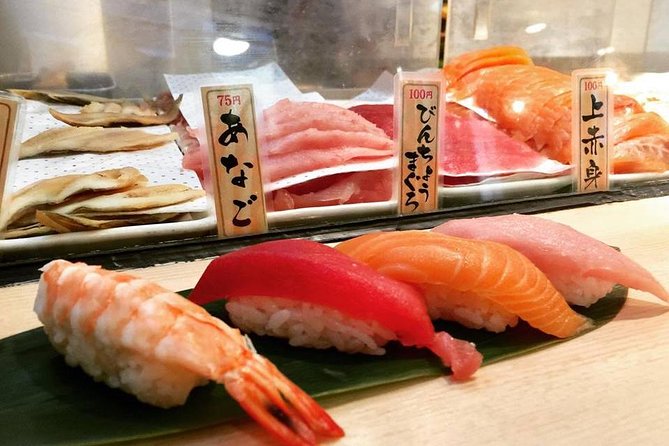
Sushi may be included as another stop. The quality can vary depending on the restaurant selected that night. Some people found the sashimi stop especially good, while one food-focused participant felt the sushi and yakitori were disappointing. This is a useful warning: the tour is designed for range and access, not for a carefully selected luxury tasting menu.
You may receive explanations about etiquette, ingredients, and the dishes you are about to eat. Ray was praised for explaining Japanese dining manners, while Wesley and Alex were appreciated for adding cultural and historical context to the food. If you want detailed culinary instruction at every stop, tell your guide early. The amount of explanation may depend on the guide and the pace of the group.
Dietary needs are not ignored. The experience is listed as pescetarian and vegetarian friendly, and a gluten-free vegetarian participant received suitable meals with help from the guide. Still, you should state your restrictions when booking and again at the start, since menus and restaurant choices can change.
Same city, a completely different kind of day:
- Mt Fuji and Hakone 1-Day Bus Tour Return by Bullet Train
★ 5.0 · 26,383 reviews - 1-Day Tokyo Bus Tour
★ 5.0 · 14,250 reviews - Tokyo: TOKYO SKYTREE® Admission ticket
★ 4.5 · 11,192 reviews - Tokyo: teamLab Planets TOKYO Digital Art Museum Entry Ticket
★ 4.6 · 9,779 reviews
Kabukicho, Tokyo’s famous entertainment district
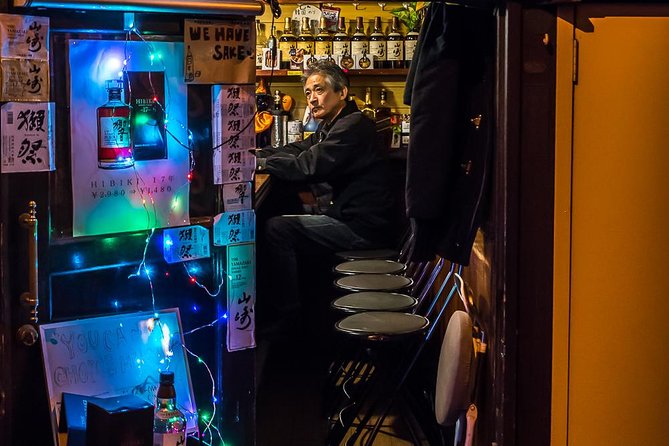
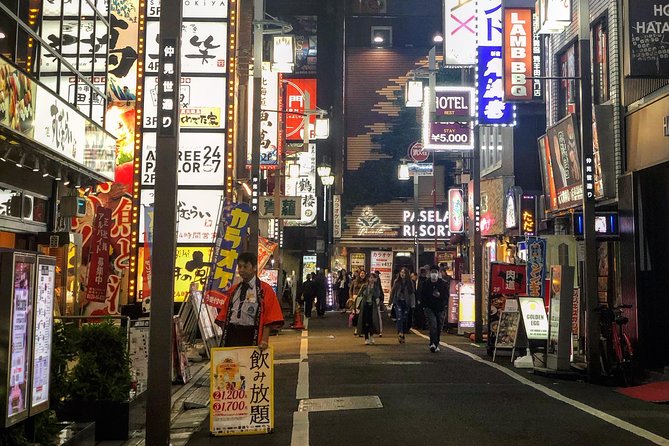
The route then moves through Kabukicho, often described as Asia’s largest and safest red-light district. The area is better understood as a broad entertainment zone, with restaurants, bars, karaoke venues, theaters, hotels, and nightlife businesses packed together.
Your guide provides the local frame for what you are seeing. That is valuable because Kabukicho can look like a wall of advertising if you walk through without context. A good explanation helps you separate the district’s history from its current nightlife and understand how the area functions after dark.
This part of the route also shows why a guided walk can be more useful than simply choosing a restaurant near the station. You pass places you might otherwise miss and learn how the side streets connect. The guide also helps the group avoid wasting time at spots that cannot handle everyone.
There is one practical weakness here. Restaurant seating may not always be arranged in advance. One group was turned away by a couple of restaurants because the venues could not fit everyone, and the last stop had standing room only. For a $217 tour, I would expect the operator to manage seating carefully. Ask about this if a chair at every stop matters to you.
Hanazono Shrine, a quiet pause amid the neon
Hanazono Shrine adds a change of mood to the evening. Set within the Shinjuku area, it provides a brief look at a traditional religious site amid the nightlife streets.
The shrine is not presented as a long sightseeing stop, so do not expect an extended temple visit or a formal ceremony. Its value is in the contrast. Within a short walk, you move from grills, bars, and bright signs to a place associated with worship and quiet reflection.
This is also where the tour becomes more than a list of dishes. The neighborhood is not only about drinking and entertainment. It includes older customs and places that remain part of daily life. Guides such as Yoshi, Giulia, and Sandra were praised for making those connections clear without turning the walk into a lecture.
Golden Gai after the food stops
The tour finishes in Shinjuku Golden Gai, a famous cluster of more than 200 small pubs, stalls, and karaoke bars. The lanes are extremely narrow, and many venues are up steep stairways or behind compact doors. From the outside, it can be difficult to know which places welcome newcomers.
Your included drink gives you a reason to settle in at the end rather than simply walk through. The ending point is Araku Bar in the Golden Gai area. Depending on the group and the evening, karaoke may be part of the fun, and a separate karaoke after-party is available.
This final stop is a major reason to choose the tour. Golden Gai is easy to admire from a distance, but entering a tiny bar can feel less intimidating when your guide handles the introduction. The setting is social and close. You may sit with the group, or you may find that space is limited.
The tour ends here, but you are free to continue exploring on your own. That is a real advantage for people who want a gentle introduction rather than a tightly controlled night. You leave with a sense of the layout and can decide if you want another drink, more karaoke, or a quiet walk back toward the station.
What $217 buys you
At $217 per person, this is not a bargain meal. The price includes a local guide, four food stops, and two drinks, but not transportation, hotel pickup, or anything beyond the specified inclusions.
If you calculate only the food, the value is hard to defend. You could spend far less on ramen, yakitori, and casual sushi in Tokyo. One food-focused participant felt that the same money would be better used for high-end sushi or a kaiseki dinner.
The case for the price is different. You are buying a three-hour route through four distinct areas, help entering small venues, language support, historical background, and a social evening in a part of Tokyo that can be difficult to approach alone. The small group limit also gives the guide a better chance to speak with everyone.
I would book it for a first or second night in Tokyo, when you want orientation and a lively introduction to Shinjuku. I would not book it if your main goal is the finest possible sushi, a formal meal, or detailed chef-led food education.
The guide can make or break the evening
The strongest praise focuses on the guides. Sandra was repeatedly valued for her Tokyo knowledge, warmth, and ability to arrange vegetarian and gluten-free options. Ray was praised for food explanations, Japanese etiquette, and keeping the tour moving smoothly.
Alex was described as engaging and funny, with strong local context. Wesley was appreciated for connecting each dish to Japanese culture. Yoshi, Osmar, Tommy, Giulia, and Daniel were also singled out for making the night social and memorable.
That list also points to a possible inconsistency. Not every guide will have the same depth of local experience. One unhappy participant felt the guide was not local and did not yet have a firm grasp of Japanese customs. I would not treat that as the normal result, given the strong overall rating, but it is fair to say that the quality of the explanations can depend on who leads your group.
Who should book this Shinjuku night walk?
I would recommend it to first-time visitors who want a safe, organized introduction to Shinjuku after dark. It suits people who enjoy small-group conversation, several tasting portions, neighborhood stories, and a little karaoke.
It is also a good fit if you are unsure about entering Golden Gai alone. The guide gives you a starting point and helps you understand the etiquette of compact Japanese bars and eateries.
Vegetarians and pescetarians can fit into the experience, provided you communicate restrictions in advance. People who dislike standing, tight spaces, or changing restaurant plans should think twice.
The tour is for adults aged 20 and older only. That rule matters because drinking is included. The start time is 5 p.m., and the experience lasts about three hours, so it works well as an evening plan rather than a late-night party.
Free cancellation is available up to 24 hours before the start time. Last-minute changes are not accepted, and poor weather or failure to reach the minimum group size can lead to a rescheduled date or full refund.
Should you book it?
Book this tour if you want access and context, not a luxury food event. Its best features are the route through Omoide Yokocho, Kabukicho, Hanazono Shrine, and Golden Gai, the chance to try several Japanese dishes, and the help of a friendly guide in places that can feel hard to enter alone.
Skip it if $217 feels too high for casual food, or if you want guaranteed seating and a serious gourmet meal. For many people, the best strategy is to take this tour early in a Tokyo visit, learn the area, then return to your favorite Shinjuku spots independently.
FAQ
How long does the Shinjuku Golden Gai Food Tour last?
The tour lasts approximately three hours.
What time does the tour start?
The stated start time is 5 p.m.
Where does the tour begin?
The meeting point is Tajimaya Coffee at 1 Chome 26, Nishishinjuku, Shinjuku City, Tokyo.
Where does the tour end?
The tour ends at Araku Bar in the Golden Gai area of Kabukicho.
How many food stops are included?
Four food stops are included. Dishes may include yakitori, ramen, sushi, and local or seasonal foods.
Are drinks included?
Yes. Two drinks are included in the tour.
Is the tour suitable for vegetarians?
The experience is listed as vegetarian and pescetarian friendly. Dietary restrictions should be communicated when booking.
Are children allowed on the tour?
No. The activity is for adults aged 20 and older only.
Can I cancel for a refund?
You can cancel at least 24 hours before the start time for a full refund. Cancellations or changes made less than 24 hours before the start time are not accepted.
More Food in Tokyo
- Tokyo Night Foodie Tour in Shinjuku – Seasonal Sushi, Wagyu Beef
★ 5.0 · 1,161 reviews - Tokyo: Tsukiji Fish Market Food and Culture Walking Tour
★ 4.7 · 757 reviews - Tsukiji Fish Market: Street Food & Culture Walking Tour
★ 5.0 · 669 reviews - Tsukiji Fish Market Small-Group Food Walking Tour
★ 5.0 · 621 reviews
More Food & Drink in Tokyo
- Best of Shinjuku: Izakaya Food Tour (4 Stops, 14+ Tastings)
★ 5.0 · 1,863 reviews - Tokyo: Tsukiji Fish Market Food and Walking tour
★ 5.0 · 1,724 reviews - Eat and Drink Like a Local: Tokyo Ueno Food Tour-Taverns&Ramen
★ 5.0 · 957 reviews - Tokyo: Shibuya Food Tour (13 dishes and 4 Eateries)
★ 5.0 · 770 reviews
Just added around Tokyo
- Tokyo: Customizable Private Guided Walking Tour★ 4.5 · 129 reviews
- Private Harajuku Omotesando Architecture Tour★ 4.9 · 18 reviews
- Tokyo: Guided Helicopter Ride★ 4.9 · 24 reviews
- Tokyo: Guided Walking Tour of Tsukiji Market with Lunch★ 4.4 · 24 reviews
- Tokyo: Private Personalized Local Food Tour★ 4.5 · 101 reviews
- Tokyo GINZA: KONPARU Japanese Cabaret Show with Drink★ 4.8 · 38 reviews
- Tokyo: Guided Walking Tour of Tsukiji Market with Breakfast★ 4.4 · 134 reviews
- Tokyo: Gotokuji Cat Temple, Shinjuku Cat Cafe & 3D Cat Tour★ 4.9 · 38 reviews
Food Market Tours, compared.
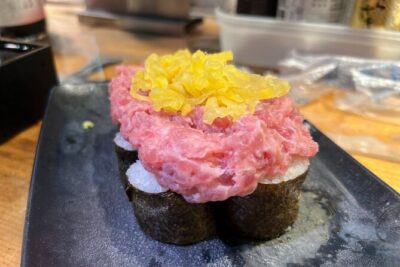
Shinjuku Food Tour (13 Dishes at 4 Local Eateries)
Read our review →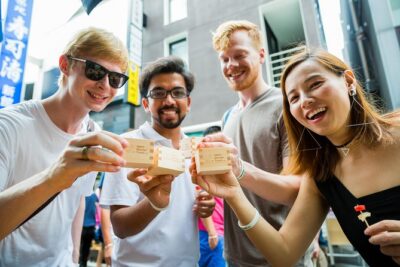
Tokyo Tsukiji Fish Market Food and Culture Walking Tour
Read our review →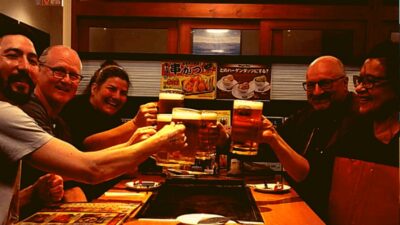
Shinsekai Food Tour with 13-15 Dishes at 5 Eateries
Read our review →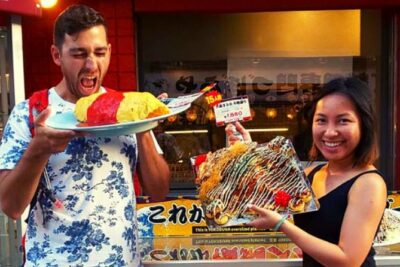
Osaka Food Tour: 13 Dishes at 5 Local Eateries
Read our review →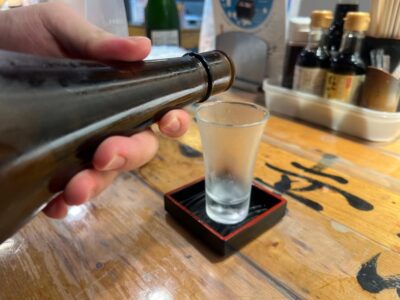
Shinjuku Food Tour (15 Dishes and 4 Eateries)
Read our review →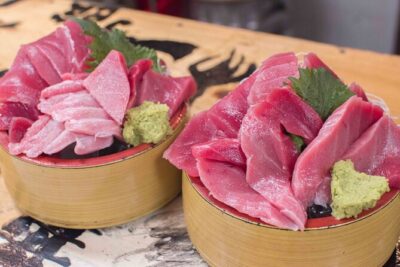
Best of Shinjuku: Izakaya Food Tour (4 Stops, 14+ Tastings)
Read our review →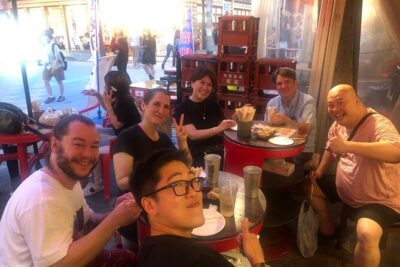
Hungry Osaka Street Food Tour:15 Tastings & 3 Drinks with a Local
Read our review →
Browse the lists this tour appears in