
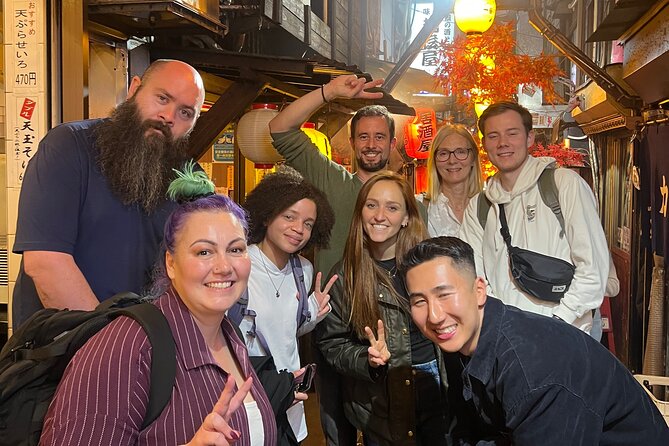
REVIEW · FOOD MARKET TOURS
Shinjuku: Food Tour – 15 Dishes at 4 Eateries
Shinjuku’s best food experience may be found down a narrow side street, behind an unassuming door, or in a tiny izakaya that is easy to miss from the main road. This three-hour walk takes you into Kabukicho, Omoide Yokocho, and Nishishinjuku, with 15 dishes and drinks served at four eateries along the way.
I like the way the tour combines food with local context, and I like the small maximum of 10 people. Guides such as Dai, Mak, Lisa, Haydn, and Naoya have been praised for explaining customs, neighborhood stories, and unusual dishes such as Okinawan food. The main drawback is the walking pace and distance between stops, which can feel tiring, while the food quality may vary from one eatery to the next.
In This Review
- Key points to know before booking
- Why this Shinjuku food tour works
- Meeting at Shinjuku’s west side
- Kabukicho: food beside Tokyo nightlife
- Omoide Yokocho and the old izakaya streets
- Nishishinjuku, where the route gets more local
- What you may eat and drink
- The guides shape the evening
- Small groups, walking, and timing
- What the $77.60 price really covers
- Who should book this food walk
- Practical details before you go
- Should you book the Shinjuku 15-dish food tour?
- FAQ
- How long does the Shinjuku food tour last?
- How many dishes are included?
- How many people can join the tour?
- Where does the tour begin and end?
- Are food and drinks included in the price?
- Can I cancel for a full refund?
Key points to know before booking
- Fifteen dishes at four eateries: You get a full evening of sampling rather than one large meal at a single restaurant.
- Okinawan food and sashimi: The menu can include distinctive regional dishes, several types of sashimi, tonkatsu, and drinks such as sake sours.
- Kabukicho after dark: The route includes Tokyo’s famous entertainment district, Godzilla Head, and stories about the area’s social past.
- Small-group setting: The tour accepts no more than 10 people, making it easier to ask questions and share dishes.
- Three hours on foot: Plan for a fair amount of walking between restaurants, especially if your legs are already tired from sightseeing.
- A useful first-night choice: The food and cultural orientation can help you understand what to order during the rest of your time in Japan.
Why this Shinjuku food tour works
Shinjuku is a useful place to begin a Tokyo food tour because it offers almost every kind of city eating in one district. The area around the station has department-store food halls, polished restaurants, old drinking alleys, inexpensive noodle shops, and late-night places aimed at office workers and nightlife crowds.
You could spend days trying to sort it out alone. This tour gives you a shortcut. A guide leads you through four eateries and handles the practical work of choosing food, ordering, and moving the group along. You pay $77.60 per person, and food and drinks are included, so the price is easier to judge than a restaurant crawl where costs keep appearing on the bill.
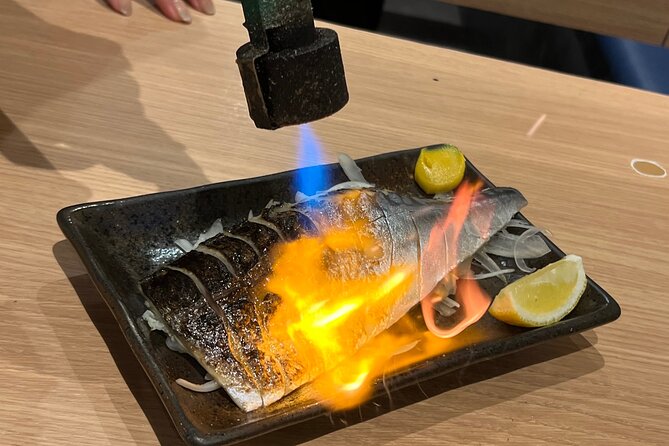
The strongest part is the range. You are not simply taken to one famous restaurant and given a standard set meal. The evening can include sashimi, tonkatsu, Okinawan dishes, and drinks at different stops. One account describes roughly seven varieties of sashimi, while another highlights sake sours and food from Okinawa. The exact dishes may change, but the point is variety.
This is also a walking and culture tour. Between plates, you get an explanation of Shinjuku’s streets, dining customs, and entertainment district. That extra context matters. Japanese menus and ordering habits can feel opaque at first, and a good guide can explain what you are eating and how it fits into local food culture.
More Food Market Tours in Tokyo
- Tokyo: Shinjuku Food Tour (13 Dishes at 4 Local Eateries)
★ 5.0 · 6,603 reviews - Tokyo Tsukiji Fish Market Food and Culture Walking Tour
★ 5.0 · 3,184 reviews - Tokyo: Shinjuku Food Tour (15 Dishes and 4 Eateries)
★ 4.9 · 2,033 reviews
Meeting at Shinjuku’s west side
The meeting point is AOKI Shinjukunishiguchi Honten at 1-chome-8-5 Nishishinjuku. That puts you on the west side of Shinjuku Station, close to public transportation and within reach of the district’s main streets.
Shinjuku Station is famously large and busy, so allow time to reach the correct exit. The tour begins and ends at the same meeting point, which is helpful if you want to continue exploring afterward or return to your hotel from a familiar location.
The start time is not provided here, so check your booking details carefully. Since the route includes Kabukicho and nightlife streets, an evening departure is possible, but you should rely on the confirmed time rather than assume it.
A mobile ticket keeps the arrival simple. You do not need to print anything, and confirmation is provided when you book. Wear shoes you can walk in comfortably. The route lasts about three hours, and the distance between restaurants is one of the few consistent complaints about the experience.
Kabukicho: food beside Tokyo nightlife
The first major stop is Kabukicho, one of Tokyo’s largest entertainment districts. Its signs, narrow lanes, bars, restaurants, hotels, and theaters create a setting unlike the quiet temple neighborhoods elsewhere in the city.
You visit a local restaurant in this area, and this first stop seems to be the most dependable part of the meal for some people. Seafood and drinks receive particular praise, and the first restaurant is described as the strongest of the four in one less favorable account. That is useful to know because it shows the evening is not built around four equally memorable restaurants.
Your guide may also explain how Kabukicho developed and how its nightlife operates. Some tours place more weight on stories about the red-light district, organized crime, and the yakuza than on food itself. If you enjoy urban history and social stories, this adds interest. If you want a tightly focused gourmet tour, that emphasis may feel like a distraction.
The district is also home to Godzilla Head, which rises above Kabukicho and makes an easy photo stop. It is a playful landmark, but it helps you get a sense of the area’s movie-themed identity and crowded commercial streets.
Omoide Yokocho and the old izakaya streets
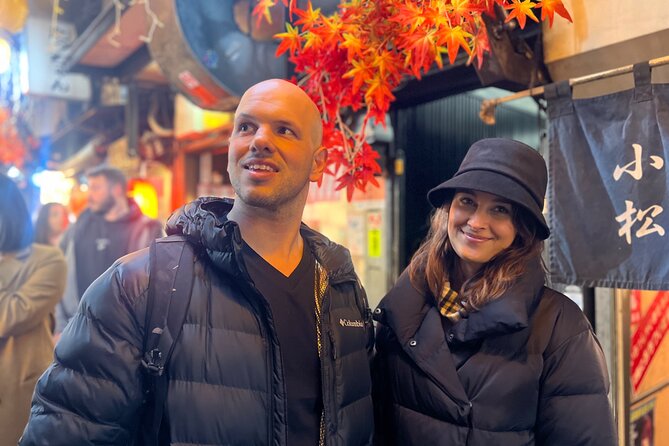
The route continues past Omoide Yokocho, also called Memory Lane. This narrow street is lined with old izakayas and restaurants dating from the postwar era, with a character that feels far removed from Shinjuku’s towers and shopping centers.
You spend about 15 minutes walking through or past the area rather than sitting down for a full meal there. That short visit is enough to see the compact dining spaces and understand why the alley is one of Shinjuku’s most photographed food areas.
Omoide Yokocho can be crowded and cramped. You should not expect a leisurely stroll with a lot of room for stopping. The value here is visual and cultural: you see the kind of small restaurant street that many people would pass without knowing how to approach.
A guide is useful in this setting because the alleys can be confusing, and the group can keep moving without stopping to decipher every sign. Still, remember that this is a walking tour first and a seated restaurant meal second. The route does not promise a long tasting inside Omoide Yokocho itself.
Same city, a completely different kind of day:
- Mt Fuji and Hakone 1-Day Bus Tour Return by Bullet Train
★ 5.0 · 26,383 reviews - 1-Day Tokyo Bus Tour
★ 5.0 · 14,250 reviews - Tokyo: TOKYO SKYTREE® Admission ticket
★ 4.5 · 11,192 reviews - Tokyo: teamLab Planets TOKYO Digital Art Museum Entry Ticket
★ 4.6 · 9,779 reviews
Nishishinjuku, where the route gets more local
The final named area is Nishishinjuku, a part of the district that many tourists miss. You dine at a local restaurant described as a favorite with residents, and the change in atmosphere is one of the more appealing features of the route.
Nishishinjuku is known for office towers and quieter side streets, but this tour focuses on local restaurants rather than grand views or shopping. It gives you a counterpoint to Kabukicho. Instead of only seeing the famous entertainment district, you get a look at the everyday dining side of Shinjuku.
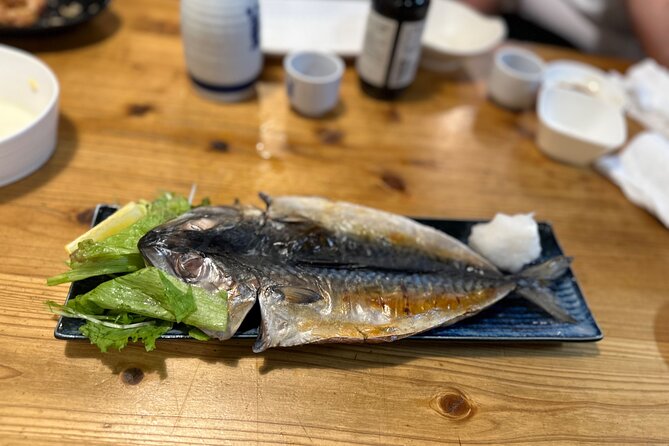
The meal at this stage can be substantial. Several people describe the food as plentiful enough that you will not go to bed hungry. Tonkatsu receives specific praise, and the Okinawan dishes provide a welcome change from the usual sushi-and-ramen introduction to Japan.
Food quality is not perfectly even. Some dishes are called merely average, while others are described as excellent. That is normal for a multi-stop tasting, but it means you should book this for variety and access rather than expect every plate to be destination-level cuisine.
What you may eat and drink
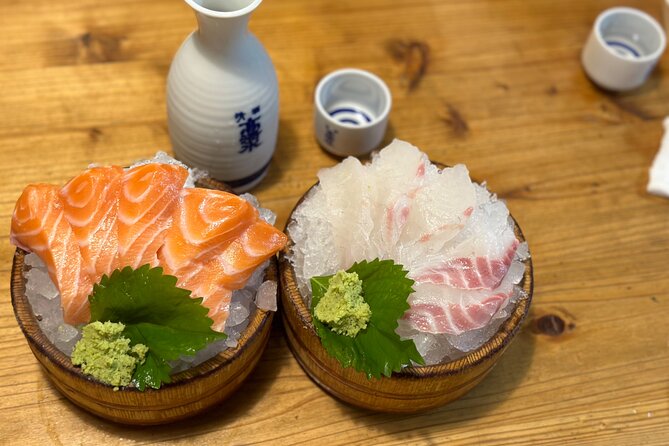
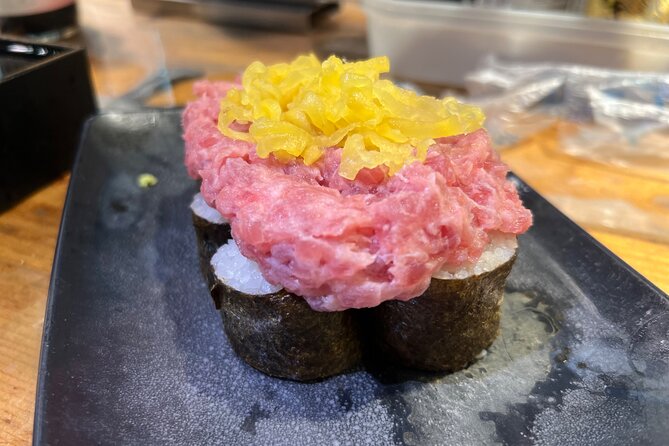
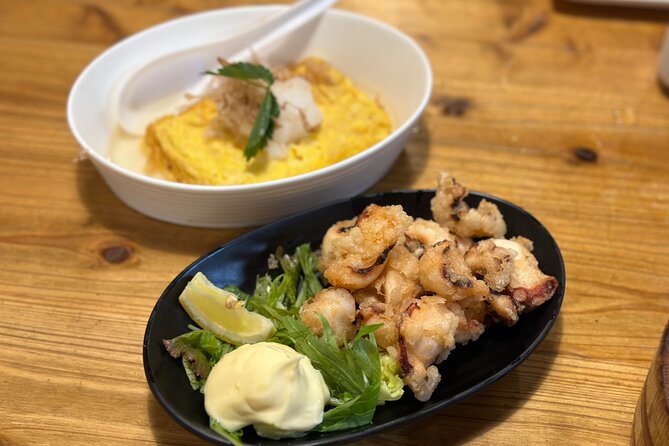
The tour promises 15 dishes at four eateries, with food and drinks included. The supplied menu details do not provide a fixed list of all 15 items, so you should not book expecting a guaranteed sequence of named dishes.
Known examples include sashimi, tonkatsu, Okinawan food, seafood, and sake sours. One especially strong account describes a selection of about seven kinds of sashimi. Another points to Okinawan food as an unusual regional taste that the person would not have found easily alone.
That uncertainty can work in your favor. You may try dishes outside your usual order and learn how Japanese food differs by region. Okinawan cuisine, in particular, gives the evening a wider scope than a standard Tokyo food crawl.
Drinks are included, and some stops offer a choice of beverage. Alcohol is part of the experience for some people, but you do not need to drink to take part. One person who skipped alcohol could not assess those drinks personally, while the rest of the group appeared to enjoy them. If you have allergies, dietary restrictions, or strong dislikes, ask the provider about accommodation before booking because the supplied information does not spell out the policy.
The amount of food is a real advantage for the price. You are sampling 15 dishes rather than paying $77.60 for one main course and a guide. Even if two stops are only average, the number of tastings and the included drinks can make the cost reasonable.
The guides shape the evening
This experience depends heavily on the guide. The names associated with especially strong feedback include Dai, Mak, Lisa, Haydn, Naoya, Naruto, Yota, Alma, Akia, Izzy, Fu, Agathe, Kaira, and Will.
Dai receives repeated praise for friendly explanations, good food choices, and local history. Mak is described as enthusiastic and well informed about Shinjuku and the dishes. Haydn is noted for discussing food, culture, sights, and the social character of the area. Naoya is praised for selecting restaurants that showed different sides of Tokyo’s food scene.
Naruto is singled out for speaking excellent English and explaining Shinjuku, local customs, and a street connected with yakuza history. Yota is praised for his command of the food and drinks, while Alma is described as pleasant, entertaining, and strong in English.
These details tell you something important: the guide is not just there to lead you from door to door. The best version of the tour includes explanations between meals, help with unfamiliar dishes, and enough conversation to make the group feel at ease.
The guide can also make or break the walking portion. One poor experience involved a guide walking too fast and speaking mainly to the people nearest him. Stay near the guide from the beginning, especially in crowded streets. If the group spreads out, you may miss both directions and explanations.
Small groups, walking, and timing
The group limit is 10 people. That is a good size for shared plates, restaurant seating, and questions. It is also small enough that the guide can usually keep track of everyone, though crowded Shinjuku streets can still cause gaps.
The three-hour duration sounds manageable, but the route involves repeated walking between eateries. One person liked the food and guides but felt the distances were excessive, pointing out that Shinjuku has many restaurants closer together.
Treat the tour as an active evening rather than a series of quick taxi rides. You will want comfortable footwear and a little patience when crossing crowded streets. The walking also helps break up the meal, which is useful when 15 dishes are spread across several stops.
Most people can participate, and the activity is near public transportation. No separate accessibility details are provided, so if you need a specific arrangement, contact the provider before paying.
What the $77.60 price really covers
At $77.60 per person, the tour is not the cheapest way to eat in Shinjuku. You can find inexpensive Japanese meals for far less, especially if you order one dish at a casual restaurant.
The comparison changes when you count what is included. You get about three hours with a professional guide, 15 food tastings, drinks, neighborhood walks, and an introduction to local customs. You also gain access to places that may be difficult to choose or approach on your own.
I see the price as fair for someone who values convenience and variety. It is particularly useful on a first visit, when a guide can help you identify foods and restaurants for the rest of your trip. It is less appealing if you already know Shinjuku well, speak Japanese comfortably, and prefer to spend your entire evening in one carefully chosen restaurant.
The tour’s high overall rating and 98 percent recommendation figure suggest strong satisfaction, but you should read those numbers with the right expectation. The experience earns its value through quantity, access, and guiding. It does not promise that every dish or restaurant will be exceptional.
Who should book this food walk
I would choose this for a first or second night in Tokyo. The route helps you get oriented, and the food gives you a working introduction to Japanese dining. You can use what you learn later when ordering alone.
It suits people who enjoy trying several small portions, walking through nightlife districts, and talking with a guide. It is also a good match for solo visitors or couples who want an easy social evening with a small group.
Families and people who do not drink can still participate because food is the main focus, but the Kabukicho setting and stories about nightlife may not appeal to every child. People with limited walking ability should ask for more details before booking.
I would skip it if your priority is a quiet, polished, high-end meal or if you dislike group pacing. I would also think twice if you are highly selective about food quality. The strongest plates can be very good, but the standard varies among the four eateries.
Practical details before you go
The tour includes a professional guide, food, drinks, and the walking culture experience. Gratuity is optional. The activity returns to the original meeting point, so you do not need to solve a second-location pickup at the end.
Free cancellation is available if you cancel at least 24 hours before the local start time. Changes or cancellations made inside that window are not accepted for a refund.
Bring your mobile ticket, wear walking shoes, and arrive with room for a generous meal. Do not eat a large dinner beforehand. You may want to keep the rest of the night open, since the combination of 15 dishes and drinks is intended to be filling.
Should you book the Shinjuku 15-dish food tour?
Book it if you want a guided introduction to Shinjuku, enjoy trying many foods, and value the chance to enter small local eateries without planning the route yourself. The strongest guides add real value through explanations of food customs, Okinawan cuisine, neighborhood history, and the social side of Kabukicho.
Go in expecting a varied tasting rather than four perfect restaurants. The food can range from excellent sashimi and tonkatsu to dishes that feel ordinary, and the walking may be more extensive than expected. For a first Tokyo visit, that is a reasonable trade: you get a full meal, a neighborhood orientation, and several ideas for where to eat next.
FAQ
How long does the Shinjuku food tour last?
The tour lasts approximately three hours.
How many dishes are included?
The experience includes 15 dishes served across four eateries.
How many people can join the tour?
The group has a maximum of 10 people.
Where does the tour begin and end?
It begins at AOKI Shinjukunishiguchi Honten at 1-chome-8-5 Nishishinjuku, Shinjuku City, Tokyo. It ends back at the meeting point.
Are food and drinks included in the price?
Yes. Food and drinks are included. Gratuity is optional and not included.
Can I cancel for a full refund?
Yes, if you cancel at least 24 hours before the experience start time. Cancellations or changes made less than 24 hours in advance are not accepted for a refund.
More Food in Tokyo
- Tokyo Night Foodie Tour in Shinjuku – Seasonal Sushi, Wagyu Beef
★ 5.0 · 1,161 reviews - Tokyo: Tsukiji Fish Market Food and Culture Walking Tour
★ 4.7 · 757 reviews - Tsukiji Fish Market: Street Food & Culture Walking Tour
★ 5.0 · 669 reviews - Tsukiji Fish Market Small-Group Food Walking Tour
★ 5.0 · 621 reviews
More Food & Drink in Tokyo
- Best of Shinjuku: Izakaya Food Tour (4 Stops, 14+ Tastings)
★ 5.0 · 1,863 reviews - Tokyo: Tsukiji Fish Market Food and Walking tour
★ 5.0 · 1,724 reviews - Eat and Drink Like a Local: Tokyo Ueno Food Tour-Taverns&Ramen
★ 5.0 · 957 reviews - Tokyo: Shibuya Food Tour (13 dishes and 4 Eateries)
★ 5.0 · 770 reviews
Just added around Tokyo
- Tokyo: Customizable Private Guided Walking Tour★ 4.5 · 129 reviews
- Private Harajuku Omotesando Architecture Tour★ 4.9 · 18 reviews
- Tokyo: Guided Helicopter Ride★ 4.9 · 24 reviews
- Tokyo: Guided Walking Tour of Tsukiji Market with Lunch★ 4.4 · 24 reviews
- Tokyo: Private Personalized Local Food Tour★ 4.5 · 101 reviews
- Tokyo GINZA: KONPARU Japanese Cabaret Show with Drink★ 4.8 · 38 reviews
- Tokyo: Guided Walking Tour of Tsukiji Market with Breakfast★ 4.4 · 134 reviews
- Tokyo: Gotokuji Cat Temple, Shinjuku Cat Cafe & 3D Cat Tour★ 4.9 · 38 reviews
Food Market Tours, compared.
Shinjuku Food Tour (13 Dishes at 4 Local Eateries)
Read our review →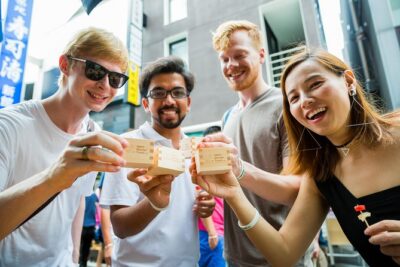
Tokyo Tsukiji Fish Market Food and Culture Walking Tour
Read our review →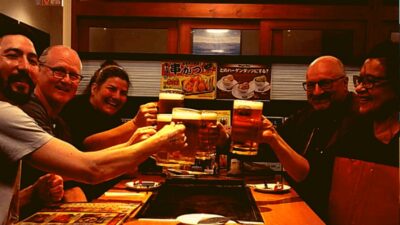
Shinsekai Food Tour with 13-15 Dishes at 5 Eateries
Read our review →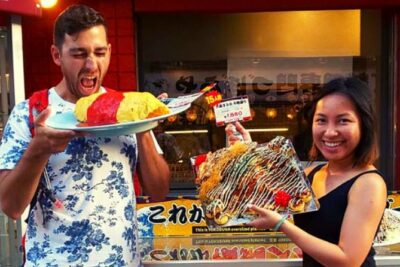
Osaka Food Tour: 13 Dishes at 5 Local Eateries
Read our review →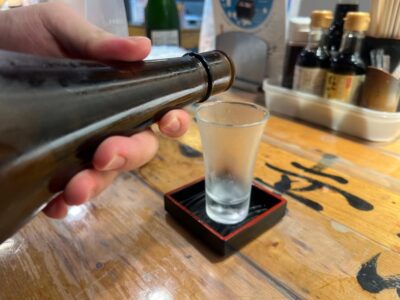
Shinjuku Food Tour (15 Dishes and 4 Eateries)
Read our review →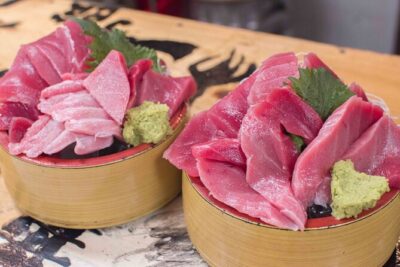
Best of Shinjuku: Izakaya Food Tour (4 Stops, 14+ Tastings)
Read our review →
Hungry Osaka Street Food Tour:15 Tastings & 3 Drinks with a Local
Read our review →
Browse the lists this tour appears in