
REVIEW · TEA CEREMONY EXPERIENCES
Sencha-do the Japanese Tea Ceremony Workshop
The best part of this Sencha-do workshop is simple: you do not just watch someone prepare tea. After a demonstration, you handle the utensils, measure the leaves, and brew your own cup. Instructor Kyo teaches the Higashi Abe school’s method with care, giving you a close look at a tea tradition many visitors miss because they know matcha but not leaf-brewed green tea.
I like the small maximum group of four, which leaves room for questions and makes the lesson feel personal. I also like the relaxed photo policy and the chance to compare your brew with friends or family. The main catch is finding the Kawasaki meeting point, since the directions have caused confusion, so allow extra time and check the address carefully.
In This Review
- Key details before you book
- Why Sencha-do is different from the tea ceremony you expect
- Watching the opening ceremony in Kawasaki
- Brewing your own loose-leaf tea
- Japanese sweets and the taste of the ceremony
- A close lesson with room for questions
- What $65.69 gets you
- Getting to the meeting point without stress
- Timing, participation, and cancellation
- The main strengths and the small weaknesses
- Should you book the Sencha-do workshop?
- FAQ
- Where does the Sencha-do workshop take place?
- How long does the tea ceremony workshop last?
- What kind of tea is used?
- Can I brew tea myself?
- Are tea and Japanese sweets included?
- How many people can join the activity?
Key details before you book
- You brew the tea yourself: This is a hands-on class, not only a demonstration.
- Sencha, not matcha: The tea is made by infusing green leaves rather than whisking powdered tea.
- A very small group: The class accepts no more than four people.
- Japanese sweets are included: They give you a pleasant way to taste the tea with a traditional accompaniment.
- The lesson lasts about 90 minutes: It fits neatly into a morning or afternoon in Kawasaki.
- The address deserves care: The meeting point is in Saiwai Ward, near public transportation, but online directions have not always been clear.
Why Sencha-do is different from the tea ceremony you expect
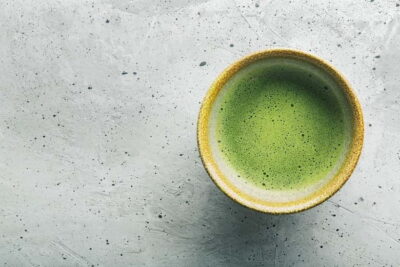
When most people picture Japanese tea, they picture matcha: bright green powder, a bamboo whisk, and a bowl of foamy tea. Sencha-do takes another path. You work with loose green tea leaves and extract their flavor through careful brewing.
That difference matters. Sencha can taste sweet, light, grassy, or gently astringent, depending on how it is prepared. The workshop lets you notice those changes because you make the drink yourself. You are not simply handed a finished cup and told what to think.
The Higashi Abe school has its own rules, movements, and sense of order. The lesson also shows you that Japanese tea culture is not one single practice. Different schools have different methods, utensils, and traditions, and this class offers an introduction to one of them.
You begin by watching. That opening demonstration gives you a sense of the room, the pace, and the meaning behind the movements before you need to copy anything. It is a smart format for beginners. You can observe first, then try the process with a clearer idea of what your hands should do.
More tea ceremony experiences in Japan:
- Kyoto: Tea Ceremony in a Traditional Tea House in Kiyomizu
★ 4.9 · 3,519 reviews - Kyoto: Tea Ceremony Ju-An at Jotokuji Temple
★ 4.9 · 3,207 reviews - Kyoto: 45-Minute Tea Ceremony Lesson Experience
★ 4.3 · 2,378 reviews
Watching the opening ceremony in Kawasaki
The experience takes place at the Higashi Abe school’s location at 1-chome-7-2 Totehonmachi, Saiwai Ward, Kawasaki, Kanagawa 212-0023. The activity begins and ends at this same meeting point.
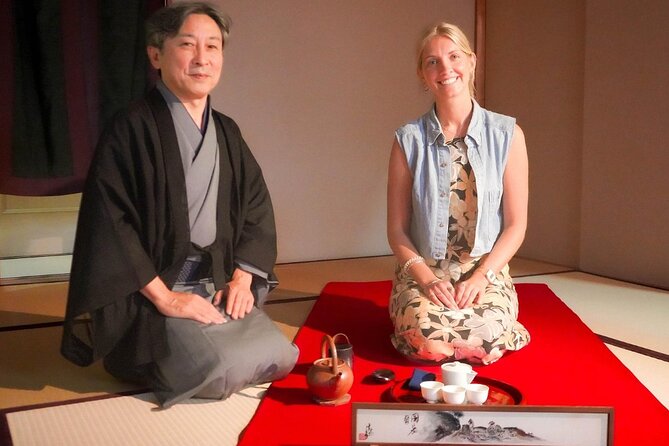
The first stage is a demonstration of Sencha-do. The instructor explains what is happening and provides context about the tea, the school, and the ceremony’s development. Several people who have taken the class found this background especially useful because it placed the movements in a wider cultural setting.
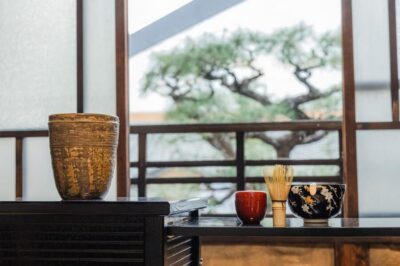
Pay attention to the small actions. The value of the demonstration is not only the final cup. It helps you see how the utensils are arranged, how the tea is handled, and how much care goes into a drink that can look very simple.
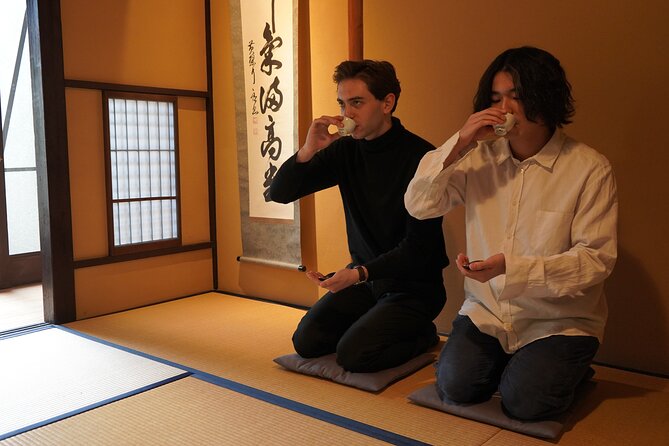
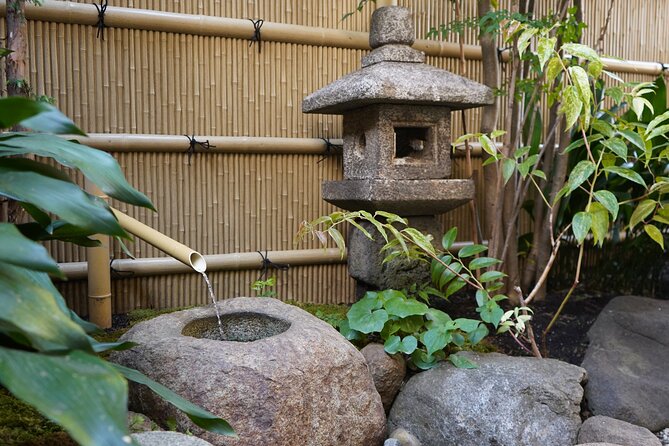
The setting is described as traditional, and the lesson is presented in a respectful way. You should expect a cultural activity with quiet moments and formal gestures, not a fast cooking class. That slower pace is part of the point. It gives you time to notice how preparation can be treated as an art.
The instructor may also discuss the school’s family background and the long process of learning tea ceremony. One family-focused session included a grandmaster of the school, while other classes were led by instructors such as Kyo. The exact teacher can vary, but the teaching style is consistently described as patient, polite, and careful with the school’s customs.
Brewing your own loose-leaf tea
After watching the ceremony, you get to use the utensils. This is the feature that sets the workshop apart from many formal tea demonstrations, where visitors must remain spectators.
You are guided through the process from the beginning. The instructor shows you how to prepare the leaves and brew the tea, then gives you the chance to repeat the steps yourself. The lesson is designed for beginners, so you do not need prior tea knowledge.
Do not worry about getting every movement perfect on the first try. The useful part is learning how the method changes the taste. A small change in brewing can affect the balance of sweetness and bitterness, and your own cup gives you a direct way to notice that.
If you attend with a companion, you can compare cups. That turns the lesson into a small experiment. You may prepare tea using the same broad method but notice different flavors in each serving. It is a good feature for families and couples, since the activity gives you something to discuss instead of leaving you to watch in silence.
The hands-on format also makes this a better choice for anyone who wants a practical cultural lesson. You leave with an understanding of the process, not just a few photographs of someone else performing it.
Japanese sweets and the taste of the ceremony
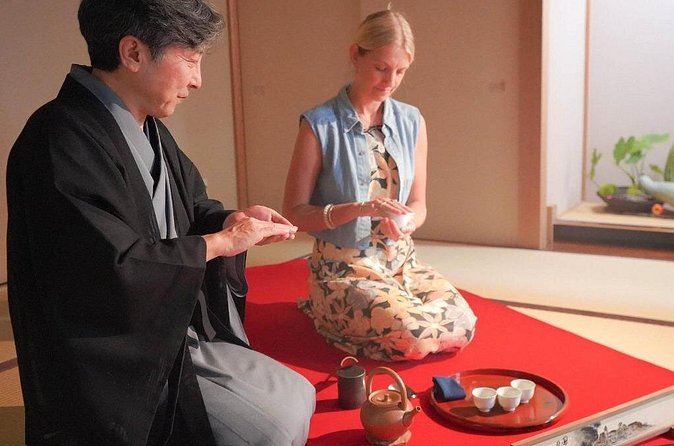
Green tea is served with Japanese sweets, which are included in the price. The sweets provide a useful contrast to the tea and give the session a more complete rhythm.
The pairing is not just a snack break. Japanese tea traditions often pay close attention to the relationship between bitterness, sweetness, texture, and presentation. Even if you do not have a trained palate, tasting the tea alongside a sweet helps you notice its character.
This part should appeal to visitors who enjoy food culture but do not want a full cooking activity. You get a taste of Japanese hospitality without adding another long stop to your day.
The workshop also allows photographs, so you can record the utensils, the tea preparation, and the room. Be considerate during the formal demonstration, especially during quiet moments, but the open photo policy is helpful if you want a visual memory of the class.
A few more Japan trips to weigh up
- Sushi Making Tokyo Roll and Authentic Japanese Sushi Class
★ 5.0 · 3,971 reviews - Tokyo: Roll and Authentic Sushi Making Class in Asakusa
★ 4.9 · 1,957 reviews - Ramen Cooking Class at Ramen Factory in Kyoto
★ 5.0 · 1,937 reviews - Tokyo Shinjuku Chopsticks Making Class
★ 5.0 · 1,763 reviews
A close lesson with room for questions
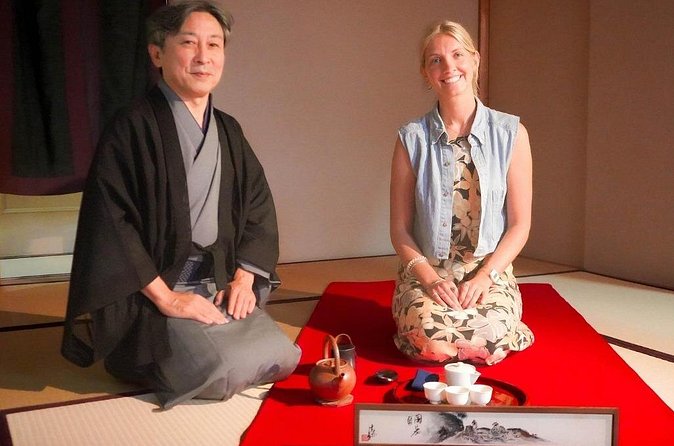
The group limit is four people. That is a major advantage at $65.69 per person because you are paying for more than a short public demonstration. You get direct access to the instructor and time to work with the equipment.
A larger class could make the practical section feel rushed. Here, the instructor can watch how you handle the utensils, correct your technique, and explain a point again if needed. The available information does not promise a private class, but a group of four is small enough to feel personal.
The format suits many types of visitors:
- Couples can prepare tea and compare the results.
- Families can share a calm activity that is suitable for most participants.
- Solo visitors can ask questions without needing to keep up with a large crowd.
- Tea enthusiasts can learn about brewed green tea beyond the better-known matcha tradition.
- First-time visitors to Japan can gain cultural context without committing to a full-day tour.
The lesson has also been praised for being welcoming to children. Still, the workshop involves formal handling of utensils and a quiet ceremonial setting, so very young children who cannot sit or listen for part of the 90 minutes may find it less engaging.
What $65.69 gets you
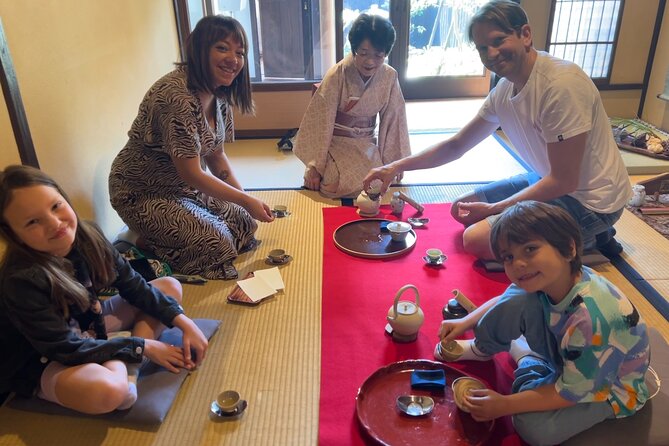
At $65.69 per person, this is not the cheapest cup of tea you will have in Japan. The price makes more sense when you view it as a short cultural lesson with instruction, equipment, green tea, Japanese sweets, and a very small group.
You are paying for access to a school and its teaching method, not just a tasting. The hands-on portion gives the class practical value, while the demonstration and background explain why the preparation matters.
I think the price is reasonable for visitors who have a real interest in Japanese culture or who want an activity with more substance than a quick photo stop. It may feel high if you only want to sample sencha and have no interest in ceremony, etiquette, or the details of brewing.
Group discounts are available, which can improve the value for families or small parties. The class accepts a maximum of four people, so you should not expect a large-group discount experience with a crowd of other participants.
The activity is usually booked about 13 days ahead. That pattern suggests you should plan rather than assume you can find a last-minute place, especially if your schedule in Kawasaki is tight.
Getting to the meeting point without stress
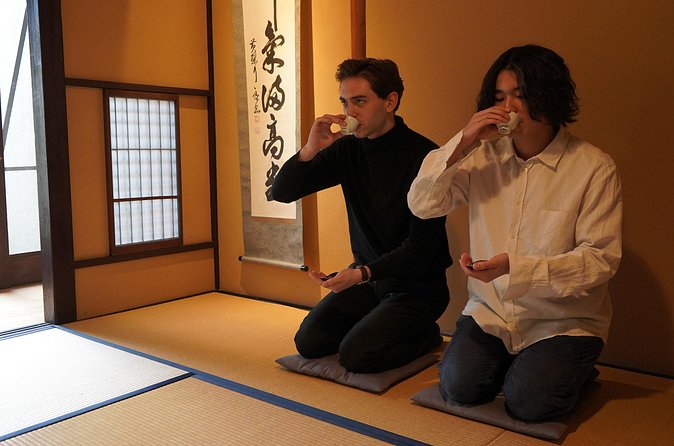
The meeting point is near public transportation, and private transportation is not included. You need to make your own way to the school and return from there after the lesson.
One practical warning deserves emphasis: the location has been difficult for some people to find using the online directions alone. The building itself may be easy once you are close, but the written guidance has not always been enough. I would check the Japanese address, save the meeting point before leaving your hotel, and allow extra time for the final approach.
The address is:
一般財団法人 煎茶道東阿部流
1-chōme-7-2 Totehonmachi
Saiwai Ward, Kawasaki, Kanagawa 212-0023, Japan
Some comments connected with the school refer to a Kyoto branch and Kyoto-area visits. Do not use those Kyoto references to plan this booking. The stated meeting point for this experience is in Kawasaki, so confirm that your map is directing you to Kawasaki before setting out.
The activity ends back at the starting point. That makes it easier to combine with nearby plans, since you do not need to arrange a separate return transfer.
Timing, participation, and cancellation
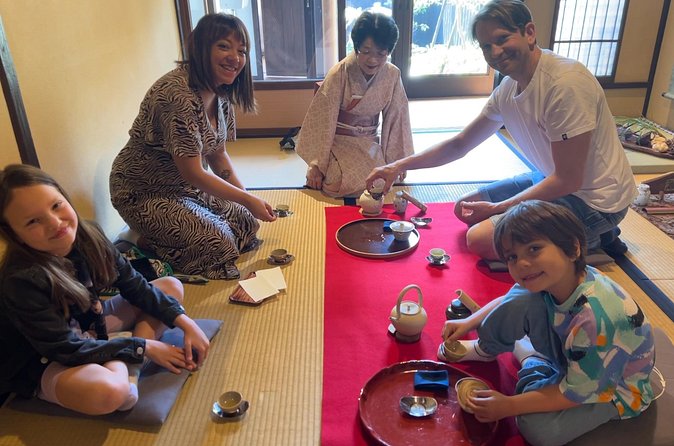
The workshop lasts about one hour and 30 minutes. That is long enough for a demonstration, explanations, sweets, and your own brewing attempt, but short enough to fit into a half-day plan.
Most people can participate, and service animals are allowed. No special skill level is stated, and the class is built around careful instruction, making it suitable for beginners.
Mobile tickets are accepted. Confirmation is provided when you book. These small details matter when you are moving between several Japanese cities and want to keep your plans on your phone.
Free cancellation is available if you cancel at least 24 hours before the start time. Changes made less than 24 hours before the experience are not accepted, and late cancellations are not refunded.
The activity has a minimum number of participants and may be canceled if that number is not reached. It also has a weather-related cancellation policy. If poor weather causes a cancellation, you can receive a different date or a full refund. Since the class takes place indoors, this condition may depend on local operating decisions rather than the tea lesson itself.
The main strengths and the small weaknesses
The strongest feature is the chance to handle the utensils. Many tea experiences ask you to sit quietly and watch. Here, you get to understand the motions by doing them.
The teaching is another clear advantage. The instructors are described as patient and respectful, and Kyo has been singled out for making the lesson approachable. The school’s background and the history of its tea style add depth without requiring you to already know the subject.
The small group is valuable. Four people is enough for shared conversation but not so many that your turn disappears. Families, couples, and solo visitors can all get something from the format.
The drawback is the address information. If you are already dealing with train transfers, unfamiliar streets, and a fixed start time, a hard-to-follow final approach can create unnecessary pressure. Build in a time cushion.
A second consideration is the specialized focus. This is Sencha-do, not a general introduction to every Japanese tea tradition. That is a strength if you want something less familiar than matcha, but it may not satisfy someone looking specifically for the powdered-tea ceremony seen in popular photographs.
Should you book the Sencha-do workshop?
Book it if you want to learn by doing, especially if you are curious about Japanese tea beyond matcha. The combination of a formal demonstration, school background, Japanese sweets, and your own brewing attempt gives you a clear introduction in 90 minutes.
I would especially recommend it for a small family group, a couple, or a solo visitor who enjoys quiet cultural activities. The 4.8 rating from 21 ratings and 95 percent recommendation figure support the strong impression of the experience, but the practical warning about directions should not be ignored.
Skip it if you want a quick tasting, a large-scale show, or a matcha-focused ceremony. For everyone else, $65.69 is a fair price for a personal lesson in a less familiar branch of Japanese tea culture. Save the Japanese address, arrive early, and let the class unfold at its own careful pace.
FAQ
Where does the Sencha-do workshop take place?
The meeting point is 一般財団法人 煎茶道東阿部流 at 1-chōme-7-2 Totehonmachi, Saiwai Ward, Kawasaki, Kanagawa 212-0023, Japan.
How long does the tea ceremony workshop last?
The experience lasts approximately one hour and 30 minutes.
What kind of tea is used?
The workshop uses green tea leaves that are brewed by infusion. Sencha-do does not use powdered green tea such as matcha.
Can I brew tea myself?
Yes. You first watch a demonstration, then use tea utensils to prepare and brew tea with guidance from the instructor.
Are tea and Japanese sweets included?
Yes. Green tea and Japanese sweets are included in the experience price.
How many people can join the activity?
The experience has a maximum of four participants. Group discounts are available, and most people can participate.
Just added around Japan
- Private Memorable Tokyo Tour with English Speaking Driver★ 5.0 · 30 reviews
- Private Tokyo Custom Full-Day Tour by Chartered Vehicle★ 5.0 · 16 reviews
- Private Sightseeing to Mt Fuji and Hakone with English Driver★ 5.0 · 51 reviews
- Tokyo Photography Masterclass – Private Photography Lesson★ 5.0 · 25 reviews
- Private Mt. Fuji Day Trip from Tokyo with English-Speaking Driver★ 5.0 · 33 reviews
- 4 Day Tour – Mount. Fuji, Tokyo, Hakone, Kamakura and Yokohama★ 5.0 · 19 reviews
- Private Unforgettable Mt Fuji Tour with English Speaking Driver★ 5.0 · 142 reviews
- Private Tokyo Food Tour – A Journey Through Time Through Food★ 5.0 · 36 reviews
Tea Ceremony Experiences, compared.
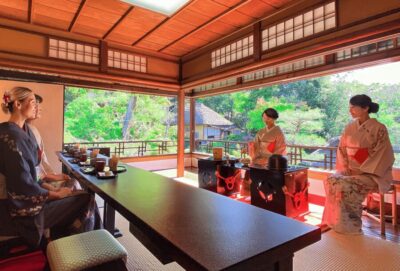
Tea Ceremony in a Traditional Tea House in Kiyomizu
Read our review →
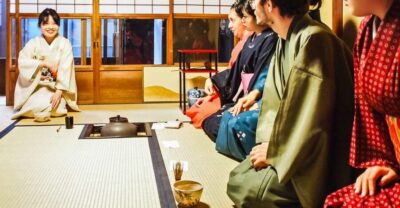
World Heritage Kyoto & Nara Uji Authentic Matcha Experience
Read our review →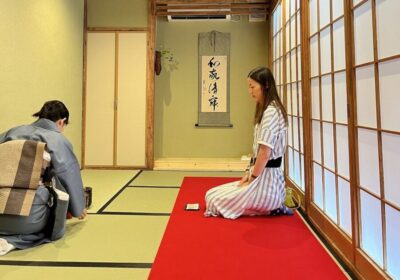
Browse the lists this tour appears in