
REVIEW · WALKING TOURS
Private Echizen Knife Making Factory and walking Tour
Echizen knife making is not a staged museum display. You visit working factories, smell the wood at Yamaken Woodworks, meet craftsmen, and then see blades being made at Ryusen Hamono. The hands-on portion gives you a small but memorable link to the craft.
I like the direct contact with makers, and I like the way the tour covers both halves of a knife: the handle and the blade. It also gives you private time with your own group, rather than sending you through a large standard tour.
The main consideration is the price, $163.30 per person before the optional English guide fee. You should also plan your transport carefully. The area is near public transportation, but the walk from Oshio Station takes about 35 minutes and can be windy, so driving is the simpler choice.
In This Review
- Key points at a glance
- Why Echizen knives are worth a special trip
- Yamaken Woodworks and the smell of fresh wood
- Ryusen Hamono, where the blades take shape
- What the private format changes
- The walk from Oshio Station
- Is $163.30 good value?
- Who should book this factory visit?
- Timing, weather, and booking details
- What to bring and how to get more from it
- Should you book the Echizen knife tour?
- FAQ
- Where does the tour begin?
- Where does the tour end?
- How long does the tour last?
- Is the tour private?
- What factories will I visit?
- Is there a hands-on activity?
- Is an English guide included?
- Is the tour accessible by public transportation?
- Can I cancel for a full refund?
Key points at a glance
- Two working factories: See wooden handles at Yamaken Woodworks and blades at Ryusen Hamono.
- A small hands-on activity: Try part of the knife-making process rather than only watching.
- Private group format: Only your party takes part in the activity.
- About two and a half hours: The factory visits take roughly one hour and 10 minutes, plus time for the other stop and walking.
- Echizen setting: Reach the factories in a scenic part of Fukui, with rice fields along the walk from Oshio Station.
- English help costs extra: An English guide is available for ¥10,000 per person, on top of the tour price.
Why Echizen knives are worth a special trip
Echizen is one of Japan’s important knife-making areas, and this tour lets you see the craft in its working environment. You are not simply looking at finished knives behind glass. You move between a woodworks factory and a blade factory, which helps you understand how separate skills come together in one kitchen tool.
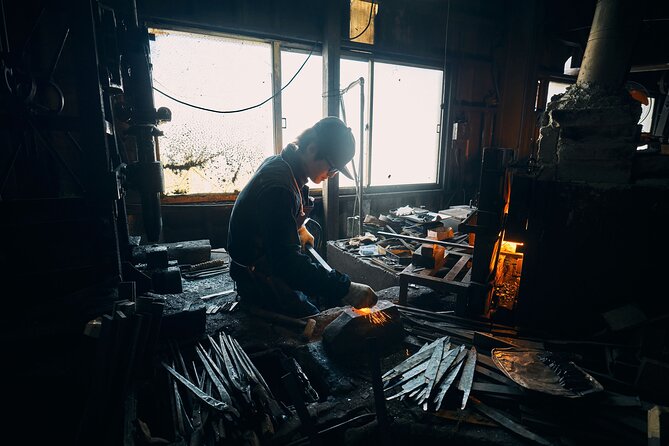
That division is the heart of the visit. At Yamaken Woodworks, the focus is on handles. At Ryusen Hamono, the attention shifts to blades, blacksmithing, finishing, and the finished products in the shop. The two stops give the tour a useful shape, from a piece of wood to a knife ready for sale.
For anyone who cooks seriously, this is more than a shopping stop. You can ask craftsmen about their work and see the care that goes into an object you might use every day. The appeal is strongest if you value Japanese tools, traditional handwork, or the story behind a purchase.
The setting adds to the sense of place. The factories are in Ikenokamichō, in Echizen, rather than in central Fukui. That means a little more effort, but it also takes you away from the usual city sightseeing route and into the area where the work is actually done.
More walking tours in Japan:
- Kyoto Geisha Walking Tour: Gion District & Hidden Gems
★ 4.7 · 3,273 reviews - Tokyo Tsukiji Fish Market Food and Culture Walking Tour
★ 5.0 · 3,184 reviews - Kyoto: Gion Magical Night Walking Tour with Geisha Trivia
★ 4.9 · 2,393 reviews
Yamaken Woodworks and the smell of fresh wood
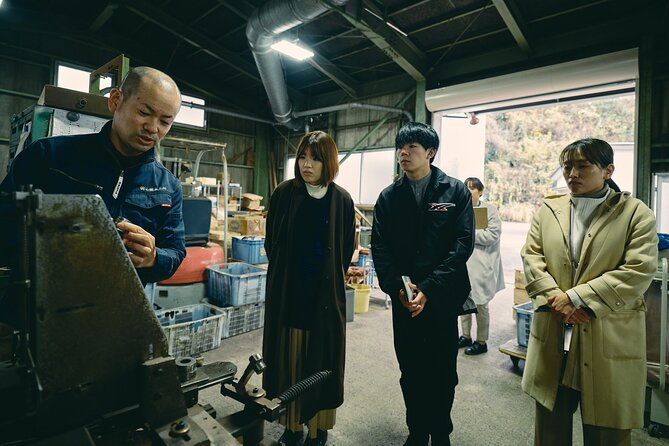
The first stop is Yamaken Woodworks, located at 46-1-10 Ikenokamichō. This factory produces knife handles, and the visit centers on the detailed work needed to shape and finish them.
One of the simplest pleasures here is the aroma of wood inside the workshop. That sensory detail makes the stop feel grounded and real. You can see the material before it becomes part of a finished knife, and you can speak directly with the craftsmen about how they work.
The factory shop next door sells handles made on site. This gives you a chance to look closely at the finished woodwork and perhaps buy a component connected to the place you just visited. The shop is not simply an afterthought. It helps you compare the practical product with the process you have just seen.
I would give this stop your full attention even if blades are your main interest. A knife handle affects comfort, balance, grip, and appearance. Seeing the handle work first makes the later blade visit easier to understand.
The information does not promise a large demonstration or a long lecture, so set your expectations properly. This is a compact factory visit with conversation and observation, not a full-day woodworking class. Its value comes from access to the craftsmen and the chance to see work that is normally hidden from shoppers.
Ryusen Hamono, where the blades take shape
The second stop is Ryusen Hamono, a knife factory and store. You will meet blacksmiths involved in knife making and learn about the work behind high-quality blades.
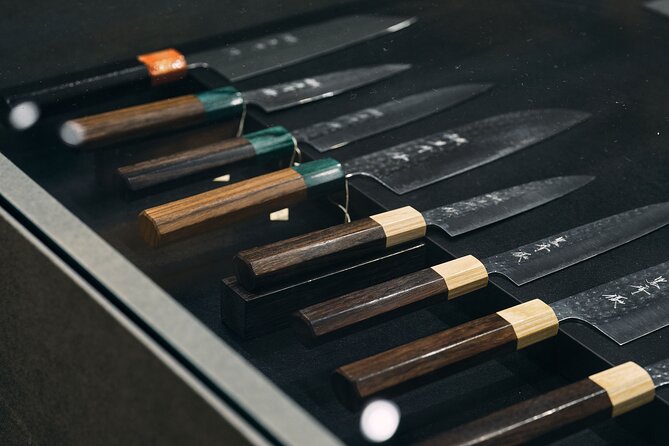
This is the part most knife enthusiasts will anticipate. The factory visit brings you closer to the production process, while the store lets you see a broad selection of finished knives. The contrast is useful: first you see the labor, then you see the polished result.
You also get to try part of the knife-making process. The supplied details do not specify exactly which task you will perform, so do not book this expecting to forge an entire knife from raw steel. Think of it as a brief, supervised taste of the craft. Even a small task can change the way you look at a finished blade.
The contact with actual blacksmiths is a major reason to choose this tour over a regular knife shop visit. A shop can show you products and prices. A factory visit can show you why knives differ, how much skill lies behind them, and why handmade Japanese blades attract cooks around the world.
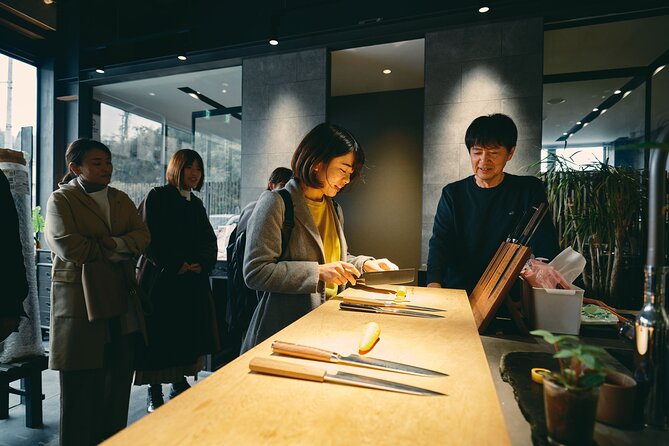
Ryusen Hamono also makes the tour practical for shoppers. You can inspect the assortment of knives after seeing how they are made. If you plan to buy, take your time comparing the options, but remember that the tour price does not include food, drinks, or purchases from the shops.
What the private format changes
This is a private activity, so only your group participates. That matters in a factory setting, where a large crowd could make it harder to hear explanations or ask questions.
A private tour also lets you set the pace within the scheduled visits. You can spend more time looking at handle details if that interests you, or focus your questions on blades and blacksmithing. The available information does not promise a named personal guide, so you should not expect a particular guide by name.
The optional English guide costs ¥10,000 per person. If you need detailed explanations in English, include that fee when judging the total cost. If you can communicate comfortably without an English guide, the base price may feel more reasonable, but you should confirm the language arrangements before booking.
The strong rating of 4.9 from 12 ratings and a 100 percent recommendation record suggest that the format has worked well for previous bookers. Still, the tour is specialized. Its appeal depends on your interest in knives and making things by hand. If you only want a quick look at Fukui, this may feel too focused.
A few more Japan trips to weigh up
- Tokyo 6hr Private Tour with Government-Licensed Guide
★ 5.0 · 3,902 reviews - Private Tour to Mt. Fuji and Hakone (Fully Licenced Operator)
★ 5.0 · 1,910 reviews - Fushimi Inari Hidden Hiking Tour (Private Option Available)
★ 5.0 · 1,750 reviews - Private Kyoto Tour with a Local, Highlights & Hidden Gems, Personalised
★ 5.0 · 1,543 reviews
The walk from Oshio Station
The meeting point is 48-6-1 Ikenokamichō, Echizen, Fukui 915-0873, and the activity returns there at the end. The area is near public transportation, but the factories are not right beside the station.
One person made the walk from Oshio Station in about 35 minutes, passing through rice fields. That route can be a pleasant way to see a quieter side of Fukui, but it is not the best choice in every condition. Strong winds made the return walk difficult on one occasion.
I would drive if you have access to a car, especially if you are buying a knife or visiting in poor weather. If you plan to walk, allow extra time and check the forecast. The tour requires good weather, and poor conditions can lead to a different date or a full refund.
The walking element is part of the experience, but it should not be treated as a major countryside hike. The key reason to come here is the factories. Public transport can work, yet driving is the more convenient option for most people.
Is $163.30 good value?
At $163.30 per person, this is not a casual bargain activity. You are paying for access to two specialist workplaces, a private format, contact with craftsmen, and a hands-on element. You are not paying for a meal, transportation, or an included English guide.
The price makes better sense for a committed knife enthusiast than for a curious first-time visitor. If you already plan to buy an Echizen knife, the factory access can add real value. You can see the work behind the product and ask questions before choosing from the store selection.
The private setup also affects the calculation. A couple or small family group may appreciate having the craftsmen’s attention without a large crowd. Solo bookers or people with only a passing interest in kitchen tools may find the per-person cost harder to justify.
I would compare the price with your wider Fukui plans. If this is your main reason for visiting Echizen, two and a half hours gives you a focused look at the local craft. If you are squeezing it between several distant sights, the travel time and extra guide fee may make the day less efficient.
Who should book this factory visit?
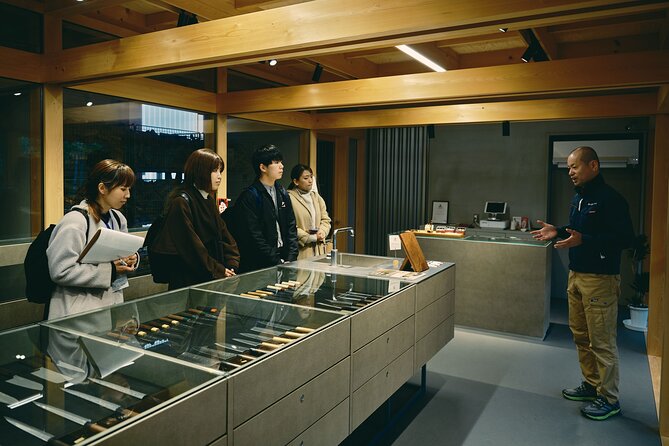
I recommend it most strongly for:
- Cooks who care about Japanese kitchen knives
- Visitors who want to meet makers, not only browse shops
- People interested in woodwork, blacksmithing, or traditional manufacturing
- Couples or small groups who value a private visit
- Anyone willing to travel beyond central Fukui for a specialist activity
It may not suit you if you want a broad cultural tour, a long workshop, or a cheap shopping excursion. The hands-on portion is limited in scope, and the factories are the clear focus.
Families can consider it because most people can participate, but the tour may be more rewarding for older children and adults who can appreciate the craft. The available information does not list a special children’s program, so do not expect one.
Timing, weather, and booking details
The activity lasts about two hours and 30 minutes. The Yamaken stop is scheduled for one hour, while Ryusen Hamono takes about one hour and 10 minutes. The remaining time covers movement between the stops and the flow of the private visit.
You receive confirmation at booking in most cases. If you book within seven days of the activity, confirmation may arrive within 48 hours and depends on availability. Since this is a private tour with a minimum number of participants, last-minute plans carry some risk.
Free cancellation is available until 24 hours before the start time for a full refund. Changes or cancellations made less than 24 hours before the start time are not accepted for a refund.
Weather matters here. If poor weather causes the operator to cancel, you can choose another date or receive a full refund. The same choice applies if the minimum number of participants is not met.
The mobile ticket is convenient, but it does not solve the transport question. Save the meeting address before leaving and allow time to reach Ikenokamichō.
What to bring and how to get more from it
Wear comfortable shoes. You may walk from the station, and factory floors are better suited to practical footwear than sandals or formal shoes.
Bring questions. Ask about the handle work at Yamaken, the blade process at Ryusen Hamono, and the differences among the knives in the shop. The tour’s real strength is the chance to speak with people who make the products.
If you are considering a purchase, think about what you want before arriving. Handle shape, blade use, maintenance, and size are all useful subjects to discuss. You do not need to buy anything for the tour to be worthwhile, but the shop visits give you a better basis for making a choice.
I would also leave room in your luggage if you hope to shop. The tour includes factory and shop visits, but knife purchases are separate from the $163.30 activity price.
Should you book the Echizen knife tour?
Book it if Japanese knives are a serious interest and you want to see the craft at its source. The pairing of Yamaken Woodworks and Ryusen Hamono is especially effective because you see both handles and blades, then try part of the process yourself.
Think twice if you are watching your budget, relying on a long public transport connection, or hoping for a full blacksmithing lesson. Add ¥10,000 per person if you need the English guide, and remember that driving is likely easier than the 35-minute walk from Oshio Station.
For the right visitor, this is a rare, focused look at Echizen workmanship. It asks for extra time and money, but it gives you something a normal knife shop cannot: a direct connection to the people and workshops behind the finished blade.
FAQ
Where does the tour begin?
It begins at 48-6-1 Ikenokamichō, Echizen, Fukui 915-0873, Japan.
Where does the tour end?
The activity ends back at the meeting point.
How long does the tour last?
The tour lasts approximately two hours and 30 minutes.
Is the tour private?
Yes. Only your group participates in this private activity.
What factories will I visit?
You will visit Yamaken Woodworks for knife handles and Ryusen Hamono for knife blades and finished products.
Is there a hands-on activity?
Yes. You can experience part of the knife-making process at Ryusen Hamono.
Is an English guide included?
No. An English guide is available for an additional ¥10,000 per person.
Is the tour accessible by public transportation?
The area is near public transportation. Oshio Station is about a 35-minute walk away, and driving is described as the easiest way to arrive.
Can I cancel for a full refund?
Yes, if you cancel at least 24 hours before the experience start time. Poor weather or failure to meet the minimum number of participants can also lead to a different date or a full refund.
Just added around Japan
- Private Memorable Tokyo Tour with English Speaking Driver★ 5.0 · 30 reviews
- Private Tokyo Custom Full-Day Tour by Chartered Vehicle★ 5.0 · 16 reviews
- Private Sightseeing to Mt Fuji and Hakone with English Driver★ 5.0 · 51 reviews
- Tokyo Photography Masterclass – Private Photography Lesson★ 5.0 · 25 reviews
- Private Mt. Fuji Day Trip from Tokyo with English-Speaking Driver★ 5.0 · 33 reviews
- 4 Day Tour – Mount. Fuji, Tokyo, Hakone, Kamakura and Yokohama★ 5.0 · 19 reviews
- Private Unforgettable Mt Fuji Tour with English Speaking Driver★ 5.0 · 142 reviews
- Private Tokyo Food Tour – A Journey Through Time Through Food★ 5.0 · 36 reviews
Walking Tours, compared.

Kyoto Geisha Walking Tour: Gion District & Hidden Gems
Read our review →
Tokyo Tsukiji Fish Market Food and Culture Walking Tour
Read our review →
Gion Magical Night Walking Tour with Geisha Trivia
Read our review →
Imperial Palace and Shogun Historical Walking Tour
Read our review →
Gion Geisha District Walking Tour – Stories of Geisha
Read our review →
Asakusa Walking Tour with Sensoji Temple Visit
Read our review →
Kyoto Gion Geisha District Walking Tour – The Stories of Geisha
Read our review →Browse the lists this tour appears in