
REVIEW · WORKSHOPS
Osaka: Private Ceramic Painting Workshop
Osaka’s Ceramics Tocoton workshop gives you something better than a shop-bought souvenir: a dish you design yourself, painted in a century-old house in a quiet southern neighborhood. You walk from JR Teradacho Station through a Showa-era part of Osaka that most sightseeing routes skip, then settle in for a private class with Anna or Ryo.
I like the personal scale and the language choice. You can work in English, Spanish, Catalan, or Japanese, and the private setting leaves room for questions and conversation about Japanese culture. I also like the useful gifts: a small handmade dish and a sakura-shaped chopstick holder that you can carry away that day.
The main drawback is the wait for your own painted piece. It takes about a month and a half to fire and ship, and shipping costs are extra. If you are leaving Japan soon, plan around that delay and give the studio a reliable home address.
In This Review
- Key Points Before You Book
- A Quiet Start at JR Teradacho Station
- Inside the Century-Old Workshop
- Designing Your Dish With Japanese Images
- The Two Gifts You Carry Away
- A Long Wait for the Finished Ceramic
- What the Walk Adds to the Experience
- Why the Private Format Matters
- Is $61 a Fair Price?
- Who Will Enjoy This Most
- Booking and Timing Tips
- Should You Book the Ceramic Painting Workshop?
- FAQ
- Where does the ceramic workshop meet?
- How long does the activity last?
- What languages are available?
- What will I paint?
- Is the finished pottery ready to take home that day?
- What is included in the price?
- Can young children join the workshop?
Key Points Before You Book
- A private class in a century-old Osaka house: You receive personal attention rather than sharing the table with a large group.
- Choose your own Japanese design: Paint Mount Fuji, sushi, cherry blossoms, other Japan-related images, or a kanji word.
- Meet at JR Teradacho Station: The guide collects you at the north exit and walks with you to the studio.
- Shigaraki clay is part of the experience: Your dish is made from clay associated with the Shigaraki area.
- Spanish and Catalan are available: This is an unusual choice for ceramic instruction in Osaka.
- Your finished dish arrives later: Firing and shipping take about one and a half months, with postage paid separately.
A Quiet Start at JR Teradacho Station
Your meeting point is the north exit of JR Teradacho Station. Look for a guide carrying a sign with the studio name, Ceramics Tocoton. This is a useful arrangement because you do not need to search for an address in an unfamiliar residential area.
Ryo has handled the station pickup for some classes, while Anna has led the painting session. The exact instructor may depend on the date, but you can expect a small, personal welcome rather than a formal tour desk. If you are more than 15 minutes late, contact the studio. More than 15 minutes is treated as a no-show, so this is not the time to rely on a loose Osaka timetable.
The walk from the station is part of the experience. You pass through a less polished side of the city, with the kind of Showa-era Osaka that does not usually appear in sightseeing brochures. The value here is not a list of famous buildings. It is the chance to see an ordinary southern neighborhood before entering the workshop.
That walk also gives you time to talk. Ryo has been described as friendly during the route to the studio, and the conversation can help connect the craft session to daily life in Japan. If you prefer a tightly timed activity that begins the instant you leave the station, this short transition may feel less direct. I think it works well because the workshop is meant to feel local, not packaged.
A few more Osaka trips to weigh up
- Sushi Making Osaka Roll and Authentic Japanese Sushi Class
★ 5.0 · 1,220 reviews - Matcha Making Class in Osaka with Authentic Japanese Sweets Set
★ 5.0 · 509 reviews - Osaka: Ramen and Gyoza Cooking Class in Dotonbori
★ 5.0 · 378 reviews
Inside the Century-Old Workshop
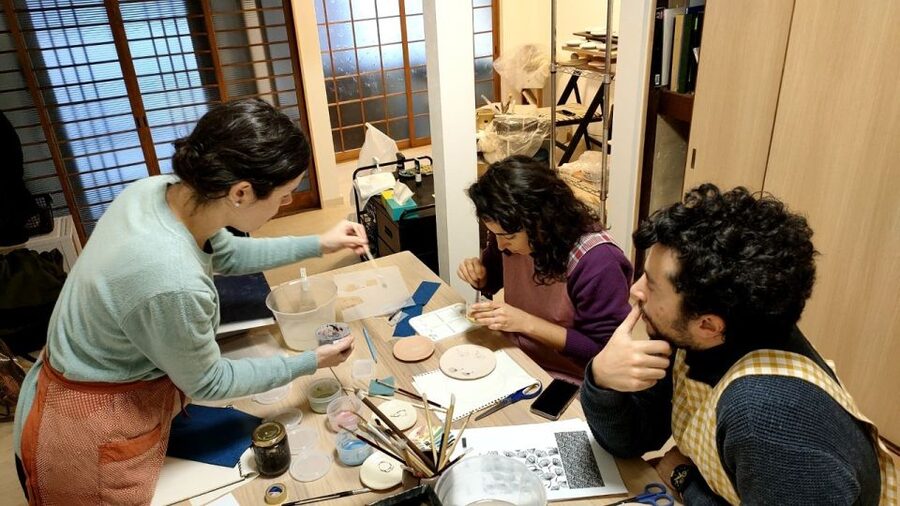
The class takes place in a house said to be about 100 years old. You are not heading into a large commercial craft center with rows of identical workstations. The setting is part of the lesson, and the home-like atmosphere makes the two-hour session feel more relaxed.
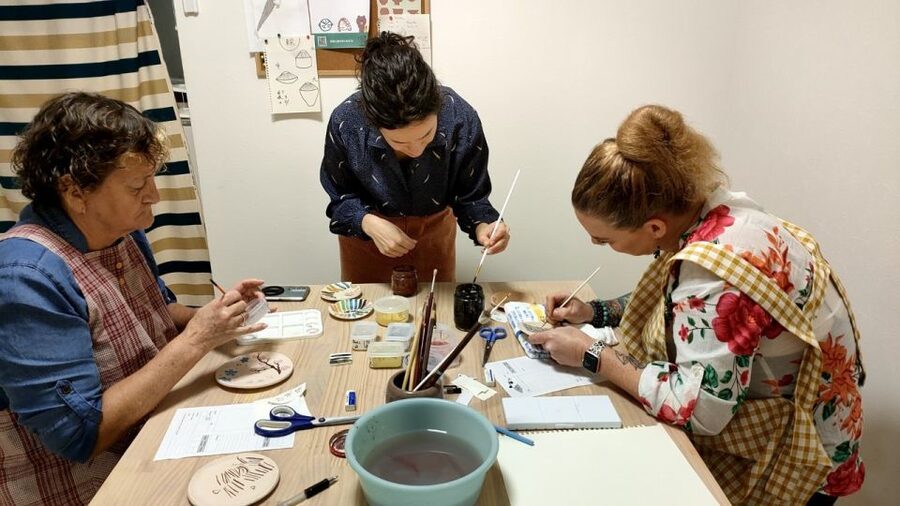
The class is private, so the people at the table are your own group. That matters if you want to ask basic questions, need help with a design, or simply prefer not to paint in front of strangers. You do not need to arrive as an artist. The instruction is designed for people who are curious and willing to try.
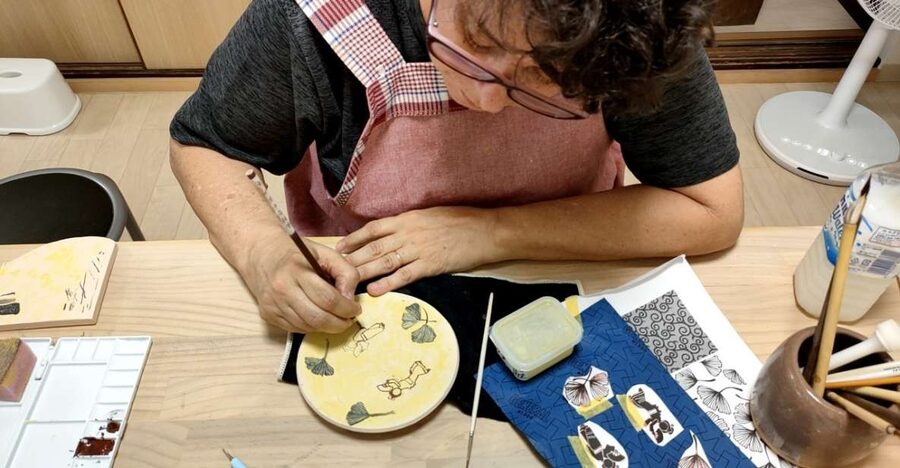
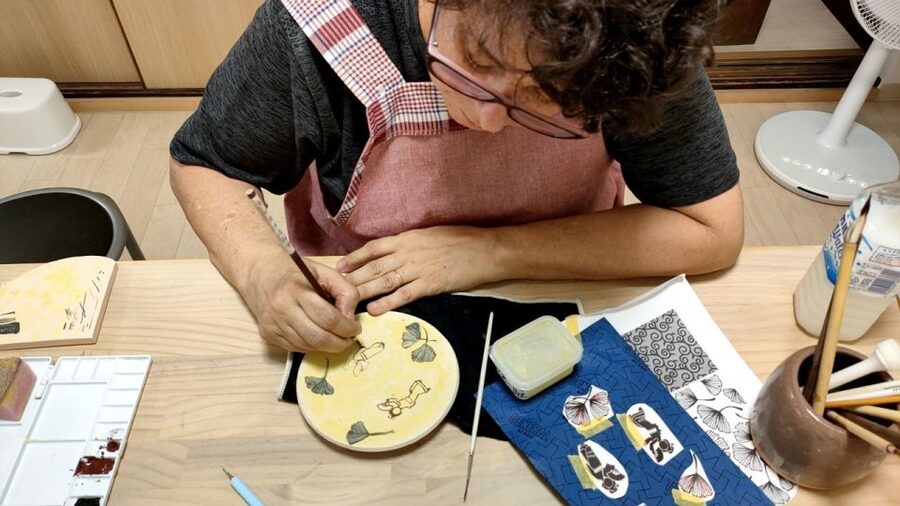
Anna has been praised for her warm, welcoming teaching style, and the class allows room for creativity. You receive guidance, but you are not pushed into copying one fixed pattern. If your drawing skills are modest, that is fine. You can ask for help with the design, brushwork, or kanji, then make the piece your own.
The workshop is taught in English, Spanish, Catalan, or Japanese. Spanish and Catalan are especially useful here because they are not common choices in every ceramics activity in Osaka. Confirm your preferred language when booking so the studio can arrange the right instructor.
Tea has been served at the end of some sessions, adding to the informal feel. It is not listed as a guaranteed part of the package, so I would treat it as a possible extra rather than a promise. The focus remains the painting, conversation, and finished ceramic work.
Designing Your Dish With Japanese Images
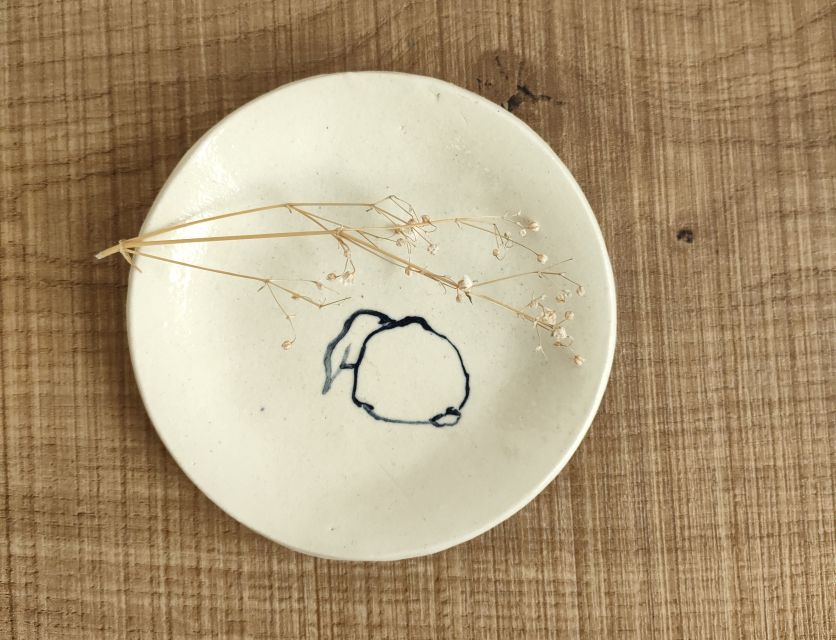
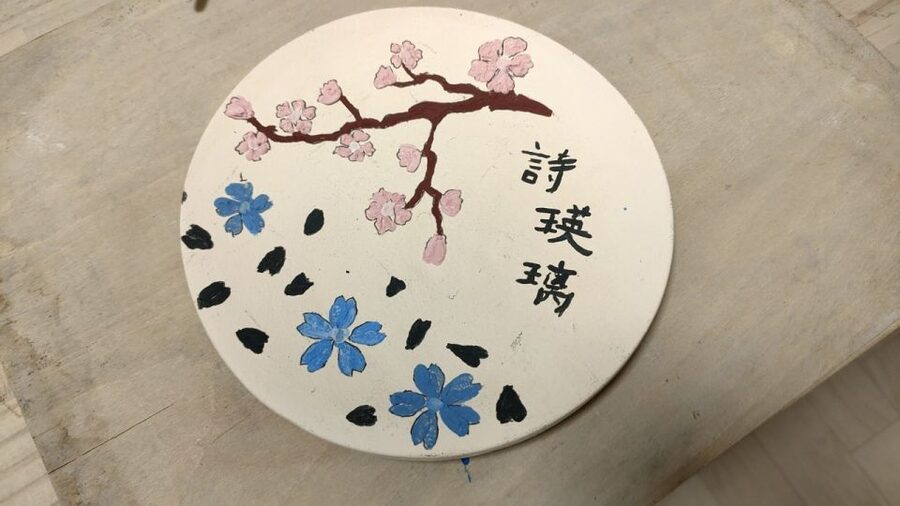
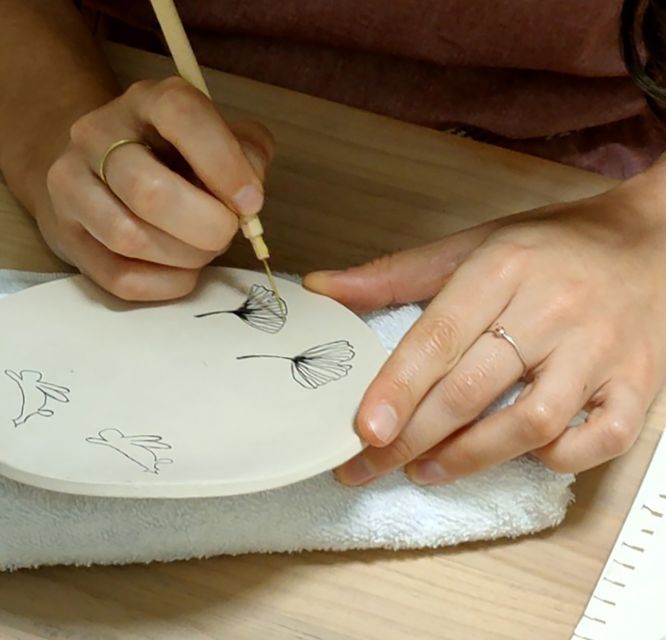
The central task is painting a ceramic dish with a brush. You can choose a traditional Japanese pattern or a familiar image tied to Japanese culture. Mount Fuji, sushi, and a sakura tree are suggested examples, but you can also write a desired word in kanji.
This is where the private format earns its keep. You have time to discuss a design rather than rushing to follow a preset sample. If you want a simple cherry blossom, you can keep it clean. If you want a word in kanji, ask about the meaning and the correct characters before you paint.
I would decide on a general idea before arriving, but not prepare a detailed drawing. The class is more enjoyable when you leave room for the instructor’s suggestions. You might find that a simple image works better on a small dish than a crowded scene.
The materials include a dish made with clay from the Shigaraki area and ceramic paints. Shigaraki is one of Japan’s well-known pottery regions, so the material gives the activity a stronger connection to Japanese ceramic tradition than painting an anonymous factory blank.
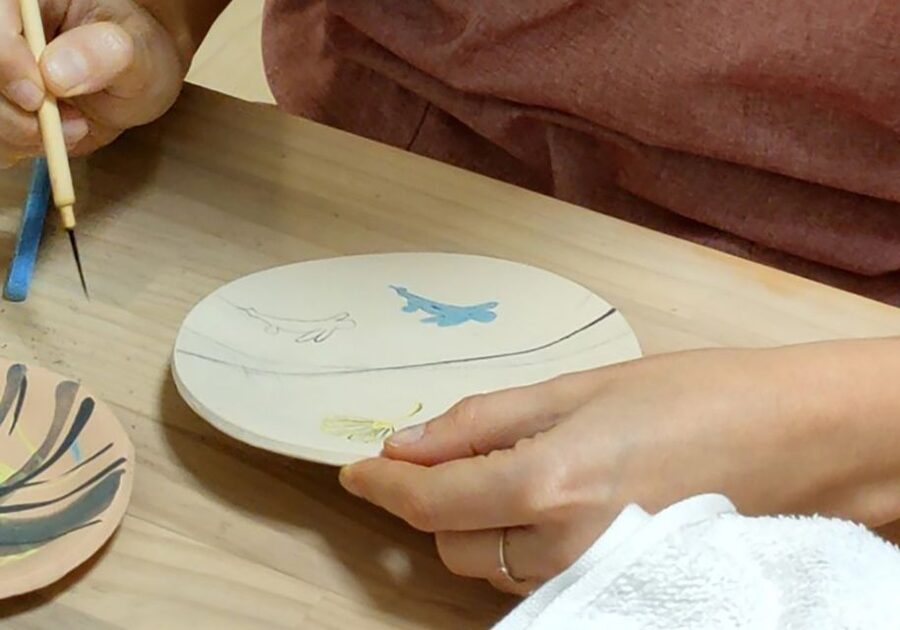
Keep in mind that you are painting a ceramic piece, not taking home a finished fired object that day. The colors and final surface will depend on the firing process. You have control over the design, but the studio handles the firing afterward.
The Two Gifts You Carry Away
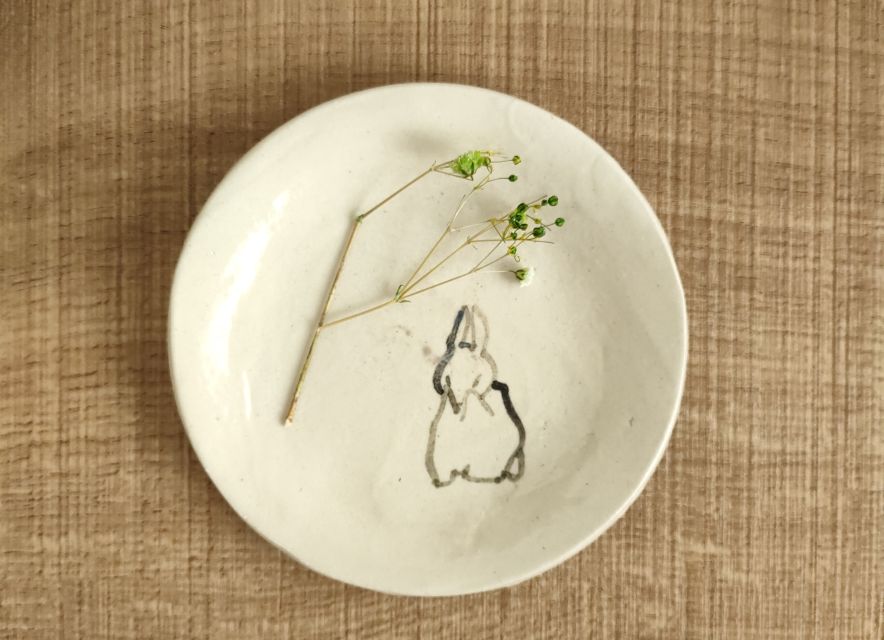
The $61 price includes a small handmade dish with a traditional Japanese pattern and a Sakura-shaped chopstick holder. You can take both gifts with you on the day of the class.
That detail improves the value. Your painted dish is the main souvenir, but it goes away for firing and shipping. The gifts give you something tangible to pack immediately, which is especially helpful if you are continuing around Japan and want a small reminder of the afternoon.
The chopstick holder is shaped like a sakura blossom, and the small dish uses a traditional Japanese design and materials. These are practical objects, not just decorative tokens. They also help you remember how Japanese table settings use small pieces for everyday purposes.
The gifts should not be confused with the dish you paint. Your own piece is sent to your home later, while the small dish and chopstick holder are included for you to carry away. Ask the instructor if you want to confirm which items are yours before leaving.
Same city, a completely different kind of day:
- Osaka Go Karting Tour with Funny Costume
★ 5.0 · 2,658 reviews - Osaka Castle: Museum and Tower Entry Ticket
★ 4.5 · 2,380 reviews - Osaka: Shinsekai Food Tour with 13-15 Dishes at 5 Eateries
★ 4.8 · 2,204 reviews - Osaka Food Tour: 13 Dishes at 5 Local Eateries
★ 5.0 · 2,149 reviews
A Long Wait for the Finished Ceramic
After the class, the studio fires your painted dish and ships it to your home. The stated wait is about one month and a half, or roughly six weeks. Shipping is not included in the $61 price.
This is the biggest practical issue. You need to provide a delivery address and budget for postage separately. If you are staying in Japan for several weeks, the information says the pottery is sent to the participant’s home, so do not assume it will arrive before you leave unless you have confirmed the arrangement with the studio.
The delay is also part of the appeal. A finished pottery piece requires more work after you put down the brush, and the studio cannot simply hand you the unfired dish without risking damage. Still, the wait means this is not the best choice if you want a finished souvenir in your suitcase tonight.
Pack the two included gifts carefully. They are handmade objects, and you are responsible for carrying them after the class. Your painted dish will travel separately once the firing and shipping are complete.
What the Walk Adds to the Experience
Many Osaka activities keep you near the best-known central sights. This one takes you south of the city center and uses the route from Teradacho Station as a small window into everyday Osaka.
The Showa-era character is important. You see a side of the city that is less polished and less arranged for sightseeing. I would not book this expecting grand monuments or a guided history walk. Book it because you want the setting around the studio to feel connected to local life.
The walk also helps the class feel like a visit rather than a transaction. Ryo has chatted with participants on the way, and the time between station and studio gives you a natural chance to ask about Osaka, Japanese customs, and the craft itself.
There is a tradeoff. If you have limited time and want a workshop directly beside a major attraction, this location may be less convenient. You must reach Teradacho Station, meet the guide at the correct exit, and follow the walk to the house. For me, that extra step is worthwhile because the neighborhood is one of the experience’s most distinctive details.
Why the Private Format Matters
The two-hour duration is long enough to make a personal piece without turning the activity into a full-day commitment. A private group also means you can set the pace within the class. You may spend more time discussing patterns, ask for help with kanji, or work slowly if you are careful with brush control.
This format suits couples, families with older children, and friends who want a shared souvenir. Children under five are not allowed, and younger children may find the quiet painting work demanding even if they meet the age requirement.
It also suits solo visitors who want conversation during a creative activity. The instructor can explain the designs and talk about Japanese culture while you work, rather than giving a short demonstration and leaving you alone.
The private setup is less useful if you are hoping to meet a large group of other visitors. This is a calm, focused class, not a social event with rotating tables. You are paying for attention and flexibility rather than volume.
Is $61 a Fair Price?
At $61 per person, the cost includes the instructor, materials, station pickup, private instruction, your Shigaraki-clay dish, firing, and two small handmade gifts. Shipping is the one clear extra cost.
I consider that reasonable for a two-hour private class, especially if you value direct guidance and language flexibility. A cheaper group class might give you the same basic brush and paint task, but it may not include station pickup, a private setting, or conversation in Spanish or Catalan.
The value depends on what you want from a souvenir. If you only need a low-cost ceramic trinket, buying one from a shop will cost less and take no time. If you want to make something connected to your own visit, the class gives the object a story that a ready-made dish cannot.
Remember to include shipping in your personal budget. Since the fee is not stated in advance here, ask about the amount before you commit. The extra cost does not cancel out the value, but it does mean the headline price is not the final cost.
Who Will Enjoy This Most
I would recommend this workshop to you if you like hands-on activities, small local settings, and souvenirs with a personal mark. It works particularly well for:
- Couples who want a shared memory that becomes a useful household object
- Solo visitors who enjoy conversation and creative work
- Families with children aged five and older who can focus for two hours
- Spanish or Catalan speakers looking for instruction in their strongest language
- Anyone who wants to see a quieter part of Osaka
- Visitors who can wait about six weeks for the finished piece
You may want to skip it if your schedule is packed, you dislike painting, or you need to carry the finished dish home immediately. The design does not require professional skill, but you still need patience and interest.
The class is also a good choice for repeat visitors to Japan. If you have already seen Osaka Castle, Dotonbori, and the major shopping streets, the walk through southern Osaka and the time in the old house offer a different kind of afternoon.
Booking and Timing Tips
Check the available starting times before you book, since the two-hour class does not have one fixed daily departure listed here. Arrive at the north exit of JR Teradacho Station with enough time to find the guide holding the Ceramics Tocoton sign.
Write down the studio name and keep your phone available. A late arrival of more than 15 minutes counts as a no-show, so contact the studio promptly if transport delays you.
You can cancel for a full refund up to 24 hours before the activity, and the reserve-now, pay-later option gives you some planning flexibility. Those policies help if your Osaka schedule is still changing, but they do not remove the need to arrive on time.
Before the class, think about the word or image you might paint. You can choose Mount Fuji, sushi, sakura, a traditional pattern, or kanji, but having a rough idea helps you use the two hours well. Do not over-plan. Part of the fun is getting advice from Anna or the instructor working with you.
Should You Book the Ceramic Painting Workshop?
Book it if you want a personal souvenir, a private class, and a look at a less touristy corner of Osaka. The strongest reasons are the warm instruction associated with Anna and Ryo, the choice of English, Spanish, Catalan, or Japanese, and the freedom to design your own dish.
The workshop is not ideal for a rushed itinerary or anyone who wants to pack the finished pottery before leaving Japan. You will pay shipping later and wait about a month and a half.
For most visitors who enjoy making things, that delay is a fair trade. You leave with two small gifts, a better sense of Osaka outside the usual routes, and a ceramic piece that arrives later with your own design on it. That is a useful souvenir, and a good reason to reserve this small, personal class.
FAQ
Where does the ceramic workshop meet?
Meet at the north exit of JR Teradacho Station in Osaka. Look for the guide carrying a sign with the studio name, Ceramics Tocoton.
How long does the activity last?
The workshop lasts two hours. Starting times vary, so check availability when booking.
What languages are available?
Instruction is available in English, Catalan, Spanish, and Japanese. Spanish and Catalan make this workshop a less common language option for ceramic instruction in Osaka.
What will I paint?
You will paint a ceramic dish with a brush. Possible designs include Mount Fuji, sushi, a sakura tree, traditional patterns, or a word written in kanji.
Is the finished pottery ready to take home that day?
No. Your painted dish is fired and shipped to your home afterward. It takes about one and a half months, and shipping costs are not included.
What is included in the price?
The price includes the instructor, materials, the dish made with Shigaraki-area clay, pickup from Teradacho Station, a small dish with a traditional Japanese pattern, and a Sakura-shaped chopstick holder.
Can young children join the workshop?
Children under five are not permitted to take part.
Just added around Osaka
- (Ticket Included) Explore Osaka Castle & Museum of History★ 4.8 · 21 reviews
- Hidden Osaka – Yukaku Red Light Tour & Culinary Adventure★ 4.8 · 96 reviews
- Osaka: Walking Tour and Top Highlights★ 4.8 · 104 reviews
- Eat Like a Local in Osaka – Private Custom Street Food Tour★ 4.3 · 33 reviews
- Pickleball in Osaka, Kobe & Kyoto with Locals!★ 4.7 · 80 reviews
- Osaka:SUMO BEATS SHOWCASE: Taiko Drum and Wagyu burger!★ 4.2 · 37 reviews
- Kimono photoshoot-Includes 100 photo data★ 5.0 · 21 reviews
- Osaka: Walking Tour to Local Gems, Food & Culture★ 4.9 · 21 reviews
Workshops, compared.
Sushi Making Tokyo Roll and Authentic Japanese Sushi Class
Read our review →

Roll and Authentic Sushi Making Class in Asakusa
Read our review →
Ramen Cooking Class at Ramen Factory in Kyoto
Read our review →
Sushi Making Class in a Happi Coat near a Famous Spot
Read our review →

Sushi Making Osaka Roll and Authentic Japanese Sushi Class
Read our review →
Tokyo Sushi Making Class in Tsukiji with Professional Chef
Read our review →Browse the lists this tour appears in