
REVIEW · WORKSHOPS
Osaka: Kendo Workshop Experience
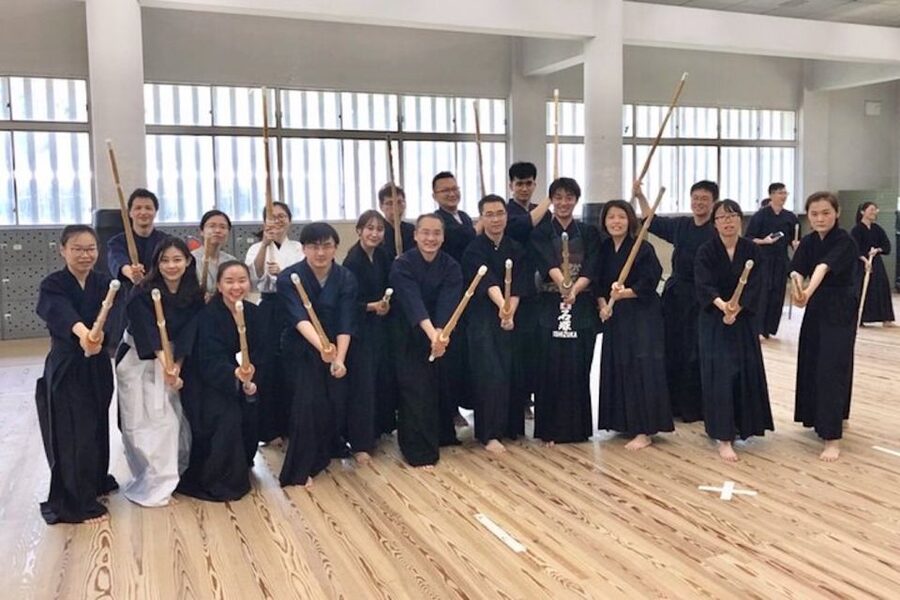
Kendo here is more than putting on a helmet and swinging a bamboo sword. At Shigino Kaikan, you learn the ritual, posture, manners, and controlled strikes that give this Japanese martial art its shape. The quiet dojo and sharp crack of bamboo swords make the session feel far removed from a costume photo stop.
I especially like the careful progression from etiquette to basic practice, then to hitting the instructor and a match-style game. I also like the very small format, with the activity generally arranged for two people, so Yamasaki-sensei can watch your stance closely and explain in English or Japanese. The main consideration is that this is physical and movement-based, not a passive cultural talk. It is not suitable for children under nine, pregnant women, wheelchair users, or people with mobility impairments.
In This Review
- Key points before you book
- Why this Osaka Kendo workshop feels different from a samurai photo stop
- Starting at Shigino Kaikan with clothes and etiquette
- Learning the bamboo sword one step at a time
- Hitting the instructor and feeling the rhythm
- Putting on the Men and stepping into a mini-match
- Watching national-level instructors at close range
- The final bow, photographs, and a possible samurai meal
- Is $116 per person a fair price?
- Who should book, and who should think twice?
- Practical details for a smoother session
- Should you book this Osaka Kendo experience?
- FAQ
- Where does the Osaka Kendo workshop take place?
- How long does the Kendo experience last?
- Is the workshop taught in English?
- Is Kendo equipment included?
- How many people can join?
- Can I cancel or pay later?
Key points before you book
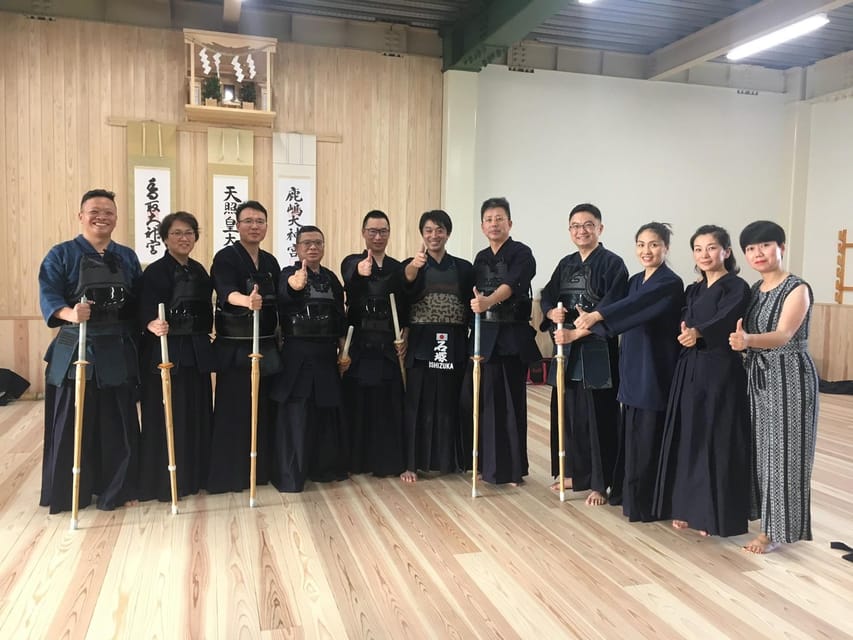
- You learn the full Kendo sequence: Changing clothes, bowing, basic instruction, bamboo-sword practice, armor work, and a mini-match all fit into two hours.
- Yamasaki-sensei teaches clearly: English and Japanese instruction, easy-to-follow corrections, and a friendly sense of humor make the session approachable for beginners.
- You practice with real protective equipment: Rental armor and equipment are included, along with a special Japanese hand towel for putting on the Men.
- The dojo atmosphere matters: The echoing commands, bamboo smell, formal manners, and sword impacts create a genuine training-room feel.
- National-level demonstrations add value: You get to see techniques performed close up, after learning enough basics to understand what you are watching.
- The price reflects personal attention: At $116 per person for two hours, this is not a cheap photo opportunity, but a focused lesson with equipment and instruction included.
Why this Osaka Kendo workshop feels different from a samurai photo stop
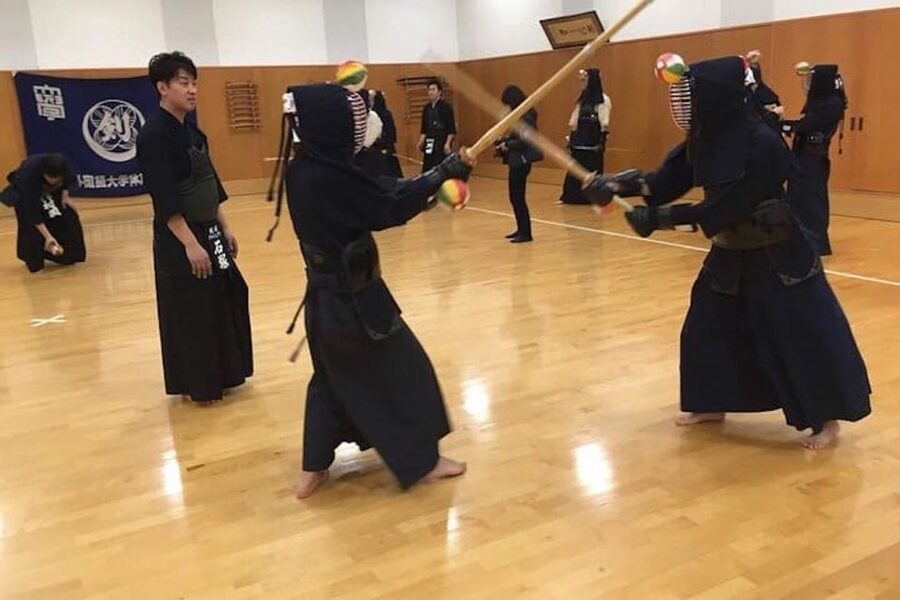
Many samurai-themed activities revolve around costumes and staged poses. This one asks you to learn how to stand, bow, hold the bamboo sword, and control your movements before you try to strike.
That difference matters. Kendo is built around unifying your spirit, manners, and lifelong practice, not simply hitting a target. You may leave with a photograph in armor, but the more useful souvenir is an understanding of why the bow comes first and why form matters as much as force.
The setting helps. The tranquility of the dojo, the sound of bamboo swords colliding, and the instructor’s voice echoing across the room give the activity a focused feel. You are not just handed equipment and told to swing. The session gives you a short but real introduction to the way Kendo is practiced.
The small-group setup is another strong point. The activity is advertised for a maximum of two participants, and the information says it is basically arranged for two people. That makes it a good choice if you want personal correction rather than a large class where you repeat movements at the back of the room.
A few more Osaka trips to weigh up
- Sushi Making Osaka Roll and Authentic Japanese Sushi Class
★ 5.0 · 1,220 reviews - Matcha Making Class in Osaka with Authentic Japanese Sweets Set
★ 5.0 · 509 reviews - Osaka: Ramen and Gyoza Cooking Class in Dotonbori
★ 5.0 · 378 reviews
Starting at Shigino Kaikan with clothes and etiquette
You meet at 鴫野会館, or Shigino Kaikan hall. Hotel pickup and drop-off are not included, so you need to make your own way to the meeting point.
The first part involves changing clothes and preparing for the dojo. This may sound routine, but it sets the tone. Kendo places strong importance on manners, and the activity introduces those customs before the physical work begins.
You will learn how to behave in the training space, how to show respect, and how the session is organized. These details give context to the commands and movements that follow. Without them, the later strikes could feel like a game. With them, you begin to see Kendo as a disciplined practice.
The instructors keep the opening accessible. You do not need previous Kendo experience, and the instruction is designed to help beginners take part safely. Still, listen closely and copy the movements carefully. Formal actions are not filler here. They are part of what you came to learn.
Learning the bamboo sword one step at a time
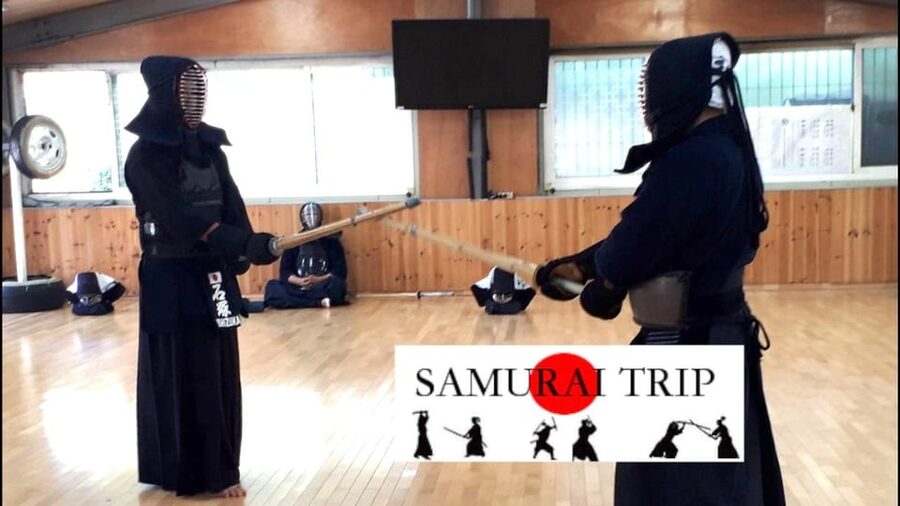
Next comes a basic lecture and an introduction to the bamboo sword. The equipment is called a shinai, though the supplied details do not require you to know Japanese terms in advance. Your instructor explains how to hold it and how to move with it.
The early practice focuses on the fundamentals rather than speed. You work on posture, position, and the basic method of striking. The instructors are experienced, and the session is structured so that you can progress without being thrown into a full match at once.
I like this stage because it gives you a fair chance to understand the activity before the protective armor appears. A first-time participant can concentrate on stance and timing. Someone who has tried Kendo before can use the close attention to refine small habits.
The sessions also include cultural instruction at intervals. You learn about Kendo’s background and its manners as a martial art, not only about competition and striking. That balance is useful. It explains why the workshop includes such formal behavior and why discipline remains central even during the livelier parts.
Hitting the instructor and feeling the rhythm
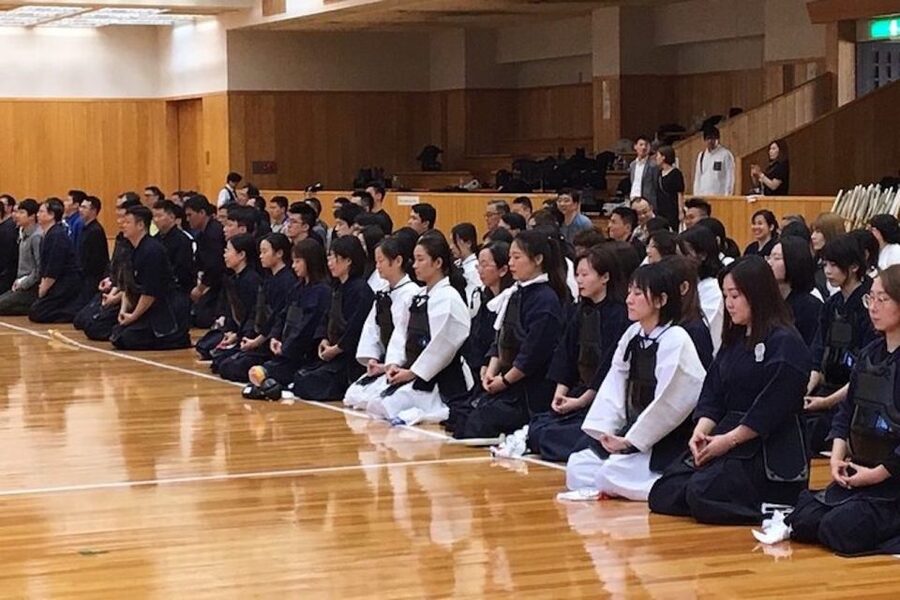
Once you have the basic movements, you practice striking the instructor. This is the moment when the lesson becomes physical in a more direct way.
You hear the instructor’s voice, move into position, and make contact with the bamboo sword. The supplied description emphasizes the sound of the swords and the echoing calls in the dojo, and those details are important. Kendo is a sport you hear as much as feel.
You should not expect a free-for-all. The point is controlled practice. Your instructor watches your movement and gives corrections so that you can understand what a proper strike should look and feel like.
Yamasaki-sensei has received particular praise for clear English, easy explanations, humor, and close attention to posture. That is valuable for a beginner. Martial arts instruction can become intimidating when every correction sounds severe, so a teacher who can keep the mood light while still focusing on form makes a real difference.
This section may also test your stamina. You are moving, calling out, and repeating strikes while trying to remember several instructions at once. The session is only two hours, but Kendo is not a sit-down activity.
Same city, a completely different kind of day:
- Osaka Go Karting Tour with Funny Costume
★ 5.0 · 2,658 reviews - Osaka Castle: Museum and Tower Entry Ticket
★ 4.5 · 2,380 reviews - Osaka: Shinsekai Food Tour with 13-15 Dishes at 5 Eateries
★ 4.8 · 2,204 reviews - Osaka Food Tour: 13 Dishes at 5 Local Eateries
★ 5.0 · 2,149 reviews
Putting on the Men and stepping into a mini-match
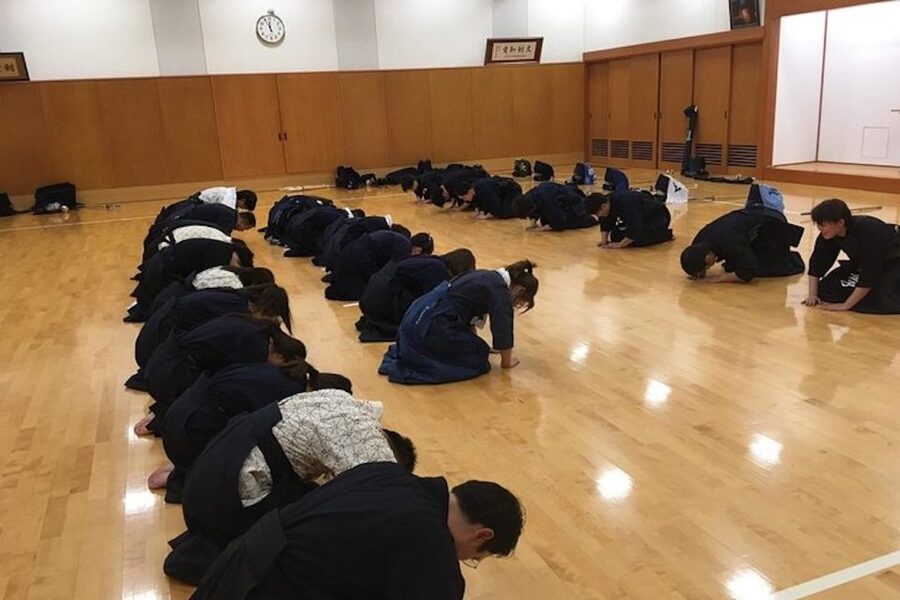
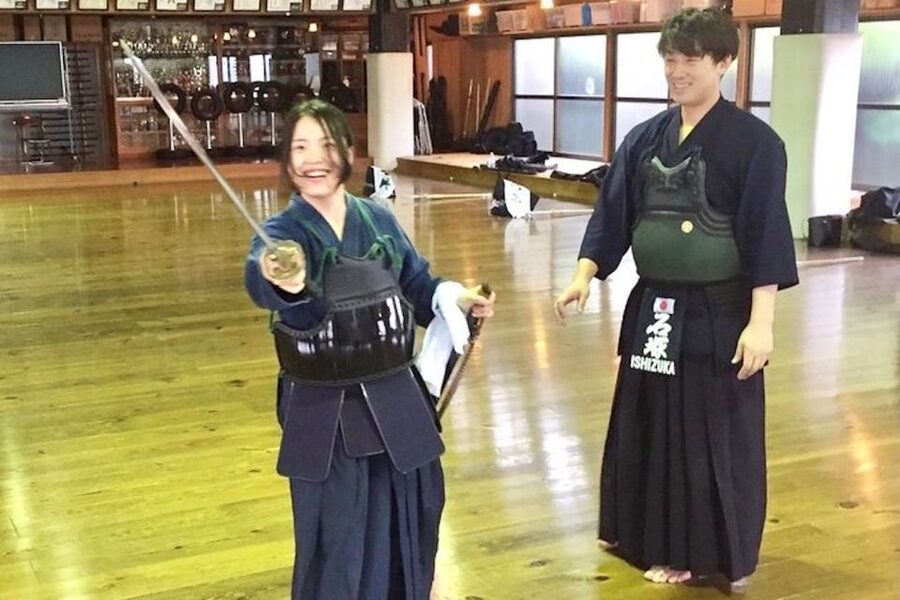
After the initial drills, you put on the Men, the protective face covering used in Kendo. The workshop provides rental Kendo armor and equipment, so you do not need to bring your own protective kit.
Each participant receives a special Kendo towel. You use it when putting on the Men, which is a practical detail and a small keepsake from the experience. The armor also changes the feel of the activity. Your vision narrows, your voice sounds different, and the movements take on a more serious rhythm.
You then practice striking the instructor again, this time with the added sense of wearing the protective equipment. This second round helps connect the earlier lesson with the way Kendo is practiced in armor.
The match-style mini-game follows. It is not presented as a high-level tournament, and the program is designed so beginners can take part. You get a taste of competition without needing years of training.
That distinction is important. If you are hoping for a serious contest against a trained Kendo athlete, this is not that experience. If you want to understand the pressure of facing another person after learning the basics, the mini-game gives you a useful and memorable finish to the practical lesson.
Watching national-level instructors at close range
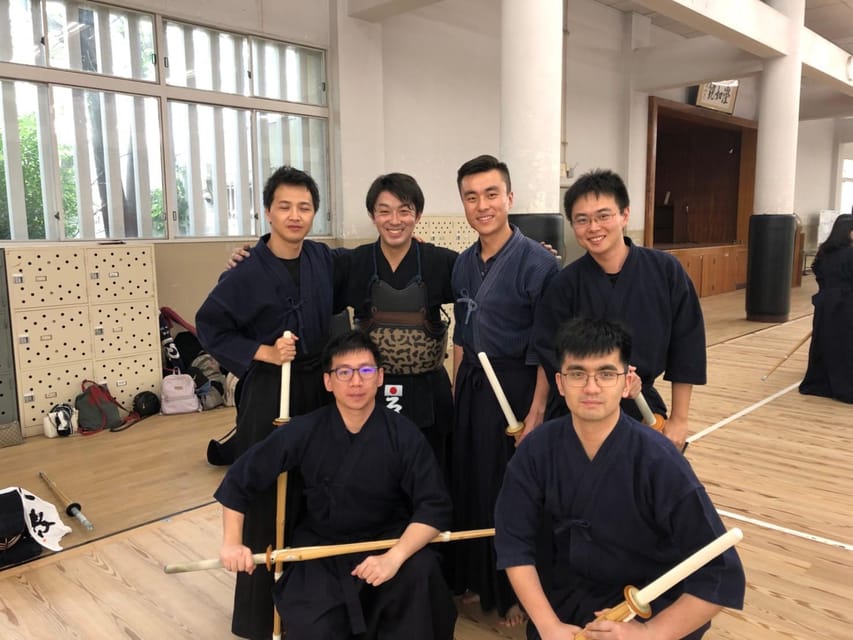
The demonstration is one of the workshop’s best features. National-level instructors perform techniques after you have already learned the basic ideas.
That timing makes the demonstration easier to appreciate. You can recognize the posture, the timing, and the force behind the strikes instead of watching a blur of movements with no context. The difference between your beginner practice and the instructors’ control should be clear, but that contrast is part of the lesson.
You may also notice how much of Kendo depends on precision. The impressive part is not simply that the sword moves quickly. It is the coordination of stance, voice, distance, and timing.
For many people, this will be the most visually exciting section. For others, the hands-on practice will be more important. Either way, the demonstration adds something you cannot get from a basic equipment rental or a short costume session.
The final bow, photographs, and a possible samurai meal
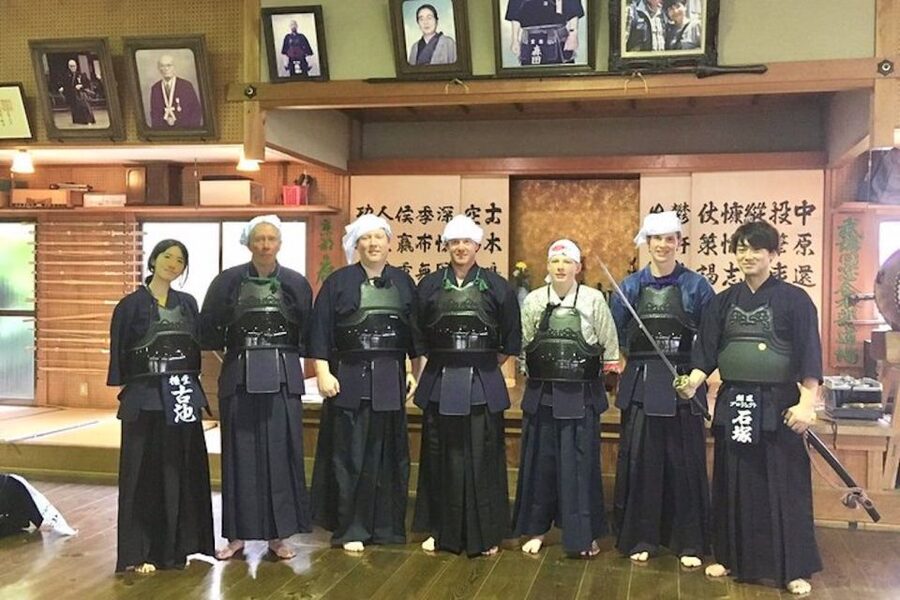
The workshop closes with etiquette and photographs. You have time to record the experience in your Kendo equipment before changing back into your clothes.
The photograph is a fun ending, but it carries more meaning after the lesson. You are not simply wearing armor for a staged image. You have learned the basic manners, handled the bamboo sword, practiced strikes, and taken part in a mini-match.
Afterward, you can visit an izakaya, a Japanese restaurant or drinking spot, though food is not included in the workshop. The information mentions a special Samurai meal on the menu, giving you a themed way to continue the evening.
Alcohol and drugs are not allowed during the activity, so save any drinks for later and follow the dojo’s rules. The izakaya suggestion is optional, not part of the $116 booking, but it could make a pleasant follow-up if you want to keep the evening connected to the theme.
Is $116 per person a fair price?
At $116 per person, this workshop costs more than a quick cultural demonstration or a basic group lesson. The price makes better sense when you count what is included: a professional instructor, rental armor and equipment, mineral water, a Japanese hand towel, cultural explanation, practical training, a mini-match, and national-level demonstrations.
The two-hour duration also matters. You are not paying for a full martial arts course, and you should not expect to become proficient in Kendo during one visit. You are paying for a concentrated introduction with equipment and personal instruction already arranged.
The small group is the key value. If the session is limited to two participants as advertised, you receive far more attention than you would in a large class. That is especially useful when learning posture and striking technique, since small errors are hard to notice on your own.
I would call it good value for someone who wants a hands-on martial arts experience and has room in the budget. It is less suitable if you only want a quick photograph or a low-cost cultural activity.
Who should book, and who should think twice?
This workshop suits adults, older children who meet the minimum age, couples, siblings, and friends who want to learn together. It also works for solo-minded visitors who prefer a small group, though the information says the activity is basically for two people.
You do not need previous Kendo experience. The instructors teach the movements from the start, and the program builds toward the mini-match rather than expecting you to know how to fence with a bamboo sword.
I would especially recommend it if you enjoy activities where manners and technique matter as much as entertainment. The history and culture sections give the physical practice some context, while the demonstrations show where years of training can lead.
Think twice if you dislike protective headgear, repeated physical drills, or formal rules. The session is not suitable for children under nine, pregnant women, people with mobility impairments, or wheelchair users. Pets, alcohol, and drugs are not allowed.
English instruction is available, along with Japanese. That makes the activity practical for international visitors, and the teaching style appears designed to keep explanations simple and usable during movement.
Practical details for a smoother session
Wear something that allows comfortable movement, although the activity includes changing clothes and rental equipment. Since the workshop provides mineral water, you do not need to buy a drink during the session.
Plan around the full two hours rather than treating the listed duration as a rough estimate. You need time for changing clothes, etiquette, instruction, armor, practice, demonstrations, photographs, and changing back.
The booking terms are flexible: you can cancel up to 24 hours ahead for a full refund, and you can reserve now and pay later. Starting times depend on availability, so check the schedule before building the rest of your Osaka day around it.
The meeting point is Shigino Kaikan hall, not your hotel. Allow enough time to reach it, since pickup and drop-off are not part of the activity.
Should you book this Osaka Kendo experience?
Book it if you want to do more than pose as a samurai. The workshop gives you a structured introduction to Kendo, from bowing and manners through sword practice, protective armor, a mini-match, and demonstrations by national-level instructors.
The strongest reason to choose it is the personal teaching. Yamasaki-sensei’s English ability, humor, and careful corrections make the experience approachable while keeping the focus on real technique. The small-group format also helps you feel that you are receiving a lesson, not being moved through a large tourist class.
Skip it if your priority is a cheap, quiet cultural stop or if physical activity is difficult for you. At $116, it is best viewed as a specialized Osaka experience with equipment, instruction, and close personal attention included.
For the right visitor, the final photograph is only the last piece. The better memory is the sound of bamboo, the formal bow, and the sudden feeling that even a beginner can take the first step into Kendo.
FAQ
Where does the Osaka Kendo workshop take place?
The meeting point is 鴫野会館, known as Shigino Kaikan hall. Hotel pickup and drop-off are not included.
How long does the Kendo experience last?
The activity lasts two hours, including changing clothes, etiquette, instruction, sword practice, armor practice, the mini-match, demonstrations, photographs, and changing back.
Is the workshop taught in English?
Yes. The instructors teach in English and Japanese. Yamasaki-sensei is specifically identified as an instructor who can explain the activity in English.
Is Kendo equipment included?
Yes. Rental Kendo armor and equipment are included. Each participant also receives a special Kendo towel for use when putting on the Men, plus free mineral water and a Japanese hand towel.
How many people can join?
The activity is described as a small-group experience limited to two participants, and the information says it is basically arranged for two people.
Can I cancel or pay later?
You can cancel up to 24 hours in advance for a full refund. The reserve-now, pay-later option allows you to book without paying on the day of reservation.
Just added around Osaka
- (Ticket Included) Explore Osaka Castle & Museum of History★ 4.8 · 21 reviews
- Hidden Osaka – Yukaku Red Light Tour & Culinary Adventure★ 4.8 · 96 reviews
- Osaka: Walking Tour and Top Highlights★ 4.8 · 104 reviews
- Osaka: Private Ceramic Painting Workshop★ 5.0 · 13 reviews
- Pickleball in Osaka, Kobe & Kyoto with Locals!★ 4.7 · 80 reviews
- Eat Like a Local in Osaka – Private Custom Street Food Tour★ 4.3 · 33 reviews
- Osaka:SUMO BEATS SHOWCASE: Taiko Drum and Wagyu burger!★ 4.2 · 37 reviews
- Kimono photoshoot-Includes 100 photo data★ 5.0 · 21 reviews
Workshops, compared.
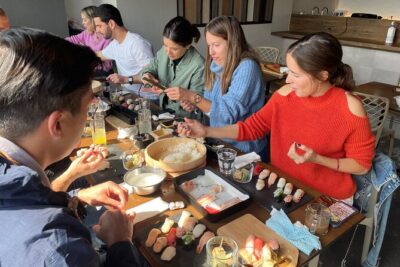
Sushi Making Tokyo Roll and Authentic Japanese Sushi Class
Read our review →
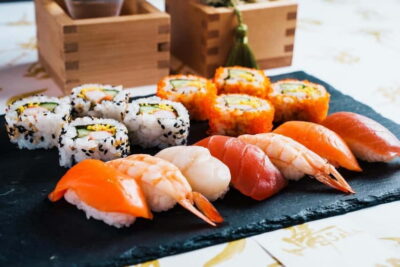
Roll and Authentic Sushi Making Class in Asakusa
Read our review →
Ramen Cooking Class at Ramen Factory in Kyoto
Read our review →
Sushi Making Class in a Happi Coat near a Famous Spot
Read our review →
Sushi Making Osaka Roll and Authentic Japanese Sushi Class
Read our review →
Tokyo Sushi Making Class in Tsukiji with Professional Chef
Read our review →Browse the lists this tour appears in