
REVIEW · KIMONO & CULTURE EXPERIENCES
Ninja experience in Takayama – Special Course
Takayama’s Ninja Cafe turns a short indoor visit into hands-on training: you dress as a ninja, handle traditional-style weapons, and learn simple sword movements rather than just posing for a photo. The authentic iron shuriken gives the activity a satisfying sense of weight and purpose.
I like the mix of physical practice and historical displays, especially the chance to see helmets, swords, and tea utensils while learning about old Japan. I also like that the small group, capped at six people, should give you more room to ask questions and take your turn. The main drawback is its fixed 90-minute format, which may feel brief if your family wants a long cultural lesson.
In This Review
- Key points at a glance
- A hands-on ninja session in central Takayama
- Changing into a ninja outfit
- Historic helmets, swords, and tea utensils
- Shuriken practice with real weight
- Sword iai with a replica blade
- Blowing an arrow and trying more ninja skills
- VR games add a modern finish
- What the $45 price includes
- Who will enjoy this most
- Simple planning advice for your Takayama day
- Should you book the Ninja Experience in Takayama?
- FAQ
- Where does the ninja experience take place?
- How long does the experience last?
- How much does the experience cost?
- What is included in the price?
- Can children join the activity?
- What languages are available?
- Is the activity suitable in bad weather?
Key points at a glance
- Throw an authentic iron shuriken: Try a real metal throwing star under guidance.
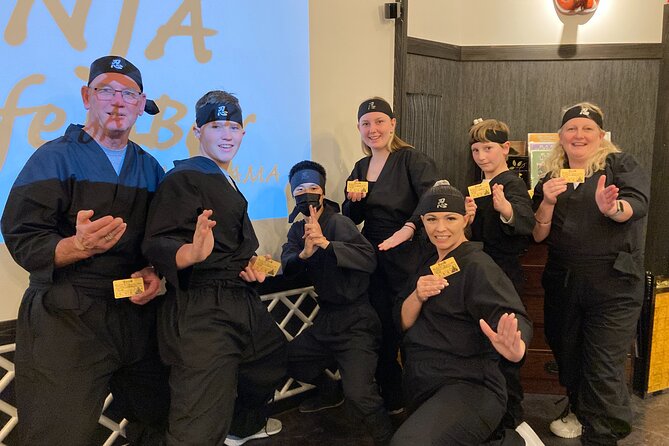
- Wear a full ninja outfit: Change clothes and take photos as part of the experience.
- Practice several ninja skills: Handle a replica sword, work on sword iai, and try blowing an arrow.
- See historic Japanese objects: Helmets, swords, and tea utensils add useful context.
- Small indoor group: Sessions are limited to six people and offered in English or Japanese.
- Good family activity: Children under six cannot take part, but older children and adults can train together.
A hands-on ninja session in central Takayama
Ninja Cafe Takayama offers something different from the usual sightseeing stop. Takayama is known for its historic streets and mountain setting, but this activity gives you a playful way to connect with Japan’s warrior traditions without spending half a day at a museum.
The session lasts 90 minutes. That is long enough to cover several activities, yet short enough to fit around Takayama’s morning markets, old town walks, or a meal. Since everything takes place indoors, it also gives you a useful break if the weather is cold, rainy, or simply tiring after a day in the highlands.
The experience is guided in English or Japanese. No individual instructor names are provided, but the staff lead you through the clothing, weapons, and training activities. The small group limit matters here. With no more than six participants, you should spend less time waiting for a turn than you would in a large activity class.
The tone is clearly family-friendly, but it is not only for children. Adults can enjoy the costume photos, the weapon practice, and the chance to handle objects connected with old Japan. If you are looking for a serious martial arts course, this is not that. Think of it as a structured cultural activity with real objects, safe replicas, and plenty of chances to take part.
More Kimono & Culture Experiences in Takayama
- Ninja Experience in Takayama – Basic Course
★ 5.0 · 62 reviews - Ninja Experience in Takayama – Basic Course
★ 4.6 · 59 reviews - Knife Making Experience in Samurai Sword Town
★ 5.0 · 29 reviews
Changing into a ninja outfit
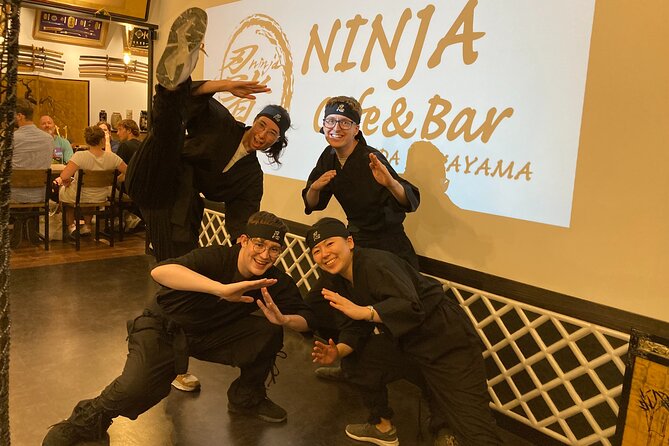
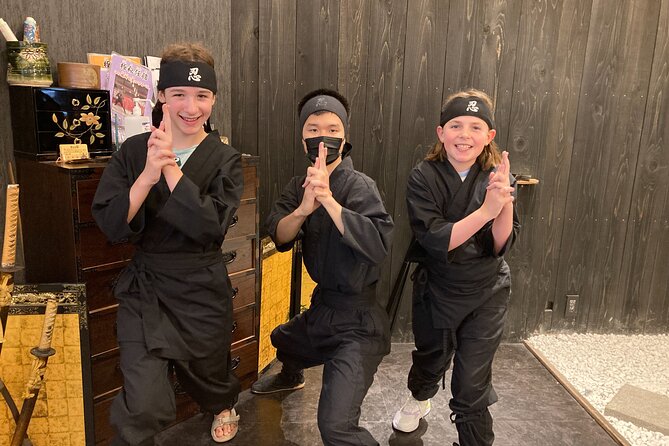
The session begins with the part most children will be waiting for: changing into ninja clothing. Rental clothing is included in the $45 price, so you do not need to arrange a costume in advance.
The outfit makes the photos more memorable than ordinary souvenir snapshots. You can pose in the setting, then move directly into the training activities while still dressed as a ninja. That combination gives the session a clear rhythm: first look the part, then learn what the role involved in popular images of ninja culture.
The clothing also helps turn the visit into a shared family activity. Parents can join the children instead of standing to one side with a camera. Since the group is small, you should have a better chance to take photos without the room feeling crowded, though the supplied information does not promise a dedicated photographer or a set number of photographs.
I would wear comfortable clothes underneath the costume and shoes that let you move easily. The activity takes place indoors, but you are still handling weapons and practicing movements, so comfort is more useful than dressing for a formal meal afterward.
Historic helmets, swords, and tea utensils
Before or during the training, you can see displays of helmets, swords, and tea utensils. These objects provide a helpful link between the playful costume and the wider culture of old Japan.
A helmet and sword can make ninja stories feel familiar, but the tea utensils add a different note. They remind you that old Japanese life was not only about combat. The display gives the staff something concrete to explain as they discuss ninja roles and Japanese history.
This part is likely to interest adults who want more than a dress-up photo. It does not turn the activity into a full museum visit, and there is no detailed exhibition schedule provided. Still, the objects help set the scene before you begin handling training equipment.
I like this balance. You get a quick look at historical items, then move into activities that make the visit active. That is often a better fit for families than asking children to spend the whole afternoon reading labels.
Shuriken practice with real weight
The shuriken session is one of the most distinctive parts of the course. You get to try throwing an authentic iron shuriken under instruction, rather than using only a soft toy or a purely decorative prop.
The word authentic matters here because iron has weight. It should make the exercise feel more like a skill to learn, even though this remains a controlled activity for visitors. The instructor guides you through the process, and you take your turn within the small group.
Do not expect instant accuracy. The fun is in seeing how the object travels and adjusting your technique. For children, this is likely to be the most exciting section. Adults may find it surprisingly tricky, which can make the activity more enjoyable for everyone.
Safety instructions and exact throwing arrangements are not provided, so you should follow the staff closely and wait until you are told to step forward. The course is not designed as an advanced weapons lesson. It is a supervised introduction that gives you a physical sense of one famous ninja tool.
Same city, a completely different kind of day:
- Kanazawa: World Heritage Shirakawa-go Morning Guided Tour
★ 4.9 · 988 reviews - Kanazawa: World Heritage Shirakawa-go & Two Local Experience
★ 4.9 · 274 reviews - Kanazawa/Takayama: Shirakawago & Takayama Private Day Tour
★ 4.8 · 172 reviews - Departing from Takayama [Regular sightseeing bus] World Heritage Sites Shirakawago and Gokayama Ainokura
★ 4.5 · 137 reviews
Sword iai with a replica blade
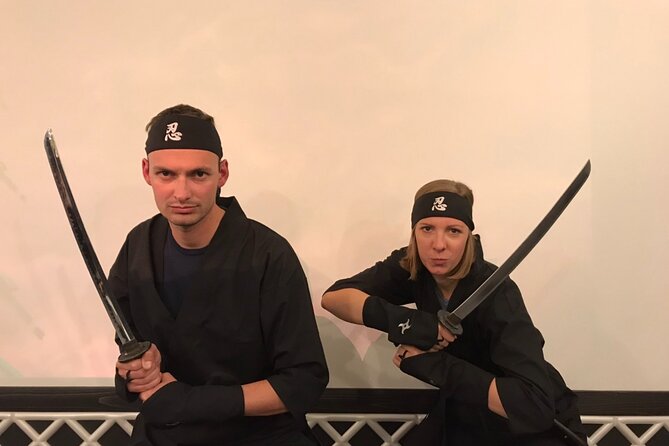
The sword section uses a replica sword, not a live blade. That is the right choice for a short visitor activity, especially when adults and children are training in the same room.
You may practice sword iai, a controlled drawing and movement form. The course description explains that this is kata training using blades and an important part of real ninja training, but the equipment used here is an imitation sword. The point is posture, movement, and learning the shape of the exercise, not combat.
This section may appeal most to adults who enjoy martial arts or Japanese history. It also gives children a chance to slow down after the faster excitement of shuriken throwing. You will need to pay attention to the instructor’s directions and leave enough space around you for the movements.
The sword lesson is best understood as a taste of training rather than a qualification or formal martial arts class. The 90-minute schedule leaves time for several activities, so the sword work cannot be an extended technical course. It does, however, add substance to the costume experience.
Blowing an arrow and trying more ninja skills
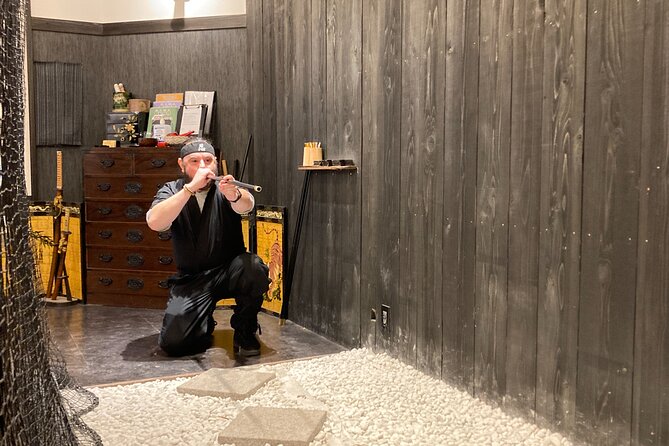
The session also includes an activity described as blowing an arrow. This gives you another way to explore the tools associated with ninja stories, alongside the shuriken and sword exercises.
The information does not specify the exact equipment or the amount of time spent on this part, so you should expect a short guided trial rather than a long lesson. That is a useful distinction when deciding if the $45 cost matches your expectations.
The range of activities is one of the course’s strongest features. If one skill does not suit you, you still have sword practice, costume photos, displays, and VR games to enjoy. A single-focus shuriken lesson might disappoint someone who wants variety, but this format keeps the pace moving.
The activities also work well for mixed-age groups. An adult may enjoy the sword form, a child may prefer the throwing practice, and everyone can take part in the costume portion. Children under six are not suitable for the experience, so families with younger children will need another plan for them.
VR games add a modern finish
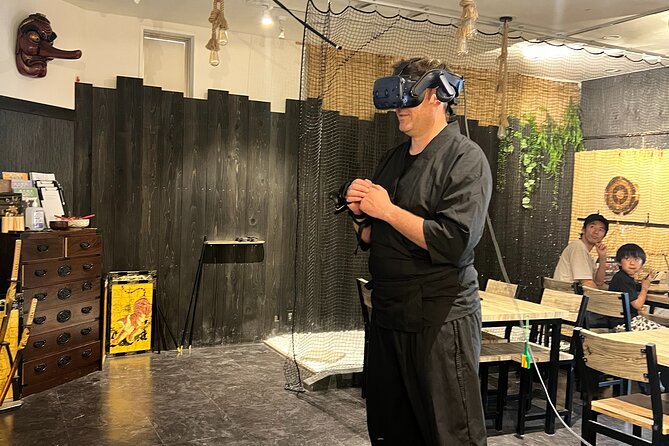
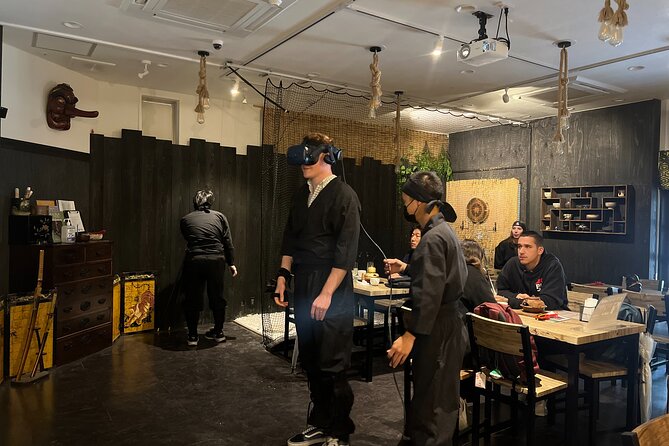
VR games are included in the price. They bring a modern arcade-style element into a session otherwise built around historical objects and traditional weapons.
This may sound like an unusual pairing, but it can help keep the activity lively for children who enjoy technology as much as history. It also gives you another option if physical training is not your favorite part of the session.
The supplied details do not identify the VR game or explain how long you will play. You should therefore treat it as an extra part of the course, not the main reason to book. The strongest reason to choose this activity is the combination of costume, guided training, and weapon practice.
For parents, the VR section can be a useful change of pace. The session does not ask you to concentrate on one type of activity for the full 90 minutes, and that variety reduces the chance of younger participants losing interest.
What the $45 price includes
At $45 per person, the price is reasonable if you plan to use most of the included activities. Your fee covers:
- Ninja clothes rental
- Entrance
- One drink
- Guided ninja training with weapons
- VR games
The drink is a small but welcome addition, especially if you are fitting the visit between walks around Takayama. Snacks are not included, so do not count on this as a meal stop. The cafe can also serve as a rest point, but you should budget separately if you want food.
Value depends on your priorities. If you only want a quick costume photo, the price may feel high. If you want a 90-minute activity with several hands-on sections, clothing, instruction, a drink, and VR, the package makes more sense.
There is no hotel pickup or drop-off. You need to make your own way to the facility in Takayama, which is worth remembering when planning a day trip from elsewhere in Gifu Prefecture or from Nagoya. The activity is most convenient if you are already spending time in Takayama.
Who will enjoy this most
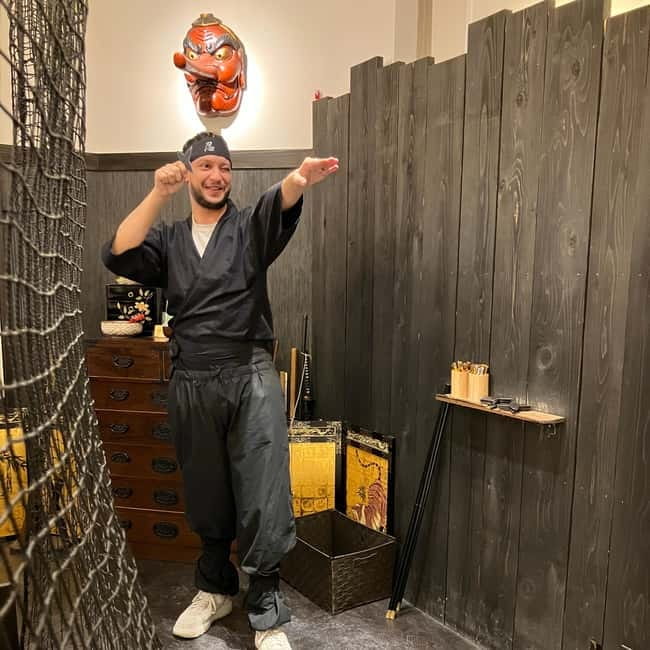
I would recommend this to families with children aged six and older, couples looking for a light cultural activity, and adults who enjoy Japanese history without wanting a long lecture.
It is also a good choice for a rainy day. Since the whole session is indoors, you do not need to worry about outdoor conditions affecting the training or photographs. That makes it especially useful during a multi-day Japan itinerary when you want one planned activity that is not weather-dependent.
The activity received a 4.9 rating from 13 reviews, with repeated praise for the fun atmosphere, friendly staff, and the chance to learn different ninja combat methods. One especially useful point is that people found the full set of activities worth paying for, rather than viewing the session as only a photo opportunity.
You may want to skip it if you dislike dressing up, prefer quiet museum visits, or want advanced martial arts instruction. The training is introductory and recreational. It offers a memorable taste of ninja culture, not a deep technical study.
Simple planning advice for your Takayama day
Allow the full 90 minutes, even if the activity sounds compact. Changing clothes, listening to instructions, taking photos, and waiting for turns all form part of the experience.
Because the group is limited to six, booking ahead is sensible if your Takayama schedule is tight. Starting times vary, so check availability when you choose your date. You can reserve and pay later, and cancellation is free up to 24 hours in advance for a full refund.
The session is offered in English and Japanese. If you are not comfortable with either language, the physical demonstrations may still make the activities easy to follow, but no other language option is listed.
Keep your larger sightseeing plan flexible around the visit. Takayama rewards slow walking, and you may not want to rush from the old town to a fixed start time. On the other hand, the 90-minute length makes it easier to place the Ninja Cafe between other stops than a full-day excursion.
Should you book the Ninja Experience in Takayama?
Book it if you want an indoor, hands-on activity that combines Japanese objects, costume photos, simple weapon training, and VR games. The small group and included clothing make the session feel more personal than a quick photo stop, while the 90-minute length keeps it manageable.
The best value comes when your group participates in everything: shuriken throwing, sword iai, blowing an arrow, costume photos, and VR. If that sounds like your kind of afternoon, $45 is a fair price for the variety and guidance.
Skip it if you want a serious martial arts course or a large museum collection. For families, first-time visitors to Japan, and anyone needing a fun indoor break in Takayama, this is an easy activity to recommend.
FAQ
Where does the ninja experience take place?
It takes place indoors at Ninja Cafe Takayama in Takayama, Gifu Prefecture, Japan.
How long does the experience last?
The session lasts 90 minutes.
How much does the experience cost?
The listed price is $45 per person.
What is included in the price?
The price includes ninja clothes rental, entrance, one drink, ninja training with weapons, and VR games.
Can children join the activity?
Children under six are not suitable for the experience. The activity is designed for adults and older children.
What languages are available?
The instructor support is available in English and Japanese.
Is the activity suitable in bad weather?
Yes. The ninja experience takes place indoors, so weather does not affect the training session.
Just added around Takayama
- Takayama: Takayama Jinya & Old Town Private Walking Tour★ 4.5 · 32 reviews
- Takayama: Private Night Walking Tour with Dinner★ 4.5 · 13 reviews
- Takayama: Private Walking Tour with a Local Guide★ 4.6 · 29 reviews
- Takayama Private Custom Tour with Local Guide★ 5.0 · 31 reviews
- Takayama: Onigiri and miso soup making at a buddhist temple★ 4.9 · 93 reviews
- Takayama: Edo-Period Old Town Walking Tour★ 4.5 · 22 reviews
- Shirakawago&HidaTakayama&GujoHachiman 1 Day Tour from Nagoya★ 4.5 · 14 reviews
- Sake Tasting: Educational Tour of Six Takayama Breweries★ 5.0 · 14 reviews
Kimono & Culture Experiences, compared.
Kyoto Geisha Walking Tour: Gion District & Hidden Gems
Read our review →
Gion Magical Night Walking Tour with Geisha Trivia
Read our review →
Gion Geisha District Walking Tour – Stories of Geisha
Read our review →
Best of Kyoto: Gion, Geisha, Pagodas & Cobblestones
Read our review →

Kyoto Gion Geisha District Walking Tour – The Stories of Geisha
Read our review →
Browse the lists this tour appears in