
REVIEW · KIMONO & CULTURE EXPERIENCES
Knife Making Experience in Samurai Sword Town
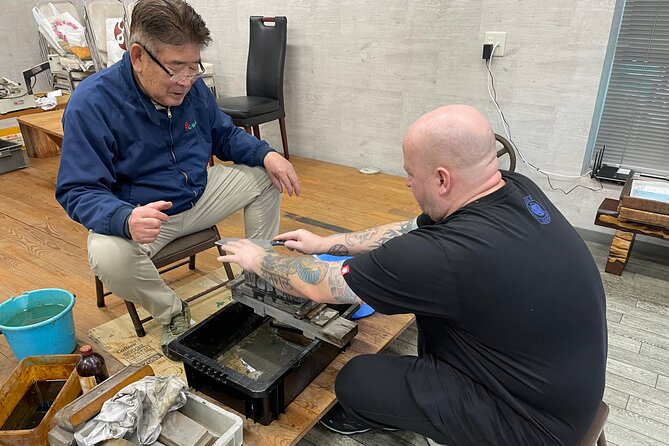
Seki is one of Japan’s best places to make a knife, not just buy one. On this private half-day outing, master bladesmiths with more than 50 years of experience guide you through polishing, sharpening, engraving, and assembling a Damascus kitchen knife. You finish by testing it on fresh vegetables, which gives the craft a practical payoff.
I like the hands-on work and the chance to leave with a one-of-a-kind knife rather than a factory souvenir. I also like the mix of workshop time, sword history, local cutlery, and Zen Buddhist tradition. The main consideration is price: at $316.27 per person, this is a serious spend for five hours, so it makes the most sense if you care about knives, Japanese craftsmanship, or an unusual cultural activity.
In This Review
- What makes this Seki experience special
- Why Seki is the right place to make a knife
- Two hours at the Knife Museum
- The Seki Swordsmith Museum and the story behind the blade
- Gifu Cutlery Hall in 30 minutes
- Seki Zenko-ji Temple and the final hour and a half
- What the $316.27 price really covers
- The guides shape the day
- Timing, transport, and who should book
- The useful extras you take home
- Cancellation and booking advice
- Should you book the Seki knife-making experience?
- FAQ
- Where does the knife-making experience begin?
- What time does the activity start?
- Where does the experience end?
- How long does the experience last?
- Is pickup available?
- Is the activity private?
- What will I do during the knife-making session?
- What else is included besides the knife-making?
- Do I receive anything to take home?
- Can I cancel for a full refund?
What makes this Seki experience special
- You make a Damascus kitchen knife: Polish, sharpen, engrave, and assemble your own blade under direct instruction.
- Veteran hosts lead the session: Sumio, Yoshi, and Hiro bring decades of knife-making experience, clear instruction, and a relaxed sense of humor.
- You test the finished knife: Fresh vegetables provide a simple, satisfying way to check the blade’s sharpness.
- Seki’s sword tradition comes alive: The Swordsmith Museum connects modern cutlery with sword production dating to the 13th century.
- Several extras are included: You receive a Japanese lunch, signed certificate, and, while supplies last, a handcrafted mini knife.
- The outing stays private: Only your own group participates, with pickup offered and the day beginning and ending at Sekitomioka Station.
Why Seki is the right place to make a knife
Seki City, in Gifu Prefecture, has been linked with sword production since at least the 13th century. That long connection explains why this is more than a generic kitchen activity moved into a workshop for tourists. The city still has a strong cutlery industry, and modern knife-making carries techniques shaped by its swordsmithing past.
The experience also places you in a part of Japan that many visitors skip. Kyoto is roughly 1.5 to 2 hours away by train, making Seki possible as a day trip, though you will need to allow enough time for the rail journey on both ends. The meeting point is Sekitomioka Station at 10:30 a.m., and the activity returns there at the end.
I would choose this outing for a day when the process matters more than checking off a long list of sights. You are not simply shown a finished blade. You work on it, make decisions about its appearance, and take responsibility for the final result.
More Kimono & Culture Experiences in Takayama
- Ninja Experience in Takayama – Basic Course
★ 5.0 · 62 reviews - Ninja Experience in Takayama – Basic Course
★ 4.6 · 59 reviews - Gifu Samurai Sword Town;Japanese Damascus Knife Making Experience
★ 5.0 · 27 reviews
Two hours at the Knife Museum
The first stop is the Knife Museum, where the main making session takes place. The museum also displays unusual knives from around the world, giving you a useful comparison before or after your own work.
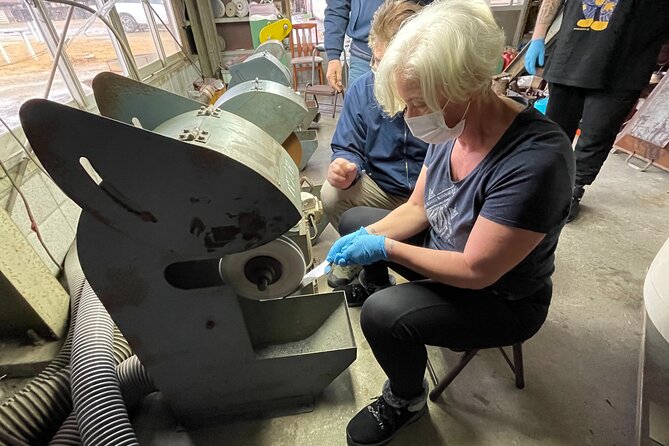
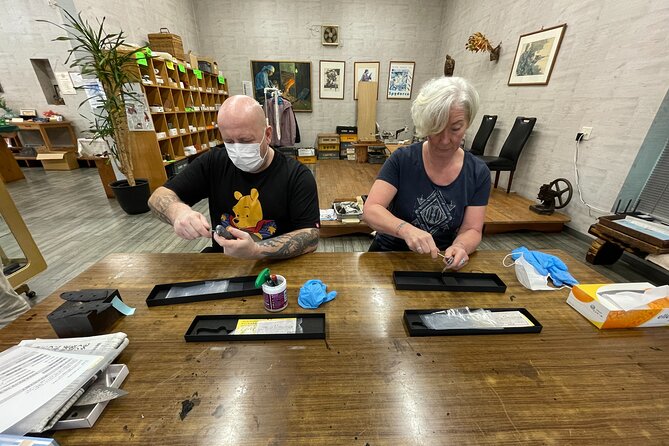
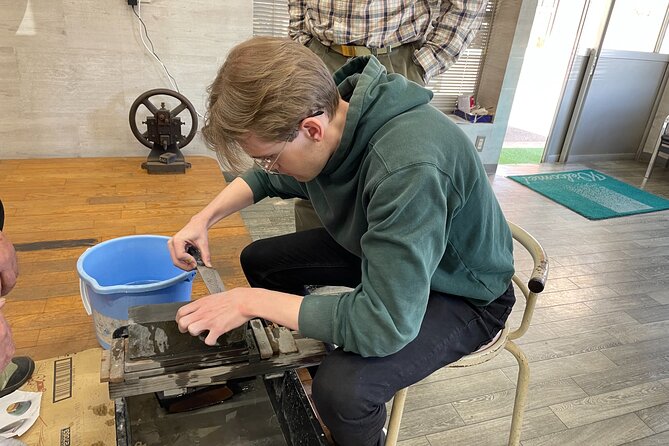
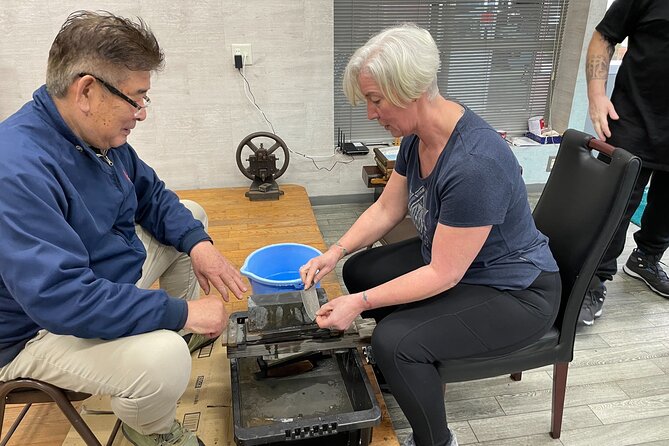
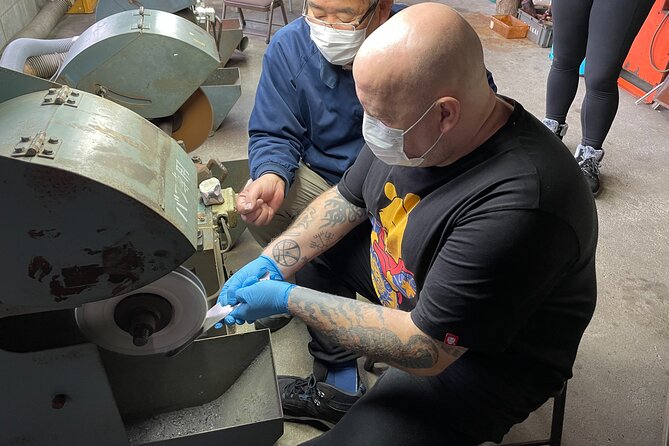
The knife-making portion includes polishing, sharpening, engraving, and assembly. These are the parts of the process listed for the activity, so expect careful finishing work rather than a full blacksmithing demonstration with molten steel and hammering. That distinction matters. If you want to forge a blade from raw metal, this is not presented as that kind of class. If you want to finish a professional Damascus kitchen knife with expert help, it is a much better match.
A master bladesmith with more than 50 years of experience guides the work. The hosts named for the activity are Sumio, Yoshi, and Hiro, with Sumio and Yoshi described as brothers Sakai. Their role is central. You are handling sharp tools and a blade, so clear instruction and patient supervision matter more than a grand presentation.
The session is also personal in a way a standard museum visit cannot be. You engrave your own knife, creating a lasting mark that turns it from a purchased object into a personal memento. The final knife is meant to be used, not just displayed, and you test its sharpness on fresh vegetables before leaving.
One practical point: the activity is private, but the number of people in your own booking can still affect the rhythm of the workshop. A small group should offer plenty of direct attention. A larger private group may mean that some steps take longer, though the hosts continue to guide the process.
The Seki Swordsmith Museum and the story behind the blade
After the workshop, you spend about an hour at the Seki Swordsmith Museum. This stop gives useful context to the knife in your hands. Seki developed as a major sword-making center as early as the 13th century, and the museum explains the place of samurai swords in Japanese history.
I like this sequence. Seeing the museum after working on a blade helps you notice details you might otherwise miss. You have already felt how much care goes into a small section of a knife. The museum then gives that work a wider setting, showing how sword production shaped local identity and technique.
This is not just a samurai-themed photo stop. It helps explain why Seki became a cutlery center and why the town still treats blade-making as a serious local craft. If your interest is mainly food, the museum adds a useful historical layer. If your interest is samurai culture, it may be one of the most important parts of the day.
The listed timing is about one hour. That is enough for an introduction, but not a full study of every object or period. You should see this as a focused museum visit paired with the workshop, not as an all-day sword research program.
Gifu Cutlery Hall in 30 minutes
The next stop is Gifu Cutlery Hall, with about 30 minutes to look around. Seki is identified as one of the world’s three major cutlery-producing regions and has Japan’s highest cutlery production volume. The hall shows how the local tradition continues beyond swords and into everyday kitchen and household tools.
This stop is brief, but it gives you a chance to think about the knife you have just made beside the wider range of goods produced in the area. The museum explains the old skills. The hall shows the modern commercial side.
Do not expect the same slow, hands-on pace as the workshop. Thirty minutes is a short visit, and admission is free. It works best as a compact look at Seki’s current cutlery identity rather than a major standalone attraction.
Same city, a completely different kind of day:
- Kanazawa: World Heritage Shirakawa-go Morning Guided Tour
★ 4.9 · 988 reviews - Kanazawa: World Heritage Shirakawa-go & Two Local Experience
★ 4.9 · 274 reviews - Kanazawa/Takayama: Shirakawago & Takayama Private Day Tour
★ 4.8 · 172 reviews - Departing from Takayama [Regular sightseeing bus] World Heritage Sites Shirakawago and Gokayama Ainokura
★ 4.5 · 137 reviews
Seki Zenko-ji Temple and the final hour and a half
The final listed stop is Seki Zenko-ji Temple, where you spend about 1 hour and 30 minutes. The temple’s foundation dates to the mid-18th century. Two features are specifically noted: the Great Bell and the Kaidan tour, a traditional feature associated with Japanese history and religious practice.
You can try ringing the bell, adding a small physical moment to what has otherwise been a day of close work and museum viewing. The temple gives the schedule a change of pace. After concentrating on a blade, you have time for a quieter cultural stop.
The temple visit may appeal most if you want more than a technical workshop. It rounds out the day with religious architecture and local tradition. If your only goal is to make a knife as quickly as possible, the extra sightseeing will make the experience feel longer. Since the total duration is about five hours, the temple is part of the value for people who want a broader Seki visit.
What the $316.27 price really covers
The cost is $316.27 per person, which puts this well above a casual museum tour or ordinary cooking class. You should judge the price by what you take part in, not just by the five-hour duration.
The package includes the personal Damascus knife-making session, admission to the Knife Museum and Seki Swordsmith Museum, the Japanese lunch, and the private guide service. You also receive a signed certificate of completion. A handcrafted mini knife is offered as a limited-time bonus, so I would treat that as a welcome extra rather than something to depend on forever.
The strongest value is the knife itself and the instruction behind it. A finished blade made with your own hands has more meaning than a souvenir purchased from a shop, especially when you can point to the polishing, sharpening, engraving, and assembly as work you completed.
The price is easier to justify if you already collect knives, enjoy cooking, follow samurai history, or want a special activity outside the usual Tokyo, Kyoto, and Osaka route. It is harder to justify if you are looking for the least expensive way to see Seki or if you have little interest in blades.
Lunch also matters. You do not need to arrange a separate meal during the five-hour schedule, and the included food gives the day a more complete shape. Still, no details are provided about the menu, so you should not book based on a specific dish.
The guides shape the day
The people leading this experience are a major part of its appeal. Sumio, Yoshi, and Hiro are repeatedly singled out for being kind, humorous, and clear in their instruction. Sumio and Yoshi are brothers, and their family connection to the work gives the session a friendly, informal feel.
That tone can make a big difference when you are learning a precise skill. You need enough correction to handle the knife properly, but you also want room to enjoy the process. The hosts are described as passionate about knife-making and willing to share their experience, so you can expect conversation and explanation alongside the practical steps.
One useful lesson from the available feedback is that the instruction remains important even when the group is not tiny. A larger group can make the workshop less quick and intimate, but the hosts still walk participants through the stages. If you want the most individual attention possible, ask about the size of your private group before booking.
Timing, transport, and who should book
The meeting point is Sekitomioka Station, Hidase, Seki, Gifu 501-3911. The start time is 10:30 a.m., and the activity finishes back at the same meeting point. Pickup is offered, but the supplied details identify the station as the start and end location, so confirm pickup arrangements when you book.
Seki can be reached by train from Kyoto in roughly 1.5 to 2 hours. That makes this possible as a day trip, but it is not a quick side excursion from central Kyoto. Check your morning train connection carefully, since arriving late could reduce your workshop time. One person even arrived late and still had a good experience, but I would not plan around that generosity.
Most people can participate, and the activity is near public transportation. No special fitness requirement is listed. You should be comfortable handling a knife under instruction and staying focused during the practical work.
This suits:
- Knife collectors and home cooks
- People fascinated by samurai swords
- Visitors who prefer making something to watching a demonstration
- Couples, families, or friends booking a private activity
- Anyone seeking a cultural day trip from Kyoto
It may not suit you if you want a full sword-forging lesson, a very short activity, or a low-cost sightseeing tour.
The useful extras you take home
The main souvenir is your Damascus kitchen knife. Because you polish, sharpen, engrave, and assemble it, the object carries a personal connection that a store-bought blade does not. The activity also includes a signed certificate of completion, which helps mark the work as a formal craft experience.
The mini knife is a particularly nice addition, but availability is limited. Ask about it at booking or early in the experience if it matters to you. The wording makes clear that it is a limited-time bonus, not a guaranteed permanent feature.
You also take home a better understanding of Seki’s cutlery culture. The museums and hall are not filler between workshop steps. They explain how a small kitchen tool connects to a much older local tradition of sword and blade production.
Cancellation and booking advice
Confirmation is sent at booking. Free cancellation is available if you cancel at least 24 hours before the 10:30 a.m. start time. Canceling or changing the booking less than 24 hours ahead is not accepted for a refund, and cut-off times follow local Japanese time.
I would reserve this on a day when you can protect the entire schedule. The train ride from Kyoto requires planning, and the outing ends at the station after the temple visit. Since only your own group participates, it is also worth checking that every member wants both the workshop and the cultural stops.
Should you book the Seki knife-making experience?
Book it if you want a substantial souvenir, enjoy working with your hands, and see value in meeting craftspeople rather than simply shopping for Japanese goods. The combination of a personal Damascus knife, veteran instruction, sword history, cutlery displays, lunch, and a temple visit gives you a full picture of Seki in about five hours.
Skip it if $316.27 feels too high for a half-day outing or if you want to forge a sword from raw steel. This is a finishing and assembly experience, not a complete swordsmith apprenticeship.
For the right person, the cost buys more than a knife. It buys time with Sumio, Yoshi, and Hiro, a direct link to Seki’s blade-making tradition, and an object you helped create. That is a strong reason to make the journey from Kyoto.
FAQ
Where does the knife-making experience begin?
It begins at Sekitomioka Station in Hidase, Seki, Gifu 501-3911, Japan.
What time does the activity start?
The scheduled start time is 10:30 a.m.
Where does the experience end?
The activity ends back at the meeting point, Sekitomioka Station.
How long does the experience last?
The total duration is approximately five hours.
Is pickup available?
Pickup is offered. The listed meeting point is Sekitomioka Station, so confirm the pickup details when booking.
Is the activity private?
Yes. Only your own group participates in the private activity.
What will I do during the knife-making session?
You will polish, sharpen, engrave, and assemble a Damascus kitchen knife, then test its sharpness on fresh vegetables.
What else is included besides the knife-making?
The schedule includes visits to the Seki Swordsmith Museum, Gifu Cutlery Hall, and Seki Zenko-ji Temple. A Japanese lunch and admission to the Knife Museum and Swordsmith Museum are also included.
Do I receive anything to take home?
You receive your finished Damascus kitchen knife and a signed certificate of completion. A handcrafted mini knife is also offered as a limited-time bonus while available.
Can I cancel for a full refund?
Yes, if you cancel at least 24 hours before the experience start time. Cancellations or changes made less than 24 hours before the start are not refunded or accepted.
Just added around Takayama
- Takayama: Takayama Jinya & Old Town Private Walking Tour★ 4.5 · 32 reviews
- Takayama: Private Night Walking Tour with Dinner★ 4.5 · 13 reviews
- Takayama: Private Walking Tour with a Local Guide★ 4.6 · 29 reviews
- Takayama Private Custom Tour with Local Guide★ 5.0 · 31 reviews
- Takayama: Onigiri and miso soup making at a buddhist temple★ 4.9 · 93 reviews
- Takayama: Edo-Period Old Town Walking Tour★ 4.5 · 22 reviews
- Shirakawago&HidaTakayama&GujoHachiman 1 Day Tour from Nagoya★ 4.5 · 14 reviews
- Sake Tasting: Educational Tour of Six Takayama Breweries★ 5.0 · 14 reviews
Kimono & Culture Experiences, compared.
Kyoto Geisha Walking Tour: Gion District & Hidden Gems
Read our review →
Gion Magical Night Walking Tour with Geisha Trivia
Read our review →
Gion Geisha District Walking Tour – Stories of Geisha
Read our review →
Best of Kyoto: Gion, Geisha, Pagodas & Cobblestones
Read our review →
Kyoto Gion Geisha District Walking Tour – The Stories of Geisha
Read our review →
Browse the lists this tour appears in