
REVIEW · KIMONO & CULTURE EXPERIENCES
Gifu Samurai Sword Town;Japanese Damascus Knife Making Experience
Seki’s centuries-old blade-making tradition becomes wonderfully practical in this small-group knife workshop. You do not just admire Japanese cutlery behind glass. You assemble, polish, sharpen, and sign your own Damascus knife, then cut fresh vegetables with it.
I especially like the visit to the G.SAKAI Knife Museum and the chance to see present-day factory production before working at the atelier. I also like the patient, personal hosting from Hiro, Sumi, and Yoshi, with a maximum of five participants. The main drawback is the out-of-the-way setting, and the roughly $250 starting price is a serious spend for a two-and-a-half-hour activity.
In This Review
- Key Points
- Why Seki Is the Right Place for a Knife Workshop
- Meeting Hiro, Sumi, and Yoshi
- Inside the Canadian-Style Knife Museum
- Seeing How G.SAKAI Makes Knives Today
- Choosing Between Three Damascus Knives
- Assembling and Personalizing Your Knife
- Learning to Sharpen Instead of Just Buying Sharp
- Cutting Fresh Vegetables With Your Finished Blade
- Is the $250.38 Price Worth It?
- Making This a Day Trip From Kyoto
- Who Will Get the Most From This Activity?
- Practical Booking Advice
- Should You Book the Seki Knife Workshop?
- FAQ
- Where does the knife-making experience start?
- What time does the activity begin?
- How long does the experience last?
- Where does the activity end?
- Is hotel pickup available?
- How many people can join?
- What types of knives can I make?
- Can I test the knife after making it?
- Can I cancel for a full refund?
Key Points
- Forge a useful keepsake: Choose a Japanese Damascus kitchen knife, folding Damascus hunting knife, or Chinese Damascus kitchen knife.
- See Seki’s blade tradition up close: The museum covers cutlery from Japan and around the world, while the factory shows modern Japanese knife production.
- Finish the knife yourself: Assemble, polish, sharpen, and write your name on the blade with guidance from a knife craftsman.
- Test the edge: Cut fresh vegetables after sharpening to see what your finished knife can do.
- Keep the group tiny: The activity accepts no more than five participants, making it easier to receive hands-on help.
- Plan the journey: The meeting point is at Sekitomioka Station, about 1.5 to 2 hours by train from Kyoto, with pickup also offered.
Why Seki Is the Right Place for a Knife Workshop
Seki City has been making blades since at least the 13th century. Iron sand from the Nagaragawa River helped early sword makers establish their craft here, and the city later became a major center for samurai swords and knives during the Edo period.
At one point, several hundred blacksmiths worked in Seki. The samurai sword trade has passed, but the city remains a major cutlery center. Along with Sheffield in the United Kingdom and Solingen in Germany, Seki is widely regarded as one of the world’s leading places for knife manufacturing.
That background gives this activity more weight than a generic souvenir class. You are working in a city where blade production is part of the local identity, not simply attending a demonstration created for a day trip.
The connection is especially clear at G.SAKAI, a Japanese knife producer whose products are sold internationally. Its knives are used for cooking, hunting, outdoor sports, and other professional purposes. The workshop lets you see both sides of that work: the factory’s modern production and the careful hand-finishing that makes your own knife personal.
More Kimono & Culture Experiences in Takayama
- Ninja Experience in Takayama – Basic Course
★ 5.0 · 62 reviews - Ninja Experience in Takayama – Basic Course
★ 4.6 · 59 reviews - Knife Making Experience in Samurai Sword Town
★ 5.0 · 29 reviews
Meeting Hiro, Sumi, and Yoshi
The human side of the workshop matters. Hiro, Sumi, and Yoshi are identified as the main hosts, and the experience is designed around direct help rather than a large class format.
Hiro is noted as speaking English well. Pickup may also be available, and one arrangement described by a participant included Hiro collecting them from their hotel and later taking them to the sword museum and a local sword shop. Because pickup details can vary, confirm the exact location and timing when you book.
The official meeting point is Sekitomioka Station in Seki, Gifu, with a 10:30 am start. The activity ends back at the meeting point. Nearby public transportation makes the station a sensible arrival point, but this is not a stop you should treat casually. The setting is described as off the beaten track, so allow enough time for the train journey and finding the meeting point.
The small group limit of five is one of the strongest practical features. Knife work calls for close instruction, particularly when you are sharpening or handling a newly finished edge. A crowded class could turn those steps into a quick demonstration. Here, you have a better chance to ask questions and receive help at the right moment.
Inside the Canadian-Style Knife Museum
The first stop is the Knife Museum, housed in an attractive Canadian-style log building beside the G.SAKAI factory. The building itself gives the visit a little character, but the exhibits are the real reason to pause here.
You will see rare items and cutlery from around the world. This helps place Japanese knives in a wider setting. A good knife is not only a Japanese idea, and the museum gives you a chance to compare different forms, purposes, and traditions before starting your own work.
The museum also prepares you for the choices ahead. You are not simply selecting a pattern from a menu without context. You have already seen that knives can serve very different purposes, from kitchen preparation to hunting and outdoor use.
Do not expect a long museum visit with a full historical tour. The entire activity lasts about 2 hours and 30 minutes, so the museum is one part of a compact schedule. Its value is in giving meaning to the workshop and showing the range of cutlery made and used around the world.
Seeing How G.SAKAI Makes Knives Today
After the museum, you enter the factory to see how Japanese knives are produced in modern conditions. This is an important step because it connects traditional Seki craftsmanship with current manufacturing.
The activity description does not promise a full factory tour of every production stage, so you should think of this as a focused look at quality knife production rather than an industrial sightseeing visit. Still, seeing the working environment before making your own knife gives you a useful point of comparison.
Your knife will not be made from start to finish in the same way as a large commercial production run. Instead, your workshop centers on the final hands-on work: assembling, polishing, sharpening, and adding your name. That distinction matters. You are not replacing the factory, but you are taking part in the finishing process.
I like this balance. You get the practical side of a working knife maker and the personal satisfaction of creating something yourself. The activity does not ask you to pretend that a short workshop equals years of blacksmith training. It gives you a manageable, authentic slice of the craft.
Same city, a completely different kind of day:
- Kanazawa: World Heritage Shirakawa-go Morning Guided Tour
★ 4.9 · 988 reviews - Kanazawa: World Heritage Shirakawa-go & Two Local Experience
★ 4.9 · 274 reviews - Kanazawa/Takayama: Shirakawago & Takayama Private Day Tour
★ 4.8 · 172 reviews - Departing from Takayama [Regular sightseeing bus] World Heritage Sites Shirakawago and Gokayama Ainokura
★ 4.5 · 137 reviews
Choosing Between Three Damascus Knives
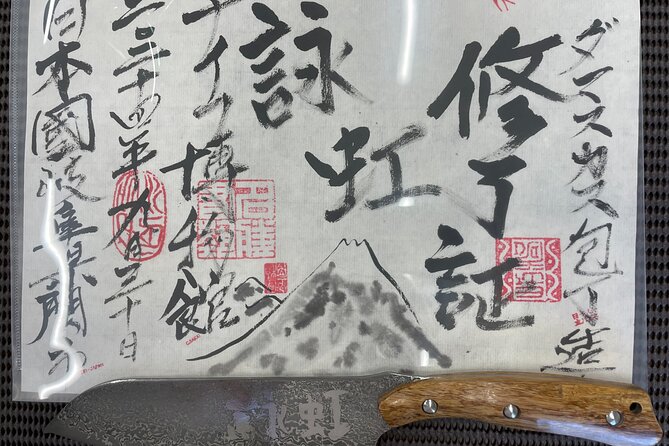
You can choose among three knife types, and the price changes according to your selection. Confirm the exact cost of each option before making your final choice.
Japanese Damascus kitchen knife: This is the most natural pick for everyday cooking. It should suit you best if you want a useful home knife rather than a display piece or outdoor tool.
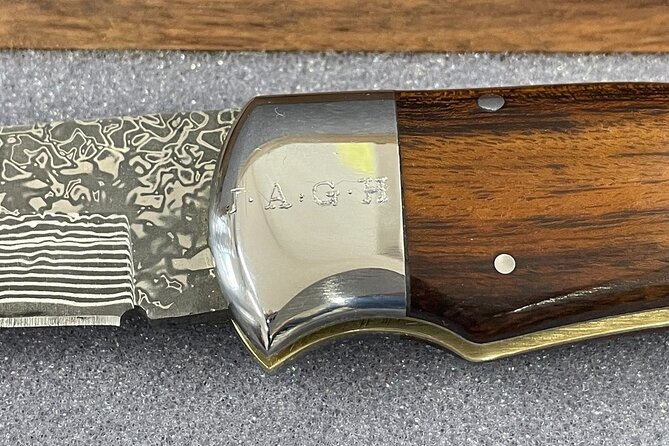
Folding Damascus hunting knife: This is aimed at outdoor use and portability. It may appeal to someone interested in hunting, camping, or practical gear, although the supplied details do not specify its exact size or locking system.
Chinese Damascus kitchen knife: This option is intended for traditional Chinese cooking techniques. It gives you a different culinary purpose from the Japanese kitchen knife, so consider how you actually cook before choosing.
The word Damascus refers to the distinctive layered pattern associated with the blade. The appearance is attractive, but the workshop gives you something more important than a decorative finish: you learn how to maintain the cutting edge.
If you are buying for daily use, choose based on purpose first and appearance second. A folding hunting knife may look appealing but make little sense if you want to prepare vegetables at home. Likewise, the Chinese kitchen option may be a better fit for your cooking style than the more obvious Japanese choice.
Assembling and Personalizing Your Knife
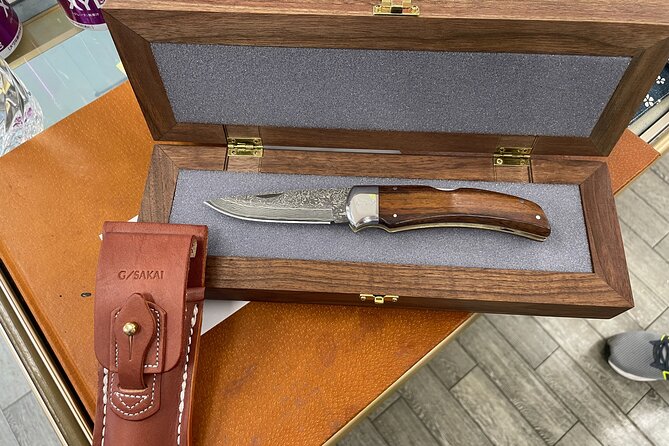
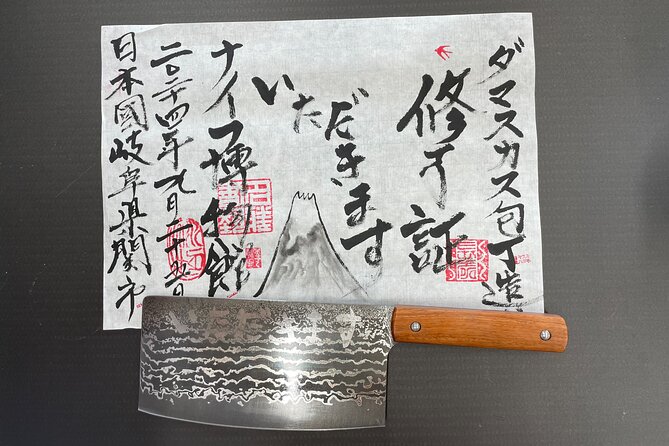
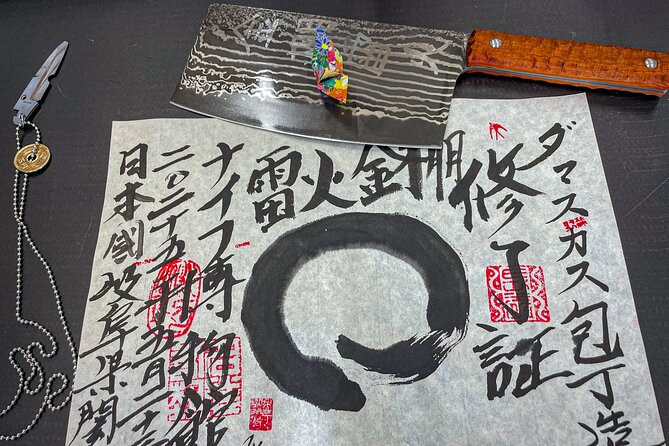
The atelier is where the activity becomes yours. With a knife craftsman guiding you, you assemble the knife, polish it, sharpen it, and write your name on it.
Assembly is a useful part of the process because it shows that a knife is a set of carefully fitted parts, not just a blade with a handle attached. Polishing gives you a closer look at the finish, while writing your name adds a clear personal mark.
The name inscription is a small detail, but it changes the feel of the finished item. You leave with something tied to your time in Seki rather than a standard knife picked up in a shop.
The pace should feel active without becoming frantic. The workshop lasts about 150 minutes, and the group is limited to five people. That is enough time for several stages, but not enough for you to linger over each one indefinitely. Listen closely to the instructions, especially when the group moves to sharpening.
Learning to Sharpen Instead of Just Buying Sharp
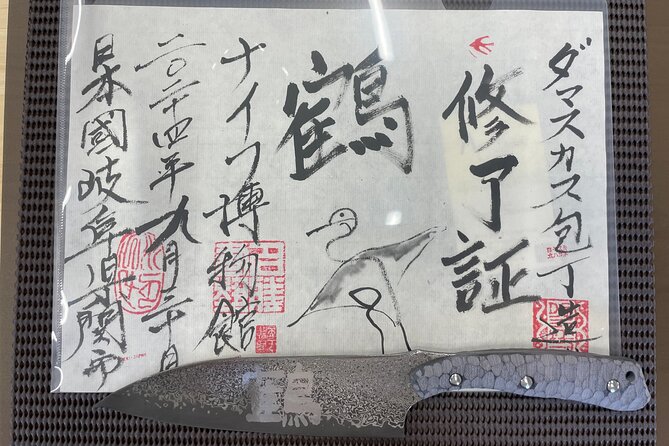
The sharpening lesson may be the most useful part of the activity. A factory-fresh knife can lose its edge through normal use, and owning a good blade is less satisfying if you do not know how to care for it.
Here you learn the essential sharpening skill and use it as part of the finishing process. The aim is not only to make the knife sharp on the day, but to show you how to keep it in good condition for years.
That practical lesson adds value to the price. A souvenir class often ends when the object is complete. This one gives you a maintenance skill that can apply beyond the knife you make.
Pay attention to the craftsman’s hand position, angle, and pressure. The supplied information does not specify the sharpening method or equipment, so you should follow the instructor’s exact process rather than assume it is the same as your usual home technique.
Cutting Fresh Vegetables With Your Finished Blade
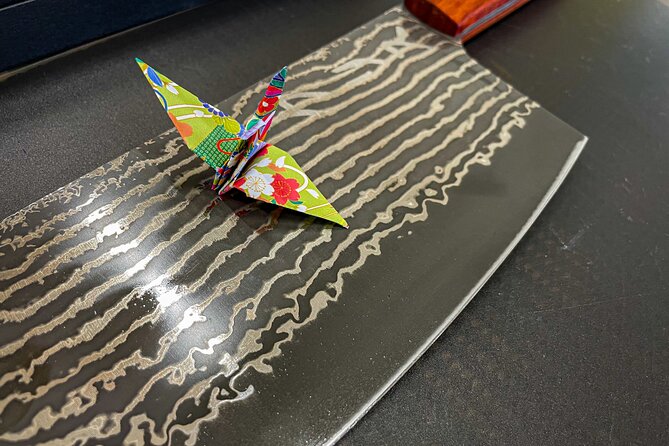
Once your knife is assembled and sharpened, you test it by cutting fresh vegetables. This is a simple but effective finale.
You can feel the difference between a blunt edge and a properly sharpened one immediately. The test also checks whether you have completed the sharpening stage well, turning an abstract lesson into a direct result.
There is a small thrill in using a knife you helped finish. You are not merely holding a polished object. You are checking its performance in a real kitchen task.
This part should also keep expectations sensible. A sharp knife still requires safe handling, and the workshop’s cutting test does not turn you into an experienced cook or blade craftsman. It does give you a clear first use and a practical reason to remember the sharpening lesson.
Is the $250.38 Price Worth It?
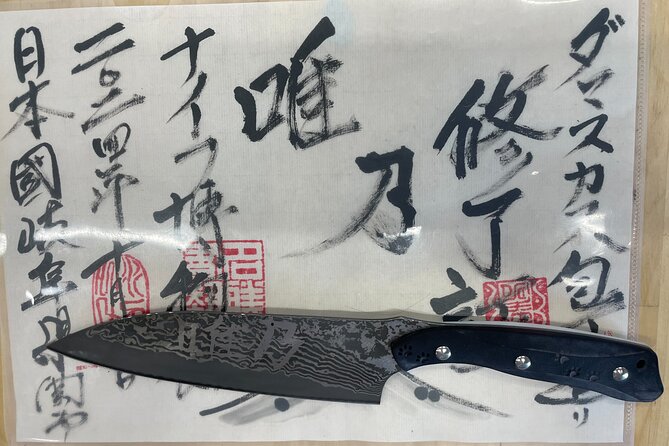
At about $250.38 per person, this is an expensive short activity. The final price can also vary depending on which knife you choose, so treat the advertised amount as a starting point rather than a universal total.
The cost makes more sense if you value several parts together:
- A visit to the Knife Museum
- A look inside G.SAKAI’s factory
- Direct instruction in assembly, polishing, and sharpening
- A personalized Damascus knife
- A practical cutting test
- A small group capped at five people
- Possible pickup assistance
You are paying for the knife as well as the instruction and access. If you mainly want a cheaper Japanese kitchen knife, buying one from a shop will likely be the better financial choice. If you want a personal activity tied to Seki’s blade-making tradition, the workshop offers more than a purchase alone.
The value also depends on your interest level. A keen home cook, outdoor enthusiast, or craft-minded person may find the price fair because the finished knife continues to be useful. Someone with limited interest in knives may find the hands-on portion too specialized for the cost.
The activity’s perfect rating from 27 submitted ratings and a 100 percent recommendation record suggest very strong satisfaction, but you should still judge the price against your own travel budget. A good rating does not make an expensive workshop right for every itinerary.
Making This a Day Trip From Kyoto
You can join the workshop as a day trip from Kyoto, with the journey taking roughly 1.5 to 2 hours by train. That makes the 10:30 am start important. You will need to plan your departure carefully and leave room for transfers, station navigation, and any unexpected delay.
The meeting point at Sekitomioka Station simplifies the final arrival, but the location is not in the middle of Kyoto or another major sightseeing district. You should not assume you can wander in at the last minute.
Pickup is offered, which may help if you are staying at a hotel and the arrangement is available for your booking. One recorded pickup arrangement involved Hiro collecting participants at their hotel, but you should confirm the exact pickup area rather than count on hotel service automatically.
The tour ends where it begins. That makes your return journey easier to plan, but it also means you should consider what else you want to do in Gifu afterward. The supplied details do not provide a full schedule of nearby attractions, though one pickup arrangement included visits to a sword museum and local sword shop after the workshop.
Who Will Get the Most From This Activity?
I would recommend this for someone who likes useful souvenirs, Japanese craft, cooking, or outdoor equipment. It also suits parents and older children who can follow careful instructions, though the provided information only says most people can participate and does not give a specific minimum age.
It is a strong choice for a couple or small family because the five-person limit keeps the activity personal. The workshop also works well for anyone who wants a break from temples, shrines, and city sightseeing.
You may enjoy it less if you want a broad cultural tour of Gifu. The focus is firmly on blades, production, and knife care. It is also not ideal if you want a long forging session in which you heat and hammer raw steel from the beginning. The described process centers on assembling, polishing, sharpening, and personalizing the knife.
English support appears available through Hiro, who speaks English well. Other language arrangements are not specified, so ask before booking if you need a particular language.
Practical Booking Advice
Confirmation is provided at booking, and the activity is offered with a mobile ticket. The official start time is 10:30 am, and the activity lasts approximately 2 hours and 30 minutes.
Free cancellation is available if you cancel at least 24 hours before the local start time. A cancellation or change made less than 24 hours before the activity is not accepted for a refund, so check your train plans before the deadline.
Bring a calm, attentive attitude. The finished knife is sharp, and the most valuable part of the workshop is learning to handle and maintain it correctly. Wear clothing you can work comfortably in, although no special clothing requirements are provided.
Ask about the price of each knife type before you begin. This is the simplest way to avoid choosing a model that pushes the cost beyond your plan.
Should You Book the Seki Knife Workshop?
Book it if you want a personal, useful souvenir and have a real interest in how Japanese knives are made. The museum, factory visit, small group, sharpening lesson, and vegetable-cutting test give the 2.5-hour program a clear shape.
I would skip it if your budget is tight or if you only want to buy a knife. The workshop costs far more than a simple shopping stop, and the journey from Kyoto takes planning.
For the right person, this is one of those activities that gives a day trip a purpose. You return with a Damascus knife bearing your name, a better idea of why Seki matters, and the basic skill needed to keep the blade working well.
FAQ
Where does the knife-making experience start?
It starts at Sekitomioka Station, Hidase, Seki, Gifu 501-3911, Japan.
What time does the activity begin?
The scheduled start time is 10:30 am.
How long does the experience last?
The activity lasts approximately 2 hours and 30 minutes.
Where does the activity end?
It ends back at the meeting point at Sekitomioka Station.
Is hotel pickup available?
Pickup is offered. Confirm the exact pickup location and arrangement when booking, since the provided details do not list a universal pickup area.
How many people can join?
The activity has a maximum of five participants.
What types of knives can I make?
You can choose a Japanese Damascus kitchen knife, a folding Damascus hunting knife, or a Chinese Damascus kitchen knife. Prices vary by knife type.
Can I test the knife after making it?
Yes. You will test the finished knife by cutting fresh vegetables.
Can I cancel for a full refund?
Yes, if you cancel at least 24 hours before the local start time. Cancellations and changes made less than 24 hours before the start are not accepted for a refund.
Just added around Takayama
- Takayama: Takayama Jinya & Old Town Private Walking Tour★ 4.5 · 32 reviews
- Takayama: Private Night Walking Tour with Dinner★ 4.5 · 13 reviews
- Takayama: Private Walking Tour with a Local Guide★ 4.6 · 29 reviews
- Takayama Private Custom Tour with Local Guide★ 5.0 · 31 reviews
- Takayama: Edo-Period Old Town Walking Tour★ 4.5 · 22 reviews
- Takayama: Onigiri and miso soup making at a buddhist temple★ 4.9 · 93 reviews
- Shirakawago&HidaTakayama&GujoHachiman 1 Day Tour from Nagoya★ 4.5 · 14 reviews
- Sake Tasting: Educational Tour of Six Takayama Breweries★ 5.0 · 14 reviews
Kimono & Culture Experiences, compared.
Kyoto Geisha Walking Tour: Gion District & Hidden Gems
Read our review →
Gion Magical Night Walking Tour with Geisha Trivia
Read our review →
Gion Geisha District Walking Tour – Stories of Geisha
Read our review →
Best of Kyoto: Gion, Geisha, Pagodas & Cobblestones
Read our review →

Kyoto Gion Geisha District Walking Tour – The Stories of Geisha
Read our review →
Browse the lists this tour appears in