
REVIEW · TEMPLE & SHRINE TOURS
Ise Jingu(Ise Grand Shrine) Half-Day Private Tour with Government-Licensed Guide
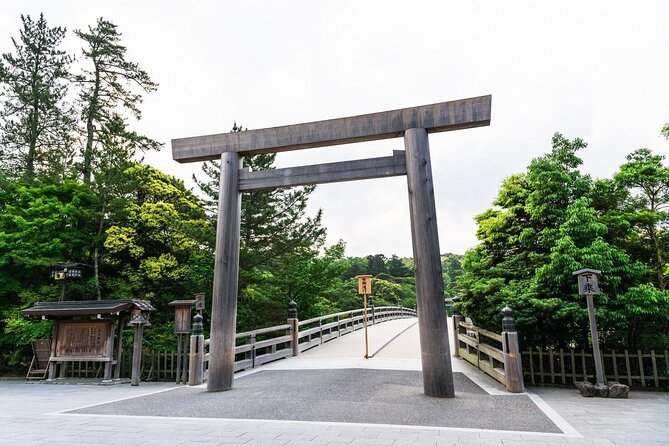
Ise Jingu is not simply a pretty shrine stop. It is Japan’s most sacred Shinto setting, where you can pay respect to Amaterasu Omikami, the sun goddess, and learn why these buildings and rituals matter. I like the private format, since your guide can adjust the pace and explain customs without a large group slowing you down. I also like the choice of adding Okage Yokocho or Meoto Iwa to the shrine visit.
The main catch is time. Four hours is enough for a focused visit to two or three places, but not every stop listed. You must also pay for buses, taxis, entrance fees, meals, and other personal costs. On a busy Sunday, guide Tetsuya Tanahashi advised arranging a taxi so the group could fit Geku, Naiku, and Meoto Iwa into the half-day.
In This Review
- Key points to know before booking
- Why Ise Jingu is worth a half-day
- Naiku, the shrine of Amaterasu Omikami
- Geku adds another side of Ise Jingu
- Isuzugawa River brings a pause between shrine visits
- Okage Yokocho is the easy place to add food and shopping
- Meoto Iwa gives the tour a coastal finish
- What private guiding changes at Ise
- The real cost is more than $108.38
- How to fit the route into four hours
- Who will get the most from this tour
- Booking timing and cancellation
- Should you book this Ise Jingu tour?
- FAQ
- How long does the Ise Jingu private tour last?
- How much does the tour cost?
- Is the tour private?
- Is an English-speaking guide included?
- How many sites can I visit?
- Is transportation included?
- Are entrance fees included?
- Is lunch included?
- Can I cancel for a full refund?
Key points to know before booking
- Choose two or three sites: The tour is customizable, but four hours is too short for a relaxed visit to every listed stop.
- Expect a walking and public-transport tour: Pickup means meeting your guide on foot or by public transportation, not riding in a private vehicle.
- Learn Shinto customs in context: Guides explain prayer, shrine workers, sacred structures, and the special routes connected with the imperial family.
- Naiku and Geku serve different purposes: Both are important parts of Ise Jingu, and visiting them with guidance gives the complex more meaning.
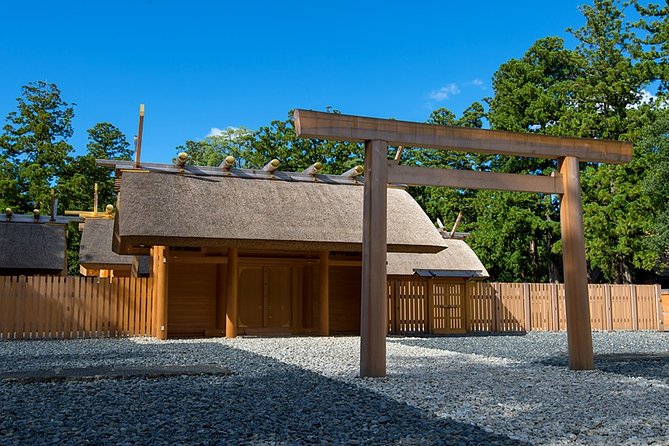
- Add local flavor: Okage Yokocho brings food and shopping near Naiku, while Meoto Iwa offers a coastal stop beyond the shrine grounds.
- Private means personal attention: Only your own group participates, and special requests can be discussed with the guide.
Why Ise Jingu is worth a half-day
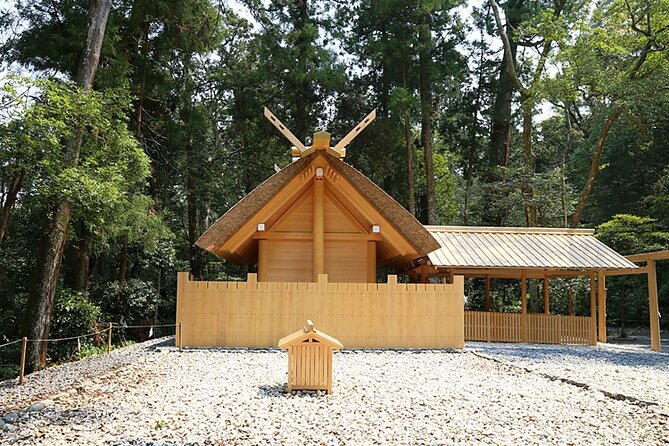
Ise Jingu is made up of two major shrine areas, Naiku and Geku, with sacred structures said to be around 2,000 years old. Naiku is dedicated to Amaterasu Omikami, the sun goddess and supreme deity of the Ise Shrines.
That description can sound grand but vague until you are standing among the shrine grounds, following the approach, and trying to understand the customs taking place around you. A guide gives you the missing pieces. Instead of seeing wooden buildings as attractive but unfamiliar, you learn about their role in Shinto and the care given to maintaining them.
I like this tour for that reason. It is not built around rushing from one photo stop to the next. The guide’s job is to help you read the place, understand how people pray, and notice the details that are easy to miss on your own.
The tour lasts about four hours and is private, so your group receives the guide’s full attention. The guide can discuss meeting points, timing, and the route with you after booking. This is especially useful at Ise, where the two main shrine areas are separated and local transport affects how much you can cover.
More private guided tours with driver in Japan:
- Tokyo 6hr Private Tour with Government-Licensed Guide
★ 5.0 · 3,902 reviews - Tokyo 4hr Private Tour with Government-Licensed Guide
★ 5.0 · 1,394 reviews - Kyoto 6hr Private Tour with Government-Licensed Guide
★ 5.0 · 1,369 reviews
Naiku, the shrine of Amaterasu Omikami
Naiku is the essential stop. It is the Inner Shrine of Ise and the place associated with Amaterasu Omikami, making it the spiritual center of the visit.
You should expect the guide to explain the meaning of the shrine features and the way worship works. One especially useful part of the guidance is practical instruction about how to pray. That may sound like a small detail, but it helps you take part respectfully rather than copy the nearest person and hope for the best.
The buildings and structures also deserve explanation. Their appearance is simple, but the way they are maintained is part of the story. A guide can point out how the shrine’s traditions continue and why certain areas have special importance.
Plan on about one hour here if Naiku is treated as one of your selected sites. That gives you time to listen, walk through the main areas, and pause along the Isuzugawa River without turning the visit into a sprint.
The limitation is that Naiku alone can easily absorb more than an hour if you want a slow visit. If you also hope to see Geku, Okage Yokocho, and Meoto Iwa, you will need to keep moving and use transport wisely.
Geku adds another side of Ise Jingu
Geku is the Outer Shrine and one of the two major shrine areas that define Ise Jingu. The tour gives it about an hour when selected, allowing your guide to explain how it fits with Naiku and the wider sacred complex.
For many people, Geku is more meaningful after they understand that Ise Jingu is not one single building. It is a connected religious setting with more than one major shrine area, each deserving attention.
A guide such as Tetsuya Tanahashi can help turn the visit into a clear story rather than a string of names. Yoshi has also guided visitors through the main temples, Shinto beliefs, prayer customs, shrine workers, and the restricted route used by Japan’s emperor at the largest shrines.
Those details are useful because they connect religious practice with modern Japanese life. You are not only looking at old structures. You are learning who uses the shrines, how worship is carried out, and which spaces carry special status.
If Geku and Naiku are your priority, the four-hour plan is much more comfortable. You can give each shrine proper attention and still have some time for the river or a nearby shopping street, depending on the route arranged with your guide.
Isuzugawa River brings a pause between shrine visits
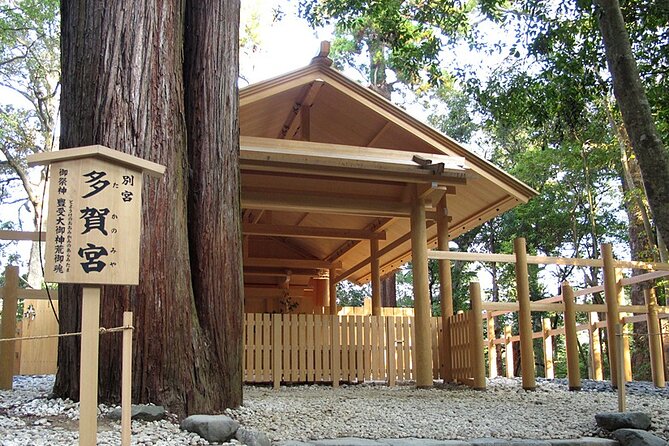
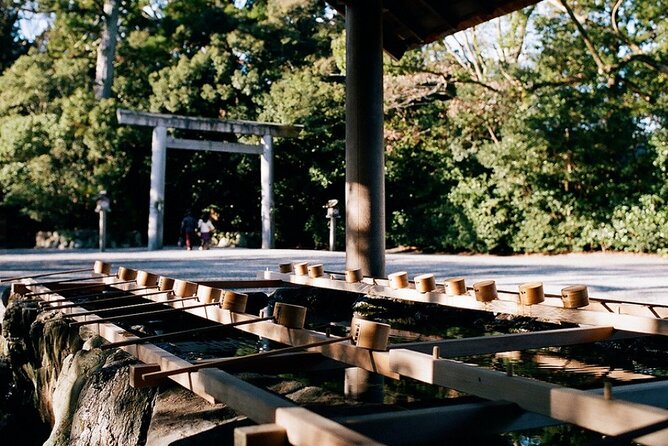
The Isuzugawa River runs alongside the Naiku grounds and is connected with purification and the natural setting of the shrine. It is included as a free stop, so there is no admission charge listed for this part of the experience.
I like having the river in the plan because it changes the pace. After listening to explanations about Shinto buildings and customs, you get a quieter stretch beside the water. It also helps you understand that Naiku is not only a collection of structures. The surrounding setting is part of the visit.
Your time here may be brief if you choose three larger stops. Still, it is a useful addition to Naiku, particularly if you want moments for reflection rather than four straight hours of formal sightseeing.
More temple & shrine tours in Japan:
- Kyoto: Fushimi Inari, Kinkakuji, Bamboo Grove 1 Day Bus Tour
★ 4.8 · 4,316 reviews - Kyoto: Tea Ceremony in a Traditional Tea House in Kiyomizu
★ 4.9 · 3,519 reviews - Kyoto: Tea Ceremony Ju-An at Jotokuji Temple
★ 4.9 · 3,207 reviews - Tokyo: Meiji Shrine, Asakusa, Skytree Bus Tour and Cruise
★ 4.7 · 1,986 reviews
Okage Yokocho is the easy place to add food and shopping
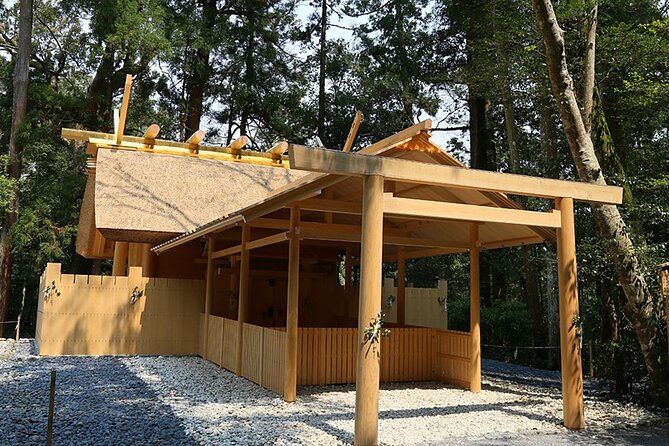
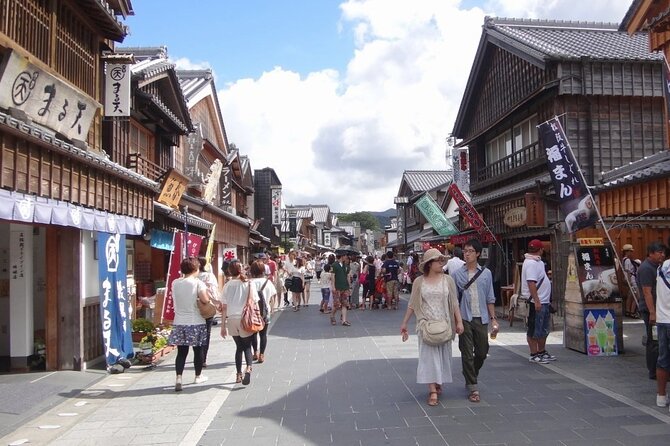
Okage Yokocho sits in front of Naiku’s gate. Built in 1993, it recreates an Edo to Meiji period townscape and includes shops and restaurants.
This is the most accessible place to add local atmosphere to a shrine-focused visit. You can move from sacred grounds to food, small shops, and a traditional-style street without needing a separate excursion.
The contrast is part of its appeal. Ise Jingu asks for quiet attention, while Okage Yokocho gives you a chance to browse and eat. It makes the half-day feel less one-note, especially if some members of your group are more interested in local food and shopping than religious architecture.
Do not assume that the tour price covers lunch or purchases. Meals and personal expenses are extra, and entrance charges are not generally included. The guide can help explain what you are seeing, but your own spending remains separate.
Allow about an hour if Okage Yokocho is selected. If you want to eat a full meal and shop at leisure, that time can disappear quickly. Pairing it with Naiku makes sense because the street is right by the Inner Shrine gate.
Meoto Iwa gives the tour a coastal finish
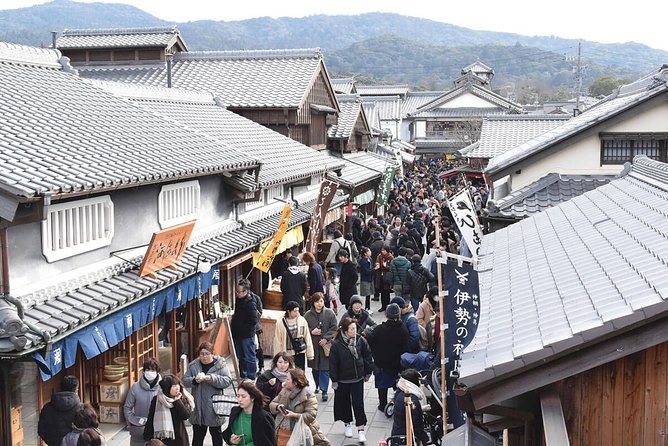
Meoto Iwa, known as the Wedded Rocks, is near Futami, a small town in Ise City. The two sacred rocks sit in the ocean, with the larger rock paired with a smaller one.
This stop changes the character of the day. Instead of another shrine compound, you get a scenic coastal view and a local religious symbol connected with the sea. It is a good choice if you want the tour to include more than buildings and formal worship.
The practical problem is distance and timing. Meoto Iwa is not simply another corner of Naiku, so transportation matters. The tour does not include private transportation, and you are responsible for transport fees. On a crowded day, a taxi may be the sensible choice if Meoto Iwa is important to you.
One hour is allocated to the stop, but the total time needed also includes getting there and back. That is why the tour is built around choosing two or three sites rather than trying to cover everything.
What private guiding changes at Ise
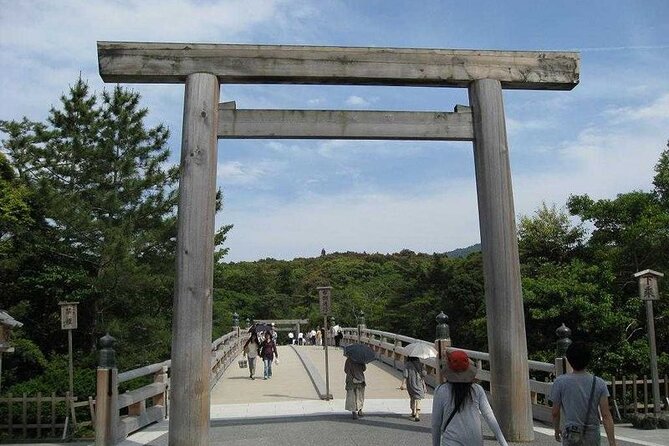
A private guide is most useful here when you have questions. Shinto customs can feel unfamiliar, and the meaning of a shrine approach, prayer, building, or restricted route may not be obvious from signs alone.
Your guide can also adjust the tour to your group. The route, meeting place, and timing can be discussed by email, and a guide may help you decide if the best plan is Geku and Naiku, Naiku and Okage Yokocho, or a more ambitious route that includes Meoto Iwa.
This flexibility was particularly clear in a route arranged with guide Nishio. The group met at Ise City Station, visited Geku, used a public bus toward Naiku, stopped at Sarutahiko Shrine along the way, and continued through Oharai-machi and Okage Yokocho to Naiku.
That route shows both the benefit and the limit of customization. You can shape the experience around your interests, but every extra stop uses time. I would decide your top two priorities before the day begins.
The guides named in the available information include Tetsuya Tanahashi, Yoshi, and Nishio. English-speaking licensed local guidance is included, giving you help with both cultural meaning and practical movement around Ise.
The real cost is more than $108.38
The listed price is $108.38 per person. For a solo visitor or couple, that is not a cheap add-on, but the value depends on how much explanation you want and how many people share the cost.
Because the tour is private, the guide fee is not spread across a large group. That makes the price easier to justify for families, friends, or small groups who want to set their own pace. Group discounts are available, so the per-person cost may work better as your party grows.
The price includes a licensed local English-speaking guide and a customizable tour of two or three sites. It does not include private transportation, public transport fares, entrance fees, lunch, or personal purchases.
You should budget extra for moving between Geku, Naiku, and Meoto Iwa. The guide meets you within the designated Ise area on foot or by public transportation. Private transport is not supplied.
For the best value, use the guide where guidance matters most. If you already know Ise well and only want someone to walk you between sights, the price may feel high. If you want clear explanations of Shinto, prayer, sacred buildings, and local customs, the cost buys more than directions.
How to fit the route into four hours
Start by choosing the purpose of your visit. If this is your first time at Ise Jingu, I would make Naiku and Geku the core plan.
Choose Naiku and Okage Yokocho if you want the shrine’s main spiritual center plus food and shopping. This is the simplest pairing because the two stops are close together.
Choose Naiku and Meoto Iwa if the coastal rocks matter to you. Tell the guide early, and be ready to discuss a taxi or another practical transport plan. The extra movement can make this route tight.
Choose Geku, Naiku, and Meoto Iwa only if you accept a brisk schedule. Tetsuya Tanahashi’s advice about arranging a taxi on a busy Sunday is worth taking seriously. Public transport can work, but crowds and waiting time may reduce your time at the sites.
You can also ask about other local stops, such as Sarutahiko Shrine, but adding more places means shortening the main shrine visits. Four hours rewards a clear priority list.
Who will get the most from this tour
I recommend this experience to first-time visitors who want context, not just photographs. It also suits anyone curious about Shinto, Japanese prayer customs, and the way sacred sites are maintained.
Families and small groups should appreciate the private arrangement. You can discuss pace and interests with one guide instead of following a fixed large-group schedule.
It is also a good fit for people who prefer a local guide’s explanation to reading signs on their own. The tour can be adjusted for a shrine-heavy visit, a mix of culture and shopping, or a route that includes Meoto Iwa.
I would be more cautious if you want a slow, all-day exploration. Four hours is a half-day introduction, not a complete Ise visit. It is also less suitable if you expect an included vehicle, lunch, or admission tickets.
Most people can participate, and service animals are allowed. The experience is near public transportation, but the meetup and movement are on foot or by public transport, so plan for a walking-based outing.
Booking timing and cancellation
This tour is commonly booked well ahead, with an average booking lead time of 46 days. That is useful to know if your Japan plans are fixed, especially if you want a particular guide or date.
Confirmation is provided when you book. You can cancel for a full refund up to 24 hours before the local start time. Changes or cancellations made inside that 24-hour window are not accepted for a refund.
Should you book this Ise Jingu tour?
Book it if you want Ise Jingu explained by a licensed local guide and you value a private route. The strongest plan for most people is Geku and Naiku, with Okage Yokocho added if food and shopping appeal to you.
Choose Meoto Iwa instead of one shrine only if the coastal rocks are a priority and you are ready to pay for transport. Do not book this expecting a private car or an all-inclusive day out.
At $108.38 per person, the tour makes the most sense for a small group that wants personal guidance and can share the cost. If you want to understand what you are seeing, rather than simply pass through the shrine grounds, the four hours can be well spent.
FAQ
How long does the Ise Jingu private tour last?
The tour lasts approximately four hours.
How much does the tour cost?
The listed price is $108.38 per person. Group discounts are available.
Is the tour private?
Yes. Only your group participates in the activity, and the guide’s attention is dedicated to your party.
Is an English-speaking guide included?
Yes. The tour includes a licensed local English-speaking guide. Guides named in the available information include Tetsuya Tanahashi, Yoshi, and Nishio.
How many sites can I visit?
The tour is customizable around two or three sites from the listed options. Four hours is not designed for a relaxed visit to every listed stop.
Is transportation included?
No. Transportation fees and private transportation are not included. The guide meets you on foot or by public transportation within the designated Ise area.
Are entrance fees included?
Entrance fees are not generally included. Guide entry fees are covered only for sights listed under the tour’s included sites.
Is lunch included?
No. Lunch and other personal expenses are extra.
Can I cancel for a full refund?
Yes, if you cancel at least 24 hours before the experience start time. Cancellations or changes made less than 24 hours before the start time are not refunded or accepted.
More Half-Day in Japan
- Kyoto Arashiyama Bamboo forest & Garden Half-Day Walking Tour
★ 5.0 · 413 reviews - Miyajima Half-day Trip Historical Walking Tour
★ 5.0 · 284 reviews - Half-day Tokyo Afternoon Tour by Hato Bus
★ 4.0 · 269 reviews - Naha, Okinawa: Kerama Islands Half-Day Whale Watching Tour
★ 4.4 · 241 reviews
Just added around Japan
- Private Memorable Tokyo Tour with English Speaking Driver★ 5.0 · 30 reviews
- Private Tokyo Custom Full-Day Tour by Chartered Vehicle★ 5.0 · 16 reviews
- Private Sightseeing to Mt Fuji and Hakone with English Driver★ 5.0 · 51 reviews
- Tokyo Photography Masterclass – Private Photography Lesson★ 5.0 · 25 reviews
- Private Mt. Fuji Day Trip from Tokyo with English-Speaking Driver★ 5.0 · 33 reviews
- 4 Day Tour – Mount. Fuji, Tokyo, Hakone, Kamakura and Yokohama★ 5.0 · 19 reviews
- Private Tokyo Food Tour – A Journey Through Time Through Food★ 5.0 · 36 reviews
- Private Tokyo Custom Half-Day Tour by Chartered Vehicle★ 4.5 · 13 reviews
Temple & Shrine Tours, compared.

Tea Ceremony in a Traditional Tea House in Kiyomizu
Read our review →
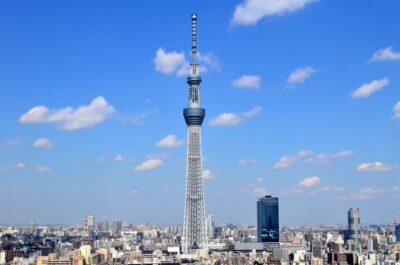
Meiji Shrine, Asakusa, Skytree Bus Tour and Cruise
Read our review →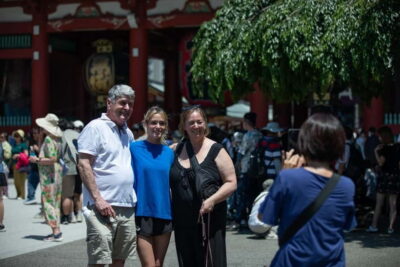
Asakusa Walking Tour with Sensoji Temple Visit
Read our review →
Kamakura & Enoshima Day Trip including Temple Tickets
Read our review →
Kyoto/Osaka: Nara, Fushimi Inari Taisha, Arashiyama Bus Tour
Read our review →
Nikko Toshogu Shrine and Kegon Waterfall Tour
Read our review →
Tokyo Panoramic 1 Day: Meiji Shrine, Asakusa, Odaiba and SKYTREE®
Read our review →Browse the lists this tour appears in